Red Ribbon Week Assemblies and Drug Prevention Programs for Schools
A hosted game show assembly where every student plays, built around your health curriculum and this year’s Red Ribbon theme. For elementary, middle and high schools in New Jersey, New York City and Connecticut.
Red Ribbon Week · October 23 to 31
A drug prevention assembly students take part in, not sit through
Red Ribbon Week runs from October 23 to 31 every year, and its organizers describe it as the nation’s largest and longest-running drug-use prevention campaign. The official 2026 theme is “Make A Difference. Be A Hero. Stay Drug Free.” It was created by Ava Tackett, a student at Griswold Middle School in Griswold, Connecticut, who won the 2026 national theme contest (Red Ribbon Week theme).
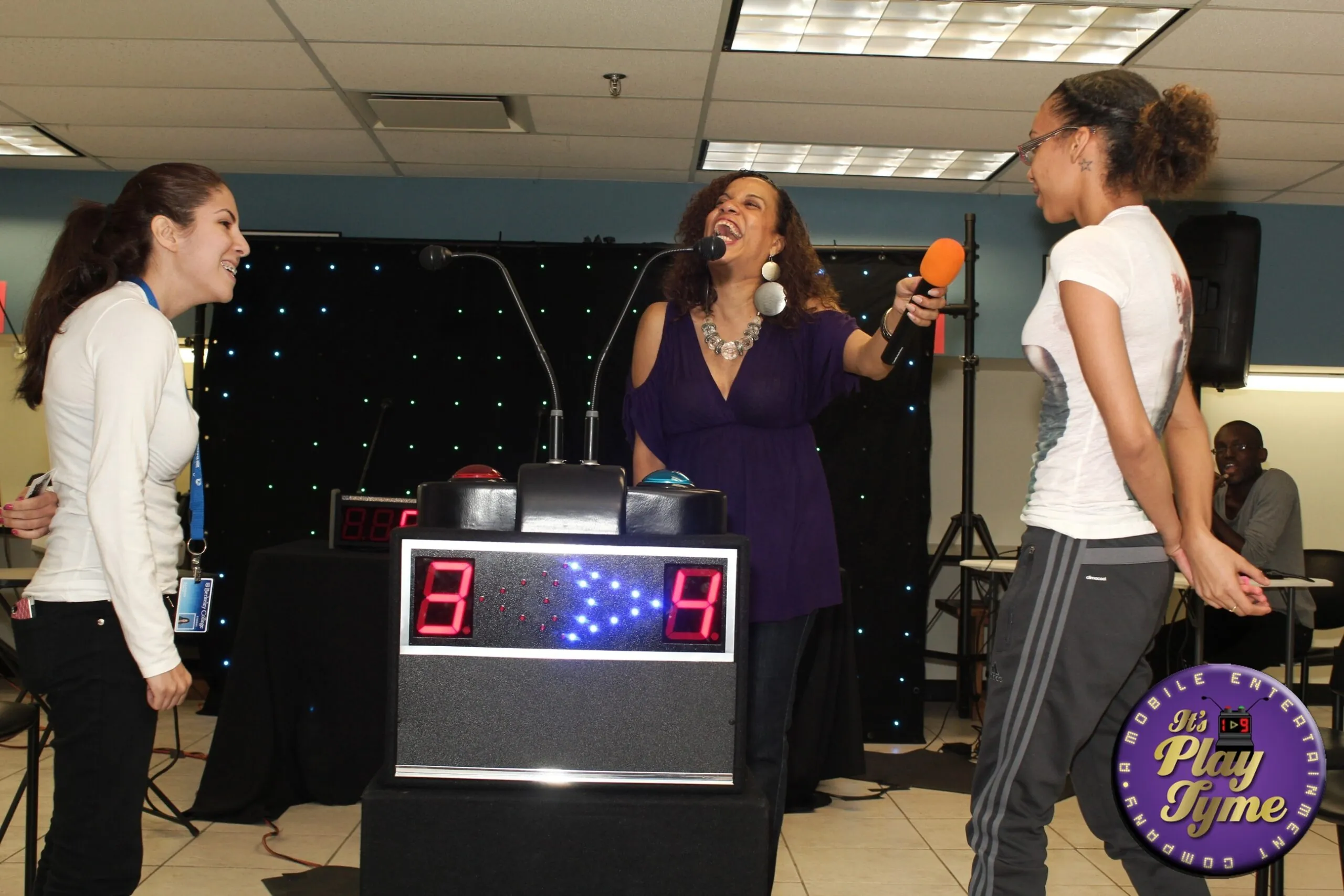
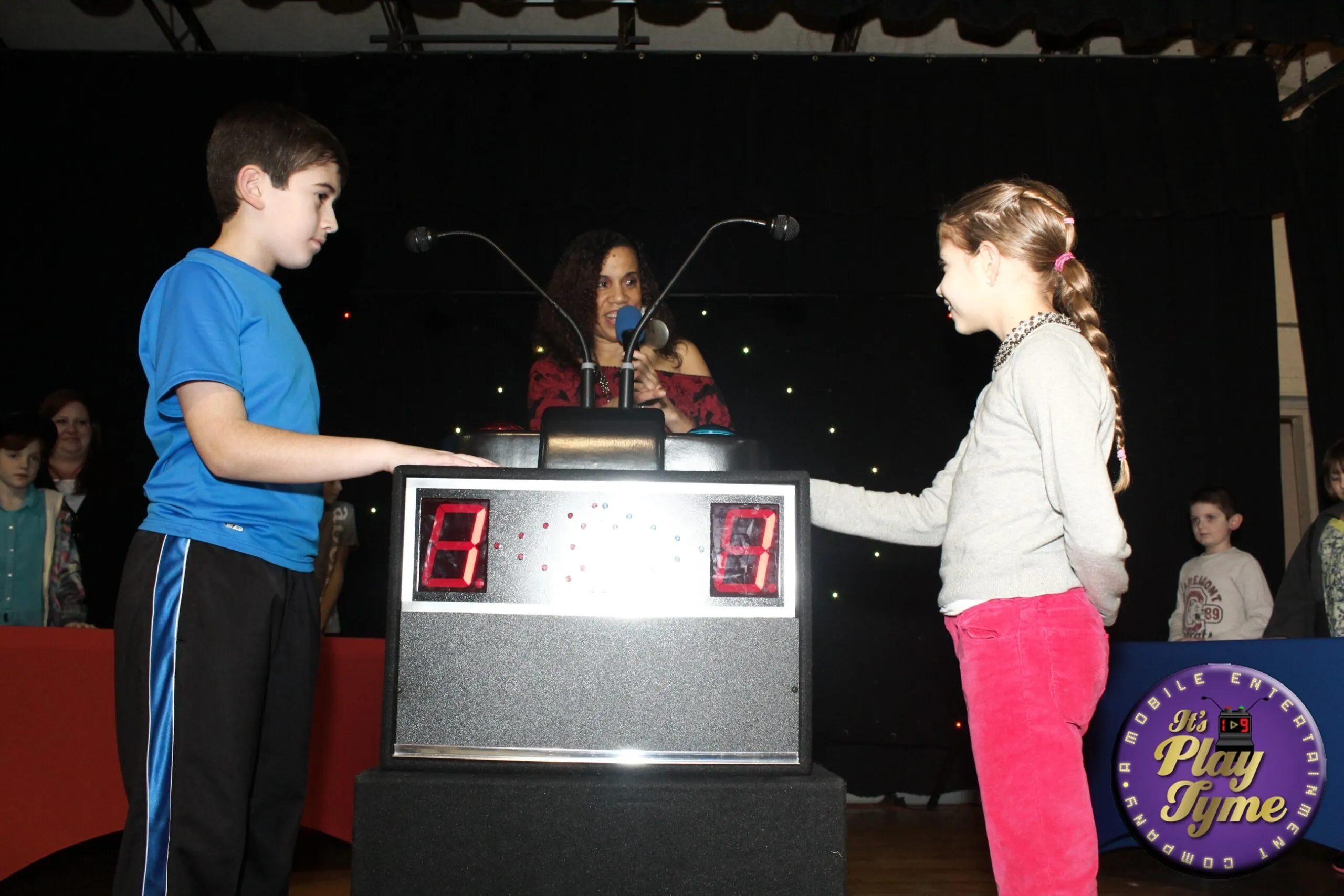
Most schools mark the week with spirit days, pledge walls and a speaker. The assembly is the one moment the whole building is in one room, and it is often the part students remember least. It’s PlayTyme turns that hour into a live, professionally hosted game show: classes compete as teams, students answer on keypads or phones, and the questions are written with your health and counseling staff so the content is yours.
Planning the rest of the week? Our guide to Red Ribbon Week ideas lays out a day-by-day plan for October 23 to 31.
What the research says
Why a lecture-style assembly underperforms
The National Institute on Drug Abuse’s research-based guide, Preventing Drug Use among Children and Adolescents, is direct about it: “Drug information alone, however, has not been found to be effective in deterring drug abuse.” The same guide notes that “use of interactive methods and appropriate booster sessions helps to reinforce earlier program content and skills” (NIDA prevention guide).
There is good news to build on, too. In the 2025 Monitoring the Future survey, 91% of 8th graders, 82% of 10th graders and 66% of 12th graders reported using no marijuana, alcohol or nicotine in the past 30 days (NIDA, December 2025). Most students are already making the healthy choice. A game show lets them say so out loud, as a team, in front of their peers.
What changes when students play instead of listen
- Every student answers, not only the few who raise a hand.
- Teams talk through the answer before they lock it in, which is where the real conversation happens.
- Your staff see what students actually believe, because the room shows its answers.
- The theme becomes something students say and cheer, not a slogan on a poster.
How it works
What your Red Ribbon assembly includes
Questions written with your staff
We gather the facts and messages from your health teachers and counselors, then turn them into game rounds at the right level for each grade.
Every student plays
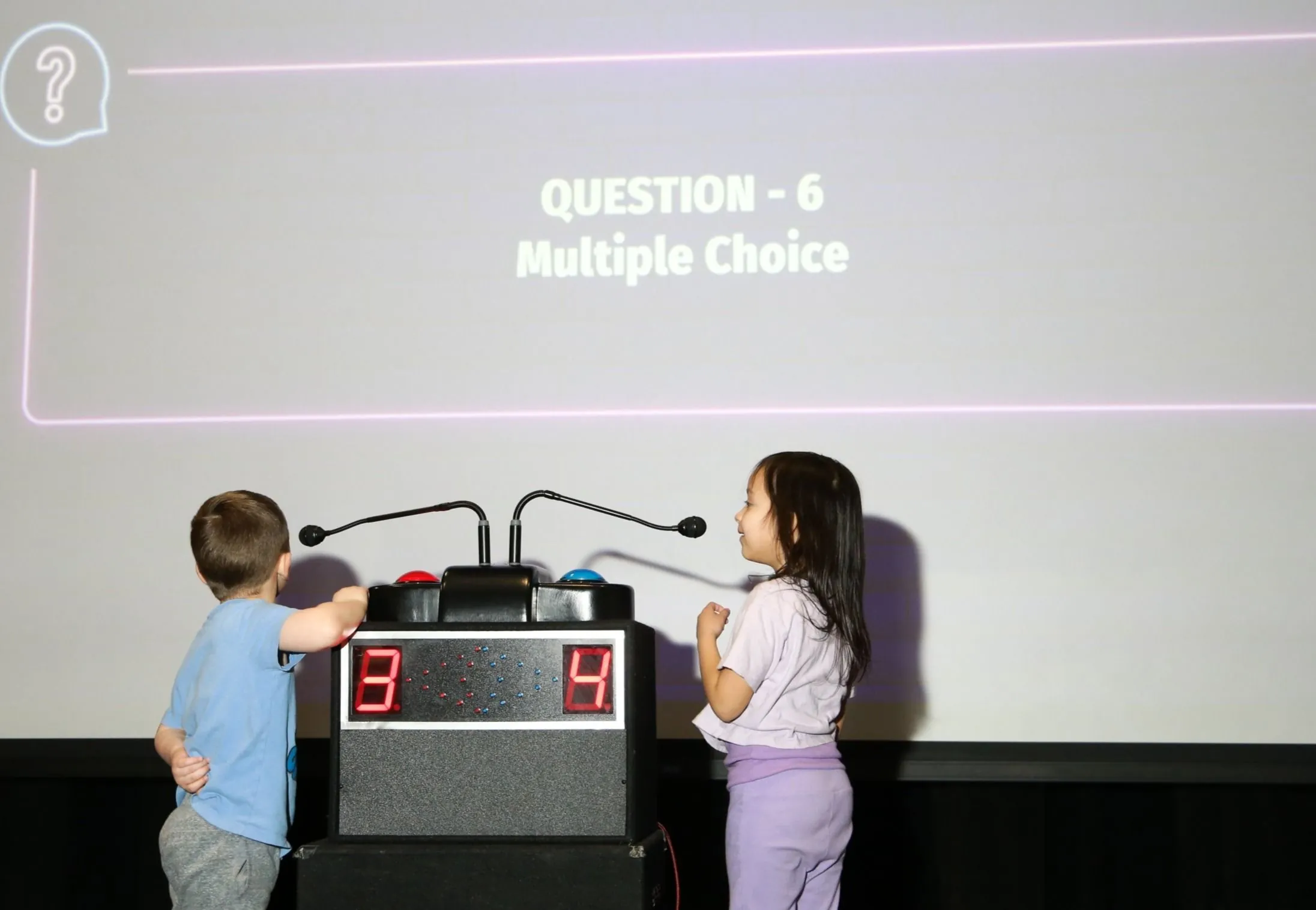
Students answer on audience-response keypads or phones, so the whole room competes, not only the students on stage.
Familiar game show formats
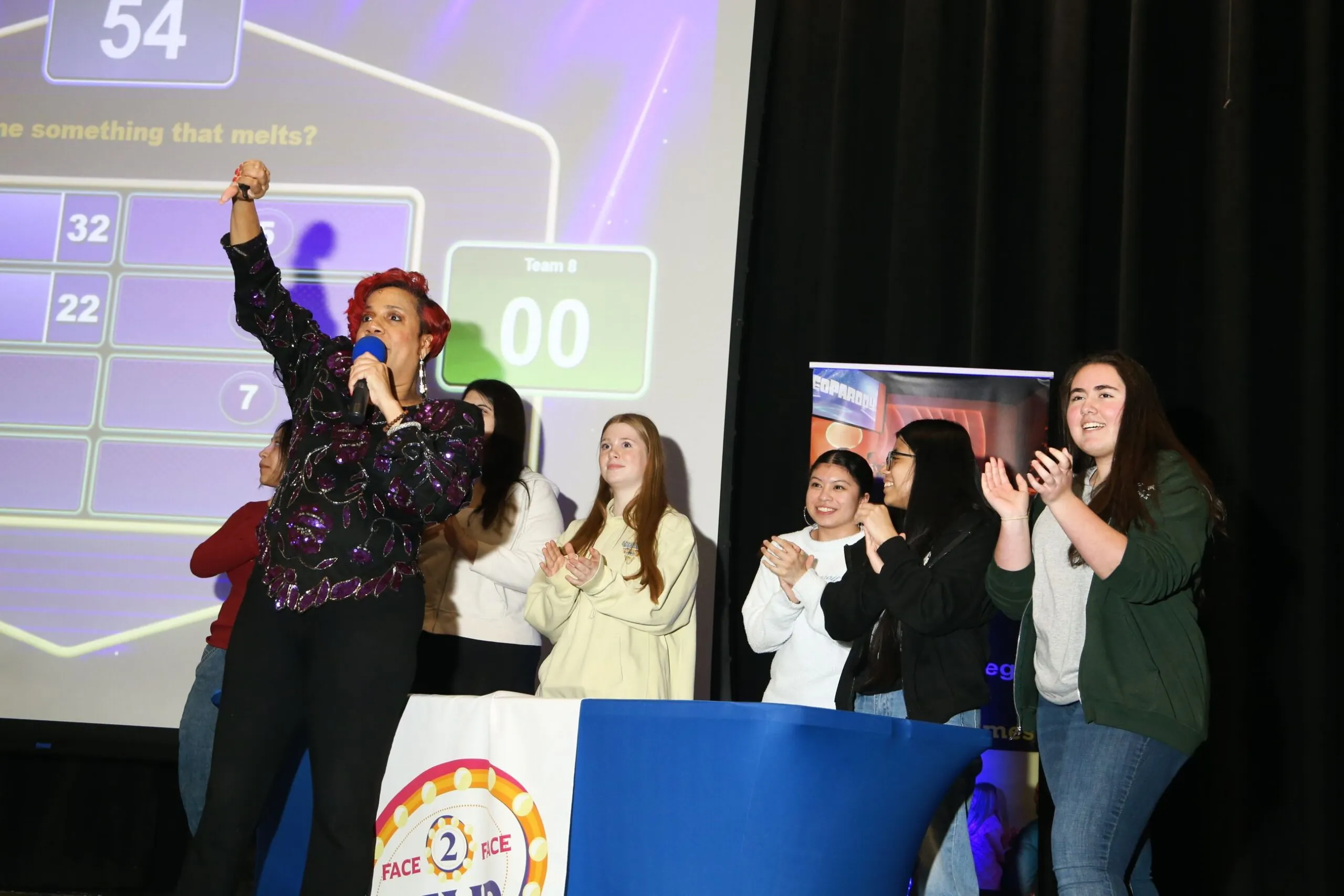
Formats students already know, such as Face 2 Face Feud, The Challenge and PlayPad Mania, so there is no learning curve.
Built around the 2026 theme
Rounds tie back to “Make A Difference. Be A Hero. Stay Drug Free.” so the week carries one message from the first spirit day to the last.
A professional host
A host who runs rooms for a living keeps the pace fast, keeps it respectful on a sensitive topic and brings the quiet students in.
Full production, we set it up
Host, sound, podiums, buzzers, lighting and prizes arrive with us. Your team supplies the room and the students.
See a prevention game show in action
Students compete in teams on questions about alcohol, vaping, tobacco and other drugs, with a live host running the room.
Beyond one week
Topics we cover, any time of year
Red Ribbon Week is the anchor, but the same NIDA guide notes that the benefits of middle school prevention programs diminish without follow-up programs in high school. A second game show later in the year works as that follow-up. Rounds can cover:
- Alcohol and underage drinking
- Vaping, nicotine and tobacco
- Marijuana and edibles
- Prescription medicines and opioids
- Peer pressure and refusal skills
- Where to go for help in your school and community
Middle school, high school and district-wide programs
For middle and high schools the rounds go deeper: vaping and nicotine, peer pressure, health and the choices students face at parties and in the car. Districts can run the same program across several schools as one prevention initiative, and the team-based format supports PBIS goals by modelling cooperation, recognition and respectful participation. We serve public and private schools across North Jersey, including Bergen, Essex and Hudson counties, as well as New York City, New York State and Connecticut.
We also run anti-bullying assemblies, distracted driving prevention and senior-year events such as Project Graduation. See every option on our school assembly programs page.
NJ · NY · CT
How an assembly fits your state requirements
All three states in our service area require schools to teach about alcohol, tobacco and other drugs. An assembly can support and reinforce that instruction. It does not replace it: your health curriculum stays the place where the standards are taught.
- New Jersey: N.J.S.A. 18A:40A-1 requires instruction on drugs, alcohol, anabolic steroids and tobacco in every public school from kindergarten through grade 12, “in a manner adapted to the age and understanding of the pupils” (N.J.S.A. 18A:40A-1). The state’s Comprehensive Health and Physical Education standards cover the topic under standard 2.3 (NJDOE standards).
- New York: Education Law Section 804 makes alcohol, tobacco and other drug instruction part of health education in elementary school and an integral part of the required health course in secondary school (NY Education Law 804).
- Connecticut: General Statutes Section 10-19 requires this instruction every academic year in all grades (C.G.S. 10-19).
Planning steps
How to book your Red Ribbon Week assembly
- Pick a date inside October 23 to 31, or the week before if that week is already full on your calendar.
- Tell us your grades, student count and room through the form below or our contact page.
- Share your key messages. Your health and counseling staff send the facts they want reinforced, and we build the rounds.
- Review the questions before the day, so nothing surprises your staff.
- We arrive, set up and host. We need two hours of setup access before the first show.
Give Red Ribbon Week an assembly students talk about
Tell us your date, your grades and the message you want students to leave with. We will come back with a plan.
Red Ribbon Week assembly questions
When is Red Ribbon Week 2026?
Red Ribbon Week runs from October 23 to 31, the same dates every year. Most schools hold their assembly during that week; the week before also works if your calendar is full.
What is the 2026 Red Ribbon Week theme?
The official 2026 theme is “Make A Difference. Be A Hero. Stay Drug Free.” It was created by Ava Tackett, a student at Griswold Middle School in Connecticut.
Can the assembly work for elementary students?
Yes. Questions are written for each grade band, so an elementary assembly focuses on healthy choices and asking a trusted adult for help, while middle and high school rounds go deeper into vaping, alcohol and peer pressure.
Does a Red Ribbon assembly meet our state requirement?
No assembly replaces required instruction. New Jersey, New York and Connecticut all require schools to teach about alcohol, tobacco and other drugs through health education. A game show assembly reinforces what students learn in class.
How does every student play in a large assembly?
Students answer on audience-response keypads or phones, so the whole audience scores points for their team while contestants play on stage.
Which areas do you serve?
We bring assemblies to schools across New Jersey, New York City, New York State and Connecticut.
Plan your school’s assembly
Send us your date, grades and student count. We set up a quick discovery call before we put your proposal together.