


Fathers who participate in school activities produce measurable results. According to the National Center for Education Statistics, 89% of parents attended a general school meeting or event during the most recent survey period, yet father-specific attendance at fundraising events trails far behind that number. Meanwhile, the National PTA reports that students whose parents actively participate in school functions earn higher grades, attend school more regularly, and develop stronger social skills across every demographic group.
A father-son game show fundraiser taps directly into those benefits. It gives dads a reason to walk through the school doors on a weeknight, puts them shoulder-to-shoulder with their kids in a competitive format, and raises money for the PTA or school program at the same time. The format is simple: families pay an entry fee, compete in team-based game show rounds, and the school keeps the proceeds.
But most PTA coordinators and school event planners already know the frustration. Traditional fundraisers (candy bar sales, wrapping paper catalogs, walk-a-thons) produce diminishing returns year after year. Parent turnout drops. Dads skip the event entirely because it feels like another obligation rather than something they actually want to attend. And the planning committee burns out trying to organize an event that barely breaks even. A game show fundraiser built around the father-son dynamic solves several of these problems at once.
Quick Answer
- Father-specific attendance at school fundraisers falls well below the 89% general parent participation rate.
- Students with actively involved parents earn higher grades and attend school more regularly, per the National PTA.
- Families pay an entry fee to compete in team-based game show rounds, generating funds for the PTA.
- The competitive format puts fathers and sons shoulder-to-shoulder, creating a strong draw for a weeknight event.
- The event raises school money while building the parent involvement that research links to student success.
What a Father-Son Game Show Fundraiser Actually Looks Like
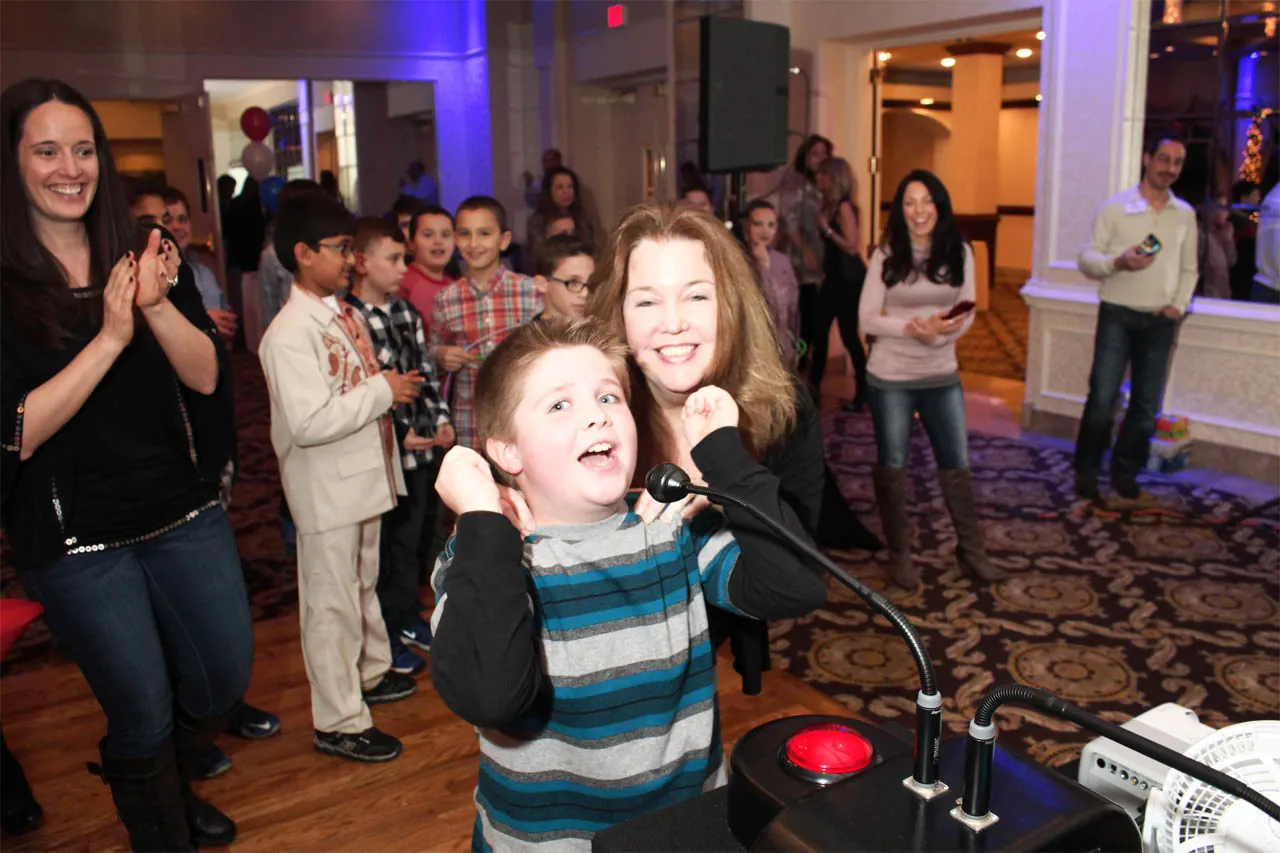
Picture your school gymnasium or cafeteria transformed into a live game show set. A professional host runs the event from a stage with lighting, sound, and scoring displays. Father-son teams compete in rounds of trivia, physical challenges, and relay-style games. The audience (moms, siblings, grandparents, teachers) watches from bleachers or folding chairs, cheering and participating in crowd rounds.
Each round is designed so the father and son must work together. One round tests how well dad knows his kid’s favorite things. Another puts the son in charge while dad follows instructions blindfolded. The competitive energy in the room builds fast because every family wants to win, and the format keeps the stakes light enough that nobody feels embarrassed.
It’s PlayTyme Game Shows specializes in exactly this format across New Jersey, New York City, and Connecticut. Their school assembly experience translates directly into fundraiser events because they already understand gymnasium acoustics, age-appropriate content, and how to keep a room of 200+ people engaged for 90 minutes straight.
Challenges of Planning a School Fundraiser That Families Actually Attend
Every PTA board has dealt with the same set of problems when planning fundraisers:
- Low dad turnout. Most school events skew toward mother attendance. Fathers often feel like the event “isn’t for them” or conflicts with work schedules. Without a compelling reason to show up, they stay home.
- Fundraiser fatigue. By the third catalog sale of the year, families stop participating. The per-family donation amount drops, and volunteers grow resentful of the effort-to-return ratio.
- Entertainment gap. A bake sale or silent auction raises money, but it does not create the kind of memorable experience that builds community. Parents attend out of obligation, not excitement.
- Planning burden. Volunteer-run events require weeks of coordination: sourcing prizes, setting up decorations, managing signups, handling money at the door. The planning committee does all the heavy lifting.
- Unpredictable revenue. Product-based fundraisers depend on individual sales effort. One family sells 40 boxes of cookies. Another sells two. The total is impossible to forecast.
A game show fundraiser with a professional company addresses every one of these problems. The company handles entertainment, equipment, and hosting. The school handles ticket sales and promotion. Revenue is predictable because it is based on attendance, not individual sales performance.
Why the Father-Son Dynamic Makes This the Best Fundraiser Format
The competitive energy between a father and son is the secret ingredient. Dads who would never attend a craft night or potluck dinner will absolutely show up to compete on a game show stage with their kid. The format gives fathers a specific role (teammate, not spectator) and a specific reason to be there (winning).
Kids respond to it just as strongly. A third-grader who dreads the annual fun run will beg his dad to sign up for a game show night. The format feels like something they watch on TV, not something the school invented to collect money. That distinction matters for both attendance and enthusiasm.
The parent-child team structure also creates moments that families talk about for years. When a father fumbles a trivia answer about his son’s favorite song, the whole gymnasium laughs together. Those shared moments build the kind of school community that PTA boards work hard to foster through less effective means.
How It’s PlayTyme Game Shows Runs a School Fundraiser
It’s PlayTyme brings professional-grade game show production to school events. Their team arrives with all equipment: stage lighting, wireless microphones, buzzers, scoreboards, and a sound system sized for your venue. The host is a trained entertainer, not a parent volunteer reading from index cards.
Before the Event
The It’s PlayTyme team coordinates with the PTA or event chair on logistics: venue layout, expected attendance, age range of participating kids, and the type of game show format that fits the group. They customize rounds based on the school’s preferences and the father-son theme.
During the Event
The host manages all pacing, scoring, and audience engagement. Rounds rotate between team challenges (father-son pairs), audience participation (everyone in the room), and head-to-head eliminations. The energy stays high because the host reads the room and adjusts on the fly. A typical event runs 60 to 90 minutes.
After the Event
The school keeps 100% of ticket and concession revenue. It’s PlayTyme handles breakdown and cleanup of their own equipment. The PTA gets a turnkey fundraiser without sourcing entertainment, building sets, or training volunteers to host.
Game Show Formats That Work for Father-Son Fundraisers
| Format | Best For | Group Size | Energy Level |
|---|---|---|---|
| Family Feud Style | Large groups, all ages | 50-300+ | High |
| Trivia Challenge | Older kids (grades 4-8) | 30-200 | Medium-High |
| Minute to Win It | Physical, high-energy crowds | 40-250 | Very High |
| Are You Smarter Than Your Kid | Father-son/daughter pairs | 20-150 | High |
| Wheel of Fortune Style | Mixed ages, relaxed pace | 30-200 | Medium |
The “Are You Smarter Than Your Kid” format works especially well for father-son fundraisers because it puts the parent-child knowledge gap on full display. Dads answer questions about their son’s world (favorite YouTubers, school subjects, friend names), and sons answer questions about dad’s era (cassette tapes, rotary phones, 1990s TV shows). The generational comedy writes itself.
What PTA Coordinators Need to Know Before Booking
Planning a game show fundraiser is significantly less work than organizing a traditional event, but a few decisions affect the outcome:
Ticket Pricing
Most schools charge $10 to $25 per person or $30 to $50 per father-son pair. Set the price based on your community and your fundraising goal. A gymnasium with 150 attendees at $15 each generates $2,250 before concessions.
Venue Setup
A gymnasium or cafeteria works best. The game show company needs access to power outlets, a clear stage area (20’ x 15’ minimum), and enough seating for your expected crowd. It’s PlayTyme handles the rest.
Promotion
Send flyers home with students two to three weeks before the event. Emphasize the father-son competition angle in all messaging. Use phrases like “Dad, are you ready to compete?” and “Can your father-son team take the trophy?” Dads respond to direct, competitive calls to action, not generic “join us for a fun evening” language.
Concessions
Add a concession table with snacks and drinks for additional revenue. This is separate from the game show and entirely managed by the school. Pizza, popcorn, and bottled water are the highest sellers at school game show nights.
Beyond Father-Son: Expanding the Format
While the father-son angle is the hook, the format adapts to any parent-child combination. Mother-daughter nights, mixed-gender family teams, and grandparent rounds all work with the same game show structure. Schools that run a successful father-son fundraiser in the fall often book a mother-daughter event in the spring, doubling their annual fundraiser revenue with a proven format.
The game show structure also works for school assemblies during the academic day. It’s PlayTyme runs school assembly programs that use the same energy, equipment, and hosting expertise in an educational context. Schools that see the fundraiser in action frequently book assemblies for anti-bullying programs, end-of-year celebrations, and reward days.
How to Pick the Right Fundraiser Entertainment for Your School
The right fundraiser does three things at once: raises money, builds community, and creates demand for next year’s event. A game show fundraiser checks all three boxes because families leave asking “when is the next one?” rather than “do we have to do this again?”
When evaluating entertainment companies, ask these questions: Do they have experience in school settings specifically (not just corporate events)? Do they bring all their own equipment? Do they have a professional host who works with kids regularly? Do they customize the format for your group size and age range? It’s PlayTyme answers yes to all four because corporate game shows and school events are their core business, not a sideline.
Ready to book a father-son game show fundraiser for your school? Reach out through the contact page to discuss dates, formats, and pricing for your event. It’s PlayTyme serves schools across New Jersey, New York City, and Connecticut with a format that turns a routine fundraiser into the most talked-about night of the school year.
Frequently Asked Questions (FAQs)
How much does a father-son game show fundraiser cost to book?
Pricing depends on the event duration, group size, and game show format. Most schools cover the entertainment cost through ticket sales alone and keep concession revenue as pure profit. Contact It’s PlayTyme directly for a quote based on your school’s specific needs.
What age range works best for a father-son game show event?
The format works for kids in grades K through 8. It’s PlayTyme adjusts the difficulty of trivia, the pace of physical challenges, and the complexity of team rounds based on the age range of your group. Elementary and middle school events tend to generate the highest energy and attendance.
How many father-son teams participate in a typical event?
Most school game show fundraisers accommodate 15 to 40 competing teams with additional audience members watching and participating in crowd rounds. The total attendance (competitors plus spectators) typically ranges from 75 to 300 people depending on the school size.
Do fathers and sons need to prepare anything before the event?
No preparation is needed. All games are designed for spontaneous participation. The host explains each round, and teams compete on the spot. The unprepared element is part of what makes the event funny and engaging for everyone involved.
What if a child does not have a father available to participate?
Any adult male figure (grandfather, uncle, older brother, family friend, mentor) partners with the child. It’s PlayTyme hosts these events with inclusive language and flexible team structures so every child who wants to participate has a partner. Schools also run mixed-gender parent-child versions of the same event.
What measurable benefits do students see when fathers participate in school events?
The National PTA reports that students whose parents actively participate in school functions earn higher grades, attend school more regularly, and develop stronger social skills across every demographic group. A father-son game show gives dads a compelling reason to attend on a weeknight, directly connecting to those documented outcomes.