

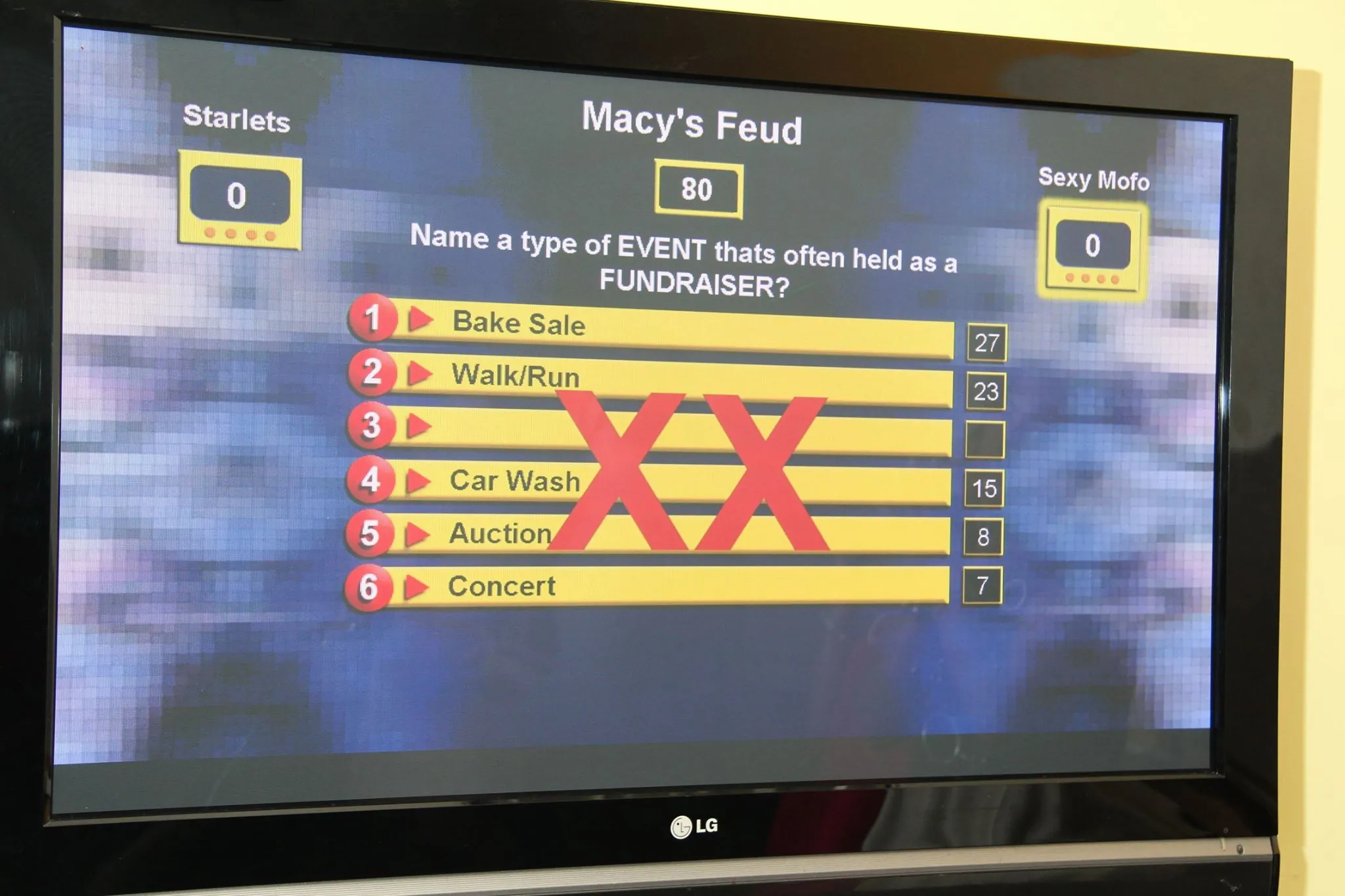

A workplace Family Feud game turns a quiet conference room into a roomful of cheering coworkers in under an hour. Run well, it pulls every department into the same fun. The reason to bother is simple, because Gallup reports that only 20% of employees feel engaged at work. A fast, funny competition is one of the easiest ways to spark real connection.
The social payoff is bigger than the laughs. Pew Research found that most workers value the relationships they build at their jobs, and a shared game gives those relationships a reason to grow. This guide walks you through running the game yourself, step by step, from team splits to Fast Money.
Most first-time hosts run into the same hurdles. You worry about an uneven split, a confusing scoreboard, awkward pauses, and a final round that fizzles. You want a clear script so the game flows without you scrambling. The steps below remove the guesswork so you can host with confidence, even if you have never run a game show before.
Step 1: Set Up the Teams
A clean team split sets the tone for the whole game. Aim for two teams of four to six players each, drawn from different departments so the rivalry crosses normal boundaries.
- Split by mixing groups: Put people who rarely work together on the same team to spark new introductions.
- Name a captain each: The captain steps up for the face-off and speaks for the team when needed.
- Keep teams even: Balance numbers so no side feels outmatched before the first question.
- Seat them facing each other: Two clear sides build energy and make the face-off easy to run.
If your group is large, build a bracket and rotate teams between rounds. Spectators cheer, then rotate in, so no one sits idle for long.
Step 2: Build the Board and Questions
The board is the heart of the game. Each question is a survey-style prompt with a ranked list of answers and points tied to popularity.
- Write office-friendly prompts: Use questions like “Name something people do on their first day at a new job.”
- Rank the answers: List the top six or so responses, with higher points for the most common.
- Build a simple board: A slide deck with hidden answers works well, or a printed board with covers you remove.
- Prepare extra questions: Keep a backlog ready so the game never stalls between rounds.
Keep prompts clean and inclusive. The goal is laughter that everyone shares, not jokes that single anyone out.
Step 3: Run the Face-Off and Main Round
The face-off decides which team controls the question. One player from each team steps to the front and tries to name the top answer.
The player who names the higher-ranked answer wins control. That team then chooses to play the round or pass it to the other side. The controlling team takes turns guessing answers, building points for each correct response revealed on the board.
Scoring at a glance
| Stage | How it works | Points |
|---|---|---|
| Face-off | Top answer named first wins control | Highest revealed answer |
| Main round | Controlling team guesses answers | Sum of revealed answers |
| Steal | Other team guesses after three strikes | All banked points if correct |
Step 4: Handle Strikes and Steals
Strikes give the game its tension. When the controlling team gives an answer that is not on the board, they earn a strike, marked by a loud buzzer and a visible X.
- Three strikes end the turn: After three wrong answers, control passes to the other team.
- The steal is one guess: The opposing team huddles and offers a single answer.
- A correct steal wins the round: If their answer is on the board, they take all the banked points.
- A failed steal: If they miss, the original team keeps the points.
As host, keep the strikes dramatic. A sharp buzzer sound and a big visible X make every wrong answer land with energy.
Step 5: Run Fast Money to Finish
Fast Money is the climax that decides the winner. Two players from the leading team answer five rapid questions against the clock.
- First player: Answers five questions in 20 seconds, then the answers are hidden.
- Second player: Answers the same five questions in 25 seconds, avoiding repeats.
- Tally the points: Combine the survey points from both players.
- Set a target: Reaching the target total, often around 200 points, wins the grand prize.
Fast Money rewards quick thinking and gives the room a thrilling finish. Build the suspense by revealing the final scores one answer at a time.
The Host Script That Keeps It Flowing
A simple script keeps the game tight. Open by welcoming both teams and explaining the rules in two minutes. Call the face-off with energy, announce each revealed answer clearly, and react to strikes with a loud buzzer. Keep banter light and inclusive, name the running score after each round, and build the tension into Fast Money. The host carries the pace, so confidence matters more than a perfect memory of every rule.
The Problems Every Family Feud Host Has to Solve
Even a well-planned game hits predictable obstacles. Naming them early makes them easier to solve.
- Uneven teams: A lopsided split kills the rivalry. Balance numbers and mix departments before you start.
- Scoreboard confusion: A messy board slows everything. Use a clear slide deck or a clean printed board.
- Dead air: Pauses drain energy. Keep extra questions ready and call the action with pace.
- Reluctant players: Some people freeze up front. Use captains and team huddles so no one stands alone.
- Host overload: Running the board, scoring, and banter at once is a lot. A professional host removes that pressure entirely.
When to Hire a Professional Host Instead
Running the game yourself works for a small, casual group. For a big event or a high-stakes celebration, a professional host carries the whole experience for you. It’s PlayTyme Game Shows brings a professional emcee, broadcast-style equipment, buzzers, and a tested format to venues across New Jersey, New York City, and Connecticut. You skip the board building, the scripting, and the scoring, and you play alongside your team.
The hosted version solves every challenge above at once. Teams are balanced on the spot, the board runs on broadcast screens, the pace never drags, and the host keeps every table involved. You get the energy of a real game show without spending your week preparing it.
Ready to hand the microphone to a pro? Contact It’s PlayTyme to book a host, or explore our corporate event game shows built for teams across NJ, NYC, and CT.
How to Decide Between Hosting and Hiring
Start with the size and stakes of your event. For a small, low-pressure team gathering, hosting it yourself with this guide gives you a fun afternoon at no cost. For a large group, a milestone celebration, or a client-facing event, hire a professional host who brings the equipment, the script, and the energy. Weigh how much time you have to prepare, how confident you feel running the room, and how much the night matters. Teams that want the full game show experience with zero preparation consistently choose a hosted booking, because it turns a good idea into a polished event.
Frequently Asked Questions (FAQs)
How do you play Family Feud at work?
Split the group into two even teams from different departments, then run a face-off where the top survey answer wins control. The controlling team guesses ranked answers to bank points, with three wrong answers passing control for a steal. The leading team finishes with Fast Money, a rapid five-question round that decides the winner.
How many people do you need to play?
Two teams of four to six players each works well, so eight to twelve people is ideal. For larger groups, build a bracket and rotate teams between rounds while spectators cheer. The format scales easily as long as you keep team numbers balanced.
How do strikes and steals work?
A strike is given when the controlling team names an answer that is not on the board. After three strikes, control passes to the other team for a single steal guess. If their answer is on the board, they take all the banked points for the round.
What questions work best for an office game?
Use survey-style prompts with clear, ranked answers, such as “Name something people bring to a meeting.” Keep questions clean, inclusive, and easy to laugh about, and prepare a backlog so the game never stalls. Office-themed prompts land well because everyone shares the experience.
Should I hire a professional host?
Hire a host for large events, milestone celebrations, or client-facing occasions where you want polish without preparation. It’s PlayTyme Game Shows brings the emcee, equipment, and format to venues across New Jersey, New York City, and Connecticut. You play alongside your team while the host runs every detail.
If you would rather not host it yourself, we bring the whole production. Game show team building covers the formats and group sizes, and corporate event entertainment has published pricing so you can budget before you call.