
Leadership meetings carry a quiet tension. Senior managers walk in guarded, protective of their time, and skeptical of anything that feels like forced fun. The right icebreaker cuts through that in minutes, which matters because Gallup reports that only 20% of employees feel engaged, and leaders set the tone for everyone below them.
The cost of a flat opener is real. Harvard Business Review notes that poorly designed team activities waste money and goodwill, so an icebreaker for a leadership room has to earn its place. The formats below are facilitated, fast, and built for executives who do not suffer awkward games. They warm the room without insulting anyone’s time.
Anyone who runs leadership meetings knows the obstacles. Executives resist anything that feels childish, the group is often large enough to fracture into side conversations, and a few dominant voices can swallow the room. You need an opener that respects rank, includes the quieter directors, and produces real energy in under fifteen minutes. These leadership icebreakers do exactly that.
What Makes a Leadership Icebreaker Different
An opener for a leadership room follows different rules than one for new hires. Senior people read intent quickly, and they disengage the moment an activity feels like filler. The goal is not to fill time, it is to shift the room from guarded to candid before the real decisions begin. A strong leadership opener also signals respect: it shows you planned the meeting with care rather than improvising. Get these traits right and senior people lean in instead of checking their phones.
- Purpose-driven: it ties to strategy, decisions, or the meeting goal, not random trivia.
- Low embarrassment: no one is asked to dance, sing, or share something deeply personal.
- Time-boxed: ten to fifteen minutes, with a clean stop before the agenda.
- Inclusive of rank: the loudest VP and the quietest director get equal airtime.
Game-Show-Style Icebreakers for Large Leadership Groups
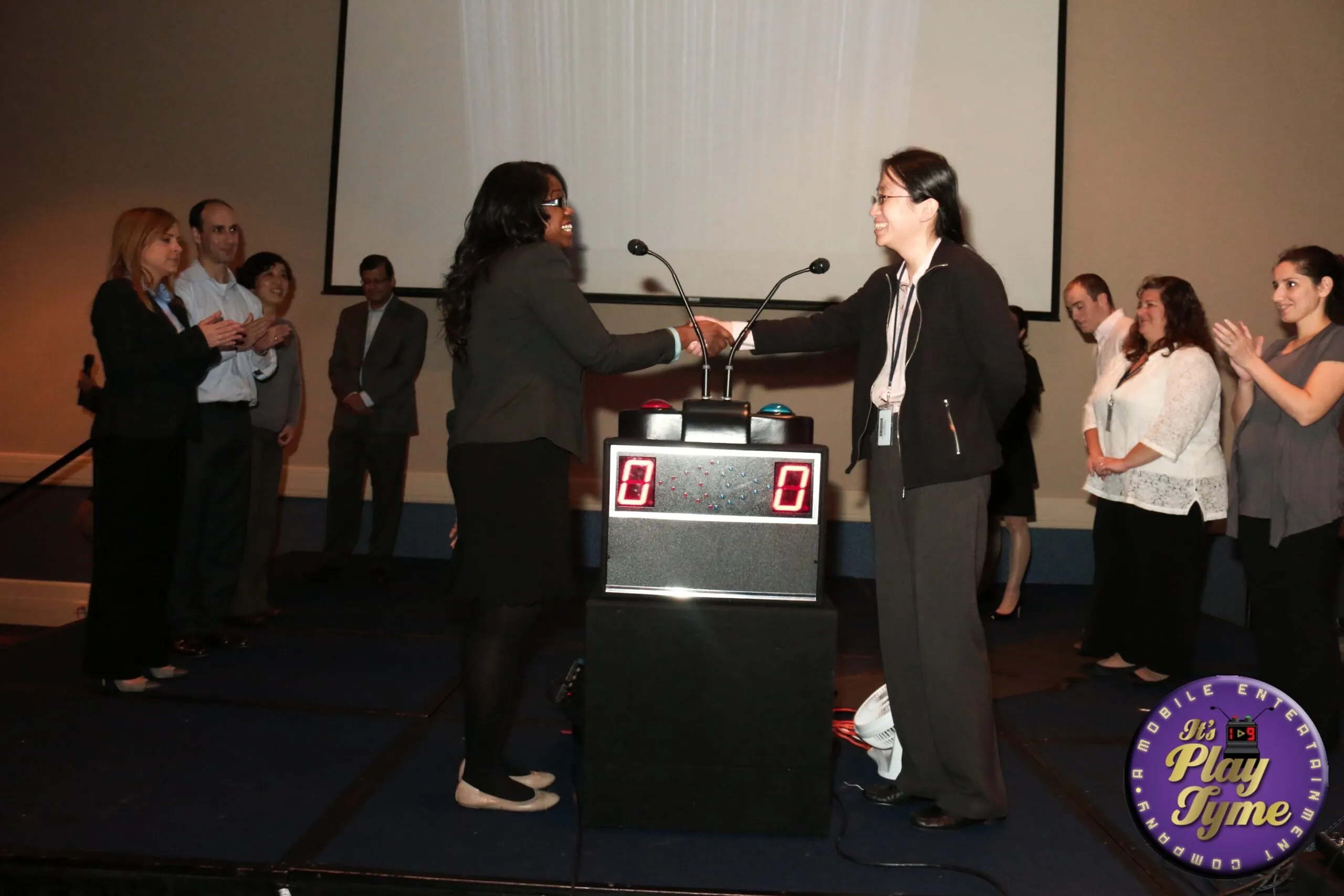
When a leadership offsite gathers 30, 50, or 100 managers, a facilitated game-show format holds the whole room in a way that round-the-table sharing cannot. These run with a host, teams, and a points board.
Leadership Feud
Run a Family Feud format where teams of managers guess the top-ranked answers to leadership-themed questions. Sample: “Name a trait of a great leader” ranks communication, vision, honesty, decisiveness, and empathy. Teams compete, the host keeps score, and cross-department leaders mix on the same side. It scales cleanly to a hundred people.
Strategy Trivia Showdown
A hosted trivia round mixes company history, market facts, and a few light questions about the leadership team. Big screens and buzzers keep energy high, and the competition gives reserved executives a reason to speak up.
Two Truths and a Strategy
Each leader shares two real facts and one fictional plan for the year. Teams vote on the fake. It surfaces priorities and personality at once, and a facilitator keeps it moving so no one rambles.
Quick Discussion Icebreakers for Smaller Leadership Teams
For an executive team of six to fifteen, a sharp prompt does the work without a full game.
- One word check-in: each leader names one word for how the quarter feels, then explains in a single sentence.
- Best decision, worst decision: each person shares one of each from the past month, building candor fast.
- If our company were a competitor: leaders name which rival they admire and why, surfacing strategy views.
- The thirty-second win: each leader shares one team win, spotlighting their people and setting a positive tone.
Icebreakers That Set Up the Agenda
The strongest leadership openers feed directly into the meeting. Use these to warm the room and prime the work at once.
- Headline the quarter: each leader writes a newspaper headline for the next 90 days, framing priorities.
- Stop, start, continue: a one-line round on what the leadership team should stop, start, and continue.
- Rose and thorn: one highlight and one obstacle from each leader, surfacing risks before they hit the agenda.
Why Leadership Icebreakers So Often Fall Flat
Even good intentions stumble in a room full of senior people. Plan around these obstacles.
- Executive skepticism: leaders disengage instantly from anything that feels like a forced game.
- Dominant voices: one or two senior people can monopolize the round and silence the rest.
- Large-group fracture: past 25 people, a casual icebreaker splinters into side chats without a facilitator.
- Rank pressure: junior directors hold back honest answers when the CEO speaks first.
- Time slippage: with strong personalities, a ten-minute opener stretches into thirty without a firm host.
Why Leadership Teams Bring in a Facilitator
For a small executive check-in, a self-run prompt works. For a leadership offsite or a large management gathering, a professional facilitator changes the result. It’s PlayTyme Game Shows brings a polished host, buzzers, and broadcast-style production to leadership events across New Jersey, New York City, and Connecticut, with questions tuned to your company and strategy.
A neutral host solves the rank problem. Executives compete as equals, the facilitator gives every voice airtime, and the format holds a room of a hundred managers as easily as fifteen. Scoring and pacing are handled, so your senior team plays instead of managing the activity. The energy carries straight into the real agenda.
Planning a leadership offsite or management summit? Contact It’s PlayTyme to design a facilitated opener, or explore our corporate event game shows built for teams across NJ, NYC, and CT.
What to Consider When Choosing a Leadership Icebreaker
Start with group size and goal. For a small executive team, a sharp discussion prompt tied to the quarter does the work in ten minutes. For 25 or more managers, a facilitated game-show format holds the room and mixes departments without fracturing. Always pick something purpose-driven, low on embarrassment, and time-boxed with a firm stop. When the stakes or the headcount are high, bring in a host so rank, dominant voices, and timing are managed for you. Choose with intent, and the opener will set the tone for a sharper meeting.
Frequently Asked Questions (FAQs)
What makes a good icebreaker for a leadership meeting?
It ties to the meeting goal, avoids embarrassment, stays under fifteen minutes, and gives every rank equal airtime. Senior leaders engage when an opener feels purposeful rather than childish. Purpose-driven prompts and facilitated game formats work best.
How do I run an icebreaker for a large management group?
Use a facilitated, game-show-style format with teams, a host, and a points board. Round-the-table sharing fractures past 25 people, while a hosted competition holds a room of fifty or a hundred. Teams also mix leaders across departments naturally.
How do I keep dominant executives from taking over?
Use structured formats where everyone answers in turn or on a team, and consider a neutral facilitator to manage airtime. Team-based games spread participation by design. A host can also redirect long talkers without it feeling personal.
How long should a leadership icebreaker last?
Ten to fifteen minutes is ideal for a leadership room. That is long enough to warm the group and short enough to respect senior schedules. Set a firm stop, because strong personalities will otherwise stretch the round.
Should we hire a facilitator for a leadership offsite?
For large offsites and management summits, yes. A professional facilitator handles rank dynamics, dominant voices, timing, and scoring, so your leaders participate instead of managing the activity. For a small executive check-in, a self-run prompt is usually enough.
Why does a poorly run leadership icebreaker cost more than just awkward silence?
Harvard Business Review notes that poorly designed team activities waste both money and goodwill. In a leadership room that goodwill is especially hard to recover, because senior managers enter already guarded and skeptical of anything that feels like forced fun.