
Employee engagement in the United States has dropped to just 31%, the lowest level in a decade according to Gallup. At the same time, SHRM reports that 77% of American workers experience work-related stress, leading to emotional exhaustion, reduced motivation, and lower output. Those numbers make one thing clear: morale boosting activities for employees are no longer a nice-to-have. They are a business priority.
The good news is that raising morale does not require a massive budget or a week-long retreat. A well-chosen mix of daily habits, monthly traditions, and structured events turns disengaged teams into ones that actually look forward to showing up. This guide covers that full spectrum, from five-minute energizers to professionally hosted experiences that reset a team’s energy in a single afternoon.
But most companies struggle to get morale initiatives right. HR teams spend hours planning activities that fall flat because they feel forced, exclude remote staff, or repeat the same tired format quarter after quarter. Managers default to pizza parties when the real issue is that employees feel invisible. And leadership often treats morale as a checkbox instead of an ongoing practice. The result: wasted effort, cynical employees, and a revolving door of talent that costs far more than any team event ever would.
The Hard Parts of Keeping Employee Morale High
Before choosing activities, it helps to understand why morale stays low even when companies try to fix it. These are the most common roadblocks.
One-Size-Fits-All Programming
A trivia night works for some teams. Others find it tedious. When every quarter delivers the same format, participation drops and resentment builds. Effective morale boosting activities for employees rotate formats and match the group’s actual preferences.
No Follow-Through After the Event
A single team outing does not fix months of disengagement. Companies that treat morale as an event rather than a practice see short-lived bumps followed by the same problems. Sustained morale requires layered touchpoints: daily, weekly, and quarterly.
Excluding Remote and Hybrid Workers
If the activity only works for the people in the office, remote employees feel like afterthoughts. That divide actively damages the morale you are trying to build.
Budget Without Strategy
Throwing money at catered lunches or swag bags without connecting the spend to what employees actually want produces expensive indifference. Strategy first, budget second.
Quick Daily Morale Boosters (Under 15 Minutes)
Small, consistent actions compound over time. These take minutes and cost nothing.
- Morning shout-outs: Start the day or the team standup with one specific recognition. Name the person, name what they did, and keep it to 30 seconds.
- Two-question check-ins: “What’s going well?” and “What’s blocking you?” give managers real data and employees a voice.
- Desk drop notes: A handwritten thank-you note left at someone’s workspace carries more weight than a mass email ever will.
- Music breaks: A shared playlist running during the last 15 minutes of the day shifts the office tone without requiring anyone to “participate” in anything.
- Walking meetings: Moving a one-on-one outside reduces stress and often produces better conversation than a conference room.
None of these require approval, a budget line, or a planning committee. They work because they signal that the company notices its people every day, not just at the annual holiday party.
Weekly and Monthly Activities That Build Momentum
Daily habits set the tone. Weekly and monthly rituals sustain it.
Weekly Options
- Lunch roulette: Randomly pair employees from different departments for a 30-minute lunch. Cross-team relationships reduce silos and give people allies outside their immediate group.
- Skill swap sessions: One employee teaches something for 20 minutes (a spreadsheet trick, a design principle, a cooking technique). The subject does not need to be work-related. The format signals that individual knowledge matters.
- Friday wins board: A physical or digital board where anyone posts a win from the week. Reviewing it together takes five minutes and closes the week on a high note.
Monthly Options
- Team challenges: Step-count competitions, departmental cook-offs, or volunteer days give employees a shared goal outside of their KPIs.
- Manager office hours: A standing 30-minute block where anyone on the team drops in with questions, ideas, or concerns. Open-door policies only work when the door is visibly, predictably open.
- Themed appreciation weeks: Rotate themes (wellness week, learning week, gratitude week) and attach small, tangible actions to each day. Structure prevents these from becoming empty gestures.
Structured Events That Transform Workplace Energy
Daily and weekly habits keep morale steady. But a well-run event creates a shared memory that bonds a team in ways incremental activities cannot replicate. The difference between a forgettable team outing and one that employees talk about for months comes down to three factors: professional hosting, full-group participation, and genuine fun.
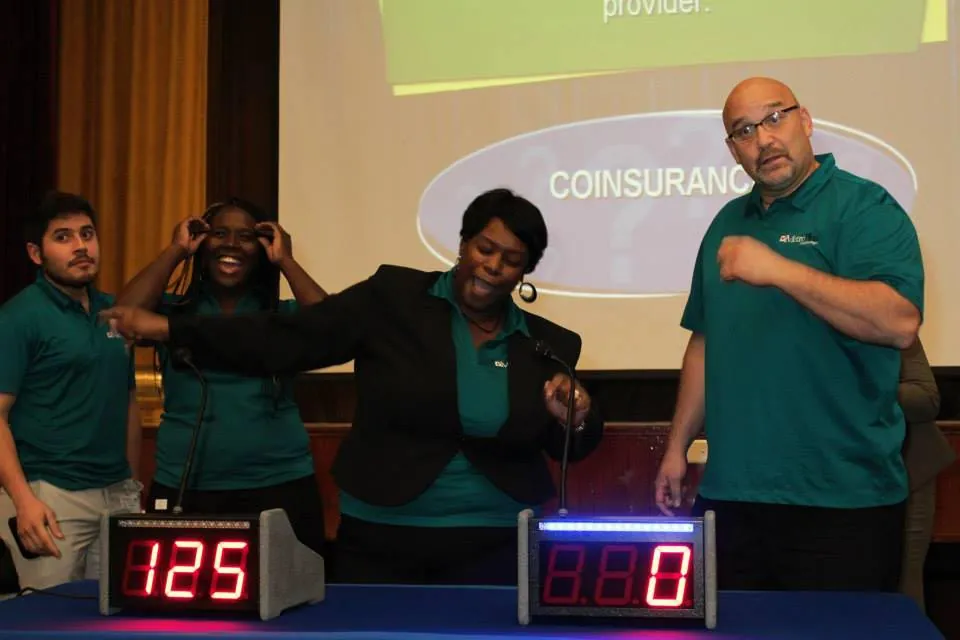
It’s PlayTyme Game Shows specializes in exactly this format. Their professionally hosted live game shows bring the energy of a TV-style competition directly to your workplace, hotel ballroom, or event venue across New Jersey, New York City, and Connecticut. A dedicated host runs the entire experience, so managers participate instead of managing logistics. Groups of 20 to 300+ play together, which means no one sits on the sidelines. And the company’s 100% satisfaction guarantee takes the worry out of booking a large-scale event.
This kind of structured, high-energy experience is the most effective morale boosting activity for employees who have grown tired of passive outings like dinners or lectures. Everyone participates. Everyone competes. Everyone leaves with a story.
How a Live Game Show Raises Morale for Groups of Every Size
Most team activities break down past 20 people. Escape rooms cap at 10. Cooking classes max out at 15. Ropes courses require athletic ability and exclude team members with physical limitations. A live game show scales without losing energy.
- Small teams (10 to 30): Intimate rounds with head-to-head matchups. Every person gets spotlight time.
- Mid-size groups (30 to 100): Team-based competition with table rounds, audience participation, and real-time scoring.
- Large groups (100 to 300+): Full production with sound, lighting, and a professional host driving the room. The format that works for a department meeting works identically for a company-wide summit.
The hosted format also removes the biggest barrier to event-based morale building: the planning burden on HR. It’s PlayTyme handles setup, execution, and teardown. The internal team shows up and plays.
| Activity Type | Group Size | Time Required | Hosted | Participation Level |
|---|---|---|---|---|
| Live Game Show (It’s PlayTyme) | 20 to 300+ | 60 to 120 min | Yes, fully hosted | 100% active |
| Escape Room | 4 to 10 | 60 min | Venue staff | Active (small group only) |
| Cooking Class | 8 to 15 | 90 to 120 min | Instructor-led | Active |
| Happy Hour / Dinner | Any | 90+ min | No | Passive / social |
| Volunteer Day | 10 to 50 | Half day | Org-dependent | Active |
| Trivia (DIY) | 10 to 40 | 45 to 60 min | Self-run | Mixed |
Remote and Hybrid Morale Boosting Activities
Teams with remote members need activities that do not treat virtual participants as spectators watching a screen. Effective remote morale boosters share one trait: equal participation regardless of location.
- Virtual game shows: A hosted game show runs simultaneously for in-room and remote attendees through a single live host. This is one of the few formats where hybrid groups compete on equal footing.
- Online recognition platforms: Tools like Bonusly or Kudos let employees recognize each other asynchronously. The visibility of public praise matters more than the reward attached to it.
- Remote coffee chats: Scheduled 15-minute video calls between randomly paired employees replicate the hallway conversations that remote workers miss.
- Digital wellness challenges: Meditation streaks, hydration tracking, or reading goals with a shared leaderboard create connection without requiring simultaneous availability.
The key is consistency. A quarterly virtual happy hour does not move the needle. A weekly touchpoint does.
Measuring the Impact of Morale Activities
If you invest time and budget in morale boosting activities for employees, measure whether they work. Gut feeling is not a metric.
Leading Indicators
- Participation rates: Track how many employees attend optional events over time. Declining attendance signals format fatigue.
- Pulse survey scores: A three-question monthly pulse survey (“I feel valued,” “I enjoy working with my team,” “I would recommend this workplace”) gives you trend data without survey fatigue.
- Manager check-in sentiment: Note whether one-on-ones shift from complaint-heavy to forward-looking over a quarter.
Lagging Indicators
- Voluntary turnover rate: The most expensive symptom of low morale. Track it monthly, not annually.
- Absenteeism patterns: Rising unplanned absences often precede resignations.
- Internal mobility: High morale teams see more lateral moves and promotions. Low morale teams see exits.
Connect these numbers to your activity calendar. If pulse scores rise in months with structured events and dip in months without them, you have your answer.
A Short Checklist Before You Pick an Activity
Not every team needs the same approach. The right mix depends on four factors.
Team size: Groups under 15 benefit from intimate formats (cooking classes, skill swaps). Groups over 30 need structured, hosted experiences that keep the entire room engaged. For groups over 100, a professionally hosted live game show is one of the few formats that delivers full participation without logistical chaos.
Frequency: Layer your approach. Daily micro-recognition plus a weekly ritual plus one quarterly event creates a morale baseline that survives busy seasons and leadership transitions.
Budget: Start with free daily habits. Invest your event budget in one or two high-impact experiences per year rather than spreading it across a dozen forgettable outings. A single live game show that 200 employees remember beats four pizza lunches that no one recalls.
Team composition: Hybrid and remote teams need activities built for equal participation across locations. In-person teams have more options but still need variety to prevent format fatigue.
If your team is ready for a morale reset that every employee actually enjoys, explore It’s PlayTyme’s corporate event options or reach out directly to plan a live game show for your next team gathering. For more ideas on team building activities that keep energy high between events, start with the daily and weekly habits above and build from there.
Frequently Asked Questions (FAQs)
What are the best morale boosting activities for employees on a tight budget?
Daily recognition habits, walking meetings, skill swap sessions, and Friday wins boards cost nothing and consistently improve morale when practiced weekly. Free activities work best as a baseline layer, with occasional invested events for bigger impact.
Do morale activities work for remote and hybrid teams?
Yes, when the format treats remote participants as equal players rather than spectators. Virtual game shows, asynchronous recognition platforms, and scheduled remote coffee chats all maintain morale across locations. The key is choosing activities designed for hybrid participation from the start.
How do you measure whether morale activities are working?
Track participation rates for optional events, run a monthly three-question pulse survey, and monitor voluntary turnover and absenteeism trends quarterly. Connect these metrics to your activity calendar to identify which formats deliver the strongest results for your specific team.
What morale boosting activities work for large groups over 100 employees?
Professionally hosted live game shows are one of the few formats that scale past 100 without losing participation or energy. A dedicated host runs the room, teams compete in real time, and every employee plays rather than watches. This format works for company-wide summits, annual meetings, and large department gatherings.