Only 20% of employees worldwide report feeling engaged at work, according to Gallup’s 2026 State of the Global Workplace report. The pharmaceutical industry faces an even steeper engagement challenge: complex regulatory requirements, geographically dispersed sales teams, and dense scientific content create conditions where traditional training formats consistently underperform. A TalentLMS survey found that 83% of employees who receive gamified training feel motivated, compared to 61% of those in non-gamified programs who feel bored and unproductive.
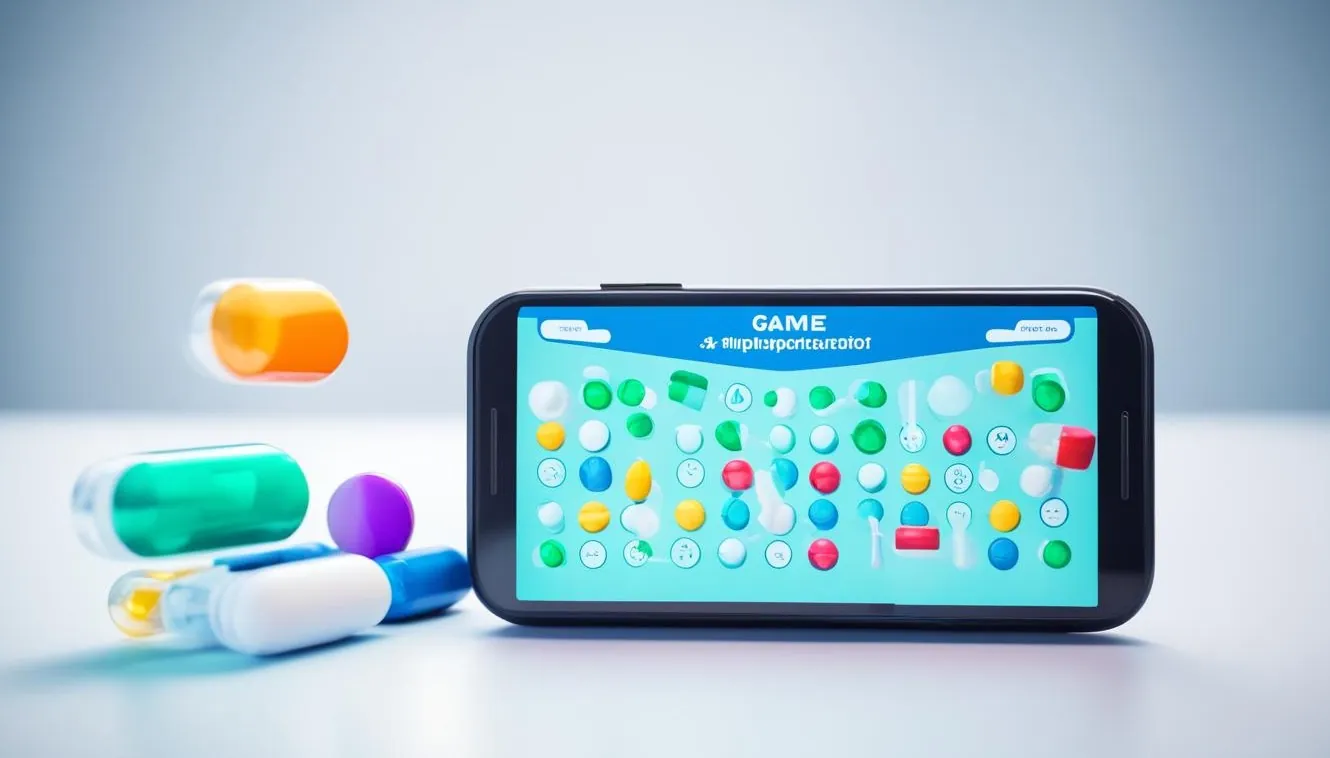
Gamification for pharmaceutical companies closes this engagement gap directly. By embedding competitive, game-based formats into sales meetings, compliance sessions, and product launches, pharma organizations turn passive audiences into active participants who retain more information and return to the field energized.
Still, applying gamification in pharma settings is not as straightforward as adding a quiz to a slide deck. Field representatives sit through hours of product data at annual meetings and need formats that break through information fatigue, not add to it. Compliance training must satisfy regulatory standards while keeping participants alert. And when a national sales force flies in from dozens of territories, the event needs to deliver measurable impact or the entire investment falls flat.
What Gamification Looks Like in Pharmaceutical Settings
Gamification for pharmaceutical companies applies game mechanics (competition, scoring, team-based challenges, instant feedback) to training and event contexts where traditional formats fall short. In pharmaceutical settings, this means replacing lecture-heavy sessions with interactive formats that test product knowledge, reinforce compliance protocols, and reward participation in real time.
The most effective pharma gamification formats include:
- Team trivia competitions built around drug portfolios, therapeutic areas, and market positioning
- Scenario-based challenge rounds that simulate real field situations, from physician objections to formulary access conversations
- Leaderboard tournaments that track individual and regional performance across multiple rounds
- Live game shows modeled on familiar TV formats where teams compete head-to-head with customized pharma content
The format matters as much as the content. A well-designed game show structure gives participants permission to be competitive, vocal, and physically engaged. All of those behaviors accelerate learning and retention.
Where Traditional Pharmaceutical Training Usually Falls Short
Pharmaceutical companies invest heavily in training their sales forces, medical science liaisons, and compliance teams. Yet the returns on those investments often disappoint. The core problems are consistent across the industry.
Information Overload at National Meetings
A typical national sales meeting packs two to three days with product updates, market data, competitive intelligence, and compliance refreshers. Representatives absorb a fraction of this content. Research consistently shows that adults forget up to 70% of new information within 24 hours without active reinforcement.
Passive Compliance Sessions
Regulatory training is mandatory, and it often feels that way. Slide-driven compliance reviews produce checked boxes, not genuine understanding. When field reps encounter gray-area situations months later, passive training fails them.
Disconnected Field Teams
Pharmaceutical sales forces are scattered across territories. Annual or semi-annual meetings represent rare opportunities to build team cohesion and shared purpose. Lecture formats waste that opportunity by keeping participants isolated in their seats.
Difficulty Measuring Real Engagement
Traditional training measures attendance and completion. It rarely measures whether participants actually internalized the material. Without engagement data, training leaders struggle to justify budgets or identify content gaps.
National Sales Meetings That Drive Retention
National sales meetings represent the single largest training investment most pharmaceutical companies make each year. Gamification transforms these events from information dumps into high-retention experiences where every attendee participates.
It’s PlayTyme Game Shows specializes in exactly this transformation. Their interactive game show formats turn product knowledge sessions into team competitions where sales representatives actively recall, discuss, and apply what they’ve learned. Formats like Face-2-Face Feud and The Challenge Trivia Show adapt directly to pharmaceutical content: drug mechanisms, indication data, competitive positioning, and payer details all become game questions that teams race to answer.
The competitive element changes how the brain processes information. When a representative answers a question correctly under time pressure in front of peers, that knowledge sticks. When they answer incorrectly, the correction registers more deeply than it would in a passive lecture. Either outcome keeps the participant fully engaged.
Compliance Training That Holds Attention
Compliance is non-negotiable in pharma. Off-label promotion, adverse event reporting, transparency requirements, and interactions with healthcare professionals all carry regulatory consequences. Gamification for pharmaceutical companies makes compliance training something people participate in rather than endure.
Scenario-based game formats present real-world compliance dilemmas in a competitive context. Teams debate the correct course of action, submit answers, and receive immediate scoring and feedback. This approach tests comprehension rather than memory, forcing participants to apply rules to ambiguous situations rather than simply recite them.
Game show formats also create peer accountability. When a team member gives an incorrect compliance answer in front of colleagues, the group discussion that follows reinforces the correct protocol more effectively than any slide presentation.
Product Launch Events That Build Field Confidence
A product launch is a high-stakes moment for any pharmaceutical company. The sales force needs to leave the launch event ready to articulate the product’s value proposition, handle objections, and differentiate it from competitors. Gamification accelerates this readiness.
Interactive quiz rounds organized around the new product’s clinical data, approved messaging, and competitive positioning force representatives to practice their knowledge before they return to the field. Timed challenges that simulate physician conversations prepare reps for the speed and pressure of real-world selling.
It’s PlayTyme’s corporate event programs include customizable game formats where every question, scenario, and challenge ties directly to the client’s specific launch content. This is not generic team building with pharma branding layered on top. The game content itself becomes the training vehicle.
Field Force Motivation Through Competitive Formats
Pharmaceutical field forces thrive on competition. Sales rankings, quota attainment, and performance metrics already define their daily work. Gamification taps into this existing competitive drive and channels it toward learning objectives.
Leaderboard-based game show formats create visible, real-time competition between regions, districts, or product teams. When the Southeast region faces off against the Northeast in a product knowledge showdown, the energy in the room shifts completely. Representatives who would disengage during a lecture are suddenly strategizing, coaching teammates, and fighting for every point.
This competitive energy also builds the team cohesion that pharmaceutical companies need from their national meetings. Shared victories (and shared losses) create memories and inside references that persist long after the event ends. Those social bonds translate to stronger cross-territory collaboration throughout the year.
Why Live Game Shows Outperform Digital-Only Gamification
Digital gamification platforms (apps, e-learning modules, online quizzes) serve a purpose for ongoing reinforcement. But for high-impact events like national sales meetings and product launches, live game shows deliver results that screens do not match.
Live formats generate physical energy. People stand, cheer, huddle, and high-five. That physical activation improves memory encoding. Digital formats keep people in their chairs staring at individual devices, which replicates the isolation problem of traditional training.
Live game shows also create shared experiences. When 200 sales representatives compete together in a room, the event becomes a story they retell for months. That social reinforcement extends the learning well beyond the event itself. A quiz app notification three weeks later does not carry the same emotional weight.
When evaluating gamification for pharmaceutical companies, consider how much of your budget goes toward events your team will actually remember. Live, facilitated game shows consistently outperform self-directed digital tools on both engagement and recall metrics.
The following table compares common gamification formats for pharmaceutical events:
| Pharma Event Type | Best Format | Group Size | Primary Outcome |
|---|---|---|---|
| National Sales Meeting | Team game show (trivia, feud) | 20 to 300+ | Product knowledge retention |
| Compliance Training | Scenario-based challenge rounds | 20 to 200 | Regulatory understanding |
| Product Launch | Competitive quiz rounds | 30 to 300 | Field confidence and messaging |
| Field Force Motivation | Leaderboard tournaments | 20 to 100 | Performance and morale boost |
| Leadership Retreat | Strategy-based team games | 15 to 50 | Cross-functional alignment |
Matching the Right Gamification Format to Your Team
Selecting the right gamification format depends on three factors: the size of your group, the content you need to reinforce, and the outcomes your leadership expects from the event.
For large national sales meetings (100+ attendees), team-based game shows work best. They keep the entire room engaged simultaneously and create the competitive energy that pharmaceutical sales teams respond to. Formats like PlayPad Mania, where every participant plays from their own device, ensure no one sits on the sidelines.
For smaller compliance or training sessions (20 to 50 people), scenario-based formats with discussion components allow deeper exploration of complex topics. These formats balance competition with collaboration and give facilitators room to address nuanced regulatory questions.
For product launches, choose formats that mirror the selling environment. Timed Q&A rounds, objection-handling challenges, and competitive messaging exercises prepare representatives for the conversations they will have in the field.
The provider you choose matters as much as the format. Look for a partner who customizes every question and scenario to your specific content rather than offering a generic platform with your logo attached. Ask whether they have direct experience with pharmaceutical audiences and whether they understand compliance sensitivities around content and messaging.
It’s PlayTyme Game Shows brings 14+ years of experience running high-energy, fully customized game shows for corporate audiences across New Jersey, New York City, and Connecticut. Their team works directly with pharma event planners to build content that aligns with training objectives, compliance requirements, and brand guidelines. Contact It’s PlayTyme to discuss how gamification fits your next pharmaceutical event, or explore their full range of team building activities to find the right format for your organization.
Frequently Asked Questions (FAQs)
What is gamification for pharmaceutical companies?
Gamification for pharmaceutical companies applies game-based mechanics like competition, scoring, and team challenges to training, sales meetings, and compliance sessions. The goal is to increase engagement, improve knowledge retention, and make mandatory content sessions interactive and effective for field teams.
How does gamification improve pharmaceutical sales training?
Gamification forces active recall rather than passive listening. When sales representatives answer questions under time pressure in a competitive format, they process and retain product information more deeply. The social and emotional elements of team competition further strengthen memory encoding and long-term recall.
Is gamification appropriate for pharmaceutical compliance training?
Yes. Scenario-based game formats test real-world compliance decision-making rather than rote memorization of rules. This approach produces stronger regulatory understanding and gives compliance teams measurable data on where knowledge gaps exist across the organization.
What group sizes work best for pharmaceutical gamification events?
Live game show formats scale from 20 to 300+ participants. Team-based formats like trivia competitions and feud-style shows work well for large national sales meetings. Smaller compliance sessions of 20 to 50 people benefit from scenario-based formats that allow group discussion and deeper content exploration.
How do you measure the ROI of gamification at a pharma event?
Track pre-event and post-event knowledge scores to measure retention gains. Compare engagement metrics (participation rates, response accuracy, session energy) against previous non-gamified events. Follow up 30 to 90 days later with field performance data to connect event engagement to on-the-job results.