Disengaged employees cost the global economy $10 trillion in lost productivity each year, according to Gallup. A significant chunk of that waste happens inside meeting rooms, where large companies lose roughly $100 million annually on unnecessary or unproductive meetings. The problem is not that teams meet too often. The problem is that most meetings fail to involve the people sitting in them.
Gamification changes that equation. By adding game mechanics (scoring, competition, collaboration, and rewards) to your regular meetings, you turn passive attendees into active participants. The results show up fast: higher energy, better retention of information, and teams that actually look forward to gathering.
Still, many managers struggle with where to start. They know their weekly stand-ups feel stale and their quarterly all-hands get tuned out after the first five minutes. They see glazed eyes during status updates and awkward silence when they ask for input. The core challenge is bridging the gap between “we need to meet” and “we want to meet.” That is exactly what gamification solves, and this guide walks you through it step by step.
Step 1: Identify What Makes Your Current Meetings Fall Flat
Before you add any game element, diagnose the specific problems. Gamification works best when it targets a real engagement gap, not when it is layered on top of an already functional meeting.
Common signs your meetings need gamification
- Attendees multitask on laptops or phones during presentations
- The same two or three people dominate every discussion
- Action items from the last meeting went unfinished
- Remote participants stay muted the entire session
- Post-meeting surveys (if they exist) show low satisfaction scores
Run a quick anonymous poll asking your team to rate meetings on a 1—10 scale for usefulness and engagement. That baseline number gives you a target to beat once gamification is in place.
Step 2: Choose the Right Game Mechanics for Your Goals
Not every game mechanic fits every meeting. Match the mechanic to the outcome you need.
Points and scoring
Award points for participation: asking a question, volunteering for an action item, or presenting a status update on time. Track scores on a visible leaderboard (a shared spreadsheet or a whiteboard works). Points create friendly competition and reward the behaviors you want to see more of.
Team-based challenges
Split attendees into small teams and assign a collaborative task: solve a case study, brainstorm ideas for a real project, or complete a quiz on company knowledge. Team challenges build cross-departmental connections and give quieter team members a structured way to contribute.
Timed rounds
Set a visible countdown timer for each agenda segment. When people know they have four minutes to present instead of an open-ended slot, they prepare tighter updates and stay focused. The time pressure itself becomes a game mechanic.
Rewards and recognition
Rewards do not have to be expensive. A rotating trophy, the right to pick the next meeting’s theme, or public shout-outs on a team channel all work. The key is consistency: if you promise a reward, deliver it every time.
Step 3: Build a Gamified Meeting Agenda Template
A gamified meeting still needs structure. The difference is that every segment has an interactive element baked in, not bolted on as an afterthought.
Sample 60-minute gamified meeting
| Time | Segment | Game Element | Purpose |
|---|---|---|---|
| 0-5 min | Icebreaker trivia | Buzzer-style quiz (3 rounds) | Warm up the room, set energy |
| 5-20 min | Status updates | 2-min timer per speaker, points for on-time finish | Keep updates tight |
| 20-35 min | Team challenge | Small-group problem solving, scored by creativity | Collaboration on a real issue |
| 35-50 min | Decision discussion | Live polling on proposals | Democratic input, faster alignment |
| 50-55 min | Leaderboard update | Announce scores, recognize top contributors | Reinforce participation habits |
| 55-60 min | Action item lock-in | Each owner states their item aloud (accountability round) | Clear ownership, follow-through |
Adapt this template to your cadence. Weekly check-ins use a lighter version (trivia opener plus timed updates). Quarterly planning sessions go deeper with extended team challenges.
Step 4: Introduce Game Show Formats for High-Impact Sessions
When you need a bigger energy shift (think quarterly meetings, department kickoffs, or team retreats) a full game show format delivers results that a points spreadsheet simply cannot match. This is where professional facilitation makes the difference.
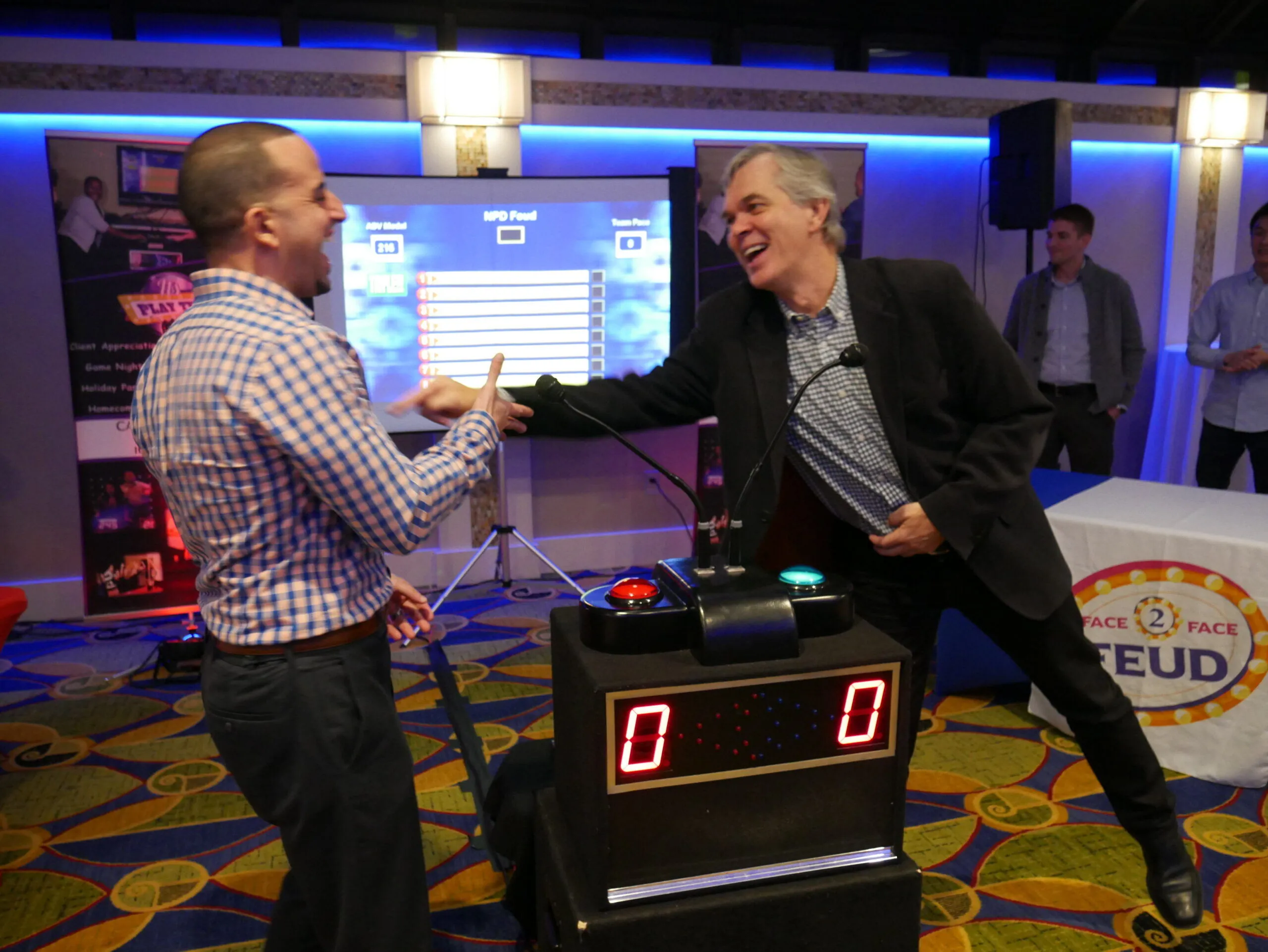
It’s PlayTyme Game Shows specializes in exactly this format. Their team brings professional game show equipment, a live host, and custom content tailored to your company’s goals. Formats include corporate versions of Jeopardy, Family Feud, Wheel of Fortune, and Minute to Win It, all adapted with your company’s own trivia, training content, or team-building prompts.
The difference between a DIY trivia night and a professionally run game show is significant. Professional hosts manage energy, keep score in real time, and handle groups of 20 to 300+ people with the same level of engagement. The production quality (buzzers, sound effects, large-screen visuals) signals to your team that this meeting matters, which raises participation before the first question is even asked.
Step 5: Adapt Gamification for Remote and Hybrid Teams
Remote teams face extra barriers to engagement. Cameras off, muted microphones, and the temptation to check email in another tab all work against you. Gamification fights these forces directly.
Tactics that work virtually
- Live polling tools: Use Slido, Mentimeter, or Kahoot to run real-time quizzes. The competitive element pulls people in, and the anonymity of polling encourages honest input.
- Breakout room challenges: Assign a 5-minute task to small breakout groups, then have each group present their result. Score groups on speed, creativity, or thoroughness.
- Hybrid game shows: On request, It’s PlayTyme can add remote players to a live, in-person show with a hybrid game show format. A live host runs the show through a shared screen while teams compete from their own locations.
- Reaction rewards: Award bonus points to the first person who reacts with an emoji or unmutes to answer a question. Small nudges like these break the “everyone stay muted” habit.
Why Senior Staff Resist Gamified Team Meetings
Gamification is not a magic switch. Implementing it poorly creates new problems instead of solving old ones. Understanding these challenges upfront helps you avoid them.
Resistance from senior staff
Some leaders see games as frivolous. Counter this by framing gamification in business terms: faster decisions, higher participation rates, and better follow-through on action items. Start with a low-stakes pilot (one team, one meeting) and let the results speak.
Over-competition
If the scoring system rewards individual performance too heavily, it breeds rivalry instead of collaboration. Balance individual points with team-based challenges. Make sure the rewards emphasize fun and recognition, not material prizes that create jealousy.
Fatigue and repetition
Running the same trivia format every week gets stale fast. Rotate your game mechanics monthly: trivia one month, team challenges the next, timed debates the month after. Variety keeps the element of surprise alive.
Excluding introverts
Not everyone thrives in a buzzer-speed quiz. Include formats that reward thoughtful responses (written brainstorms scored by quality, not speed) alongside high-energy activities. A good gamified meeting has room for every personality type.
Losing sight of the meeting’s purpose
The game is the vehicle, not the destination. Every game element should connect to a real meeting objective. If a trivia round does not reinforce useful knowledge or a team challenge does not address a genuine business problem, cut it and replace it with something that does.
Step 6: Measure Results and Iterate
Gamification only sticks if you track what is working and adjust what is not. Set up a simple measurement system from day one.
Metrics to track
- Participation rate: How many people actively contributed (spoke, answered a question, submitted a poll response) versus sat silently?
- Action item completion: Are tasks assigned in gamified meetings getting finished at a higher rate than before?
- Meeting satisfaction score: A quick post-meeting rating (1-5, anonymous) tracks the trend over time.
- Energy and morale: Qualitative feedback from managers and team leads about whether the atmosphere has shifted.
Review these numbers monthly. If participation plateaus, introduce a new game mechanic. If satisfaction drops, ask the team what they want changed. Gamification is a living system, not a one-time setup.
Step 7: Scale From One Meeting to a Company-Wide Culture
Once you prove the concept with a single team or meeting type, expand it intentionally.
- Start with your most disengaged meeting (the one people dread) and gamify it for four weeks. Document the before and after.
- Share the results with other department leads. Let early adopters become internal champions.
- For company-wide events (annual kickoffs, holiday parties, sales conferences), bring in a professional game show experience. It’s PlayTyme runs events for groups ranging from small leadership retreats to full-company gatherings of hundreds, with customized trivia and game formats that reinforce your company’s culture and goals.
- Build gamification into your meeting norms: every recurring meeting has at least one interactive element, every quarter includes one full game show event.
Which Gamification Approach Fits Your Team Size
The best approach depends on three factors: your team size, your meeting frequency, and how much energy you want to invest in facilitation.
For small teams meeting weekly, lightweight mechanics (points, timers, rotating icebreakers) keep things fresh without requiring outside help. For larger departments or monthly all-hands meetings, structured team challenges and live polling tools raise the bar. For quarterly events, annual kickoffs, or any session where you need maximum impact, a professional game show format from a company like It’s PlayTyme delivers an experience that no DIY spreadsheet replicates.
The key is to start small, measure the response, and build from there. Gamification is not about turning every meeting into a party. It is about giving people a reason to pay attention, participate, and leave the room feeling like their time was well spent.
Ready to bring a professional game show experience to your next team meeting or corporate event? Get in touch with It’s PlayTyme Game Shows to start planning a session your team will talk about long after the final buzzer.
Frequently Asked Questions (FAQs)
How do you gamify meetings without it feeling forced?
Start with one small element, like a 3-question trivia opener or a timed update round. Let the team experience it naturally before adding more. When the game connects to real work (company knowledge trivia, project-based challenges), it feels purposeful rather than gimmicky.
What are the best game show formats for corporate meetings?
Jeopardy-style trivia, Family Feud, Minute to Win It, and Wheel of Fortune all translate well to corporate settings. Companies like It’s PlayTyme Game Shows customize these formats with company-specific content, professional hosting, and full production equipment for groups of any size.
Does gamification work for remote teams?
Yes. Live polling tools, breakout room challenges, and virtual game shows all drive engagement for remote teams. The competitive and collaborative elements give remote workers a reason to turn on cameras, unmute, and actively participate instead of passively observing.