

Escape rooms earned their popularity for good reason. They put a small team in a locked space, ramp up the pressure, and force collaboration under a ticking clock. But when an event planner tries to scale that experience to 40, 80, or 200 employees, the cracks show fast. The format was built for pods of six to ten, not a full department.
The stakes for getting team building right are real. Gallup’s State of the Global Workplace report found that teams with high engagement show 23% greater profitability than disengaged ones. And according to SHRM research on employee engagement, organizations that invest in structured social and team activities see measurably higher retention and morale scores. Picking the wrong format does not just waste a budget line. It burns trust with the people who showed up expecting something better.
If you have ever booked an escape room for a large group, you already know the recurring frustrations: splitting your team across multiple rooms, half the group standing around waiting for a slot, the loud thinkers solving everything while quieter employees spectate, and an off-site venue that eats two hours in transit before anyone solves a single puzzle. These are structural problems, not a bad booking. The format works brilliantly for a handful of people. It was never designed for a company-wide event.
Challenges of Using Escape Rooms for Corporate Team Building
Before comparing alternatives, it helps to name exactly what goes wrong when escape rooms get pushed past their intended use case.
- Hard group-size cap. Most escape rooms hold 6 to 10 players per room. A group of 50 means five separate rooms running in parallel, which fragments the shared experience into isolated pockets that never reconnect.
- Uneven participation. Puzzle-heavy formats reward the fastest thinkers. Two or three assertive employees tend to dominate each room while quieter colleagues stand behind them and watch. That dynamic reinforces existing silos instead of breaking them.
- Venue logistics. Escape rooms are fixed locations. Your team travels to them, not the other way around. Between commute time, staggered start slots, and waiting for the last group to finish, the actual bonding window shrinks to under an hour.
- Observer exclusion. Anyone with mobility limitations, claustrophobia, or anxiety around timed pressure sits the event out entirely. There is no observer role that still feels like participation.
- One-and-done replayability. Once your team solves a room, that room is finished. Repeat bookings require a completely different venue or theme, which narrows options quickly in smaller markets.
What Makes a Strong Escape Room Alternative?
The right alternative keeps what escape rooms do well (competition, collaboration, time pressure) while removing the structural limits. A strong replacement should scale to the actual headcount without splitting the group, include every participant regardless of physical ability or personality type, arrive at your location so nobody loses an afternoon in transit, and offer enough format variety that you never repeat the same experience twice.
A live hosted game show checks every one of those boxes. It’s PlayTyme Game Shows built its entire model around the problems escape rooms create at scale. The company brings a full TV-style production (buzzer podiums, a professional host, sound and lighting) directly to your office, conference venue, hotel ballroom, or outdoor event space anywhere across New Jersey, New York City, and Connecticut.
Side-by-Side: Escape Rooms vs. Live Game Shows
The differences become clear when you stack the two formats against the factors that actually decide whether a corporate event works.
| Factor | It’s PlayTyme Live Game Show | Corporate Escape Room |
|---|---|---|
| Group Size | 20 to 300+ in one room | 4 to 10 per room (split for more) |
| Setup Location | On-site: we travel to you | Venue-bound: your team travels |
| Participation Rate | 100% (every person plays simultaneously) | Active solvers dominate; observers sit out |
| Hosted Experience | Professional host runs the entire show | Staff-monitored via camera; no live host |
| Replayability | Multiple themes (trivia, Family Feud, Minute to Win It) | One-and-done per room |
| Accessibility | All mobility levels, all personality types | Physical movement required; pressure-sensitive |
Why Group Size Is the Deciding Factor
Escape rooms work beautifully at a single-team scale. A pod of six colleagues solving puzzles together builds genuine trust and communication. The problem is that most corporate events do not involve just six people.
When a company books an escape room for 60 employees, the venue splits them into six to ten separate rooms. Each room has its own experience. Teams never interact with each other. The “company event” becomes a collection of parallel small-group outings that happen to share a parking lot. There is no shared moment, no collective energy, and no story everyone tells on Monday.
A live game show puts the full group in one room at the same time. Teams compete against each other on buzzer podiums while the host keeps energy high across every round. Whether the headcount is 25 or 250, the experience stays unified. Everyone sees the same big moments, reacts together, and walks out with the same stories.
Full Participation vs. Spectator Sidelines
Inclusion is not a soft metric. When half the room disengages during a team building event, the people who sat out remember that feeling longer than the people who played.
Escape rooms create a natural hierarchy inside the room. Employees who think fast, speak loudly, or have done escape rooms before tend to take over. That leaves analytical thinkers, introverts, and first-timers watching from two feet away. The format does not offer a meaningful way to pull them back in.
It’s PlayTyme’s game show format eliminates that dynamic. Every participant holds a buzzer or plays on a team that rotates through rounds. The professional host reads the room in real time, calls on quieter tables, adjusts difficulty, and keeps the competition balanced. Nobody fades into the background because the format does not allow it.
On-Site Production vs. Off-Site Travel
The logistics gap between these two formats is larger than most planners realize until event day.
An escape room requires your entire team to travel to one fixed location. For companies in northern New Jersey or Manhattan, that means coordinating parking, transit, arrival windows, and staggered start times across multiple rooms. The actual bonding time shrinks dramatically once you subtract the commute, the waiting, and the debrief that happens in a lobby.
It’s PlayTyme brings the full production to wherever your team already is. The crew arrives early, sets up buzzer podiums, sound equipment, screens, and lighting in your conference room, hotel ballroom, outdoor tent, or office cafeteria. Your employees walk down the hall and the show is ready. No buses, no carpools, no lost afternoon.
Replayability and Format Variety
Escape rooms have a built-in ceiling: once a team solves a room, that room is done. Booking a second event means finding a completely different venue or waiting for new rooms to open. In smaller markets across New Jersey and Connecticut, options thin out fast.
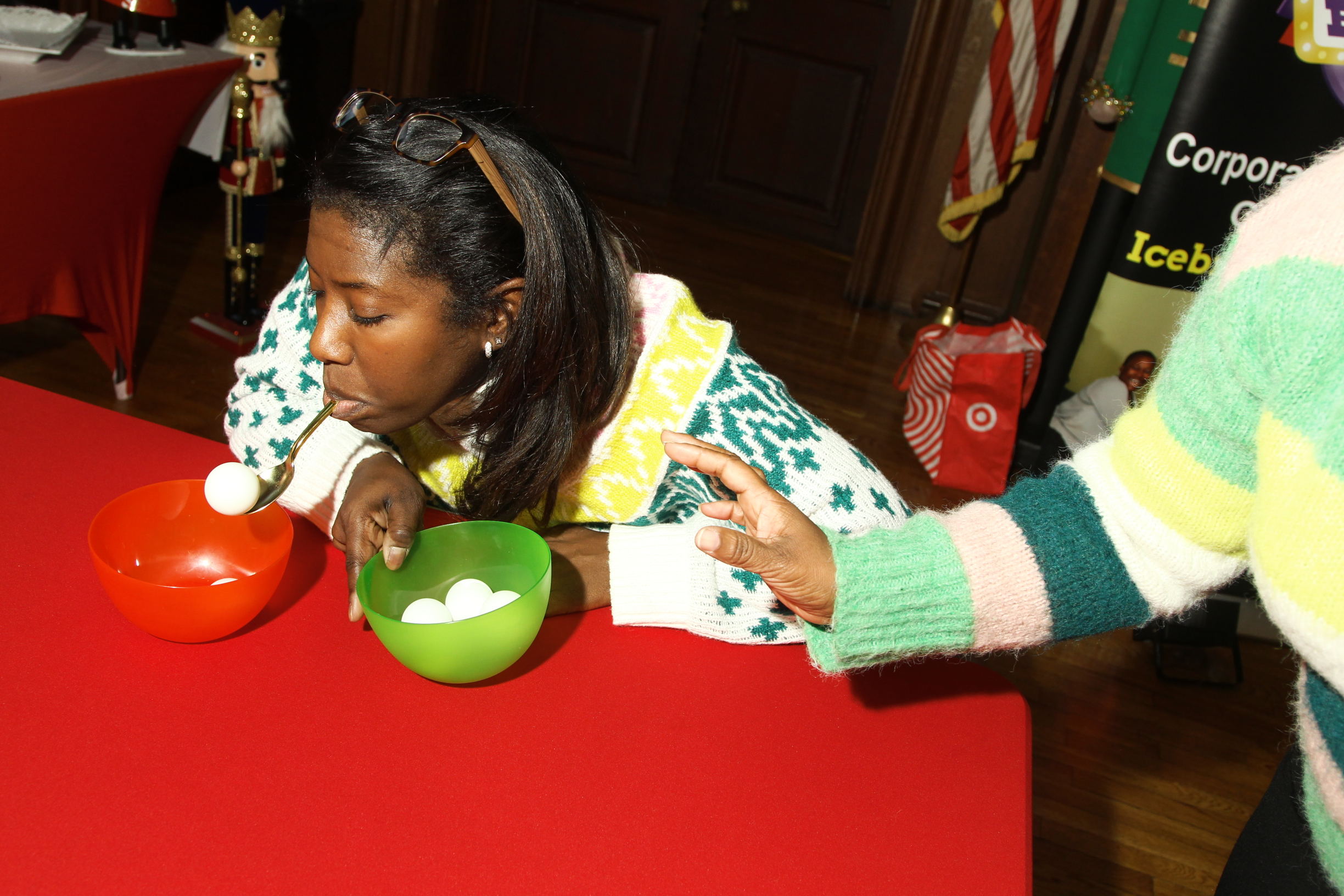
A live game show sidesteps this entirely. It’s PlayTyme offers multiple show formats (trivia face-offs, Family Feud-style survey rounds, Minute to Win It physical challenges, music and pop culture rounds) that rotate across events. A company that books quarterly never repeats the same show. The host customizes questions to the company’s industry, inside jokes, and team dynamics, so each event feels built for the room.
When an Escape Room Is Still the Right Call
Escape rooms deserve credit for what they do well. If your group is a single team of 6 to 10 people who want deep, focused, puzzle-driven collaboration, an escape room delivers an intensity that other formats do not replicate. The locked-room pressure forces fast communication and shared problem-solving in a way that feels genuinely earned when the team cracks the final code.
The format also works for leadership retreats where a small executive team wants a bonding challenge outside the office. In those situations, the tight group size is a feature, not a limitation.
The disconnect happens when planners try to stretch that small-team format across a company-wide event. That is where an escape room alternative built for scale becomes the better investment.
What Sets It’s PlayTyme Apart as the Top Alternative
Several companies offer game show-style entertainment. It’s PlayTyme separates itself on three concrete points.
- more than a decade of production experience. Founder Lisa Lawrence and the PlayTyme crew have hosted thousands of events across NJ, NYC, and CT. That depth of experience means the host reads rooms accurately and adjusts on the fly.
- Full production setup, not a trivia app. Buzzer podiums, professional sound, screens, and stage lighting arrive with the crew. The experience looks and feels like a real TV game show, not a laptop plugged into a projector.
- No deposit to hold your date. It’s PlayTyme reserves your date when you agree on it, and the host running your event is named in your agreement.
- 100% satisfaction guarantee. Backed by a 5-star Google rating and 14+ years of getting rooms to engage.
The company serves corporate clients, schools, and organizations across New Jersey, New York City, and Connecticut with game shows designed for corporate events, holiday parties, conferences, and team building days.
How to Choose the Right Format for Your Next Team Building Event
Start with two numbers: your headcount and your available time window. If you have fewer than 10 people and a full afternoon to travel off-site, an escape room is a strong, focused option. If your group is larger than 15, if travel logistics are tight, or if full participation matters, a live game show is the format built for exactly that scenario.
Ask yourself three questions before booking. First, will every employee participate actively, or will some watch from the side? Second, does the format come to your venue, or does your team lose time getting there? Third, who is running the room on the day? The answers point clearly toward a format that scales, travels, includes everyone, puts a professional host in charge, and stands behind the experience with a 100% satisfaction guarantee.
Ready to see how a live game show works for your team? Tell us about your event and the PlayTyme crew will build a show matched to your group size, goals, and venue. Explore team building activities in New Jersey to see the full lineup.
Frequently Asked Questions (FAQs)
What is the best escape room alternative for large corporate groups?
A live hosted game show is the strongest alternative for groups over 15 people. It keeps the competition and teamwork of an escape room while scaling to 200+ participants in a single room, with every person playing simultaneously instead of splitting into small pods.
How many people fit in an escape room vs. a game show?
Most escape rooms hold 6 to 10 players per room. Larger groups require multiple rooms running in parallel, which fragments the shared experience. A live game show runs 20 to 300+ people together in one space with a single host driving the energy for the entire group.
Is a live game show more cost-effective than booking multiple escape rooms?
For groups over 20, the per-person cost of a single game show production is typically lower than booking four to six separate escape rooms. The game show also eliminates travel expenses, and lost work time in transit, there is no deposit required to hold your date, and every event is backed by a 100% satisfaction guarantee.