
Booking the venue and picking the catering menu is the easy part. Add alcohol and the stakes change: Connecticut’s dram shop statute exposes a seller to $250,000 in damages per injured person and starts a 120-day written notice clock, while New Jersey and New York run on rules that look nothing alike. You want a room full of people laughing and connecting. Getting there means managing employer social host liability on purpose.
The National Highway Traffic Safety Administration describes responsible beverage service as server training combined with management policies that discourage excess drinking and impaired driving. NHTSA files those programs under countermeasures that still need further evaluation. Treat them as prudent practice, not a guarantee, and build the rest of your plan around the law in your state.
This guide is general information, not legal or tax advice. Confirm every detail with your own legal counsel or tax adviser before you finalize event logistics.
| Approach or Jurisdiction | Who Can Be Liable | Key Statute |
|---|---|---|
| It’s PlayTyme Game Shows (activity-led party plan) | Licensed venue or caterer holds the primary service duty | Best practice, not a statute |
| New Jersey | Licensed server; adult social host in narrow cases | N.J.S.A. 2A:22A and 2A:15-5.5 |
| New York | Anyone who unlawfully sells alcohol or assists in procuring it | GOL 11-101 (Dram Shop Act) |
| Connecticut | Seller who serves a person who is already intoxicated | C.G.S. 30-102 |
Cut Employer Social Host Liability by Hiring a Licensed Bartender
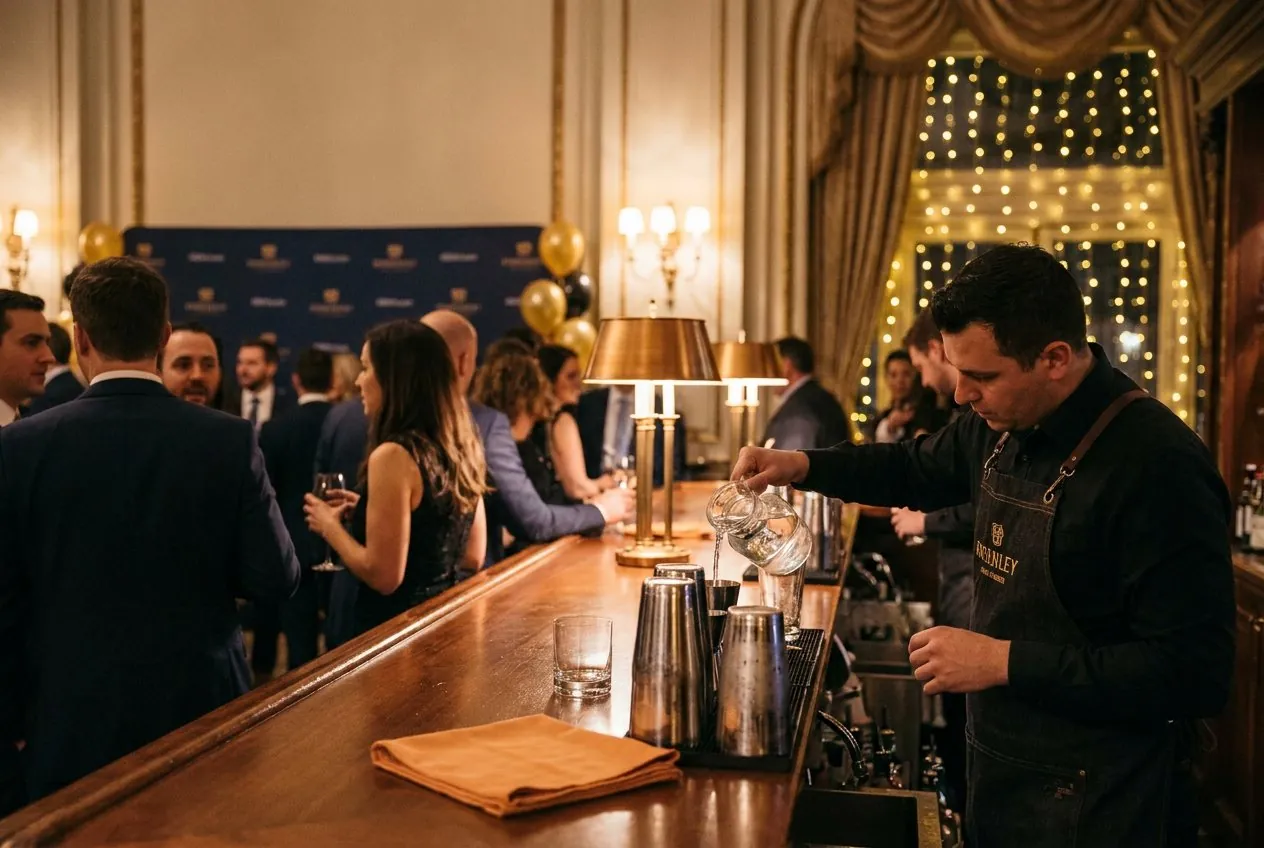
The fastest way to cut liability at a company party is to hand alcohol service to a licensed professional. A licensed caterer or an established venue carries the primary duty of responsible service, and they are staffed for it.
New Jersey’s Licensed Alcoholic Beverage Server Fair Liability Act (N.J.S.A. 2A:22A) governs licensed servers, including caterers, bars, and venues. Under that law, a licensed server is negligent only when it serves a visibly intoxicated patron or a minor it knew or should have known was underage.
Trained bartenders check IDs, measure pours, and stop serving guests who have had enough. That puts a professional between your company and the fallout from overservice. It also takes your HR team out of the role of bar monitor.
The 13-Point Company Holiday Party Liability Checklist
Work through this list before you send a single invitation.
- Hire a licensed bartender. Employees should never mix their own drinks. Trained staff pour standard measures and cut off anyone who is visibly intoxicated.
- Kill the self-serve bar. Coolers of beer and open wine bottles invite overconsumption, and nobody can track who drank what.
- Use drink tickets or a short bar window. Two tickets per person sets a clear boundary. Closing the bar after the first hour moves the night toward dinner and the activity.
- Serve real food. Heavy appetizers and a full dinner slow alcohol absorption. Put the food out the minute guests walk in.
- Make the non-alcoholic options good. Stock real mocktails, craft sodas, and sparkling water. Designated drivers and non-drinkers get the same quality experience as everyone else.
- Stop service early. Close the bar a full hour before the party ends, then bring out coffee and dessert.
- Check IDs on every guest under 21. If interns or young hires are on the list, ID checks are mandatory. New York GOL 11-100 and Connecticut C.G.S. 30-89a both penalize furnishing alcohol to minors or letting them possess it on property you control.
- Run a safe ride voucher program. Pre-purchase Uber or Lyft credits and hand the codes out at check-in. A paid ride home removes the reason to drive.
- Put voluntary attendance in writing. State on the invitation that attendance is voluntary, and keep the holiday party off the work-requirement list. That one line changes your workers’ compensation picture.
- Secure host liquor liability insurance 30 days out. Confirm in writing that your general liability and workers’ compensation coverage reaches off-site social events where alcohol is served, and ask your broker specifically about host liquor liability, the coverage that answers a claim from a guest who drank at your event.
- Collect a certificate of insurance from every vendor. Ask the venue, the caterer, and the entertainment vendor for a COI naming your company as an additional insured, and read the indemnification clause before you sign. A contract with no indemnification language leaves your company holding the claim.
- Name a sober host. Assign one manager or HR leader to stay completely sober. That person watches the room, handles the venue, and arranges a ride when a guest needs one.
- Give the night a focus other than the bar. Idle crowds drink more. A structured, interactive activity holds attention and gets people competing instead of refilling.
State Laws: New Jersey, New York, and Connecticut
Liability depends on where you host. All three states treat a licensed seller differently from a private social host.
Under the New Jersey Social Host Liability Act (N.J.S.A. 2A:15-5.5 to 2A:15-5.8), the civil remedy against an adult social host is narrow and exclusive. The host faces liability only for willfully and knowingly serving a visibly intoxicated adult in their presence, or serving in reckless disregard of the consequences, when that person then causes a car accident.
New York draws no bright line for a private host who serves an adult, so those claims turn on ordinary negligence. The New York Dram Shop Act (General Obligations Law 11-101) gives anyone injured by an intoxicated person a claim against whoever unlawfully sold the alcohol or unlawfully assisted in procuring it. Dram shop act employer liability therefore follows the pour, not the invoice, which is why who serves matters more than who pays. Alcoholic Beverage Control Law 65 separately bars selling, delivering, or giving alcohol to anyone under 21 or to any visibly intoxicated person.
In Connecticut, C.G.S. 30-102 makes a seller liable for injuries caused by a person it served while intoxicated, subject to the $250,000 per-person cap above. The statute requires written notice within 120 days and suit within one year. Connecticut also treats recklessly permitting minors to possess alcohol on property you control as a misdemeanor.
Workers’ Compensation and Voluntary Attendance
The wording on your invitation drives your workers’ compensation exposure. If an employee goes down on the dance floor, the question becomes whether the party was part of the job.
New Jersey statute (N.J.S.A. 34:15-7) excludes injuries from recreational or social activities unless the activity is a regular incident of employment and produces a benefit to the employer beyond improved health and morale. A mandatory party stacked with business announcements and corporate awards reads very differently from a voluntary celebration.
New York Workers’ Compensation Law 10 excludes voluntary off-duty athletic activities unless the employer requires, sponsors, or pays for them. New York has no parallel rule written specifically for holiday parties, so ask your carrier how it handles employer-sponsored events.
The tax side is friendlier. Under IRC 274(e)(4), a holiday party held primarily for employees is an exception to the 50 percent limit on meal deductions. Your tax adviser can confirm how that exception applies to your event.
Make the Party About Something Other Than the Bar
At It’s PlayTyme Game Shows, we have used live game shows as the vehicle for connection since 2012. Attendance is not the measure of a good event. Participation is.
Give the room a real centerpiece and the bar stops being the main event. Our company holiday party entertainment takes the planning off your desk. Shows run 60 or 90 minutes for groups of 20 to 300+, and whether you pick Face 2 Face Feud or a custom trivia format, a professional host gets everyone playing and the whole room laughing together. For format inspiration, start with these office holiday party ideas.
We work with corporate and education clients across New Jersey, New York City, New York State, and Connecticut, with packages starting at $2,995. No deposit is required, and your date is reserved once the signed performance agreement is returned. No activity satisfies a legal requirement, but an engaged room makes responsible event management far simpler.
What Usually Goes Wrong at Company Holiday Parties
The same problems tend to surface every December. Plan for them now and you avoid the Monday cleanup.
- Morale pulls against risk management. You want employees to feel celebrated, and an unchecked open bar turns that into behavioral issues HR has to sort out the next week.
- Alcohol loosens behavior and HR inherits the conduct complaints. A party where drinking is the main activity raises the odds of inappropriate comments and unwanted advances, and those investigations land on your desk days later.
- One room, four generations. A company party mixes 22-year-old new hires with executives in their sixties. Finding entertainment that lands with every age group is hard.
- Remote and hybrid staff feel the room least. Employees who rarely come into the office walk into established cliques, and a mingling format built around the bar leaves them standing at the edge of it.
- The post-dinner lull. Energy drops the moment dessert clears. With nothing structured to follow, guests either leave early or drift back to the bar out of boredom.
- The committee ends up policing the room. When your planners double as security, they never get to enjoy the event they spent months building.
Lock Your Holiday Party Risk Management Policy Before Invitations Go Out
Review the venue contract, the catering plan, and the entertainment schedule together, not one at a time. Ask your committee one blunt question: is alcohol the entertainment?
Then decide three things and write them down. Who holds the license and the liability for overservice. What your coverage limits actually reach, confirmed by your broker rather than assumed. Which structured activity carries the room after dessert. Set the activity first, because the timeline follows the activity, not the other way around.
Ready to build a holiday event your team remembers for the right reasons? Contact It’s PlayTyme Game Shows to talk through your date and get a custom quote.
Related reading
Frequently Asked Questions (FAQs)
Can a company be held liable if an employee drinks too much at a holiday party?
It can. Depending on the state and the facts, an employer may face liability for furnishing alcohol to a visibly intoxicated person or a minor who then injures someone or damages property. Shifting service to a licensed venue or caterer moves the primary duty to a trained professional.
Do we need host liquor liability insurance for a company holiday party?
Ask your broker before you sign the venue contract. Host liquor liability is the coverage that responds when a guest claims harm from alcohol served at an event your company hosted without holding a liquor license. Pair it with a certificate of insurance from the venue and caterer naming your company as an additional insured.
Does hosting a party at a restaurant remove all employer liability?
No. A licensed restaurant takes on the primary dram shop duty through its trained bartenders. You still owe your staff a duty of care, so arrange safe transportation and step in when an employee is visibly impaired.
Should we make our office holiday party mandatory?
Mandatory attendance can change how the event is treated. In New Jersey, a social event that is a regular incident of employment and benefits the employer beyond morale can bring injuries under workers’ compensation, and other states differ. Stating in writing that attendance is voluntary, and checking with your carrier, keeps the picture clear.
How do we engage employees at a holiday party without relying on an open bar?
Build the timeline around an interactive group activity instead of passive drinking. A live, professionally hosted game show gets people out of their seats, sparks friendly competition, and gives the room a focal point that needs no alcohol to work.
Do you require a deposit to book holiday party entertainment?
No deposit is required. Your date is reserved once the signed performance agreement is returned, and the host running your event is named in that agreement.