Teams that communicate well outperform their peers by 25%, according to a study published by Harvard Business Review on high-performing group dynamics. Meanwhile, Gallup research shows that only 33% of U.S. employees feel engaged at work, a figure that drops further when collaboration breaks down between departments.
The gap between “we work together” and “we actually function as a team” is wider than most managers realize. Exercises designed to sharpen teamwork close that gap faster than passive icebreakers or trust falls ever will. The word “exercises” matters here: it signals structure, repetition, and measurable improvement, not just a fun afternoon.
Most workplaces struggle with the same friction. Cross-functional teams speak different professional languages. Remote and hybrid schedules erode the informal communication that once happened naturally. New hires feel disconnected from veteran staff. And when deadlines tighten, people retreat into silos instead of reaching out. These are the real barriers to teamwork, and a single team lunch does nothing to fix them.
Quick Answer
- Teams that communicate well outperform peers by 25 percent, per Harvard Business Review research on group dynamics.
- Only 33 percent of U.S. employees feel engaged, and that number drops further when departments stop collaborating.
- Structured exercises close the gap between working together and actually functioning as a team faster than icebreakers.
- Cross-functional teams, remote workers, and new hires benefit most from deliberate practice with structure.
- Exercises signal repetition and measurable improvement, not just a fun afternoon away from desks.
Why Most Team Building Produces Zero Behavioral Change
Before exploring which exercises actually work, it helps to understand why so many team building efforts fail. The biggest challenge is low transfer: an activity that feels fun in the moment but produces zero behavioral change back at the office. Employees enjoy the outing, forget it by Wednesday, and return to the same communication habits.
A second challenge is uneven participation. Quiet team members sit back while the loudest voices dominate. The exercise reinforces the existing hierarchy instead of disrupting it. A third challenge is the “forced fun” problem. When employees feel coerced into participating, engagement drops and cynicism rises. The exercise needs to create genuine stakes, not manufactured enthusiasm.
Finally, there is the measurement gap. Managers invest time and budget without any framework for evaluating whether the activity improved anything. Without clear before-and-after indicators, team building becomes a line item nobody questions and nobody defends.
The Psychology Behind Competitive Team Building Exercises
Competitive formats solve several of these problems at once. Behavioral science explains why. When a team competes together, three psychological mechanisms activate simultaneously.
Public Accountability
In a competitive exercise, every participant’s contribution is visible. There is no place to hide. When your answer, decision, or response directly affects the team’s score, you pay closer attention, contribute more actively, and listen harder to teammates. This mirrors real workplace dynamics where project outcomes depend on individual follow-through. The difference is that an exercise compresses this accountability into minutes instead of weeks, making the feedback loop immediate.
Shared Wins and Losses
Winning together generates a dopamine response tied to group identity. Losing together, when handled correctly, builds solidarity and reveals how a team processes setback. Both outcomes are instructive. A team that learns to debrief a loss without finger-pointing develops the exact resilience it needs during a difficult product launch or a missed quarterly target.
Fast Feedback Loops
Traditional work projects take weeks or months before outcomes are visible. A well-designed competitive exercise delivers results in real time: correct answer, wrong answer, ahead, behind. This compressed timeline forces teams to adjust their communication strategies on the fly. They learn to speak concisely, delegate decisions, and trust each other’s expertise within a single session.
5 Purposeful Team Building Exercises That Drive Real Results
Each of these exercises is structured around the competitive psychology described above. They are not casual games. They are formats designed to surface communication patterns and strengthen them.
1. Live Game Show Competitions
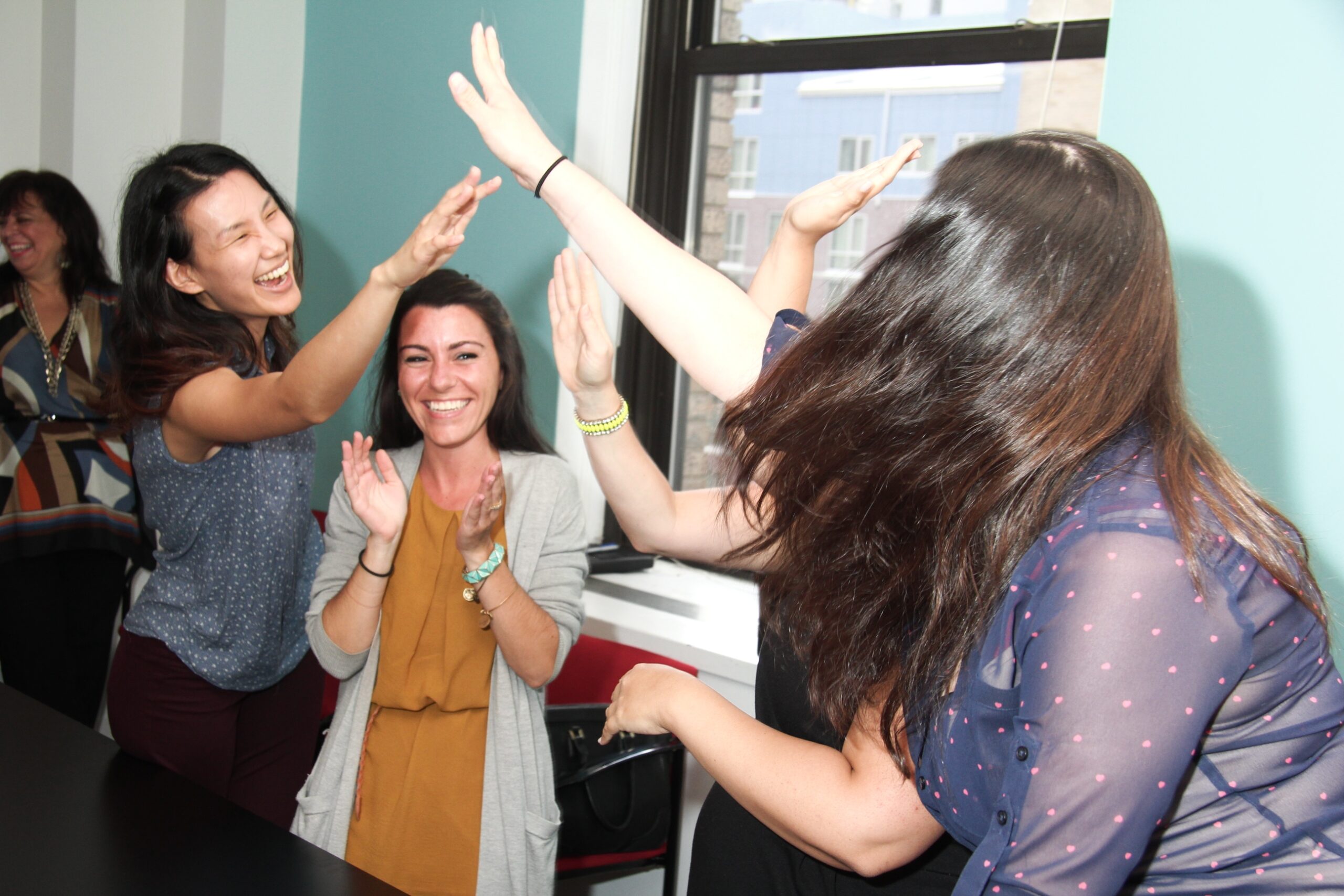
It’s PlayTyme Game Shows runs professionally hosted competitive game shows for corporate teams across New Jersey, New York City, and Connecticut. Teams compete through trivia rounds, physical challenges, and strategic puzzles that require constant communication under time pressure. The format forces quiet team members into active roles because every round demands different skills. A trivia question rewards the subject-matter expert. A physical relay rewards coordination. A puzzle round rewards the person who listens best. The rotating demands create a level playing field that cubicle hierarchies never allow.
2. Timed Problem-Solving Relays
Split the team into small groups and present a series of escalating challenges, each with a strict time limit. The first challenge is easy enough that any individual could solve it. The second requires two people coordinating. The third requires the full group. The escalating difficulty teaches teams to recognize when a task exceeds one person’s capacity and to ask for help without hesitation.
3. Competitive Trivia With Role Rotation
Standard trivia rewards the person who knows the most. Role-rotated trivia assigns a different team captain each round. The captain decides which teammate answers, manages the clock, and makes the final call on disputed answers. Rotating leadership exposes every team member to decision-making pressure and teaches the group to follow different leadership styles.
4. Strategy-Based Board Game Tournaments
Large-format board games or tabletop strategy challenges place teams in scenarios that require resource allocation, negotiation, and long-term planning. Unlike trivia, these exercises reward patience and consensus-building. Teams that rush lose. Teams that listen to every member’s input find better paths. The format directly mirrors project planning meetings where the best idea often comes from the quietest person in the room.
5. Head-to-Head Physical Challenges
Physical relay races, obstacle courses, or minute-to-win-it style challenges add a kinetic dimension that purely cerebral exercises miss. Physical activity lowers social barriers, generates laughter, and creates shared memories faster than any seated activity. The competitive element ensures that teams organize themselves efficiently: who runs, who directs, who strategizes. These roles often differ from workplace titles, revealing leadership qualities that managers would otherwise overlook.
| Exercise | Primary Skill Developed | Group Size | Time Required | Energy Level |
|---|---|---|---|---|
| Live Game Show Competition | Communication under pressure | 20-300+ | 60-90 min | High |
| Timed Problem-Solving Relay | Delegation & asking for help | 8-40 | 30-45 min | Medium |
| Competitive Trivia (Role Rotation) | Adaptive leadership | 10-60 | 45-60 min | Medium |
| Strategy Board Game Tournament | Consensus & resource planning | 8-30 | 60-90 min | Low |
| Head-to-Head Physical Challenges | Trust & role flexibility | 10-100+ | 30-60 min | High |
What Changes After: Concrete Teamwork Outcomes
The real test of any team building exercise is what happens Monday morning. Here are the specific, observable changes that well-run competitive exercises produce.
Communication Speed Increases
Teams that have practiced making fast decisions under competitive pressure bring that speed back to the office. Meetings get shorter because people state their positions directly instead of circling around them. Email chains shrink because team members pick up the phone or walk over to resolve questions in real time.
Conflict Becomes Productive
After experiencing healthy disagreement during a competitive exercise (and seeing that the team survived it), employees become more willing to challenge ideas without making it personal. The exercise teaches the difference between attacking a strategy and attacking a person. That distinction transforms meeting dynamics.
New Leaders Emerge
When exercises rotate roles and demand different skills each round, people who are invisible in the office hierarchy suddenly stand out. A quiet data analyst turns out to be the best strategist under pressure. A junior hire shows a gift for rallying a struggling team. Managers who pay attention during these exercises gain actionable intelligence about their team’s untapped strengths.
Trust Deepens Across Departments
Cross-functional teams that compete together develop a shared reference point: “Remember when we came from behind in that last round?” That shared story creates a bond that doesn’t exist when people only interact through Slack messages and status update meetings. Trust built under mild pressure transfers directly to workplace collaboration.
Accountability Becomes the Norm
In a competitive format, dropping the ball costs the team points. That experience makes people more conscious of follow-through in their regular work. When everyone on the team has felt the sting of letting the group down (and the satisfaction of contributing to a win), personal accountability becomes an internalized value rather than a management talking point.
How to Match the Right Exercise to Your Team’s Needs
Choosing an exercise is not about picking the most entertaining option. It is about diagnosing the specific teamwork gap and selecting the format that targets it.
If your team struggles with cross-department communication, choose a large-group competitive format like a live game show that mixes people from different teams and forces interaction with unfamiliar colleagues. If the problem is passive participation in meetings, role-rotation trivia exposes every team member to leadership and eliminates the option of staying silent. If your team needs better strategic thinking and patience, a board game tournament rewards deliberation over speed.
For teams that are physically co-located and need to break down social barriers quickly, head-to-head physical challenges create instant camaraderie. For hybrid or newly formed teams that need a structured re-introduction, a professionally facilitated game show provides the framework, energy, and pacing that a DIY approach struggles to match.
The most effective approach combines two or three exercise types across a quarter, rather than relying on a single annual event. Teamwork is a skill. Like any skill, it improves with regular, varied practice.
Ready to give your team purposeful, competitive exercises that produce measurable results? Contact It’s PlayTyme Game Shows to book a professionally hosted corporate game show event in New Jersey, New York City, or Connecticut. Your team will walk away with stronger communication, clearer roles, and a shared experience that sticks.
Frequently Asked Questions (FAQs)
How often should teams do team building exercises?
Quarterly sessions produce the best results because they give teams enough time to apply what they learned before reinforcing it with a new exercise. Annual events are better than nothing, but the behavioral changes fade within weeks without follow-up. Two to four sessions per year keeps communication skills sharp.
Do competitive exercises work for teams that are not naturally competitive?
Yes. Well-designed competitive exercises scale the intensity to the group. The goal is not to crown a winner but to create stakes that make participation meaningful. Even low-energy formats like strategy board games include a competitive element that keeps people focused without overwhelming anyone who dislikes high-pressure environments.
What is the ideal group size for team building exercises?
Most formats work best with 10 to 50 participants, though professionally hosted game shows accommodate 200 or more. Smaller groups (under 10) benefit from problem-solving relays and board game tournaments. Larger groups need a facilitator and a structured format to keep everyone engaged simultaneously.
How do you measure whether a team building exercise worked?
Track three indicators: meeting efficiency (do meetings get shorter or produce more decisions?), cross-team communication frequency (are departments reaching out to each other more?), and employee feedback on collaboration quality. A short survey two weeks after the exercise captures the behavioral changes that matter.
Are team building exercises effective for remote or hybrid teams?
Competitive exercises are especially valuable for hybrid teams because they create a shared in-person experience that remote communication lacks. The strongest approach brings hybrid teams together physically for the exercise, then uses the shared memory as a foundation for better virtual collaboration afterward. Virtual game show formats also exist for fully remote teams.
What is the difference between a team building exercise and a team building icebreaker?
An exercise signals structure, repetition, and measurable improvement, not just a fun afternoon. An icebreaker is typically a one-time activity designed to ease introductions. Exercises are built to close the gap between teams that merely work together and teams that actually function as a cohesive unit, something passive icebreakers rarely accomplish.
Why do cross-functional teams especially benefit from structured team building exercises?
Cross-functional teams often speak different professional languages. Structured exercises give these groups a shared experience and common vocabulary, helping bridge the communication gap between departments that must collaborate but rarely have the chance to build informal connections.