
Most organizations invest in team building, but few employees walk away with skills they actually use on Monday morning. According to Gallup’s State of the Global Workplace report, only 20% of employees worldwide are actively engaged at work. Meanwhile, Gallup’s Q12 meta-analysis found that business units with highly engaged teams achieve 23% greater profitability. The gap between disengaged teams and high-performing ones is not about attitude. It is about method.
Effective team building techniques give employees structured ways to communicate, solve problems, and build trust. They are not trust falls or awkward icebreakers. They are repeatable exercises with clear objectives and measurable outcomes.
The real challenge is that most managers receive no formal training in facilitation. They default to pizza parties or one-off outings that feel forced. Employees sit through activities with no connection to their daily work, forget the experience within a week, and return to the same siloed habits. Remote and hybrid teams face an additional barrier: distance strips away the casual interactions that build rapport naturally. Without deliberate technique, collaboration stalls and frustration grows.
Key Takeaways
- Only 20% of employees worldwide are actively engaged at work, per Gallup.
- Engaged teams deliver 23% greater profitability than disengaged ones, per Gallup’s Q12 analysis.
- Effective techniques give employees structured ways to communicate, solve problems, and build trust.
- Most managers default to pizza parties because they receive no formal facilitation training.
Why the Wrong Format Breaks Employee Team Building
Before diving into specific techniques, it helps to understand why so many team building efforts fail. Recognizing these obstacles ensures you pick the right format from the start.
- One-size-fits-all programming. A trivia game designed for 10 people does not translate to a group of 200. Forcing the wrong format on the wrong audience breeds disengagement.
- No clear objective. Activities planned as “fun breaks” without a defined goal (strengthen communication, break down departmental silos, practice collaborative decision-making) produce forgettable results.
- Inconsistency. A single annual retreat does not build lasting habits. Teams need repeated, shorter sessions spread across the calendar to reinforce skills.
- Excluding introverts and remote workers. Techniques that require volunteers to perform in front of a crowd alienate a significant portion of the team. The best methods give everyone a role without putting anyone on the spot.
- Lack of follow-through. Even a great exercise loses impact if managers never reference the lessons in subsequent meetings or projects.
Icebreaker Techniques That Build Genuine Connection
Icebreakers set the tone for everything that follows. Done well, they lower social barriers in under 15 minutes. Done poorly, they make people dread the next team event.
Two Truths and a Goal
This is a twist on the classic “two truths and a lie.” Each participant shares two true statements about themselves and one professional goal they are working toward. The group guesses which statement is the goal. This technique surfaces personal interests while creating natural accountability around objectives. Run it in groups of 5 to 8 for the best results.
Photo Story
Ask each employee to bring (or pull up on their phone) a photo that represents something they are proud of outside work. Each person gets 60 seconds to explain the photo. The constraint forces concise storytelling, and the personal subject matter builds empathy faster than any scripted prompt.
Step-by-step
- Announce the icebreaker format at least one day before the meeting so participants have time to prepare.
- Set a strict time limit per person (60 to 90 seconds) and appoint a timekeeper.
- Go first as the facilitator to model vulnerability and set the expected depth.
- Close with a 2-minute group reflection: “What surprised you?”
Problem-Solving Exercises With Built-In Collaboration
Problem-solving exercises force employees to think together under a shared constraint. The constraint is the key ingredient: it prevents any single person from dominating the process.
The Marshmallow Challenge
Teams of 4 receive 20 sticks of spaghetti, one yard of tape, one yard of string, and one marshmallow. They have 18 minutes to build the tallest freestanding structure with the marshmallow on top. The exercise exposes assumptions about planning versus prototyping. Teams that prototype early (placing the marshmallow repeatedly during construction) consistently outperform teams that plan extensively and place it at the end.
Reverse Brainstorm
Present a real workplace challenge, then ask the team to brainstorm ways to make the problem worse. After 10 minutes, flip each “bad idea” into its opposite. This technique bypasses the self-censoring that kills traditional brainstorms and produces more creative, actionable solutions.
Step-by-step
- Define the problem clearly in one sentence before the session starts.
- Form cross-functional teams of 3 to 5 (mix departments deliberately).
- Set a visible countdown timer so every team works under the same pressure.
- Have each team present their solution in under 2 minutes.
- Debrief as a full group: what worked, what broke down, and what applies to actual projects.
Communication Drills That Transfer to Daily Work
Strong communication is the foundation of every functional team. These drills isolate specific communication skills (listening, clarity, feedback) and give employees repeated practice.
Back-to-Back Drawing
Pair employees and seat them back to back. One person describes a simple image (a house with a tree, a flowchart with three boxes) while the other draws it based solely on verbal instructions. After 5 minutes, compare the drawings. The gap between intent and result reveals exactly where communication breaks down: vague language, missing context, or failure to check understanding.
Active Listening Rounds
In groups of 3, assign roles: speaker, listener, and observer. The speaker describes a work challenge for 2 minutes. The listener must paraphrase what they heard before responding. The observer scores accuracy on a simple 1 to 5 scale. Rotate roles three times so everyone practices each position. This drill builds the habit of confirming understanding before reacting.
Step-by-step
- Pair or group employees across departments (not within existing teams).
- Explain the rules and the specific skill being practiced (listening, clarity, or feedback).
- Run the drill for a defined time block (5 to 10 minutes per round).
- Debrief immediately: ask participants to name one specific thing they will do differently in their next meeting.
Interactive Game Show Formats for Large Groups
Traditional team building techniques struggle to scale. Once a group exceeds 30 people, breakout exercises lose energy, facilitation becomes chaotic, and half the room checks out. Interactive game show formats solve this by giving every participant a way to engage simultaneously.
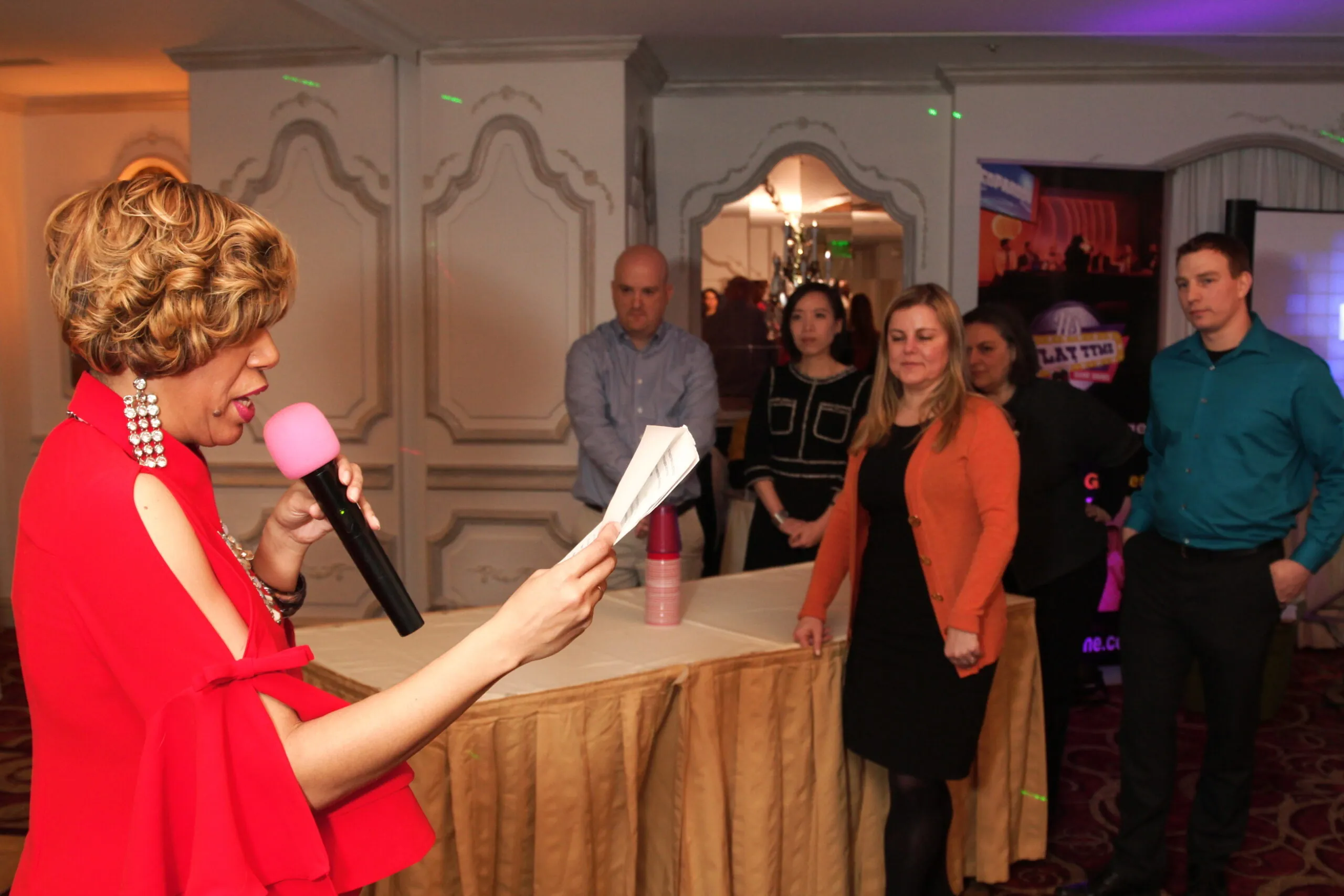
It’s PlayTyme Game Shows specializes in this format across New Jersey, New York City, and Connecticut. Their events use live polling technology that lets every participant answer questions from their phone at the same time. Groups of 20 to 300+ stay engaged because nobody sits on the sidelines. The questions blend pop culture, trivia, and custom company content, so the experience connects directly to organizational culture.
This format works particularly well for all-hands meetings, onboarding kickoffs, annual conferences, and department celebrations. The competitive structure creates natural energy without requiring anyone to stand up and perform solo. Introverts participate through their devices on equal footing with extroverts.
Why this technique stands out
- Scales from executive leadership groups of 20 to company-wide events of 300+ without losing engagement.
- No preparation required from attendees. The facilitator runs everything.
- Custom questions let you reinforce company values, product knowledge, or strategic priorities inside the game.
- Results are visible in real time, creating shared moments that teams reference for months afterward.
Quick Team Building Techniques for Time-Pressed Teams
Not every technique requires a dedicated event. Some of the strongest team building happens in 5- to 10-minute blocks embedded in existing meetings.
Rose, Thorn, Bud
At the start of a meeting, each person shares one rose (something going well), one thorn (a current frustration), and one bud (something they are looking forward to). This takes 30 seconds per person and surfaces team sentiment faster than any survey.
Skill Swap Lightning Talks
Once a week, one team member gives a 5-minute informal talk on a skill they have outside their job description. A developer explains woodworking. A project manager walks through a recipe. These talks reveal hidden expertise and build respect across roles.
The One-Word Check-In
Ask each person to describe their current state in a single word. Go around the room (or virtual call) without commentary. The exercise takes under 2 minutes and gives facilitators an immediate read on team energy. If three people say “overwhelmed,” the manager knows to adjust the agenda.
| Technique Type | Format | Group Size | Time Needed | Best For |
|---|---|---|---|---|
| Icebreakers | In-person or virtual | 5 to 50 | 10 to 15 min | New teams, kickoffs |
| Problem-solving exercises | In-person | 8 to 30 | 30 to 60 min | Cross-functional groups |
| Communication drills | In-person or virtual | 4 to 20 | 20 to 45 min | Departments with silos |
| Interactive game shows | In-person | 20 to 300+ | 45 to 90 min | Large groups, all-hands |
| Quick exercises | In-person or virtual | 3 to 15 | 5 to 10 min | Daily standups, meetings |
| Remote/hybrid activities | Virtual | Any size | 30 to 60 min | Distributed teams |
Techniques for Remote and Hybrid Employees
Remote employees miss the hallway conversations and lunch-table bonding that in-office workers take for granted. Team building techniques for distributed teams need to account for screen fatigue, time zones, and the absence of physical cues.
Virtual Escape Room
Teams of 4 to 6 work through a series of digital puzzles within a set time limit. The puzzles require dividing tasks, sharing clues verbally, and making group decisions under pressure. This format replicates the collaborative tension of in-person problem-solving without requiring anyone to travel.
Asynchronous Show and Tell
Create a shared channel (Slack, Teams, or a simple shared document) where one team member posts a 60-second video each day showing something personal: their workspace, a pet, a hobby project, a favorite local spot. Colleagues respond with comments or questions on their own schedule. This technique builds familiarity without adding another meeting to the calendar.
Step-by-step for hybrid facilitation
- Test all technology (screen sharing, polling tools, breakout rooms) at least 30 minutes before the session.
- Assign a co-facilitator to monitor the chat for remote participants while the lead facilitator runs the activity.
- Use a digital whiteboard (Miro, FigJam, or similar) so remote and in-person employees contribute to the same visual space.
- Keep sessions under 60 minutes. Virtual attention spans are shorter than in-person ones.
How to Match the Right Technique to Your Team
Choosing the right team building technique starts with diagnosing the specific gap your team faces. A team that communicates well but struggles with creative problem-solving needs a different approach than a newly formed team that has not built basic trust yet.
Start by asking three questions. First, what is the specific outcome you want after this session? If you want people to know each other better, choose icebreakers. If you want to improve how the team handles disagreements, choose communication drills. If you want to energize a large group and create a shared experience, choose an interactive team building format that scales.
Second, how large is the group? Techniques that work beautifully for 8 people collapse at 80. For groups above 30, professional facilitation makes a measurable difference. It’s PlayTyme Game Shows runs events for groups ranging from intimate leadership retreats to company-wide gatherings of 300+ across NJ, NYC, and CT, handling all the logistics so your team focuses entirely on participation.
Third, how much time do you have? Match your time budget to the technique. Five-minute check-ins belong in weekly meetings. Ninety-minute game shows belong at quarterly all-hands events. Trying to compress a 60-minute exercise into 20 minutes produces a rushed experience that does more harm than good.
Ready to bring a proven, high-energy team building experience to your next corporate event? Get in touch with It’s PlayTyme Game Shows to book an interactive event that gets every employee involved, whether your group is 20 or 300+. Explore the full range of corporate team building options to find the right fit.
Frequently Asked Questions (FAQs)
What are the most effective team building techniques for employees?
The most effective techniques match the team’s specific needs. Icebreakers work best for new or restructured teams. Problem-solving exercises strengthen cross-functional collaboration. Communication drills improve clarity and listening habits. Interactive game show formats engage large groups where traditional exercises fall flat. The best results come from combining multiple techniques across the calendar rather than relying on a single annual event.
How often should teams do team building exercises?
High-performing teams practice short team building techniques weekly (5- to 10-minute check-ins or lightning talks) and participate in longer structured sessions monthly or quarterly. Consistency matters more than duration. A 10-minute icebreaker every Monday morning builds stronger habits than a single daylong retreat once a year.
What team building techniques work best for remote employees?
Virtual escape rooms, asynchronous show-and-tell channels, and structured video check-ins all work well for remote teams. The key is keeping sessions under 60 minutes to respect screen fatigue and providing asynchronous options so employees in different time zones participate equally. Digital whiteboards and live polling tools help remote participants engage at the same level as in-person colleagues.
How long should a team building activity last?
Quick exercises (check-ins, one-word rounds) take 5 to 10 minutes and fit inside regular meetings. Communication drills and problem-solving exercises run 20 to 60 minutes. Large-group interactive events, such as game show formats, typically last 45 to 90 minutes. Match the length to the technique and the group size rather than padding time to fill a schedule block.
How do you measure whether team building techniques are working?
Track three indicators: employee engagement scores (pulse surveys before and after a series of sessions), team communication quality (fewer misunderstandings, faster conflict resolution), and voluntary participation rates in future activities. If attendance drops or survey scores stay flat, the technique is not connecting with your team and needs to be replaced with a different format.