

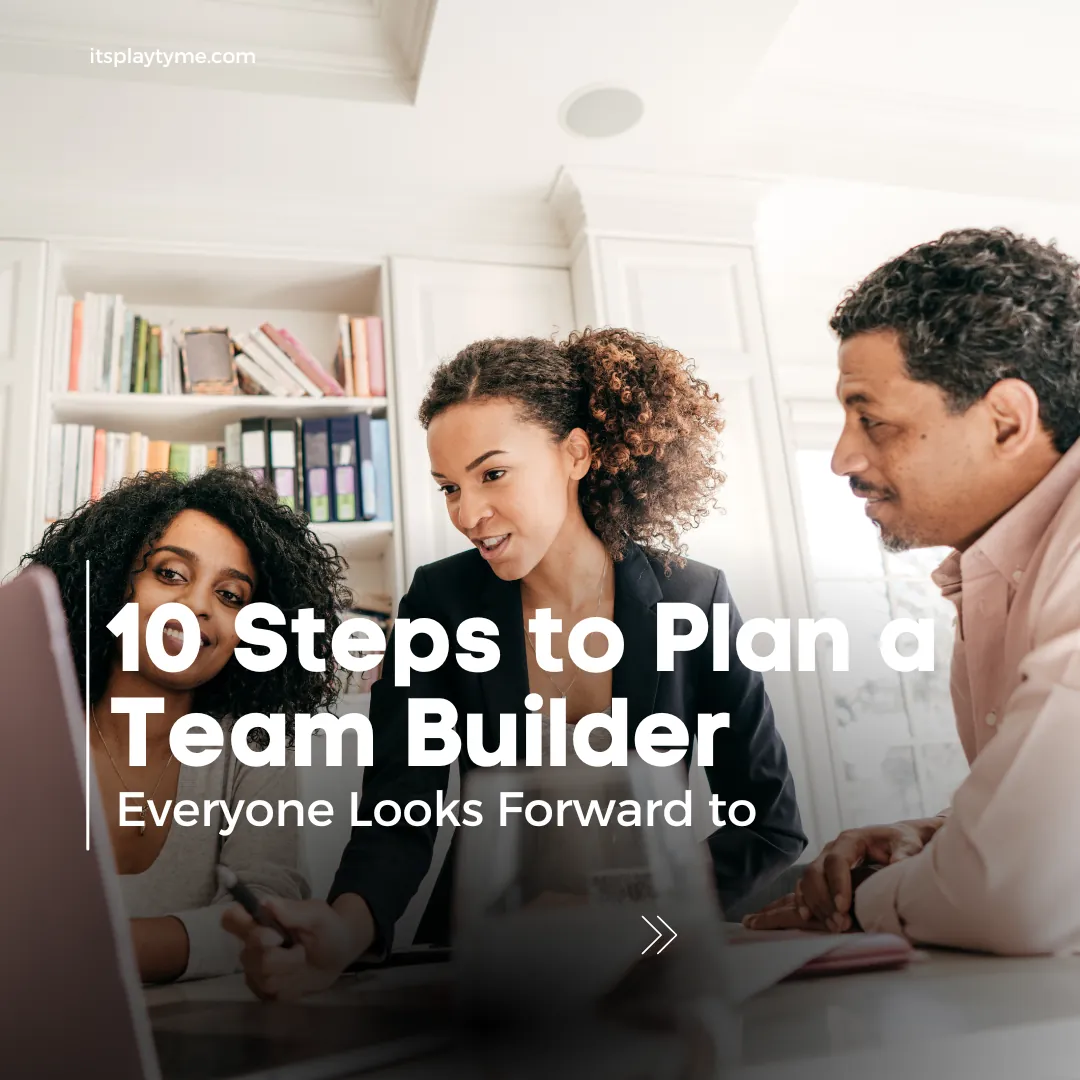
A poorly planned team building event wastes money and goodwill. A well-planned one transforms a group of coworkers into a connected, high-performing team. Gallup research shows that highly engaged business units are 21% more profitable than their disengaged counterparts. Yet most companies spend their event budgets without a real plan, and the results reflect it.
The data backs up what every good manager already senses: connection drives results. A landmark study published in Harvard Business Review found that face-to-face interaction patterns are the single most reliable predictor of team performance, more important than individual talent or experience. Team building events create exactly those patterns, but only when planned with intention.
Here is the problem most organizers face. Someone hands them the task with no playbook. They pick a random activity, send a calendar invite, and hope for the best. The result is a room full of people checking their phones, a budget that vanishes with nothing to show for it, and a team that leaves less enthusiastic than before. These 10 steps to plan a team building event give you a repeatable framework that produces real engagement every time.
What You Need to Know
- Gallup links highly engaged business units to 21% higher profitability than disengaged counterparts.
- Harvard Business Review found face-to-face interaction patterns are the single strongest predictor of team performance.
- Most organizers default to a random activity and a calendar invite with no real plan.
- Intentional planning transforms a group of coworkers into a connected, high-performing team.
- Poor planning wastes money and goodwill; structured intention produces measurable, lasting connection.
Why Most Team Building Events Miss the Mark
Every organizer runs into the same obstacles. Ignoring them leads to the forgettable offsite everyone dreads.
- No clear objective: Without a defined goal, the event becomes entertainment with no business purpose. Organizers struggle to justify the cost after the fact.
- One-size-fits-all activities: What works for a sales team of 15 fails spectacularly for a cross-functional group of 200. Activities that exclude introverts, remote workers, or anyone with physical limitations breed resentment instead of connection.
- Budget uncertainty: Hidden costs for venues, catering, equipment, and facilitators add up fast. Without a clear budget framework, organizers either overspend or cut corners that tank the experience.
- Low participation and buy-in: Mandatory fun is an oxymoron. If people show up expecting a trust fall or an awkward icebreaker, they mentally check out before the event starts.
- No follow-through: The event ends, everyone returns to their desks, and nothing changes. Without a follow-up plan, even a great event loses its impact within a week.
Set the Foundation: Goals, Audience, and Budget
Step 1: Define Your Goals
Start with one question: what should be different on Monday morning? A clear goal shapes every decision that follows. Common objectives include breaking down silos between departments, welcoming new hires, celebrating a milestone, or improving communication. Write the goal down in one sentence. If you struggle to do that, the goal is not specific enough.
Your goal also determines how you measure success later. “Have fun” is not a goal. “Get employees from engineering and marketing to collaborate on at least one shared challenge” is a goal. The more specific you are now, the easier every following step becomes.
Step 2: Know Your Audience
Your team is not a monolith. Consider the group size, age range, physical abilities, personality mix (introverts and extroverts), and whether anyone will attend remotely. A 25-person marketing department and a 200-person company-wide gathering need fundamentally different approaches. Survey your team or talk to department heads to learn what they actually enjoy, not what you assume they enjoy.
Step 3: Set a Realistic Budget
Map out every cost category: venue rental, food and beverage, activity or facilitator fees, transportation, decorations, and prizes. Allocate 60 to 70 percent of the budget to the activity and facilitation, because the experience is what people remember. A professional game show from It’s PlayTyme Game Shows gives you a flat, transparent rate that covers the host, equipment, and full production, so there are no surprise line items eating into your bottom line.
Lock in the Details: Date, Venue, and Format
Step 4: Pick the Right Date and Time
Avoid Mondays (heavy workloads) and Fridays (people mentally check out). Tuesday through Thursday, mid-morning or early afternoon, works best for energy and attendance. Give at least four to six weeks of lead time so people block their calendars. Check for conflicts with major deadlines, holidays, and school schedules if your team includes parents.
Step 5: Choose a Venue That Fits
The venue sets the tone. An offsite location signals that this is special, not just another meeting. Consider capacity (everyone should move comfortably), AV and tech capabilities, parking or transit access, and catering options. Hotel conference rooms, dedicated event spaces, and even your own office work as long as the space supports the activity format you choose. For companies in New Jersey, New York City, and Connecticut, there are venues at every price point within a short drive.
Step 6: Select an Activity Format That Fits Your Team
This is where most planners stall. The right format matches your goal, group size, and team personality. Here is a quick comparison of popular options:
| Activity Format | Best For | Group Size | Time Needed | Engagement Level |
|---|---|---|---|---|
| Professional Game Show | All teams, all goals | 20 to 300+ | 1 to 3 hours | Very high |
| Escape Room | Small teams, problem-solving | 4 to 12 per room | 1 hour | High |
| Outdoor Adventure | Active, younger teams | 10 to 50 | Half day | Medium to high |
| Cooking Class | Casual bonding | 10 to 30 | 2 to 3 hours | Medium |
| Volunteer Project | Purpose-driven culture | 10 to 100 | Half day | Medium |
A professional game show stands out because it scales to any group, includes everyone regardless of physical ability, and delivers consistently high energy. The format (think Family Feud, Jeopardy, Minute to Win It) is instantly familiar, so there is zero learning curve and no awkward warm-up period.
Step 7: Choose a Professional Facilitated Provider
This single decision determines whether your event is memorable or forgettable. A DIY approach puts enormous pressure on one internal person who becomes the host, tech support, and referee while everyone else watches uncomfortably. Hiring a professional changes the entire dynamic.
Look for a provider with a proven track record, verifiable client reviews, and deep experience with corporate groups. Ask these questions before you book:
- How do you customize the experience for our specific group?
- What is included in the price (host, equipment, setup, teardown)?
- What group sizes have you handled successfully?
- Do you offer a satisfaction guarantee?
It’s PlayTyme Game Shows checks every box. With more than a decade of experience and more than 3,000 corporate events produced across NJ, NYC, and CT, every show comes with a professional host, full AV production, customized questions tied to your company, and a 100% satisfaction guarantee. The event is turnkey: you show up, your team plays, and the host handles everything else. This is the step in your planning process that separates a good event from a great one.
Prepare, Execute, and Follow Up
Step 8: Handle the Logistics
Create a checklist that covers every detail: room setup time, AV requirements, catering delivery windows, parking instructions, name tags (if needed), and a run-of-show timeline. Assign one person as the point of contact for the venue and the activity provider. Confirm everything in writing at least one week before the event. When you follow these steps to plan a team building event thoroughly, the day itself runs smoothly for everyone.
Step 9: Build Anticipation
A team building event starts before anyone walks in the door. Send a save-the-date four to six weeks out. Follow up with a teaser one week before. Hint at the format (“think game show, not trust fall”) without revealing everything. When people are curious and excited, attendance and energy both go up. Share a short video clip or a few photos from a past event to give your team a taste of what is coming.
Step 10: Follow Up and Measure the Impact
The event is not over when the last round ends. Within 48 hours, send a short survey (three to five questions) asking what people enjoyed and what they would change. Share photos and highlights in a team channel or company newsletter. Report results back to leadership tied to the goals you set in Step 1. This final step closes the loop and makes it significantly easier to get budget approval for next time.
Getting Your Team Building Event Right the First Time
The difference between a forgettable afternoon and a team-defining experience comes down to preparation and partnership. These steps to plan a team building event work because they move you from vague intention to specific action at every stage. Start with a goal that matters, match the format to your people, and hand the execution to a provider who does this every day.
A facilitated experience removes the risk of awkward silences, technical breakdowns, and low participation. It frees your organizer to relax and lets your entire team engage without anyone feeling forced into something uncomfortable. If your group is in the NJ, NYC, or CT area, a hosted game show is the fastest path from “we need to do something for the team” to an event people genuinely talk about afterward.
Ready to put these steps to plan a team building event into action? Get in touch with It’s PlayTyme Game Shows to discuss your goals, your group size, and your preferred date. Your team deserves an event worth remembering.
Frequently Asked Questions (FAQs)
How far in advance should I start planning a team building event?
Start at least four to six weeks before your target date. This gives you enough time to secure a venue, book a provider, and build anticipation with your team. For large groups over 100 people, eight weeks or more is better to coordinate schedules and logistics.
How do I get reluctant employees to participate?
Choose a format that does not require physical exertion or public vulnerability. Game shows work because the format is familiar, team-based (so no one is singled out), and genuinely fun. Building anticipation with teasers and framing the event as a reward rather than an obligation increases buy-in significantly.
What team building activities work for large groups over 100 people?
Professional game shows scale to 300+ participants, making them one of the few formats that work at that size. Escape rooms and cooking classes cap out at small groups. For large events, look for a provider experienced with big crowds who brings the AV equipment to keep everyone engaged from the front row to the back.
How do I measure whether the team building event was successful?
Send a short survey within 48 hours asking about enjoyment, connection with colleagues, and relevance to work goals. Track participation rates and compare them to previous events. Watch for qualitative signals over the following weeks: more cross-department conversations, higher meeting engagement, and improved collaboration on shared projects.