

Plenty of team events promise fun, but fun alone does not build a team that works together. Real collaboration, where people share information and solve problems as one unit, is the skill that moves results. That matters because Gallup reports that only 20% of employees feel engaged, and disengaged groups default to working in isolation rather than cooperating.
Collaboration is learnable, and shared experiences teach it fastest. Harvard Business Review found that psychological safety underpins high-performing teams, and that safety grows when people cooperate toward a shared goal in a low-stakes setting. The collaborative activities below, all available across New Jersey, are built around cooperation rather than individual performance, so your team practices the exact behavior you want at work.
If you lead a group that works in silos, you know the worry. Departments rarely talk, new hires stay on the edges, and meetings turn into a few voices while the rest go quiet. You want experiences that force people to depend on each other, not just sit in the same room. Each idea here ties to a clear collaboration outcome, so you choose by the cooperation it builds.
Quick Answer
- Only 20% of employees feel engaged, so most teams default to isolation instead of cooperation.
- Collaboration is a learnable skill, and shared experiences teach it faster than any other method.
- Harvard Business Review links psychological safety to high team performance; low-stakes events build that safety.
- New Jersey collaborative activities are structured around group cooperation, not individual performance.
- Teams stuck in silos benefit most because shared goals built at these events carry back to the workplace.
What Makes an Activity Truly Collaborative
Collaborative is not the same as group. A group activity puts people side by side. A collaborative activity makes them depend on each other to succeed. The difference shows in three features.
- Shared goal: One outcome the whole team wins or loses together, so individual glory does not matter.
- Interdependence: No one can succeed alone, which forces information sharing.
- Pooled strengths: The activity rewards combining different skills and perspectives.
Hold any idea up to these three features. If it passes, it builds real cooperation. If it fails, it is just a fun outing.
Game Shows: Collaboration Built Into Every Round
A hosted game show is collaboration-first by design, because teams cannot win without talking, strategizing, and sharing the decision. It’s PlayTyme Game Shows runs these formats across New Jersey, New York City, and Connecticut with a professional host and broadcast-style equipment.
The cooperation outcomes are concrete:
- Forced strategy talk: Teams must decide answers and wagers together, so quiet members get pulled into the discussion.
- Shared wins: The whole team scores together, which rewards cooperation over individual showing off.
- Pooled knowledge: Categories range wide, so the marketer, the engineer, and the new hire each contribute, proving every voice has value.
- Live negotiation: Final wagers require fast group agreement, the same skill teams need on real deadlines.
Players leave having practiced cooperation dozens of times in an hour, all while thinking they were just playing a game.
Activities Where No One Succeeds Working Alone
These structured activities make interdependence the whole point.
- Escape rooms: Teams must pool scattered clues to escape in time. The outcome is open information sharing instead of clue hoarding.
- Build-a-bridge challenges: Teams construct a working structure from limited materials. The outcome is shared planning and role division.
- Group puzzle relays: Each member holds one piece of the solution. The outcome is recognizing that no one wins alone.
Each format breaks down the moment one person tries to go solo, which makes the lesson land without a lecture.
Creative Collaboration Activities
Some teams cooperate best when they build something together.
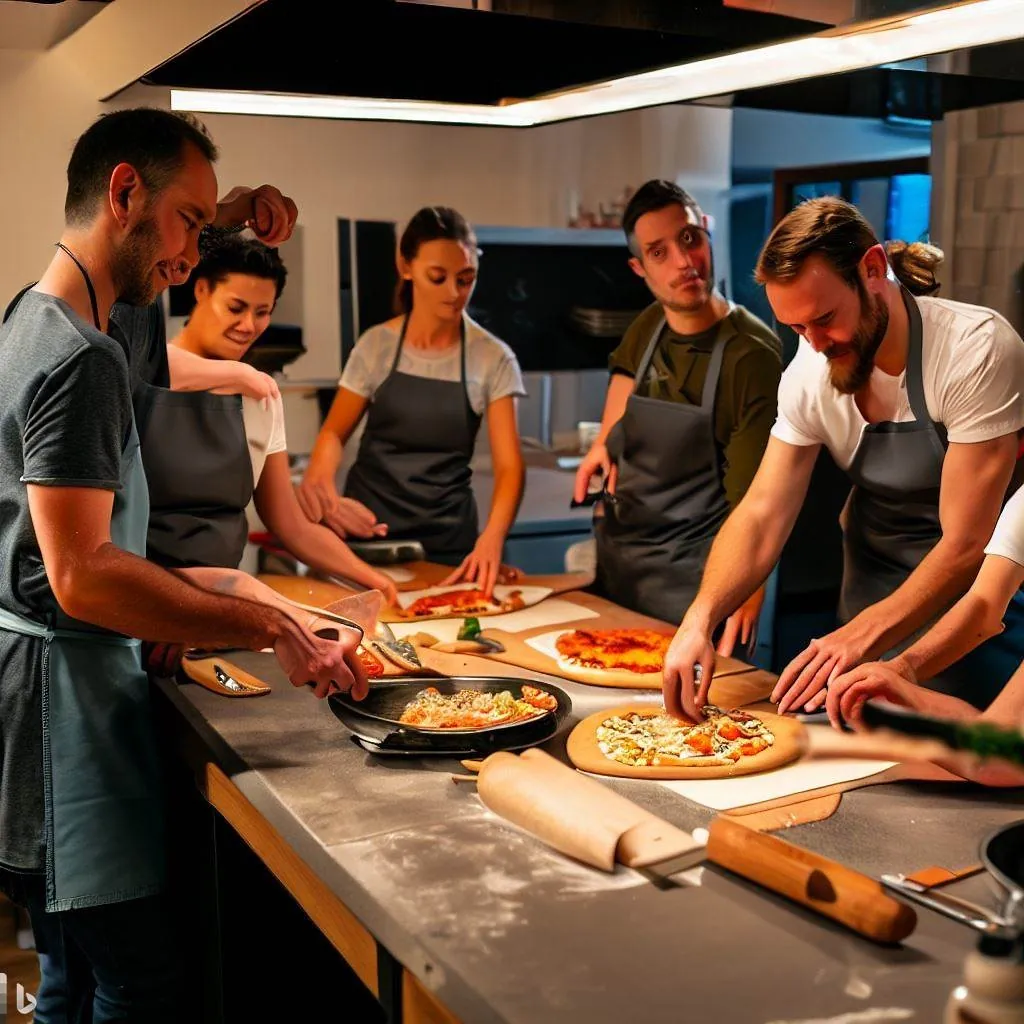
Group cooking challenges
Teams plan and cook a shared dish under time pressure. The outcome is coordination and division of labor toward one result everyone tastes.
Team art or build projects
A large mural or model that only works if sections connect. The outcome is alignment, since each team must match the pieces beside them.
Common Challenges in Building a Collaborative Team
Knowing the obstacles helps you choose the activity that fixes them.
- Entrenched silos: Departments rarely interact. Mixed-team formats force cross-group cooperation toward a shared win.
- Solo-star culture: A few people grab credit while others coast. Team scoring spreads the reward, so cooperation pays.
- Left-out newcomers: New hires hesitate to contribute. Wide-ranging game show categories give everyone a moment to add value.
- Surface-level fun: Outings that entertain but do not bond. Choose activities with true interdependence, not just shared space.
- Uneven participation: Loud voices dominate. Formats that require group agreement pull quiet members into the decision.
Comparing Collaborative Formats
| Activity | Collaboration driver | Best for |
|---|---|---|
| Hosted game show | Shared scoring and strategy | Any size, mixed groups |
| Escape room | Pooled clues | Small teams |
| Build-a-bridge | Role division | Mid-size groups |
| Group cooking | Coordinated tasks | Smaller teams |
The comparison shows the game show as the one format that scales across sizes while keeping cooperation at its core. The others shine for smaller groups.
Making Collaboration Stick After the Event
One collaborative event sparks cooperation, but a few follow-up habits keep it alive. Reference the shared win in your next team meeting, mix project teams the way the activity mixed them, and call out moments where people pooled strengths. Those small reinforcements turn a single afternoon into a lasting cooperative habit.
Ready to give your team a cooperation workout they will enjoy? Contact It’s PlayTyme to check dates, or explore our team building game shows built for groups across New Jersey, NYC, and CT.
Matching the Activity to Your Cooperation Problem
Start with the cooperation problem you most want to solve, whether that is breaking silos, including newcomers, or curbing a solo-star culture. Test each option against the three collaboration features: a shared goal, true interdependence, and pooled strengths. Weigh your group size, since escape rooms and cooking suit small teams while a hosted game show scales to any crowd. For mixed or larger groups that need everyone involved, the game show format delivers the most cooperation per hour because no one can win alone. Book early so the date and format you want stay open.
Frequently Asked Questions (FAQs)
What makes a team building activity collaborative?
A truly collaborative activity has a shared goal, real interdependence, and a reward for pooling different strengths. People must depend on each other to succeed, not just sit in the same room. Formats like hosted game shows and escape rooms pass this test because no one can win alone.
Which collaborative activities work for large New Jersey groups?
Hosted game shows scale best, holding cooperation at the center for groups from 20 to 300+. Team scoring and wide categories keep everyone contributing. Escape rooms and cooking challenges work well too, but they suit smaller teams because of capacity limits.
How do game shows build collaboration specifically?
Game show rounds force teams to discuss answers, agree on wagers, and pool knowledge across categories. The whole team wins or loses together, which rewards cooperation over individual performance. Players practice shared decision making dozens of times in a single session.
How do collaborative activities help with department silos?
Mixed-team formats place people from different departments on the same side, forcing them to cooperate toward a shared win. That cross-group contact builds new working relationships that carry back to the office. Assigning teams rather than letting people self-select makes the mixing happen naturally.
How do I keep cooperation going after the event?
Reference the shared win in your next meeting, mix project teams the way the activity mixed them, and praise moments where people pooled strengths. These small reinforcements turn one event into a lasting habit. Consistency matters more than how often you run events.
Why does psychological safety matter for collaborative team activities?
Harvard Business Review found that psychological safety underpins high-performing teams, and it grows when people cooperate toward a shared goal in a low-stakes setting. Collaborative activities create exactly that environment, giving your team a practical way to build the safety that drives better results at work.