

Work relationships are not a soft extra. They are the wiring that makes collaboration possible. Gallup’s State of the Global Workplace report finds that people who have a close friend at work are far more engaged and productive than those who feel isolated. Connection is not a nice-to-have; it is a performance driver.
Yet building those relationships keeps getting harder. Harvard Business Review’s research on trust at work shows that trust forms through repeated, positive shared experiences, exactly the kind that hybrid schedules and back-to-back meetings squeeze out. The activities below rebuild that connection on purpose, and the most effective ones are built on play.
If you lead a team, you feel the friction every day. New hires stay strangers for months, remote colleagues become names on a screen, departments operate in silos, and the awkward forced mixer does more harm than good. You do not need another trust fall. You need activities that create real connection quickly, without the cringe.
Quick Answer
- Gallup finds employees with a close work friend are far more engaged and productive than isolated colleagues.
- Harvard Business Review shows trust forms through repeated positive shared experiences, which hybrid schedules eliminate.
- New hires, remote colleagues, and siloed departments are the friction points these activities directly address.
- Play-based activities are the most effective approach because they create shared experience naturally.
Why Game-Based Activities Build Relationships Faster
Most relationship-building efforts fail because they are too direct. Asking strangers to bond over a catered lunch puts pressure on a moment that should feel natural. Games solve this by giving people a shared goal to focus on instead of each other. The relationship forms as a byproduct of playing together, which is exactly how friendships form in real life.
Play also lowers people’s guard. The colleague who is reserved in meetings becomes animated in a fast trivia round. A shared laugh, a near-miss, a winning answer: these small emotional spikes create memories, and shared memories are the raw material of every workplace relationship. Game-based formats manufacture those moments on demand. A single hosted session can produce more genuine connection than months of scheduled coffee chats, because the bonding happens while people are busy having fun rather than trying to network.
1. Hosted Game Show Events
A professionally hosted game show is the most reliable relationship builder available. It puts people on teams, gives them a shared mission, and removes the formality that usually keeps coworkers polite but distant. Within minutes, departments that never interact are strategizing together and celebrating wins as one group.
The format works because the host carries the energy and the structure guarantees participation. Nobody sits on the sidelines, and the competition stays light enough that goodwill survives every round. People leave knowing colleagues they had only emailed before.
2. Family Feud-Style Team Rounds
Family Feud formats are connection machines. Teams huddle, debate, and commit to answers together, which forces conversation and reveals personality fast. The collaborative pressure creates inside jokes and shared stories in a single session. People bond over the answer they almost guessed and the round they barely won.
Collaborative Trivia That Breaks Silos and Builds Respect
Team trivia rewards diverse knowledge, which means everyone contributes something. The history buff, the sports fan, and the pop-culture expert all get their moment, and teammates learn what each person brings beyond their job description. That discovery is the foundation of respect and the start of a real relationship.
- Mix departments on each team to break silos.
- Keep categories broad so every personality shines.
- Reward teamwork, not just the smartest individual.
4. Two Truths and a Reveal
Light personal-sharing games help people find common ground. A quick round where colleagues share surprising facts about themselves uncovers hobbies, backgrounds, and stories that never come up in work conversation. These small revelations give people a reason to talk after the activity ends.
5. Shared-Win Challenges
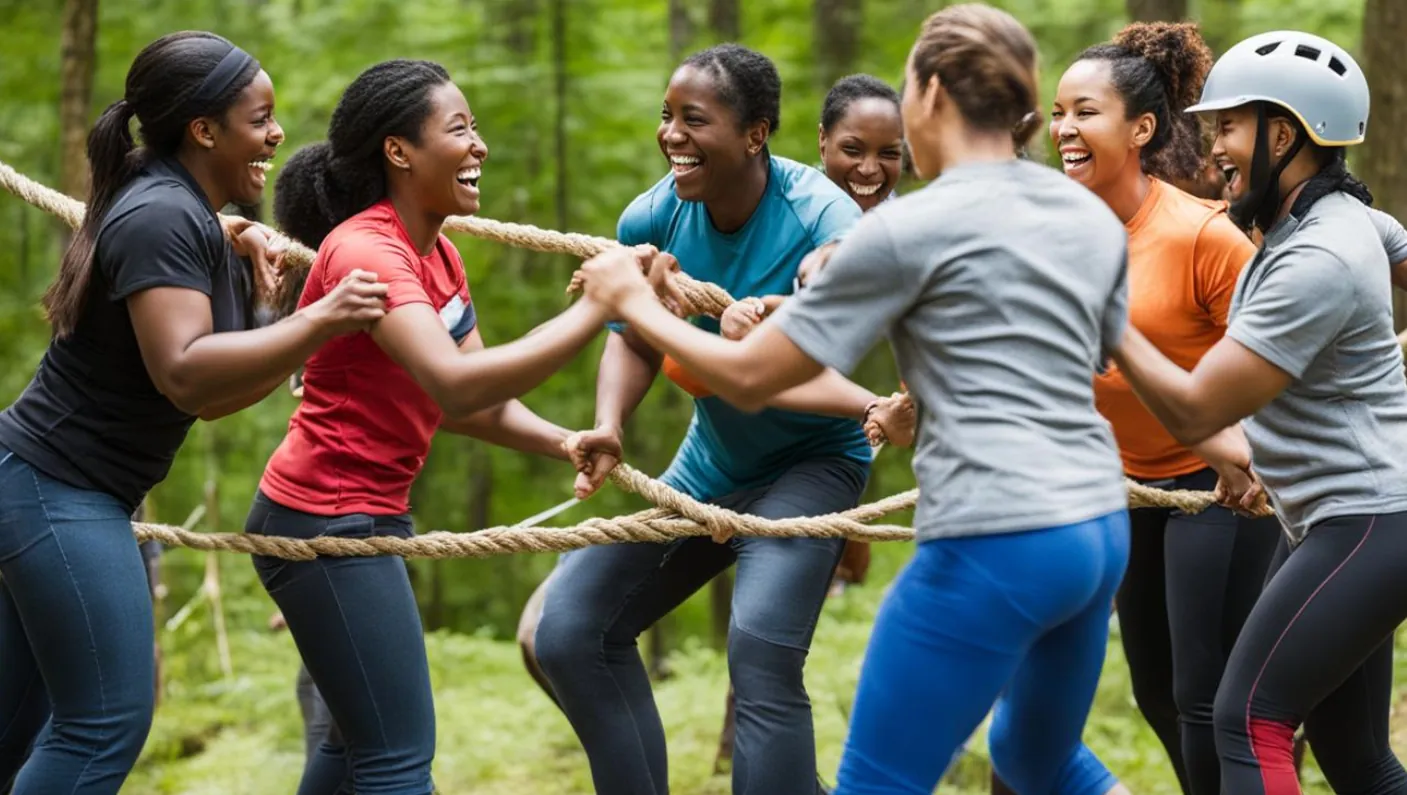
Activities where the whole team must succeed together build the strongest bonds. When success depends on everyone, people coach each other, cover gaps, and feel genuine relief and joy at a shared victory. That mutual reliance is the exact dynamic you want to carry back into real projects.
The Real Challenges of Building Relationships at Work
Several obstacles get in the way of genuine workplace connection:
- Hybrid distance: screens flatten emotion and erase the casual hallway moments that build rapport.
- Forced awkwardness: mandatory mixers with no structure leave people standing in silence.
- Department silos: teams that never interact develop quiet mistrust and slow handoffs.
- Uneven comfort: outgoing people dominate while quieter colleagues retreat further.
A facilitated game-based event clears each obstacle. An outside host removes the awkwardness, the team structure mixes silos, the games close the distance hybrid work creates, and the format pulls quiet people in through their teammates rather than spotlighting them alone.
Why a Hosted Game Show Is the Standout Choice
It’s PlayTyme Game Shows designs hosted events that build real relationships for teams across New Jersey, New York City, and Connecticut. A professional host runs the room, the games scale to any group size, and no apps or devices are required. Family Feud-style rounds and collaborative trivia put people shoulder to shoulder, where genuine connection forms faster than any lunch or mixer.
The events succeed because they are collaborative at the core. Teammates rely on each other to win, discover hidden talents in their colleagues, and build the shared memories that turn coworkers into a real team. That connection follows them back to their desks and shows up in smoother projects for months.
A Short Checklist Before You Pick a Team Activity
Match the activity to your goal. To break silos, mix departments in a hosted game show. To deepen an existing team, use Family Feud rounds and shared-win challenges. To welcome new hires, start with light personal-sharing games. Then weigh the awkwardness factor: the more reserved your group, the more a structured, hosted format outperforms an open mixer.
For most teams, the strongest move is a single hosted event that builds many relationships at once. Reach out through our contact page, or explore our team building options to see how a live game show fits your group. Give your people one shared experience, and watch real relationships take root.
Frequently Asked Questions (FAQs)
Why do game-based activities build relationships faster?
Games give people a shared goal to focus on instead of forcing direct bonding. The relationship forms naturally as a byproduct of playing together. Shared laughs, near-misses, and wins create the emotional memories that workplace friendships are built from.
What is the best relationship building activity for new hires?
Light personal-sharing games and collaborative trivia work well because they reveal personality without pressure. A hosted game show is especially effective since it mixes new hires with established teammates on the same team, turning strangers into collaborators within minutes.
Do these activities work for hybrid and remote teams?
Yes, and they matter more for distributed teams. Hybrid work erases the casual contact that builds rapport, so periodic in-person gatherings become essential. A live event gives remote colleagues the face-to-face connection that video calls cannot provide.
How do game shows break down department silos?
Mixing departments onto the same team forces people who never interact to strategize and celebrate together. The shared goal of winning overrides the usual formality, and colleagues leave knowing peers from other teams they had only emailed before.