

Small groups break the ice differently than big crowds. With five to twenty people in the room, every voice counts, and one awkward silence is felt by everyone. A quick, well-chosen game fixes that fast, which matters because Gallup reports that only 20% of employees feel engaged at work, and small-team connection is where engagement starts.
The format has to fit the moment. Pew Research found that most workers value the social side of their jobs, and a tight, fun icebreaker delivers that without eating a whole meeting. The games below are built for small groups across New Jersey, New York City, and Connecticut: quick to explain, easy to join, and free of props you do not have.
Anyone who leads a small team knows the obstacles. With few people, there is nowhere for a quiet member to hide, a single dominant voice can take over, and a game built for fifty falls apart with eight. You need something short, inclusive, and low-pressure that warms the room in minutes. The small-group games here solve exactly that.
What Makes a Small-Group Icebreaker Work
Small groups need a different design than large crowds. Keep these traits in mind and the warm-up lands every time.
- Fast to explain: the rules fit in two sentences so no time is lost.
- Everyone participates: with few people, the game must include all of them by design.
- Low pressure: nothing forces a shy person to perform alone.
- Short runtime: five to ten minutes warms the room without stalling the meeting.
Quick Talking Icebreakers for Small Teams
These need zero props and run in minutes, perfect for the start of a meeting.
- One word check-in: each person names one word for their mood, then explains in a single sentence.
- Two truths and a lie: each member shares three statements and the group guesses the false one.
- Would you rather: the leader poses a fun choice and everyone explains their pick in ten seconds.
- Best part of the week: a fast round where each person shares one highlight, work or personal.
Active Games for Small Groups
When the team needs energy, these get people moving and laughing.
- Desk scavenger hunt: the leader calls an item (something blue, something round) and the first to hold it up wins.
- Common ground: the group races to find five things everyone shares, building fast connection.
- The name chain: each person adds a fun fact, and the next must repeat all the facts before adding theirs.
- Quick draw: one person sketches a word while the rest guess, a five-minute round that breaks tension.
Mini Game-Show Icebreakers for Small Groups
A scaled-down game show brings competition without needing a crowd. These adapt cleanly to a team of eight to twenty.
Small-Group Feud
Split the team into two mini-teams and run a Family Feud round. Read a light question and reveal ranked answers. Sample: “Name something everyone keeps at their desk” ranks a mug, charger, snacks, photo, and a plant. Even with eight people, the back-and-forth creates real laughs.
Rapid Trivia
A quick five-question trivia round, with the group split into pairs, builds friendly rivalry. Mix company facts with pop culture so everyone has a shot. It runs in under ten minutes.
Icebreakers for Virtual Small Groups
Remote small teams warm up just as fast with the right prompt.
- Show and tell: each person grabs one nearby object and explains why it matters in 20 seconds.
- Virtual background vote: everyone picks a fun background and the group votes on a favorite.
- Emoji check-in: each person posts one emoji for their mood in chat, then explains it aloud.
- One-question poll: the host runs a quick poll, then the group reacts to the results together.
What Goes Wrong With Small Group Icebreakers
Small does not mean simple. These obstacles trip up team leaders most often.
- Nowhere to hide: with few people, a quiet member feels exposed, so the game must lower pressure, not raise it.
- One voice dominates: a single talkative person can swallow a small round without a structure that shares time.
- Wrong scale: games designed for big crowds collapse with eight people and feel flat.
- Same game fatigue: small teams meet often, so repeating one icebreaker drains its energy fast.
- Time creep: without a firm stop, a five-minute opener stretches and crowds the agenda.
When a Hosted Game Show Fits a Small Group
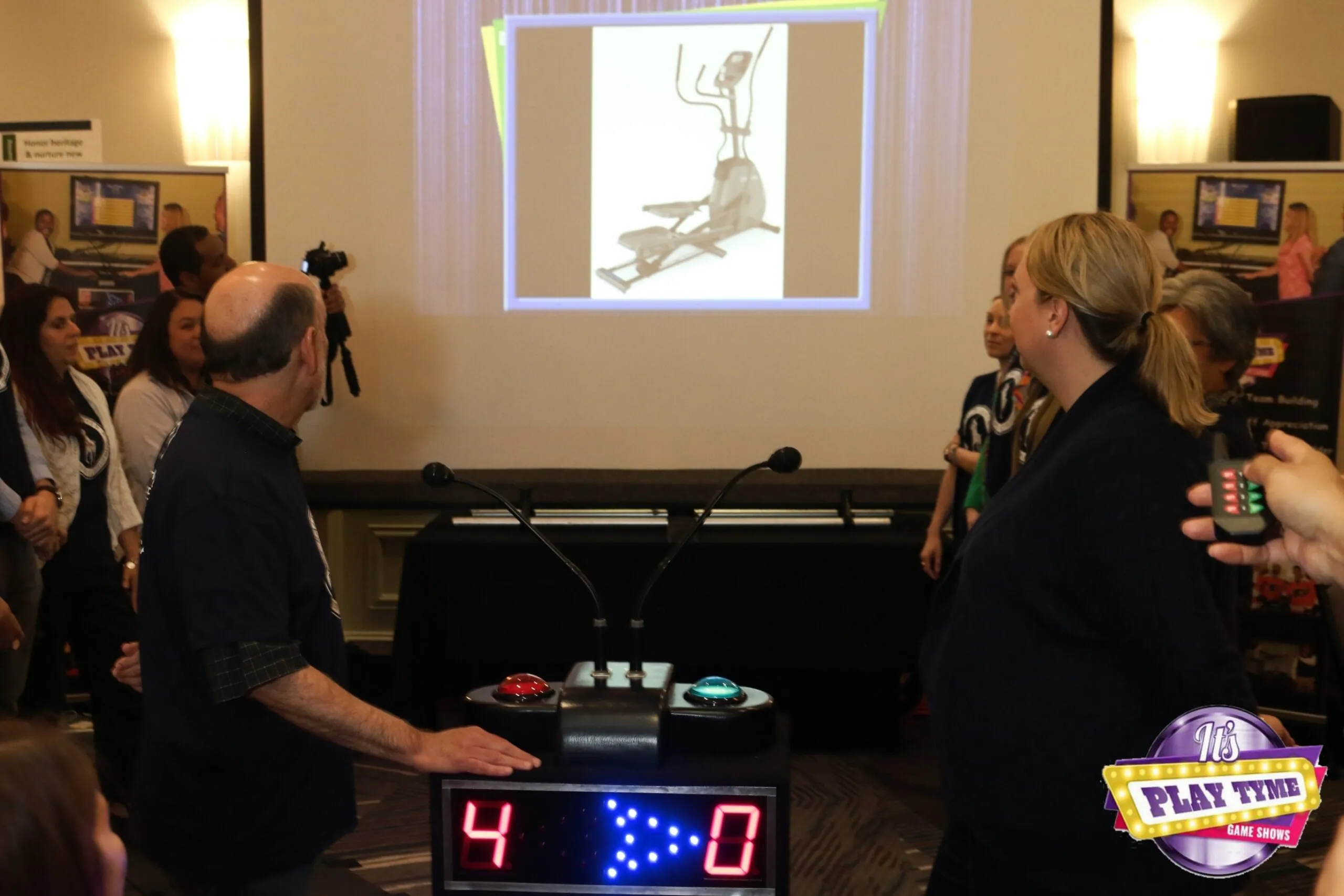
For a weekly stand-up, a self-run prompt is perfect. For a small-team retreat, a milestone celebration, or a client gathering, a professional host turns the warm-up into the main event. It’s PlayTyme Game Shows scales a full game-show experience to intimate groups across New Jersey, New York City, and Connecticut, with custom questions and broadcast-style production.
A pro host solves the small-group traps at once. The structure gives every person airtime, the format keeps any one voice from taking over, and the energy never depends on the leader. Scoring and pacing are handled, so a team of a dozen gets the same polished show a large crowd would, sized to fit the room.
Planning a small-team event that deserves more than a quick prompt? Contact It’s PlayTyme to check dates, or explore our team building game shows built for groups across NJ, NYC, and CT.
Which Game Fits Your Group and Your Goal
Match the game to your goal and your minutes. For a fast meeting warm-up, pick a talking icebreaker like a one-word check-in that needs no setup. For energy, choose an active game that gets people moving. For a real event, scale up to a mini game show or hire a host. Always keep it short, inclusive, and low-pressure, and rotate your choices so the team never tires of the same round. Pick with the room in mind, and even a group of eight will feel the spark.
Frequently Asked Questions (FAQs)
What are the best icebreaker games for small groups?
Talking games like two truths and a lie, would you rather, and one-word check-ins work best because they include everyone and run in minutes. For energy, try a desk scavenger hunt or a mini Family Feud. The key is keeping every person involved.
How long should a small-group icebreaker last?
Five to ten minutes is ideal for a small team. That is long enough to warm the room and short enough to protect the agenda. Set a firm stop, since small groups can let a single round drift longer than planned.
How do I include quiet members in a small group?
Use structured games where everyone answers in turn, so no one has to fight for airtime or volunteer first. Team-based formats also lower pressure by removing solo performance. A round-robin order makes participation feel natural rather than forced.
Do these games work for virtual small teams?
Yes. Show and tell, emoji check-ins, virtual background votes, and quick polls all translate cleanly to video calls. The small size actually helps online, since everyone fits on one screen and can react in real time.
When should I hire a host for a small group?
Hire a host for small-team retreats, milestone celebrations, and client events where you want a polished centerpiece, not just a quick opener. A pro brings custom questions, equipment, and fair scoring that scale down to a dozen people while keeping the full game-show energy.
Do these icebreaker games require any special props or equipment?
No. The games here are quick to explain, easy to join, and free of props you do not have.