

Burnout is not slowing down. According to Gallup’s 2026 State of the Global Workplace report, only 20% of employees worldwide are engaged at work, the lowest figure in three years and the first time Gallup has recorded two consecutive years of decline. The financial toll is staggering: that same report estimates disengagement costs the global economy more than $10 trillion in lost productivity annually, roughly 9% of global GDP.
These numbers reflect a workforce running on fumes. Team building to prevent burnout is no longer a “nice to have” perk for annual retreats. It is a strategic intervention that restores energy, strengthens social bonds, and gives employees the psychological distance they need to recover from chronic stress.
Yet most organizations respond to burnout with surface-level gestures: a wellness app nobody opens, a pizza lunch that changes nothing, or a once-a-year offsite that feels forced. Employees stay exhausted. Managers stay overwhelmed (manager engagement dropped nine points since 2022, per Gallup). And HR leaders keep watching turnover climb without a repeatable system to reverse the cycle.
Why Burnout Keeps Spreading Despite Awareness
Every organization talks about burnout now. Few treat it with the urgency it deserves. The gap between awareness and action exists for three reasons.
First, burnout is systemic, not individual. Telling a stressed employee to meditate does nothing about the workload, unclear expectations, or isolation driving the exhaustion. Second, most “wellness initiatives” are passive. A mental health webinar informs but does not interrupt the stress response. Third, companies treat burnout reactively, waiting until performance drops or resignations spike instead of building regular recovery into the work calendar.
Team building to prevent burnout works because it addresses all three failures at once. It is active (not passive), social (not individual), and schedulable (not reactive).
What Makes Workplace Burnout Hard to Catch
Before choosing an intervention, leaders need to understand what burnout actually looks like inside their teams. It rarely announces itself. Instead, it shows up as:
- Chronic emotional exhaustion that weekends and PTO do not fix, because employees mentally stay connected to work even when physically away.
- Social withdrawal within teams, where colleagues stop collaborating voluntarily and retreat into silos.
- Cynicism toward company culture, especially when “fun” initiatives feel performative or disconnected from daily reality.
- Cognitive fog and reduced output, where employees work longer hours but produce less, mistaking presence for productivity.
- Manager fatigue, a compounding problem where the people responsible for supporting burned-out teams are themselves running on empty.
These challenges do not respond to one-time fixes. They require a recurring rhythm of genuine recovery experiences built into the organizational calendar.
How Team Building Breaks the Stress Cycle
Burnout researchers identify three dimensions of the condition: exhaustion, depersonalization, and reduced professional efficacy. Effective team building to prevent burnout targets all three.
Exhaustion: Replacing Depletion with Restoration
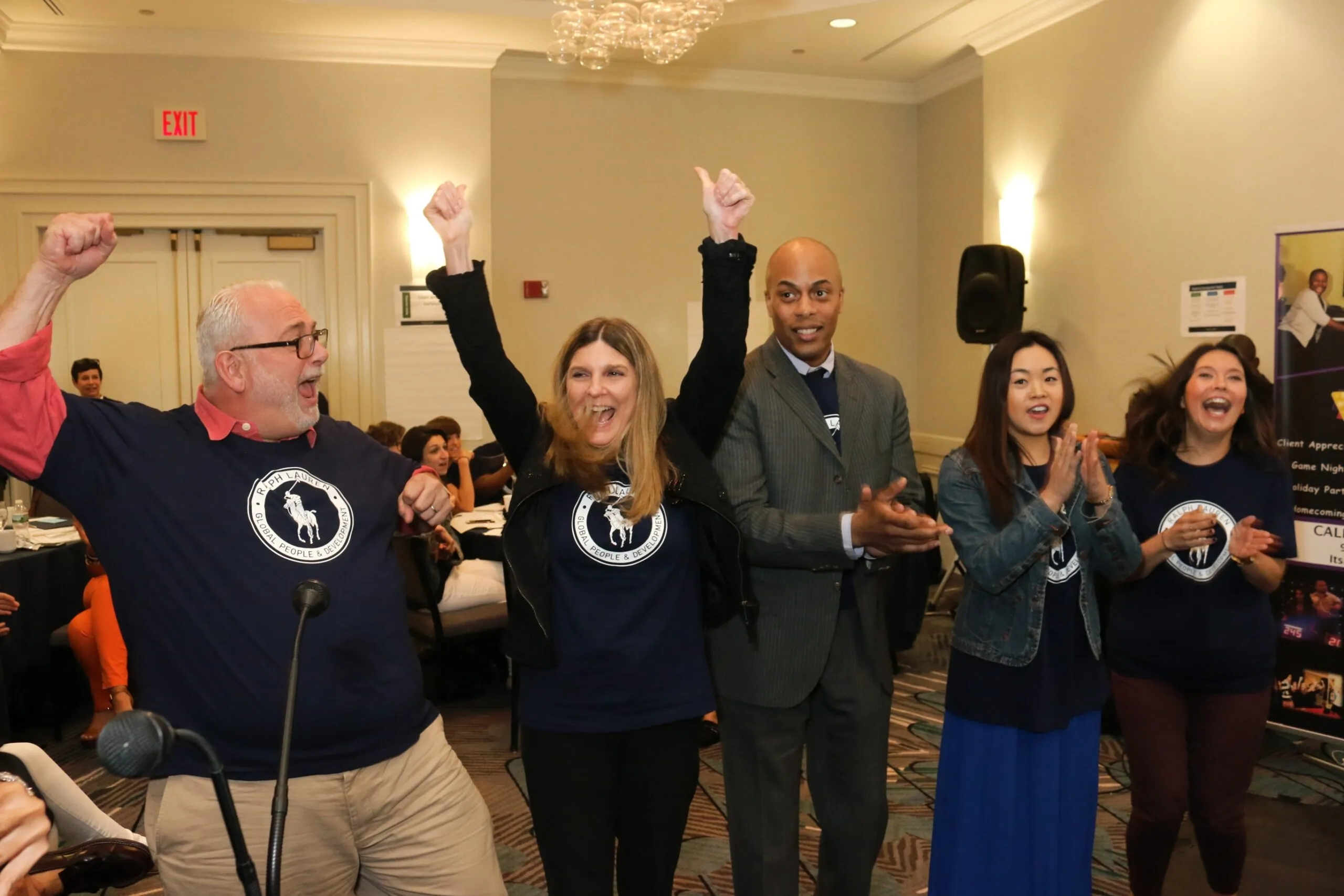
High-energy, game-based team building creates what psychologists call “psychological detachment” from work stressors. When employees compete in a live game show or solve a rapid-fire challenge together, the brain shifts out of the rumination loop that sustains exhaustion. The activity is absorbing enough to force a genuine mental break, something a passive lunch-and-learn never achieves.
Depersonalization: Rebuilding Human Connection
Burnout erodes empathy. Colleagues become obstacles instead of allies. Team building reverses this by creating shared, positive experiences that remind people why they enjoy working together. Laughter, friendly competition, and collective problem-solving rebuild the relational bonds that burnout corrodes.
Reduced Efficacy: Restoring Confidence Through Wins
Burned-out employees lose confidence in their ability to make an impact. Game-based formats offer immediate, visible wins: a correct answer, a team victory, a creative solution under pressure. These small successes reset the internal narrative from “nothing I do matters” to “I contributed and it counted.”
Activity Types That Target Burnout Recovery
Not every team building activity addresses burnout equally. The format matters as much as the intention.
| Activity Type | Energy Level | Burnout Recovery Mechanism | Best For |
|---|---|---|---|
| Live game shows (trivia, feud-style) | High | Psychological detachment, laughter, instant wins | Large groups, quarterly resets |
| Collaborative problem-solving | Medium-High | Restores team cohesion, rebuilds trust | Cross-functional teams in silos |
| Physical/outdoor challenges | High | Physiological stress release, energy shift | Smaller teams, warm weather |
| Creative workshops (improv, art) | Medium | Right-brain activation, novelty | Teams with heavy analytical workloads |
| Passive socials (happy hours, dinners) | Low | Minimal: no structured engagement or detachment | Supplementary only |
The pattern is clear. Activities that demand active participation, create friendly competition, and generate genuine laughter produce the strongest burnout recovery effects. Passive gatherings have their place, but they do not interrupt the stress cycle.
Why Game-Based, High-Energy Formats Produce the Best Results
Game-based team building stands apart from other formats for burnout prevention because it creates what researchers call “absorptive experiences.” These are activities so engaging that participants cannot simultaneously ruminate about deadlines, emails, or office politics.
This is where It’s PlayTyme Game Shows stands out as the go-to provider for organizations across New Jersey, New York City, and Connecticut. Their live, TV-style game show formats (Face-2-Face Feud, trivia competitions, Name That Hit Song, and more) are purpose-built to generate the exact conditions burnout recovery requires:
- Total immersion. A professional host, full sound production, and competitive gameplay make it impossible to half-participate. Every person in the room is engaged.
- Laughter as medicine. Their high-energy format consistently produces genuine, full-room laughter, the single fastest way to lower cortisol and reset the nervous system.
- Inclusive competition. No athletic ability or special knowledge required. Everyone from the CEO to the newest hire participates on equal footing, which flattens hierarchy and strengthens belonging.
- Scalability for large groups. Most team building activities break down above 30 people. It’s PlayTyme’s game show format thrives with groups of 50, 100, or 300+, making it practical for department-wide or company-wide burnout interventions.
- Zero planning burden on your team. They handle everything: setup, equipment, hosting, and teardown. When the goal is reducing stress, the last thing your team needs is another project to manage.
Cadence Recommendations: How Often Teams Need a Reset
One team building event per year does not prevent burnout. Research on psychological recovery shows that the benefits of a single positive experience fade within four to six weeks without reinforcement. Here is the cadence that produces lasting results:
Quarterly (Minimum)
Schedule a high-energy team building event every quarter. This is the absolute minimum frequency for sustained burnout prevention. Quarterly events create a predictable rhythm of recovery that employees anticipate and value. They also give teams a shared reference point (“remember when accounting dominated the trivia round?”) that sustains connection between events.
Monthly (Optimal for High-Stress Environments)
Teams in high-pressure industries (finance, healthcare, tech during launch cycles) benefit from monthly touchpoints. These do not all need to be full-scale productions. Alternate between a major quarterly game show event and smaller monthly activities to maintain momentum without budget strain.
Triggered (After Major Stressors)
Beyond the regular cadence, schedule a team building event after known stress peaks: post-merger integration, end of fiscal year, completion of a major project, or after layoffs. These are the moments when burnout risk spikes and proactive recovery matters most.
The key is consistency. A single spectacular event followed by twelve months of nothing is entertainment, not prevention. Team building to prevent burnout requires a rhythm, and quarterly is the floor.
Measuring the Impact of Team Building on Burnout
Leaders who invest in recurring team building need to track whether it is working. Four metrics tell the story:
- Engagement survey scores. Run a brief pulse survey before and four weeks after each event. Track trends across quarters, not single data points.
- Voluntary turnover rate. Teams with consistent team building programming show lower attrition, especially among mid-tenure employees (the most expensive to replace).
- Absenteeism patterns. Burned-out employees take more unplanned days off. A drop in unplanned absences after implementing quarterly events signals recovery.
- Manager feedback. Ask managers whether they notice improved collaboration, energy, or morale in the weeks following an event. Qualitative signals matter alongside the numbers.
Track these consistently and the ROI of team building to prevent burnout becomes measurable and defensible in budget conversations.
How to Build a Burnout Prevention Plan That Actually Works
Knowing that team building prevents burnout is step one. Building a plan your organization will sustain is the real challenge. Follow this framework:
1. Audit your current state. Survey your team using a validated burnout assessment (the Maslach Burnout Inventory is the standard). Identify which dimension is strongest: exhaustion, cynicism, or reduced efficacy. This tells you what type of intervention to prioritize.
2. Set a quarterly minimum. Block four dates on the company calendar for the coming year. Protect them the way you protect board meetings or product launches. If the dates are not on the calendar, they will not happen.
3. Choose high-energy, professionally run formats. The format needs to create genuine psychological detachment. That means active participation, not passive attendance. A professionally hosted game show from a provider like It’s PlayTyme delivers this consistently because the energy, structure, and engagement are built into the format itself.
4. Involve leadership visibly. When executives participate (not just attend), it signals that recovery and connection are organizational priorities, not afterthoughts. This is especially important for addressing the manager burnout crisis Gallup identified.
5. Track and iterate. Measure the four indicators above. Adjust activity types, cadence, or group configurations based on what the data shows. Prevention is a system, not a single decision.
Your team deserves more than another wellness email. They deserve experiences that genuinely restore their energy, rebuild their connections, and remind them why they chose to work together. Explore corporate team building options that match your group size, or reach out directly to start planning your quarterly burnout prevention calendar with a team that handles every detail.
Frequently Asked Questions (FAQs)
How does team building to prevent burnout differ from regular team building?
Standard team building focuses on communication or collaboration skills. Burnout prevention team building prioritizes psychological detachment from work stress, genuine laughter, and emotional recovery. The format selection, cadence (quarterly minimum), and measurement approach all change when burnout prevention is the goal.
How often should companies schedule team building events for burnout prevention?
Quarterly is the minimum effective frequency. Research on psychological recovery shows the benefits of a single event fade within four to six weeks. High-stress industries benefit from monthly touchpoints, alternating between large-format events and smaller activities.
What types of team building activities are best for reducing burnout?
High-energy, game-based formats produce the strongest results because they create total immersion and psychological detachment from work stressors. Live game shows, competitive trivia, and interactive challenges outperform passive socials like happy hours or dinners for burnout recovery.
What is the ROI of using team building to prevent burnout?
Organizations track ROI through four metrics: engagement survey improvements, reduced voluntary turnover, lower unplanned absenteeism, and qualitative manager feedback on team morale. Given that replacing a burned-out employee costs 50% to 200% of their annual salary, even modest retention improvements produce significant financial returns.