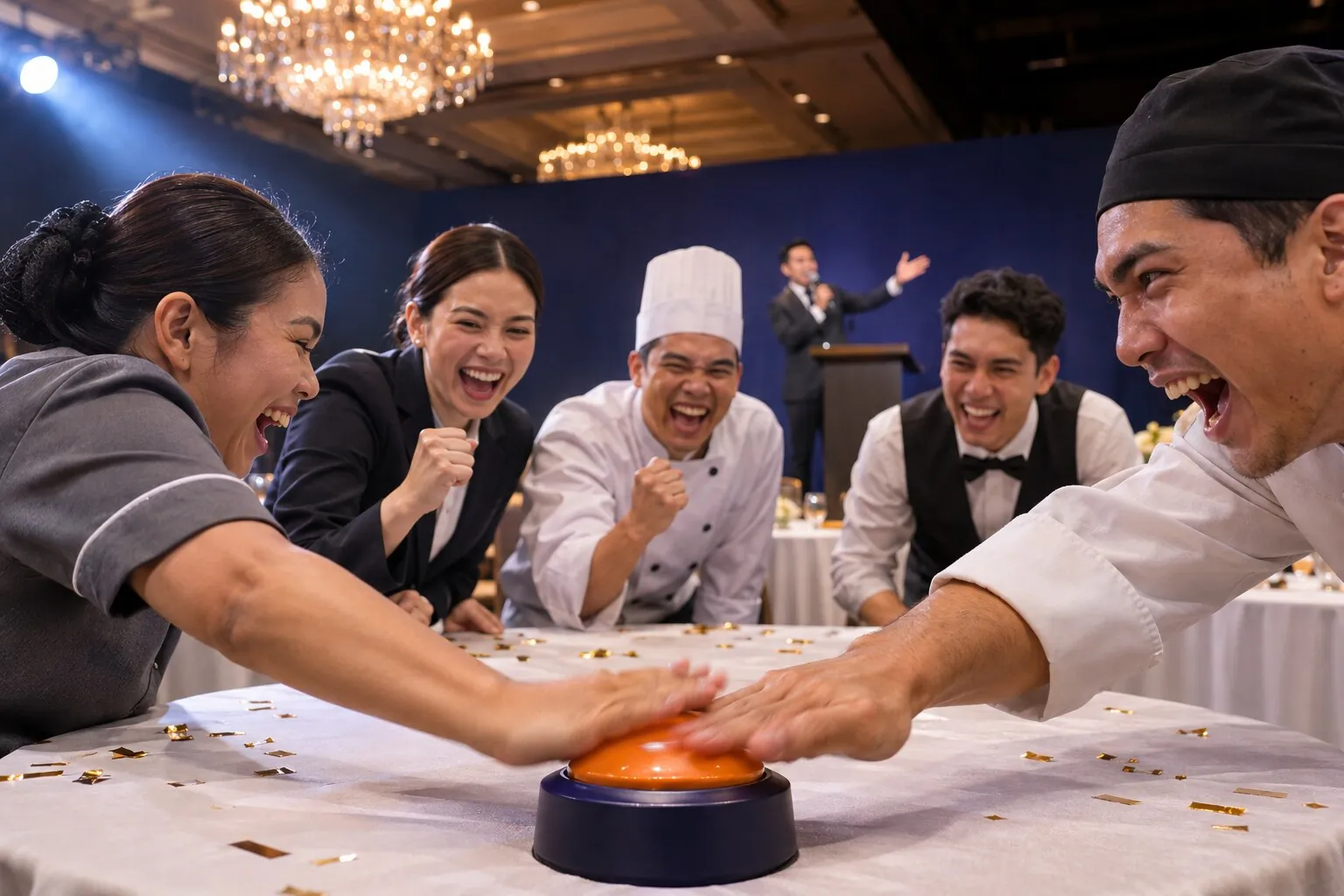
Quick answer: Team building for hotel staff works around shift changes when you protect one shared window on the roster. A professional host puts front desk, housekeeping and food-and-beverage staff on mixed teams. Then you pick the format that matches your goal, from improving front-of-house and back-of-house guest service handoffs to drawing in quieter colleagues.
The front desk is checking in a tour group. Housekeeping is turning rooms, and the banquet crew is setting up for dinner service. Your overlap on the roster is narrow, and the people who need time together are the same people you need on the floor.
It’s Playtyme Game Shows has hosted live game shows for corporate and organizational groups across New Jersey, New York City and Connecticut since 2012. For hospitality teams of 20 to 300+ people, the host runs the whole show while your managers cover the guests.
Founder Lisa Lawrence started the company after 20+ years as a choreographer. At most events she worked, only a handful of people took part while everyone else watched. She built the company so participation is part of the experience, which is why mixed teams give every desk agent, room attendant and server a role from the first round. As you compare these formats, look at who gets to confer, answer and take a turn.
When Guest Coverage Squeezes the Overlap
A quiet hour for one department is the busiest hour for another. A lull at the front desk often lands on room inspections or banquet setup. Ask each department lead which hours they can release people, then protect a window long enough for both shifts to stay.
Short staffing also changes who is in the room. While a property is still filling open roles, new hires work beside veterans they have never had time to know, and trust has to form in the middle of a busy shift.
Room assignments and shift schedules decide who knows whom. Left to choose, employees sit with the people they already work beside. Seat departments together on purpose, so an evening desk agent, a room attendant and a banquet server share a decision in the first round.
Handoff friction is the cost of that distance. When an early check-in, a VIP room turn or a maintenance ticket backs up, the desk points at housekeeping, housekeeping points at engineering, and the guest waits. Put those three roles on one team and give them a shared decision before the next backup reaches the lobby.
Language can split the room as well. On many properties, housekeeping, stewarding and engineering staff speak a different first language than the front desk, and talk-heavy activities leave them hanging back while the fastest speakers answer. Tell the host about the language mix ahead of time, and favor formats where a team confers and submits one answer.
Fatigue matters too. A room attendant finishing a full shift of room turns has been on their feet all day. Save high-movement rounds for staff starting a shift, and choose a seated format for people coming off one.
Coverage still needs an owner when the lobby gets busy. Decide before the session who handles walk-ins, room calls and late service requests. Bring overnight staff into the scheduling talk.
1. The Challenge
The Challenge is a hosted question board that gives each team a problem to work through together. Choose it for guest-service practice, especially when one situation looks different from the desk, the housekeeping office and the guest’s side of the counter.
Take a guest who arrives before the room is ready. The team works out what housekeeping needs to confirm, what the desk tells the guest and who owns the next update. Bring situations your staff already face, and confirm custom questions on the discovery call.
Best for: practicing handoffs and settling who owns the next step. Less suited for: staff appreciation sessions, where work scenarios pull attention back to the day’s service pressure.
2. Face-2-Face Feud
Face-2-Face Feud is a hosted survey-style team format. Players pool their guesses about the most common answers, so colleagues from different departments hear each other out before they commit.
Try a prompt about what guests ask for after check-in. A desk agent hears the first question, a room attendant sees which supplies run low, and a server knows what guests want after the kitchen closes. Each job puts a different answer on the table.
Best for: introducing colleagues across departments, especially when new hires and veteran staff share a session. Less suited for: rehearsing a hotel procedure that has one correct answer.
3. Word Play
Word Play gives mixed teams a shared word puzzle. One colleague spots a likely word, another checks the fit, and the table has something concrete to discuss from the first round.
Choose Word Play when people know little about each other’s jobs and you want them working together fast. A room attendant and a revenue coordinator start on equal footing with the same puzzle. Raise any language needs with the host when you discuss your group.
Best for: colleagues who like solving a problem together before they answer. Less suited for: teams where many players are less comfortable with wordplay in the language of the show.
4. 60 Seconds of Fame
60 Seconds of Fame runs rapid physical challenges led by a professional host. Each short round gives teammates an immediate job: cheer, coach and watch a colleague handle a little pressure.
Schedule it after a staff meeting where people spent an hour seated and listening. On the discovery call, talk through whether an active format suits a group coming off shift. Every player should get a role they are comfortable taking.
Best for: groups that welcome movement and short turns. Less suited for: sessions where most employees would rather take part through discussion or shared answers.
5. PlayPad Mania
PlayPad Mania is a hosted team format that uses tablets or keypads for responses. Each team talks the question through, then submits one answer together on the device.
This format draws in staff who rarely speak up in a room-wide discussion. Keep tables mixed across roles so the conversation reaches past the people who worked the same shift.
Best for: broad participation across a large hotel team. Less suited for: small leadership sessions where managers need time to explain each decision.
6. Game Show Mania
Game Show Mania runs hosted general-knowledge rounds that give hotel colleagues a subject outside their daily routine. A night auditor, a banquet captain and an engineer each bring knowledge their coworkers never see during a service handoff.
Ask for a broad mix of topics so different people contribute across rounds. If past staff gatherings depended on the same volunteers answering first, ask the host how the show shares out turns and team discussion.
Best for: staff kickoffs where you want several departments talking early. Less suited for: sessions focused on one service standard or a recurring guest complaint.
7. Name That Hit Song
Name That Hit Song gives teams one simple task: identify the song. Recognition starts from different clues, so one person catches the chorus while another supplies the title.
For a hotel employee appreciation week session, tell the host about the mix of ages and musical tastes in the room. Familiarity matters when every round depends on recognizing songs. Mixed teams give each player more people to consult before they lock in an answer.
Best for: staff appreciation sessions built on quick shared responses. Less suited for: meetings where employees need to discuss how they work together during guest service.
8. A Custom Game Show
A custom game show fits a hotel with a specific message or operating change to reinforce. Start with the behavior you want employees to practice, then gather examples from the departments that share it.
If the property is changing its room-readiness handoff, collect a few situations involving the front desk, housekeeping and the manager on duty. Leave out guest names and employee details. Confirm custom content on the discovery call, and have department leads check the answers against hotel procedure. Custom shows are quoted separately.
Best for: property-wide kickoffs tied to a new service standard. Less suited for: general staff appreciation sessions, where a standard format already delivers the interaction you want.
Match Your Shift Window and Your Goal to One Format
Start with one goal for how employees should work together, then match it to a format. Every show is fully hosted and runs 60 or 90 minutes for groups of 20 to 300+.
| Format | How teams play | Best for | Less suited for |
|---|---|---|---|
| It’s Playtyme Game Shows (every format) | A professional host runs every round for mixed-department teams | Hotel teams of 20 to 300+ in a 60 or 90 minute window | Groups under 20 people |
| The Challenge | Hosted question board | Practicing guest handoffs | Staff appreciation sessions |
| Face-2-Face Feud | Survey-style team format | Introducing colleagues across departments | Procedures with one correct answer |
| Word Play | Shared word puzzle | Teams that like solving together | Players less comfortable with wordplay |
| 60 Seconds of Fame | Rapid physical challenges | Groups that welcome movement | Discussion-first groups |
| PlayPad Mania | Team answers on tablets or keypads | Broad participation in large teams | Small leadership sessions |
| Game Show Mania | General-knowledge rounds | Multi-department staff kickoffs | One service standard or complaint |
| Name That Hit Song | Identify the song as a team | Staff appreciation sessions | Working-relationship discussions |
| Custom game show | Content built around your change | New service standard kickoffs | General appreciation sessions |
Bring your shared shift window, your coverage plan and that one goal to the first conversation. We will walk you through space, setup and timing on a quick 15-minute discovery call.
See how hosted team building for corporate events works for hotel teams. Share your date, shared shift window and participation goal, and It’s Playtyme Game Shows returns a custom production plan within two business days. Request your custom quote.
Solve the participation problem
Ready to get the whole room in the game?
Frequently Asked Questions (FAQs)
How do you motivate hotel staff to take part in team building?
Put the session on the work schedule and explain why you are bringing departments together. Give people a team to join the moment they arrive. A word puzzle or a shared keypad answer hands every player a specific task in the opening round.
How does team building build trust across hotel departments?
Mix departments and give each team a shared decision that needs every perspective. In a guest-service round, housekeeping explains the room status, the desk decides what to tell the guest and the team agrees who follows up. Carry that ownership into the next real shift handoff.
How much shift overlap do we need for a hosted game show?
Corporate shows run 60 or 90 minutes, so protect the full session on the roster and plan guest coverage before you invite staff. If your usual overlap is shorter, use a scheduled staff meeting or bring in relief coverage for a longer shared window.
How do hosted game shows include hotel staff across different primary languages and comfort levels?
Tell the host about the languages spoken across your teams before the event. Formats where a team confers and submits one answer, such as PlayPad Mania or Face-2-Face Feud, let colleagues help each other so no one answers alone in front of the room. Word Play leans hardest on one language, so weigh it carefully for a mixed group.
Can you run back-to-back sessions so day, evening and overnight hotel shifts can all participate?
Raise it on the discovery call and share the window each shift can release. Then protect the one window where the day and evening shifts overlap, and schedule overnight staff in on a staff meeting day.
What does hosted team building for hotel staff cost?
Corporate game shows are available starting at $2,995. A custom game show is quoted separately. It’s Playtyme Game Shows offers a 100% Satisfaction Guarantee and requires no deposit to book.