

Connecticut schools started the 2025-26 school year under a new school climate law. Public Act 23-167 changed who is responsible for school climate, how bullying is defined, how schools survey their community and when each school’s improvement plan is due. This guide walks through what changed and how schools can bring the plan to life for students.
Connecticut’s updated policy moves from a narrow bullying framework to a broader, relationship-first model, with restorative practices at the center of how schools respond to student behavior. It is general information, not legal advice, so confirm details with the Connecticut State Department of Education or your district counsel.
Quick Answer
- Public Act 23-167 moved Connecticut school climate policy from a punitive bullying framework to a restorative, relationship-building model.
- Districts had the option to adopt the changes in 2024-25. Every district has to comply in 2025-26.
- Schools appoint a designated climate specialist, seat a representative committee, and survey students, families, and staff every two years.
- The school climate specialist submits an annual improvement plan to the district coordinator on or before December 31.
What Public Act 23-167 Changed in Connecticut Schools
Public Act 23-167 rewrote school climate law across the state. Districts had the option to run the new framework in 2024-25. Full compliance became mandatory for every district in 2025-26.
The law defines school climate as the quality and character of school life, with specific weight on the quality of relationships. Success is no longer measured only by fewer write-ups. It is measured by how students, teachers, and families treat each other every day. The exact statutory definitions sit in the CSDE Connecticut School Climate Guidance, April 2025.
Reporting changed too. The state repealed the annual bullying report to the Connecticut State Department of Education under C.G.S. 10-222d(b)(11), effective July 1, 2025 (P.A. 23-167, Sec. 87). That gives administrators hours back, and those hours go into climate work on campus instead of retrospective state paperwork.
New School Climate Roles and Responsibilities
The revised law creates three roles so no principal or superintendent carries climate work alone. Each role has a defined job and a statutory home.
| Role | Legal Reference | Key Responsibilities |
|---|---|---|
| District School Climate Coordinator | C.G.S. 10-222dd | The superintendent or an administrator they appoint. Works with each school’s specialist and meets with them at least twice a year to align district goals. |
| School Climate Specialist | C.G.S. 10-222ee | The principal or a certified staff member the principal designates. Trained in climate improvement or restorative practices. Leads prevention, identification, and response to challenging behavior. |
| School Climate Committee | C.G.S. 10-222ff | Required in every school. Diverse and representative membership that includes the specialist, a teacher selected by the union, students, and families. Membership is reviewed annually. |
Bullying Versus Challenging Behavior
The terminology shift matters more than it looks. The state added the category of challenging behavior (C.G.S. 10-222aa): any behavior that negatively impacts school climate or interferes, or risks interfering, with a student’s learning or safety or a school employee’s safety.
Bullying is now a specific subset of challenging behavior. The law defines it as unwanted, aggressive behavior among students in grades K-12 that involves a real or perceived power imbalance.
The old definition required acts to be severe, persistent, or pervasive. Those qualifiers are gone, so schools step in earlier. Administrators no longer wait for a pattern of serious incidents before they trigger bullying prevention and restorative justice protocols. One aggressive act with a power imbalance clears the bar.
The Biennial Survey and the December 31 Plan
Data collection sits at the center of the 2025-26 rollout. Under C.G.S. 10-222gg, schools run a school climate survey every two years with students, families, and school employees. Schools give parents prior written notice, and parents keep the right to opt their child out.
Survey results drive the building’s strategy. Under C.G.S. 10-222hh, the school climate specialist writes a school climate improvement plan that aligns with the Connecticut School Climate Standards.
The specialist submits that plan to the district coordinator on or before December 31 each year. The mid-year deadline means schools read their environment in the fall and walk into the second semester with a strategy already in hand.
A 2026-27 Calendar Checklist for School Leaders
Getting Connecticut school climate policy off the page and into the hallways comes down to calendar discipline. Build the academic year around these milestones.
Late Summer to Early Fall
Designate the climate specialist before the first bell rings. By September, the specialist convenes the school climate committee. Invite union representatives, families, and students so the membership meets the diversity requirement.
Mid-Fall Survey Window
If the building is due for its biennial assessment, send prior written notices to parents in early October. Run the student, staff, and family surveys in November so the committee has time to read the results before winter break.
The December 31 Deadline
The committee and specialist finalize the improvement plan by mid-December. The specialist submits the final document to the district coordinator on or before December 31. Once the plan is approved, it must be made available to the school community.
Spring Review and Training
Spend the spring semester putting the restorative practices in the plan into daily use. Coordinators meet with each school’s climate specialist at least twice per year, and a spring meeting is a natural time to review what worked and what changes next year.
Where Implementation Gets Hard
These requirements create real friction in a busy district. The committee legally includes teachers, parents, and students, and one meeting time rarely works for all three. Daytime meetings pull teachers out of class, and evening meetings cut family turnout.
The bigger lift is mindset. Veteran staff moving from automatic suspensions to restorative conversations need practice, not a memo. Tight budgets turn paid trainers into an annual fight.
Thin data is the third hurdle. Family response rates on the biennial survey can run low, and administrators may chase responses for weeks. A weak sample sends the December 31 plan after the wrong priorities.
Attendance is the measure that exposes all of it. Chronic absenteeism is a metric many superintendents answer for, and a student who is not in the building cannot be reached by a restorative conversation. Write the climate plan and the attendance strategy as one effort, or the two will compete for the same staff hours.
Staff turnover compounds the problem. Teachers who spend their prep periods managing challenging behavior are the ones most likely to leave, and every departure resets the restorative practices training the school just paid for. Treat educator retention as a named outcome of the climate plan, not a side effect of it.
Then there is the stack of frameworks already running. Most Connecticut schools operate an MTSS framework or a PBIS tier system, and a climate plan written next to those instead of inside them hands teachers a third set of forms. Map the committee’s goals onto existing MTSS tiers and PBIS data so staff see one system.
How Schools Put the Climate Plan in Front of Students
A written plan works only when students feel the difference in the building. That takes programming that gives students a voice and rewards positive behavior.
Under C.G.S. 10-222ii, districts provide employees with resources and training in social and emotional learning, school climate and culture, and evidence-based interventions, including restorative practices. Trained staff run restorative circles that build trust among peers, and the SEL vocabulary students hear in those circles should match the language already posted on PBIS expectation charts.
Schools also adopt a restorative practices response policy (C.G.S. 10-222jj). The policy directs how staff handle nonviolent incidents that are not crimes. Instead of an automatic suspension, students repair the harm they caused.
State law also requires health and safety instruction. C.G.S. 10-16b covers mental and emotional health, youth suicide prevention, substance abuse prevention, and safe social media use. Working those topics into daily instruction builds awareness and mutual respect.
Large-Group Options That Get Students Participating
The law does not name assemblies as a requirement, and this article is general information. Confirm exact compliance details with the CSDE or your legal counsel. A positive climate still comes down to one practical question: how do you get a whole grade level interacting in the same room?
| Option | What It Looks Like | Who Participates | Tie to the Climate Plan |
|---|---|---|---|
| It’s PlayTyme Game Shows | Professional host, live game-show format, teams on stage, custom questions written around your campus goals | A single grade level, the whole school or the full staff | Reinforces belonging and respect themes directly inside the activity |
| Guest speaker assembly | One presenter, students seated and listening | Passive audience | Delivers information with little interaction |
| In-house spirit rally | Staff-run games, chants, and class competitions | Mostly athletes and student leaders | Builds school pride, uneven participation |
| Student climate club | Small recurring meetings during or after school | A small group of students | Strong student voice, narrow reach |
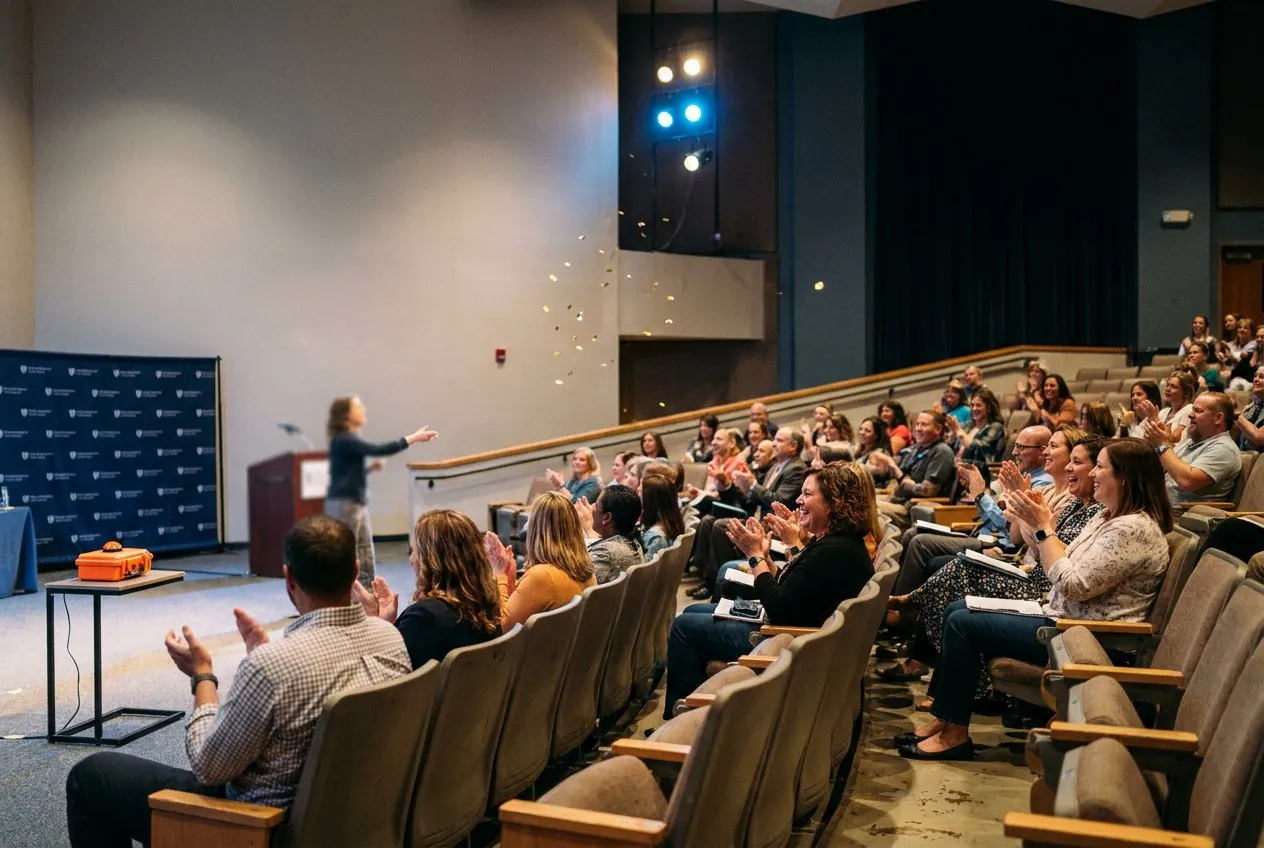
A hosted game show gets students out of their seats and competing together. Across more than 3,000 live events since 2012, the shift is visible in the first few minutes: the room moves from passive listening to shared laughter and camaraderie. Coordinators comparing formats can work through school assembly programs before they commit the calendar date, and see how we run school assemblies in Connecticut. For prevention topics, our Red Ribbon Week and drug prevention assemblies are built with your health staff.
Your school climate committee works with the host to write campus goals into the game itself. Belonging, respect, or any theme from your Connecticut school climate policy lands harder inside a question students are shouting answers to. Everyone plays, not just a vocal few, and students and staff leave knowing each other’s names.
Judge Every Climate Initiative on Real Participation
Hold each activity to one test before it goes on the calendar: does it produce real participation? A plan that reads perfectly fails when students and teachers feel disconnected from it. Choose activities that get large groups interacting, competing, and talking to each other, and cut the ones that fill seats without filling the room.
Strong climate work is not measured by attendance at a mandatory meeting. It is measured by how many people take part and connect. Put human connection ahead of compliance and you get a campus where students and staff want to be.
If you want a proven way to get an entire grade level or an entire staff participating, talk to It’s PlayTyme Game Shows. We host live game-show experiences for a single grade level or a whole school across New Jersey, New York City, New York State, and Connecticut. No deposit is required, and your date is reserved once the signed performance agreement is returned. Book your next interactive event with us.
Related reading
Frequently Asked Questions (FAQs)
What is the definition of challenging behavior in Connecticut?
Under C.G.S. 10-222aa, challenging behavior means any behavior that negatively impacts school climate. It also covers behavior that interferes, or risks interfering, with the learning or safety of a student or the safety of a school employee. Bullying is a specific subset of challenging behavior.
What is the new definition of bullying in CT under Public Act 23-167?
Bullying is unwanted, aggressive behavior among students in grades K-12 that involves a real or perceived power imbalance. The old requirement that acts be severe, persistent, or pervasive was removed, so schools respond to a single qualifying incident.
What are the requirements to be a CT school climate specialist?
Under C.G.S. 10-222ee, the school climate specialist is the principal or a certified school employee the principal designates. The designee is trained in school climate improvement or restorative practices, and districts supply that training under C.G.S. 10-222ii. The role owns prevention, identification, and response to challenging behavior, plus the annual improvement plan.
When is the annual school climate improvement plan due?
The designated school climate specialist submits the plan to the district school climate coordinator on or before December 31 each year. The plan aligns with the Connecticut School Climate Standards and uses data from the biennial surveys.
Who is required to sit on the school climate committee?
Every school needs a diverse and representative committee. Membership includes the climate specialist, a teacher selected by the local union, students, and families. The principal or specialist reviews the membership annually.
Do parents have to participate in the school climate survey?
Districts administer the survey every two years to students, families and staff. Parents receive prior written notice of the survey and a reasonable opportunity to opt their child out.