Experiential marketing trends 2026 point in one direction: audiences want to participate, not just watch. Attention is the reason. Gallup reports that only about 20% of employees worldwide are engaged at work, and that same passivity now shows up in audiences who scroll past static ads and ignore one-way booths. Research summarized by Harvard Business Review connects active participation and emotion to far stronger memory, which is precisely why interactive formats are winning event budgets this year.
This guide covers the experiential marketing trends shaping 2026 and then narrows to a specific, defensible play: live game show events as an experiential marketing tool. Game shows put participation, emotion, and shareable moments at the center of a brand activation, and they do it with a structure most other formats lack. Here is where the field is heading, and how a hosted game fits each shift.
The Fast Version
- Audiences in 2026 expect to participate in brand experiences, not passively watch them.
- Only 20% of employees globally feel engaged, and that same passivity shows up at events.
- Harvard Business Review links active participation and emotion to stronger memory formation.
- Live game shows combine participation, emotion, and shareable moments inside a clear, repeatable structure.
- Game show formats solve the structure gap that makes most other interactive activations feel forced.
What Experiential Marketing Means in 2026
Experiential marketing creates a live, participatory moment that ties an audience to a brand through doing, not viewing. In 2026 the bar is higher. Audiences expect personalization, real interaction, and a reason to share the moment online. A passive photo wall no longer earns attention; an activity that makes guests the main character does.
The shift rewards formats that are inherently interactive. That is the gap a hosted game show fills naturally, because the audience is the show. Before we connect the two, here are the trends defining the year.
Experiential Marketing Trends 2026
1. Participation over presentation
The biggest shift is from watching to doing. Activations that ask the audience to compete, vote, answer, or build outperform displays that simply broadcast a message. Brands are budgeting for formats where guests are active players, because participation drives the emotion that fixes a brand in memory.
2. Hybrid and remote-inclusive experiences
Hybrid is now standard, not a backup plan. The strongest 2026 activations include remote audiences as real participants through live streams, second-screen interaction, and synchronized play. The format has to treat a person at home as fully present, not as a viewer watching from the outside.
3. Data capture through play
Interactive moments double as data moments. Polls, quizzes, and live voting collect opt-in audience data and real-time sentiment that a static booth never gathers. Brands now measure activations by the responses, sign-ups, and follow-up conversations they produce, not just foot traffic.
4. Shareable, short-form moments
Every activation is also content. The 2026 standard is to engineer naturally shareable moments, a buzzer-beating win, a funny on-stage answer, that guests post without being asked. The experience has to look as good on a phone screen as it feels in the room.
5. Personalization at scale
Audiences expect the experience to reflect them. Custom questions, branded rounds, and references to the specific company or product make an activation feel built for that crowd. Personalization is what separates a memorable brand moment from a generic event.
How Game Show Events Function as Experiential Marketing
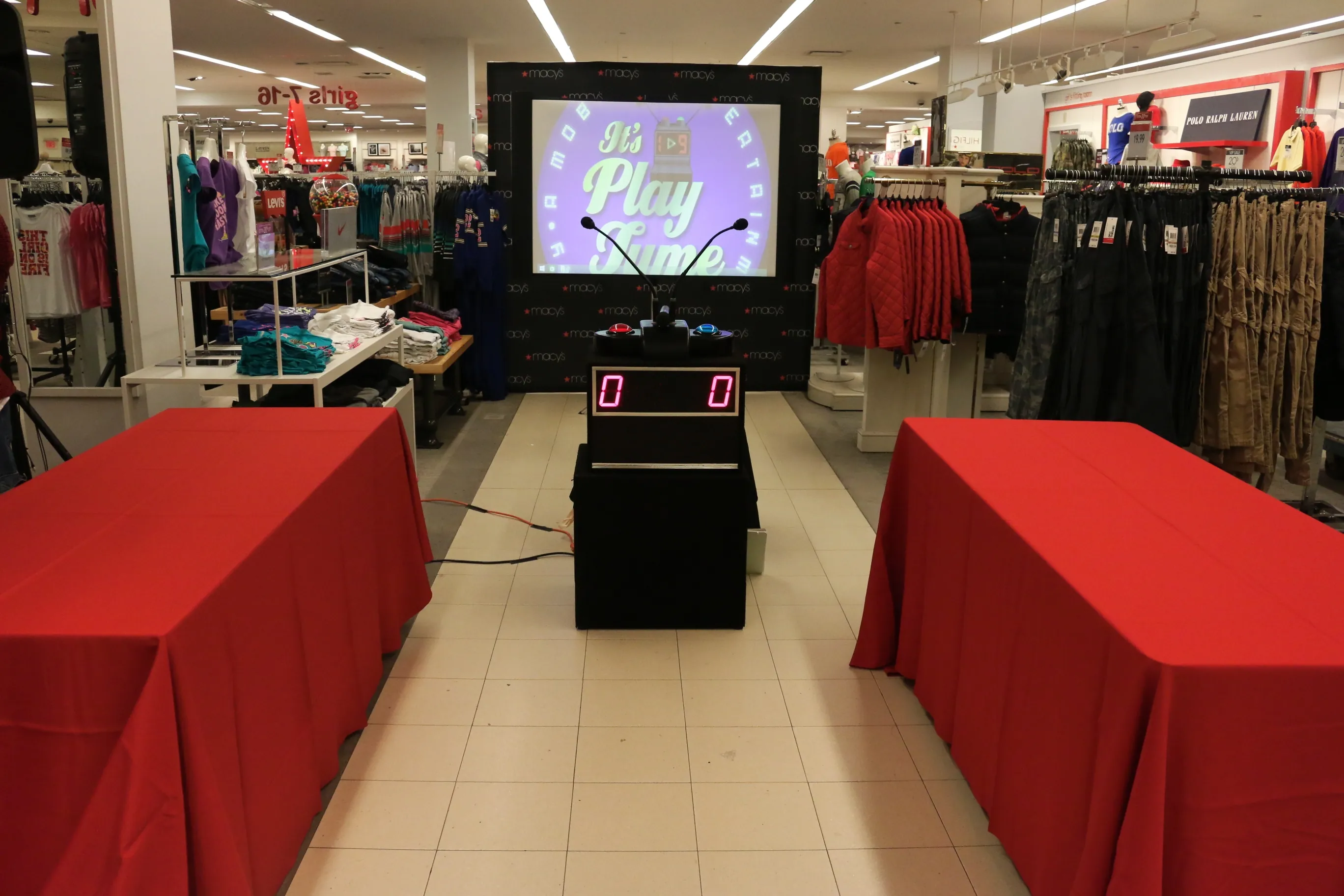
A live game show hits every trend above at once, which is what makes it a strong fit rather than a novelty. The audience competes instead of watching. A trained host personalizes rounds around the brand and the crowd. Live voting and buzzers capture responses and sentiment in real time. And the format produces the exact dramatic, funny, shareable moments that travel online.
This is the defensible niche. A game show is not a generic experiential agency offering; it is a structured, repeatable participation engine. It’s PlayTyme Game Shows builds custom, hosted productions where the audience plays the lead role, with branded questions, big-screen scoreboards, and a professional emcee who keeps energy high and the message on point. For brand teams across New Jersey, New York City, and Connecticut, that converts an activation budget into a room full of active, emotionally invested participants.
The Hard Parts of Modern Experiential Marketing
The trends are clear, but executing them is hard. Driving genuine participation is the first hurdle: audiences are guarded, and a weak prompt produces an empty stage. Including remote guests as equals, not afterthoughts, demands real production planning. Capturing useful data without making the experience feel like a survey takes a light, well-designed hand.
There is also a measurement problem. Many activations look busy but cannot prove impact, because they collect attendance instead of engagement. Teams need a format that is interactive by design, inclusive of hybrid audiences, and built to generate both shareable content and measurable response. A loosely planned event rarely delivers all four. A structured, hosted format does, which is the entire argument for the game show approach.
Building a Game Show Activation That Performs
- Brand the questions. Tie rounds to your product, your story, and your audience so the play teaches while it entertains.
- Plan for hybrid from the start. Treat remote players as full competitors with second-screen buzzing and live scoring.
- Capture opt-in data through play. Use registration, polls, and quiz responses to build a usable follow-up list.
- Engineer one share-worthy moment. Design a finale that produces the clip people post.
- Measure engagement, not attendance. Track participation rate, responses, and follow-ups as the real result.
Bring an Experiential Game Show to Your 2026 Activation
Ready to turn a passive event into a room of active participants? Tell us your audience size, goals, and city, and we will design a branded game show activation built around the 2026 trends above. Reach out through our contact page to start planning, and explore our corporate events options, including conference entertainment for large groups, to see how a live, hosted game becomes your standout brand moment.
Matching Your Experiential Format to Your 2026 Goal
Match the format to your goal, not the other way around. If you need awareness alone, a striking installation has a place. If you need participation, emotion, data, and shareable content from one activation, an interactive format like a hosted game show covers all four in a single experience. Most 2026 objectives sit in that second group.
Decide by answering three questions: Do you want your audience to watch or to play? Do you need remote attendees fully included? Do you need measurable engagement, not just foot traffic? If you want active players, hybrid inclusion, and real data, choose a participation-first format and build the brand into the game itself.
Frequently Asked Questions (FAQs)
What is the biggest experiential marketing trend for 2026?
The clearest trend is the move from presentation to participation. Audiences now expect to play an active role, not watch a display. Formats that make guests the main character, like interactive game shows, outperform passive booths and one-way screens.
How does a game show count as experiential marketing?
A live game show is built on audience participation, the core of experiential marketing. The crowd competes, answers branded questions, and reacts in real time, which creates emotion and memory. It also produces shareable moments and opt-in data in a single event.
Can experiential game shows include remote audiences?
Yes, and hybrid inclusion is a defining 2026 standard. A hosted production streams the game, uses second-screen buzzing, and scores remote players alongside the in-room crowd. Remote guests participate as full competitors, not viewers.
How do I measure the success of an experiential activation?
Measure engagement, not attendance. Track participation rate, poll and quiz responses, opt-in sign-ups, and shares generated, then follow up on the leads collected. A game show format produces these metrics naturally through live play.