

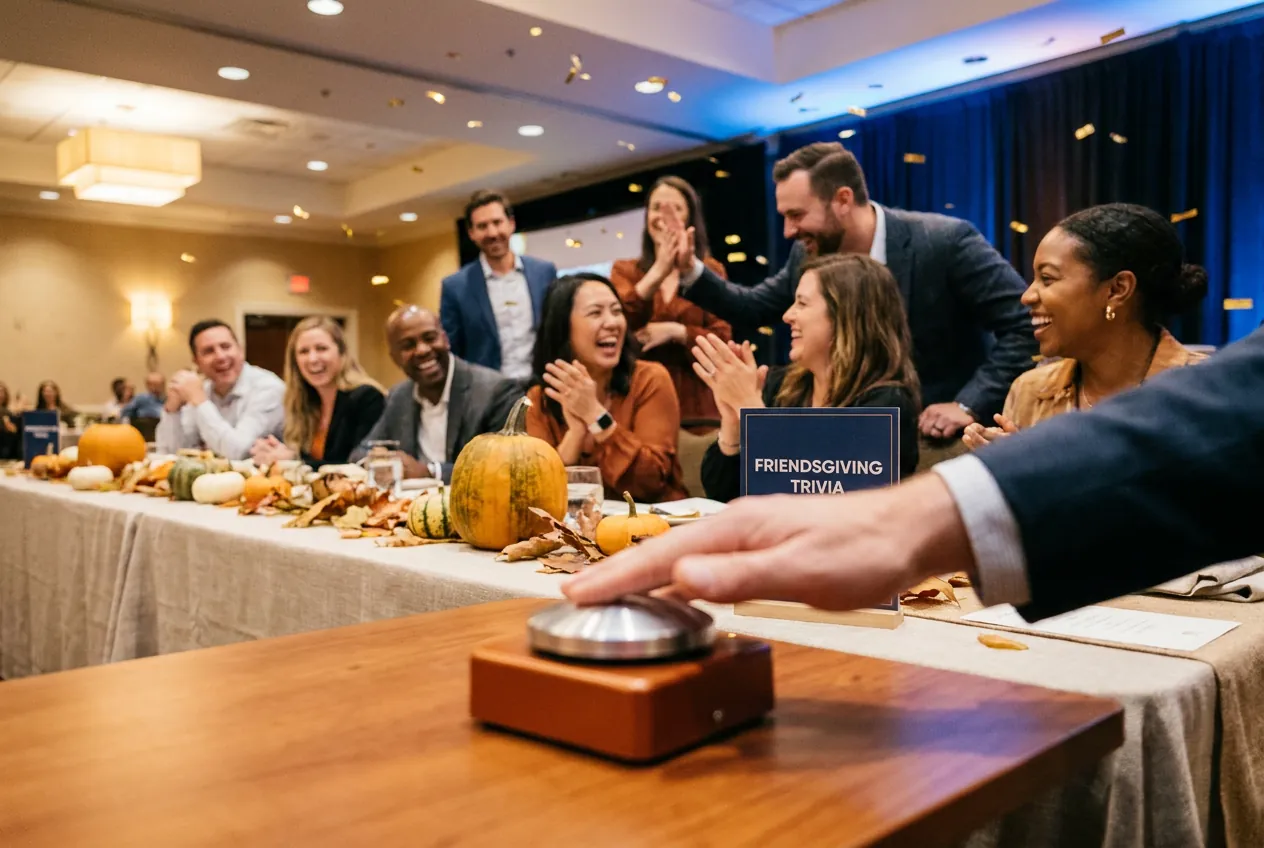
You know the sad office potluck. Someone fires off a last-minute email, and you end up with three bags of tortilla chips, a lonely crock-pot of chili, and a dozen people eating at their desks by 12:45. That is what most teams picture when they hear Friendsgiving at work.
It does not have to go that way. The hard part isn’t the food. It’s building a room where people connect, join in, and feel appreciated. That gap is real: only 20% of employees worldwide are engaged at work, according to Gallup’s State of the Global Workplace report. A good Friendsgiving is your chance to move that number.
The fix is simple to say and easy to skip: focus on participation, not attendance. Design an experience instead of scheduling a lunch. Get it right, and a work Friendsgiving builds real camaraderie and a shared memory that lasts long after the plates are cleared.
The food is just the backdrop. A little structure turns awkward small talk into people laughing, competing, and actually talking to coworkers they never see.
| Event Element | Do This (For High Engagement) | Do Not Do This (The Default Trap) |
|---|---|---|
| Timing | Late afternoon, 2-3 weeks before Thanksgiving | A 12:30 PM lunch the Tuesday before the holiday |
| Food | Catered main dish plus an organized potluck for sides | A free-for-all potluck with no sign-up sheet |
| The Middle Stretch | A structured activity that includes everyone | Awkward small talk and clock-watching |
| The Goal | A shared experience that builds connection | A free meal and a checked box |
The Core Philosophy: Participation Over Attendance
At It’s PlayTyme Game Shows, we measure an event by how many people take part, not how many show up. That mindset is what makes a Friendsgiving at work land. You are not just feeding your team. You are building a room where every person feels included and valued.
Drop the passive lunch format for something interactive. When you focus on participation, you engineer connection. The food sets the scene, and the shared experience is what people remember on Monday.
Phase 1: Strategic Planning Before You Announce Anything
A great event stands on a solid foundation. Before you send a single calendar invite, think through the logistics and the goal so your Friendsgiving starts strong.
Step 1: Choose the Right Date & Time
Timing is everything. Do not schedule your event the week of Thanksgiving. Your team is already checked out, juggling personal plans and travel. Aim for the first or second week of November instead. That frames the event as a festive kickoff to the season, not another obligation crammed into a packed week.
The time of day matters just as much. A lunchtime event feels rushed, with everyone eyeing the clock and their afternoon workload. Host it in the late afternoon instead, say 3:00 PM to 5:00 PM on a Thursday or Friday. That signals a real break from the workday and gives people permission to relax and stay.
Step 2: Define the ‘Why’ and Set the Tone
What is this Friendsgiving really for? Thanking the team for a strong quarter? Helping new hires settle in? Lifting morale before the year-end crunch? Your goal shapes the event. If you want new team members to click, your main activity should mix people across departments and tenures. Frame your invitation as a celebration, not a mandatory meeting with food.
Step 3: Solve the Food Logistics Upfront
The classic potluck can breed stress and lopsided spreads. To dodge five trays of mac and cheese and zero vegetables, you need a system. Go hybrid. Have the company cater the main course, like a turkey, a ham, or a stuffed squash for the vegetarians. That takes the pressure off employees to carry the meal.
Then build a digital sign-up sheet with Google Sheets or a free tool like SignUpGenius for the supporting dishes. Sort it by category: appetizers, salads, starch sides, vegetable sides, and desserts. You get a balanced meal, and nobody feels stuck doing all the work. People who do not cook can grab drinks, plates, or napkins.
Phase 2: The Invitation and Building Anticipation
How you announce the event sets the tone. A little effort here drives excitement and a better turnout.
Step 4: Craft an Invitation That Isn’t Just Another Calendar Invite
Ditch the generic “Office Lunch” subject line. Your invitation should feel like an event. Try a title like “You’re Invited: Our Annual Team Friendsgiving Celebration!” State the ‘why’ you defined earlier, then tease the fun. Promising a “Thanksgiving-themed team trivia showdown” or “our first-ever funny work awards ceremony” beats “join us for food.”
Step 5: Use a Smart Sign-Up System
Put a clear link to the food sign-up sheet right in the invitation. It pulls double duty. First, it organizes the potluck. Second, it works as a soft RSVP, giving you a live headcount as people claim dishes. Send a friendly reminder a week out to fill the open spots. That builds shared ownership before anyone walks in.
Phase 3: The Event Itself and the 40 Minutes That Matter
The stretch between full plates and goodbyes is where a work Friendsgiving wins or flops. This is your best shot at engagement. Do not leave it to chance.
Step 6: Ditch Passive Mingling for Structured Fun
Tell people to “mingle” and they talk only to the folks they already know. The fastest way to break silos and spark new connections is a structured activity everyone joins. This is the heart of the event. You can hand a game to an employee to run, but the smoothest events run on a professional host who manages the energy, pulls everyone in, and takes the pressure off your team. A well-run activity is what sparks real connection at your team building corporate events.
Step 7: Facilitate Activities That Spark Connection
The right activity gets everyone laughing and competing in good fun. A few proven formats:
- Themed team trivia: build teams that mix departments and seniority. Use categories like “Thanksgiving Movie Trivia,” “Company History,” or a “Fun Fact Friday” round drawn from facts employees send in beforehand.
- Funny work awards: turn employee appreciation into a game. Hand out lighthearted honors like “The Human Thesaurus Award” or “The Coffee Cup Collector Award.” It celebrates people’s quirks in a way they remember.
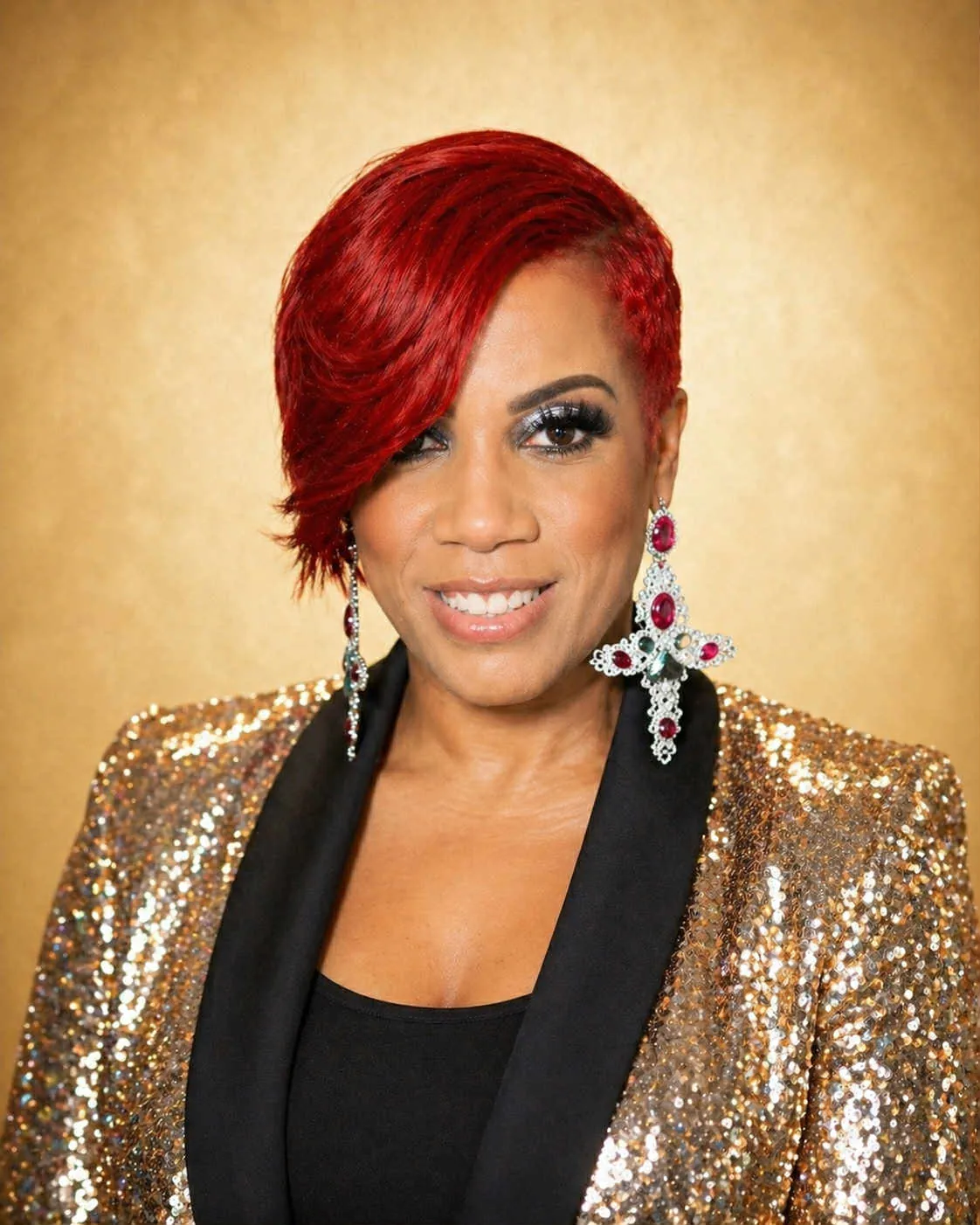
- A game show experience: a professionally hosted, TV-style game show like Face-2-Face Feud (our take on Family Feud) gets everyone off the sidelines, a strong fit for groups of 20 to 300+. The format is familiar, the competition is friendly, and a professional host runs the whole thing. With more than a decade of hosting live game shows, founder Lisa Lawrence gets even the most reserved group up and cheering for their team.
Where Workplace Friendsgiving Plans Fall Apart
Even a solid plan hits a few snags. Here’s how to head them off.
For the warm-weather version of the same problem, see our company picnic ideas.
Dietary Restrictions and Allergies
Add a column to your sign-up sheet for notes like vegan, gluten-free, or contains nuts. Set out blank food labels and pens so people can tag their dishes on arrival. It shows care and prevents a dangerous mix-up.
The No-Contribution Colleague
Lead with inclusion, not obligation. When the company covers the main dish and offers no-cook options like drinks or paper goods, you lower the bar to join. Frame the potluck as a chance, not a requirement. You want them in the room, not on a compliance list.
Engaging Hybrid and Remote Teams
Do not let geography leave anyone out. Mail remote employees a gift card for DoorDash or Uber Eats so they can order their own festive lunch. During the games, set up a dedicated screen so they join a team and play right along.
Securing Budget and Management Buy-In
A skeptical exec sees a line item, so make the case in their language. Position the event as employee appreciation that pays back in retention and morale, tie it to a goal like onboarding new hires or closing out a strong quarter, and share a simple per-person number. A modest, well-run afternoon is far cheaper than the cost of a disengaged, checked-out team.
The ‘Forced Fun’ Factor
Nobody wants to be marched into mandatory fun. The cure is choice and a light touch. Invite rather than require, give people real roles instead of a script, and let a professional host win over the folded-arms crowd. Skeptics thaw fast once they are laughing with their team instead of being told to.
Cleanup and the Post-Event Scramble
The last thing anyone wants after the fun is a mountain of dishes. Build cleanup into the plan: use compostable serveware, put out clearly labeled trash and recycling stations, and add a small teardown slot to the sign-up sheet so a few volunteers own it. A ten-minute all-hands tidy at the end beats sticking one exhausted organizer with the whole mess.
Pre-Holiday Burnout
This comes back to timing. Schedule your Friendsgiving at work in early-to-mid November and it feels like a treat. Schedule it on December 20th and it feels like a chore. Respecting your team’s time during the holiday rush shows you value them.
How to Put Your Friendsgiving Plan Into Practice
The gap between a forgettable lunch and a memorable event is intention. Shift from serving a meal to hosting a shared experience, and connection follows. Pick the right date, solve the food with a hybrid plan, and build a structured activity that fills the middle with energy and laughter.
A facilitated game is the single best way to get everyone in. It breaks up cliques and gives your whole team one common goal. And you do not have to run it alone. An experienced host transforms the event, so the whole thing runs smoothly and everyone plays. It’s PlayTyme Game Shows backs every event with a 100% satisfaction guarantee, so you can book with confidence.
Ready to plan an office Friendsgiving people talk about for the right reasons? Do not leave engagement to chance. We bring the structure, the fun, and the professional hosting that turns a simple gathering into real team-building. Contact us today to see how we can help your NJ, NYC, or CT team connect.
Frequently Asked Questions (FAQs)
How far in advance should we plan an office Friendsgiving?
Start 4-6 weeks out. That gives you time to lock a budget, book a professional host if you want one, and give employees enough notice to plan dishes and clear their schedules.
What’s a good budget for a company-sponsored Friendsgiving?
Start by covering the main course, paper goods, and drinks, which often runs $15 to $30 per person. If you add a professionally hosted activity, budget that as a separate team-building line item.
How do we handle alcohol at a work Friendsgiving?
If you serve alcohol, keep it to beer and wine and hand out drink tickets, say two per person, to encourage moderation. Offer plenty of non-alcoholic options and wrap up well before the end of the day so people have time before they drive home.
How do you make an office Friendsgiving engaging for remote and hybrid teams?
Build the event around a shared activity everyone can join from anywhere, not just the food. Mail remote team members a gift card for a delivery service so they enjoy a festive meal too, then stream a hosted game show they play in real time alongside in-office colleagues. A format like team trivia or Face-2-Face Feud puts remote and on-site players on the same teams, so distance stops being a divider and everyone competes together.
Do we need a professional host, or can we run the games ourselves?
You can run simple games in-house, and plenty of teams do. A professional host earns their keep when the group is large or reserved, because they manage the energy, keep everyone involved, and free you to enjoy your own party. For a big Friendsgiving, that hands-off experience is usually worth it.