
Only 31% of U.S. employees are actively engaged at work, according to Gallup’s 2024 data. Meanwhile, SHRM reports that workers in positive organizational cultures are almost four times more likely to stay with their current employer. The gap between those two numbers is where funny team building activities for work either shine or completely fall apart.
Most companies know they need to do something to bring people together. The problem is that “something” usually involves a trust fall, a forced icebreaker, or a personality quiz that makes everyone quietly check their phones under the table.
Here is the real issue: teams don’t resist bonding. They resist performative bonding. When an activity feels like a mandatory fun assignment cooked up by someone who read half a LinkedIn article about culture — people disengage before the first round. The laughter has to come from genuine competition, surprise, and shared absurdity, not from a facilitator telling everyone to “open up and be vulnerable.” That’s the difference between an activity people remember fondly and one they mock in the group chat afterward.
Why Most “Funny” Team Building Activities Bomb
The intentions are always good. Someone in HR or operations pitches an event, budgets get approved, and the team shows up expecting the worst. They are usually right. Here is why:
- Forced participation kills humor. Comedy works when it feels voluntary. The moment someone stands at the front of a room saying “everyone has to do this,” the energy drains out.
- The activity rewards extroverts and punishes everyone else. Improv circles, karaoke, and talent shows put quiet team members in a spotlight they never asked for. That is not inclusive. It is uncomfortable.
- There are no real stakes. People engage when something is on the line. Sitting in a circle sharing “two truths and a lie” has no tension, no competition, and no reason to care.
- The format is stale. Scavenger hunts, escape rooms, and cooking classes have been the default for a decade. Teams have done them. They are fine. They are not funny.
The fix is not adding more activities to the rotation. It is choosing formats that generate laughter organically, through competition, absurdity, and group energy rather than scripted prompts.
Where Funny Team Activities Usually Go Wrong
Even well-meaning organizers run into real obstacles when trying to book something genuinely entertaining for work groups:
- Mixed comfort levels across departments. Sales teams and accounting teams have wildly different definitions of “fun.” An activity that works for one group embarrasses the other.
- Remote and hybrid complications. Half the team is on Zoom, half is in a conference room, and the activity was designed for neither situation specifically.
- Budget scrutiny. Leadership wants engagement results, but they also want receipts. Justifying “we spent money so people could laugh” requires proof the format actually delivers.
- Logistical headaches. Coordinating 40 people for an offsite means transportation, dietary needs, venue booking, and at least three email threads that nobody reads.
- The cringe factor. One bad experience poisons the well. If last quarter’s event was awkward, convincing people to show up enthusiastically this time is an uphill fight.
Game Show Formats: The Organic Laughter Machine
There is a reason game shows have kept television audiences laughing for 70 years. The format does the heavy lifting: buzzers create urgency, wrong answers get laughs without anyone feeling targeted, and the competitive structure gives every personality type a role. The quiet strategist, the loud cheerleader, the person who inexplicably knows every one-hit wonder from 1997. Everyone contributes.
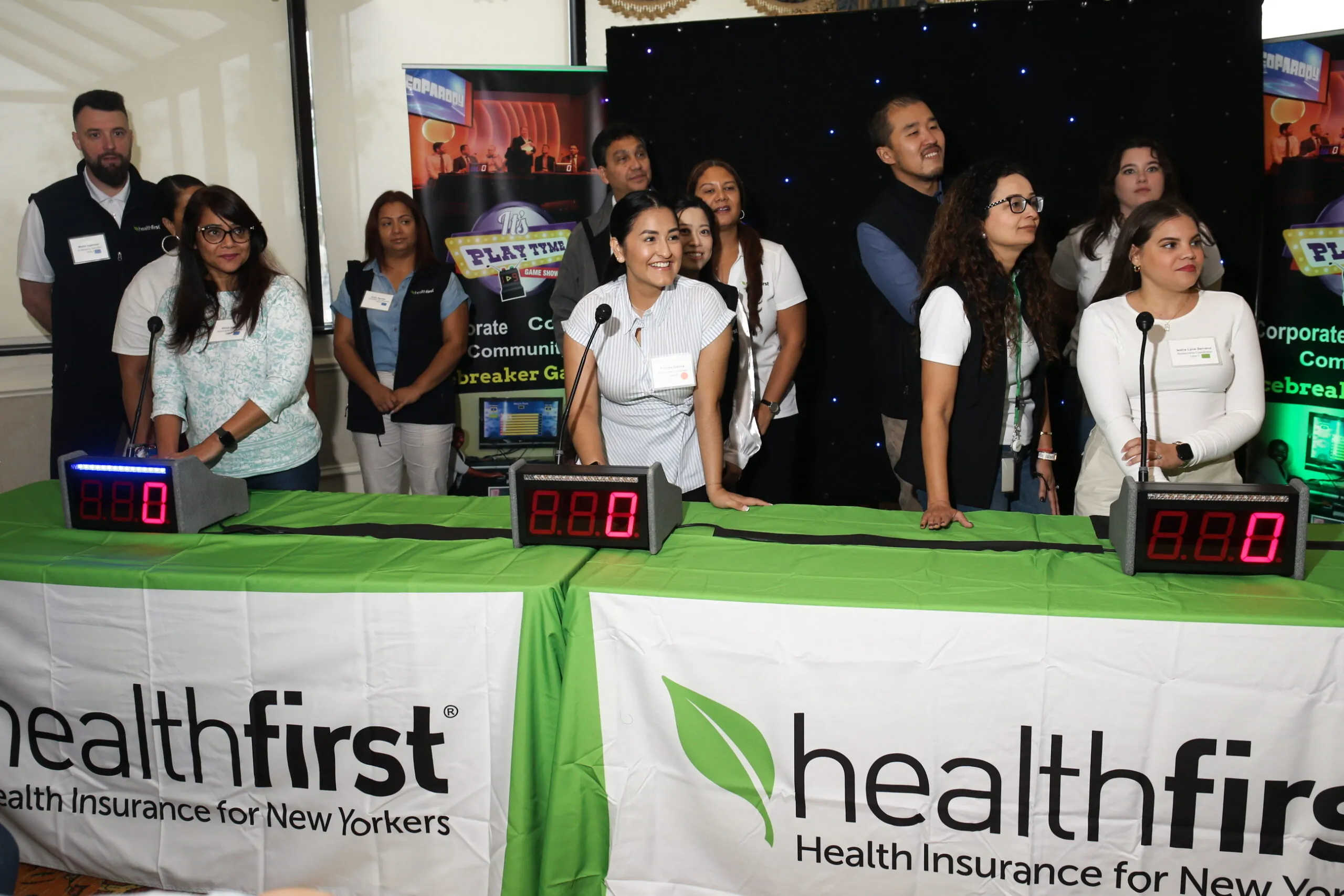
It’s PlayTyme Game Shows has spent 14+ years and 3,000+ professionally hosted events proving this exact premise across New Jersey, New York City, and Connecticut. Their model works because it removes the two biggest killers of workplace fun: self-consciousness and boredom. Nobody has to “perform.” They just have to hit a buzzer and yell an answer. The laughter follows naturally.
Their lineup includes formats modeled after popular TV game shows that audiences already know and love. That built-in familiarity removes the learning curve. People walk in, see the buzzers and scoreboards, and immediately understand the stakes. No instructions needed. No awkward warm-up period.
Five Formats That Get Genuine Laughs (Not Polite Smiles)
1. Face-2-Face Feud (Family Feud Style)
Two teams face off guessing the most popular survey answers. The comedy comes from the gap between what people think the top answers are and what they actually are. When someone confidently shouts an answer that scores zero points, the room erupts. It is unscripted, unforced, and the funniest moments are always the wrong answers.
2. Quiz Battle Trivia (Jeopardy Style)
Categories range from company-specific inside jokes to pop culture deep cuts. The format rewards different knowledge bases, so the intern who watches too much reality TV is suddenly the team MVP. That inversion of office hierarchy is where the comedy lives.
3. Price Match Showdown (The Price Is Right Style)
Teams guess the prices of everyday items, office supplies, or industry-specific products. Watching a senior VP guess that a gallon of milk costs $8 is the kind of moment that becomes office legend. The format exposes funny blind spots without putting anyone on the spot individually.
4. Name That Hit Song
A few seconds of a song plays. Teams race to identify it. The comedy comes from confident wrong guesses, generational music gaps, and the inevitable moment when someone knows every lyric to a song they claim they “never listen to.”
5. 60 Seconds of Fame
Fast-paced rapid-fire rounds where teams answer as many questions as possible in one minute. The time pressure creates genuine adrenaline, and the scrambling produces the kind of chaotic energy that makes people laugh without trying.
What Makes a Funny Activity Work (The Non-Obvious Ingredients)
Humor at work events does not come from the content being inherently hilarious. It comes from the structure creating conditions where laughter happens on its own. Here are the ingredients most planners miss:
- A professional host who reads the room. This is the single biggest differentiator. It’s PlayTyme provides trained emcees who adjust pacing, energy, and humor based on the group’s vibe in real time. A playlist and a PowerPoint are not the same thing.
- Team-based competition, not individual spotlight. When people compete as a group, the pressure is distributed. Nobody feels singled out, but everyone feels invested.
- Physical props and production value. Buzzers, scoreboards, sound effects, and stage lighting transform a conference room into an arena. The environment signals “this is different from a meeting,” and people respond accordingly.
- Customization to the actual group. Generic trivia is fine. Trivia that includes questions about the CEO’s college major or the office coffee machine that has been broken since 2019 is better. It’s PlayTyme builds custom rounds tailored to each company.
Where Game Shows Beat the Usual Alternatives
| Format | Humor Style | Introvert-Friendly | Group Size | Setup Needed |
|---|---|---|---|---|
| Game Shows (It’s PlayTyme) | Organic, competitive | Yes (team-based) | 20-300+ | Provided by host |
| Escape Rooms | Minimal | Somewhat | 4-10 per room | Venue booking |
| Improv Workshops | Forced participation | No | 10-30 | Facilitator needed |
| Cooking Classes | Incidental | Yes | 10-25 | Kitchen venue |
| Trivia at a Bar | Moderate | Somewhat | 10-50 | DIY or host |
The scalability factor matters more than most planners realize. An escape room tops out at about 10 people per session. A cooking class accommodates maybe 25. Game shows scale from a small leadership offsite of 20 people to a full company event of 300+, all with the same energy and the same laughter. That flexibility alone makes them the practical choice for organizations with real headcounts.
How to Make Any Team Building Activity Funnier
Even if a full game show production is not in the cards for every event, these principles apply to any team activity:
Remove the “Share Your Feelings” Component
Vulnerability is great in therapy. At a work event, it creates anxiety. Focus on tasks, not emotional disclosure. People bond over shared experiences, not shared confessions.
Add Real Competition With Low Stakes
A trophy, bragging rights, first pick of lunch orders for a week. The prize does not need to be valuable. It needs to exist. Competition without stakes is just an activity. Competition with silly stakes is a story people tell at the next happy hour.
Let the Quiet People Win Sometimes
Design rounds where knowledge beats volume. Trivia, strategy challenges, and puzzles give introverts a way to contribute without performing. The funniest moment at any game show is when the quietest person on the team delivers the winning answer.
Keep It Under 90 Minutes
Energy peaks around 45 to 60 minutes and drops sharply after 90. A tight, high-energy session beats a marathon. People should leave wanting more, not checking the clock.
Choosing the Right Funny Activity for Your Team
Start with three questions before you book anything:
1. What is your group size? Activities that work for 12 people rarely work for 120. Game show formats are one of the few options that scale without losing energy. If your headcount is above 30, most “intimate” activities (cooking, escape rooms, art classes) require splitting into multiple sessions, which defeats the purpose of bringing everyone together.
2. What went wrong last time? If your team groaned at the last event, diagnose why. Was it too long? Too awkward? Too much forced interaction? Choose the opposite. If the last event was a quiet, reflective workshop, book something loud and competitive. If it was chaotic and disorganized, book something with a professional host who controls the pacing.
3. Do you want laughs or lessons? Both are valid goals, but they require different formats. If the primary objective is genuine laughter and team bonding, skip the leadership development exercises disguised as fun. Book something where the only goal is to compete, laugh, and walk away with a story. That is exactly what team building game shows deliver.
For organizations across New Jersey, NYC, and Connecticut looking for funny team building activities for work that produce real engagement (not the polite, please-let-this-end-soon kind), It’s PlayTyme’s corporate game show events are built for exactly that. Reach out to book your event and give your team something they will actually talk about on Monday morning.
Frequently Asked Questions (FAQs)
How long should a funny team building activity last?
The sweet spot is 45 to 75 minutes. Energy peaks around the one-hour mark and drops noticeably after 90 minutes. A shorter, high-energy session leaves people wanting more, which is far better than watching the room mentally check out during the final stretch.
Do funny team building activities work for large groups?
They do, but format selection matters. Most activities (escape rooms, cooking classes, improv) max out at 10 to 30 people. Game show formats are one of the few options that scale to 300+ participants while maintaining the same competitive energy and humor across the entire room.
Are game show team building events worth the cost?
Professional game show events typically deliver stronger engagement per dollar than multi-activity offsite events. The production value (buzzers, scoreboards, a trained emcee) creates an experience that feels premium without the logistical costs of venue changes, transportation, or splitting into small groups. Teams remember them because the format produces genuine shared moments, not because the budget was large.