

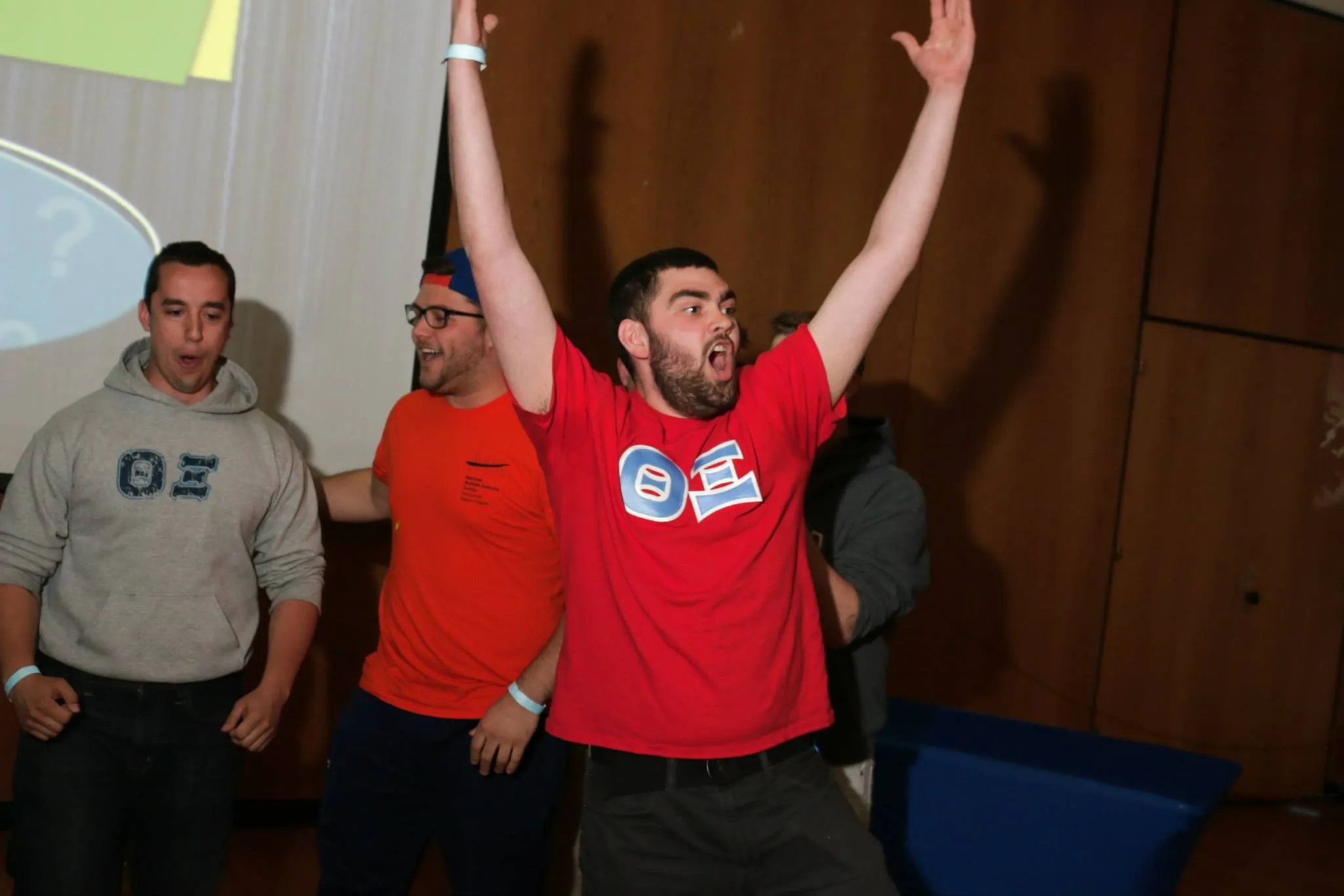
Greek Week is the loudest week on any chapter calendar, and the game night is the social heart of it. The stakes are real for student leaders, because connection drives the whole experience. Gallup research shows that people with a close friend and strong social bond in their group are far more engaged and far more likely to stick around. That bond is exactly what a great Greek Week night creates.
The trouble is that genuine connection stays rare without the right setup. Gallup also reports that only about a third of people feel truly engaged in their day to day, which shows how easily a routine event falls flat. A polished, hosted game night fixes that by turning a crowded room of chapters into one electric audience that competes, laughs, and remembers.
Greek Week chairs juggle real obstacles when they plan this night. The budget gets stretched thin across a whole week of programming. Multiple chapters with rival energy have to share one room without it turning chaotic. A student volunteer with a microphone rarely holds a packed crowd. And the night has to feel bigger than last year, or nobody talks about it. The right format solves every one of those at once.
What This Comes Down To
- Greek Week game night is the social heart of the week, where chapters compete and form lasting bonds.
- Gallup research shows that strong social bonds inside a group drive both engagement and long-term retention.
- Only about one in three people feel truly engaged day to day, making a high-energy structured event critical.
- A polished hosted game night turns a crowded multi-chapter room into one electric, unified audience.
Why a Hosted Game Night Anchors Greek Week
A game night gives Greek Week a centerpiece that every chapter shows up for. It mixes fraternities and sororities into teams, replaces awkward standing around with friendly rivalry, and gives councils a points event that feeds the overall standings. Unlike a party, it has structure, momentum, and a clear winner. That structure is what keeps hundreds of students locked in for two straight hours.
The format also scales. A small council night runs the same way a 400 person showcase does, because a professional host controls the pace, the volume, and the energy. Students stop checking their phones and start chanting for their chapter. That is the moment Greek Week is built for.
Greek Feud: The Headline Format
Greek Feud is the signature game show round, modeled on the Family Feud format that students already know. Two chapters face off at the buzzer to guess the top survey answers, while the host keeps the banter sharp and the crowd loud. The questions get tailored to campus life, Greek traditions, and inside jokes, so every answer lands with the room.
- Instant buy in: students know the rules in seconds, so play starts fast.
- Team energy: chapters rally behind their players and roar at every steal.
- Points ready: the bracket feeds straight into your Greek Week scoreboard.
Greek Feud works as the anchor because it is loud, fast, and impossible to watch passively.
Trivia Showdown for Chapter Bragging Rights
A trivia showdown rewards the chapters that think they know it all. Teams race through rounds on pop culture, campus history, and Greek life, with a live leaderboard that swings the room with every answer. The format favors quick teamwork over individual stars, so the whole chapter feels involved.
Trivia also balances the night. After the high volume of Greek Feud, a focused trivia round keeps the competition tight and gives quieter chapters a real shot at the title. The leaderboard reveal at the end is the kind of moment students film and post.
Lip Sync Battles and Performance Rounds
Lip sync battles turn the spotlight on the chapters themselves. Each group prepares a short, choreographed number, and the host runs it like a televised showdown with crowd scoring. The performances become the most shared content of the entire week, because students love watching their friends commit to a bit.
- Creative outlet: chapters express personality beyond trivia and buzzers.
- Crowd judging: the audience scores it, so every seat stays engaged.
- Highlight reel: the performances power your recap posts and reels.
Pairing a performance round with the game show formats gives the night variety, so it never feels like one long quiz.
Proven on New Jersey Campuses Like Montclair State
Local experience matters when hundreds of students fill a campus venue. It’s PlayTyme Game Shows has run Greek Week game nights on New Jersey campuses, including Montclair State, with formats built for student crowds. A host who knows campus venues, sound setups, and council scheduling shows up ready, so chairs spend their energy on turnout rather than production.
The team brings the full kit: a professional host, sound, scoring, and the on screen graphics that make the night feel like real television. Chapters get a polished show, and the council gets a points event that runs on time. That reliability is what separates a hosted night from a volunteer scramble.
The Challenges of Planning a Greek Week Game Night
Every Greek Week night carries pressure because the whole community is watching. Budgets stretch across days of events, so each dollar has to earn attention. Rival chapters need a format that channels competition into fun instead of friction. A packed venue demands real sound and a host who commands the room. And the night must top last year to keep the tradition growing. Plan for each, and the night becomes the highlight of the week.
The fix is a professionally hosted show that bundles structure, sound, scoring, and energy into one booking. It keeps mixed chapters engaged, holds a loud room, and gives the council a repeatable centerpiece. One vendor handles the production, so student leaders run the week instead of running cables.
How to Build Your Greek Week Game Night Lineup
Start with the anchor and build outward. Open with Greek Feud to set a loud tone, drop in a trivia showdown to tighten the standings, then close with lip sync battles for the highlight moment. Stagger the formats so energy rises and resets across the night. To lock your date, use the contact page and review the hosted event options on the events page. Book early, because spring Greek Week weeks fill fast across New Jersey.
How to Choose the Right Game Night for Your Chapter
Match the lineup to your crowd and your calendar. For a tight council event, a single Greek Feud bracket delivers a fast, loud win. For a marquee all chapter showcase, stack Greek Feud, trivia, and lip sync into a full production. Favor a hosted show over a volunteer run night when turnout is high, since a professional holds the room and keeps the points clean. Pick the format students will retell, because the night they remember is the tradition that lasts.
Frequently Asked Questions (FAQs)
What is the best game night format for Greek Week?
Greek Feud is the strongest anchor because students know the rules instantly and the buzzer play stays loud. Pair it with a trivia showdown and lip sync battles for variety, and the night holds a packed crowd from start to finish.
How many chapters can join one game night?
A hosted show scales from a small council event to a 400 person showcase. A professional host controls pace, sound, and scoring, so the format works whether two chapters compete or the whole community fills the venue.
Can the games feed into our Greek Week points?
Yes. The bracket and leaderboard produce clear winners that drop straight into your overall standings. The council gets a structured points event that runs on time and keeps the week competitive.
Do you run game nights on New Jersey campuses?
Yes. Hosted Greek Week game nights run on New Jersey campuses, including Montclair State, with formats built for student crowds. A local host arrives with the full production kit and knows campus venues and scheduling.
How far in advance should we book?
Book four to six weeks ahead, and earlier for spring Greek Week season. Popular dates fill quickly across New Jersey, so locking your host early secures both the date and the full production setup.
Why does a game night build stronger chapter bonds than other Greek Week events?
Gallup research shows that people with a close social bond in their group are far more engaged and far more likely to remain involved. A hosted game night creates exactly that bond by turning a crowded multi-chapter room into one shared audience that competes, laughs, and remembers the night together.