

A positive work environment is not luck, and it is not a perk budget. It is the result of deliberate steps repeated until they become habits. The stakes are high: Gallup’s State of the Global Workplace report finds that roughly 23 percent of employees are engaged at work, which means most people show up without feeling connected to what they do.
The upside of fixing that is just as clear. Gallup’s research on how engagement drives growth links positive, engaged workplaces to higher productivity, better retention, and stronger results. The good news is that the path is concrete. Follow a clear sequence, and you change how your team feels about coming to work.
If you manage a team in New Jersey, New York City, or Connecticut, the obstacles look familiar. Communication breaks down across hybrid schedules. Recognition is rare or feels generic. New hires take months to feel they belong, and stress quietly erodes morale. These are the real problems a positive environment has to solve, and each step below targets one of them directly.
This is a step-by-step how-to. Work through the six steps in order, and you build an environment people want to be part of.
Key Takeaways
- A positive work environment results from deliberate steps repeated until they become habits.
- Only about 23 percent of employees are engaged at work globally, per Gallup.
- Engaged workplaces link directly to higher productivity, better retention, and stronger results.
- The path to improvement is concrete and follows a clear, repeatable sequence.
- Hybrid schedules, generic recognition, and slow onboarding are the most common obstacles to fix.
Step 1: Build Open and Honest Communication
Everything starts with communication, because people who feel unheard disengage first. Create regular, predictable channels for two-way feedback. Hold short weekly check-ins, run open question-and-answer sessions, and respond to concerns visibly so people see that speaking up changes things.
- Schedule consistent one-on-ones and protect them from cancellation.
- Ask specific questions instead of a vague “how are things going.”
- Close the loop publicly when team input leads to a change.
When communication is safe and frequent, trust grows, and trust is the soil every other step needs.
Step 2: Recognize and Appreciate Contributions
People repeat what gets noticed. Recognition is the cheapest, fastest morale lever available, and most teams underuse it. Make appreciation specific, timely, and visible to peers.
- Name the exact behavior you are praising, not just the outcome.
- Recognize people in front of the group, not only in private.
- Spread recognition beyond the usual high performers.
Public, genuine recognition tells the whole team what good work looks like and signals that effort is seen.
Step 3: Invest in Real Connection Between People
A positive environment depends on relationships, not just processes. Colleagues who know and trust each other collaborate faster and forgive small frictions. Connection rarely forms on its own across busy, hybrid schedules, so you have to design for it.
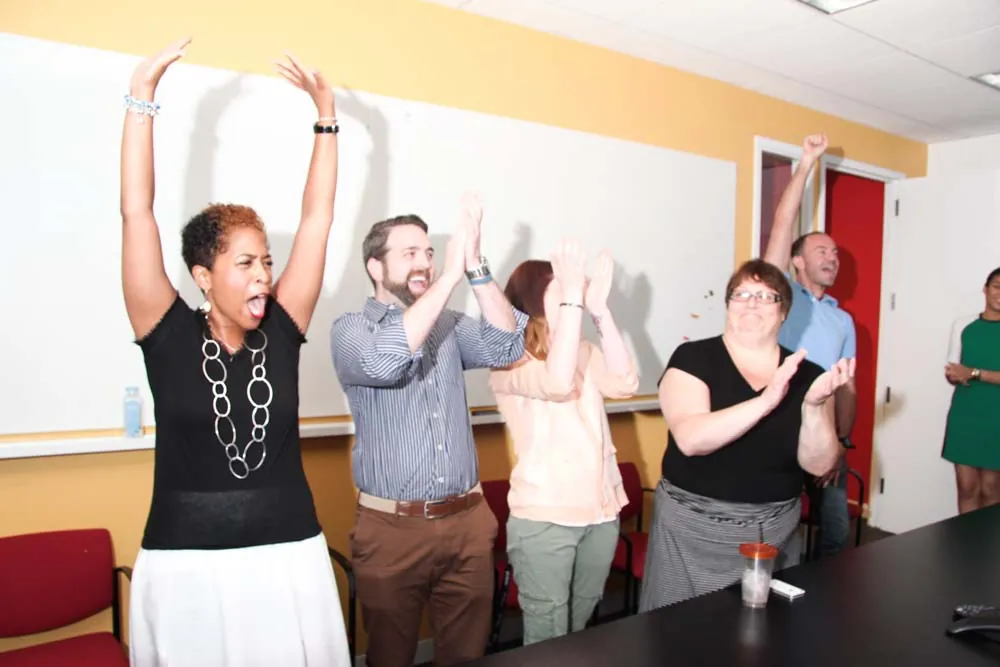
Shared experiences are the most reliable way to build connection quickly. A hosted team event, where people compete and laugh in mixed groups, creates bonds that months of meetings cannot. It’s PlayTyme Game Shows runs interactive, professionally hosted game shows for companies across NJ, NYC, and Connecticut, with formats built to include everyone and turn coworkers into teammates.
Step 4: Support Wellbeing and Manage Stress
Chronic stress poisons even well-run teams. A positive environment protects energy as carefully as it protects output. Set realistic workloads, respect time off, and model healthy boundaries from the top.
- Normalize taking breaks and using vacation fully.
- Watch for overload and rebalance work before people burn out.
- Build in moments of fun that release pressure and reset the mood.
Lighthearted shared activities are not a distraction from serious work. They are how teams discharge stress and return focused. A team that laughs together handles pressure better, because the relationships built in easy moments hold up during hard ones. Protecting wellbeing is not soft management; it is how you keep your best people from burning out and walking away.
Step 5: Give People Autonomy and Growth
Adults thrive when they own their work and see a future. Micromanagement signals distrust and drains motivation fast. Define clear outcomes, then give people room to reach them their own way.
- Set goals and let individuals choose the path.
- Offer learning, stretch projects, and visible advancement.
- Treat mistakes as information, not as cause for blame.
Autonomy paired with growth turns a job into a place people choose to stay. People who see a future with you invest more of themselves today, and that investment shows up in the quality of their work and the way they treat teammates. A clear path forward is one of the strongest reasons employees give for staying through hard stretches.
Step 6: Make Positivity a Repeating Ritual
A single good week fades. Lasting culture comes from rhythm. Build positive moments into a predictable calendar so the environment stays warm even during hard stretches.
- Schedule a recurring team activity each quarter.
- Mark wins, milestones, and anniversaries consistently.
- Reference shared experiences in everyday conversation to keep them alive.
When positivity is a ritual rather than a reaction, it becomes part of how your team operates.
Where Positive Work Environment Plans Usually Stall
Even a clear plan meets resistance. Here are the obstacles that derail positive-environment work, with the fix for each.
- Skepticism from past failures: teams burned by hollow initiatives stay guarded. Start small, follow through, and let consistency rebuild belief.
- Hybrid distance: remote schedules thin out connection. Anchor the calendar with in-person events people look forward to.
- Forced fun: awkward, mandatory activities backfire. Use professional facilitation that reads the room and keeps energy genuine.
- Manager inconsistency: a positive environment dies if leaders do not model it. Train and hold managers to the same standards.
- Fading momentum: enthusiasm dips without structure. A fixed rhythm of recognition and events keeps it steady.
How to Choose Where to Start First
You do not have to run all six steps at once. Pick the step that targets your biggest current obstacle. If communication is the weak link, start there. If morale is low after a hard quarter, lead with a connection-building event that resets the mood and gives people a reason to re-engage. The right first step is the one that solves the problem your team feels most today.
For teams in the tri-state area, a professionally hosted event is a fast, low-risk way to jump-start the connection and recognition steps at once. To plan one, visit /contact and share your goals. Explore formats for your next corporate event or a focused team building program designed around participation and morale.
Frequently Asked Questions (FAQs)
How long does it take to create a positive work environment?
Early shifts in mood appear within weeks once communication and recognition improve. Durable culture takes a few quarters of consistent effort. The key is steady follow-through rather than a single big push.
What is the most important first step?
Open communication comes first because every other step depends on trust. People who feel heard engage with recognition, autonomy, and connection. Without it, the later steps feel hollow.
Do team events really improve the work environment?
Yes, shared experiences build the relationships that daily processes cannot. A hosted event creates trust and recognition in a single session. That connection then carries back into everyday collaboration.
How do we keep a positive environment from fading?
Turn positivity into a repeating ritual with a fixed calendar. Schedule recurring activities, celebrate milestones, and reference shared moments often. Rhythm keeps the environment warm even during stressful periods.
How does this work for hybrid teams?
Hybrid teams need deliberate connection because organic contact is limited. Anchor the year with in-person events and keep communication frequent online. Planned gatherings replace the hallway moments remote work removes.