Most managers want the same thing: a team that shows up energized, owns its work, and pushes through hard weeks together. Yet only a fraction of employees feel genuinely engaged at work, according to Gallup’s State of the Global Workplace report, which estimates that low engagement costs the world economy trillions of dollars in lost productivity each year.
The good news is that motivation responds to deliberate action. Gallup also finds that recognition is one of the cheapest, highest-impact levers a leader has, as detailed in its analysis of employee recognition. When you understand the real drivers of motivation, you stop guessing and start building momentum.
If you manage people, you already know the daily friction: deadlines stack up, recognition slips through the cracks, remote and hybrid schedules thin out human connection, and a few disengaged voices drag down the room. You do not need another generic pep talk. You need motivators you can apply on purpose, and a setting where your team experiences them together.
What Actually Motivates People at Work
Motivation is not a personality trait you either have or lack. It is the product of conditions. People give more when they feel seen, when they belong, when the work has meaning, and when winning feels within reach. Four drivers do most of the heavy lifting: recognition, connection, play, and healthy competition. Every tactic below maps back to one of these, and a well-hosted game show event delivers all four in a single afternoon.
1. Recognize Effort in Public, Often
Recognition is the fastest motivation win available to any manager. People repeat behavior that gets noticed. The catch is that praise buried in a one-on-one rarely lands the way public acknowledgment does. Build recognition into your weekly rhythm: call out a specific contribution by name, explain the impact, and do it where peers can hear it.
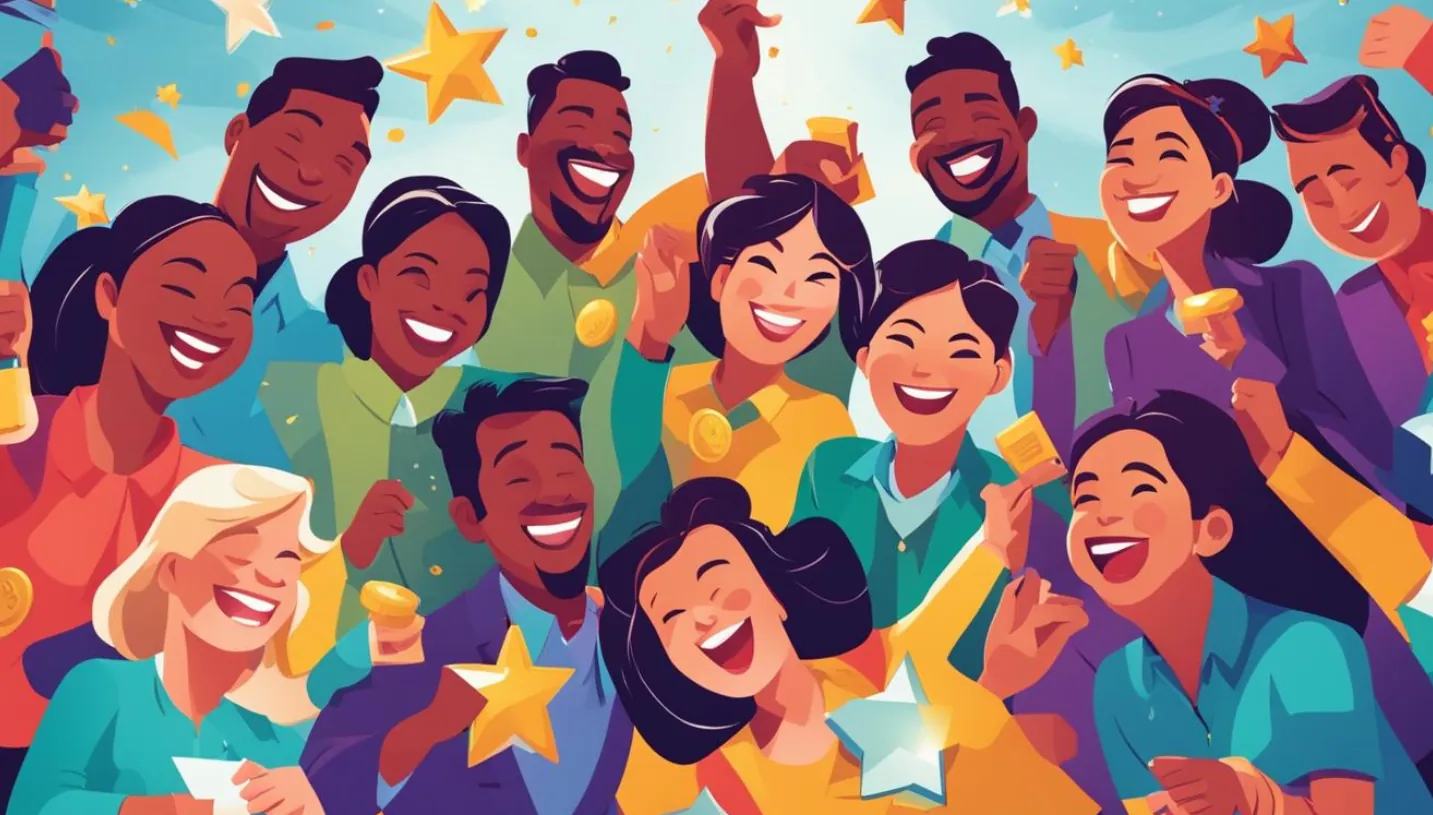
A hosted game show turns recognition into a shared event. When a quiet team member nails the winning answer and the room erupts, that moment of visible praise sticks far longer than a line in a status meeting. The format hands out spotlight moments to people who never get them.
2. Build Real Human Connection
Disengagement often starts with isolation. When colleagues only interact through tickets, threads, and calendar invites, the relationships that fuel motivation never form. People work harder for teammates they actually know.
- Pair people from different departments on shared tasks.
- Open meetings with two minutes of non-work conversation.
- Create reasons for the whole group to gather in person.
Game-based events accelerate connection because they put people on teams, give them a shared goal, and lower the formality that usually keeps coworkers at arm’s length. Strangers become collaborators within minutes.
3. Bring Play Back Into the Workweek
Play is not the opposite of productivity. It is a reset button. A team that laughs together releases stress, drops its guard, and returns to work with sharper focus. Yet most workplaces treat fun as an afterthought, squeezed into an awkward happy hour nobody asked for.
A structured, facilitated game show gives play a clear shape. There are rules, rounds, and a host who keeps the energy high, so the fun feels purposeful rather than forced. People who would never volunteer for a trust fall happily shout answers in a fast-paced trivia round.
4. Use Friendly Competition the Right Way
Competition motivates when the stakes are light and the playing field is fair. It backfires when it pits people against each other in ways that damage trust. The fix is team-versus-team competition with a clear, low-pressure prize. Everyone wants their group to win, and that shared desire pulls effort upward without creating resentment.
Family Feud-style and collaborative trivia formats channel competitive energy into cooperation. Your team competes hard, then shakes hands and laughs about it. That balance of intensity and goodwill is exactly what keeps motivation healthy.
5. Give People Autonomy and a Voice
Motivation drops when people feel like cogs. It climbs when they own decisions. Push authority down whenever you safely can. Ask for input before you set direction, and act on at least some of what you hear. A team that helps shape the plan defends the plan.
6. Connect Daily Work to a Bigger Purpose
People sustain effort when they understand why the work matters. Spell out the connection between a single task and the customer it serves or the goal it advances. Repeat it often. Purpose is not a one-time speech; it is a steady drumbeat that keeps motivation from drifting.
The Hard Parts of Sustaining Team Motivation
Knowing the drivers is one thing. Sustaining them under pressure is another. Several obstacles trip up even thoughtful managers:
- Recognition fatigue: generic praise stops registering, so acknowledgment has to stay specific and genuine.
- Hybrid distance: screens flatten emotion and erode the casual moments that build trust.
- Time pressure: when every hour is spoken for, motivation work feels like a luxury and gets cut first.
- Uneven participation: the loudest voices dominate while quieter contributors fade out.
A facilitated event clears several of these obstacles at once. An outside host removes the planning burden, the structure guarantees that everyone participates, and the shared experience rebuilds the human connection that distance erodes.
Why a Hosted Game Show Delivers Every Motivator at Once
Individual tactics work, but stacking them is hard inside a normal week. It’s PlayTyme Game Shows packages recognition, connection, play, and friendly competition into one professionally hosted event built for corporate teams across New Jersey, New York City, and Connecticut. A high-energy host runs the room, the games are tuned for groups of any size, and no app or laptop is required. Your team simply shows up and plays.
The result is motivation you can watch happen in real time. People who rarely speak up become the hero of a round. Departments that never mix end up cheering for each other. The energy generated in those ninety minutes carries back into the office for weeks.
Which Motivation Approach Fits Your Team Right Now
Start with your biggest gap. If your team feels invisible, prioritize recognition. If it feels fragmented, prioritize connection. If it feels burned out, prioritize play. If it feels flat, introduce light competition. Then pick a setting that hits more than one driver at once, because compounding the motivators produces faster, longer-lasting results than chipping at them one by one.
For most managers, the highest-return move is a single shared experience that delivers all four drivers together. Book a hosted game show through our contact page, or explore formats on our team building page to see how a live event fits your group. Give your people one afternoon of recognition, connection, play, and competition, and watch the motivation follow them back to their desks.
Frequently Asked Questions (FAQs)
What is the fastest way to motivate a team?
Public, specific recognition is the fastest lever because it costs nothing and takes effect immediately. Name the contribution, explain its impact, and do it where peers can hear. A shared event amplifies this by handing spotlight moments to many people at once.
How do game shows actually motivate employees?
A hosted game show delivers four motivators in one sitting: recognition, connection, play, and friendly competition. It puts people on teams, gives them a shared goal, and creates visible wins. That combination lifts morale faster than any single tactic applied alone.
How often should I run team motivation activities?
Build small recognition and connection habits weekly, and schedule a larger shared event each quarter. Steady reinforcement keeps motivation from fading, while periodic high-energy gatherings reset the team’s spirit and strengthen bonds across departments.
Do motivation tactics work for hybrid and remote teams?
Yes, though distance demands extra intention. Public recognition still works over video, and in-person gatherings become more valuable, not less. A periodic live event gives hybrid teams the face-to-face connection that screens cannot replace.