

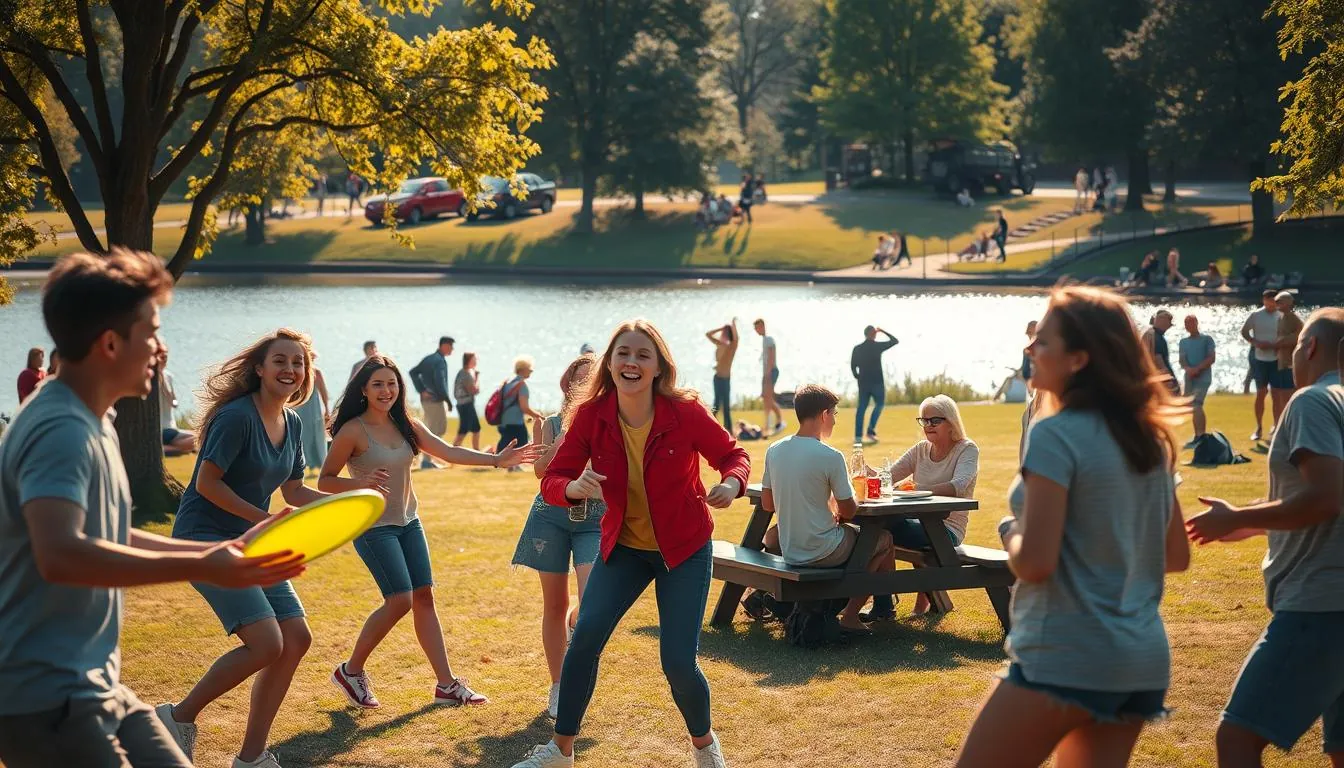

Interactive means every person in the room does something. That is the whole test, and it eliminates most of what gets booked for groups in Hackensack. A comedian is entertainment. A DJ is background. A speaker is a lecture. An interactive group activity puts your staff, your students or your association members into teams with something to win and a host driving the pace.
The reason it matters now is measurable. Gallup put U.S. employee engagement at 31% in 2025, down from a 36% peak in 2020, and among Gen Z and younger millennials the share who agree that someone at work cares about them as a person dropped from 54% to 41% over the same period. Rooms full of people who do not know each other do not fix themselves.
Hackensack groups face a practical version of that problem. The Bergen County seat packs hospitals, county offices, law firms and corporate tenants into a small footprint, staff commute in from across the county and from New York, and the room you have is usually a conference space or a hotel function room rather than an auditorium. The options below are compared on what actually runs in those rooms.
Interactive Group Activities Compared
| Activity | Group Size | Everyone Participates? | Space Needed | Length |
|---|---|---|---|---|
| Hosted live game show | 20 to 300+ | Yes, every round | One room with a clear front | 75 to 120 minutes |
| Trivia night | 10 to 80 | Yes, but energy depends on the host | Conference room | 60 to 90 minutes |
| Escape room | 6 to 8 per room | Yes inside each room only | Offsite venue | 60 minutes plus travel |
| Comedian or speaker | Any | No, audience watches | Any room with sightlines | 45 to 60 minutes |
| Casino night | 40 to 300 | Partly, people drift between tables | Large open floor | 2 to 3 hours |
| Minute-to-win-it challenges | 20 to 150 | Rotating, some watch | Open floor plus tables | 60 to 90 minutes |
Key Venue and Parking Issues in Hackensack
Five practical constraints shape what is bookable here.
- Rooms are function rooms, not auditoriums. Standard ceiling height, pillars, and a service door where you want the stage. Any production has to be designed to fit rather than assume a venue.
- Parking is the hidden cost. Downtown Hackensack parking fills during business hours. Confirm a garage or a validated arrangement before you send the invite, or attendance suffers.
- Shift schedules break attendance. Healthcare and county employers run rotating shifts, so a single 2pm event misses whole teams. Either run the activity twice or pick a date built around the shift change.
- Multilingual and multi-generational rooms. Pop culture references from one decade or one country quietly exclude a third of the room. Company-specific and visual content travels much better.
- Passive entertainment does not deliver connection. A comedian gets laughs and produces no new relationships. If the reason for the event is that people do not know each other, the format has to require them to work together.
Hosted Live Game Shows
A professional emcee runs your group as competing teams with a full game show set, sound system and live scoreboard, set up in your own room. This is the format that scales without splitting the group: 30 people or 300, one host, one leaderboard, everyone playing.
The catalog covers different room temperaments. Face 2 Face Feud is a survey-answer buzzer showdown that plays loud. PlayPad Mania hands everyone a device so all attendees answer every round rather than watching six volunteers. Word Play suits analytical crowds. Lip Sync Challenge and 60 Seconds of Fame suit groups that already know each other and want a spectacle. Rounds can be built around your organization’s own milestones and names.
90-minute hosted shows start at $2,995 for groups of 20 or more. Use our pricing estimator to see the range for your group size. Host, set, audio and visual equipment, sound engineer and prizes are included, and the production travels to you. Local groups can see how a booking runs on our Hackensack game shows page.
Trivia Nights and In-House Formats
A conference-room trivia night is the lightweight version and works well as a monthly habit. Teams of four to six, three rounds, a modest prize, an hour at lunch.
It has two limits. Without a sound system and a host who can read a room, the energy rests entirely on whoever volunteers to read questions. And above about 80 people the format flattens, because scoring and answer collection slow to a crawl. Use it between larger events rather than as the annual one.
Escape Rooms and Offsite Venues
Bergen County has escape room venues within easy reach of Hackensack, and the collaboration inside a room of six is genuinely intense. For a leadership team or an intact department of eight, they are an excellent choice.
For 80 people they are the wrong tool. The group is split into ten rooms that never meet, half the afternoon goes to travel and waiting, and there is no shared moment at the end. Book them for small teams, not for a whole organization.
Making the Activity Do Real Work
The activity is only half the value. The other half is how you build the teams. Assign them yourself across departments, shifts, tenure and office location, publish the list in advance, and keep teams to six to ten people so nobody disappears and nobody carries the whole table.
Name the teams after something the organization will keep referring to. A scoreboard that people quote in the hallway two weeks later is doing more for cohesion than the activity itself did on the day.
What to Consider When Booking a Group Activity
Three questions settle it. How many people are actually attending? Above 40, remove anything that caps at a table or a room. Does everyone need to be included, including people in business dress and people with mobility limits? If yes, choose seated and low-physical. How much uninterrupted time do you own? Under two hours means the activity comes to you rather than the group travelling.
Then check the purpose. If the goal is a reward, a comedian or a casino night is fine and nobody should overthink it. If the goal is that people who never speak start speaking, the format has to force teams to make decisions together, which only the interactive formats do.
Send us the date, the headcount and the room, and we will build the format and the teams around it. If you want to see the show catalog first, browse the game show themes.
Frequently Asked Questions (FAQs)
What counts as an interactive group activity?
One where every attendee participates rather than watches. Hosted game shows, team trivia, timed challenges and structured problem sessions qualify. Comedians, DJs, speakers and open-bar receptions do not, because the room can sit through them without doing anything. If the goal is connection, the participation test is the one that matters.
How much does an interactive group activity cost in Hackensack?
90-minute hosted shows start at $2,995 for groups of 20 or more. Use our pricing estimator to see the range for your group size. Travel, setup and breakdown, customization and gratuity are quoted separately. Venue and catering are additional.
What group size works best for these activities?
Hosted formats work from about 20 people to 300+ in a single room. Escape rooms and lane-based venues cap at six to eight per room, so large groups get split into parallel sessions. As a rule, above 40 attendees you should only consider formats that keep the whole group on one scoreboard.
Can these activities run in a hotel function room?
Yes. A mobile production is designed for standard function rooms and needs a clear front of room, normal power access and a sightline from the back row. Confirm load-in access, elevator availability and any insurance certificate requirement with the venue when you book the room rather than the week of the event.
How do you keep quieter people from opting out?
Assign teams instead of letting people self-select, keep teams to six to ten, and choose formats where answers are agreed as a group rather than performed alone. A professional host controls the pace and never puts an individual on the spot without warning, which is why team-based formats get participation that open-mic activities never do.
Why doesn’t booking a comedian or a DJ count as an interactive group activity?
A comedian performs for the room. A DJ provides background. Neither puts your staff into teams or gives anyone something to win. The room stays passive. An interactive activity requires every person to do something, not simply be present.
What does the data say about whether younger employees feel connected at work?
Gallup found that among Gen Z and younger millennials, the share who agreed that someone at work cares about them as a person dropped from 54 percent to 41 percent between 2020 and 2025. That is the gap a well-run interactive event is designed to close.