Only 20% of employees worldwide are actively engaged at work, according to Gallup’s 2026 State of the Global Workplace report. That disengagement costs the global economy an estimated $10 trillion in lost productivity every year. Meanwhile, research published in Harvard Business Review found that teams who socialize together improve their communication patterns by up to 50%, making shared group experiences one of the strongest predictors of team success.
Those numbers tell a clear story: people perform better when they feel connected to the colleagues around them. But most organizations struggle to create that connection on command. Annual retreats feel forced. Icebreaker worksheets get tossed in the recycling bin before lunch. And manager-led “fun” activities often land with a collective groan rather than genuine energy.
The real challenge is bridging the gap between wanting a connected team and actually building one. Employees are skeptical of anything that feels like mandatory fun. HR directors are tired of planning events that get lukewarm feedback. And leadership wants measurable morale impact, not just a photo op. That is exactly where a professionally hosted, interactive team building experience changes the equation.
What Separates an Experience from an Activity
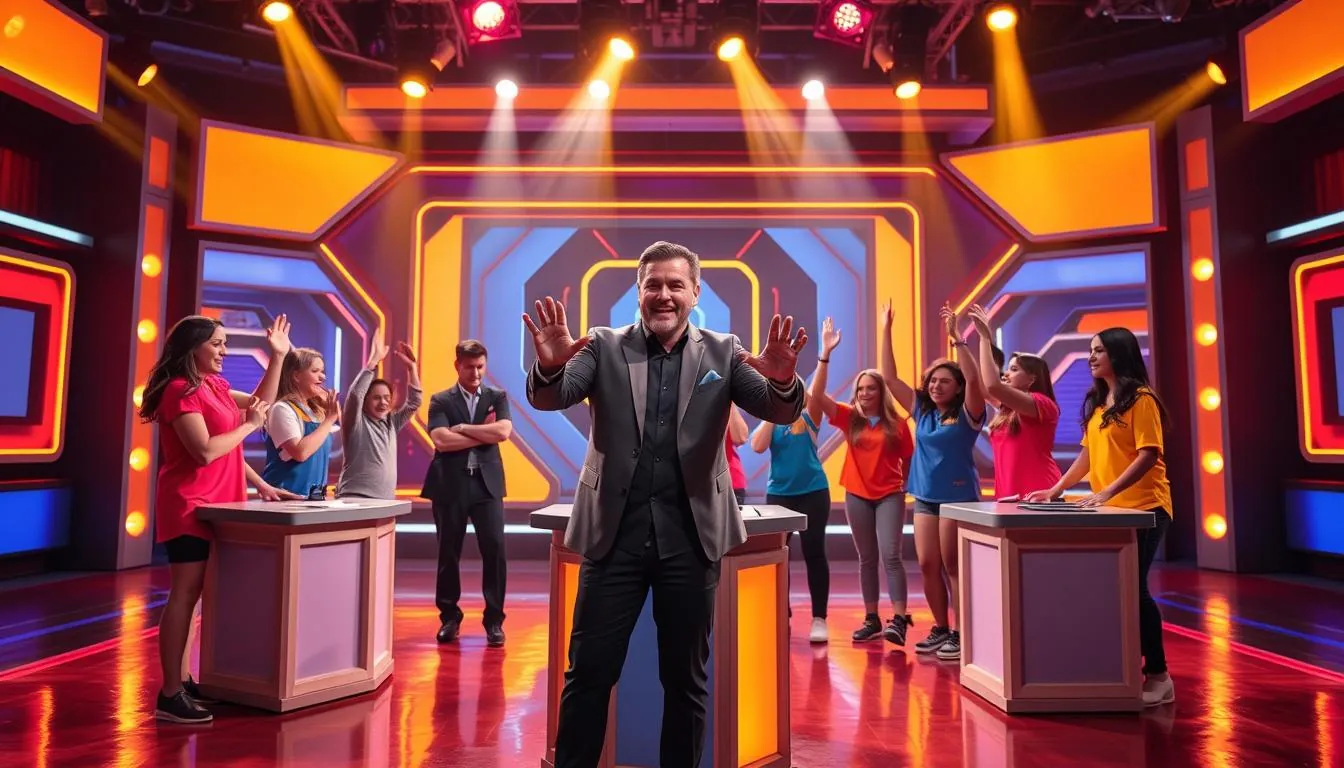
The word “activity” describes something you do. The word “experience” describes something you feel. A trust fall is an activity. A live, hosted game show where your entire sales floor is screaming answers, laughing at inside jokes, and high-fiving people they barely spoke to yesterday: that is an experience.
An interactive team building experience is curated from start to finish. It has a host who reads the room and adjusts pacing. It has production elements (sound, lighting, scoring displays) that make the event feel larger than a conference room exercise. And it has a structure designed to pull every person into participation, not just the extroverts.
It’s PlayTyme Game Shows built its entire model around this distinction. Their live game show format across New Jersey, New York City, and Connecticut treats every corporate event like a produced show, not a worksheet with a timer. The host drives energy. The rounds escalate. The outcome is genuine team bonding because the format makes participation irresistible.
Where Team Building Events Fail Their Quieter Members
Before investing in any team event, it helps to understand why so many fall short. These are the problems HR professionals and event planners face repeatedly:
- Low participation from introverts. Most traditional activities reward the loudest voices. Quieter team members sit on the sidelines, and the event reinforces existing social divides instead of bridging them.
- No emotional arc. A scavenger hunt or trivia sheet has no buildup, no climax, and no payoff. People complete it and move on. There is nothing memorable enough to reference on Monday morning.
- Logistical headaches for planners. DIY team building puts the burden on internal staff who already have full plates. Sourcing materials, writing questions, managing scoring, and keeping energy high is a second job nobody signed up for.
- Skepticism from employees. Teams that have endured too many awkward icebreakers walk in with their guard up. Breaking through that wall requires professional-grade energy and pacing, not a printout from the internet.
- No lasting impact. Without a structured emotional journey (anticipation, competition, celebration), the event fades from memory within days.
The Experience Arc: From Arrival to Winner Ceremony
A well-designed interactive team building experience follows a deliberate emotional arc. Understanding these stages explains why hosted events generate stronger results than anything self-directed.
Stage 1: Arrival Energy
The moment attendees walk into the room, something feels different. Music is playing. A host is already working the crowd, greeting people, cracking jokes, and building anticipation. This is intentional. The first five minutes set the tone for everything that follows. When people feel like they walked into a show rather than a meeting room, their guard drops immediately.
Stage 2: Team Reveal
Teams are announced (often with creative team names and color-coded identifiers). This is the moment coworkers from different departments become teammates with a shared identity. The competitive framing gives everyone a reason to engage, and the randomized team assignments force new connections.
Stage 3: Game Rounds
Multiple rounds with varying formats keep the energy climbing. A round of fast-paced trivia rewards knowledge. A physical challenge rewards speed. A creative round rewards collaboration. Each format pulls a different personality type to the front, so everyone gets a moment to contribute and shine. The host adjusts difficulty, pacing, and humor based on how the room responds.
Stage 4: Winner Ceremony
The finale matters more than most planners realize. A proper winner ceremony with dramatic scoring reveals, applause, and recognition gives the entire event a satisfying conclusion. Teams leave with a shared story. Winners brag at the coffee machine. Runners-up demand a rematch. That ongoing conversation is the real ROI of the experience.
Why Hosted Events Outperform DIY Exercises
Self-directed team building puts the facilitation burden on a manager or HR coordinator who is also trying to participate. That split attention kills momentum. A professionally hosted interactive team building experience removes that problem entirely.
The host is a trained performer and facilitator. They know when to push the energy higher and when to let a quiet moment breathe. They handle scoring, time management, transitions, and crowd engagement so your team leads are free to actually be part of their teams.
Production quality matters too. Sound systems, visual displays, and professional equipment transform a conference room into a stage. That shift in environment signals to attendees: this is not another meeting disguised as fun. This is something worth showing up for.
| Format | Facilitation | Engagement Level | Setup Burden | Lasting Impact |
|---|---|---|---|---|
| Hosted Game Show Experience | Professional host | High (full room) | None (turnkey) | Strong (shared stories) |
| DIY Trivia Night | Internal staff | Moderate | Heavy | Low |
| Escape Room | Venue staff | High (small group) | Moderate | Moderate |
| Outdoor Team Sports | Self-directed | Variable | Heavy | Low |
| Virtual Team Building | Platform-led | Low to moderate | Light | Low |
Who Benefits Most from an Interactive Team Building Experience
Every team benefits, but certain situations make an interactive team building experience especially high-impact:
- Post-merger or restructured teams. When people from different legacy companies or departments are thrown together, a shared competitive experience builds rapport faster than any onboarding deck.
- Remote and hybrid teams meeting in person. Colleagues who know each other only through screens need a structured way to break through digital distance. A live event gives them a physical, emotional, shared memory.
- Sales kickoffs and annual conferences. Large groups that need high energy from the start respond immediately to a game show format. It sets the tone for the rest of the agenda.
- Teams showing signs of disengagement. When survey scores dip or turnover ticks up, a well-timed experience reminds people why they like working together.
- Holiday parties and milestone celebrations. Instead of a passive dinner, a hosted experience turns the celebration into something people actually look forward to.
What to Look for in a Provider
Not every team building company delivers a true experience. When evaluating options for the NJ, NYC, or CT market, look for these signals:
A Dedicated Host, Not a Facilitator Reading a Script
The host makes or breaks the event. Ask to see video of past events. Watch how the host interacts with the crowd. A great host reads energy, improvises, and keeps every person in the room engaged.
Customizable Content
Generic trivia questions feel generic. The best providers tailor questions to your company, your industry, and even your inside jokes. It’s PlayTyme Game Shows builds custom question sets for every client, so the content feels personal from the first round.
Turnkey Setup
If you are responsible for buying supplies, printing materials, or configuring technology, that is not a hosted experience. A true provider brings everything: sound, visuals, scoring systems, and team materials. Your only job is to show up.
Proven Track Record in Your Region
A company with thousands of events across your market knows the venues, the logistics, and the audience. It’s PlayTyme has produced over 3,000 corporate events across NJ, NYC, and CT with consistent five-star reviews from Fortune 500 companies and local organizations alike.
The Science Behind Why Shared Competition Bonds Teams
Competitive play triggers a specific neurological response. When people compete together toward a shared goal, their brains release oxytocin (the bonding hormone) and dopamine (the reward chemical). That combination creates positive emotional associations with the people they competed alongside.
This is why teammates at a game show remember each other’s names weeks later, while attendees at a passive dinner forget who sat across from them. The emotional intensity of competition encodes the memory more deeply. Add laughter (which reduces cortisol and increases trust) and you have a neurological recipe for genuine connection.
Structured competition also creates what psychologists call a “leveling effect.” In a game show round, the CEO and the newest hire are equals. Title disappears. Hierarchy flattens. The only thing that matters is who knows the answer or who reacts fastest. That temporary leveling carries forward into workplace interactions long after the event ends.
Making the Most of Your Interactive Team Building Experience
To get the strongest return from a hosted event, keep these principles in mind:
- Schedule it during work hours. Asking employees to give up a Saturday signals that you value the company’s time over theirs. A midweek afternoon event shows respect and still delivers full impact.
- Mix up the teams deliberately. Cross-departmental teams build the new connections your organization actually needs. Letting people pick their own groups reinforces existing cliques.
- Brief your provider on company culture. The more context the host has about your team’s dynamics, inside jokes, and goals for the event, the more personalized and effective the experience becomes.
- Follow up within 48 hours. Share photos, announce final scores in a company-wide message, and reference the event in your next team meeting. That reinforcement extends the bonding effect from days to weeks.
Which Format Fits Your Team and Your Event Goal
Start with your goal. If you need to energize a large group fast, a live game show format with a professional host is the strongest option. If your team is under 15 people and prefers problem-solving, an escape room works. If your group is remote with no in-person option, virtual activities fill the gap (though they rarely match the impact of a live event).
Next, evaluate your provider on three criteria: host quality, customization depth, and logistical simplicity. The right partner handles every detail so you focus on your team, not on event planning. For organizations across NJ, NYC, and CT, It’s PlayTyme Game Shows delivers a fully produced, interactive team building experience with zero setup on your end and consistent results that teams talk about for months.
Ready to give your team something worth remembering? Get in touch to book your event, or explore corporate team building options to see which format fits your group.
Frequently Asked Questions (FAQs)
What group size works best for a hosted team building event?
Live game show formats work well for groups of 20 to 300+. The format scales naturally because the host manages participation across the entire room, and team-based rounds keep everyone involved regardless of total headcount.
Do participants need to be competitive or outgoing to enjoy it?
No. A well-hosted experience is designed to pull in every personality type. Trivia rounds reward knowledge, creative rounds reward imagination, and physical challenges reward speed. Introverts and extroverts both find moments to contribute and enjoy the event.
How far in advance should we book an interactive team building experience?
Booking four to six weeks ahead is ideal, especially during peak seasons (Q4 holiday parties and Q1 kickoffs). Popular providers in the NJ, NYC, and CT market fill up quickly, so earlier is better for securing your preferred date.
Is the content customized to our company?
The best providers build custom question sets around your company, industry, and audience. It’s PlayTyme Game Shows creates tailored content for every event, incorporating company-specific trivia, industry knowledge, and even inside references that make the experience feel personal.