
Low employee engagement costs the global economy $10 trillion each year, according to Gallup’s State of the Global Workplace report. That figure keeps climbing because too many organizations treat motivation as a single annual event rather than an ongoing practice.
Research from LinkedIn’s Workplace Learning Report shows that 94% of employees would stay longer at a company that invests in their professional development. Motivational workshops give HR managers a structured, repeatable format to deliver that investment in ways employees actually remember.
Yet most HR teams run into the same frustrations every quarter. Attendance drops after the first session. Employees sit through lectures and forget everything by Friday. Budgets get slashed because leadership sees no measurable return. These problems multiply when workshops feel generic, disconnected from daily work, or built around a speaker talking at a room instead of engaging it. The ten ideas below address those frustrations head-on with formats that demand participation, produce visible results, and give employees a reason to show up next time.
What Holds Most Motivation Workshop Programs Back
Before choosing a format, it helps to name the obstacles that derail most workshop programs. Recognizing these early keeps your planning realistic and your expectations grounded.
- Passive formats kill retention. Slide-heavy presentations produce a 5% knowledge retention rate compared to 75% for practice-based learning. If employees sit and listen, the session fails before it starts.
- One-size-fits-all content misses the mark. A workshop designed for the sales floor rarely resonates with operations staff. Different departments face different pressures, and generic motivational content ignores those differences.
- No follow-through after the event. A single workshop generates a short burst of energy that fades within days. Without reinforcement (peer accountability, manager check-ins, or follow-up sessions), the investment evaporates.
- Budget pressure from leadership. When workshops lack clear outcomes, finance teams treat them as expenses rather than investments. HR needs formats that produce observable, reportable changes in behavior or performance.
- Scheduling conflicts and remote teams. Coordinating a full-team workshop across shifts, offices, or time zones makes attendance a logistical challenge. Formats need to work for hybrid and in-person groups alike.
| Workshop Type | Format | Group Size | Energy Level | Best For |
|---|---|---|---|---|
| Game Show Competitions | Interactive, team-based | 20-300+ | High | Cross-department bonding, morale boosts |
| Team Trivia Battles | Quiz-based competition | 20-300+ | High | Knowledge reinforcement, fun engagement |
| Peer-Led Skill Swaps | Collaborative teaching | 8-30 | Medium | Internal expertise sharing |
| Innovation Labs | Problem-solving sprints | 10-40 | Medium-High | Creative thinking, process improvement |
| Mindfulness Sessions | Guided practice | 5-50 | Low | Stress reduction, mental clarity |
| Improv Training | Performance-based exercises | 10-30 | Medium-High | Communication, adaptability |
| Volunteer Projects | Community service | 10-100 | Medium | Purpose, team unity |
Competition-Based Workshops That Build Energy
1. Game Show Events With Live Hosts
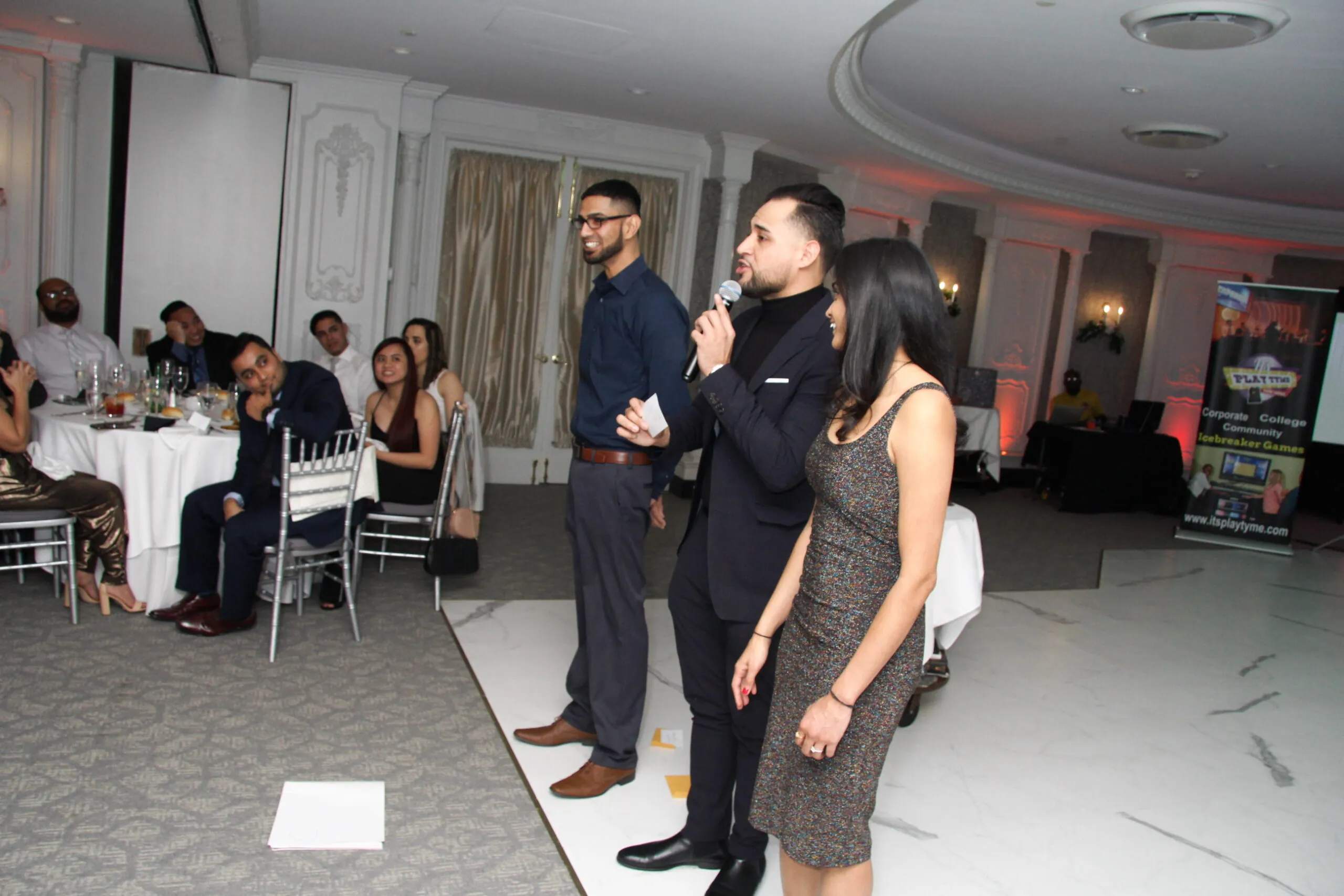
Few workshop formats match the instant energy of a live, professionally hosted game show. It’s PlayTyme Game Shows runs exactly this kind of experience across New Jersey, New York City, and Connecticut. Their corporate event programs bring full production setups (buzzers, screens, sound systems, and trained hosts) directly to your venue. Teams compete in rounds of trivia, physical challenges, and strategy games that force collaboration while keeping the energy high.
What separates a professional game show from a DIY trivia night is execution. It’s PlayTyme handles all logistics, customizes questions around your company’s values or training content, and scales from groups of 20 to audiences of 300+. The competitive structure gives every participant a stake in the outcome, which eliminates the passive-audience problem that sinks most workshops. Employees walk away with shared stories and inside jokes that strengthen working relationships long after the event ends.
2. Team Trivia Battles
Trivia battles work especially well when you embed company-specific or industry-specific questions into the rounds. Employees learn (or relearn) product details, safety protocols, or company history without sitting through another training slide deck. Splitting participants into cross-functional teams forces people who rarely interact to communicate under mild pressure, which builds rapport faster than any icebreaker exercise. Keep rounds short (90 seconds per question) and add a physical or creative challenge every third round to maintain momentum.
Workshops That Develop Professional Skills
3. Peer-Led Skill Swap Sessions
Every organization has untapped expertise scattered across departments. A skill swap workshop pairs employees from different teams to teach each other something practical: a designer teaches basic wireframing to the sales team, while a salesperson demonstrates objection-handling techniques. These sessions cost almost nothing to run, and they build mutual respect between departments that normally operate in silos. Limit each teaching slot to 20 minutes and cap groups at 8 to keep interactions personal.
4. Innovation and Problem-Solving Labs
Give teams a real company problem (a clunky process, a customer complaint trend, a workflow bottleneck) and 90 minutes to prototype a solution. Structure the session like a design sprint: 15 minutes to define the problem, 30 minutes to brainstorm, 30 minutes to build a rough prototype or plan, and 15 minutes for group presentations. The best ideas go to leadership for review. This format produces tangible output that justifies the time investment to skeptical executives, and employees feel heard when their solutions get implemented.
Wellness and Mindfulness Workshops
5. Guided Mindfulness and Breathwork Sessions
Stress directly erodes motivation. A 45-minute guided mindfulness session gives employees practical techniques (box breathing, body scans, focused attention exercises) they use at their desks the same afternoon. Bring in a certified instructor for the first session, then train an internal champion to lead 10-minute daily check-ins. The key is consistency: a single session feels like a novelty, but a weekly practice changes the baseline stress level across the team.
6. Outdoor Team Challenges
Moving workshops outside changes the dynamic entirely. Obstacle courses, scavenger hunts, or relay-style challenges get employees moving physically while solving problems together. The change of environment breaks the association between “workshop” and “conference room boredom.” For teams in the NJ, NYC, and CT area, local parks and outdoor venues offer plenty of space. Even a 90-minute outdoor session resets energy levels in ways that an indoor workshop simply does not replicate.
Creative Workshops That Spark New Thinking
7. Improv and Communication Training
Improv exercises teach employees to listen actively, respond without overthinking, and support each other’s ideas. The “yes, and” principle from improvisational theater translates directly to brainstorming sessions, client calls, and cross-functional collaboration. A professional improv facilitator runs participants through progressively challenging scenarios, starting with low-stakes word association games and building toward spontaneous group storytelling. Employees leave more comfortable with ambiguity and faster on their feet during real conversations.
8. Vision Board and Goal-Mapping Sessions
Vision boards get dismissed as fluff, but structured goal-mapping sessions produce real clarity. Give each participant 30 minutes to define one professional goal for the next quarter, identify three specific actions to reach it, and name one obstacle standing in the way. Then pair employees to share their boards and commit to a mutual accountability check-in two weeks later. The visual format makes abstract goals concrete, and the peer pairing creates social pressure that drives follow-through.
Purpose-Driven Workshops
9. Volunteer and Community Service Projects
Shared purpose motivates more reliably than shared pizza. Organize a half-day volunteer project (a food bank shift, a school supply drive, a park cleanup) and frame it as a team workshop rather than a charity obligation. Working together on something meaningful outside the office reveals leadership qualities, problem-solving instincts, and interpersonal strengths that never surface in a conference room. Debrief afterward with a 20-minute group conversation about what the experience revealed about how the team operates.
10. Values Alignment Workshops
Employees stay motivated when their personal values connect to the organization’s mission. A values alignment workshop uses structured exercises (card sorts, small-group discussions, scenario-based decision making) to help participants identify their core values and map them against the company’s stated principles. Where alignment exists, reinforce it. Where gaps appear, acknowledge them honestly. This format works best with groups of 15 to 25, facilitated by someone outside the direct management chain to encourage candor.
How to Select the Right Motivational Workshop
Start with the outcome you need, not the format that sounds interesting. If morale is low and energy is flat, a high-energy competition format (like a live game show from It’s PlayTyme) delivers immediate impact. If communication breakdowns cause repeated project failures, improv training or skill swaps address the root cause. If burnout is the issue, wellness sessions and outdoor challenges restore capacity before piling on new initiatives.
Match the format to your group size and culture. A team of 12 thrives in a peer-led skill swap. A department of 150 needs the production value and crowd management that a professional game show provides. Consider running a different format each quarter so employees never associate “workshop” with a single repetitive experience. Rotate between high-energy, skill-building, wellness, and purpose-driven formats to address different dimensions of motivation throughout the year.
Budget matters, but impact matters more. A poorly run free workshop wastes more money (in lost productivity hours) than a professionally facilitated paid event that produces measurable results. Track attendance, gather post-event feedback scores, and compare team performance metrics before and after each workshop to build the business case for continued investment.
Ready to bring a high-energy motivational workshop to your team? Get in touch with It’s PlayTyme Game Shows to explore game show events, team building activities, and custom corporate programs designed for groups across New Jersey, New York City, and Connecticut.
Frequently Asked Questions (FAQs)
What are the most effective motivational workshop ideas for employees?
The most effective workshops combine active participation with a clear purpose. Game show competitions, problem-solving labs, and peer-led skill swaps consistently outperform lecture-based formats because they require every participant to engage. The best results come from matching the workshop format to the specific challenge your team faces.
How long should an employee motivation workshop last?
Most effective workshops run between 60 and 120 minutes. Sessions shorter than 45 minutes feel rushed and fail to build momentum. Sessions longer than two hours cause attention to drop unless the format includes varied activities, physical movement, or competition elements that reset energy throughout.
How often should companies run motivational workshops?
Quarterly workshops strike the right balance between consistency and scheduling pressure. Monthly sessions work well for small teams with flexible calendars. The key is regularity: a single annual workshop produces a short energy spike that fades within a week, while quarterly sessions build lasting cultural shifts.
Do motivational workshops actually improve employee performance?
Yes, when the format is participatory and the content connects to real work challenges. Organizations that run structured, interactive workshops report higher engagement scores, lower turnover rates, and stronger cross-team collaboration. The difference between workshops that work and workshops that waste time is almost always the level of active participation required.
How much do motivational workshops for employees typically cost?
Costs range widely based on format and group size. Peer-led skill swaps and internal innovation labs cost little beyond the time invested. Facilitated programs typically run between $1,000 and $5,000 depending on group size, location, and customization, and professionally hosted game shows from It’s PlayTyme start at $2,995 (see our pricing estimator). The return on a well-run workshop (measured in retention, productivity, and morale) consistently outweighs the cost.