


Disengaged employees cost organizations worldwide an estimated $8.9 trillion in lost productivity each year, according to Gallup’s State of the Global Workplace report. Meanwhile, Gallup’s Q12 meta-analysis found that business units with high employee engagement see 23% greater profitability compared to those with low engagement. The numbers are clear: keeping your workforce connected and motivated is a business priority — not a perk.
Out of office activities for employees give teams a chance to interact outside the daily grind of meetings, emails, and deadlines. These shared experiences build trust, improve communication, and create the kind of genuine rapport that makes collaboration easier back at the office.
Still, planning an off-site event is rarely straightforward. HR managers and team leads face real obstacles: coordinating schedules across departments, finding activities that suit varied physical abilities and personalities, justifying the budget to leadership, and figuring out whether an event actually moved the needle on morale. Without a clear strategy, out of office activities turn into expensive outings that employees forget within a week.
Why Out of Office Activities for Employees Drive Real Results
Taking your team out of the office does more than break up the routine. It removes hierarchy and puts people in unfamiliar situations where they rely on each other. A director and a junior analyst working together to solve a puzzle or win a trivia round interact differently than they do in a conference room.
Shared experiences create “social capital,” the informal bonds that make it easier to ask for help, give honest feedback, and collaborate under pressure. Teams that build this trust off-site bring it back to their daily work. Communication improves. Conflict decreases. People stay longer because they feel a genuine sense of belonging.
The return on investment goes beyond feelings. Organizations that invest in regular team bonding activities report lower turnover, higher productivity, and stronger cross-departmental collaboration. These are measurable outcomes that affect the bottom line.
Challenges of Planning Out of Office Activities for Employees
Before diving into activity ideas, it helps to name the obstacles that derail most off-site plans.
- Scheduling conflicts: Getting 20 or 50 people in the same place at the same time requires weeks of coordination, especially across departments with different peak workloads.
- Inclusivity concerns: Not everyone enjoys ropes courses or escape rooms. Physical limitations, introversion, cultural preferences, and personal comfort levels all factor in. An activity that alienates part of the group does more harm than good.
- Budget justification: Leadership wants ROI numbers. “The team had fun” is not a compelling budget request. HR teams need activities that produce observable, measurable improvements in engagement and collaboration.
- Logistics overload: Booking a venue, arranging transportation, managing dietary restrictions, coordinating with vendors, and handling last-minute cancellations all fall on the organizer’s plate.
- Measuring impact: After the event, how do you know it worked? Most companies lack a framework for tracking post-event engagement improvements, making it hard to justify repeating the investment.
Interactive Game Shows and Trivia Events
Game shows and trivia competitions are among the most effective out of office activities for employees because they work for groups of almost any size and require no athletic ability. Everyone participates, whether they are competitive or casual.
It’s PlayTyme Game Shows stands out in this category. Based in New Jersey and serving the entire NJ, NYC, and Connecticut region, they bring fully produced, interactive game show experiences directly to corporate events. Their format includes buzzer-based trivia, music and pop culture rounds, and team-based competition rounds that keep every participant involved from start to finish.
What separates It’s PlayTyme from generic trivia nights: a professional host runs the show, all equipment is provided, and the format adapts to groups ranging from 20 to 300+ people. The energy of a live game show creates a shared experience that teams talk about for months. It is an ideal option for companies that want high engagement with zero planning burden on their internal team.
Why Game Shows Work for Corporate Groups
- Participation is natural: answering questions and cheering for teammates does not require special skills or courage.
- Introverts and extroverts both engage: the team format lets quieter employees contribute knowledge without being the center of attention.
- Customizable content lets organizers weave in company trivia, industry knowledge, or inside jokes.
- Setup and teardown are handled by the provider, removing logistics stress from the HR team.
Outdoor and Adventure Activities
For teams that thrive on physical activity, outdoor options offer a change of scenery and a dose of adrenaline. Popular choices include hiking excursions, kayaking trips, go-kart racing, and field day competitions.
The trade-off with adventure activities is accessibility. A rock climbing outing excludes employees with physical limitations. A full-day hiking trip requires a level of fitness that not everyone shares. If you go this route, always offer an alternative track so no one sits on the sidelines.
Outdoor Options That Work for Mixed Groups
- Scavenger hunts: Teams explore a park, downtown area, or neighborhood while solving clues. Walking pace is flexible, and the puzzle element keeps it engaging.
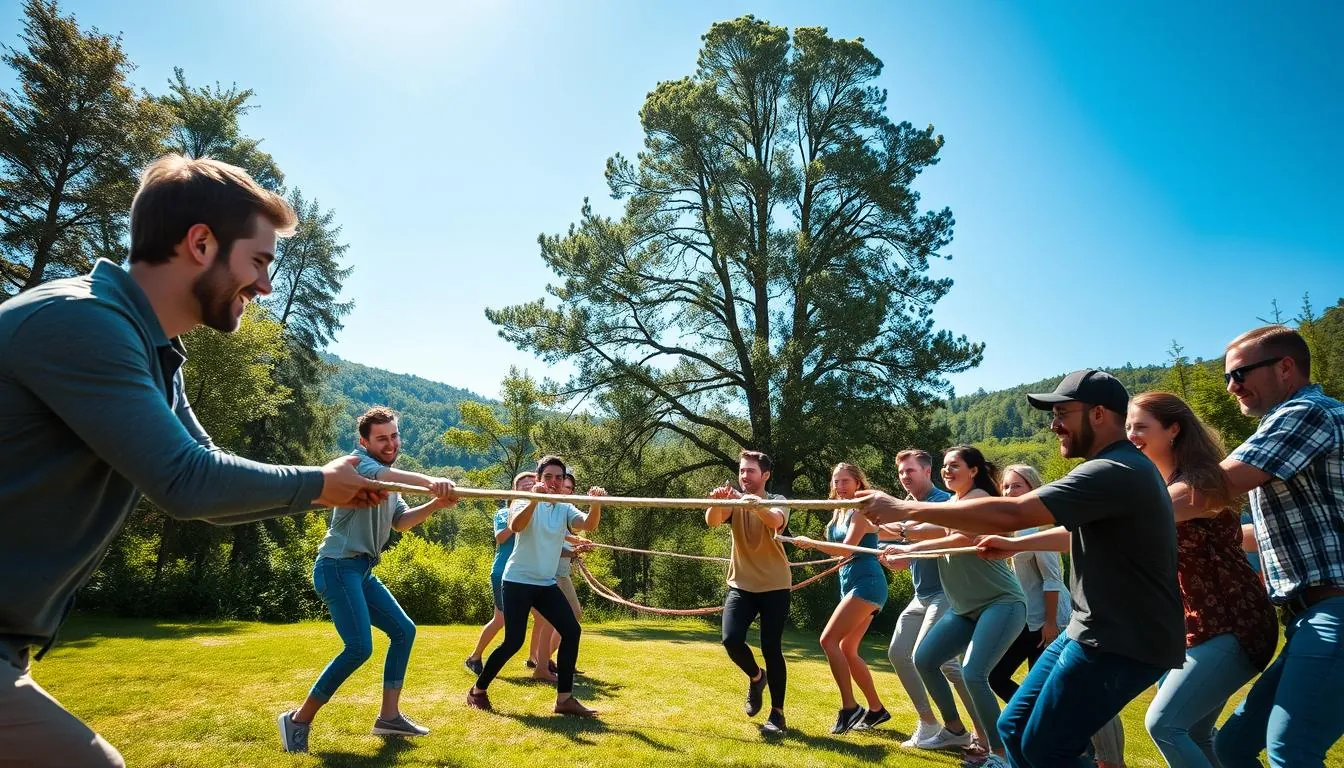
- Field day events: Relay races, tug-of-war, and sack races bring out playful competition without requiring serious athleticism.
- Picnic and games: Combine a catered lunch with lawn games like cornhole, bocce, and giant Jenga for a relaxed, social atmosphere.
Creative Workshops and Collaborative Projects
Hands-on workshops appeal to teams that prefer collaboration over competition. These activities tap into problem-solving skills and produce something tangible by the end of the session.
- Cooking classes: Teams work in small groups to prepare a meal. Communication, delegation, and time management are built into the process naturally.
- Art or pottery sessions: Low-pressure creative activities reduce stress and give people a chance to express themselves outside of work roles.
- Build-a-project challenges: Teams assemble bikes, care packages, or other items that get donated to a local charity. The collaborative effort serves a purpose beyond the team itself.
Creative workshops tend to run 2 to 3 hours, making them a practical option for half-day outings that do not consume an entire workday.
Volunteer and Community Service Outings
Volunteering together gives employees a shared sense of purpose that extends beyond quarterly targets. It also strengthens the company’s community presence, which matters for employer branding and recruitment.
Effective volunteer outings have structure. Partnering with a local food bank, habitat organization, or park cleanup crew provides clear tasks and a visible outcome. Avoid vague “volunteer days” where people show up without direction. The activity should feel organized and meaningful.
Pair a morning of service work with a team lunch afterward. The informal conversation that happens over food is where the real bonding occurs.
How to Plan Out of Office Activities on a Budget
Budget constraints should not eliminate off-site activities from your calendar. Some of the most effective team-building experiences cost very little.
| Activity Type | Estimated Cost Per Person | Group Size | Time Required | Best For |
|---|---|---|---|---|
| Game show event | $25 $75 | 20-300+ | 1-2 hours | All teams, any fitness level |
| Scavenger hunt | $10 $30 | 10-100 | 2-3 hours | Small to mid-size groups |
| Cooking class | $50 $100 | 10-30 | 2-3 hours | Teams that enjoy collaboration |
| Volunteer outing | $0 $15 | 10-100+ | 3-5 hours | Purpose-driven teams |
| Field day/picnic | $15 $40 | 20-200 | 3-4 hours | Outdoor-friendly groups |
| Trivia night (in-house) | $5 $15 | 10-50 | 1-2 hours | Budget-conscious teams |
When budgets are tight, focus spending on the elements that create the most impact: a skilled facilitator, good food, and a well-organized format. The venue matters less than the experience. A game show in your office parking lot with a professional host beats a fancy restaurant with no structured activity.
How to Pick the Right Out of Office Activity for Your Team
Start with three questions: What is the goal? Who is participating? What is the budget? The answers narrow your options quickly.
If the goal is engagement and energy, interactive formats like game shows and trivia events deliver the highest participation rates. If the goal is deeper relationship building, workshops and volunteer projects create more intimate connections. If you need something fast and inexpensive, a structured team lunch with icebreaker activities does the job.
Consider your team’s demographics. A group of 25-year-olds in a startup responds differently than a cross-generational department of 80 people. Activities that require no special physical ability, no embarrassing performance moments, and no pressure to “be fun” get the broadest participation and the most honest feedback.
For teams across New Jersey, New York City, and Connecticut, It’s PlayTyme’s corporate game show events solve the hardest part of planning: they handle setup, hosting, and teardown so your HR team focuses on showing up, not managing logistics. Reach out to book your team’s next off-site experience and see firsthand how a professionally run game show transforms your next company outing.
Frequently Asked Questions (FAQs)
What are the best out of office activities for large teams?
Game shows, trivia competitions, and field day events work best for large groups because they scale easily and keep everyone involved. It’s PlayTyme Game Shows, for example, handles groups of 20 to 300+ people with a format designed to keep energy high throughout the event.
How often should companies plan out of office team building activities?
Quarterly events strike the best balance between frequency and budget. Monthly activities work for smaller, lower-cost options like team lunches. The key is consistency: one well-planned event every quarter produces better results than a single expensive annual retreat.
How much should a company budget for off-site team building events?
Budget $25 to $100 per person for most activities. Game shows and trivia events fall on the lower end of that range while delivering high engagement. Cooking classes and adventure outings tend to cost more per person. Factor in transportation and food when calculating total costs.
How do you measure the success of out of office activities for employees?
Send a short survey within 48 hours asking about enjoyment, connection with colleagues, and willingness to attend future events. Track employee engagement scores quarterly to identify trends. Monitor turnover rates and cross-team collaboration metrics over 6 to 12 months for long-term impact data.
What out of office activities work for remote and hybrid teams?
Virtual game shows and online trivia events keep remote employees engaged without requiring travel. For hybrid teams, plan in-person events at a central location and offer a virtual participation option. The goal is inclusion: every employee should feel part of the experience regardless of where they work.