

Nearly half of all U.S. students report feeling actively engaged at school, according to Gallup’s student survey research. That means the other half sits through the day disconnected. Data from the National Center for Education Statistics adds context: students who participate in structured extracurricular activities are three times more likely to perform in the top academic quartile than those who do not. The takeaway is clear. Schools that create interactive, high-energy experiences outside the standard curriculum give students something a textbook never will: a reason to show up excited.
School game shows in New Jersey deliver exactly that kind of experience. A professionally hosted game show assembly transforms an auditorium full of restless students into a room of enthusiastic participants, competing in teams, answering questions, and cheering each other on. For administrators and PTA committees searching for an assembly that students actually talk about afterward, this format works.
But finding the right program is harder than it sounds. Schools face real obstacles when planning assemblies: tight budgets that demand every dollar justify itself, scheduling constraints that leave little room for setup and teardown, content requirements that must align with school values, and the constant pressure to find something that works for kindergartners and eighth graders in the same building. Charter schools face additional hurdles, from smaller per-pupil budgets to the need for programming that reinforces their specific educational mission. These are the problems a great school game show provider solves before the host ever picks up a microphone.
What School Game Shows Actually Look Like
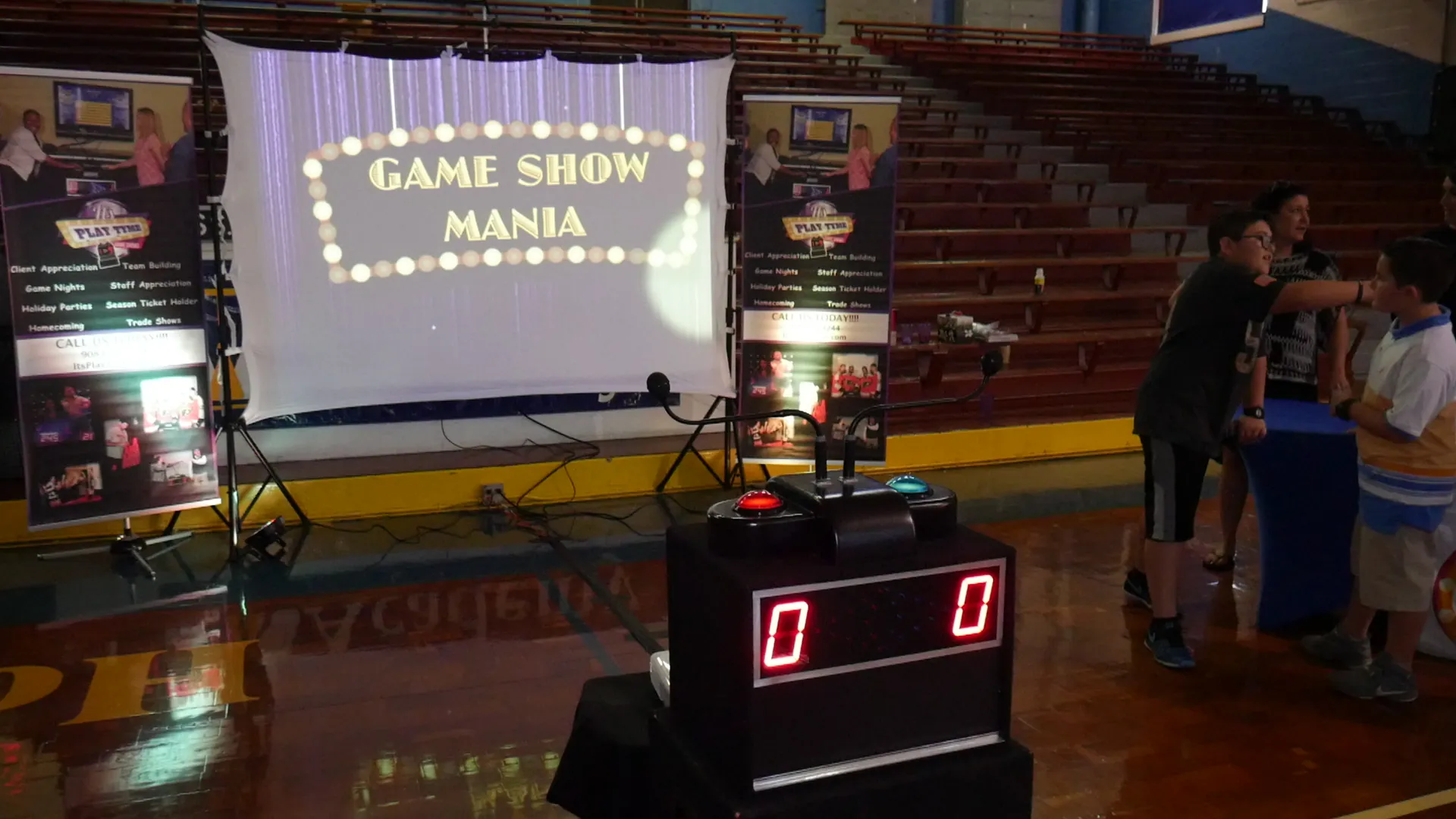
A school game show is a live, fully hosted assembly program modeled after popular television formats. Students compete in teams through rounds of trivia, physical challenges, music identification, and word games. A professional emcee runs the entire event with a sound system, on-screen graphics, buzzers, and live scoring.
It’s PlayTyme Game Shows has run more than 3,000 of these events across New Jersey, New York City, and Connecticut since 2012. Their school assembly programs include formats like:
- Face-2-Face Feud: a Family Feud-style team competition with survey-based answers
- 60 Seconds of Fame: fast-paced physical and mental challenges completed against the clock
- Name That Hit Song: music recognition rounds that get the entire audience involved
- Word Play: vocabulary and spelling games adapted to grade level
- Custom trivia: questions built around curriculum topics, school history, or anti-bullying themes
The host handles everything: the equipment, the energy, the crowd management, and the pacing. Teachers and administrators watch the event alongside students instead of running it.
Why New Jersey Schools Book Interactive Assemblies
New Jersey has more than 2,500 public schools and over 80 charter schools. Competition for student attention is steep, and the standard assembly lineup (a motivational speaker, a science demo, a drug awareness presentation) starts to feel repetitive after a few years. Interactive assemblies break that cycle.
Game show assemblies succeed where passive programs fail for three reasons:
- Participation is built into the format. Students are not watching a presenter. They are on stage, answering questions, racing through challenges, and representing their class or grade. The audience participates through cheering, chanting, and bonus rounds designed for the whole room.
- Energy is controlled, not chaotic. A professional host knows how to keep 300 students excited without losing control of the room. The structure of a game show (rounds, rules, scoring, a clear winner) channels that energy productively.
- The content adapts. A good provider customizes questions to match the school’s curriculum, values, or event theme. An end-of-year celebration looks different from a reading week kickoff or a Red Ribbon Week assembly.
What Stalls Schools When Planning Assembly Programs
Booking a school assembly sounds simple until you start making calls. The reality involves several obstacles that trip up even experienced event planners.
Budget pressure is constant. Public and charter schools in New Jersey operate under strict funding guidelines. Every dollar spent on enrichment programming competes with classroom supplies, staff development, and facility maintenance. PTA fundraising covers some assembly costs, but committees need to justify the expense to parents who want to see a clear benefit.
Age-range gaps create headaches. A K-8 school needs programming that holds the attention of a five-year-old and earns respect from a thirteen-year-old. Most assembly providers offer a one-size program and hope for the best. That approach leaves younger students confused or older students bored.
Setup and logistics eat into instruction time. Schools operate on tight bell schedules. An assembly that requires an hour of setup, 45 minutes of performance, and 30 minutes of teardown disrupts three periods instead of one. Administrators need a provider who arrives early, sets up independently, and clears out fast.
Content alignment matters more than entertainment. Schools answer to parents, boards, and state standards. An assembly that is purely entertaining but offers no educational or character-building tie-in is a harder sell than one that reinforces a school-wide initiative like anti-bullying, STEM awareness, or literacy.
How Charter Schools Use Game Shows Differently
Charter schools in New Jersey operate under a unique set of pressures. They compete for enrollment, answer to their own boards, and build cultures around specific educational philosophies. A game show assembly serves a different strategic purpose in a charter school than it does in a traditional public school.
For charter schools, assemblies are culture-building events. Many charter models emphasize community, character, and school identity. A game show customized with questions about the school’s core values, founding story, or academic achievements reinforces that identity in a way students enjoy. It turns abstract mission statements into something students remember because they competed over it.
Charter schools also use assemblies as retention and recruitment tools. A high-energy, well-run event gives students a positive memory tied to the school. That matters when families decide whether to re-enroll or when prospective families attend an open house. Some charter schools book game shows for family engagement nights, turning the format into a shared experience between students and parents.
It’s PlayTyme Game Shows works with charter schools across New Jersey to build programs around these goals. The content is fully customizable, so a STEM-focused charter gets science and math trivia while a performing arts charter gets music and pop culture rounds.
What Makes a Professional School Game Show Worth the Investment
The difference between a professional game show assembly and a DIY trivia session is the difference between a school play with a set and lights and a teacher reading from a script in the cafeteria. Production quality matters because students can tell.
A professional provider brings:
- A trained host who manages crowd energy, draws out shy students, and keeps the event on schedule
- Professional-grade equipment: wireless buzzers, sound system, projector-ready graphics, and live scoring displays
- Tested formats that have been refined over thousands of shows, so the pacing, difficulty curve, and audience involvement all work
- Custom content aligned to the school’s specific theme, curriculum, or event purpose
- Zero burden on staff: no teacher needs to run the sound, manage the slides, or play emcee
It’s PlayTyme Game Shows backs that package with a 100% satisfaction guarantee, which matters to administrators who have been burned by underperforming assembly vendors before. With more than a decade of experience and thousands of school assembly events completed, the track record speaks for itself.
Formats That Work for Every Grade Level
One of the biggest advantages of a game show format is its flexibility. The same provider runs age-appropriate versions of the same show for different grade bands within a single school day.
| Grade Band | Best Formats | Content Focus | Audience Involvement |
|---|---|---|---|
| Pre-K to 2nd | 60 Seconds of Fame, Word Play | Colors, shapes, basic vocabulary, movement | Whole-room chanting, simple physical challenges |
| 3rd to 5th | Face-2-Face Feud, Name That Hit Song | Curriculum trivia, school values, pop culture | Team representatives plus audience bonus rounds |
| 6th to 8th | Full game show with all formats | Advanced trivia, STEM, current events, school history | Head-to-head competition, student hosts for bonus rounds |
| High School | Custom tournament-style show | SAT vocab, career readiness, senior superlatives | Class vs. class format, faculty round |
This flexibility means a K-8 school books one provider for the entire day and gets two or three tailored shows instead of one generic assembly that half the building outgrows. It’s PlayTyme Game Shows runs split assemblies as standard practice, adjusting the difficulty, music, and energy level for each group.
When to Book a School Game Show in New Jersey
Timing matters. The most popular windows for school game show assemblies in New Jersey fall into predictable patterns:
- End-of-year celebrations (May and June): the single busiest season, when schools reward students for a strong academic year
- Welcome-back assemblies (September): sets a positive tone for the school year and builds excitement from day one
- Red Ribbon Week (late October): game show content built around anti-drug and character education themes
- Read Across America / Literacy Week (March): trivia and word games tied to reading goals
- Field Day and Spirit Week: game shows as the anchor event for a full day of activities
- Holiday and seasonal celebrations: winter and spring events that bring the school community together
The busiest dates book months in advance. Schools that wait until April to book a June event often find their preferred dates gone. Early planning, especially for end-of-year events, is the difference between getting the date you want and settling for what is left.
What to Ask Before Booking a School Game Show
Not every game show company is built for schools. The vendor who runs a great corporate holiday party does not automatically know how to manage 400 elementary students in a gymnasium. When evaluating providers for school game shows in New Jersey, focus on these factors:
School-specific experience. Ask how many school events the provider has completed. A company with thousands of school assemblies behind them understands the environment: the noise, the attention spans, the need to keep content appropriate, and the logistics of working within a bell schedule.
Customization depth. A great provider does not just swap out a few trivia questions. They build the entire show around your school’s event, theme, and student population. Ask whether they offer curriculum-aligned content and whether they will include school-specific questions.
References and reviews. Ask for references from other New Jersey schools. Read online reviews. Look for specifics: did the host control the room? Did students talk about it afterward? Did the setup and teardown stay within the scheduled window?
All-inclusive pricing. The best providers quote a flat rate that covers the host, all equipment, setup, teardown, and customization. No surprise fees for travel, extra rounds, or “premium” game formats.
A satisfaction guarantee. A provider confident in their work stands behind it. It’s PlayTyme Game Shows backs every event with a 100% satisfaction guarantee, which tells you everything about how they approach each event.
Ready to book the assembly your students will talk about all summer? Get in touch with It’s PlayTyme Game Shows to lock in your preferred date. Whether you are planning an end-of-year celebration, a spirit week anchor, or a charter school community event, the show is fully customized to your school and delivered with zero work for your staff.
Frequently Asked Questions (FAQs)
How long does a school game show assembly last?
Most school game show assemblies run 45 to 60 minutes, which fits a standard assembly period. Setup and teardown happen before and after school hours or during transitions, so no instructional time is lost beyond the assembly itself.
What age group works best for a school game show?
Game shows work for every grade level from pre-K through high school. A professional provider like It’s PlayTyme Game Shows adjusts the format, content difficulty, and energy level for each grade band, running separate assemblies for younger and older students within the same school day.
How much does a school game show assembly cost in New Jersey?
Pricing depends on the number of shows, the school’s location, and the level of customization. Most providers quote a flat rate that covers the host, equipment, and setup. Contact the provider directly for a quote tailored to your school’s needs and budget.
Are school game shows educational or just entertainment?
They are both. The game show format is built around questions and challenges, so every round reinforces knowledge. Providers customize content to match curriculum standards, reading initiatives, anti-bullying themes, or any school-wide goal the administration wants to highlight.
How far in advance should we book a school game show?
Book at least four to six weeks in advance for most dates. End-of-year events in May and June fill up fastest, so schools planning for that window should reach out by early spring to secure their preferred date.
How does a game show assembly help with student disengagement?
Gallup research shows that roughly half of U.S. students feel disconnected during the school day. Students who participate in structured activities are three times more likely to perform in the top academic quartile than those who do not. A game show assembly creates an interactive, team-based experience that gives disengaged students a direct reason to participate and show up excited.