

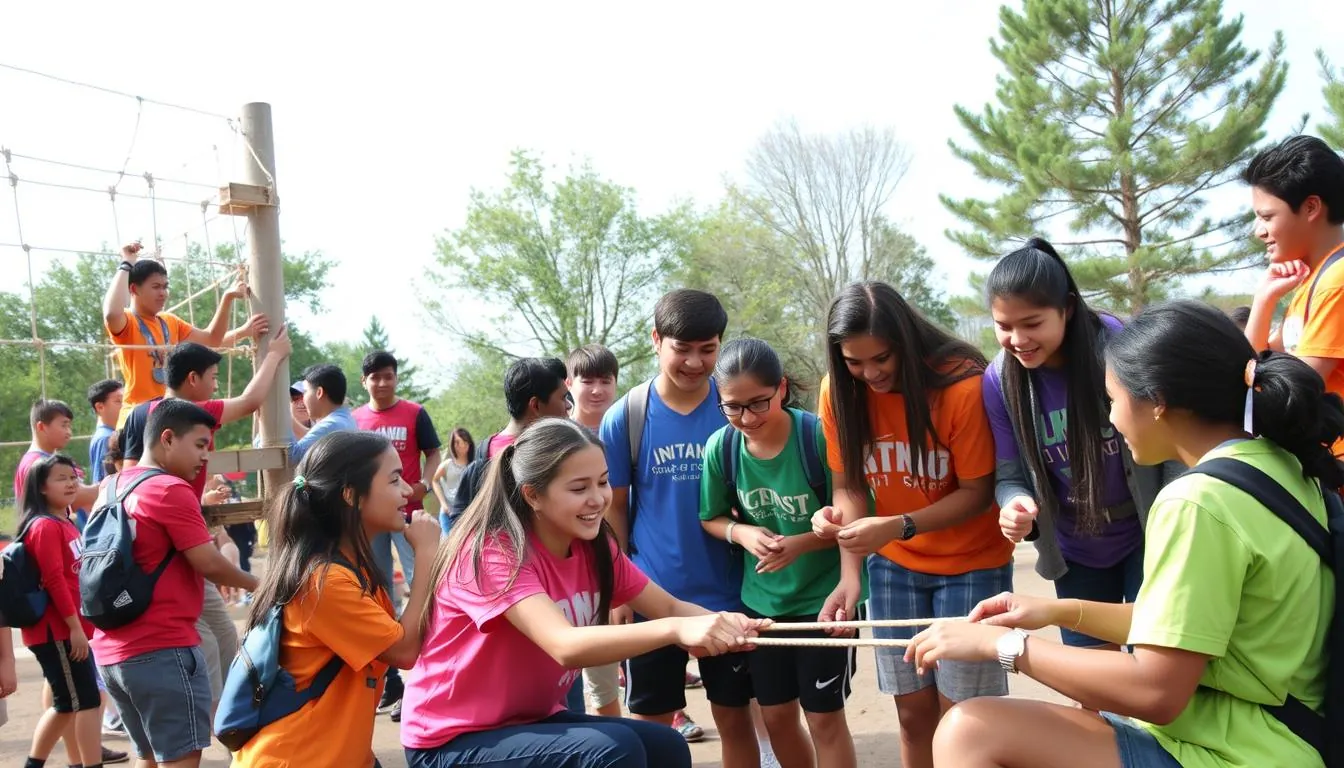

Strong teams are built long before students reach the workforce, and the habits start in high school classrooms, clubs, and athletic programs. Gallup reports that only about 23 percent of employees worldwide are engaged at work, a gap that traces back to weak collaboration skills, according to the Gallup State of the Global Workplace report. Teaching teenagers to communicate and cooperate now pays off for decades.
Connection matters just as much as skill. Pew Research finds that 95 percent of teens have access to a smartphone, and constant screen time can crowd out face-to-face bonding, according to Pew Research Center. Structured team building pulls students out of their feeds and into real conversation, which is where trust actually forms.
Teachers and advisors know the obstacles. You have a tight class period, a mixed group of personalities, a few students who dominate and a few who disappear, and almost no budget. You need activities that include everyone, run on a schedule, work without special equipment, and feel fun rather than forced. The ideas below cover both the do-it-yourself end and the professionally hosted tier.
What Makes Team Building Work for Teenagers
High schoolers spot a forced exercise instantly, so the best activities disguise the lesson inside genuine fun. When a group laughs together while solving a problem, the cooperation feels natural and the skills stick.
Shared stakes also drive engagement. A common goal, a friendly scoreboard, or a real deadline gives every student a reason to contribute. The goal is participation from the quiet students, not just the loud ones, and good design pulls everyone in.
Quick DIY Activities for the Classroom
These cost nothing, fit inside one class period, and need no special setup. They work for advisory periods, the first day of a club, or a team practice.
Fast icebreakers
- Two Truths and a Lie, played in rotating small groups
- Common Ground, where teams race to list ten things everyone shares
- Human Knot, a physical puzzle that forces communication
Problem-solving rounds
- Marshmallow tower build with spaghetti and tape
- Blindfold maze, where one partner guides another by voice only
- Escape-style puzzle packets that small teams race to crack
Rotate groups between rounds so students work with classmates they rarely talk to. That single rule turns a fun hour into real relationship building.
Activities for Sports Teams and Clubs
Athletic squads and club groups already share a goal, so team building sharpens chemistry rather than creating it from scratch. Focus on communication under pressure.
- Relay challenges that mix athletic and mental tasks
- Strategy games where the team plans, executes, then debriefs
- Captain rotations so every member leads a drill once
- Group goal-setting sessions with written, visible targets
Debriefing matters most. After each activity, a short discussion about what worked turns a fun game into a lasting lesson about trust and roles.
The Time and Buy-In Problems Schools Run Into
Time is the first hurdle. A 45-minute period barely fits setup, play, and reflection, so activities must start fast and need almost no instruction. Pick games students grasp in one sentence.
Mixed buy-in is the second hurdle. Some students arrive eager and others arrive skeptical, and one disengaged group can stall the room. Friendly competition and a visible scoreboard pull reluctant students in without singling anyone out.
Logistics finish the list. Limited space, no budget, and a wide range of physical abilities all narrow your options. Choose inclusive activities that work in a standard classroom and never depend on athletic skill to win.
The Premium Tier: A Professionally Hosted Game Show
When the occasion calls for something bigger than a classroom game, a hosted game show lifts the whole experience. A professional host, real buzzers, a giant scoreboard, and a fast-paced format turn an entire grade into one charged room. It’s PlayTyme Game Shows runs interactive programs for schools across New Jersey, New York City, and Connecticut, designed so every student plays rather than watches.
The hosted format solves the participation problem on its own. Team-based rounds put quiet students on equal footing with the outgoing ones, and the energy of live competition keeps a packed gym engaged from the first question to the final round. For pep rallies, end-of-year events, or club kickoffs, it delivers a shared memory that a worksheet never could.
Pairing both tiers gives advisors the most range. Use the free DIY games for weekly practice and connection, then bring in a hosted show for the marquee event that everyone talks about for months.
Building a Year-Long Team Building Plan
Spread activities across the calendar rather than cramming them into one day. Open the year with icebreakers, weave problem-solving games into the middle months, and close with a large group event that rewards the bonds students built.
Track what works for your specific group. Note which games drew the quiet students out and which fell flat, then repeat the winners. A simple log turns scattered activities into a real program that improves every term.
Want help with the marquee event your students will remember? Send the details through our contact page, and explore our team building programs built for high school groups of any size. For all-grade celebrations, our school programs bring the same energy to the whole student body.
Matching the Activity to the Moment for Students
Match the activity to the moment. For a quick connection inside class, reach for a free icebreaker or a problem-solving round that runs in fifteen minutes. For a team that needs chemistry under pressure, choose strategy games with a real debrief afterward.
For the events that define a school year, step up to a professionally hosted game show that puts every student in the game at once. Weigh your time, your space, and your goal, then pick the tier that fits, and rotate groups so the quiet voices get heard alongside the loud ones.
Frequently Asked Questions (FAQs)
What are the best team building activities for high school students?
The best activities mix fun with a clear goal and include every personality. Quick wins include Two Truths and a Lie, the marshmallow tower build, and the human knot, while a hosted game show works for whole-grade events that put every student in the action.
How do you include shy or reluctant students?
Use team-based formats and rotating groups so no one is singled out and every team needs each member. Friendly competition and a visible scoreboard pull reluctant students in naturally, without forcing anyone to perform alone.
Why use a hosted game show for high school team building?
A hosted game show turns an entire grade into one engaged room with a professional host, real buzzers, and team rounds. It guarantees full participation and creates a shared memory that simple classroom games rarely match.