

You’ve been handed the next corporate event, and the pressure is on. Booking a room and ordering catering is the easy part. Your real job is creating an experience that connects people. The hard part isn’t getting people to show up; it’s getting them to take part. Too many corporate gatherings turn into small, cliquey conversations while everyone else checks their phones and waits for it to end. You want a room full of energy and laughter, not polite silence. With teams now spread across offices, home desks, and travel schedules, those moments of real connection are harder to manufacture than they used to be.
That disconnection is expensive. Gallup pegs the cost of low employee engagement at $10 trillion to the global economy. One event won’t fix a culture, but a well-run interactive experience builds the camaraderie that sustains one. Event professionals feel the stakes too: a Bizzabo study found that 91% of event marketers call in-person events a critical part of their company’s success. Your role is bigger than logistics. You’re building an opportunity for real connection.
| Timeframe | Key Task | Critical Confirmation |
|---|---|---|
| 8-12 Weeks Out | Define Goals and Source Vendors | Budget approval and clear event objectives. |
| 6-8 Weeks Out | Vet and Secure Partner | Signed contract with clear terms and cancellation policies. |
| 4-6 Weeks Out | Venue and Technical Logistics | Completed site survey with your entertainment partner. |
| 2-4 Weeks Out | Customize Content and Communicate | Finalized custom material and internal promotion plan. |
| 1 Week Out | Finalize Run Sheet | Detailed timeline distributed to all vendors and stakeholders. |
| Day of Event | Execute and Engage | Point-of-contact chain is clear and active. |
8-12 Weeks Out: Strategy, Budget, and Sourcing
A successful event is built long before the first invitation goes out. This phase is about clarity and direction. Without a clear goal, you can’t measure success. Without a firm budget, you can’t make real decisions.
- Define your “why.” What is the primary goal? Integrating new hires, celebrating a win, strengthening cross-department ties, or kicking off a quarter? Write one or two sentences that describe success. For example: “Our team leaves re-energized for the year, with stronger connections to colleagues outside their own department.”
- Set a realistic budget. Pin down your total and split it across venue, food and beverage, and group entertainment. Carve out a specific line for engagement. Treating entertainment as an afterthought is the most common way to end up with lackluster results.
- Shortlist dates and venues. Pick two or three dates that work for your team. Research venues across NJ, NYC, and CT that fit your group size and support a live event.
- Source engagement partners. Look for pros who specialize in corporate event entertainment and know the NYC-metro venue scene across NJ, NYC, and CT. Favor companies built around interaction and participation, not passive viewing. Study their sites, watch event videos, and read reviews. A real partner acts as a consultant and helps you hit your event’s “why.”
6-8 Weeks Out: Vetting Vendors and Securing Your Partner
Now you dig deeper into your shortlist. The right partner does more than show up; they shape the experience around your goals and audience. This phase takes you from a list of options to a signed contract.
- Run discovery calls. Book 20 to 30 minute calls with your top two or three choices. Come ready to discuss goals, audience (age range, roles, culture), and group size. Notice the questions they ask. A strong partner cares about your objectives as much as their own pitch.
- Ask the right questions:
- How do you get everyone to take part, not just the outgoing few?
- What is your experience with groups of our size and industry?
- Can you build the content around our company, people, and culture?
- What exactly do you need on site (power, space, ceiling height)?
- Who hosts our event, and can we talk with them first?
- Review proposals and contracts. A professional proposal spells out the scope, the full cost with no hidden fees, and the payment schedule. Read the contract closely, especially cancellation and rescheduling terms. Get everything in writing.
- Secure your partner. Make the call and sign. The best hosts book up months ahead, especially around holidays and end-of-quarter celebrations. Once the contract is signed, your event has its cornerstone.
4-6 Weeks Out: Logistics and Venue Coordination
With your partner booked, attention shifts to logistics. This phase prevents day-of surprises by aligning your partner, venue, and technical needs early.
- Run a site survey. Have your partner visit the venue or complete a detailed remote tech survey. For a live game show, this step is non-negotiable. They confirm accessible power, enough ceiling height for screens or staging, clear sightlines for every guest, and control of the house audio and lighting.
- Confirm the logistics. Get written venue confirmation on load-in and load-out times, docking or elevator access, and the exact activity location. Pass it all to your entertainment partner.
- Update the headcount. Give your venue and vendors a sharper estimate. It shapes catering, seating, and how your partner structures the activity for full participation.
2-4 Weeks Out: Content, Communication, and Customization
With logistics set, focus turns to content and how you tell attendees about it. Building anticipation gets people through the door ready to play.
- Build custom content. This is where a great partner shines. Feed them fun facts about employees, inside jokes, or company trivia. That turns a generic activity into a celebration of your team. It’s central to what It’s PlayTyme Game Shows delivers, drawing on more than a decade of experience.
- Plan your internal communications. Draft the emails and messages that promote the event. Don’t just post the date and time; build excitement for the interactive part. Frame it as a chance to connect and have fun, not another happy hour.
- Finalize special needs. Submit dietary restrictions and accessibility requirements to your venue and caterer. Make sure the space and the activity work for everyone on your team.
1 Week Out: Finalizing the Run Sheet
The final week is about triple-checking every detail. You want one clear plan to hand your on-site team so you can host, not manage, on event day.
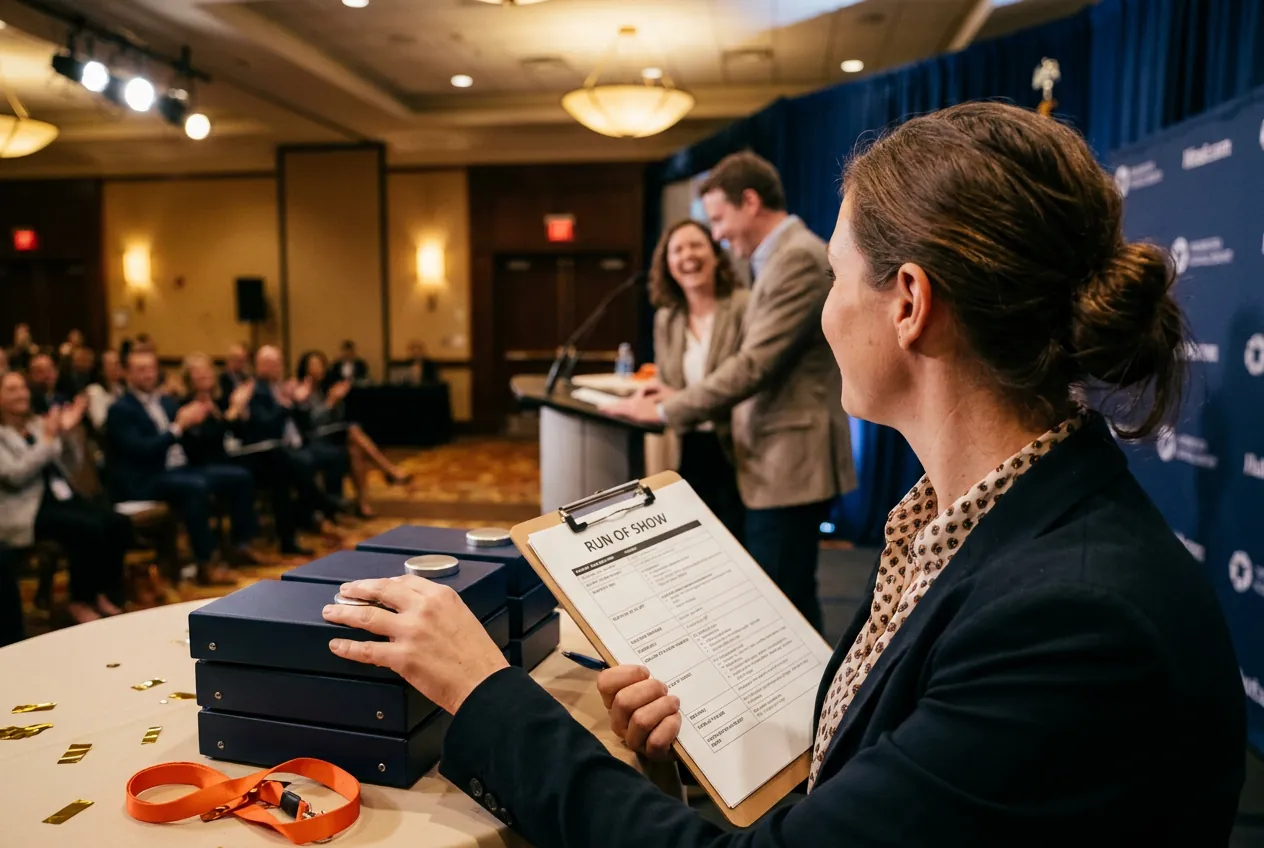
- Create and share the run sheet. It’s your master plan: a minute-by-minute schedule from vendor arrival to guest departure. Include contacts for every vendor, the venue manager, and internal stakeholders. Circulate it to everyone involved.
- Confirm arrival times. Call or email every vendor (entertainment, catering, AV, venue) to confirm arrival and setup. Repeat any special instructions from the run sheet.
- Set the day-of contact chain. Who decides if the schedule slips? Who does the venue call for your entertainment partner? Make it clear to the whole team.
- Send the final guaranteed headcount. Give the venue and all vendors your locked number.
Day of Event: Execution and Engagement
All the planning pays off today. Follow the checklist and the day is about managing and enjoying, not fighting fires.
For the local supplier and venue angle, our guide to corporate event planning in NJ covers the New Jersey specifics.
- Arrive early. Be first on site to greet your vendors and give them what they need. A warm welcome sets the tone.
- Run a team briefing. Pull your support staff and key vendors for a 10-minute huddle. Review the run sheet and confirm every role.
- Be a connector. Your main job now is to be present. Talk with guests, make introductions, and join the activities. Your energy spreads.
- Trust your partners. You hired pros for a reason, so let them work. A great host from a company like It’s PlayTyme Game Shows takes charge of the room’s energy and keeps the experience sharp for everyone.
What Stalls Group Engagement at Company Events
Even a perfect checklist meets a few snags. Here is how to head off the issues that most often flatten group engagement.
- The passive audience. Many employees are trained to spectate at company events. Design participation straight into the program. Swap the open-ended cocktail hour for a facilitated, interactive experience where everyone has a role and a reason to jump in.
- Technical failures. A dead microphone or a screen that won’t connect stops an event cold. A mandatory tech site survey with your partner prevents it. Experienced providers bring tested equipment and backups instead of leaning on house AV.
- A disjointed schedule. Clunky transitions from cocktails to dinner to the main activity kill momentum. A detailed run sheet, agreed on by the venue, caterer, and entertainment partner, keeps the handoffs clean.
- Logistical overload. As the planner, you can become the bottleneck for every decision. Hire a turnkey engagement partner. A pro who handles setup, hosting, and teardown lifts the load so you can focus on your guests.
- Justifying the spend. Leadership wants proof that engagement dollars pay off. Tie the event to a concrete goal from your kickoff (stronger retention, cross-team collaboration, faster onboarding) and gather quick post-event feedback so you report on outcomes, not just attendance.
- A mixed-ability, multi-generational room. One activity has to land for a 22-year-old new hire and a 60-year-old VP, and for guests with different physical abilities. Choose a format that scales the challenge to each player and never forces anyone onto a stage against their will.
- Losing momentum after the applause. The energy fades by the next standup if nothing carries it forward. Capture photos and standout moments during the event, then share them internally that same week to keep the new connections alive.
How to Put Your Event Entertainment Plan into Action
This checklist is more than a task list; it’s a framework for cutting risk and driving engagement. Plan proactively and you stop filling a slot with “entertainment” and start designing an experience for connection. The biggest decision you make is the partner who understands group dynamics.
Choose a specialist who consults on your goals, insists on technical due diligence, and has a track record of getting a whole room to play, laugh, and connect. Lisa Lawrence and her team at It’s PlayTyme Game Shows deliver a fully hosted, turnkey experience that guarantees participation for groups of 20 to 300+. We stand behind it with a 100% satisfaction guarantee, no deposit to hold your date, and a host named in your agreement.
A great event isn’t measured by attendance; it’s measured by participation. Follow this checklist and you set the stage for the kind of event people still talk about on Monday.
Ready to build an event where everyone gets in the game? Let’s talk about making your next gathering the most engaging one yet. Contact It’s PlayTyme Game Shows today to plan your event.
Frequently Asked Questions (FAQs)
How far in advance should I book corporate event entertainment?
Book your primary partner 8 to 12 weeks out, and earlier for peak seasons like the holidays or spring and fall conference season. The best hosts have limited availability, so booking early locks in your first choice.
How much does corporate event entertainment cost?
Pricing usually follows one of two models: a flat fee for the full hosted experience, or a per-person rate that scales with your headcount. What you pay depends on group size (a 30-person team costs less to host than a 300-person all-hands), how much custom content you want, travel, and program length. Ask any partner for an all-in quote with no hidden fees so you can compare proposals cleanly.
What if my final headcount changes after I’ve booked everything?
Minor swings are normal. Tell your venue and vendors about any significant change as soon as you can. Your contract sets a date for the final guarantee, and after that date you may owe for the guaranteed number.
Why is a technical site survey so important?
A technical site survey prevents day-of disasters. Your partner uses it to verify power, check audio-visual compatibility, assess sightlines, and plan their setup. It makes sure their gear works in your specific venue for a professional result.
How do you make an event fun for introverts and extroverts?
The trick is designing participation that never puts anyone on the spot. A well-run game show gives quieter guests a role inside a small team, where they contribute without performing solo, while the outgoing players get their moment too. Team-based formats, varied question types, and a host who reads the room let a group of 20 or 500 all take part on their own terms.