
Schools that invest in purposeful assembly programming see measurable gains in student engagement and academic performance. A CASEL meta-analysis of 213 school-based programs found that students participating in structured social-emotional learning experiences gained 11 percentile points in academic achievement over peers who did not participate. Yet according to Gallup research, fewer than half of Gen Z students report finding their school experiences genuinely engaging or interesting.
That gap represents an enormous opportunity for school administrators, PTA leaders, and event coordinators. The right assembly topic does more than fill an hour on the calendar. It sparks conversations, reinforces curriculum goals, and gives students a shared experience they talk about for weeks.
The problem is that most schools default to the same handful of tired themes year after year. Anti-bullying. Career day. A motivational speaker reading quotes from a slideshow. Students tune out before the first five minutes are over, teachers spend energy managing behavior instead of reinforcing learning, and the assembly becomes something everyone endures rather than enjoys. Finding unique topics for school assembly programs requires a structured approach, not a last-minute Google search the week before the event.
Before You Read On
- Students in structured SEL assembly programs gain 11 percentile points in academic achievement over non-participating peers.
- Fewer than half of Gen Z students report finding their school experiences genuinely engaging or interesting.
- The right assembly topic reinforces curriculum goals and gives students a shared experience they discuss for weeks.
- Most schools repeat the same tired themes each year, missing chances to address topics students actually care about.
- Purposeful assembly programming closes the gap between widespread student disengagement and measurable academic gains.
The Topic Fatigue and Age-Span Mismatch Problem
Before diving into the blueprint, it helps to name the specific obstacles that make assembly planning difficult.
- Topic fatigue: Students who have sat through the same character-education presentation three years running stop paying attention. Repetition signals that the school isn’t investing in fresh programming.
- Age-span mismatch: An assembly that works for fifth graders often falls flat with eighth graders. Schools serving multiple grade bands struggle to pick topics with broad enough appeal.
- Budget constraints: Hiring outside performers or speakers costs money, and PTA funds are finite. Administrators need topics that justify the expense with clear educational value.
- Curriculum alignment pressure: Principals want assemblies that connect to learning standards, not just entertainment. Finding a topic that is both fun and academically defensible takes research.
- Logistical complexity: Gym space, AV equipment, scheduling around testing windows, and coordinating with multiple grade levels all add friction to the planning process.
This blueprint addresses each of these challenges step by step.
Step 1: Audit What Your School Has Already Done
Start by listing every assembly your school hosted in the past two years. Note the topic, format (speaker, performance, interactive program), and grade levels served. This audit reveals patterns. If three of the last four assemblies featured a solo presenter with a microphone and a slideshow, you know the format needs to change before you even pick a new topic.
What to look for in the audit
- Repeated themes (character education, drug awareness, reading motivation)
- Formats that dominated (lecture, performance, hands-on activity)
- Grade levels that were underserved or lumped together inappropriately
- Teacher feedback on student engagement during and after each event
The audit takes 30 minutes and saves weeks of wasted planning on topics your students have already outgrown.
Step 2: Identify Unique Topics That Align with School Goals
Once you know what to avoid, brainstorm topics that serve your school’s current priorities. The best unique topics for school assembly programs sit at the intersection of three criteria: student interest, curriculum relevance, and format variety.
High-engagement topic categories worth exploring
- STEM and innovation showcases: Robotics demonstrations, coding challenges, or science experiment spectacles that connect to classroom learning in a visceral way.
- Cultural celebration and global awareness: Interactive programs that explore heritage months, world music, or international traditions through participation rather than passive listening.
- Financial literacy and life skills: Game-based programs that teach budgeting, entrepreneurship, or decision-making through competition and teamwork.
- Mental health and wellness: Movement-based assemblies, mindfulness workshops, or stress-management programs that give students tools they use the same day.
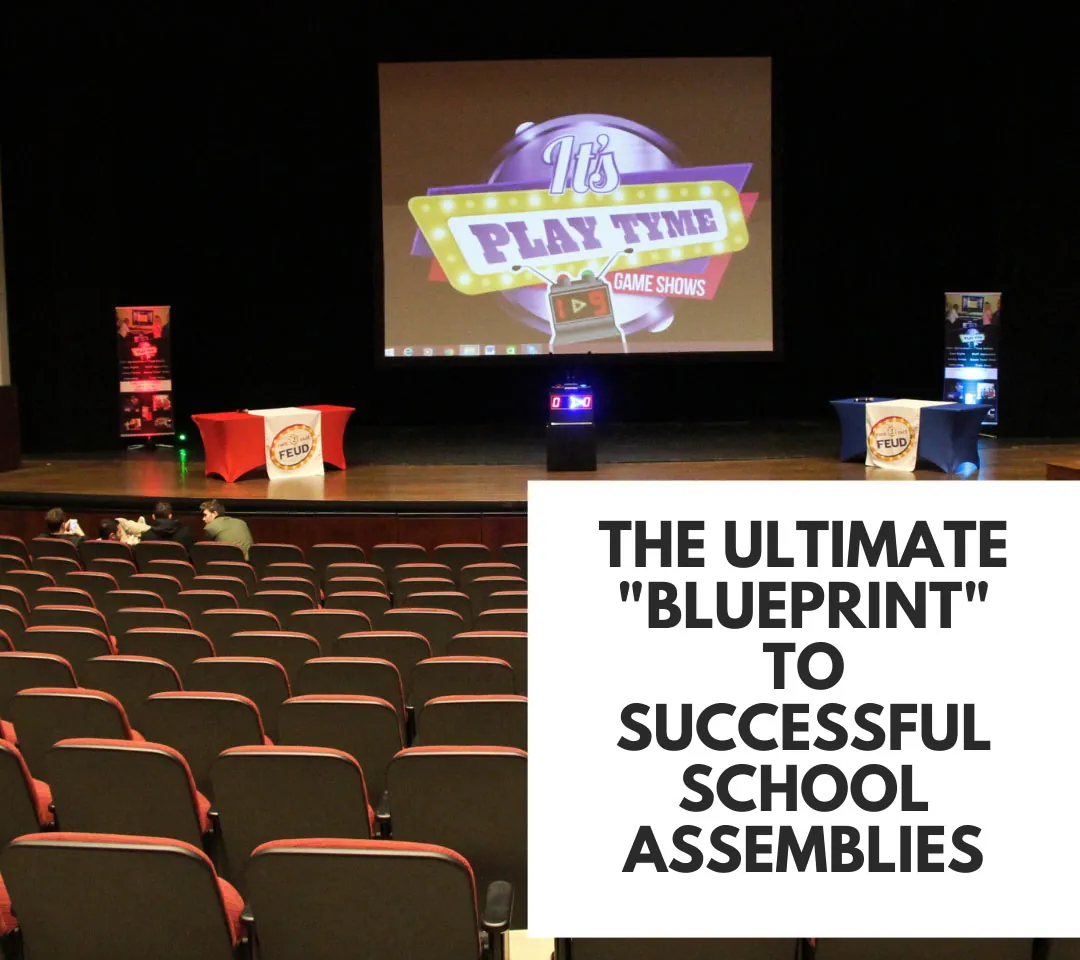
- Interactive game shows: Trivia competitions, team challenge formats, and live game show experiences that weave academic content into high-energy entertainment. It’s PlayTyme Game Shows specializes in exactly this format, bringing professional game show productions into schools across New Jersey, New York City, and Connecticut. Their programs combine curriculum-aligned questions with the energy of a TV-style competition, keeping every student in the audience actively involved.
- Environmental stewardship and sustainability: Hands-on recycling challenges, upcycling workshops, or climate science demonstrations that connect to real-world action.
- Leadership and teamwork labs: Programs that put students into collaborative problem-solving scenarios where they practice communication and conflict resolution in real time.
Step 3: Match Topics to Grade Bands
A single topic rarely works the same way for kindergarteners and high school juniors. Once you have a shortlist of unique topics, map each one to the grade bands it fits best.
| Topic Category | Best Grade Band | Format | Typical Duration |
|---|---|---|---|
| Interactive game shows | K-12 (adapted per level) | Live competition | 45-60 min |
| STEM showcases | 3rd-8th grade | Demo + hands-on | 45 min |
| Cultural celebrations | K-8 | Performance + participation | 40-50 min |
| Financial literacy | 6th-12th grade | Game-based workshop | 50-60 min |
| Mental health/wellness | 4th-12th grade | Movement + discussion | 40-45 min |
| Environmental projects | K-6 | Hands-on challenge | 45 min |
| Leadership labs | 5th-12th grade | Team scenarios | 50-60 min |
When a topic spans a wide grade range (like interactive game shows), the provider adjusts the content difficulty and participation style for each group. This is one reason game show formats work so well for schools: the structure scales naturally from elementary vocabulary challenges to high school history and science competitions.
Step 4: Evaluate Providers and Formats
The topic is only half the equation. The provider and format determine whether the assembly actually delivers. Ask these questions before booking anyone:
- Does the provider customize content to your curriculum or school theme?
- Do they have experience with your specific grade levels?
- What is the maximum audience size they handle effectively?
- Do they bring their own equipment (sound, visuals, props)?
- Do they provide a post-assembly resource or follow-up activity for teachers?
Providers like It’s PlayTyme Game Shows check every box. Their team arrives with full production equipment, customizes questions to match the school’s academic focus, and runs programs for groups ranging from a single classroom to an entire school. The game show format ensures participation is built into the structure rather than bolted on as an afterthought. For more ideas on formats that keep students active, see our guide to fun school assembly ideas.
Step 5: Build a Year-Long Assembly Calendar
One great assembly is a start. A year-long calendar is a strategy. Spacing unique topics across the school year prevents topic fatigue and gives each event time to resonate before the next one arrives.
A sample calendar framework
- September (back to school): Teamwork and community-building game show to set the tone for the year.
- November (cultural awareness month): Interactive cultural celebration or global awareness program.
- January (new semester): STEM innovation showcase tied to science fair season.
- March (testing prep season): Academic review game show that turns test prep into a competition students actually want to win.
- May (end of year): Leadership and life skills program that sends students into summer with practical tools.
Notice the variety in both topic and format. No two consecutive assemblies use the same structure. This rotation keeps students curious about what comes next and gives teachers different types of content to reinforce in the classroom. Schools that want to improve school culture find that consistent, well-planned assemblies are one of the most effective tools available.
Step 6: Measure Impact and Refine
After each assembly, collect brief feedback from three groups: students, teachers, and the administrative team. A five-question survey takes under three minutes and gives you data to improve the next event.
Key metrics to track
- Student engagement score: Ask students to rate how involved they felt (not just whether they “liked it”).
- Curriculum connection: Ask teachers whether the assembly content connected to what they were teaching.
- Behavior impact: Track referral and incident data in the week following the assembly compared to the week before.
- Repeat request rate: If teachers and students independently ask for the same provider or topic again, that is the strongest signal of success.
Use this data to refine your calendar each year. Replace low-scoring topics, double down on formats that generated high engagement, and adjust grade-band assignments based on teacher observations.
How to Put This Blueprint Into Practice Today
You do not need a committee or a six-month lead time to start. Pick one topic from the list above that your school has never tried. Contact a provider who specializes in that format. Book a single assembly for the next available date. Then use the feedback framework from Step 6 to decide what comes next.
For schools in New Jersey, New York City, or Connecticut, the fastest path to a high-impact assembly is reaching out to It’s PlayTyme Game Shows and scheduling an interactive game show experience. Their team handles every detail, from equipment setup to curriculum-aligned content, so your staff focuses on students instead of logistics. Visit the school assembly programs page to see available formats and book a date.
Frequently Asked Questions (FAQs)
What are the most unique topics for school assembly programs?
The most unique topics include interactive game shows with curriculum-aligned content, financial literacy competitions, STEM innovation showcases, environmental stewardship challenges, and leadership labs built around team problem-solving. These formats prioritize student participation over passive listening, which drives higher engagement and stronger retention of the material covered.
How do you choose a school assembly topic that works for multiple grade levels?
Start by selecting a format that scales in difficulty, such as a trivia-based game show where question complexity adjusts by grade band. Avoid topics that skew too young (puppet shows for high schoolers) or too mature (career networking for elementary students). The best multi-grade topics use competition, movement, or collaborative challenges that naturally engage different age groups.
What makes an interactive game show assembly better than a traditional speaker?
Interactive game shows require every student to participate, not just listen. The competitive format holds attention naturally, the game structure reinforces academic content through repetition and recall, and the energy level stays high throughout the program. Traditional speakers rely on one person holding an entire audience, which is difficult to sustain for more than 15 to 20 minutes with younger students.
How much does a school assembly program typically cost?
Costs vary based on format, group size, and provider. Interactive game show assemblies from professional providers like It’s PlayTyme Game Shows typically serve an entire school in a single session, making the per-student cost comparable to or lower than field trips. Contact providers directly for exact pricing based on your school’s size and location.