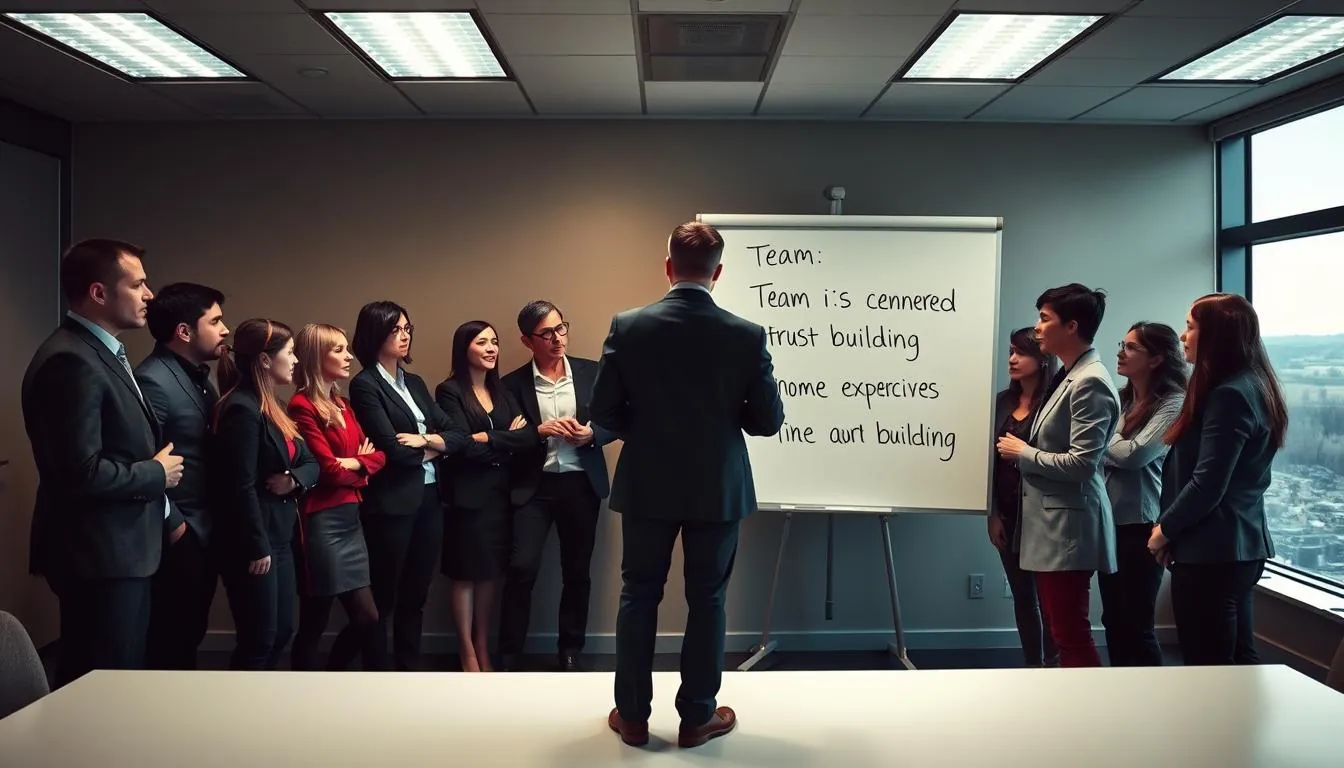
Only 31% of U.S. employees were actively engaged at work in 2024, according to Gallup, marking a ten-year low. At the same time, SHRM research confirms that employees with a positive workplace experience are 68% less likely to consider leaving. Engagement matters. Connection matters. So why does the standard corporate answer to both problems (team building) make so many people groan?
The disconnect is real. Companies invest thousands of dollars in team building events each year, yet a large share of those employees walk away feeling annoyed, drained, or embarrassed rather than connected. The problem is not the concept of bringing people together. The problem is how most organizations execute it.
If your team rolls their eyes every time an HR email announces the next “fun mandatory activity,” you are not alone. Employees resist team building because past experiences taught them to expect awkward icebreakers, wasted afternoons, and activities that ignore their actual preferences. Understanding the specific reasons behind that resistance is the first step toward choosing something your team will genuinely enjoy.
What Employees Are Actually Reacting To
Before blaming employees for being “negative,” it helps to look at what they are actually reacting to. The frustration rarely comes from laziness or antisocial attitudes. It comes from repeated exposure to poorly designed experiences that ignore basic human needs: autonomy, relevance, and respect for time.
- Loss of control: Employees are told when, where, and how to “have fun.” No input, no opt-out.
- Irrelevant activities: Generic exercises that have nothing to do with the team’s actual work or interests.
- Time pressure: People already feel stretched. Adding a half-day event to a packed schedule creates resentment, not bonding.
- Social discomfort: Not everyone thrives in forced social settings, especially introverts or newer employees.
- Lack of follow-through: One afternoon of trust falls does nothing if the workplace culture remains unchanged on Monday.
These are not personality flaws. They are rational responses to a broken approach. The sections below break down each reason in detail and explain what to do instead.
1. “Mandatory Fun” Feels Like a Contradiction
Nothing kills enjoyment faster than being told you must enjoy something. When attendance is required and the activity is framed as a reward, employees feel manipulated. They showed up because they had to, not because they wanted to. That forced compliance strips away the sense of autonomy people need to actually relax and engage.
The fix is straightforward: choose activities that are genuinely entertaining on their own merits, not just “good for the team.” When people are laughing because the activity is inherently fun (not because the boss is watching), the bonding happens organically. It’s PlayTyme Game Shows builds every event around competitive, TV-style game show formats that get people invested because they want to win, not because a memo told them to participate.
2. The Activities Are Embarrassing or Childish
Trust falls. Blindfolded obstacle courses. Sharing your “spirit animal” with the group. These activities put adults in vulnerable, awkward positions in front of their coworkers and supervisors. The cringe factor is real, and it does lasting damage to how employees perceive future team events.
Embarrassment does not build trust. It builds walls. Employees remember being put on the spot, and they carry that memory into the next invitation. The result: lower participation, more excuses, and growing cynicism about anything labeled “team building.”
Effective activities give people a chance to shine without forcing vulnerability. Game show formats work because the structure is familiar (everyone has watched a quiz show), the roles are clear, and the humor comes from the competition itself rather than from putting individuals in uncomfortable spotlight moments.
3. It Feels Like Wasted Time
Time is the most valuable resource your employees have, and they know it. When an entire afternoon disappears into an activity that feels pointless, the message they receive is: “We don’t respect your time.” That breeds resentment, not camaraderie.
The worst offenders are long, unstructured events with vague goals. A four-hour “collaboration workshop” with no clear outcome feels like a meeting that should have been an email. Employees mentally check out within the first 30 minutes and spend the rest of the time thinking about the work piling up on their desks.
High-energy, structured events with built-in pacing solve this problem. A 60 to 90 minute game show event moves fast, keeps everyone active, and ends before attention fades. People leave energized instead of drained.
4. The Activity Ignores Different Personalities
Not every employee is an extrovert who thrives on group hugs and loud brainstorming. Introverts, neurodivergent employees, and people with social anxiety experience traditional team building very differently from the outgoing sales rep who volunteers for everything.
When activities demand constant small talk, physical contact, or public performance, a significant portion of the team shuts down. They are not being difficult. They are protecting themselves from an environment that does not account for how they operate.
What accommodating different personalities looks like:
- Activities with defined roles so everyone contributes without being singled out
- Team-based formats where quieter members strategize while louder ones present
- Short, high-energy rounds that keep engagement high without exhausting anyone
- A professional host who reads the room and adjusts the energy level in real time
Game show events naturally accommodate this range. Teams collaborate on answers, so every personality type has a way to contribute. The trivia nerd, the pop culture fan, the quiet strategist: they all find their lane.
5. There Is No Professional Facilitation
Asking a manager to run team building is like asking the pilot to also serve the drinks. Managers carry authority. When the boss leads an icebreaker, the power dynamic never disappears. Employees censor themselves, perform enthusiasm, and count the minutes.
Professional facilitation changes the dynamic entirely. A skilled host who is not part of the company hierarchy creates a neutral space where people feel comfortable being themselves. The host manages energy, timing, and group dynamics so the organizer and the team both get to participate rather than perform.
It’s PlayTyme provides a dedicated, experienced emcee for every event. With over 3,000 professionally hosted events across New Jersey, New York City, and Connecticut, their hosts know how to engage skeptical audiences, keep energy high, and make sure no one feels singled out or left behind.
6. It Is Disconnected from Real Work Life
Building a spaghetti bridge has nothing to do with launching a product. When team building activities are completely detached from the actual work environment, employees see them as performative. The “teamwork” displayed during a scavenger hunt rarely transfers back to the office because the context is too different.
The best activities mirror real collaboration patterns without feeling like work. Competitive trivia, for example, requires communication, quick decision-making, and working under pressure: the same skills teams use every day. The difference is that the stakes are fun (bragging rights, a small prize) instead of stressful (a quarterly deadline).
7. One Bad Experience Ruins the Next Ten Invitations
Employee resistance to team building is cumulative. One cringeworthy event creates skepticism. Two create active avoidance. By the third, employees are drafting excuses before the invitation even arrives. Past trauma (and that word is not too strong for some people’s karaoke memories) poisons the well for future events, even good ones.
Breaking this cycle requires a dramatically different format. You are not going to win back skeptics with the same category of activity that burned them. That is why game show events work for resistant teams: the format is so different from traditional team building that employees walk in curious rather than defensive. The TV game show framework signals “entertainment,” not “corporate exercise.”
8. Leadership Does Not Participate Authentically
Nothing signals “this is for you, not for us” like a leadership team that watches from the sidelines, checks their phones during activities, or leaves early. Employees notice. If the executives are not fully in, the implicit message is that this activity is not actually important.
The most successful team events put leaders and entry-level staff on equal footing. In a game show format, the CEO answering trivia questions alongside a junior analyst creates genuine moments of leveling. When a VP gets buzzed out on the first round and laughs about it, that does more for approachability than a year of open-door policies.
| Approach | Employee Reaction | Engagement Level | Repeat Appeal |
|---|---|---|---|
| Trust falls & icebreakers | Embarrassment, eye-rolls | Low | None |
| Unstructured “hang out” time | Cliques form, some feel excluded | Low to moderate | Limited |
| Escape rooms | Fun for some, stressful for others | Moderate | Moderate |
| Professional game show events | Competitive fun, inclusive participation | High | Strong |
How to Select a Format Employees Will Actually Enjoy
Stop guessing what your team wants and start applying a simple filter. The right team building format meets four criteria:
It is genuinely entertaining.
Would your employees do this activity voluntarily on a weekend? If the answer is no, it is not fun enough. Game shows pass this test because people already watch them for entertainment.
It respects everyone’s comfort level.
The activity should not require singing, dancing, physical contact, or sharing personal stories. It should offer ways for every personality type to participate comfortably.
It has professional facilitation.
A dedicated host removes the manager-as-entertainer problem and creates a level playing field. Look for companies with extensive experience and a track record with corporate events.
It fits your time and space constraints.
The best format adapts to your venue (office, hotel, restaurant, offsite) and your schedule. A tight 60 to 90 minute event often outperforms a full-day retreat because it maximizes energy and minimizes time away from work.
It’s PlayTyme checks every box. Their live game show events run across New Jersey, NYC, and Connecticut, adapting to groups of 20 to 300+ in virtually any venue. With 14+ years of experience and thousands of events, they specialize in turning skeptical teams into enthusiastic participants.
Ready to replace the groans with genuine laughter? Get in touch to book a game show event your team will actually talk about afterward, or explore the full lineup of team building activities available for your group.
Frequently Asked Questions (FAQs)
Why do employees dislike team building activities?
Employees dislike team building when activities feel forced, embarrassing, or disconnected from their actual work. The core issue is a lack of autonomy: people are told to have fun rather than given genuinely enjoyable options. Poor facilitation, awkward icebreakers, and disregard for different personality types compound the problem.
How do you make team building fun for introverts?
Choose activities with defined team roles so introverts contribute through strategy rather than public performance. Game show formats work well because team members collaborate on answers privately before a spokesperson shares them. Short rounds and professional hosting also prevent energy drain.
What is the best team building activity for large corporate groups?
Live game show events scale effectively from 20 to 300+ participants because the format uses team-based competition with a professional host managing the room. The structure keeps everyone engaged simultaneously, unlike activities that require small breakout groups or one-at-a-time participation.
Are team building activities actually worth the investment?
Yes, when done correctly. The key is choosing activities that generate authentic positive experiences rather than forced participation. Teams that share a genuinely fun, memorable experience show improved communication and stronger working relationships in the weeks that follow. The return depends entirely on the quality of the event format and facilitation.