
Schools across the country are turning to interactive, game-based formats to boost student engagement and academic retention. According to the Joan Ganz Cooney Center at Sesame Workshop, 74% of K-8 teachers already use game-based learning in their classrooms, reporting stronger motivation and participation from students. A separate meta-analysis published in the Proceedings of the National Academy of Sciences found that active learning methods reduce student failure rates by 55% compared to traditional lectures.
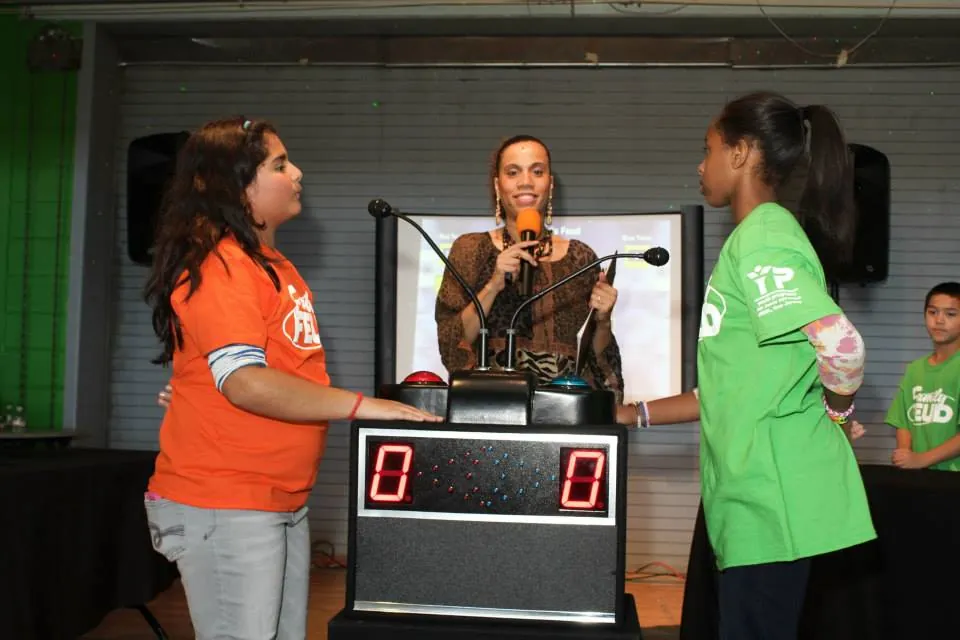
Educational game shows take these findings off the screen and onto the stage. They combine trivia, teamwork, and physical activity into a live experience that reinforces lessons students learn in the classroom. For schools in New Jersey, New York City, and Connecticut, booking a professionally hosted educational game show is one of the fastest ways to turn an ordinary assembly into a high-energy learning event.
Yet many administrators and PTO organizers struggle with the same set of problems when planning educational entertainment. Budgets are tight. Assemblies need to serve multiple grade levels at once. Vendors rarely explain how their content connects to actual curriculum standards. And a bad booking (a show that talks down to older students or overwhelms younger ones) wastes time, money, and teacher goodwill. Understanding what separates a strong educational game show from generic entertainment solves all four of those problems before they start.
The Short Version
- 74% of K-8 teachers already use game-based learning, reporting stronger student motivation and participation.
- Active learning methods reduce student failure rates by 55% compared to traditional lectures.
- Educational game shows combine trivia, teamwork, and physical activity into one live stage experience.
- The format reinforces classroom lessons in a way that standard assemblies cannot match.
- Schools in New Jersey, New York City, and Connecticut can book professionally hosted educational game shows.
Why Kids Learn More When the Format Feels Like a Game
Game-based formats work because they shift students from passive listeners to active participants. When a child stands up, buzzes in, and answers a science question in front of peers, the brain processes that information differently than it does during a lecture. The combination of competition, social pressure, and immediate feedback creates stronger memory encoding.
Educational game shows add a layer that digital tools do not: physical presence and group energy. Students cheer for teammates, strategize together between rounds, and celebrate correct answers as a group. That social reinforcement strengthens both the academic content and the interpersonal skills students practice during the event. Teachers consistently report that students reference game show questions in class discussions days and even weeks later.
Types of Educational Game Shows for Kids
Not every game show format serves the same purpose. Some emphasize recall and knowledge. Others focus on teamwork, physical coordination, or creative thinking. The right format depends on the learning objective, the age group, and the size of the audience.
| Format | Best For | Group Size | Primary Skill |
|---|---|---|---|
| Trivia-Based (Jeopardy Style) | Grades 3-12 | 25-300+ | Knowledge recall, quick thinking |
| Team Challenge | Grades K-8 | 20-150 | Collaboration, communication |
| Physical Relay + Quiz Hybrid | Grades K-6 | 30-200 | Coordination, active learning |
| Wheel-Based Game | Grades 2-10 | 25-300+ | Probability, subject review |
| Family Feud Style Survey Game | Grades 5-12 | 30-300+ | Critical thinking, persuasion |
Many schools combine two or three formats into a single assembly block to keep energy high and cover multiple objectives in one session.
Challenges Schools Face When Planning Educational Entertainment
The biggest challenge is quality control. Schools book an assembly expecting educational value and receive a glorified DJ set or a motivational speaker who reads from a script. Without a clear curriculum tie-in, entertainment-only programs waste instructional time and leave teachers skeptical of future assemblies.
Budget constraints rank second. Many schools rely on PTO fundraising to cover assembly costs, which means every dollar needs to justify itself with measurable outcomes. Administrators need to explain to parents and boards exactly what students gained from the experience.
Grade-span coverage creates a third obstacle. An elementary school with grades K through 5 spans a massive developmental range. A show that engages fifth graders often confuses kindergarteners, and a show designed for younger students bores the older ones. Schools need providers who customize content by grade band, not providers who deliver one generic show to the entire building.
Scheduling logistics add another layer of difficulty. Gym availability, testing windows, teacher prep periods, and district calendar restrictions all narrow the window for assemblies. A provider that requires extensive setup time or rigid scheduling creates more problems than it solves.
What Sets a Great Educational Game Show Apart
It’s PlayTyme Game Shows stands out because the company builds every show around the school’s specific needs. Rather than delivering a one-size-fits-all program, their team works directly with administrators and teachers to align game content with current curriculum topics, character education themes, or anti-bullying messaging.
Their professional hosts are trained to manage large groups of students across wide age ranges. They adjust pacing, vocabulary, and difficulty in real time based on how students respond. That adaptability is the difference between an assembly where half the room checks out and one where every student stays locked in from start to finish.
The production quality reinforces the educational impact. Professional sound systems, branded game show equipment, buzzer systems, and visual displays create an atmosphere that feels like a real television game show. Students take the experience seriously because it looks and sounds serious. That elevated production value drives higher participation rates and deeper engagement with the content.
Age-Appropriate Formats: Elementary Through High School
Grades K-2
Shows for the youngest students focus on movement, simple recall, and group participation. Questions cover basic math facts, letter recognition, science vocabulary, and character traits like kindness and sharing. Every child gets a chance to participate, and the host keeps energy high with music, props, and call-and-response prompts.
Grades 3-5
Upper elementary students handle more complex trivia, team-based strategy, and multi-step challenges. Content aligns with state standards in math, ELA, social studies, and science. Shows at this level introduce competitive scoring, which motivates students who respond to structured challenges.
Grades 6-8
Middle school audiences need fast pacing and social relevance. Game shows for this group incorporate pop culture references alongside academic content, keeping students engaged without sacrificing learning objectives. Team formats work especially well because they channel adolescent social energy into productive collaboration.
Grades 9-12
High school formats emphasize critical thinking, debate-style responses, and content review for standardized tests. Game shows become effective SAT/ACT prep tools, finals review sessions, or career-exploration activities when the questions are designed with those goals in mind.
How Educational Game Shows Support Curriculum Goals
The strongest educational game shows are not add-ons to the curriculum. They are extensions of it. A well-designed show reinforces what students already study in the classroom by presenting the same material in a new context. That context shift is what drives retention: students encode the information through a different pathway, which strengthens recall.
- STEM review: Trivia rounds built around grade-level science and math standards give students low-stakes practice with high-stakes content.
- Literacy and ELA: Word games, vocabulary challenges, and reading comprehension rounds reinforce language skills through competition.
- Social studies: History trivia, geography challenges, and civics questions bring textbook content to life in a format students actually enjoy.
- Character education: Scenario-based rounds teach conflict resolution, empathy, and decision-making without lecturing.
- Anti-bullying and prevention: Interactive formats create space for students to discuss real situations and practice positive responses. It’s PlayTyme offers dedicated prevention programs that address bullying, substance abuse, and distracted driving through game show formats.
Where to Book Educational Game Shows in NJ and NYC
Schools across New Jersey, New York City, and Connecticut have access to several assembly providers, but few specialize in game show formats with genuine educational integration. It’s PlayTyme Game Shows operates throughout this tri-state region and brings all equipment, staffing, and customized content directly to the school. There is no need for the school to supply anything beyond gym or auditorium access.
Their school assembly programs cover elementary, middle, and high school audiences with format options ranging from trivia competitions to team relay challenges. Each program is built around the school’s chosen theme, grade level, and learning objectives.
How to Choose the Right Educational Game Show for Your School
Start with the learning objective. If the goal is curriculum review before state testing, choose a trivia-heavy format with questions aligned to specific standards. If the goal is social-emotional learning or team building, pick a collaborative challenge format that requires communication and strategy.
Next, confirm the provider’s experience with your grade range. Ask for references from schools with similar demographics. A provider who works primarily with corporate clients will not understand the classroom management demands of a gymnasium full of third graders.
Ask about customization. The best providers (like It’s PlayTyme) build question sets from scratch based on what students are currently studying. Generic trivia databases do not deliver the same academic reinforcement as custom content aligned to your curriculum map.
Finally, verify logistics: setup time, space requirements, the number of students per session, and whether the provider carries liability insurance. Professional companies handle all of this without adding work to the school’s plate.
Ready to bring an educational game show to your school? Contact It’s PlayTyme Game Shows to discuss your grade levels, curriculum goals, and preferred dates. Their team serves schools throughout New Jersey, NYC, and Connecticut with fully customized programs.
Frequently Asked Questions (FAQs)
What are the educational benefits of game shows for kids?
Educational game shows improve knowledge retention by combining active participation with academic content. Students recall information more effectively when they learn it through competition and teamwork. The format also builds communication skills, sportsmanship, and confidence in front of peers.
How much does it cost to hire an educational game show for a school?
Pricing varies based on the number of sessions, audience size, and level of content customization. Most professional providers offer packages starting at a few hundred dollars per session. Contact providers directly for accurate quotes based on your school’s specific needs.
How do you book an educational game show for a school assembly?
Start by contacting the provider with your preferred dates, grade levels, and learning objectives. The provider will recommend a format and build a custom question set. Most bookings require two to four weeks of lead time for content development and scheduling confirmation.
Do educational game shows align with state curriculum standards?
The best providers design question sets around your state’s specific standards in math, ELA, science, and social studies. Ask the provider whether they customize content to match your curriculum map. Generic trivia does not deliver the same academic value as standards-aligned material.