Best Team Building for Large Groups | Big Teams, Big Fun | NJ, NYC, CT

Best Team Building for Large Groups | Big Teams, Big Fun | NJ, NYC, CT

If you’re responsible for planning team-building activities for large groups, and by large we mean 20, 60, 150, or even 300+ people, you already know the pressure is real.

This isn’t about “fun ideas.”  You need an experience that keeps everyone engaged at the same time, doesn’t force participation or create awkward moments, works across departments, personalities, and seniority levels, and makes leadership feel confident they approved the right solution.

large group energizer - for pd day - NJ, NYC, CT

This is where most large-group team-building efforts fall apart and exactly why professionally facilitated, game show–style experiences consistently outperform DIY activities.

So you are located in NJ, NYC, or CT and ready to break the ice, build stronger bonds, and inject serious energy into your next corporate event or retreat, you’re in the right place.

Keep reading to discover powerful team-building activities for large groups that actually work, and learn how to make your next big event a game-changer.

Key Insights and Takeaways – Planning Team Building for Large Groups

If you’re short on time, here’s what matters most:

  • Large groups require a different approach. Activities designed for small teams rarely work once you hit 20–300+ participants.
  • Engagement must happen simultaneously. If everyone isn’t involved at the same time, energy drops and attention splinters.
  • Forced participation backfires. The best large-group experiences remove social pressure while still encouraging interaction.
  • Professional facilitation matters at scale. Structure, pacing, and flow are what separate successful events from awkward ones.
  • Game show–style formats outperform DIY activities. They’re built to handle size, variety, and momentum without chaos.
  • The right format protects leadership optics. When an experience works smoothly, decision-makers look smart for choosing it.
 

Employee engagement game shows for large teams - NJ, NYC, CT

employee-engagement-game-show-idea


Large Groups Require a Different Approach

Most team-building activities were designed for small teams, not large corporate groups. Once you scale past 20 people, those same activities start to break down quickly. Instructions get lost, energy splinters, and participation drops. What works in a breakout room simply doesn’t translate to a full conference room or ballroom.

Large groups require a fundamentally different approach, one built for size, variety, and momentum from the start.

Harvard Business Review states that larger teams communicate 50% more effectively, leading to smoother team collaboration and faster problem-solving.  Large team-building ideas amplify these benefits by creating structured opportunities for connection.

team building for large groups

Engagement Must Happen Simultaneously

In large groups, staggered participation doesn’t work. If only a handful of people are involved at a time, attention fades, side conversations start, and the room disconnects. The fastest way to lose energy is to let people sit and watch instead of participating.

Successful large-group team building requires a format where everyone is engaged at the same time, so energy stays high, and the entire room moves together as one.

Book a Live Game Show!

[We bring the full game show setup to your location in NJ, NYC, or CT and run the show start-to-finish]

Benefits of Large Group Team Building for Collaboration

Large group team building breaks down departmental walls, fostering unity and improving group communication is the immediate benefit.

It brings teams together, making them more vibrant, focused, and engaged. Corporate Leaders in the U.S. report that 63% see better communication from their team when expanding these activities with other groups.

Recent research shows that high-trust environments reduce stress by 74%, especially when friendships form at work, productivity jumps by 50% or more.

If you’re looking for a variety of quick team-building ideas to boost participation and collaboration, keep reading. A well-planned team bonding event leads to higher morale, fewer conflicts, and stronger teamwork.

Having a solid plan and selecting the right type of team-building activity is key. Teams will get up to 25% better creativity and collaboration when they engage in structured activities.

These experiences encourage your team to be more productive, strengthen relationships, and build a sense of belonging. Investing in classic team building activities drives everyone toward shared goals and eventually, long-term success.

Game-shows-for-large-groups NJ

Game-shows-for-large-groups

Indoor Team Building for Large Groups – Workshops 

What if your office could be more than just a workspace?  Imagine transforming it into a dynamic innovation hub where ideas flow effortlessly, and collaboration happens naturally.

Indoor creative workshops are not just about fun, they’re a powerful catalyst for fresh thinking and stronger team connections.

These team-building activities are perfect for large groups that are looking to spark creativity and push beyond their usual routines.

Whether it’s brainstorming breakthrough ideas, crafting prototypes, or tackling real-world challenges, these sessions encourage employees to step out of their comfort zones and into a space of limitless possibility.

Groups are challenged to think outside the box, using problem-solving skills in new and unexpected ways. The result is stronger connections, sharper collaboration, and an inspired workforce ready to tackle any challenge.

So, what’s the next big idea waiting to be uncovered in your office?  It’s time to turn everyday ordinary meetings into unforgettable creative group experiences!
top 10 TB Activities for LG Pin - Team Building For Large Groups

top 10 TB Activities for LG Pin


Why Forced Participation Backfires

Forced participation is one of the quickest ways to create resistance. When people feel put on the spot, introverts disengage, extroverts dominate, and the experience becomes uncomfortable instead of energizing. In large groups, that discomfort spreads fast.

The most effective large-group experiences remove social pressure while still encouraging interaction. Team-based play allows people to contribute naturally, without being singled out or pushed beyond their comfort zone.
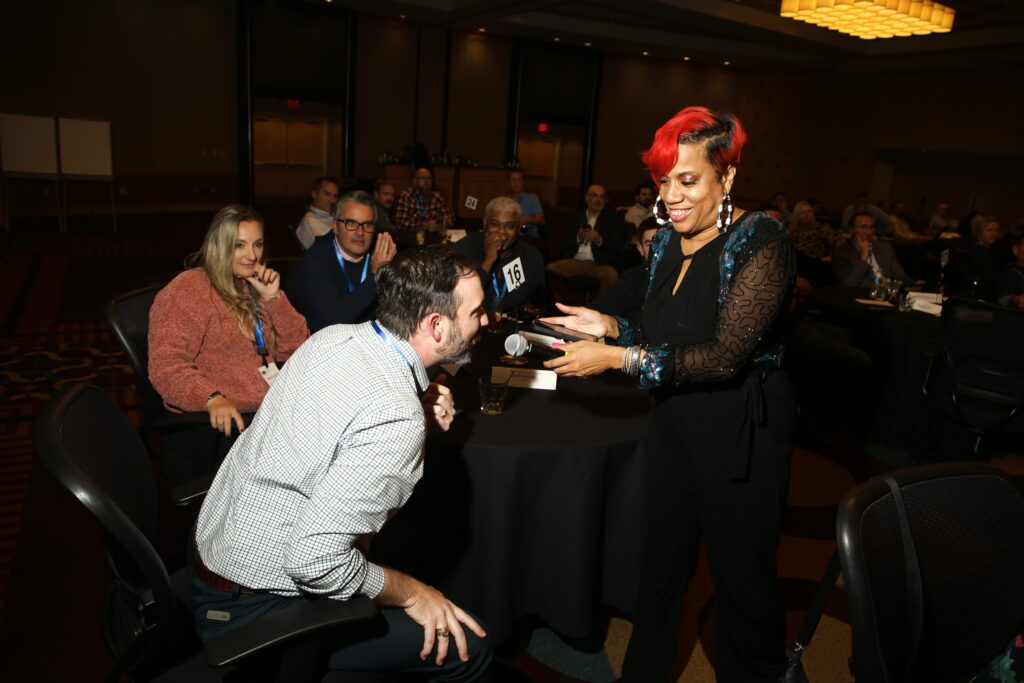
Team Building Large Groups - It's Playtyme - NYC

Professional Facilitation Matters at Scale

At scale, facilitation isn’t a nice-to-have—it’s essential. Structure, pacing, and flow are what separate smooth, high-energy events from awkward ones that stall out halfway through. Without professional facilitation, even good ideas lose momentum.

Experienced facilitators manage the room in real time, keep the experience moving, and prevent the dead spots that derail large-group events. That level of control simply can’t be replicated with DIY activities.

Why Game Show Formats Work Exceptionally Well for Large Groups

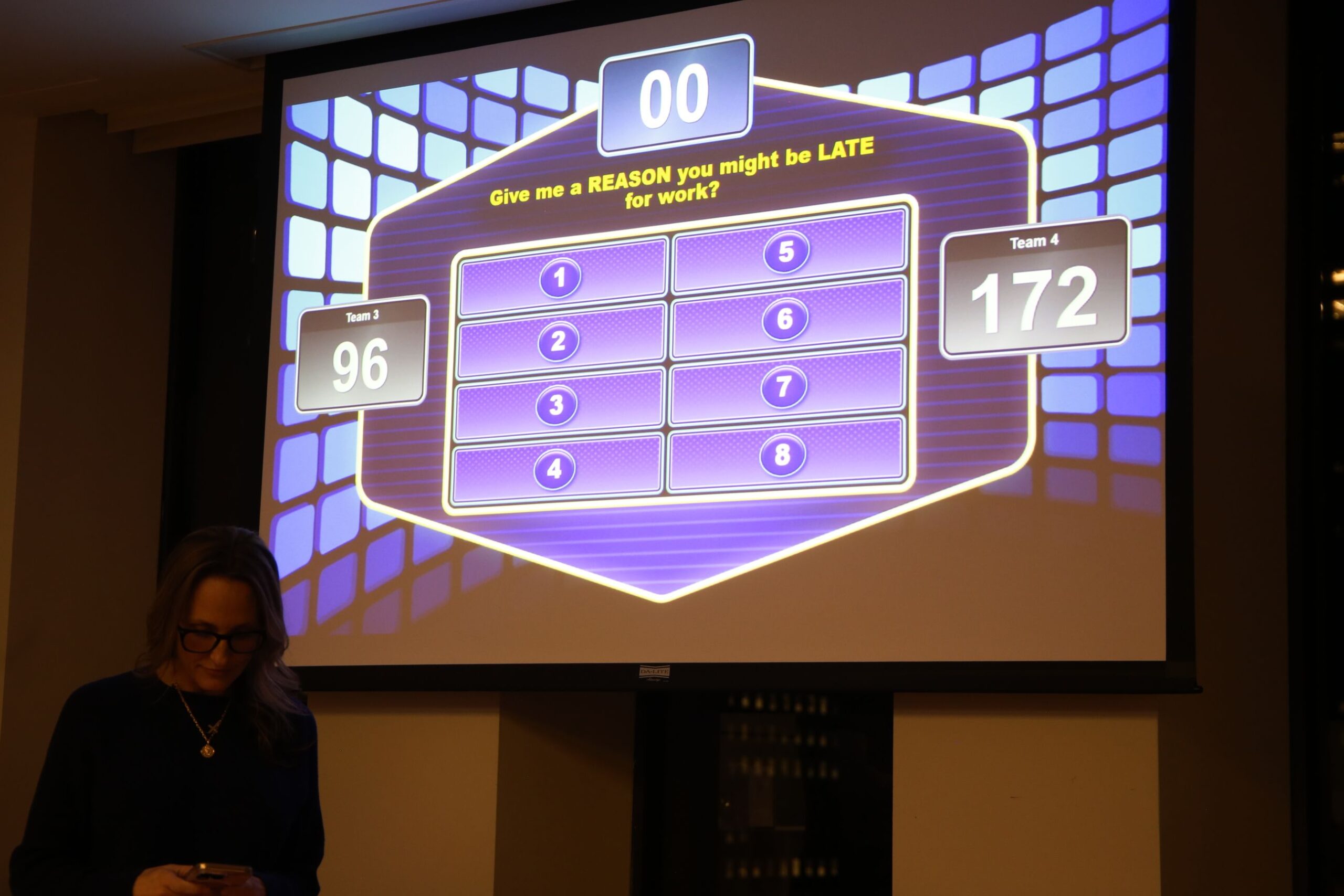
Game show–style team building isn’t about games, it’s about engagement engineering. These formats are built specifically to handle large numbers of people, different personality types, and time constraints without chaos.

Because the structure is already proven, game show experiences scale cleanly from 20 to 300+ participants, keeping everyone involved and energized. That’s why Fortune 500 companies and large organizations consistently choose this format for corporate events, retreats, and meetings. It works reliably under pressure.
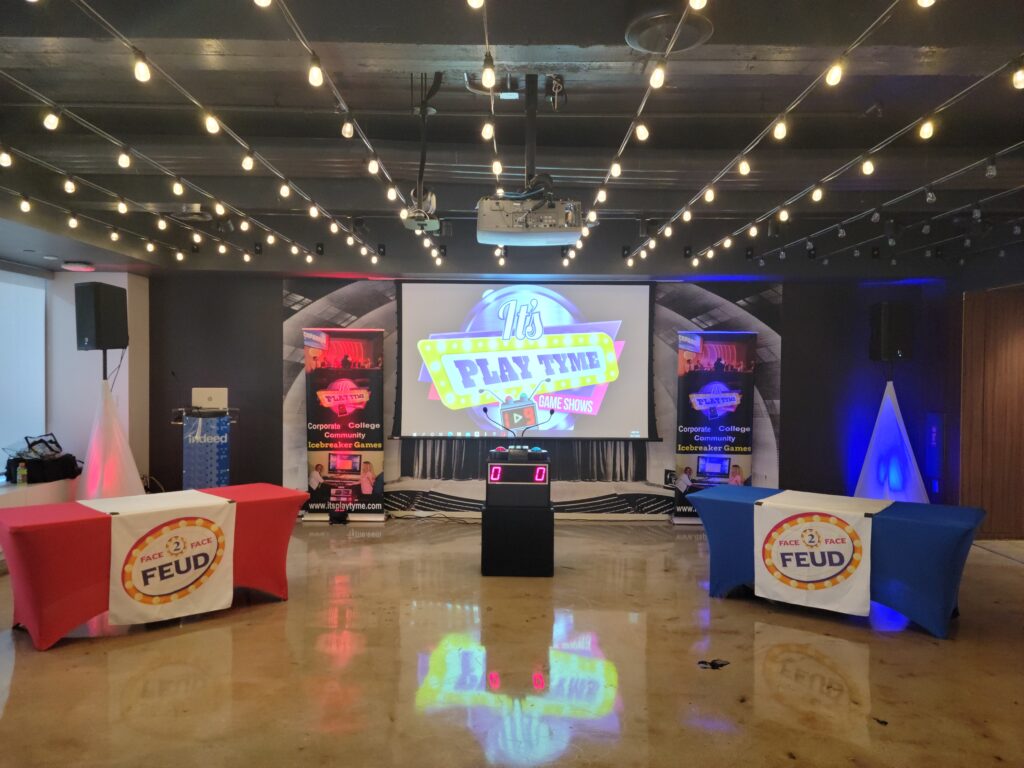
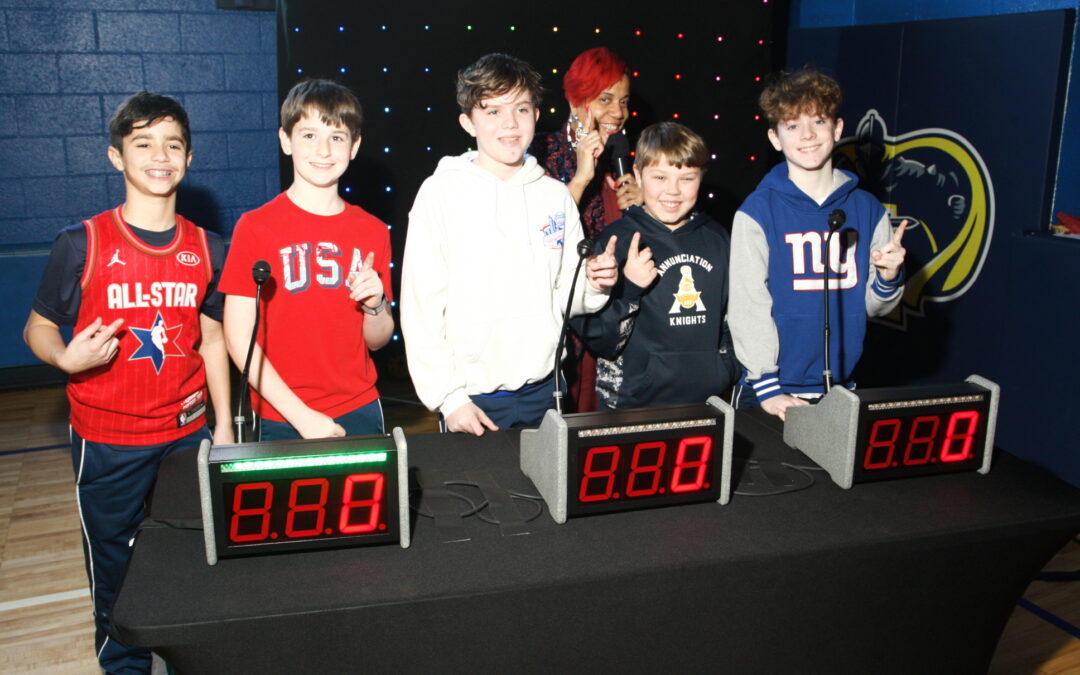
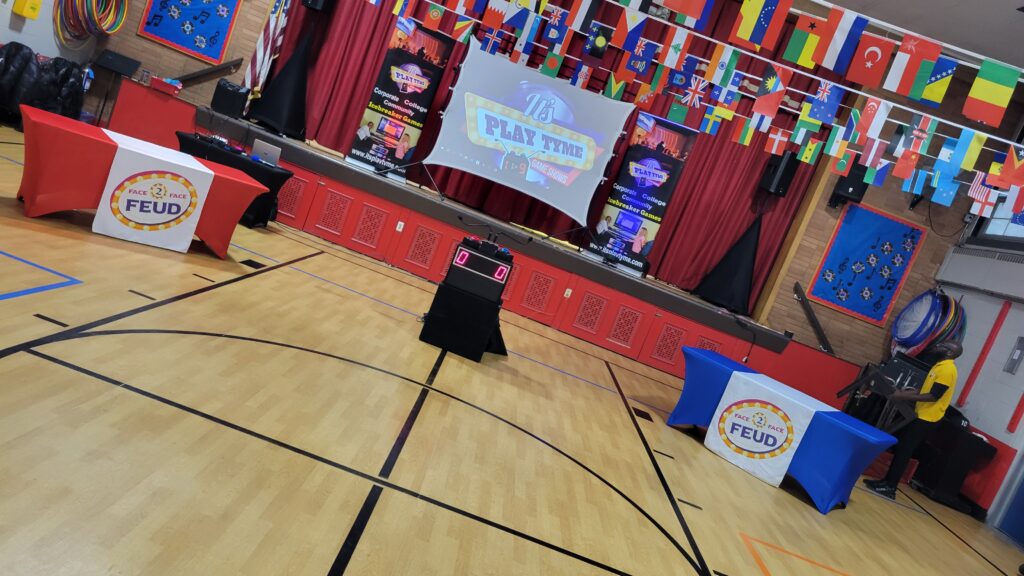
Game Show Set - team building - NJ, NYC, CT
Face-2-Face Feud – Game Show Set – Team Building – NJ, NYC, CT

Game shows are one of the few formats that naturally support:

  • Simultaneous participation
  • Friendly competition
  • Clear structure
  • Fast energy shifts

Instead of asking people to talk first, the game creates movement and momentum. Conversation and collaboration follow.  This is why many organizations use game show team building as their primary solution for large groups.
You can learn more about this approach here.

Where Large Group “Game Shows” Work Best

This format is especially effective for:

Company retreats and off-sites
Game shows break through silos fast, especially when teams don’t work together daily. They reset energy, create shared experiences early in the agenda, and make it easier for people to collaborate during the rest of the retreat.

Annual meetings and sales kickoffs
These events carry high expectations and limited time.  A game show format keeps large audiences engaged simultaneously, reinforces messaging, and adds momentum without derailing the business objectives of the meeting.

Leadership summits
Executives don’t want “cute” activities. They want something efficient, polished, and reputationally safe. Game shows offer a structured format that encourages participation without putting anyone on the spot.

Pre-dinner or conference energizers
This is one of the strongest use cases. When attention is fading or people are transitioning between sessions, a high-energy game show reactivates the room quickly and sets the tone for what follows.

Employee appreciation and milestone events
When the goal is celebration rather than training, game shows deliver visible engagement, shared laughter, and inclusive participation without requiring individuals to perform or compete.

Each experience is custom-built around your group size, audience makeup, timing, and goals, then professionally facilitated so it fits seamlessly into your event flow.

The result is a turnkey experience that feels intentional and well-executed without adding planning stress or logistical complexity to your plate.

Book a Live Game Show!

[We bring the full game show setup to your location in NJ, NYC, or CT and run the show start-to-finish]

Large Group Team Building vs Traditional Options

Activity Type Scales to 100+ Engagement Awkwardness Risk Leader-Friendly
Icebreakers No Low High No
DIY Games Inconsistent Moderate Moderate No
Workshops Limited Variable Low Somewhat
Speakers Passive Low Low Somewhat
Facilitated Game Shows Yes High Low Yes

For high-visibility events, this difference matters.

Comparing Large-Group Team Building “Options” 

When planning team building for 20–300+ people, not all formats perform equally. Below is a side-by-side, real-world comparison designed for planners who need reliability, engagement, and leadership confidence.


1️⃣ Game Show–Style Team Building (Best Overall Solution)

Group Size: 20–300+
Budget Range Per Person: $$–$$$
Why It Works: Engages everyone simultaneously, removes awkwardness, and scales cleanly with professional facilitation.


2️⃣ Large-Scale Trivia Competitions

Group Size: 30–150
Budget Range Per Person: $$–$$$
Why It Works: Can maintain engagement when paced well and team-based.


3️⃣ Survey-Style Games (Family-Feud-Style Formats)

Group Size: 25–200
Budget Range Per Person: $$–$$$
Why It Works: Inclusive, humorous, and effective when structured into a full game show experience.


4️⃣ Tournament-Style Team Games

Group Size: 30–100
Budget Range Per Person: $$-$$$
Why It Works: Creates competition, but relies on elimination rounds.


5️⃣ Interactive Polling or Live Q&A Formats

Group Size: 50–300
Budget Range Per person: $-$$
Why It Works: Keeps audiences involved through technology.


6️⃣ Scavenger Hunts (Modified for Large Groups)

Group Size: 40–150
Budget Range Per Person: $$–$$$
Why It Works: Active and engaging with tight logistics.


7️⃣ Problem-Solving or Escape-Style Challenges

Group Size: 10–60 (rotations required)
Budget Range Per Person: $$–$$$
Why It Works: Strong collaboration in small teams.


8️⃣ Performance-Based Activities (Lip Sync, Talent Show, Karaoke)

Group Size: 30–200
Budget Range Per Person: $$-$$$
Why It Works: Entertaining when guests are eager to participate.


9️⃣ Creative Workshops (Art, Cooking, Building Challenges)

Group Size: 15–50 (limited scalability)
Budget Range: $$–$$$
Why It Works: Encourages creativity and bonding in smaller groups.


🔟 DIY Icebreakers or Facilitator-Light Activities (Lowest Reliability)

Group Size: Under 40 recommended
Budget Range: $-$$
Why It Works: Minimal planning, low cost.


Takeaway For Decision-Makers

For large groups, the safest team-building option is professionally facilitated game show–style experiences because they engage everyone at the same time, remove social pressure, and scale reliably without disrupting event flow.

Proven at Scale: Large Group Team Building in Action

Across New Jersey, New York City, and Connecticut, large organizations use professionally facilitated game shows to engage entire rooms quickly and effectively. Whether it’s a 60-person leadership off-site or a 300-person company-wide event, the format creates shared energy without forcing interaction or breaking into chaotic subgroups.

Momentum isn’t accidental—it’s designed.

Team Building Facilitator for Large Groups - It's Playtyme


The Right Format Protects Leadership Optics

When a large-group experience runs smoothly, leadership looks prepared, decisive, and aligned. When it doesn’t, the fallout lands squarely on the planner. Choosing the right format isn’t just about engagement—it’s about protecting leadership credibility.

A professionally run experience removes risk, reduces stress, and delivers visible results that leadership can see in real time.

Is This the Right Team-Building Solution for Your Group?

This approach is ideal if you’re planning for 20–300+ participants, need high engagement without forced fun, and want a turnkey experience that runs smoothly from start to finish. It’s built for organizations that don’t have time for trial-and-error activities and need something that works the first time.

Turning Office Spaces into Activity Hubs

Workplaces aren’t just for meetings; they can be transformed into energizing spaces where large groups come together to collaborate, create, and compete. This is how team building for large groups becomes essential, as it brings connection and creativity on a larger scale.

Teams see things differently when they participate in diverse, hands-on activities that challenge both their physical and mental skills.

Interactive Social Events for Large Groups

Hosting scenario-based gatherings strengthens workplace bonds. Activities like philanthropic game nights, potlucks, or semi-formal awards ceremonies bring colleagues together in a meaningful way.

These events invite your team to laugh, share moments, and create new friendships—all while reinforcing the benefits of team building in a fun and engaging setting.

interactive social events


Book a Live Game Show!

[We bring the full game show setup to your location in NJ, NYC, or CT and run the show start-to-finish]

Who This Experience Is For

This is a strong fit if you:

  • Are planning for 20–300+ participants
  • Need a turnkey, professionally run experience
  • Want high engagement without forced participation
  • Responsible for making leadership look confident in the decision
  • Have a defined event date, group size, and budget range
  • Value results over experimenting with DIY activities


The Bottom Line

Large-group team building works best when it’s designed, not improvised. If you’re ready to move forward with an experience that removes stress from your plate, engages everyone in the room, and delivers results that leadership can see immediately, this approach was built for you.

If not, it’s better to know that now.  Either way, the goal is clarity and confidence.

Final Thoughts: Large Group Team Building Without the Guesswork

Planning team building for large groups isn’t about finding another activity—it’s about choosing a format that works at scale, protects leadership credibility, and delivers visible engagement without stress. When you’re responsible for 20–300+ people in one room, there’s no room for trial and error.

Professionally facilitated, game show–style team building succeeds where traditional activities fail because it’s built for size, energy, and real-world dynamics. It engages everyone at once, removes social pressure, and runs smoothly from start to finish. That’s why organizations across New Jersey, New York City, and Connecticut rely on this format when the stakes are high and the audience is large.
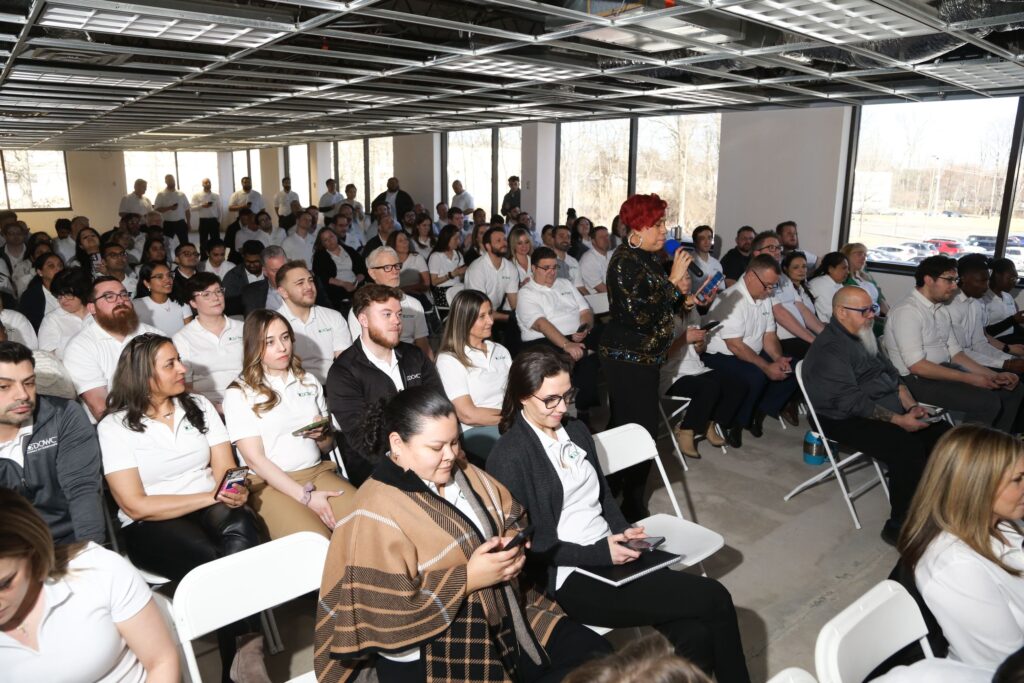
game shows for large groups - Trivia - fun corporate events

Next Step: Design the Right Experience for Your Group

If you’re actively planning a large-group event and need something that keeps 20–300+ people engaged at the same time, this is where most planners pause—and choose the safer, smarter option.

A short discovery conversation helps determine:

  • The right game show format for your group size and audience
  • How to structure the experience for maximum engagement (without awkwardness)
  • Timing that fits seamlessly into your agenda
  • What success should look like for leadership once the event is over

This isn’t a sales call. It’s a working conversation designed to remove guesswork, protect your credibility, and make sure the experience fits your organization—not the other way around.

With 13+ years of experience and 3,000+ professionally facilitated events, It’s Playtyme Game Shows brings the full game show setup, the pacing, and the facilitation directly to your location across New Jersey, New York City, and Connecticut. No piecing things together. No managing volunteers. No, hoping people participate.

Just one turnkey experience built to work at scale.

Book a Live Game Show!

[We bring the full game show setup to your location in NJ, NYC, or CT and run the show start-to-finish]

FAQ – Team Building for Large Groups (NJ, NYC, CT)

Why should you invest in large group team-building activities?

Large-group team building helps unite departments, reduce silos, and create shared momentum—fast. When designed for 20–300+ people, it delivers visible engagement without the risk of a flat or awkward event.

How do you structure large group activities for maximum engagement?

The most effective structure uses simultaneous participation, team-based play, short rounds, and fast pacing. Professional facilitation is critical to keep energy high and the room moving together.

Can you suggest a fun party game that suits big teams?

Team-based game show formats work best for big groups because they remove awkwardness and keep everyone involved at once. Survey-style games and large-scale trivia are especially effective for corporate groups in NJ, NYC, and CT.

Which options are considered the best team building activities for large workforces?

The best options are professionally facilitated formats built for scale, such as game shows and structured large-group trivia. DIY activities and long rotations tend to break down once groups exceed 75 people.

How can you amplify engagement across the entire organization during a team building event?

Eliminate watching time and replace it with full-room participation using team scoring, quick rounds, and a host-led format. Professionally run game shows are one of the most reliable ways to energize large groups without stress.


Team Names for Work, Trivia, and More: #1 List & Free Team Name Generator

Team Names for Work, Trivia, and More: #1 List & Free Team Name Generator

Stuck on a team name? 60 seconds on the clock and your team’s drawing a blank? Don’t panic! We have got you covered with a massive list of the best team names for work, trivia nights, and any other occasion where a little team spirit is needed. Whether you’re looking for funny, cool, or creative, we have something for everyone.

Random Team Name Generator

The Struggle is Real: Finding the Perfect Team Name

We have all been there – staring blankly at colleagues during a team-building event, desperately trying to conjure a team name that’s both memorable and reflects the group’s spirit. It’s a common challenge, especially when some team members might be more comfortable coding than cracking jokes.

But here’s the secret: a great team name can transform a group of individuals into a cohesive unit. It’s not just about having a label; it’s about creating a shared identity and fostering a sense of belonging. As research has shown, team names can significantly impact group dynamics and performance.

The good news is that even the most reserved individuals can contribute to crafting a creative team name. With a little brainstorming and inspiration, you can find a name that perfectly captures your team’s personality, goals, or even a shared inside joke.

Whether you’re looking for something funny, cool, trivia-themed, or work-appropriate, we’ve got you covered. In the following sections, we’ll share a treasure trove of team name ideas to get your creative juices flowing. So, let’s dive in and discover the perfect name to unite your team!

Call to Action - Button

Why a Great Team Name Matters

While some might dismiss team names as trivial, they can play a pivotal role in boosting team morale and fostering a sense of unity. A well-chosen team name acts as more than just a label—it becomes a symbol of shared identity and purpose.

Think of it this way: a great team name can:

  1. Ignite Camaraderie: It creates a sense of belonging and connection among team members.
  2. Set the Tone: It establishes a fun, positive atmosphere for collaboration.
  3. Fuel Motivation: It inspires team members to work together towards a common goal.
  4. Boost Engagement: It adds an element of excitement and friendly competition to team activities.
  5. Create Lasting Memories: A memorable team name can be a source of inside jokes and shared experiences, strengthening team bonds long after the event.

In essence, a well-crafted team name is a small investment that can yield significant returns in terms of team cohesion and performance. It’s a simple yet powerful tool that can make a real difference in any team-building endeavor.


employee engagement game show idea

employee-engagement-game-show-idea

Creating the Perfect Team Name: 7 Tips for Success

Creating a team name that’s memorable, relevant, and resonates with your team can seem daunting. But don’t worry! Here are seven tips to guide you on your team name journey:

  1. Keep it Simple and Memorable: A great team name is easy to say, spell, and remember. Avoid complex words or phrases that might leave people scratching their heads.
  2. Inject Personality: Infuse your team name with wit, humor, or wordplay. Puns, alliterations, and clever references can make your team name stand out.
  3. Relevance is Key: Consider your team’s mission, goals, or industry when brainstorming ideas. A relevant team name helps create a sense of identity and purpose.
  4. Embrace Collaboration: Brainstorm with your team members to generate a wide range of ideas. This fosters a sense of ownership and ensures everyone feels heard.
  5. Think Outside the Box: Don’t be afraid to get creative! Explore pop culture references, inside jokes, or even combine seemingly unrelated words for a unique twist.
  6. Respect Company Culture: Ensure your team name aligns with your company’s values and culture. Avoid anything offensive, controversial, or inappropriate.
  7. Test it Out: Once you have a few options, try them out on colleagues or friends to get their feedback. This helps ensure your chosen name resonates with others.

To jumpstart your brainstorming session, we’ve compiled a list of 50+ team names across various categories. Remember, the goal is to have fun and find a name that embodies your team’s spirit. Don’t hesitate to put yourself out there and suggest ideas!

Book a Interactive Game Show!

Call us today.  TV Style Game Shows are our specialty.  Let’s Play!

101+ General Team Names to Ignite Your Imagination

  1. The Brainstormers
  2. The Innovators
  3. The Trailblazers
  4. The Achievers
  5. The Visionaries
  6. The Mavericks
  7. The Power Players
  8. The Dream Weavers
  9. The Limit Breakers
  10. The Unstoppables
  11. The Go-Getters
  12. The High-Flyers
  13. The Game Changers
  14. The Rule Breakers
  15. The Trendsetters
  16. The Optimists
  17. The Explorers
  18. The Adventurers
  19. The Pioneers
  20. The Conquerors
  21. The Champions
  22. The Victors
  23. The Triumphants
  24. The Invincibles
  25. The Legends
  26. The Titans
  27. The Gladiators
  28. The Warriors
  29. The Spartans
  30. The Knights
  31. The Phoenix
  32. The Dragons
  33. The Eagles
  34. The Lions
  35. The Sharks
  36. The Wolves
  37. The Avengers
  38. The Justice League
  39. The Guardians of the Galaxy
  40. The Fantastic Four
  41. The X-Men
  42. The Incredibles
  43. The Minions
  44. The Smurfs
  45. The Powerpuff Girls
  46. The Teenage Mutant Ninja Turtles
  47. The Scooby-Doo Gang
  48. The Looney Tunes
  49. The Simpsons
  50. The Flintstones
  51. The Jetsons
  52. The Brady Bunch
  53. The Partridge Family
  54. The Addams Family
  55. The Munsters
  56. The Cosby Show
  57. The Fresh Prince of Bel-Air
  58. Friends
  59. Seinfeld
  60. The Office
  61. Parks and Recreation
  62. Brooklyn Nine-Nine
  63. The Big Bang Theory
  64. How I Met Your Mother
  65. Game of Thrones
  66. Breaking Bad
  67. The Walking Dead
  68. Stranger Things
  69. The Crown
  70. The Queen’s Gambit
  71. The Beatles
  72. The Rolling Stones
  73. Led Zeppelin
  74. Pink Floyd
  75. Queen
  76. Michael Jackson
  77. Madonna
  78. Beyoncé
  79. Taylor Swift
  80. BTS
  81. The Lakers
  82. The Yankees
  83. The Patriots
  84. The Cowboys
  85. The Red Sox
  86. The Cubs
  87. The Dodgers
  88. The Giants
  89. The 49ers
  90. The Steelers
  91. The Bomb Squad
  92. The Smart Ones
  93. The Winners
  94. Fabulous Five
  95. Risk Takers
  96. Money Makers
  97. Boss Babes
  98. Dancing Machine
  99. The Witty Ones
  100. Public Enemy Number One
  101. The Trivia Titans

Book a Interactive Game Show!

Call us today.  TV Style Game Shows are our specialty.  Let’s Play!

120+ Work-Related Team Names for Professional Success

  1. The Corporate Crusaders
  2. The Productivity Prodigies
  3. The Deadline Dominators
  4. The Excel Experts
  5. The PowerPoint Professionals
  6. The Marketing Masterminds
  7. The Sales Superstars
  8. The Customer Service Champions
  9. The IT Innovators
  10. The HR Heroes
  11. The Finance Phenoms
  12. The Legal Legends
  13. The Operations Optimizers
  14. The Project Management Pros
  15. The Brainstorm Brigade
  16. The Idea Incubators
  17. The Solution Squad
  18. The Problem Solvers
  19. The Risk Takers
  20. The Calculated Challengers
  21. The Goal Getters
  22. The Target Achievers
  23. The Dream Team
  24. The A-Team
  25. The Power Players
  26. The Masterminds
  27. The Visionaries
  28. The Strategists
  29. The Tacticians
  30. The Innovators
  31. The Disruptors
  32. The Trailblazers
  33. The Pioneers
  34. The Leaders
  35. The Mentors
  36. The Coaches
  37. The Collaborators
  38. The Communicators
  39. The Motivators
  40. The Inspirers
  41. The Office Heroes
  42. The Corporate Climbers
  43. The Micro Managers
  44. The Dominators
  45. Best Employees
  46. The Rainmakers
  47. The Workplace Warriors
  48. The Boardroom Bosses
  49. The Over Timers
  50. The Top Performers
  51. The Developers
  52. Zoomed Out
  53. The Chosen Ones
  54. Ninja Warriors
  55. The Play Timers
  56. Forever Young
  57. The Wildcards
  58. Funny Freelancers
  59. Leaders in Laughter
  60. The Self Starters
  61. The Top Guns
  62. Powerhouse Players
  63. The Outcast
  64. The Wanderers
  65. The Bean Counters
  66. Workaholics
  67. The Coffee Connoisseurs
  68. The Monday Motivators
  69. The Friday Fiesta
  70. The Water Cooler Crew
  71. The Cubicle Commandos
  72. The Spreadsheet Savants
  73. The Presentation Pros
  74. The Email Efficiency Experts
  75. The Meeting Mavens
  76. The Brainstorming Buccaneers
  77. The Idea Innovators
  78. The Solution Seekers
  79. The Problem Pulverizers
  80. The Risk-Reward Reapers
  81. The Calculated Champions
  82. The Goal Grabbers
  83. The Target Triumphants
  84. The Dream Weavers
  85. The Alpha Achievers
  86. The Powerhouse Professionals
  87. The Masterful Minds
  88. The Visionary Virtuosos
  89. The Strategic Superstars
  90. The Tactical Titans
  91. The Innovative Icons
  92. The Disruptive Dynamos
  93. The Trailblazing Titans
  94. The Pioneering Powerhouses
  95. The Leadership Luminaries
  96. The Mentoring Magicians
  97. The Coaching Connoisseurs
  98. The Collaborative Crew
  99. The Communication Commandos
  100. The Motivational Magnets
  101. The Inspirational Icons
  102. The Number Crunchers
  103. The Data Wizards
  104. The Marketing Mavens
  105. The Sales Sherpas
  106. The Customer Care Crusaders
  107. The Tech Titans
  108. The HR Harmonizers
  109. The Finance Fanatics
  110. The Legal Lions
  111. The Operations Oracles
  112. The Project Powerhouses
  113. The Brainstorming Buccaneers
  114. The Idea Ignition Squad
  115. The Solution Superstars
  116. The Problem-Solving Prodigies
  117. The Calculated Risk-Takers
  118. The Goal-Oriented Gladiators
  119. The Target Terminators
  120. The Dream Driven Dynamos


Tread Carefully: Team Names to Steer Clear Of

While creativity is encouraged, it’s crucial to remember that not all team names are created equal. Some names can backfire, causing offense, confusion, or simply falling flat. Here’s a breakdown of team name pitfalls to avoid:

  • Offensive or Inappropriate Names: Steer clear of any names that could be perceived as discriminatory, sexist, racist, or otherwise hurtful. Always prioritize respect and inclusivity.
  • Confusing or Generic Names: Avoid names that are difficult to pronounce, spell, or remember. Similarly, avoid overly generic names that lack personality or distinctiveness.
  • Negative or Self-Deprecating Names: While a bit of self-deprecating humor can be fun, avoid names that are overly negative or project a sense of defeat.
  • Duplicate Names: Check if your chosen name is already in use within your organization or industry to avoid confusion and maintain a unique identity.

Remember, a team name should uplift and unite, not alienate or offend. By being mindful of these potential pitfalls, you can ensure your team name contributes to a positive and inclusive team culture.

30 Examples of Team Names to Avoid

  1. The Slackers
  2. Team Lazy
  3. The Procrastinators
  4. Team No-Show
  5. The Underachievers
  6. The Misfits
  7. The Outcasts
  8. The Rejects
  9. The Leftovers
  10. The Second-Rate Squad
  11. The Duds
  12. The Clunkers
  13. The Has-Beens
  14. The Never-Weres
  15. The Wannabes
  16. The Copycats
  17. The Impostors
  18. The Fakes
  19. The Frauds
  20. The Phonies
  21. The Stereotypes
  22. The Clichés
  23. The Generic Gang
  24. The Unoriginal Bunch
  25. The Bland Brigade
  26. The Dull Dudes
  27. The Snoozefest Squad
  28. The Yawn-Inducing Yaks
  29. The Naptime Ninjas
  30. The Boredom Boosters

Book a Interactive Game Show!

Call us today.  TV Style Game Shows are our specialty.  Let’s Play!

Final Thoughts: Unleash the Potential of Your Team with the Perfect Name

Team names are far more than just labels – they’re powerful catalysts that can ignite team spirit, foster a sense of belonging, and set the stage for success. By choosing a name that is creative, memorable, and aligned with your team’s values, you’re not just creating an identity, you’re building a foundation for collaboration, motivation, and shared achievement.

So, the next time you’re faced with the task of naming your team, don’t shy away from the challenge. Embrace it as an opportunity to unleash your collective creativity and find a name that truly embodies your team’s spirit. Remember, a little laughter, a touch of wit, and a dash of personality can go a long way in creating a team name that will be remembered and cherished for years to come.

Now, armed with these tips, inspiration, and a plethora of examples, go forth and conquer the world of team names! Let your team’s unique identity shine through and watch as the perfect name elevates your team-building experiences to new heights.

Additional Tips:

  • If you are still struggling to find the perfect name, don’t hesitate to revisit the lists provided or try brainstorming with your team again.
  • Once you have chosen a name, celebrate it! Use it on team shirts, in presentations, and during team-building activities to reinforce your shared identity.
  • Remember, the most important thing is to have fun and choose a name that your team loves and feels proud of.

Frequently Asked Questions About Team Names

What are some creative and unique team names?

Many people search for team names that stand out from the crowd. Some examples of creative and unique team names include:

  • The Brainstormers
  • The Innovators
  • The Trailblazers
  • The Mavericks
  • The Power Players
  • The Dream Weavers

How do I come up with a good team name for work?

Choosing a team name for work can be tricky. You want it to be professional yet fun and engaging. Consider your team’s role, industry, or a shared inside joke for inspiration.

What are some funny and witty team names?

Injecting humor into your team name can create a lighthearted and enjoyable atmosphere. Here are a few examples of funny and witty team names:

  • The Pun-dit’s
  • The Excel-lents
  • The Brainstorm Troopers
  • The Ctrl+Alt+Delete Crew

Are there any team names I should avoid?

Yes, it’s crucial to steer clear of offensive, inappropriate, or confusing team names. Be mindful of your company culture and avoid anything that could be perceived as discriminatory or insensitive.

How can I involve my team in the naming process?

Brainstorming team names as a group is a great way to foster collaboration and ensure everyone feels included. You can also use online tools or team name generators to spark ideas and facilitate the decision-making process.

What are some trending team name ideas for 2024?

Stay ahead of the curve by incorporating current trends or pop culture references into your team name.

What if I’m struggling to come up with a team name?

Don’t worry, it’s perfectly normal to experience a creative block. Take a break, revisit the tips and examples provided in this guide, and try brainstorming with your team again.

Best Team Building Activities for Assemblies in NJ That Engage Students

Best Team Building Activities for Assemblies in NJ That Engage Students

The best team-building activities for school assemblies in NJ are structured experiences designed to engage large groups of students at the same time while reinforcing communication, collaboration, and school culture.

The most effective assemblies prioritize participation over presentation, using formats that work in gyms and auditoriums without creating behavior issues, downtime, or disengagement.  Organizing school assemblies can be challenging, but incorporating team-building activities enhances student engagement and impact.

In New Jersey, these activities go beyond just fun; they help students build important skills like communication, problem-solving, and leadership.   Students not only enjoy themselves but also strengthen their connections and develop skills they’ll use in the future.

game shows for students


Key Insights & Takeaways: School Assembly Team Building in NJ

If you’re short on time, here’s what matters most for school leaders planning assemblies:

  • Assemblies must be built for large groups, not classroom-sized activities.
  • Activities need a clear structure and pacing to maintain control in gyms and auditoriums.
  • Game-based formats outperform lectures because students engage faster and stay focused longer.
  • The best assemblies support school culture goals like respect, leadership, and collaboration.
  • Turnkey programs reduce stress for administrators and staff supervising large groups.
  • Team-building activities create a positive and inclusive environment for students during school assemblies.
  • Team building helps develop valuable skills, such as communication, problem-solving, and leadership, among students.
  • Effective team building results in improved student relationships and school spirit.

Game Show–Style Team Building Activities for School Assemblies

Game show–style activities consistently rank among the best team-building activities for school assemblies in NJ because they are built for large groups and high energy. Unlike traditional games that rely on volunteers or small breakout groups, game show formats allow hundreds of students to participate simultaneously. These activities combine friendly competition, teamwork, and fast-paced interaction, keeping attention high from start to finish. Most importantly, they make participation feel safe and exciting rather than intimidating.

Popular game show formats for school assemblies include:

Trivia Team Battles

Fast-paced trivia matches push students to combine their knowledge and work together under pressure. The format mirrors a high-energy Jeopardy-style showdown and keeps the entire room engaged.
👉 Explore the trivia format here.

Survey-Style Guessing Rounds

Inspired by survey-driven TV shows, teams race to guess the most popular answers to school-themed questions. It’s hilarious, interactive, and perfect for breaking the ice across grade levels.
👉 View the survey-style game here.

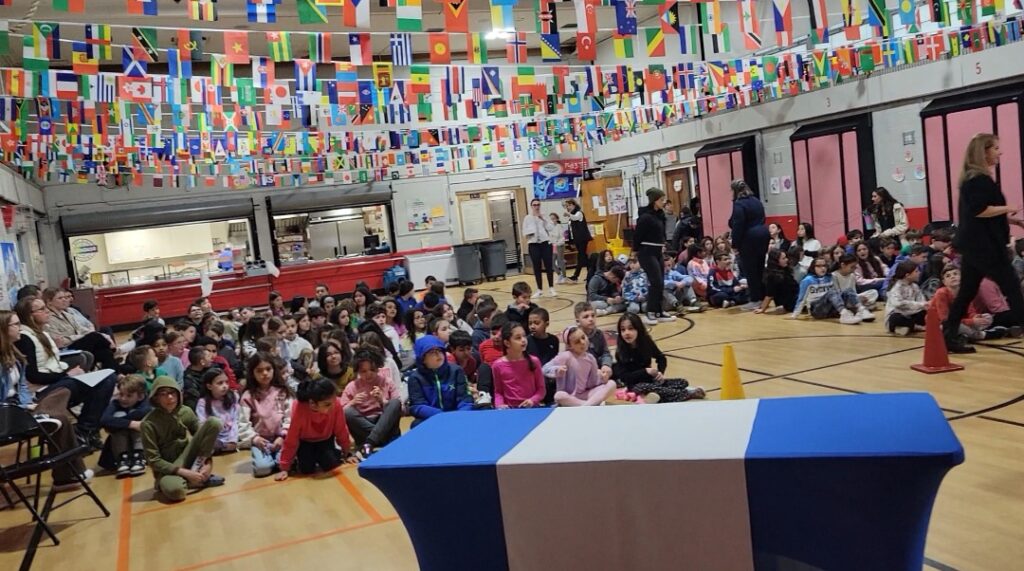
school assemblies nj - games and activities

Word & Puzzle Challenges

Puzzle boards, letter reveals, and fill-in-the-blank rounds encourage teamwork and critical thinking. Students huddle up, debate answers, and celebrate big wins as a group.
👉 See the word-puzzle format here.

60-Second Team Challenges

Beat-the-clock games bring high energy and high cooperation. Students rely on quick thinking, trust, and communication—making it ideal for strengthening classroom and schoolwide connections.
👉 Check out the 60-second challenge here.

Interactive Audience Gameplay

With buzzer systems or keypad-style participation, every student can play—even in a large gym or auditorium. This all-in format breaks up cliques and elevates school spirit instantly.
👉 Explore interactive formats here.

These game-show experiences turn ordinary assemblies into memorable, high-energy events, helping students bond, build confidence, and enjoy a shared moment of fun, unity, and connection.

These games are perfect for schools looking to strengthen community through engaging, meaningful experiences.

While game shows create instant energy, many schools still seek additional options that strike a balance between interaction and simplicity, especially for younger students.

NJ Prep School Assembly

Book a Live Game Show!

[We bring the full game show setup to your location in NJ, NYC, or CT and run the show start-to-finish]

Why Team Building Matters in New Jersey School Assemblies

School assemblies are one of the few moments when an entire student body is in the same space at the same time. That opportunity comes with pressure. Administrators and educators are expected to deliver an experience that is meaningful, inclusive, and age-appropriate—without losing control of the room. In New Jersey schools, especially, assemblies are often tied to culture-building, behavior reinforcement, or community values. When team building is built into the assembly, students don’t just listen; they actively participate, making the message stick far beyond the event itself.

When done correctly, team building during assemblies:

  • Encourages positive peer interaction
  • Reduces social barriers between grade levels
  • Builds confidence and communication skills
  • Strengthens overall school spirit


Understanding why team building matters is the first step, but choosing the right type of activity is what determines whether an assembly succeeds or fails.

Find the Perfect Game Show for Your Team

Pick the Ideal Match for Your Team’s Unique Goals and Needs – Click Below

Other Interactive Team Building Activities for NJ School Assemblies

Not every assembly needs to be fast-paced from start to finish. Some of the best team-building activities for school assemblies in NJ include low-pressure interactive games that encourage cooperation and creativity. These activities are especially effective when schools want to reinforce social skills, empathy, or classroom collaboration. The key is choosing activities that scale well and don’t single out individual students in uncomfortable ways.

Effective interactive activities include:

  • Human Knot, which emphasizes communication and teamwork
  • Pass the Picture, a creativity-based group exercise
  • Two Truths and a Lie, which helps students learn about one another
Activity Purpose
Human Knot Builds trust and problem-solving
Pass the Picture Encourages creativity and collaboration
Two Truths and a Lie Strengthens peer connections


Once students are comfortable interacting, schools can introduce deeper collaboration exercises that reinforce teamwork on a larger scale.

student leadership


Group Collaboration Games That Strengthen School Culture

Group collaboration games are ideal for assemblies focused on unity, behavior expectations, or leadership development. These activities require students to work toward a shared goal, reinforcing the idea that success comes from cooperation rather than individual performance. For NJ schools managing diverse student populations, collaboration games help break down cliques and encourage inclusive participation.

Examples include:

Game Outcome
Group Juggle Improves communication and focus
Marshmallow Challenge Builds problem-solving and creativity
Human Knot Reinforces teamwork under pressure


With collaboration established, assemblies can become powerful platforms for developing student leadership skills.

Book a Live Game Show!

[We bring the full game show setup to your location in NJ, NYC, or CT and run the show start-to-finish]

Quick 5-Minute Team Building Exercises for Students

Student collaboration and teamwork are essential for school success.  By incorporating team-building exercises into school assemblies in NJ, students can learn vital skills that will serve them well in their future academic and professional lives.

Adding team-building exercises is an effective way to develop these skills while fostering a positive school community.

Here are some team-building exercises that I recommend:

1. Blindfolded Obstacle Course: In pairs, one student is blindfolded while their partner offers verbal guidance to navigate an obstacle course. This exercise teaches trust, communication, and active listening.

2. Minefield: Place objects on the ground and divide students into pairs. One student is blindfolded, and the other student guides them through the minefield without touching any objects. This exercise promotes trust, leadership, and communication.

3. Human Knot: Students stand in a circle and hold hands with two different people not next to them. They then untangle themselves, forming a circle without releasing their hands. This exercise improves problem-solving, communication, and cooperation.

4. Paper Tower: Small groups of students are given a limited amount of materials to construct a tower out of paper, tape, and scissors. This exercise fosters creativity, communication, and teamwork.

5. Egg Drop: Students work in teams to construct a container that can protect a raw egg from breaking when dropped from a certain height. This exercise develops creativity, problem-solving skills, and teamwork.

These particular exercises promote effective communication, problem-solving, and leadership skills, while also fostering a sense of community within the school.

Leadership-Focused Team Building Activities for Students

Leadership development is a major priority in many New Jersey schools, and assemblies provide a unique setting to reinforce these skills. Team building activities that emphasize decision-making, accountability, and communication help students see leadership as action—not position. When leadership exercises are interactive, students are more likely to internalize the lesson rather than tune it out.

Leadership-focused activities help students:

  • Practice decision-making in real time
  • Communicate clearly under pressure
  • Support teammates toward a shared outcome


Before diving deeper into leadership development, many schools start with icebreakers to create comfort and trust across the room.

Icebreaker Games for School Assemblies

Icebreakers play a critical role in setting the tone for school assemblies. They reduce tension, ease social anxiety, and prepare students to engage more fully in team-building activities. Unlike deeper team exercises, icebreakers are short, simple, and designed to get students comfortable participating without fear of embarrassment.

Icebreaker Benefit
Human Bingo Encourages movement and interaction
Name Game Builds familiarity
Group Juggle Boosts focus and teamwork


Once students are comfortable participating, cooperative learning activities can reinforce both academic and social skills simultaneously.

3 Cooperative Learning Activities

Cooperative learning activities are an excellent way to enhance the learning experience and promote teamwork among students.

By working together on a common task, students learn to communicate effectively, listen to each other’s perspectives, and support one another.

Here are some examples of cooperative learning activities that can be incorporated into school assemblies:

1 – Peer Teaching

In this activity, students are divided into pairs, and each pair is assigned a specific topic related to the subject matter being discussed. Each student then prepares a short presentation on their topic and delivers it to their partner. After the presentations, students switch roles and share their knowledge on the other topic. This activity allows students to take ownership of their learning and engage in meaningful discussions with their peers.

2 – Jigsaw Technique

The jigsaw technique involves dividing students into small groups and assigning each group a different piece of information related to a larger topic. Each group becomes an expert on their piece of information before sharing it with the rest of the class. This activity fosters collaboration and encourages students to take responsibility for their own learning while also learning from their classmates.

3 – Think-Pair-Share

In this activity, students are asked to think individually about a question or problem related to the subject matter. They then pair up with a classmate and share their thoughts, discussing possible solutions or approaches. Finally, pairs present their ideas to the larger group. This activity promotes active listening, critical thinking, and problem-solving skills, and allows students to learn from each other’s insights.

These cooperative learning activities are just a few examples of how team building can be incorporated into school assemblies to enhance the learning experience and promote collaboration and teamwork among students.

If you are planning an upcoming school assembly and are looking for fun, interactive, and educational activities, click here.

Team Workshops in NJ Schools

Team building workshops take assembly engagement a step further by combining structured learning with interactive participation.  These workshops are an effective way to improve collaboration, communication, and problem-solving skills. Conducting these workshops during school assemblies can help encourage students to work together more effectively as a team. Workshops for schools should be designed to engage all participants while fostering a positive and supportive environment.

The benefits of organizing team building workshops for schools include:

  • Improved group dynamics and communication
  • Increased trust and respect among team members
  • Enhanced problem-solving and decision-making skills
  • Inspires creativity and innovation

To see how these approaches work in real schools, it helps to look at actual outcomes.


Examples of Workshops for NJ Schools

There is a range of workshops that can be tailored to suit the needs of different schools. Some examples include:

Workshop Name Description

1 – Scavenger Hunt

A fun and interactive team-building activity that encourages communication, problem-solving, and teamwork. Students work in groups to complete a series of tasks and challenges.

2 – Escape Room

Similar to a scavenger hunt, students work collaboratively to solve puzzles and clues to escape a locked room within a specified timeframe.

3 – Cooking Challenge

An activity that encourages students to work together to prepare a meal. This workshop emphasizes the importance of communication, delegation, and leadership among team members.

4 – Survivor Challenge

A team-building workshop that requires students to work in teams to complete physical and mental challenges. This workshop promotes leadership skills, decision-making, and problem-solving abilities.

Team building workshops for schools are an ideal way to help students develop their leadership skills, communication abilities, and teamwork skills.

Integrating these activities into school assemblies provides an excellent opportunity for students to enhance their personal and professional growth.


Case Studies: Real Results from NJ School Assemblies

School leaders don’t choose assembly programs based on entertainment alone. They’re balancing student behavior, limited time, supervision concerns, and educational outcomes, all while standing in front of teachers, parents, and administrators who expect the assembly to work.

The following New Jersey school assemblies were designed with those realities in mind, focusing on large-group control, age-appropriate participation, and measurable engagement, not trial-and-error activities.

Case Study 1: Large Middle School Assembly (300+ Students)

The Challenge:
A New Jersey middle school needed an assembly that could engage more than 300 students in a gym setting without creating noise issues, downtime, or disciplinary problems. Previous assemblies relied on speakers and passive presentations, which led to disengagement and inconsistent behavior.

The Approach:
A game show–style trivia format was selected to ensure simultaneous participation across grade levels. Students were organized into teams, clear rules were established upfront, and pacing was tightly managed to keep energy high without losing control of the room.

The Outcome:

  • High participation across all grade levels
  • Noticeable improvement in student focus and behavior
  • Teachers reported smoother classroom transitions after the assembly

Educational Game Show Activities For Kids in NJ, NYC & CT

Activities for Schools NJ


Case Study 2: Elementary School Assembly Focused on Culture & Values

The Challenge:
An elementary school in New Jersey wanted an assembly that reinforced themes of kindness, respect, and cooperation without lecturing students or losing their attention. The concern was keeping younger students engaged while maintaining structure and safety.

The Approach:
Cooperative team challenges were introduced that required students to work together toward shared goals. Activities were designed to be inclusive, age-appropriate, and easy for staff to supervise in a large group setting.

The Outcome:

  • Strong peer collaboration during the assembly
  • Increased student confidence in group participation
  • Teachers observed improved classroom interaction in the days that followed

Why This Matters for Decision-Makers:
These assemblies succeeded because they were designed for scale, structure, and outcomes—not just fun. When participation is intentional and facilitation is professional, assemblies become tools for culture-building instead of one-off events.


Final Word: Who These Activities Are For

The best team-building activities for school assemblies in NJ are designed for principals, superintendents, pto presidents, and school administrators who are responsible for delivering assemblies that actually work, not just on paper, but in real gyms and auditoriums filled with students. These activities are ideal for schools that need high participation without chaos, clear structure without rigidity, and engagement without putting individual students on the spot.

This approach works best for schools that care about student behavior, school culture, and meaningful interaction, not just filling time on an assembly schedule.

It’s especially effective for administrators who want assemblies to reinforce values like respect, collaboration, leadership, and inclusion while still keeping students energized and focused.

If your goal is to create assemblies that students remember for the right reasons and that teachers support because they see the impact afterward, these activities deliver that balance.

Book a Live Game Show!

[We bring the full game show setup to your location in NJ, NYC, or CT and run the show start-to-finish]

FAQ – Best Team Building Activities for School Assemblies in NJ

What are the best team building activities for school assemblies in NJ?

The best team building activities for school assemblies in NJ are structured, large-group experiences that keep students participating at the same time. The most reliable options include game show–style trivia, survey-style team rounds, word and puzzle challenges, and timed team competitions because they work in gyms and auditoriums without long downtime. Schools typically choose formats that reinforce collaboration, communication, and school culture while staying easy for staff to supervise.

How do you keep students engaged during a school assembly?

Student engagement stays high when assemblies are designed for simultaneous participation, clear rules, and fast pacing. Activities should avoid long volunteer segments where most students watch instead of play. Team-based formats work best because they create shared focus, reduce side conversations, and give students a clear role within their group.

What team building activities work best for large groups in a gym or auditorium?

Large groups do best with activities that involve everyone at once, such as audience-wide trivia, team competitions, structured call-and-response games, and timed challenges. The key is limiting downtime and keeping the room moving through short rounds. In New Jersey schools, game-based formats are often preferred because they deliver energy and structure without putting students on the spot individually.

Are game show–style assemblies appropriate for elementary and middle school students?

Yes, game show–style assemblies can be age-appropriate for both elementary and middle school students when the questions, rules, and pacing are tailored to the grade level. Elementary versions tend to use simpler prompts and cooperative team scoring, while middle school versions can add faster trivia rounds and more competitive challenges. The best formats keep participation inclusive and avoid singling out students in ways that create anxiety.

When is the best time of year to schedule team building assemblies?

Many New Jersey schools schedule team building assemblies at the start of the school year to set expectations and build culture quickly. They’re also effective before testing season, after winter break, during leadership weeks, and when a school wants to reset behavior and strengthen community. The best timing depends on whether your goal is onboarding, motivation, culture-building, or improving student connections.

What’s the easiest way to run team building activities without adding stress for staff?

The easiest approach is using a turnkey, structured format with clear facilitation, tight pacing, and simple supervision requirements for teachers. Schools should prioritize activities that don’t require complicated materials, multiple stations, or long setup time. If your goal is high participation with minimal staff workload, a professionally facilitated game show–style assembly is one of the most reliable options for large groups.

Client Appreciation Event Ideas in 2025 | Interactive Entertainment for Corporate

Client Appreciation Event Ideas in 2025 | Interactive Entertainment for Corporate

Did you know that 91% of shoppers are more likely to do business with companies that recognize their loyalty? In 2025, showing gratitude to your valued customers is more important than ever. With businesses competing for attention, a well-planned appreciation event can set you apart and strengthen relationships.

This year, events are evolving to include a mix of educational sessions, culinary experiences, and exclusive VIP outings. Whether you’re hosting a casual cocktail party or a high-end VIP experience, the goal is to create memorable moments that leave a lasting impression.

From interactive tastings to expert-led workshops, there are countless ways to show your gratitude. This guide will explore innovative ideas that cater to both in-person and virtual settings. By the end, you’ll have actionable strategies to boost loyalty and build stronger connections with your audience.


employee engagement game show idea

employee-engagement-game-show-idea

Key Takeaways

  • Showing gratitude can significantly improve customer loyalty and satisfaction.
  • Mix educational and interactive elements to create engaging experiences.
  • Both in-person and virtual events offer unique opportunities to connect.
  • Exclusive VIP outings can strengthen business relationships.
  • Innovative ideas like tastings and workshops leave a lasting impression.


Introduction to Client Appreciation in 2025

In 2025, expressing gratitude to your audience has become a cornerstone of successful business strategies. Recognizing the value of those who support your brand is no longer optional—it’s essential for fostering loyalty and trust.

Understanding the Value of Appreciation Events

Appreciation events are more than just gestures; they’re investments in your relationships. These gatherings provide a unique opportunity to connect on a personal level, making your audience feel valued and understood.

Data shows that companies prioritizing gratitude see a significant boost in customer retention. For example, businesses that host personalized events report a 50% increase in client referrals. This highlights the tangible benefits of showing genuine appreciation.

“Gratitude is not only the greatest of virtues but the parent of all others.”

Cicero

How Gratitude Strengthens Business Relationships

Demonstrating gratitude fosters emotional connections, which are critical for long-term success. When you take the time to recognize your audience’s support, you build trust and loyalty that goes beyond transactions.

Events can take many forms, from intimate dinners to large-scale celebrations. Each format offers unique benefits:

Event Type Benefits
Intimate Gatherings Personalized interactions, deeper connections
Large-Scale Celebrations Broad reach, community building
Educational Workshops Position your brand as an industry leader

By integrating these strategies, you can create memorable experiences that leave a lasting impression. For more insights on building strong connections, check out our guide on employee recognition.

Book a Live Game Show!

[We bring the full game show setup to your location in NJ, NYC, or CT and run the show start-to-finish]

team building activity

Client Appreciation Event Ideas for Building Business Relationships

Building strong business relationships in 2025 requires more than just transactions—it’s about creating meaningful connections. One of the most effective ways to achieve this is through interactive educational sessions and memorable guest experiences. These strategies not only engage your audience but also leave a lasting impression.

https://www.youtube.com/watch?v=9plABtN2Bg8

Interactive Educational Sessions and Guest Speakers

Interactive sessions are a powerful way to provide value while engaging your audience. Inviting industry experts as guest speakers can transform a standard gathering into an inspiring experience. These sessions offer actionable insights that can help your audience grow their own businesses.

For example, a live demonstration or Q&A segment encourages active participation. Gathering real-time feedback during these sessions allows you to personalize future events, making them even more impactful. This approach not only strengthens relationships but also positions your brand as a trusted leader in your field.

Memorable Guest Experiences That Create Loyalty

Memorable experiences are key to fostering loyalty. Whether it’s a hands-on workshop or an exclusive networking opportunity, these moments leave a lasting impression. Planning with a focus on relationship building can elevate your brand’s reputation and motivate repeat business.

For instance, integrating wellness activities or local cultural elements can resonate deeply with your audience. These thoughtful touches show genuine gratitude and make your event stand out. To learn more about crafting unforgettable experiences, check out our guide on client appreciation event ideas.

feud work question sudden death round
 

Seasonal and Themed Event Strategies

Seasonal and themed events are a powerful way to connect with your audience. By aligning your gatherings with holidays or community trends, you create experiences that feel timely and relevant. This approach not only boosts attendance but also strengthens your brand’s image.

Leveraging Holiday and Seasonal Trends

Holidays and seasons provide a built-in narrative for your events. For example, a winter wonderland party or a summer BBQ can instantly excite your guests. These themes tap into the natural momentum of the year, making your gatherings more engaging.

Data shows that 75% of attendees prefer themed events that resonate with the time of year. This preference highlights the importance of aligning your activities with seasonal interests. For instance, an Earth Day eco-friendly workshop can inspire your audience while reinforcing your brand’s values.

Outdoor, Wellness, and Community-Focused Events

Outdoor and wellness-focused events are another excellent way to build community relationships. Activities like yoga sessions or nature walks foster a relaxed and interactive environment. These gatherings encourage meaningful connections while promoting well-being.

Events held in outdoor venues during spring and summer see a 40% increase in attendance. This trend underscores the appeal of fresh air and open spaces. By incorporating local traditions or customs, you can further enhance community participation.

Event Type

Benefits

Holiday-Themed Parties

Built-in excitement, high attendance

Outdoor Wellness Activities

Relaxed atmosphere, community building

Seasonal Workshops

Educational value, brand reinforcement

Seasonal changes also provide opportunities to refresh your event ideas. For example, a winter event with warm drinks and cozy blankets can leave a lasting impression. To explore more creative themes, check out our guide on holiday event ideas.

Book a Live Game Show!

[We bring the full game show setup to your location in NJ, NYC, or CT and run the show start-to-finish]

Food, Beverage, and Tasting Experiences

Food and drink experiences are a timeless way to connect with your audience. These gatherings combine enjoyment with opportunities for relationship building, making them a powerful tool for fostering loyalty.

Whether it’s a signature cocktail evening or a gourmet dinner, these events create memorable interactions that leave a lasting impression.

Signature Cocktail Evenings and Wine Tastings

Signature cocktail evenings are a sophisticated way to bring people together. Hire a mixologist to craft custom drinks that reflect your brand’s identity. This personalized touch adds value and creates a unique experience for your guests.

Wine tastings are another excellent option. Host these events at local vineyards, combining guided tours with interactive tasting sessions. This approach not only educates but also provides a relaxed setting for networking.

Gourmet Dinners and Cooking Demonstrations

Gourmet dinners offer an intimate setting to show your gratitude. Collaborate with a chef to create a menu that highlights local flavors or seasonal ingredients. This attention to detail demonstrates thoughtfulness and care.

Cooking demonstrations add an interactive element to your gatherings. Invite a professional chef to lead a live session, teaching guests new culinary skills. This blend of entertainment and education creates a memorable experience.

Event Type Benefits
Signature Cocktail Evenings Personalized drinks, brand alignment
Wine Tastings Educational, relaxed networking
Gourmet Dinners Intimate, showcases local flavors
Cooking Demonstrations Interactive, skill-building

Food-centric activities are a universal language for showing gratitude. By incorporating these ideas, you can create meaningful connections and strengthen your relationships. These experiences not only leave a positive impression but also reinforce your brand’s value.

Find the Perfect Game Show for Your Team

Pick the Ideal Match for Your Team’s Unique Goals and Needs – Click Below

Exclusive and VIP Event Experiences

Exclusive experiences are a game-changer for building loyalty in 2025. Offering VIP treatment not only makes your audience feel special but also strengthens your business relationships. From behind-the-scenes tours to luxury outings, these events create lasting impressions that go beyond the ordinary.

Behind-the-Scenes Tours and Product Demos

Behind-the-scenes tours provide a unique opportunity for your audience to see the inner workings of your company. This transparency builds trust and fosters a deeper connection. For example, a tour of your production facility or creative studio can showcase your brand’s innovation and dedication.

Product demos during these events allow your audience to experience your offerings firsthand. This hands-on approach not only highlights the value of your products but also encourages feedback and engagement. It’s a powerful way to demonstrate your commitment to quality and customer satisfaction.

Luxury Outings and Private Entertainment Sessions

Luxury outings are a hallmark of VIP treatment. Whether it’s a private yacht party or an exclusive golf tournament, these experiences create unforgettable moments. They offer a relaxed setting for networking while reinforcing your brand’s prestige.

Private entertainment sessions, such as concerts or comedy nights, add a personal touch. These gatherings provide a unique blend of enjoyment and exclusivity, making your audience feel truly valued. For more inspiration, explore VIP event ideas that can elevate your next gathering.

By incorporating these exclusive elements, you can create experiences that leave a lasting impression. These strategies not only reward your most loyal supporters but also generate word-of-mouth referrals, further enhancing your brand’s reputation.

Virtual and Hybrid Client Appreciation Events

In today’s digital-first world, connecting with your audience has never been more dynamic. Virtual and hybrid gatherings are becoming essential tools for businesses looking to show gratitude while maintaining flexibility. These formats allow you to reach people from diverse locations, ensuring everyone feels included.

One of the biggest advantages of virtual events is their accessibility. Whether your audience is across town or across the globe, they can participate without the hassle of travel. This convenience often leads to higher attendance and stronger engagement.

Hosting Engaging Virtual Gatherings

To make your virtual events memorable, focus on interactive elements. Live unboxings, for example, create excitement and allow your audience to experience your products in real time. Interactive presentations, where participants can ask questions or share feedback, also foster a sense of connection.

Breakout sessions and chat rooms are excellent for encouraging networking. These smaller groups provide a space for meaningful conversations, helping attendees build relationships with each other and your brand.

Integrating Interactive Digital Activities

Digital activities like polls and quizzes keep your audience engaged throughout the event. Real-time Q&A sessions add a personal touch, allowing participants to interact directly with your team or guest speakers.

Branded digital gift baskets are another creative way to show appreciation. These virtual packages can include exclusive content, discounts, or even physical items sent to their doorstep. Such thoughtful gestures leave a lasting impression.

After the event, follow up with thank-you emails and recap posts. This reinforces the connection and keeps your brand top of mind. For more inspiration, explore client appreciation event ideas that can elevate your next gathering.

Book a Live Game Show!

[We bring the full game show setup to your location in NJ, NYC, or CT and run the show start-to-finish]

Tips for Planning Outstanding Appreciation Events

Planning a standout appreciation event requires attention to detail and strategic execution. From budgeting to follow-up, every step plays a crucial role in creating a memorable experience. Here’s how you can ensure your event leaves a lasting impression.

Budgeting, Venue Selection, and Personalization

Start by establishing a realistic budget. Allocate funds for key elements like venue, catering, and activities. A well-planned budget ensures you can deliver a high-quality experience without overspending.

Choosing the right venue is equally important. Consider your audience’s preferences and the event’s goals. A cozy restaurant might work for an intimate gathering, while a larger space suits a grand celebration.

Personalization adds a special touch. Tailor the event to reflect your audience’s interests. For example, incorporate their favorite themes or activities to make them feel valued.

Promotional Tactics and Follow-Up Strategies

Promote your event effectively to maximize attendance. Use email campaigns, social media, and direct outreach to spread the word. Highlight the unique aspects of your gathering to generate excitement.

After the event, follow up with attendees. Send thank-you emails or personalized notes to show your gratitude. This step reinforces the connection and keeps your brand top of mind.

Leverage feedback to refine future events. Ask attendees for their thoughts on what worked and what could be improved. This process ensures continuous growth and stronger relationships.

“An event is only as successful as the relationships it builds.”

Event Planning Expert

For more inspiration on creating memorable gatherings, check out our guide on holiday party planning. These strategies will help you craft events that truly stand out.

Conclusion

In 2025, nurturing business relationships goes beyond transactions—it’s about creating meaningful moments. From interactive workshops to exclusive outings, the ideas shared here offer diverse ways to show genuine gratitude. These strategies not only strengthen connections but also drive long-term loyalty.

Personalization is key to making these experiences memorable. Tailoring activities to your audience’s interests ensures they feel valued. Follow-up after the gathering reinforces the connection and keeps your brand top of mind.

Take actionable steps to plan gatherings that reflect your brand’s values. Whether it’s a virtual session or a VIP outing, focus on delivering value and fostering trust. By prioritizing gratitude, you can build stronger relationships and achieve lasting business growth.


FAQ – Client Appreciation Event Planning in 2025

Why are appreciation events important for businesses in 2025?
These gatherings help strengthen relationships by showing gratitude. They also create loyalty and foster long-term connections with your audience.
What are some unique ways to make guest experiences memorable?
Consider interactive sessions, expert-led workshops, or personalized activities. These leave a lasting impression and add value to their experience.
How can seasonal trends enhance appreciation events?
Aligning with holidays or themes adds excitement. Outdoor gatherings, wellness activities, or community-focused initiatives can make your event stand out.
What food and beverage ideas work well for these gatherings?
Signature cocktail evenings, wine tastings, or gourmet dinners are popular. Cooking demonstrations also engage guests while offering a unique experience.
What makes VIP experiences special for attendees?
Behind-the-scenes tours, private entertainment, or luxury outings create exclusivity. These moments make guests feel valued and appreciated.
How can virtual or hybrid events still feel engaging?
Use interactive digital activities, live Q&A sessions, or virtual tastings. These keep your audience connected and involved, even from a distance.
What practical tips ensure a successful event?
Focus on budgeting, venue selection, and personalization. Effective promotion and thoughtful follow-up strategies also enhance the overall impact.
10 Ways to Improve School Culture | Key Strategies | NJ/NYC | Interactive Activities

10 Ways to Improve School Culture | Key Strategies | NJ/NYC | Interactive Activities

Looking for ways to improve school culture in your district? Imagine walking into a school in New Jersey or NYC where the energy is alive, students greet each other with kindness, and teachers feel respected and excited to teach. This isn’t wishful thinking, it’s the advantage schools need to thrive in today’s world.

A positive school culture drives academic success, teacher retention, and community trust. It’s built through intentional action: strengthening relationships, celebrating diversity, and empowering student and teacher voices. One of the most effective and fun ways to improve school culture is through engaging, interactive school assemblies that energize students and reinforce your school’s values.

This guide will share practical, proven ways to improve school culture, showing how hosting game show-style school assemblies can become your secret tool for creating a community where students and staff feel connected, valued, and ready to thrive.

game shows for students

Key Takeaways

  • A positive school culture helps everyone learn, grow, and feel included.
  • Building strong connections and celebrating diversity are key ways to improve school culture.
  • Letting students and teachers share their voices creates a supportive environment.
  • Using these strategies can boost academics, well-being, and community connection.
  • School assemblies are a powerful, fun way to improve school culture while building excitement and unity.

Book a Live Game Show!

[We bring the full game show setup to your location in NJ, NYC, or CT and run the show start-to-finish]

Defining a Positive School Culture in the NYC Metro Area

A positive school culture transforms a building into a community.  All across New Jersey, NYC, and Connecticut, schools that invest in ways to improve school culture create spaces where students feel safe and teachers feel supported.

Respect, collaboration, and empathy are not just words on posters; they’re daily practices.  Schools that prioritize kindness and clear expectations see improvements in academics, student well-being, and a stronger sense of community.

“A positive school culture goes beyond grades. It’s about creating a place where every student feels seen, respected, and inspired.”

Building this culture takes intentional effort from teachers, staff, families, and students. When a school shares a unified purpose and vision, it increases student motivation, participation, and success, which are key elements for any school aiming to lead in the NYC metro area.

1 – Building Strong Relationships

Strong relationships are the backbone of a positive school culture. When students feel seen by teachers and connected to classmates, they show up ready to learn and participate. In schools across New Jersey, New York City, and Connecticut, building these connections can transform classrooms into caring communities.

Teachers can strengthen bonds by checking in with students and showing interest in their lives. Peer relationships grow stronger through group activities, mentoring, and open conversations. Whether through daily interactions or during school assemblies, investing in relationships is one of the most effective ways to improve school culture and inspire students to thrive.

Interactive school assemblies provide a perfect platform for building these connections while aligning with your school’s cultural goals.


2 – Fostering Teacher-Student Connections

In New Jersey and NYC schools, meaningful teacher-student connections are a proven way to improve school culture.  Teachers who know their students’ interests and challenges can better support their learning and emotional needs.

Practical ways to build connections include:

✅ One-on-one conversations between teachers and students
✅ Regular check-ins to discuss academic progress and well-being
✅ Teachers sharing personal stories and interests to build trust
✅ Creating open, caring classrooms where students feel safe to share

Encouraging Peer-to-Peer Support

Students also thrive when they feel connected to their classmates. Positive peer relationships lead to higher engagement, better social skills, and a stronger sense of belonging within the school community.

Schools can encourage this by:

Facilitating group activities that teach teamwork and communication
✅ Establishing peer mentorship programs with older students supporting younger ones
✅ Teaching social-emotional skills like empathy and conflict resolution
✅ Offering clubs and activities aligned with student interests

“The relationships we build with students lay the foundation for everything we do as educators. Strong, positive connections foster trust, respect, and a shared commitment to learning.”

By focusing on these relationship-building strategies, schools can create a culture where students excel academically, feel emotionally supported, and see themselves as valued members of their school community.

3 – Promoting Inclusivity and Celebrating Diversity

A thriving school culture starts with making every student feel seen, valued, and safe to be themselves. In diverse communities across New Jersey and NYC, creating a welcoming environment isn’t just a nice-to-have. It’s what helps students feel connected, engaged, and ready to learn every day.

Embracing Cultural Differences

Understanding and celebrating cultural differences isn’t just a once-a-year assembly, it’s a daily commitment. Schools can train staff on cultural awareness, bring in community voices, and encourage students to share their traditions and languages. When students see themselves reflected in their school, they show up with confidence and curiosity.

Creating an Inclusive Curriculum

An inclusive curriculum doesn’t shy away from real conversations. It weaves in stories, voices, and perspectives from all backgrounds, giving students a chance to learn about each other while seeing the value in their own experiences.

Ways to make learning inclusive include:

✅ Using diverse authors and real-world examples
✅ Teaching social justice and equity topics
✅ Letting students share personal stories
✅ Encouraging collaboration across cultures

Organizing Diversity Events and Celebrations

Diversity events bring your school’s values to life. Think multicultural fairs with food and music, heritage month projects, and student-led panels that open minds and build connections. These moments remind everyone that diversity isn’t a challenge to overcome; it’s a strength to celebrate.

Diversity events and celebrations are great for showing off a school’s cultural richness. They can be multicultural fairs, heritage months, or groups based on identity. These events show a school’s dedication to inclusivity and diversity.

Here are some ideas for these events:

  1. Have a multicultural fair with food, music, art, and traditions from different cultures
  2. Have heritage months to honor the contributions of various cultural groups
  3. Create groups for students with similar experiences and backgrounds
  4. Invite guest speakers from diverse backgrounds to share their stories

Almost every school says they value diversity, but the ones that act on it see the biggest impact on student well-being and engagement.

Ready to discover how school assemblies and interactive programs can help bring these values to life in your school, keep reading.

Got Games? – Press Play!  #boostmorale #teambuilding #schoolculture


Need Help

Book a live game show experience today!
Contact us for further details.
For Immediate assistance by text – 917-670-4689
No deposit required.  5 Star Google Reviews.
We plan and facilitate all activities.

4 – Engaging Students in Decision-Making

Letting students have a say in their education is key to a positive school culture. By involving them in decisions, you make them feel more responsible and proud of their school. When students know their opinions matter, they care more about their education and want to help make the school better.

Student councils or advisory boards are great ways to get students involved. These groups let students talk about what matters to them, suggest solutions, and work with leaders to make changes. Students learn important skills like communication and teamwork while understanding the school’s challenges and opportunities.

Surveys and focus groups are also good ways to hear from students. They help you know what students like and need in school, from classes to clubs and rules. This feedback helps make decisions that meet the students’ needs and values their opinions.

“When students are given a voice in shaping their learning environment, they become more engaged, motivated, and committed to their education.”

Participatory action research projects are another way to engage students. In these, students work with teachers and leaders to tackle issues in their school. They learn to think critically, analyze data, and come up with solutions. This approach helps students feel they can make a difference and take responsibility for their school.

Want your school culture to stand out?  Let your students have a say.  When you give them real chances to share ideas and help shape what happens at school, they feel like they belong and they’re more motivated to show up and succeed.

Book a Live Game Show!

[We bring the full game show setup to your location in NJ, NYC, or CT and run the show start-to-finish]

5 – Empowering Teachers as Leaders

In a positive school culture, teachers are more than just instructors. They are leaders who shape the learning environment and help students succeed. By giving teachers leadership roles, schools create a sense of ownership and teamwork. This leads to better student results.

Providing Professional Development Opportunities

Empowering teachers means offering them chances to grow professionally. These chances should help teachers learn new skills and keep up with the latest in their fields. There are many ways to do this, such as:

  • Workshops, team building events, and seminars
  • Conferences and conventions
  • Online courses and webinars
  • Mentoring and coaching programs

By investing in teachers, schools show they believe in their potential as leaders.

Encouraging Teacher Collaboration

Encouraging teachers to work together is another way to empower them. When teachers collaborate, they share knowledge and learn from each other. This creates a strong sense of purpose and responsibility for student learning. Schools can support this by:

  1. Creating professional learning communities (PLCs) for teachers to meet and share best practices.
  2. Using team teaching, where teachers work together in the classroom.
  3. Supporting peer mentoring, where experienced teachers help new ones.

Collaboration helps teachers use their skills together, leading to better teaching and student results.

By empowering teachers as leaders and offering them chances to grow and work together, schools build a positive culture. This culture values everyone’s skills and contributions. It leads to happier teachers, more teachers staying, and better student results.

6 – Promoting a Positive School Culture Through Strong Leadership

A positive school culture starts at the top. School leaders shape how students and staff feel every day by modeling respect, clear communication, and high expectations.  When leaders are present, listen, and follow through on their words, it builds trust across the school community.

Great leaders don’t just talk about values, they show them in how they treat people and handle challenges.  This consistency creates a school environment where students and teachers feel motivated to give their best, knowing they are supported and valued.

Developing a Clear Vision and Mission

Effective leaders create a clear vision and mission. These outline the school’s values, goals, and what’s expected. This vision guides the school community, giving direction and purpose.

By sharing this vision with passion, leaders inspire others to share these values. Together, they work towards their goals.

strong leadership in schools

A vision and mission statement should live and breathe the school’s commitment to excellence. Leaders make sure every decision and program matches this vision. This makes the learning environment cohesive and purposeful.

Modeling Positive Behaviors and Attitudes

Leaders shape their school’s culture with their actions and attitudes. By showing respect, empathy, and a strong work ethic, they inspire others. This sets a positive example.

When leaders truly care about students’ success and well-being, it makes a big impact. It shows that the school values everyone.

Good leaders also value open communication and transparency. They listen to students, staff, and families, making sure everyone’s heard. This builds trust and a sense of shared success.


7 – Prioritizing Open Communication

Open communication is key to a positive school culture. It makes sure students, teachers, and administrators can share their thoughts and feelings. This builds trust and helps everyone work together better.

Establishing Regular Feedback Channels

Schools need regular feedback channels for open communication. This lets everyone share their thoughts and ideas. Here are some ways to get feedback from students, staff, and families:

  • Conducting surveys to check satisfaction and find areas to improve
  • Organizing focus groups to talk about specific topics deeply
  • Holding town hall meetings to share news, answer questions, and get feedback

These feedback channels show that everyone’s opinions matter. They make sure everyone’s voice is heard.

Encouraging Transparency and Honesty

Being open and honest is vital for trust and accountability in schools. Leaders should share important information and talk openly about challenges and successes.

Transparency is not about sharing everything, but about sharing the right things at the right time with the right people.

By promoting honesty and openness, schools create a safe space for everyone. This leads to a more positive and supportive school culture.


Find the Perfect Game Show for Your Team

Pick the Ideal Match for Your Team’s Unique Goals and Needs – Click Below

8 – Involve the Community

Promoting a positive school culture goes beyond the classroom. It reaches out to the community. By working with local groups and getting parents and families involved, schools build a network that helps students learn and feel good.

Partnering with Local Organizations

Working with community partners gives students new skills and meaningful projects. Here are ways to make these partnerships:

  • Reach out to local businesses, nonprofits, and groups to see if you can work together
  • Start mentoring programs that link students with professionals
  • Plan community service projects for students to help others and make a difference

Working with local groups shows schools care about the community. It also gives students real-world experiences that help their school learning.

Engaging Parents and Families

Getting parents and families involved is key to a positive school culture. When they feel welcome, they support their kids’ education more. Here are ways to get them involved:

  1. Keep in touch with regular newsletters, emails, or meetings
  2. Give parents chances to volunteer with their skills
  3. Have family events like open houses, cultural festivals, or workshops

When schools focus on involving parents and families, they build a strong community. This leads to a culture of teamwork and support.

By working with the community and engaging parents and families, schools gain a lot. They get resources and expertise that make learning better for everyone.

9 – Integrating Social-Emotional Learning

In today’s schools, it’s more than just about grades. Adding social-emotional learning (SEL) to the mix is key for students’ growth. SEL helps students learn important life skills for happiness and success.

SEL teaches five key skills: self-awareness, self-management, social awareness, relationship skills, and responsible decision-making. These skills help students handle their feelings, set goals, understand others, make good friends, and make choices.

Adding SEL to everyday school life makes it a better place for learning. Teachers can do this by:

  • Starting discussions and activities that teach empathy and how to solve problems
  • Showing and teaching positive ways to handle feelings and social actions
  • Offering chances for students to work together, lead, and solve problems
  • Helping students think about their goals and how to grow stronger

By adding SEL to the school day, teachers equip students with the skills to overcome obstacles, make strong friends, and do well in school and life. Feeling supported and connected emotionally makes students more likely to learn, take chances, and help out at school.

SEL is not just one program or way of teaching. It’s about using strategies in classrooms, schools, homes, and communities to help students get the skills and mindset they need.

Putting effort into social-emotional learning means we’re investing in our students’ future. By focusing on SEL and valuing the whole child, schools can help students become aware, strong, and caring. This prepares them for the challenges of today and tomorrow.

nj-school-assembly

nj-school-assembly

10 – Recognizing and Celebrating Achievements

Creating a positive school culture means celebrating the wins of students, staff, and the whole school. By praising individual and team efforts, schools build a sense of pride and motivation. This makes the learning environment supportive and engaging.

Acknowledging Individual and Group Successes

Schools can set up regular programs to spotlight students and staff achievements. These programs might include:

By publicly sharing the wins of people and teams, schools show they value hard work and diverse skills. This boosts the morale of everyone in the community.

Creating Traditions and Rituals

Starting school traditions and rituals strengthens community and identity. These events bring students and staff together to celebrate their wins. They also highlight the school’s core values. Some examples are:

  1. School-wide assemblies
  2. Spirit weeks
  3. Annual events, such as homecoming or field day
  4. Graduation ceremonies

Traditions and rituals make everyone feel they belong and are part of something bigger. They help build a positive school culture that honors everyone’s achievements.

Conclusion

Using these ways to improve school culture will transform your school into a place where students feel welcome, engaged, and motivated to learn. From building strong relationships and embracing diversity to empowering student and teacher voices, each step strengthens your school’s culture.

Accepting everyone and making the curriculum welcoming makes students feel they belong. Letting students have a say in decisions and training teachers to lead helps, too.  Strong leadership with a clear vision and positive example sets the school’s tone.

Good communication, getting the community involved, and teaching social skills are also key. Celebrating what students and groups achieve boosts a culture of high standards and fairness. In the end, a positive school culture honors everyone’s strengths and works together for the success of all students.

One of the most effective, fun, and immediate steps you can take is to host interactive school assemblies designed to energize your students while reinforcing your school’s values.

Ready to improve your school culture with assemblies that engage, inspire, and bring your community together?   Click here to learn more and book your next assembly.


Book a Live Game Show!

[We bring the full game show setup to your location in NJ, NYC, or CT and run the show start-to-finish]

Frequently Asked Questions About Ways to Improve School Culture

What are effective ways to improve school culture in NJ and NYC schools?

Effective ways to improve school culture include building strong relationships, encouraging student voice, celebrating diversity, and promoting social-emotional learning. Schools in New Jersey and NYC can also use interactive school assemblies to energize students and align with school values.

How do school assemblies help improve school culture?

School assemblies bring students and staff together, reinforce positive values, and create shared experiences that build community. Hosting interactive assemblies is one of the most engaging ways to improve school culture quickly and effectively. Learn more about school assemblies here.

Why is student voice important in improving school culture?

When students feel heard, they are more engaged and motivated. Involving students in councils, surveys, and projects gives them ownership, which is a proven way to improve school culture in NJ and NYC schools.

What role does leadership play in ways to improve school culture?

Strong leadership sets the tone for a positive culture by modeling respect, clear communication, and accountability. School leaders who support initiatives like assemblies and open dialogue contribute to a thriving school environment.

How can schools in NJ and NYC start improving school culture today?

Schools can start by focusing on small actions like recognizing achievements, fostering inclusivity, and building teacher-student connections. Hosting an interactive school assembly is one of the fastest ways to improve school culture while boosting morale and unity. Book your assembly here.