
Quick answer: Book a trainer-led corporate team building workshop when your team needs a specific skill, such as conflict resolution or a new process. Book a hosted team building activity when the problem is connection: people who don’t talk across departments. A hosted session takes 60 or 90 minutes, needs almost no organizer prep and gets the whole room playing.
The trainer was sharp, the role-plays ran on time, and everyone left knowing the new feedback model. Three weeks later, the people who sat at different tables still haven’t spoken. That gap shows up nationally too: Gallup’s 2024 engagement data put the share of engaged U.S. employees at just 31%, the lowest in a decade.
So the real question for any employee engagement strategy isn’t whether to invest in team building. It’s which format fixes your specific problem. A workshop teaches a skill. A hosted session gets people talking to each other.
Why Team Building Falls Flat, Whatever the Format
No Clear Objective
Most team building misses because nobody defined the goal. Without one, attendees treat the day as a change of scenery and tune out.
Start with one sentence: what should be different back at work? That answer tells you whether you need a trainer or a host.
Half the Room Sits Out
Discussion-based workshops lean on the most vocal people. Quieter employees, newer hires and different age groups stay on the sidelines.
Putting introverts on the spot doesn’t fix it. Forced participation makes quiet people more uncomfortable, not more involved. The format has to build participation in: everyone contributes as part of a team, so nobody has to volunteer and nobody gets singled out.
Remote Staff Travel In for One Day
Hybrid and remote employees often commute in specifically for the offsite. After months of video calls, a day of slides in a conference room feels like the same meeting in a different building.
That one shared day should go to face-to-face time with colleagues they mostly know as a square on a screen.
The Organizer Ends Up Running the Show
Planning for 20 to 300+ people means hundreds of small decisions. When the office manager also acts as host, scorekeeper and timekeeper, they never get to join in.
That is why planners want a turnkey format. Someone else runs the room, and the organizer takes part like everyone else.
Nobody Can Show What the Budget Bought
Budget approvers ask what the spend delivered, and “people seemed to enjoy it” isn’t an answer. Most teams never set a measure before the event, so there is nothing to report afterward.
Pick one or two signals in advance: whether people now reach out across departments, whether new hires know names outside their own team, or how staff answer a two-question pulse survey a week later. Those signals turn a line item into a result you can defend.
Workshop or Hosted Session: Side-by-Side Comparison
Here is how the main options compare on the factors planners and budget approvers care about most.
| Option | What changes back at work | Organizer prep | Time needed | Who participates |
|---|---|---|---|---|
| It’s Playtyme Game Shows | People know names and talk across departments | Minimal: fully hosted and turnkey | 60 or 90 minutes | Everyone, 20 to 300+ people |
| Trainer-led workshop | A new skill or process people use on the job | Moderate: brief the trainer, book a longer block | Set by the curriculum | Small structured groups |
| DIY team activity | Depends on who runs it | High: organizer plans and runs it | Varies | Volunteers and the vocal few |
When Corporate Team Building Workshops Are the Right Call
A workshop wins when the goal is skill development. A good trainer brings real depth on one skill, runs structured practice with feedback, and leaves the team with a method people keep using back at their desks long after the session ends.
Book a trainer when something specific has to change: a new process or software rollout, a recurring conflict between people or teams, or a compliance update everyone needs to understand. Those are teaching problems, and teaching is what a trainer does best.
Plan for more lead time than you would for a hosted session. The organizer briefs the trainer on the goal and books a longer block. Participation is mostly listening, taking notes and practicing in small groups, and that repetition is what makes the skill stick. Afterward, give people a chance to use the method on real work while it is fresh.
When a Hosted Team Building Activity Wins
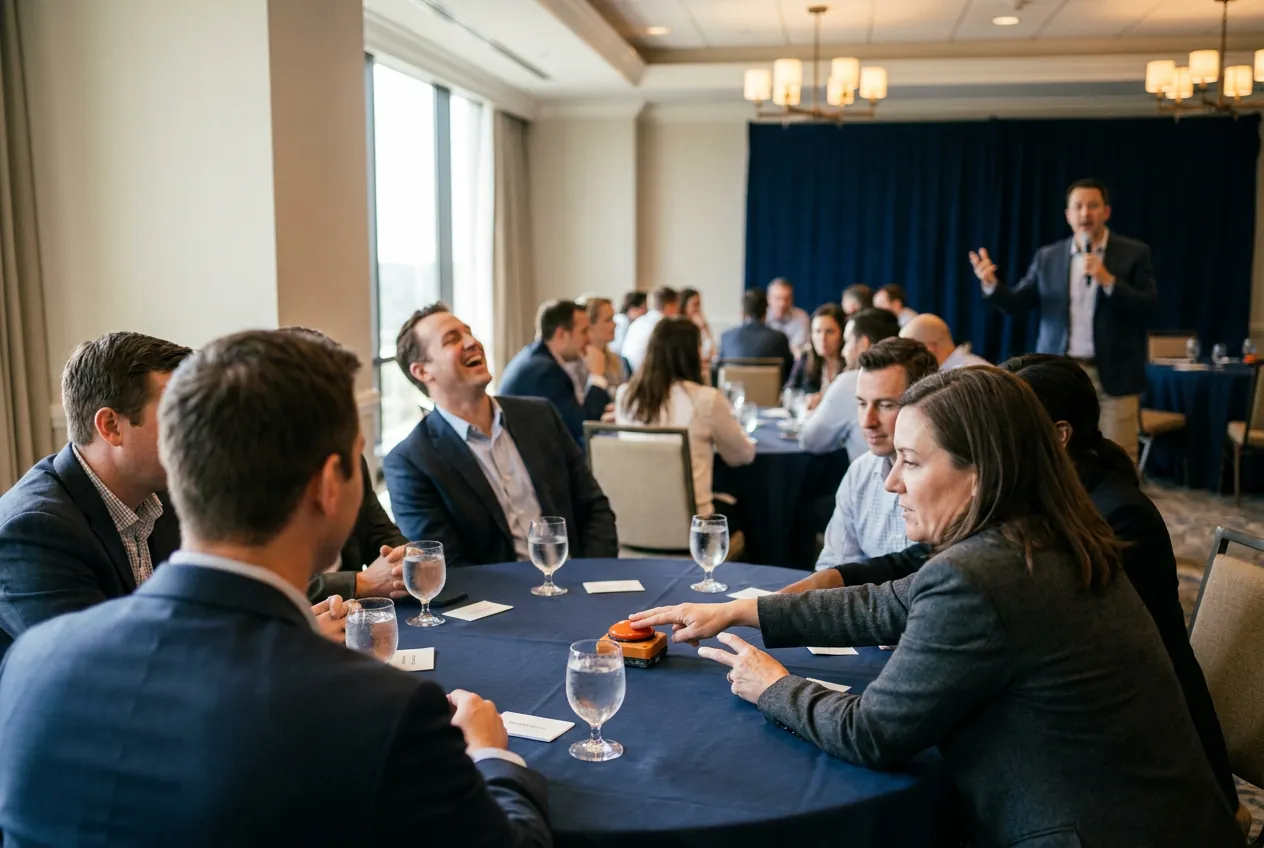
A hosted, professionally facilitated session flips the model. There is no lecture. A professional host runs a live format, and every person plays from the first minute.
The payoff shows up back at work as stronger morale and easier collaboration. People know each other’s names, share a few inside jokes and feel comfortable walking over to a colleague in another department. One session builds connection; it won’t teach a new process.
Organizer prep drops to almost nothing. The session fits a 60- or 90-minute block, and nobody hides in the back while a few voices dominate.
The two formats also pair well: run the workshop for the skill, then a hosted session to close the day with departments mixed.
It’s Playtyme Game Shows: Hosted Team Building for 20 to 300+ People
It’s Playtyme Game Shows gets large groups to participate. Lisa Lawrence founded the company in May 2012 after noticing that at most events, a handful of people take part while everyone else watches.
The game show is the method. Connection is the result. From its base in Teaneck, New Jersey, the team brings the full production to offices, hotels and conference venues across New Jersey, New York City, New York State and Connecticut, for leadership offsites, staff kickoffs, conference sessions and executive retreats.
- Group size: 20 to 300+ people, with custom quotes for the largest groups
- Format: Fully hosted live game show experiences with a professional host, sound engineer, TV-style podiums, buzzers and LED lighting
- Track record: 3,000+ live events since 2012
- Guarantee: 100% Satisfaction Guarantee, with no deposit required to book
- Pricing: Corporate shows starting at $2,995
Match the Format to What Needs to Change by Monday
Start with the problem, not the format. If your team needs a new skill, hire a trainer to teach it. If your people work in silos and rarely talk across departments, book a hosted experience.
Then check four things: how much prep time you have, how long you can hold the room, whether everyone will take part and how you will measure the result. Lisa Lawrence puts it simply: “Great events aren’t measured by how many attend; they’re measured by how many participate.”
Ready to get your whole group playing? Explore our corporate team-building experiences, and work through the corporate event planner checklist before you take the plan to your budget approver. Tell us your date, room size and goal, and we’ll send a custom production plan within two business days.
Solve the participation problem
Ready to get the whole room in the game?
Frequently Asked Questions (FAQs)
What is the difference between a team building workshop and a team building activity?
A workshop is trainer-led and teaches a specific skill, such as new software, compliance or conflict resolution. A hosted team building activity builds connection: a professional host runs a live format where the whole group plays in teams. Choose the workshop for skills and the hosted session when people need to know each other better.
Which works better for a large group: a workshop or a hosted session?
A trainer-led workshop works best in small groups or breakouts, where the trainer can watch each person practice and give feedback. A hosted session keeps 20 to 300+ people in one room, playing in teams on audience-response keypads or cellphones, so nobody waits on the sidelines. Groups above 300 get a custom quote.
How long does a hosted session take?
Shows run 60 or 90 minutes. That gives the room enough time to warm up and compete, and it fits a conference agenda or an afternoon offsite block.
How do you measure the return on a team building event?
Set the measure before you book. Track whether people reach out across departments afterward, whether new hires know colleagues outside their own team, or how staff answer a short pulse survey a week later. Agreeing on those signals with your budget approver up front makes the result easy to report.
Where does It’s Playtyme Game Shows host team building events?
The company is based in Teaneck, New Jersey, and hosts events across New Jersey, New York City, New York State and Connecticut. The host, sound engineer and full game-show set come to your office, hotel or conference venue, and travel is quoted separately from the base price.