Employee engagement sits at just 20% globally according to Gallup’s 2026 State of the Global Workplace report. Meanwhile, Google’s two-year Project Aristotle study found that psychological safety is the single strongest predictor of high-performing teams. The gap between disengaged coworkers and a connected, trusting team often comes down to something deceptively simple: asking the right questions in the right format.
Fun team building questions for work sound easy enough. Type the phrase into a search engine and you get dozens of generic icebreaker lists. But reading questions off a screen while your team stares at a conference table is a recipe for awkward silence, not connection. The real problem is delivery. Questions need a framework that creates energy, friendly competition, and actual participation from everyone in the room (not just the three extroverts).
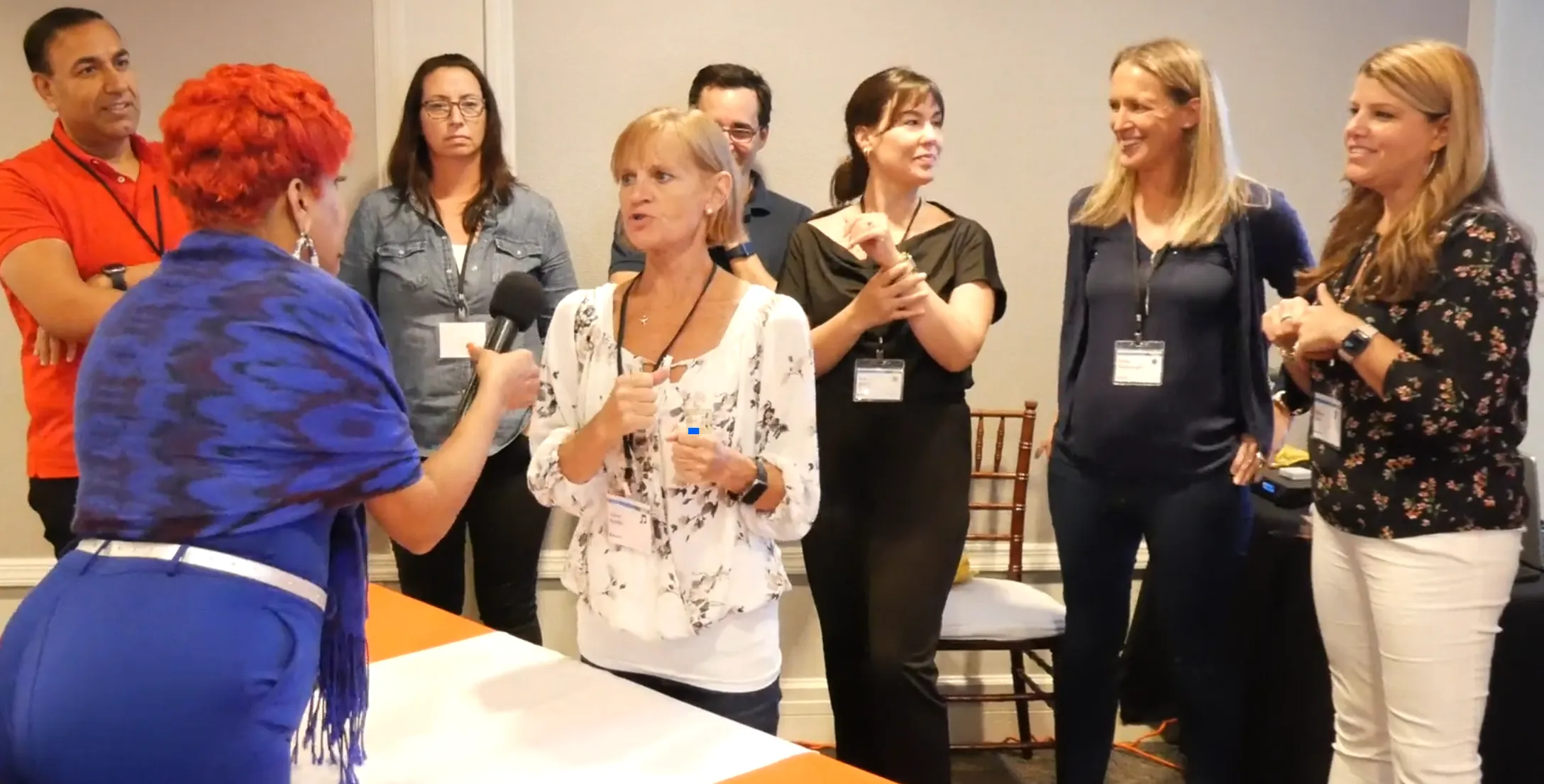
That framework is a live game show. When you wrap team building questions inside a Family Feud survey reveal, a Jeopardy!-style buzzer round, or a Price Is Right bidding war, even the quietest team members lean in. The structure gives people permission to be silly, to shout answers, and to bond over shared laughter. It’s PlayTyme Game Shows has built an entire business around this idea, hosting interactive game show experiences for corporate teams across New Jersey, New York City, and Connecticut.
Why Generic Icebreaker Lists Create Dead Air
Most team building question lists share the same problems. Recognizing these challenges explains why a game show format works better.
- No structure means no momentum. Reading questions from a printout creates dead air. There is no scoring, no timer, and no reason for anyone to pay attention after answering their own question.
- Introverts check out immediately. Open-floor icebreakers favor loud personalities. Quiet team members sit back and let others dominate, which defeats the purpose entirely.
- Questions feel forced without a game mechanic. “What’s your spirit animal?” is tolerable inside a buzzer round with team scoring. Asked cold in a meeting room, it just feels odd.
- No shared experience to reference later. A list of questions produces individual answers. A game show round produces a collective memory: the moment accounting swept the lightning round, or the boss guessed wildly wrong on the survey question.
The fix is straightforward. Take great questions and put them inside a game show format with a host, team scoring, sound effects, and a reason to cheer. Below are 50+ questions organized by game show round so you (or a professional host) can run them immediately.
Family Feud Style: “Survey Says” Team Building Questions
Family Feud rounds work because the answers come from surveys, not trivia knowledge. Teams guess what the most popular responses were. This levels the playing field: book smarts do not help here, intuition and humor do.
How to Run It
Split the room into two teams. Read the survey prompt. Each team takes turns guessing the top answers on the board. Award points based on answer ranking (top answer = most points). Three strikes and the other team steals.
The Questions
- Name something people pretend to enjoy at work but secretly dread.
- Name a snack that disappears fastest from the office kitchen.
- Name something coworkers do that makes Monday mornings bearable.
- Name a TV show everyone in the office has watched.
- Name a reason someone gives for being late to a meeting.
- Name something people do during a long video call when their camera is off.
- Name a workplace phrase that means the opposite of what it says.
- Name something you would find in every boss’s office.
- Name the first thing people check when they arrive at work.
- Name a song everyone knows the words to at karaoke.
Jeopardy!-Style Buzzer Round: Pop Culture Trivia
Jeopardy! rounds reward quick recall and teamwork. Teams huddle, pick a category, choose a point value, and buzz in with the answer. The category board creates strategy: do you go for the high-value questions early or build confidence with easier ones?
The Questions
- Movies (100): This 1994 film features a character who runs across the country multiple times. (Forrest Gump)
- Movies (200): The fictional company Dunder Mifflin sells this product. (Paper)
- Music (100): This artist’s “Eras Tour” became the highest-grossing concert tour of all time. (Taylor Swift)
- Music (200): “Bohemian Rhapsody” was performed by this British rock band. (Queen)
- Food (100): This Italian dish literally translates to “pick me up” in English. (Tiramisu)
- Food (200): The Scoville scale measures the heat level of these. (Chili peppers)
- Sports (100): This soccer star moved from Inter Miami to international fame, known simply by one name. (Messi)
- Sports (200): The Super Bowl trophy is named after this legendary coach. (Vince Lombardi)
- Tech (100): This company introduced the iPhone in 2007. (Apple)
- Tech (200): “GPT” in ChatGPT stands for this three-word phrase. (Generative Pre-trained Transformer)
Price Is Right Format: Workplace Estimation Questions
Price Is Right rounds are pure fun. Teams guess a number (a cost, a statistic, a measurement) and the closest answer without going over wins. This format generates big reactions because wrong guesses are often hilarious.
How to Run It
Display the question on screen. Each team writes their guess on a whiteboard or holds up a card. Reveal the real answer. Closest without going over scores the point.
The Questions
- How many emails does the average office worker receive per day? (121)
- How many hours per year does the average American spend commuting? (Approximately 240)
- How many cups of coffee does the average American drink per year? (Approximately 400)
- What percentage of meetings are considered unproductive by attendees? (Approximately 67%)
- How many steps does the average office worker take per day? (Approximately 4,000)
- What is the average cost of a Super Bowl commercial (30 seconds) in 2025? (Approximately $8 million)
- How many hours per week does the average person spend on their phone? (Approximately 4 hours per day, 28 per week)
- How many different species of pizza toppings exist worldwide? (Over 200 documented varieties)
“This or That” Lightning Round Questions
Lightning rounds keep the energy high. Teams or individuals choose between two options as fast as possible. There is no wrong answer, which makes this format perfect for learning about coworkers without any pressure. A good host turns each choice into a 10-second debate.
The Questions
- Morning person or night owl?
- Email or Slack message?
- Work from home or work from office?
- Coffee or tea?
- Window seat or aisle seat?
- Zoom backgrounds: real or virtual?
- Lunch at your desk or lunch away from your desk?
- Reply-all or direct message?
- Spreadsheets or slide decks?
- Early to the meeting or right on time?
- Casual Friday or dress code every day?
- Planner or go with the flow?
Audience Poll Round: “Who in This Room” Questions
This round borrows from the “Ask the Audience” mechanic. The host reads a prompt and the entire room votes (by raising hands, standing up, or using audience response pads). Results appear in real time on screen. It is a fast way to surface fun facts about the group and get 100% participation.
The Questions
- Who has worked here the longest?
- Who is most likely to survive on a desert island?
- Who has the most unusual hidden talent?
- Who would be the best contestant on a cooking show?
- Who is most likely to become a CEO?
- Who has traveled to the most countries?
- Who would win in a dance-off?
- Who sends the most GIFs in the team chat?
- Who is most likely to accidentally reply-all to the entire company?
- Who would host the best dinner party?
Rapid-Fire Trivia: General Knowledge for Teams
Classic trivia works when it moves fast. These questions span topics so every team member contributes something. The key is speed: 15 seconds per question, buzzer system, no deliberating. First correct answer gets the points.
The Questions
- What planet is known as the Red Planet? (Mars)
- How many continents are there? (Seven)
- What year did the Titanic sink? (1912)
- What is the smallest country in the world by land area? (Vatican City)
- In what city were the 2024 Summer Olympics held? (Paris)
- What element does “O” represent on the periodic table? (Oxygen)
- Who painted the Mona Lisa? (Leonardo da Vinci)
- What is the currency of Japan? (Yen)
- How many strings does a standard guitar have? (Six)
- What animal is featured on the Porsche logo? (A horse)
| Game Show Format | Best For | Group Size | Energy Level | Prep Needed |
|---|---|---|---|---|
| Family Feud (Survey Says) | Breaking the ice, new teams | 20-300+ | High | Survey data |
| Jeopardy! Buzzer Round | Competitive teams, trivia fans | 10-100 | Medium-High | Category board |
| Price Is Right Estimation | Mixed departments, all-hands | 20-300+ | High | Answer research |
| This or That Lightning | Quick warmups, large crowds | Any size | Medium | Minimal |
| Audience Poll | Getting everyone involved | 20-300+ | Medium | Voting system |
| Rapid-Fire Trivia | High-energy closers | 10-100 | Very High | Buzzer system |
How to Turn These Questions Into an Actual Event
Having 50+ great questions is only half the equation. The difference between a flat icebreaker session and an event people talk about for months comes down to execution. Here is what matters.
Get a Dedicated Host
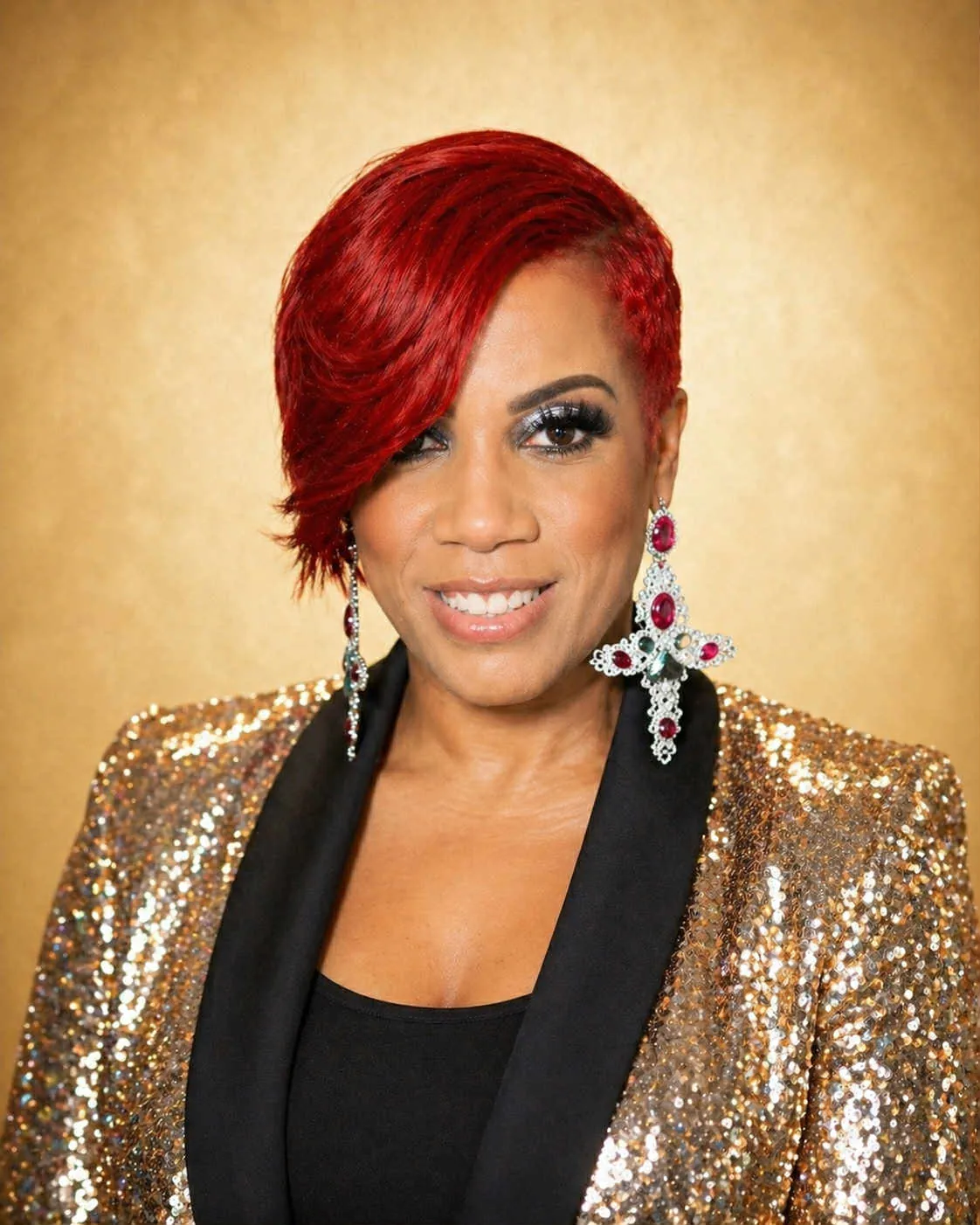
A strong host controls pacing, reads the room, riffs on funny answers, and keeps energy high between rounds. Asking a manager to host their own team building event puts them in an awkward position and removes them from participating. Professional hosts from companies like It’s PlayTyme bring wireless buzzers, scoring displays, sound effects, and stage presence that transforms a conference room into a studio set.
Mix Your Formats
Do not run 60 minutes of straight trivia. Alternate between a Family Feud round, a This or That lightning break, a Price Is Right estimation round, and a final Jeopardy! showdown. Variety sustains attention and gives different personality types their moment to shine.
Keep Score Visibly
Projected scoreboards create stakes. When teams see they are two points behind going into the final round, the energy in the room shifts. Scoring turns questions into a shared narrative with a beginning, middle, and climax.
Customize Questions to Your Team
Generic trivia is fine. Questions about your specific company, inside jokes, or industry are better. A professional game show host will work with you beforehand to weave in custom rounds that reference your team’s real experiences.
Why the Game Show Format Outperforms Other Team Building Approaches
Escape rooms work for small groups but exclude anyone with mobility concerns or claustrophobia. Outdoor activities depend on weather and athletic ability. Happy hours leave out non-drinkers. Cooking classes require a specialized venue. Game shows scale from 20 to 300+ people, run indoors in any conference space, require zero athletic ability, and keep every single person involved through team-based play and audience participation rounds.
The format also produces measurable results. Teams that laugh together build the psychological safety that Google’s research identified as the foundation of performance. A 90-minute game show creates dozens of micro-moments where coworkers encourage each other, celebrate together, and learn unexpected things about the people they work with every day. That is not a generic trust fall. That is real connection built through shared experience.
It’s PlayTyme Game Shows specializes in exactly this format. Their professional hosts bring full production setups (LED screens, wireless buzzers, professional sound) to your venue anywhere in the NJ, NYC, and CT area. Every event is customized with company-specific questions mixed into the rounds described above. The result is an event that feels like a TV production, not a corporate obligation.
How to Narrow Game Show Formats Down to One
Start with your group size. Teams under 30 people thrive in buzzer-based formats like Jeopardy! where every person gets turns. Groups over 100 do better with audience poll rounds and Family Feud style play where entire sections of the room compete as a unit. Mixed groups with remote and in-person employees benefit from formats that use digital polling so virtual attendees participate equally.
Next, consider the goal. If your team is newly formed and people barely know each other, lead with This or That and Audience Poll rounds that reveal personal preferences without putting anyone on the spot. If your team has been together for years and wants high-energy competition, go heavy on trivia and estimation rounds where deep knowledge pays off.
Finally, decide whether to DIY or hire a pro. Running your own game show works for small, casual teams if you have the right personality leading it. For groups over 20, company-wide events, or any situation where you want guaranteed engagement, a professional host and production setup is the difference between “that was fine” and “when are we doing that again?” Reach out to It’s PlayTyme to discuss which format fits your team and get a custom question list built around your company’s culture. Check out their office trivia games page for a closer look at how these rounds come together in a live event.
Frequently Asked Questions (FAQs)
How many team building questions do I need for a one-hour event?
Plan for 40 to 60 questions across multiple rounds. A professional host typically uses 8 to 12 questions per round and runs 4 to 5 rounds in an hour, with scoring breaks and team huddles in between. Having extra questions ready lets the host adjust pacing based on the room’s energy.
Do game show team building activities work for remote or hybrid teams?
Yes. Virtual game shows use digital buzzer apps, screen-shared scoreboards, and video conferencing breakout rooms to replicate the in-person energy. The This or That and Audience Poll formats translate especially well to remote settings because they rely on quick individual responses rather than physical buzzers.
What group size is best for game show style team building?
Game shows scale from 20 to 300+ participants. Small groups (10 to 30) work well with individual buzzer rounds. Larger groups (20 to 300+) use team-based play where tables or sections compete as units. This scalability is one of the biggest advantages over activities like escape rooms or cooking classes that cap at small numbers.
How do I keep team building questions appropriate for the workplace?
Stick to pop culture, general knowledge, workplace humor, and personal preferences. Avoid questions about politics, religion, salary, relationships, or anything that requires sharing personal information someone might not be comfortable disclosing. A professional host screens all questions beforehand and reads the room in real time to skip anything that feels off.
What makes a hosted game show better than running trivia yourself?
A professional host brings three things you cannot replicate with a DIY setup: production equipment (buzzers, LED displays, sound effects), performance skills (comedic timing, crowd management, energy control), and the ability for every team member, including the organizer, to participate as a player rather than a facilitator. The organizer gets to enjoy the event alongside their team instead of running it.