
Managers shape the employee experience more than any other single factor in an organization. According to Gallup research, managers account for at least 70% of the variance in employee engagement scores across business units. That statistic puts enormous responsibility on leaders who plan team activities: the questions you ask before, during, and after a team building event determine whether the experience produces lasting change or fades by Monday morning.
The data reinforces why this matters financially. Gallup’s meta-analysis of over 2,600 business units found that highly engaged teams show 21% greater profitability compared to disengaged ones. Team building is not a perk or a checkbox. It is a strategic investment, and the return depends on how intentionally you approach it.
Yet most managers schedule a team building event, show up, participate, and move on without asking a single targeted question. They miss the chance to uncover communication gaps, identify isolated team members, and understand what actually motivates their people. The result: money spent, time consumed, and no meaningful insight gained. If you want team building to drive real improvements in collaboration, trust, and performance, you need a structured question framework that spans the full lifecycle of the event.
Why the Right Team Building Questions to Ask Employees Actually Matter
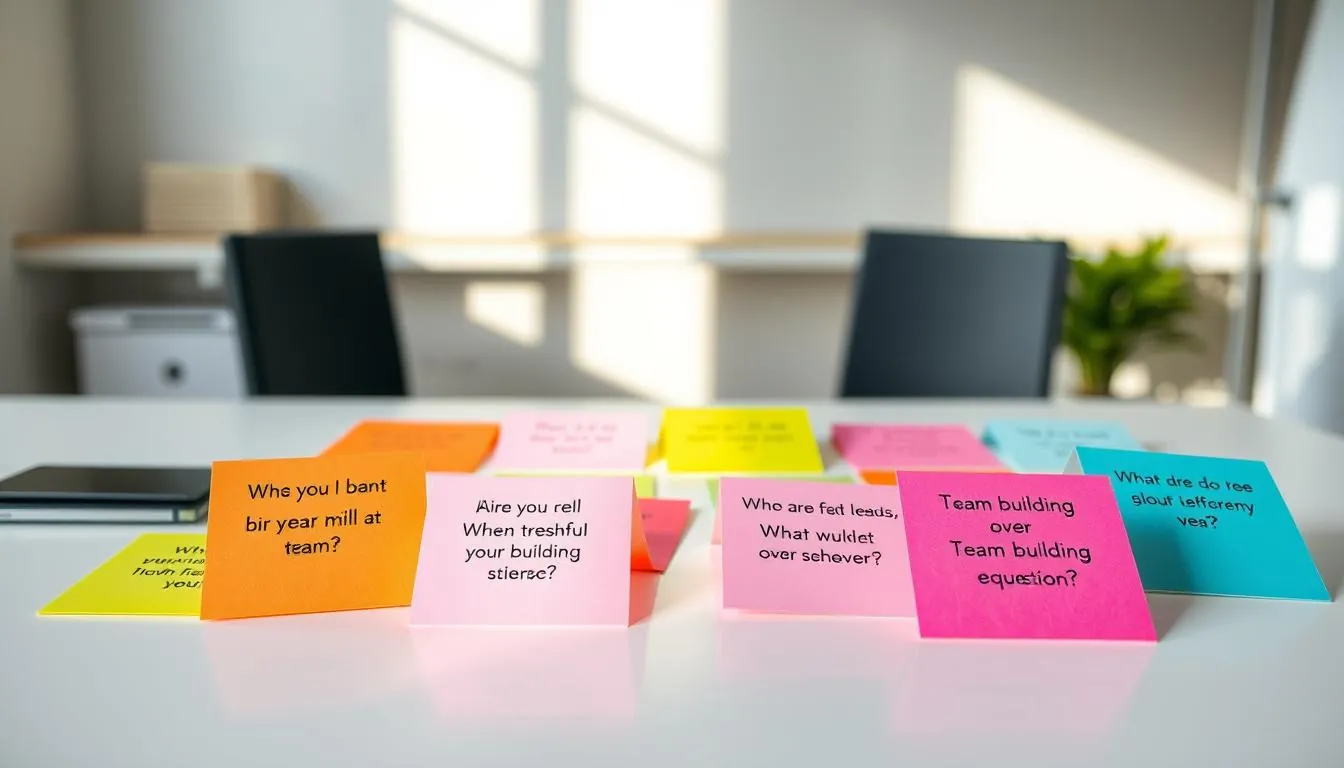
Asking the right questions transforms a team building event from entertainment into a diagnostic tool. When managers ask targeted questions before an activity, they surface hidden dynamics: who feels left out, what collaboration barriers exist, and which team relationships need attention. These insights allow you to select activities that address real issues rather than generic icebreakers that ignore the team’s actual state.
During the activity, observation questions help you see your team in a low-stakes environment where authentic behavior emerges. After the event, reflection questions capture what shifted and what needs follow-up. Without this three-phase approach, team building becomes reactive instead of strategic.
It’s PlayTyme Game Shows builds its corporate programs around this exact principle: structured engagement that gives managers observable, actionable moments with their teams across New Jersey, New York City, and Connecticut.
Questions to Ask Before a Team Building Event
The pre-event phase is where most managers leave value on the table. These questions help you design the right experience and set expectations with your team.
Questions About Team Dynamics
- “Which colleagues do you rarely interact with, and what gets in the way?”
- “Where do you see communication breaking down on our team?”
- “What does a productive working relationship look like to you?”
- “Do you feel comfortable sharing ideas in group settings? What would make it easier?”
Questions About Preferences and Comfort
- “What types of group activities energize you, and which ones drain you?”
- “Is there anything that would make you uncomfortable during a team activity?”
- “Do you prefer competitive or collaborative formats?”
These questions accomplish two things. First, they give you data to select the right activity format. Second, they signal to employees that their input shapes the experience, which increases buy-in before the event even starts.
Questions to Ask During a Team Building Activity
During the event itself, your role shifts from facilitator to observer. The questions you hold in mind while watching your team interact are just as important as anything you ask directly.
Observation Questions for Managers
- Who steps into leadership roles naturally, and who holds back?
- Which team members gravitate toward each other, and who stays on the periphery?
- How does the group handle disagreement or competing ideas?
- Who asks clarifying questions, and who charges ahead without checking understanding?
In-the-Moment Questions to Ask the Team
- “What strategy is working for your group right now?”
- “How did you decide on that approach?”
- “What would you do differently if you started over?”
Game show formats are particularly effective here because they create natural pressure, decision points, and moments of collaboration that reveal authentic team behavior. The competitive structure gives managers clear windows to observe dynamics that stay hidden in day-to-day work.
Questions to Ask After a Team Building Event
The post-event debrief is where the real value gets captured or lost. Most managers skip this step entirely. A short, structured follow-up within 48 hours locks in insights while the experience is fresh.
Reflection Questions
- “What surprised you about how our team worked together?”
- “Did you connect with anyone you don’t normally work with? What did you learn about them?”
- “What moment during the activity felt most like how our team operates at work?”
- “What one thing from today would you want to carry into our daily workflow?”
Forward-Looking Questions
- “What is one collaboration habit we should start based on today’s experience?”
- “How frequently should we do activities like this?”
- “Is there a specific team challenge you think our next event should address?”
Document the answers. Share a summary with the team. Reference it in your next one-on-one meetings. This closes the loop and shows employees their feedback drives real decisions.
Why Employees Give Surface-Level Answers to Team Questions
Even well-intentioned managers run into obstacles when trying to gather honest feedback from their teams around team building activities.
Employees give surface-level answers. When people sense their responses are being evaluated, they default to safe, generic replies. Combat this by asking specific, scenario-based questions instead of broad ones. “What frustrated you about our last group project?” produces better data than “How do you feel about teamwork?”
The manager-employee power dynamic filters honesty. Some employees will not share real concerns directly with their boss. Anonymous pre-event surveys and peer-facilitated debriefs reduce this barrier. Consider having a neutral facilitator run the post-event reflection.
No follow-through erodes trust. If you ask great questions but never act on the answers, your team stops engaging honestly. The fastest way to kill participation is to collect feedback and let it disappear. Commit to at least one visible change after every event.
Choosing the wrong activity undermines the process. When the event format does not match the team’s needs or comfort level, even the best questions produce shallow insights. This is where working with an experienced team building partner makes a measurable difference: they match formats to your goals and create environments where real behavior surfaces.
How to Turn Employee Answers into Action
Collecting team building questions to ask employees is only the first step. The competitive advantage comes from what you do with the answers. Here is a practical framework:
- Categorize responses into themes: communication, trust, role clarity, inclusion, or motivation. Look for patterns across multiple employees rather than reacting to individual outliers.
- Identify one priority per quarter. Trying to address every piece of feedback simultaneously dilutes impact. Pick the theme that appears most frequently and design your next team building event around it.
- Share what you heard. Present anonymized, aggregated findings back to the team. This transparency builds trust and shows that answering honestly produces results.
- Measure progress. Repeat selected questions after 90 days to see if the needle moved. This creates a feedback loop that makes each subsequent event more targeted.
When you treat team building as an ongoing diagnostic process rather than an isolated event, the questions become a management tool with compounding returns.
What to Look for in a Team Building Partner
| Factor | What Strong Partners Offer | Red Flags |
|---|---|---|
| Customization | Activities tailored to your team’s specific goals and dynamics | One-size-fits-all packages with no pre-event consultation |
| Facilitation | Professional hosts who manage energy, participation, and pacing | Self-run kits with no live support |
| Observation Support | Structured moments for managers to observe team behavior | Pure entertainment with no debrief component |
| Format Range | Multiple formats (game shows, trivia, collaborative challenges) to match different objectives | Only one activity type regardless of team needs |
| Logistics | On-site setup, AV, and coordination handled for you | Manager expected to handle production and facilitation simultaneously |
It’s PlayTyme Game Shows checks every column in the “strong partners” list. Their corporate game show programs are built for teams ranging from 20 to 300+ participants, with professional hosts who keep energy high while giving managers space to observe and engage.
What to Consider When Selecting Questions for Your Team
Not every question fits every team. The right set depends on your team’s maturity, size, and current state. A newly formed team benefits from questions about preferences, working styles, and comfort levels. An established team that has grown stale needs questions that challenge assumptions and surface unspoken friction.
Start with these filters:
- Team tenure: new teams need discovery questions; veteran teams need disruption questions.
- Recent changes: if you have had turnover, restructuring, or a difficult project, focus questions on trust and psychological safety.
- Event format: competitive formats (game shows, trivia) naturally generate conversation about strategy and decision-making. Collaborative formats surface communication and inclusion dynamics.
- Your blind spots: ask questions about areas where you suspect issues but lack data. The team building event creates a safe context for honest answers.
The best team building questions to ask employees are the ones you are prepared to act on. Choose fewer questions, listen carefully, and follow through visibly.
Ready to plan a team building event that gives you real insight into your team? Contact It’s PlayTyme Game Shows to discuss your goals and find the right format for your group. Their team works with managers across New Jersey, NYC, and Connecticut to design team building activities that deliver both engagement and actionable feedback.
Frequently Asked Questions (FAQs)
What are the best team building questions to ask employees before an event?
Focus on questions that reveal current team dynamics and individual preferences. Ask about communication barriers, collaboration comfort levels, and what types of group activities employees find energizing versus draining. These answers help you select an activity format that addresses real needs rather than guessing.
How do I get honest answers from employees about team building?
Use anonymous surveys for pre-event questions and peer-facilitated debriefs for post-event reflection. Employees give more honest responses when the power dynamic is reduced. Most importantly, act visibly on the feedback you receive so your team sees that honesty produces results.
How soon after a team building event should I ask follow-up questions?
Conduct a structured debrief within 48 hours while the experience is still fresh. Ask reflection questions about surprises, new connections, and moments that mirrored real workplace dynamics. Follow up again at 90 days with the same questions to measure whether the insights translated into lasting behavioral change.
How often should managers plan team building activities?
Quarterly events work well for most teams because they provide enough frequency to build momentum without creating fatigue. Teams going through significant change (mergers, rapid hiring, leadership transitions) benefit from monthly touchpoints. The right cadence depends on your team’s specific needs, which your pre-event questions will reveal.
What type of team building activity gives managers the best observation opportunities?
Competitive, structured formats like game shows and trivia challenges create natural decision points, time pressure, and group strategy discussions. These moments reveal leadership tendencies, communication patterns, and conflict resolution styles that stay hidden during normal work. Professional facilitation frees the manager to observe instead of running the activity.