

Quick answer: Team building for introverts and technical teams works best when everyone plays on a team inside a familiar, professionally hosted format. Teams compete against each other, and teammates agree on shared answers, so participation does not depend on volunteers. For large groups, interactive audience-response keypads or phones put every table in the game.
The host asks for volunteers. The same few confident colleagues step forward, and everyone else settles in to watch. Then come the opening activities that ask for personal stories, a vague agenda that pulls engineers out of focused work, and a loud room where nobody can hear the instructions. That is a design problem. It does not prove your quiet employees are disengaged.
Quiet employees are not a small audience. In The Myers-Briggs Company’s global research sample, about 56.8% of people prefer Introversion, while 43.2% prefer Extraversion. A session that only works for the first people to volunteer was not designed for most of your room. Introverts do not need a bigger spotlight. They need a clear way into the activity.
Google’s re:Work guide to effective teams ranks psychological safety first among five team dynamics, with structure and clarity also on the list. The guide defines psychological safety as a shared belief that the team is safe for interpersonal risk taking. For technical teams, that risk might be offering an answer that turns out wrong in front of a manager. Build your session so that risk feels small.
The Fast Version
- Choose a team competition where everyone contributes. Do not rely on volunteers to carry the room.
- Use a familiar format, clear instructions and a professional host who guides every moment.
- Give people an outside problem to solve, not personal questions to answer.
- Keep the session time-boxed so employees know exactly how long they will be away from focused work.
- Match the answer method to the group: shared team responses, audience-response keypads or phones.
- Mix teams on purpose and explain the experience before people arrive.
- Judge the session by participation across the whole room, not the energy at the podiums.
Why Introverted and Analytical Teams Dread Traditional Team Building
The invitation leaves too much unexplained
A calendar invite that says only “team building” tells employees almost nothing. Will there be personal disclosures, physical challenges, public speaking or strangers on their team? That uncertainty brings back every awkward corporate event they have sat through.
Explain the format before people arrive. Tell them they will compete as teams, a professional host will guide the session, and answers follow a clear process. If the format includes stage participation or physical activity, say so. Specific, honest reassurance works. Vague promises do not.
Opening activities ask people to share personal stories
Many traditional opening activities ask employees to reveal something about themselves: a surprising fact, a childhood memory, a story about the weekend. For introverts and analytical thinkers, that request can feel like a test of personality rather than a chance to connect.
Give the group an outside problem instead: a question, a puzzle or a set of possible answers to weigh. The conversation centers on the task, and colleagues get to know each other while solving it together. That makes a low-pressure, inclusive corporate event far easier to build.
Volunteering becomes the entrance requirement
A volunteer-led opening forces every employee to choose: step forward in public or stay an observer. The organizer then needs enough willing people to build momentum. Colleagues who prefer to contribute through a small group have no role at all.
Employees who collaborate mostly over chat and video calls can freeze when a large offsite opens with unstructured mingling. Team building for introverts builds participation into the structure instead. A shared question gives teammates something concrete to discuss. One person suggests an answer, another checks the reasoning, and the team submits together. Everyone contributes without fighting for the microphone.
The event pulls people out of focused work
Engineers, developers and analysts protect blocks of concentrated time. An open-ended event with no clear agenda feels like lost sprint time, and people arrive already resenting it.
State the start time, the end time and what happens in between. A defined window respects the work people stepped away from and makes it easier to commit fully to the session.
Noise and unclear instructions drain the room
A loud venue with poor sound and rambling instructions wears quieter participants down before the activity even begins. People who cannot hear the rules stop trying to follow them.
Ask every provider how they handle audio and how they explain each round. Skeptical engineering and finance groups tune out hype quickly. Crisp, rule-based play and sound that reaches every table keep them engaged.
Competition becomes a test of confidence
Team competition gives the room a shared goal. Without clear rules, it turns into a contest over who speaks first. The loudest teammate answers instantly, others stop thinking, and the team loses good ideas. The problem is the response process, not competition.
Set expectations for team discussion before play begins. Give every teammate a chance to offer an answer before the team submits, and agree who handles the response device. The professional host keeps the pace and explains each transition. Settle stage participation in advance instead of promising nobody gets called up.
Hosted Formats That Give Everyone a Role
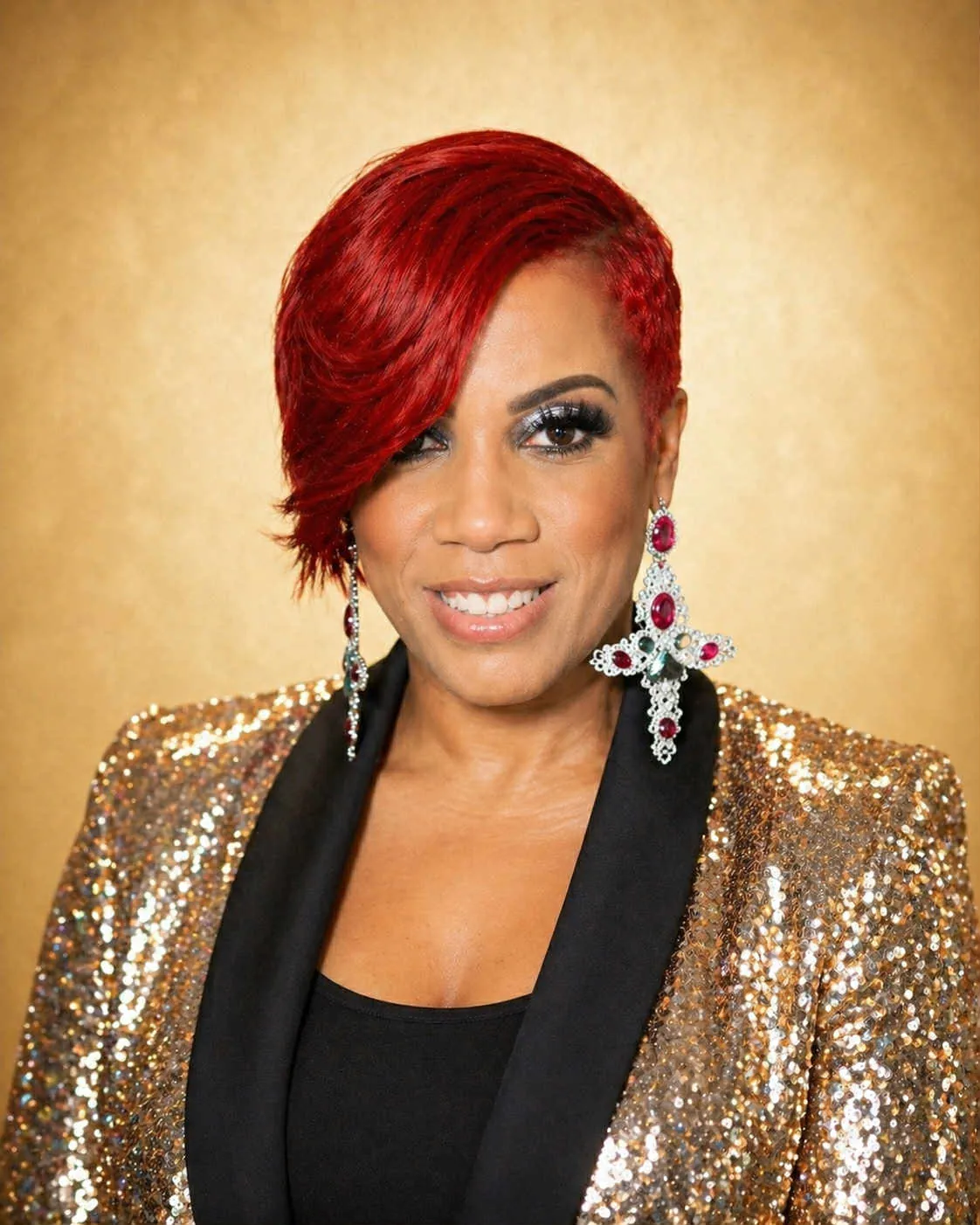
Lisa Lawrence founded It’s Playtyme Game Shows in May 2012 after more than 20 years as a choreographer. At most events, she noticed, a handful of people participate while everyone else spectates. The answer was to build participation into the experience itself.
It’s Playtyme Game Shows uses interactive live game-show experiences as the vehicle for group engagement. Everyone plays as part of a team. The format is already familiar, so there is no learning curve, the pace stays fast, and a professional host guides every moment.
PlayPad Mania: answers in every team’s hands
PlayPad Mania is a tablet and keypad team format. For large groups, interactive audience-response keypads or phones give every team a direct way to submit answers while the host runs the game. It works as a large-group alternative to opening activities that depend on a few volunteers.
Start here when broad participation across the room is the priority. Confirm how teams share devices and submit responses. The answer method should support conversation inside each team, not hand every decision to whoever holds the device.
The Challenge: a shared question board
The Challenge is built on a question board. Teams get a familiar structure for discussing each question and agreeing on an answer. It suits organizers who want a recognizable team competition with a clear focus.
Review the question mix during planning. A mixed department needs several ways to contribute. Do not let the question set become a test of specialist knowledge that only one role has.
Word Play: a common puzzle to solve
Word Play uses word puzzles as the shared task. Teammates get something concrete to examine, discuss and solve together.
Choose it when you want the activity centered on a visible problem, not personal storytelling. Ask how responses work, including any stage participation, so your advance description matches the actual session.
Face-2-Face Feud: compare possible answers
Face-2-Face Feud is a survey-style team format. It gives teammates a reason to weigh different answers and agree on one response.
Competition stays between teams, and the host guides every round. Confirm how the format involves the wider group, not only the players at the front. A familiar format still needs a clear plan for everyone to contribute.
How a Hosted Game Show Compares to Other Team-Building Options
Common team-building formats lean on volunteers stepping up, forced interaction and people “getting into it.” Here is how the usual approaches compare for a room of quiet or technical employees.
| Option | How people participate | Who runs it | Best for |
|---|---|---|---|
| It’s Playtyme Game Shows (hosted game show experience) | Everyone plays on a team and submits shared answers | A professional host, sound engineer and crew | Groups of 20 to 300+ that want everyone contributing |
| Volunteer-led workshop | Whoever chooses to step forward | A facilitator | Small groups already comfortable speaking up |
| DIY activity kit | Whatever the organizer sets up | Your own staff | Organizers with time to plan and run every step |
| Reception, DJ or speaker | Mostly watching or mingling | The venue or performer | Networking time where participation is not the goal |
What Works for Software Engineers, Developers and IT Teams
Engineers, developers, analysts and IT staff are not one personality type. Whether you are planning an IT and engineering offsite or a single department session, plan around your actual colleagues. Do not assume everyone wants technical questions or quiet activities.
A strong session pairs a familiar format with no learning curve, a fast pace and answers given as a team. People understand the task immediately, focus on the shared challenge and keep contributing as play moves forward.
Fast pacing needs a clear response process. Give teams their discussion window, then move promptly to the answer and the next question. Repeated explanations and fumbled transitions break the room’s focus.
For cross-functional groups, do not make specialist expertise the main route to winning. A developer, an analyst and an operations lead should each have a reason to join the discussion. Pick the format for the interaction you want, then work out the content with the host. For more formats built around how tech companies work, see our team building ideas for tech companies.
Set Up Mixed Teams Before People Arrive
The organizer’s most valuable work happens before the session. Team building for introverts works better when employees arrive knowing where they belong and how their team will play.
-
Choose the connection you want
Decide whether the priority is introducing new hires, connecting departments or strengthening an existing team. Let that goal drive team assignments. Random grouping wastes the opportunity.
-
Balance familiar faces with new ones
Mix roles and departments on purpose. Where you can, seat each employee with one familiar colleague alongside people they rarely work with. Never leave a newcomer alone inside an established group.
-
Keep managers from owning every answer
Ask managers to play as teammates and invite discussion before the team submits. Colleagues should feel free to offer a different answer without treating the manager’s pick as final.
-
Make the response method clear
Confirm beforehand who submits each team’s answer and how everyone contributes. When teams share devices, set a simple arrangement. Holding the keypad should not mean controlling the discussion.
Brief the host on your group, your room and your participation goals. Name past problems plainly: volunteers dominated, instructions dragged, or teams barely spoke. Those details beat a request for “something engaging.”
Tell People What Will Happen Beforehand
Your invitation should answer the questions employees are already asking. Name the team competition, explain the answer method, give the start and end times, and say a professional host will guide the session. Include any confirmed stage or physical elements.
For a keypad-based session, adapt this wording once your provider confirms the details:
You will take part in a professionally hosted team competition. We will arrange mixed teams, and your team will discuss questions before submitting answers through keypads or phones. The host will explain the rules and guide each round. Please share any access requirements with the organizer beforehand.
Do not promise that nobody will be singled out or called up. Describe the actual format, and settle participation expectations with the host before the invitation goes out.
If past sessions left employees skeptical, say what is different this time. Explain the team structure and the shared response process. Our guide to why employees hate team building covers the planning choices that create resistance.
Look Beyond the Loudest Table
Participation is the real measure of team building for introverts. During the session, scan the whole room. Are teammates discussing answers, offering suggestions and responding together? Applause alone does not tell you who took part.
Afterward, ask employees what made contributing easy and what got in the way. Ask whether they talked with colleagues outside their usual circle. Keep the feedback about the experience. Do not ask quiet employees to explain their personalities.
A strong session opens the door to connection. Follow through by giving newly introduced colleagues reasons to work together the next week. One session will not fix workplace culture on its own, so treat it as a starting point.
Ask Three Questions Before You Approve a Proposal
Before you sign off on any team-building session for quiet or technical employees, ask three questions. How does everyone participate? How do teams submit answers? What stage involvement does the format include? Those answers tell you more about fit than any promise of high energy.
It’s Playtyme Game Shows serves corporate groups of 20 to 300+ across New Jersey, New York City and Connecticut from its base in Teaneck, New Jersey. Shows run 60 or 90 minutes, and corporate experiences are starting at $2,995. The host, crew, set, audio/visual equipment, setup and breakdown are included.
Explore our game show team building for corporate events, then request a custom quote with your date, room size and participation goal. You get a custom production plan within two business days. No deposit. No upsell.
Solve the participation problem
Ready to get the whole room in the game?
Frequently Asked Questions (FAQs)
What is the best team building for introverts?
The best fit gives employees a clear role on a team, familiar rules and a professional host. Shared team answers and interactive audience-response keypads or phones keep large groups participating. Confirm the actual format instead of assuming any quiet activity suits everyone.
How do you run competitive team building without letting the loudest voices take over?
Keep the competition between teams, not individuals, and set a discussion rule before play begins: every teammate offers an answer before the team submits. Shared response devices, clear rules and a professional host who controls the pace stop the fastest talkers from deciding everything.
Do introverted employees have to go on stage or speak on a microphone during a live game show?
That depends on the format and production plan you choose. Ask the provider exactly how participants are involved, including any stage or microphone moments, then share those details with employees in advance. Do not promise that nobody will be called up.
What are the best team building activities for software engineers and technical teams?
Formats with no learning curve, a fast pace, a fixed time box and answers given as a team. Choose content that lets every role contribute, and give teams an outside problem to solve instead of personal questions. Technical teams do not need a specialist knowledge test.
How should we arrange teams for a large corporate group?
Mix departments and roles to match your connection goals, and give each person at least one familiar colleague where you can. Explain team assignments and the response method before play begins. Ask managers to play as teammates.
How much does a hosted team-building game show cost in New Jersey, New York City or Connecticut, and what is included?
It’s Playtyme Game Shows corporate experiences start at $2,995 for groups of 20 to 300+. Shows run 60 or 90 minutes, and the host, crew, set, audio/visual equipment, setup and breakdown are included. Request a custom quote to receive a production plan within two business days.