Quick answer: Customer service team building works best as a professionally hosted session scheduled around queue coverage, with attendance split across shifts so customers still reach someone. Pick a format that practices listening, clear communication or composure. Then send your shift windows, room size and goal to It’s Playtyme Game Shows for a custom production plan.
The queue is full and the afternoon shift starts in 20 minutes. The same people missed the last team event because someone had to stay on the phones. If you pull everyone offline at once, customers wait. If you leave the late shift out again, they stop believing the invitation was meant for them.
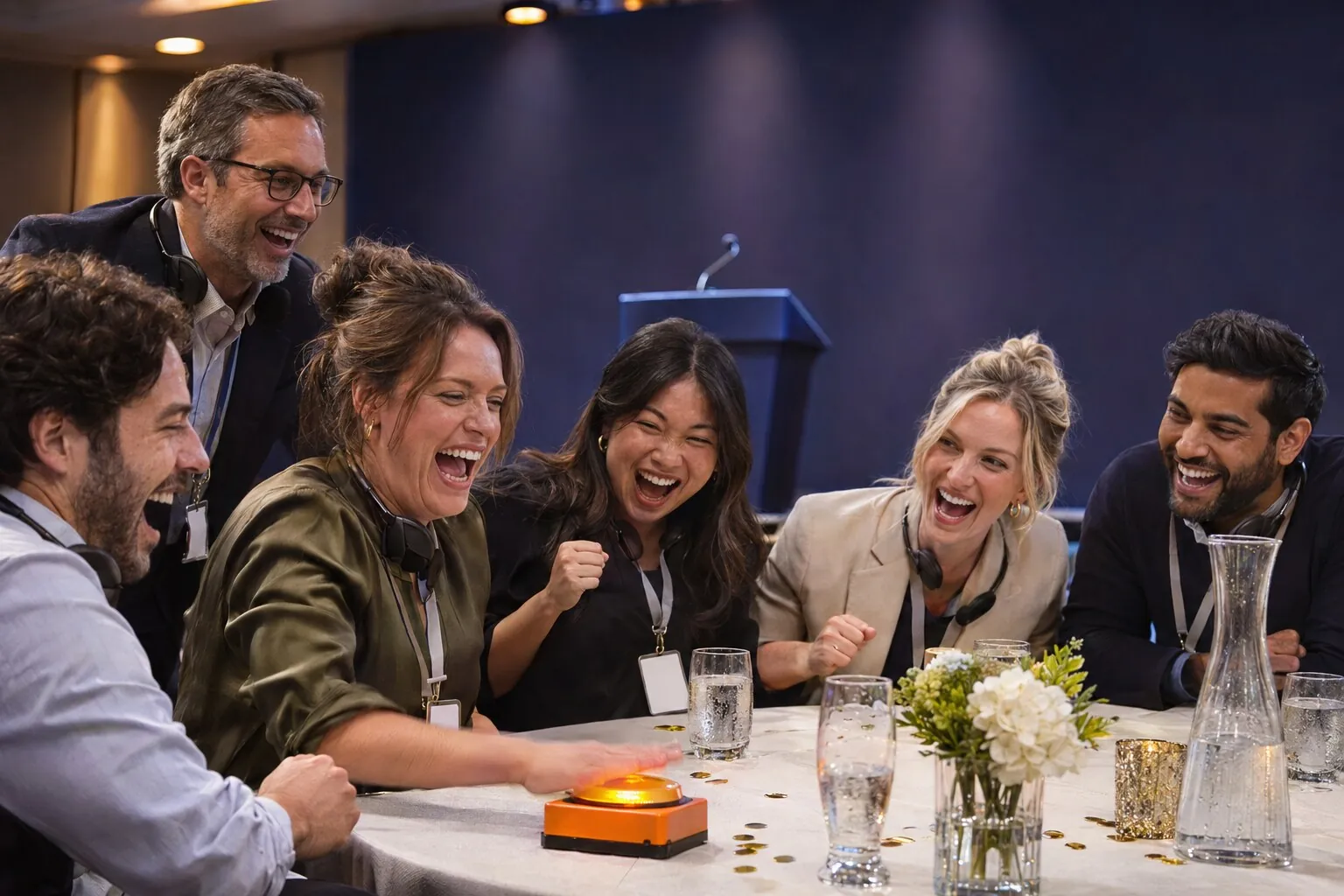
Good customer service team building starts with that problem. The goal is to get the whole department participating, including people who rarely share a shift. A hosted game show gives everyone a reason to listen, contribute and decide together. The host runs the room, and your supervisors keep watching the queue.
It’s Playtyme Game Shows was founded in May 2012 by a choreographer with 20+ years in the field, on one belief: “Great events aren’t measured by how many attend; they’re measured by how many participate.” The team has produced 3,000+ live events for groups of 20 to 300+ across New Jersey, New York City and Connecticut. Groups over 300 get a custom quote.
What Keeps Support Teams Disconnected on the Floor
Before you pick a format, name the specific problem it should address. Support teams drift apart in a few predictable ways, and a session planned around the wrong one feels like another meeting.
- Escalation fatigue: After a shift of frustrated callers, agents have little patience left for a lecture or high-pressure roleplay. A session that asks them to sit and absorb feels like more work.
- Early-tenure turnover: New hires who leave in their first months often never built a peer network on the floor. They knew their trainer and their queue, and few people beyond that.
- Tier silos: Tier 1 reps, Tier 2 specialists, QA analysts and escalation supervisors pass tickets all day but rarely talk. Friction builds in the cross-departmental handoff, where context gets lost.
- Icebreaker skepticism: Tired or introverted reps resist activities that single them out. Formats where people contribute as a team lower that barrier.
- Seasonal surges: Peak periods and Customer Service Week in October often end with pizza in the breakroom while half the team covers the phones. Appreciation that only one shift can attend sends the wrong message.
Each of the seven formats below lines up with one customer experience (CX) skill. None of them replaces product knowledge, de-escalation coaching or service training. They give people practice working together across shifts and tiers. Pick the behavior you want to build, then plan the schedule around coverage. For the full hosted model, see our corporate team building page.
1. Face-2-Face Feud: Listen Before You Answer
Face-2-Face Feud is a survey-style team format built around one shared question. For service teams, it practices active listening: working out what someone means before you jump to an answer. Customers rarely describe a problem in your internal terms.
Ask the host to bring in different voices. Your strongest talkers already know how to jump in. The real win is giving the colleague next to them a clear opening.
- CX skill: Active listening, perspective-taking and reaching agreement.
- Best fit: Departments that want agents, supervisors and support staff trading viewpoints.
- Planning question: How will the host balance team discussion with individual turns?
Afterward, have a manager ask one question: where did an assumption shape your team’s answer? Keep the talk on a shared habit, not on how any one person did.
2. The Challenge: Share Knowledge Clearly
The Challenge puts a question board in front of the room, and teams work through it together. The CX skill here is sharing what you know. One person spots a detail, another explains the reasoning, and the team commits to an answer.
It fits departments where knowledge is scattered across people. New hires know the latest onboarding material, and veterans recognize the cases that keep coming back. A shared task gives both groups a reason to speak up without making either one the permanent expert.
- CX skill: Knowledge-sharing, short explanations and group decisions.
- Best fit: Teams with a mix of tenure and departments with several service specialties.
- Planning question: Do you want general questions, or company-specific content scoped into your quote?
If you want service-related questions, supply approved answers and name one content reviewer. Skip ambiguous policy questions. Nobody should have to settle conflicting guidance in front of their peers.
3. Word Play: Make Meaning Clear
Word Play is a hosted word-puzzle format. It suits teams whose goal is careful attention and clear communication. Players work with what is actually on the board, not what they assume everyone else sees.
Tie it to the words your team uses every day. Internal abbreviations, rushed explanations and unfamiliar terms make customers work harder. A word-focused session opens a practical conversation about plain language.
- CX skill: Careful wording, shared interpretation and clear explanations.
- Best fit: Teams handling email, chat, written case notes or frequent handoffs.
- Planning question: What language and accessibility needs should shape the host’s approach?
Keep the follow-up simple. Ask each person to name one phrase customers often misunderstand, then agree on a clearer version. That conversation is where the session pays off at the desk.
4. 60 Seconds of Fame: Coordinate Under Pressure
60 Seconds of Fame is built on rapid physical challenges. The CX skill is coordination against the clock: reading the task, giving short directions and backing up a teammate. It also gets a department that sits all day up and moving.
Pick it when your team needs action and visible encouragement. Before the challenges are set, review mobility, comfort, room layout and participation options with the producer. Agree up front on how everyone stays involved, including people who would rather not compete physically.
- CX skill: Composure, clear directions and backing each other up.
- Best fit: Teams focused on coordination and visible encouragement.
- Planning question: Which challenges and participation options fit your people?
Talk afterward about behavior, not speed. Did people give clear guidance? Did the encouragement help? The same questions apply when you back up a colleague on a hard call or a sudden queue spike.
5. PlayPad Mania: Make Room for More Voices
PlayPad Mania is a tablet and keypad team format. Every player answers, not just the people who volunteer first, so quieter reps contribute without being put on the spot. For large groups, It’s Playtyme Game Shows brings audience-response keypads or uses cellphones, so the whole department plays at once.
It works well when several service teams attend together. Agents on different queues often know a supervisor’s name before they know each other. Answering together gives them something concrete to talk about from the first minute.
- CX skill: Inclusive discussion, shared decisions and communication across teams.
- Best fit: Departments bringing together separate shifts, queues or service functions.
- Planning question: What room arrangement and device setup does the production need?
Decide on the team mix before people arrive. Mixing functions starts new conversations. Keeping existing teams together shows you how familiar colleagues coordinate.
6. Name That Hit Song: Connect Across Roles
Name That Hit Song is a music-based team format. On service teams, its strength is building relationships across roles. People who usually talk only about escalations and schedules get something else to start a conversation with.
Choose it when your department already spends plenty of time on procedures and CX team morale needs room for personal connection. Tell the host about the range of ages and backgrounds in your group. Ask for a music mix that includes everyone, not one narrow era.
- CX skill: Relationship-building, attentive listening and welcoming different contributions.
- Best fit: Teams meeting across shifts or reconnecting after staffing changes.
- Planning question: How will the music selection reflect the people attending?
Be honest about the business goal. Recognizing a song says nothing about service skill. The value is that colleagues learn about each other and go back to their desks with an easy way to start the next conversation.
7. A Custom Game Show: Build Around Your Service Goal
A custom game show puts your specific objective at the center of the plan. A custom game show is quoted separately, so scope the content, format and review process before you book.
Start with one concrete goal, such as cleaner escalation handoffs, the Tier 1 and Tier 2 collaboration behind first-contact resolution (FCR), or stronger ties between frontline agents and support teams. Supply approved terminology and fictional scenarios. Leave out customer identifiers, confidential cases and anything that singles out an employee.
- CX skill: The communication or collaboration behavior you choose in your brief.
- Best fit: Departments with a defined internal message or service initiative.
- Planning question: Who approves the content, and what does the customization scope include?
A focused brief beats a long list of policies. The host owns participation. Your service leaders own procedures, policy questions and follow-through after the session.
Why Contact Center Teams Struggle to Step Away From the Queue, and How Split Sessions Fix It
Most support teams can’t leave the queue together, so settle coverage before you pick a format. Shows run 60 or 90 minutes, so build multi-shift attendance around those lengths and confirm the number of sessions with the producer. For more ways to get every shift in the room, see how to boost team building participation in our participation guide.
Solve coverage problems in this order before anyone gets an invitation:
- Start with real coverage. Name the people who stay on phones, chat, email and escalations during each session. Use your actual staffing requirements. Plans built on hoped-for quiet periods force supervisors to choose between service levels and participation.
- Protect a slot for every shift. Map comparable attendance windows for early, late and overnight teams. Confirm the session count with the producer. Repeating an invitation is not equal access if one shift always carries the heaviest workload.
- Plan the handoff between groups. Build in walking time, workstation sign-in, active-case transfers and any room reset. Release the next group only after the returning group is back online. A calendar that counts only show length creates pressure between sessions.
- Assign operational calls. Name the supervisor who releases people from the queue and the person who announces schedule changes. The host runs the experience. Your operations lead runs staffing, so employees get clear instructions when demand shifts.
Send the producer your date, room size, group size and goal, plus shift windows and any access restrictions. You get a custom production plan within two business days.
Every corporate production includes a professional host, crew, game-show set, screens, audio/visual equipment and a sound engineer. Setup, breakdown, delivery and travel within NJ, NYC and CT are included. Only travel outside that area, extensive customization, lodging, multiple event spaces, specialized equipment or extra staffing may add cost.
Corporate pricing is starting at $2,995. Get the scope for repeat sessions confirmed in writing. No deposit is required to book, and every booking comes with a 100% Satisfaction Guarantee.
Which Format Should Your Customer Support or CX Team Book First?
Start with the behavior you want your team to practice, then match it to the format below.
| It’s Playtyme Game Shows format | CX skill it practices | Best fit |
|---|---|---|
| Face-2-Face Feud | Active listening and shared judgment | Agents, supervisors and support staff trading viewpoints |
| The Challenge | Knowledge-sharing and group decisions | Teams with a mix of tenure and specialties |
| Word Play | Clear wording and shared interpretation | Email, chat and case-note teams |
| 60 Seconds of Fame | Coordination and composure under time pressure | Teams that need action and visible encouragement |
| PlayPad Mania | Every voice answering at once | Multiple shifts or queues in one room |
| Name That Hit Song | Relationships across roles | Teams reconnecting after staffing changes |
| Custom game show | The behavior named in your brief | A defined internal service initiative |
If escalation handoffs and misread customer requests are the problem, book Face-2-Face Feud or The Challenge first. If the problem is written language, coordination or quiet reps, go with Word Play, 60 Seconds of Fame or PlayPad Mania. Pick Name That Hit Song when tier silos and staffing changes have cut people off from each other, and a custom game show when one internal objective has to lead.
Send your shift windows, group size, location and service goal to get a custom quote. You get a format recommendation and a schedule that keeps the queue covered before anyone confirms attendance.
Solve the participation problem
Ready to get the whole room in the game?
Frequently Asked Questions (FAQs)
How do we schedule customer service team building without leaving the queue uncovered?
Split attendance into groups based on your staffing requirements, and confirm repeat sessions in the production plan. Shows run 60 or 90 minutes. When you work out each group’s time away, add workstation handoffs and the walk to the room.
How do live hosted game shows engage introverted or burned-out customer service reps without putting them on the spot?
The formats are team-based, so people contribute as part of a group instead of performing alone. In PlayPad Mania, every player answers at once on keypads or cellphones. Tell the host about participation preferences in advance, and agree on options for anyone who would rather not compete physically.
How does pricing work if we need back-to-back game show sessions across multiple shifts in NJ, NYC or CT?
Corporate shows start at $2,995. Repeat sessions are scoped in your quote, so get the session count and total confirmed in writing before you approve. Setup, breakdown, delivery and travel within NJ, NYC and CT are included, and no deposit is required to book.
Where can we book an in-person hosted game show for Customer Service Week in New Jersey, NYC or Connecticut?
It’s Playtyme Game Shows is based in Teaneck, New Jersey, and serves New Jersey, New York City and Connecticut for groups of 20 to 300+. Customer Service Week falls in early October, so send your date, shift windows and group size early. You get a custom production plan within two business days.
What room setup and space requirements are needed to host a live game show at our call center or office?
Send the producer your room size, layout, group size and any access restrictions, and the production plan confirms what fits. The crew delivers and sets up the game-show set, screens and audio/visual equipment. Using more than one event space may add cost, so mention it if shifts will meet in different rooms.
Do managers need to run the session or set up equipment?
No. The professional host runs the experience, and the production crew handles the equipment. Your managers supply the goal, staffing plan, room details and any approved custom content. One operations lead stays in charge of releasing people from the queue.