Quick answer: Sales team building activities built on your own product turn approved features, real customer questions and pitch language into a professionally hosted competition. Mixed teams discuss each answer before it counts, so reps practice explaining value together. Your sales leader supplies the source material, and product-specific question writing is scoped in the proposal.
Your sales kickoff ends with applause. Then the next customer call exposes the same gaps. Hours of slide presentations asked reps to listen, not to explain. Now they describe the product three different ways, newer colleagues hesitate, and the answer sits with someone in another department.
So the buying question is simple: will your team-building session get people talking about the product together? It’s Playtyme Game Shows uses professionally facilitated live game-show experiences as the vehicle for participation and connection. The format puts colleagues into one shared conversation.
Why Product Knowledge Stays With Individual Reps
Your strongest seller has a clear way to explain a complicated feature. A newer rep knows the latest product update. Someone in customer service knows exactly where buyers get confused after the handoff.
Those insights stay scattered when colleagues rarely work through the same customer situation together. Another presentation hands everyone information. It does not get departments talking to each other.
Sales kickoff agendas add to the problem. Reps sit through back-to-back slide decks and rarely say a word about the product themselves. Listening to a feature walkthrough is not the same as practicing the explanation a buyer will hear.
Experienced sellers also push back on team-building exercises that feel unrelated to quota. A session built on their own pitch, their own objections and their own customers gives them a reason to compete seriously, because it sharpens the work they do every day.
Competition creates its own problem when it rewards whoever answers first. Experienced reps dominate, quieter colleagues pull back, and teams lean on their strongest player. A product-focused session needs room for discussion before an answer counts, or the scoreboard just repeats the office hierarchy.
Then there is your own calendar. Kickoff prep already fills a sales leader’s weeks, and a custom session sounds like one more project to write and manage. Keep your role to supplying approved materials and signing off answers, and ask the proposal to state who drafts the questions.
Accuracy matters too. A memorable question with an outdated answer sends people back to customers with the wrong message. Useful sales team building activities need approved product information, clear scoring and a structure that rewards shared reasoning.
How Live Hosted Product Competitions Work for Sales Enablement
A hosted session puts your product inside a familiar competitive format. The Challenge, a category-board format, is a natural fit because each category becomes a product topic. Confirm which format suits your content, room and goals before you approve the production plan.
The questions come from your approved product materials and real customer conversations, not generic quiz content. Categories become feature knowledge, buyer needs, objection handling and handoffs between departments. Every category ties back to something your people explain or handle at work.
Here is how that plays out. One question asks teams to name the feature that solves a specific customer requirement. The follow-up asks them to explain it in plain language, which shows whether colleagues understand both the spec and why it matters.
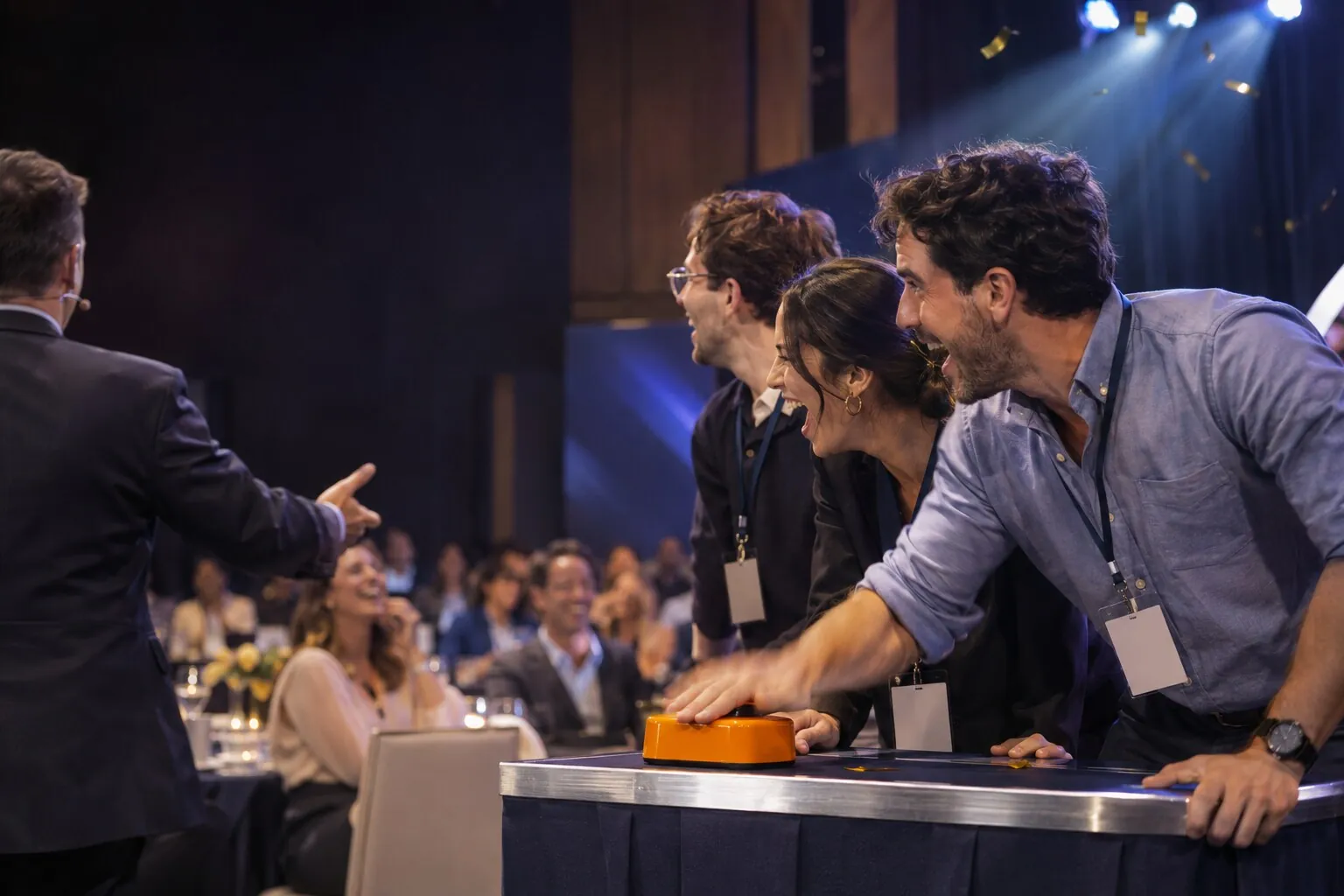
The host runs instructions, pacing and scoring, so your sales leader plays instead of running the room. For groups of 20 to 300+ people, audience-response keypads or cellphones let every team submit answers, not only the team in the spotlight.
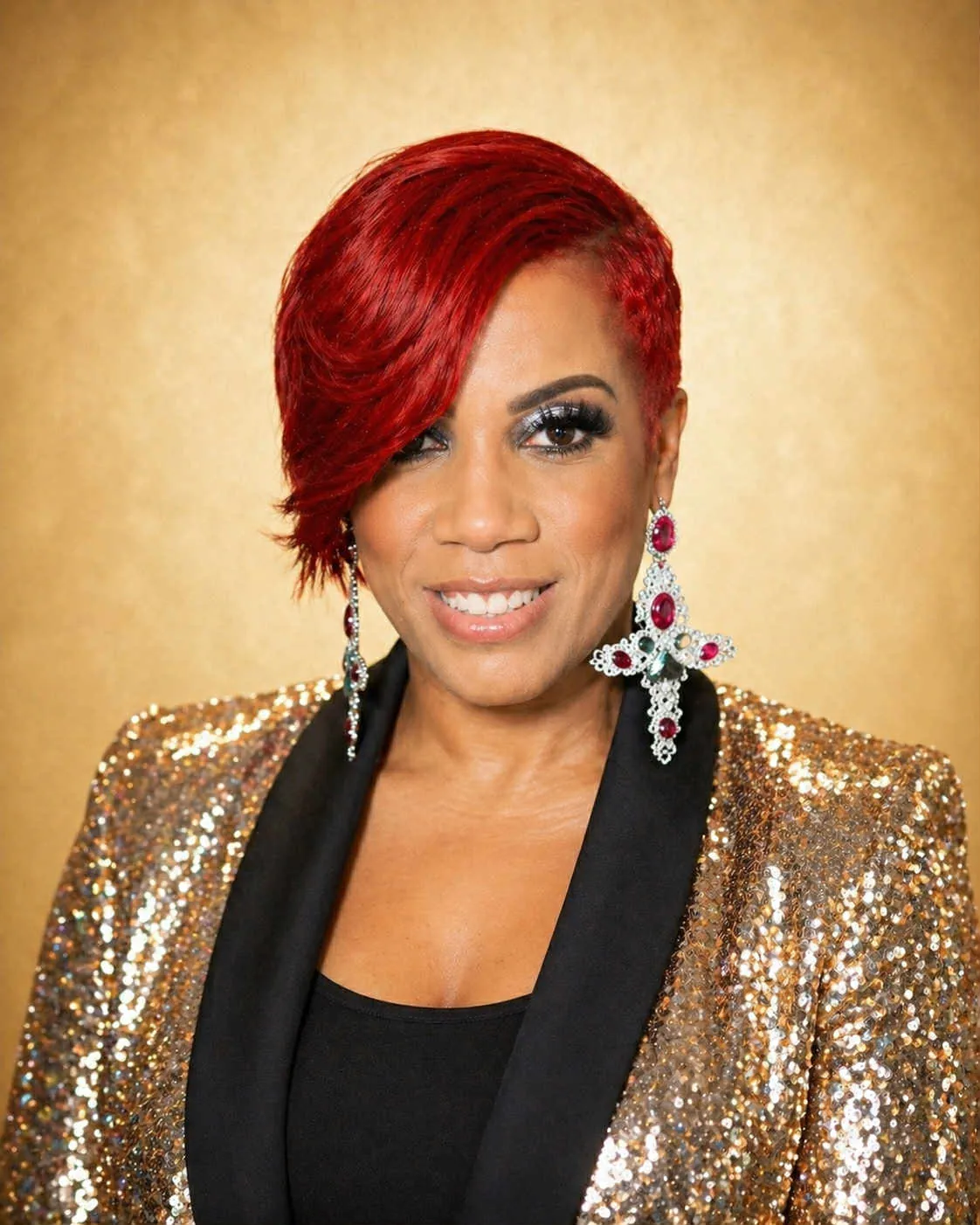
Lisa Lawrence founded It’s Playtyme Game Shows in May 2012 after 20+ years as a choreographer. At event after event, she watched a handful of people participate while everyone else spectated. That gives you a simple test for any session: count who contributes, not who attends.
Live Hosted Sales Competitions vs. Traditional Product Training Presentations
Most sales leaders weigh three options for interactive product knowledge training. Here is how they compare on the factors that decide participation.
| Approach | Who runs it | How people take part | Best for |
|---|---|---|---|
| It’s Playtyme Game Shows hosted product competition | Professional host, crew and sound engineer | Everyone plays on a mixed team that agrees on each answer | Sales, service and finance groups of 20 to 300+ who need to practice the customer conversation together |
| Product training presentation | Your internal presenter | Mostly listening, with time for questions at the end | Launching a new feature that needs a full walkthrough |
| Self-run product quiz | Your organizer writes, hosts and scores | Depends on how the organizer structures turns and scoring | Small teams with an organizer who has time to build and run it |
What Your Sales Leader Provides
The strongest brief starts with a business outcome. Name the conversation you want reps to handle better after the session, then supply the approved information behind it. Also name the person who gives final sign-off on product answers.
- Approved product material: Current spec sheets, product descriptions and feature explanations. Flag which version wins when documents disagree.
- Your preferred pitch: The language your team uses to explain value, including any claims that need careful wording.
- Real customer questions: Recurring objections, misunderstood features and common decision criteria. Remove customer names and confidential details.
- Cross-functional context: Where sales hands work to finance, service, implementation or support, and what each department wants colleagues to know.
- Event requirements: Date, venue, group size, available time and accessibility needs. Note whether the session follows a meeting, meal or awards presentation.
Set the review process before question writing starts. Agree on who checks accuracy, how open-ended answers earn credit and when content locks. That way the organizer never becomes the last-minute referee for conflicting product claims.
Mix Teams Around the Customer Conversation
Team assignments decide the value of the session. Seat departments together and you keep the boundaries you want people to cross. Mix colleagues who each touch a different part of the same customer experience.
Pair newer reps with experienced sellers, and spread product specialists across teams. Add customer service colleagues where their knowledge sharpens the discussion. Give each person a job: reading the scenario, gathering ideas or presenting the agreed answer.
A team spokesperson should represent the discussion, not replace it. Rotate that role so more colleagues speak and listen. Our guide to cross-functional team building covers more ways to structure groups across departments.
This is where sales team building activities overlap with customer service team building activities. Both groups need the same understanding of what customers were promised and what happens next. The competition gives them a concrete reason to compare notes.
A Hypothetical Car Dealership Competition
Car dealerships are one of the industries It’s Playtyme Game Shows serves, so here is a hypothetical example. A dealership plans a session for sales, finance and service staff. The goal is sharper explanations of its own models and cleaner handoffs between departments.
The sales leader supplies approved materials for the current lineup. Finance contributes guidance on its part of the customer conversation, and service lists recurring questions about ownership and features. Mixed teams bring all three perspectives to every question.
Build questions around the dealership’s actual models
Questions draw on the dealership’s own approved model information, not generic automotive facts. The examples below show the structure. Final wording and answers come from the supplied materials.
- Which model in our current lineup matches this buyer’s seating and cargo requirements?
- Which approved feature addresses this customer’s concern, and how would you explain how it works?
- What should a salesperson confirm before describing this feature as included on a specific vehicle?
- Which details should sales share when introducing the customer to finance?
- What does service need to know when a buyer asks for help understanding a feature?
Make the discussion matter beyond the scoreboard
A salesperson identifies the model. A service colleague explains a common misunderstanding, and a finance colleague clarifies the handoff. The team then agrees on one complete answer, scored on approved facts and a clear explanation, with the rules set before play.
That is the practical value of automotive sales team building activities. Colleagues hear how another department reads the same customer question, and they leave knowing who to call next time.
Turning Product Knowledge & Objection Handling Into Call-Ready Pitch Language
The best takeaway is language a rep understands well enough to use naturally. A correct feature name matters less if the rep still struggles to explain why a customer would care.
Build your buying criteria around three outcomes: clearer explanations, sharper responses to objections and more accurate handoffs. Ask how the proposed question mix supports each one. A session built only on spec recall misses the customer conversation entirely.
Plan a short internal follow-up after the corporate team-building session. Your sales leader captures the strongest explanations, settles disputed answers and flags topics that need more product guidance. Keep that follow-up separate from the hosted production unless it is in the agreed scope.
Reps return to calls knowing which colleague to ask, which detail to verify and how other departments support the customer. Those are concrete benefits to bring to your budget approver. Skip any promise of higher sales from attendance alone.
What to Confirm Before Approving the Quote
Corporate team-building experiences from It’s Playtyme Game Shows are priced starting at $2,995. Extensive customization can add to the cost. Product-specific question writing is quoted separately and is not included in the $2,995 starting price, so ask the proposal to scope it as its own item.
The standard production includes a professional host, crew, game-show set, screens, audio/visual equipment and a sound engineer. Delivery, setup, breakdown and travel within NJ, NYC and CT are included.
Costs can rise only for travel outside NJ, NYC and CT, extensive customization, lodging, multiple event spaces, specialized equipment or extra staffing. Ask the proposal to flag which of these apply to your corporate event.
- Content scope: Products covered, source materials, who writes the questions and how approval works.
- Participation: How mixed teams discuss answers and how every person contributes throughout the session.
- Timing: Whether a 60- or 90-minute show fits around your meeting, meal and presentation schedule.
- Production: Room layout, access requirements and equipment arrangements before you lock the venue plan.
Every booking carries a 100% Satisfaction Guarantee, and no deposit is required. Share your date, room size and goal, and you receive a custom production plan within two business days.
Bring One Customer Conversation to Your Planning Call
Pick the customer conversation your reps handle least consistently today, such as a feature they explain three different ways or a handoff to finance that stalls. Name the person who signs off on product answers, then gather the approved materials behind that conversation. That brief is enough to start.
Ready to plan yours? Explore corporate team building with It’s Playtyme Game Shows, then get a custom quote with your product focus, group size and goal.
Solve the participation problem
Ready to get the whole room in the game?
Frequently Asked Questions (FAQs)
How do sales team building activities use our own product?
Your sales leader supplies approved product facts, pitch language and customer questions. Those become custom questions inside a professionally hosted competition. Agree on an accuracy review before production, and ask the proposal to scope the question writing.
Who provides professionally hosted corporate activities for 200 participants?
It’s Playtyme Game Shows hosts corporate team-building experiences for groups of 20 to 300+ people across New Jersey, New York City and Connecticut. For large groups, audience-response keypads or cellphones keep every team submitting answers.
Should sales, finance and service staff compete together?
Yes, when your goal covers the full customer experience. Each department brings different knowledge about product explanations and handoffs. Write questions that give every department a real contribution and approved answers everyone understands.
How much does a custom product game show cost for a sales kickoff, and how much prep time is required?
Corporate team-building experiences start at $2,995, with no deposit required. Product-specific question writing is quoted separately and is not included in that starting price, so ask the proposal to scope it. Prep time depends on how quickly your team supplies approved materials and signs off answers, so agree on a content lock date up front.
How do live sales team building competitions support product knowledge retention and objection handling?
Reps explain answers aloud and agree on them as a team, which is active practice instead of listening to slides. Questions built on real objections let colleagues rehearse responses in approved language. An internal follow-up captures the strongest explanations so they reach customer calls.