
Quick answer: Audience response keypads let every guest in a room of 100 to 300+ answer every question at the same time, privately, while scores update on screen. It’s Playtyme Game Shows runs PlayPad Mania on handheld keypads or cellphones for groups of 20 to 300+, so the whole team plays instead of a few volunteers.
Picture the all-hands where the host asks for volunteers and the same ten hands go up. The other 190 people check their phones and wait for the next agenda item. Nobody planned it that way. A room of 200 has no way to give everyone a turn unless the format builds one in.
Audience response keypads are that built-in turn. Each guest holds a device, answers each question at the same moment, and watches the scoreboard move. For the leader who approves the budget, the case is short: the money you spend on a team building event reaches the whole room, not a handful of volunteers. This guide explains how the keypads work in a hosted game show, what goes wrong at 100, 200 or 300 guests, and the questions to put to any provider before you sign.
Interactive Audience Response Systems: How Every Guest Plays at Once
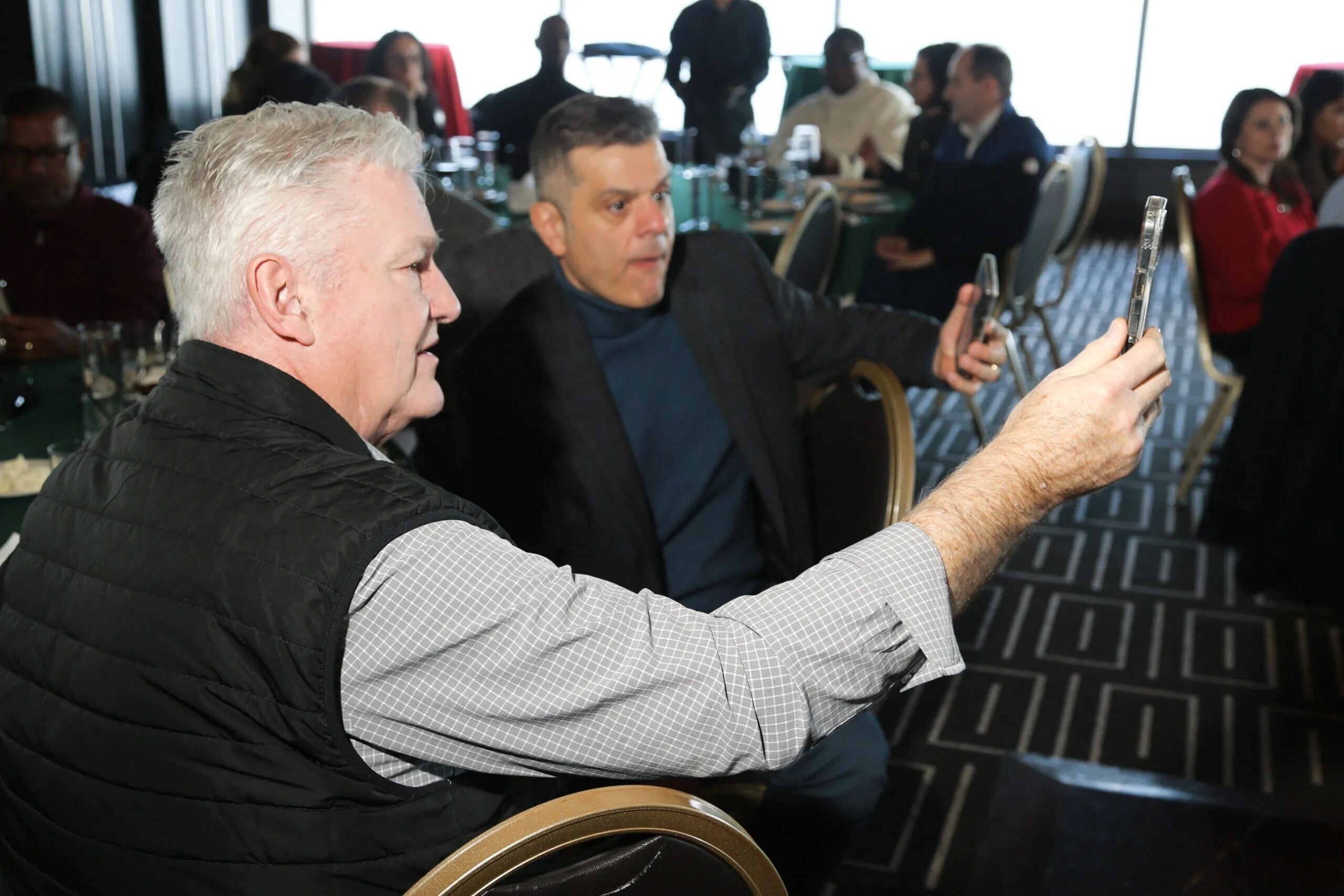
The mechanics are simple. A question appears on the screen. Every guest answers on a handheld keypad or a cellphone. The scores update on screen as the answers come in. There is no passing a microphone, no rotating teams and no waiting for a turn.
At It’s Playtyme Game Shows this format is called PlayPad Mania, a live trivia game show built for large groups. The company’s FAQ puts the range plainly: groups of 20 to 300+ can play trivia at one time through audience response keypads, and larger groups are handled by custom quote.
Three results follow from that design.
- Nobody sits out a round. Every guest answers every question, so the whole room stays involved from the first question to the last.
- Answers are private. A guest who gets one wrong is not exposed in front of the CEO or a client, which is why quieter people join in.
- The scoreboard is live. Teams watch their totals move question by question, so the friendly competition runs for the full show.
Guests do not need to come on stage. They play from their seats, which suits an after-dinner program, a leadership meeting or a conference session where moving 200 people around the room is not realistic.
Handheld Keypads or Your Guests’ Own Phones: Which Fits Your Room
PlayPad Mania works with either, and the company brings keypads if needed. The choice comes down to your group and your venue, so settle it early.
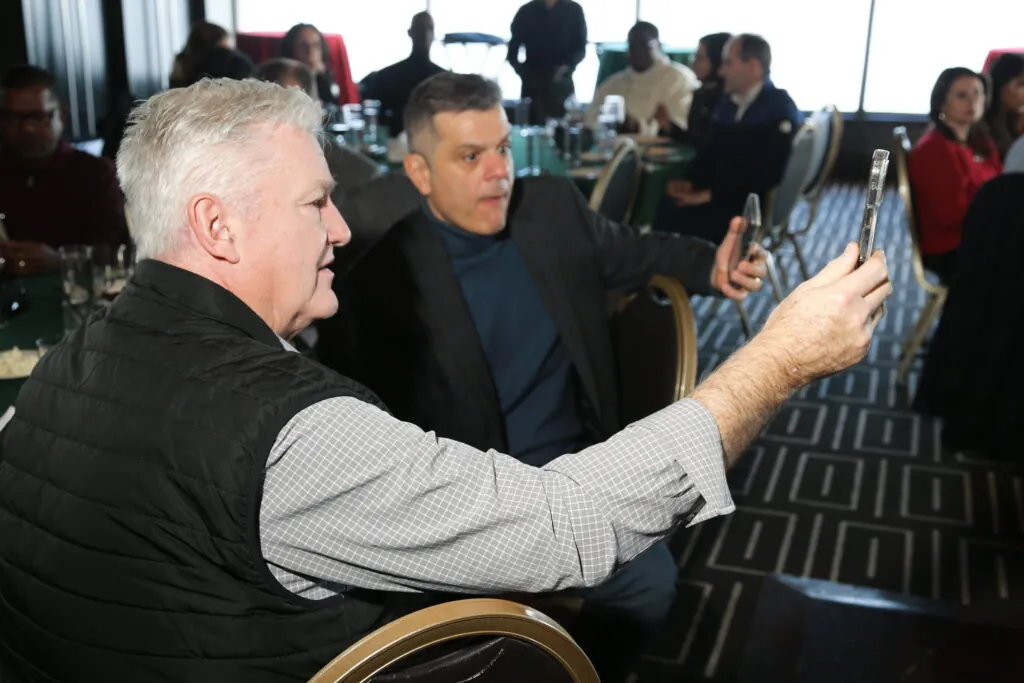
Handheld keypads put an identical device in every guest’s hand. Nobody needs a charged phone or any setup of their own,. Cellphones remove the handing-out step and suit a group that arrives already holding its devices. Which one a provider recommends depends on your room, so ask the question directly and expect a specific answer.
Whichever you choose, the guest experience stays the same: read the question, answer it, watch the screen. The rest of the show, including the mini-games and the live leaderboard, carries on around it.
Large-Group Problems to Solve Before 200 People Answer at Once
Most large-group trouble comes from planning gaps, not from the game. These four problems are general to any audience response setup, and each one is a question you settle before the date.
- The setup is left to your staff. A provider who expects your office manager to wire the screens and sort the devices turns an event into a second job. Confirm who does the setup and who tests it.
- The room cannot see the scores. A scoreboard on a small screen fails a room of 200. Ask what is displayed, how large it is and whether the back row can read it.
- Devices depend on the venue. If guests use their own phones, the experience depends on the connection in the room. This is general planning advice, not a claim about any one system: ask each provider what happens if the connection is weak, and whether handheld keypads are the alternative.
- The head count is a guess. The provider needs a number to prepare. Without one, devices and seating run short on the day.
Vetting an Audience Response Provider: Five Questions to Ask
Put these questions to every game show company on your shortlist, in writing, before you compare prices. The answers tell you more than a brochure does. Each note shows what It’s Playtyme Game Shows states on its website.
1. What happens if the venue connection is weak?
Ask whether the show runs on handheld keypads, cellphones or both, and what the plan is when reception in the room is poor. It’s Playtyme Game Shows states that it brings keypads if needed, so handhelds are part of the offer.
2. Whose AV equipment is it, and who runs it?
The answer should be the provider’s, operated by the provider’s crew. The company brings the host, the gameplay system and the keypads if needed, and manages the experience from setup to finish. Its standard shows also include audio-visual equipment and a sound engineer.
3. How early do you arrive, and how long is setup?
Ask for the arrival time in writing, then check it against your venue’s access window. The company says its team arrives early, and that screens, sound, keypads and show flow are tested before guests walk in.
4. How will the scores be shown?
You want real-time scoring on a screen the whole room can read. PlayPad Mania shows scores updating live, with a live leaderboard, and a professional host keeps the pace between questions.
5. What head count do you need, and when?
The site’s FAQ asks for an approximate head count one week before the event. Send it as soon as your registration closes, and tell the provider about late additions.
What a Hosted Keypad Show Takes Off Your Plate
The point of a hosted show is that you do not manage the technology. The company describes the day in six steps: the team arrives early and tests everything, a professional host runs the experience, participants play every round together, live scoring builds the energy, the program ends on schedule, and you do not have to manage a thing. Your role is to choose the date, share the head count and enjoy the room.
The content adjusts to your group. Trivia covers general knowledge, pop culture, music visual trivia or custom questions built around your company, with optional branded or themed rounds. The team handles that customization behind the scenes, so it adds no work for you.
For a leadership audience this matters. The format suits leadership teams, large events and after-dinner programs where timing and optics count, because nobody is put on the spot and the program runs to the clock.
How to Decide Whether Keypads Fit Your Group
Keypads earn their place when the room is large, the group is mixed and you want visible participation. For 20 to 300+ guests the answer is usually yes. Choose them when leaders and new hires share a room, when you want private answers, and when the schedule leaves no time for a slow start.
Smaller groups sometimes suit buzzer-style rounds better, and the best players are called to the front for one of the other team building game shows. Share your date, head count and goal with the team and they confirm the format. See the PlayPad Mania page for the full format. Shows start at $2,995 for 60 minutes, with details on the pricing page. No deposit is required to book, and the 100% Satisfaction Guarantee applies. For the wider picture of how 300 guests get a turn, read our large group game show guide.
Solve the participation problem
Ready to get the whole room in the game?
Frequently Asked Questions (FAQs)
What is an audience response system for a corporate event?
It is a way for every guest to answer every question at once from their seat. Each guest uses a handheld keypad or a cellphone, a question appears on screen, and the scores update live. Because answers are private, no one is put on the spot.
How many people can play at once?
It’s Playtyme Game Shows states that groups of 20 to 300+ can play trivia at one time through audience response keypads. Larger groups are available by custom quote.
Do guests need to come on stage?
No. PlayPad Mania is an all-play format, so guests answer from their seats. The best players are called to the front to play one of the other team building game shows.
Does the provider bring the keypads?
Yes. The company brings the host, the gameplay system and the keypads if needed, and arrives early to set up and test everything before guests enter.
How do you get 300 employees involved at a corporate meeting?
Use a format where everyone plays at the same moment. PlayPad Mania lets groups of 20 to 300+ answer trivia together on keypads or phones, with a professional host and live scoring, so nobody waits for a turn.
How much does a keypad trivia show cost?
Shows start at $2,995 for 60 minutes and $3,595 for 90 minutes. The exact price depends on group size, location, date and time, and groups of 300+ are a custom quote.