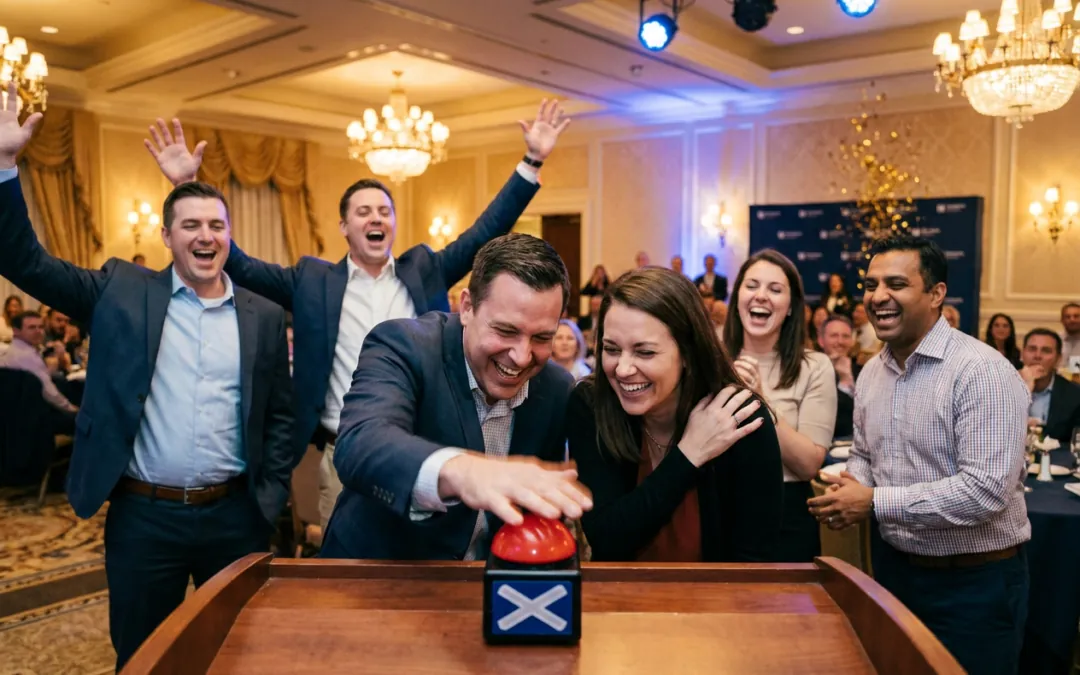
Interns can tell when an event was thrown together the week before. They have spent the summer being introduced to people whose names they immediately forgot, and the event that finally works is the one where they stop being observers and start competing. Below are the formats that land with an intern cohort, what each one needs, and what a hosted version costs if you would rather not run it yourself.
Summer intern programs provide a unique opportunity for young professionals to gain hands-on experience and embark on a transformative journey.
However, stepping into a new environment filled with unfamiliar faces can be daunting for these people.
This is where the power of opening activities and team building comes into play. In this article, we will explore 5 well-designed opening activities that can break down barriers, foster connections, and create a sense of belonging within the intern community.
It’s PlayTyme hosts intern events for groups of 20 to 300+ across New Jersey, New York City and Connecticut. Your host, the show and the equipment arrive together. Our most popular 90-minute show starts at $2,995, with no deposit to hold your date and a 100% satisfaction guarantee. Use our pricing estimator to see the range for your group size.
We have provided you with five highly effective opening activity ideas: “Name Game,” “Speed Networking”, “Face-2-Face Feud”, “Office Scavenger Hunt”, and “Word Play”.
By implementing these type of opening activities, you can ensure that your summer intern program stands out and leaves a lasting impression.
Book a Live Interactive Game Show!
Call us today. TV Style Game Shows for groups are our specialty. Let’s Play!
Effective Opening Activity Ideas For Summer Intern Programs
By incorporating a few opening activities into your summer intern program, you create an environment that nurtures open communication, collaboration, and creativity.
These activities encourage interns to step out of their comfort zones, allowing them to forge connections with their peers, mentors, and supervisors.
Join us as we delve into 5 activity ideas and uncover their power to transform summer intern programs.
Let’s get started.
Summer Interns
Idea #1 – The Name Game Opening Activity
Let’s begin with a “classic” opening activity that helps everyone remember each other’s names and characteristics. This game is designed to have one thinking and talking to one another immediately.
First, have your summer interns form a circle. Start by introducing themselves with a personal characteristic, hobby or interest with the same letter as their name. The next person repeats the previous names and personal characteristic and adds their own.
For example, “I’m Daniel, and I love Dancing”. The next person repeats the first person’s name and characteristic, then adds their own (e.g., “That’s Daniel who loves dancing, and I’m Olivia who loves origami”).
The game continues with each participant repeating the names and characteristics of all those who came before and then adding their own. This encourages active listening, memory recall that adds a touch of fun to introductions.
Idea #2. Speed Networking
The concept behind speed networking at a team building event is simple yet highly effective. Picture a series of tables or stations, each with an intern eagerly awaiting the opportunity to engage with their fellow interns.
The magic begins as pairs of interns are formed, and the clock starts ticking. Within a specific time frame, such as two minutes, the interns introduce themselves, share their interests, and discuss their career goals.
Once the time is up, one group moves to the next station, while the other remains in place, ready for a fresh connection.
The beauty of speed networking lies in its efficiency and impact. By providing interns with the chance to meet numerous peers in a short period,
It accelerates the exchange of information, fosters camaraderie, and cultivates professional relationships.
This dynamic activity allows interns to showcase their skills, share experiences, and discover common interests with their counterparts.
It’s a fast-paced, energizing opening activity that stimulates connections and sparks the beginnings of lasting professional networks.
Idea #3. Face-2-Face Feud
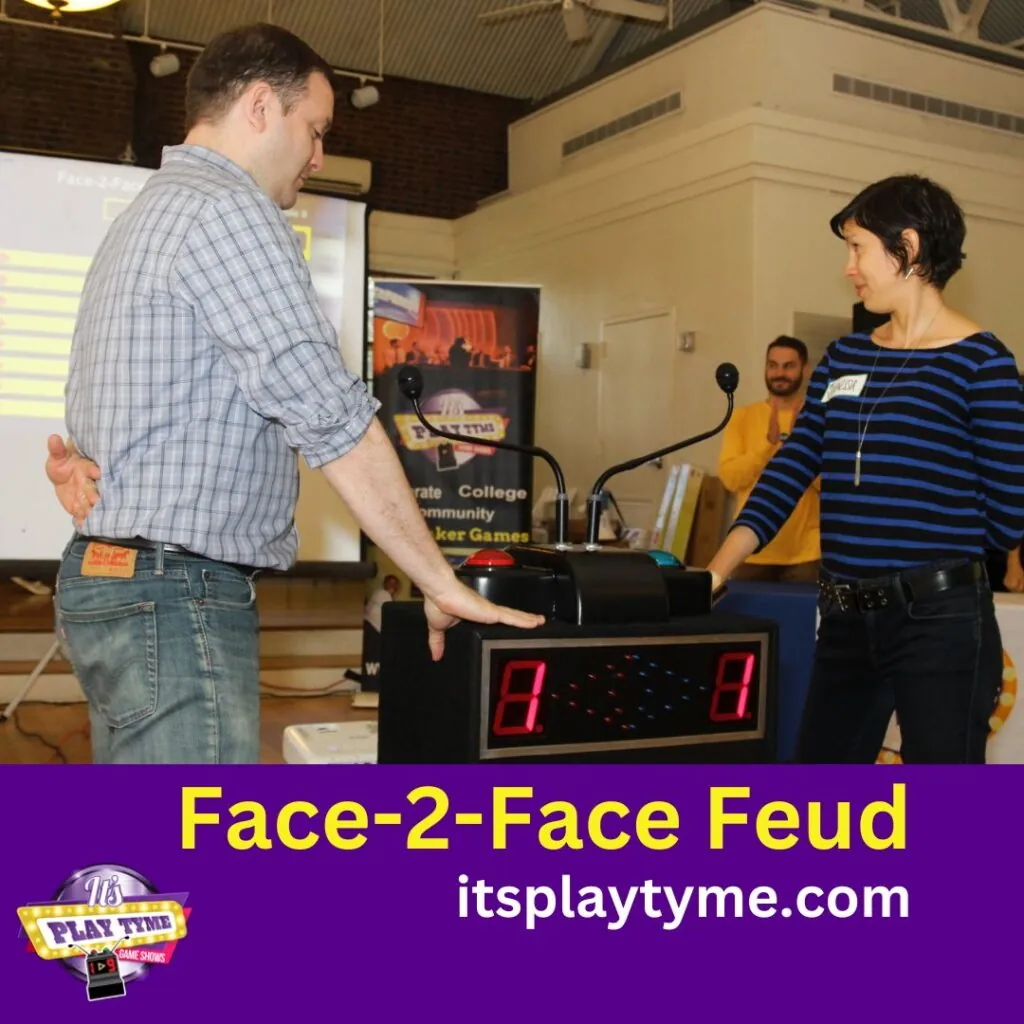
The classic game show is adapted into a fun team-based activity that brings summer interns together and gets them to work collaboratively, while sparking laughter and building rapport.
2 teams aka families face-off and must work together to guess the most popular responses to survey-type questions related to the organization, their internship, or fun general topics.
It’s important to have fun and engaging questions that break down barriers immediately. You may consider doing your own version, or hiring a professional company to facilitate one that will bring all the bells and whistles.
Family Feud prompts excitement, active participation, encourages communication, and enhances camaraderie among interns.
A fun and friendly competition atmosphere can immediately reduce early-stage anxiety, making the interns feel more comfortable in their new environment and with each other.
Idea #4. In-office Scavenger Hunt
Probably the oldest of all opening activity ideas but it’s always fun and it’s easy to set up.
This exciting interactive gametakes interns on a journey throughout the office, encouraging exploration, teamwork, and a deeper understanding of the workplace.
It is a well-thought-out activity designed to familiarize interns with different areas, departments, and resources within the company while fostering a sense of camaraderie and collaboration among participants.
Interns are divided into teams, each armed with a list of specific items or clues related to various locations or aspects of the office.
The objective is to race against the clock, decipher clues, and locate the items scattered throughout the workspace.
Scavenger hunt nurtures interns’ observational skills, attention to detail, and ability to think creatively. As they search for hidden items or solve riddles, interns sharpen their problem-solving abilities and develop a keen eye for their surroundings.
This skill set can be valuable in the workplace, where attention to detail and critical thinking are highly sought after.
Idea #5. Word Play (Wheel of Fortune)
Have you ever considered hiring a professional company to host an event for your summer interns?
Well, look no further than PlayTyme Game Shows! We have an incredible selection of shows for you to choose from.
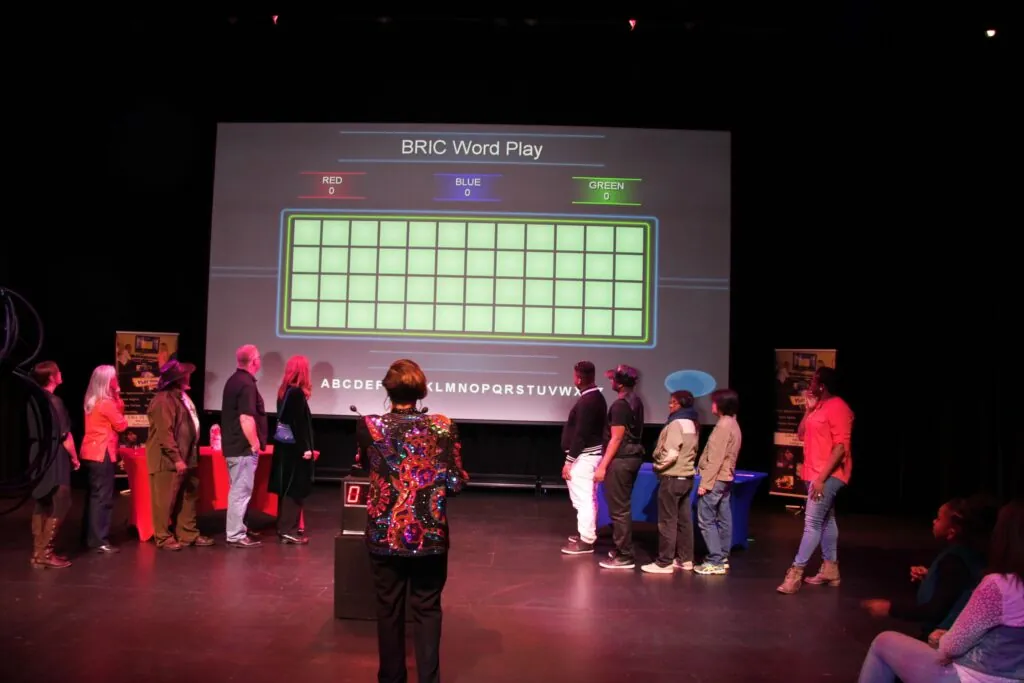
One particular gem is our own spin on the classic hit TV game show, “Wheel of Fortune.” We do have a digital wheel but no fortune, pun intended.
This game is fully customizable and an absolute blast to play. The puzzles are quite entertaining, featuring company slogans, catchphrases, movies, TV shows, and even celebrities. It’s perfect for those employees who love word challenges and solving puzzles.
Picture this: We create three teams and the contestants rotate after every puzzle instead of individual players, . It’s a fantastic way to showcase how well employees handle unexpected situations.
While our headquarters are nestled in Teaneck, New Jersey, we proudly travel throughout the entire N.E. region.
But here’s a question for you, do you think opening activity ideas really work?
Book a Live Interactive Game Show!
Call us today. TV Style Game Shows for groups are our specialty. Let’s Play!
1: What is the purpose of opening activities in summer intern programs?
The purpose of opening activities in summer intern programs is to create a positive and engaging environment, foster connections among interns, boost morale, and encourage teamwork.
2: How many people can participate in the “Name Game” opening activity?
The Name Game can be played with any number of participants depending on the length of the meeting. It works well with both small and large groups.
3: How can “Speed Networking” benefit interns in a summer intern program?
Speed networking allows interns to develop and practice their networking skills by engaging in short conversations with peers.
It helps them meet multiple individuals within a short timeframe, exchange information, and build professional relationships.
4: How does collaborative problem solving contribute to the summer intern program experience?
Collaborative problem solving promotes teamwork skills among interns and encourages critical thinking and creativity.
It provides an opportunity for interns to work together, brainstorm ideas, and come up with innovative solutions to challenging scenarios or tasks.
5: Why are opening activities important for summer intern programs?
Opening activities are important for summer intern programs because they create a welcoming and inclusive environment, facilitate connections among interns, promote teamwork, and enhance overall engagement and productivity.
6: How can these opening activity ideas make a summer intern program stand out?
Implementing these opening activity ideas can make a summer intern program stand out by fostering a positive and interactive experience, helping interns form meaningful connections, encouraging their professional growth, and leaving a lasting impression on participants.
7: How can I optimize my summer intern program’s success?
To optimize the success of your summer intern program, consider incorporating engaging opening activities, tailor the program to meet the unique needs and goals of your interns and company. Sseek further assistance or explore additional strategies to enhance the program’s effectiveness.
Want it run for you, start to finish?
It’s PlayTyme hosts intern events for groups of 20 to 300+ across New Jersey, New York City and Connecticut. Your host, the show and the equipment arrive together. Our most popular 90-minute show starts at $2,995, with no deposit to hold your date and a 100% satisfaction guarantee. Use our pricing estimator to see the range for your group size.
Most planners dread Employee Appreciation Day. The budget is thin, the calendar is tight, and a box of stale donuts lands worse than doing nothing. Recognition works only when people feel it. Gallup found that only one in three U.S. workers strongly agree they received recognition or praise in the past seven days, and that employees who do not feel adequately recognized are twice as likely to say they will quit in the next year.
The stakes run past one afternoon. Gallup’s 2026 State of the Global Workplace report puts global employee engagement at 20% in 2025, the lowest level since 2020, at an estimated cost of $10 trillion in lost productivity. A catered lunch does not move that number.
What moves it is a room where every person plays. Below are six formats that scale from a 20-person office to a 300-person division, plus a straight comparison of which one fits your headcount.
Why Typical Office Celebrations Fall Flat
The Token Gesture Problem
A catered lunch and a company-wide email read as a compliance box getting checked. Staff know the difference between a gesture and an experience. Planners feel that pressure too, because a flat afternoon reflects on them for months. The fear of booking something people quietly mock pushes teams back toward the safe, forgettable option.
Passive Rooms Kill Participation
A comedian or a guest speaker puts the room in rows and the phones back in hands. Great events are not measured by how many people attend. They are measured by how many people participate. When employees only watch, they never connect with the person two desks over.
Scaling the Activity to the Headcount
A printed trivia sheet works for ten people and collapses at two hundred. Too intimate a format and the back of the room checks out. Too loose a format and the schedule falls apart. Matching the activity to the actual headcount decides the outcome before anyone walks in.
Hybrid and Remote Staff Have Nothing to Do
Half the company now dials in. Most appreciation events give remote staff a video feed of other people laughing. That is worse than skipping the invite. Any format you pick needs a role for the people on the screen, whether that is a remote team captain or phone-based scoring.
Mixed-Generation Rooms Want Different Things
A 25-year-old and a 30-year veteran do not rate the same afternoon the same way. Newer staff tend to want something social and worth photographing. Longer-tenured staff want their contribution named out loud in front of the room. One afternoon has to serve both, which is why structured team play paired with specific recognition outperforms either half on its own.
Physical Activities Quietly Exclude People
Relay races, obstacle courses and building-wide scavenger hunts push out anyone with a mobility limit, a hearing difference, or a strong dislike of being watched. Seated, team-scored formats keep every desk in the game. Ask the venue about step-free access, sightlines and captioning before you commit to a room.
Proving the Spend When Next Year’s Budget Comes Up
Whoever approved this year’s spend will ask what it bought. Decide the measure before the event rather than after: participation rate, how many people sat with another department, or one pulse-survey question you send the following week. A number you collected beats a story you tell.
Tri-State Venue and Timing Constraints
Employee Appreciation Day falls on the first Friday in March, so every venue in the region books the same week. Union load-in rules, certificate-of-insurance requirements and NYC freight-elevator windows add hours nobody budgeted. On-site formats sidestep most of it. Your own conference room needs no load-in permit.
Key Takeaways for Successful Staff Recognition
Prioritize active participation: turn the audience into players instead of spectators.
Match the scale: pick a format built for your exact headcount band.
Hire a host: a facilitated format removes the planning load and lets you attend your own event.
1. A Fully Hosted Live Game Show
A hosted game show puts the whole room in play instead of in rows. At It’s PlayTyme Game Shows, the game show is the method and group engagement is the product. Everyone joins a team in the first minute, so nobody has to volunteer to be brave.
Founder Lisa Lawrence started the company in 2012, and the team has produced more than 3,000 live events since. Published formats include Face 2 Face Feud, The Challenge, Word Play, 60 Seconds of Fame and PlayPad Mania. The host, sound engineer, podiums, buzzers, lighting and prizes all arrive with the crew.
Hosted game shows start around $2,995 for groups of 20 or more. Use our pricing estimator to see the range for your group size. A 60-minute show is also available, and half-day and full-day team building programs are custom-priced through a rep. Coverage spans New Jersey, New York City and Connecticut.
2. Gamified Department Competitions for Staff Engagement
Sales against marketing creates instant rivalry and inside jokes that outlive the afternoon. Structure it with clear rules, short rounds and a hard time limit. Fast rounds stop one loud person from running the floor.
Clear the cafeteria, build a front-of-room stage, and give each department a color. This format also works as a lead-in to broader corporate team-building programming later in the quarter. Best for groups of 30 to 150.
3. Peer-Voted Recognition Awards
Certificates for perfect attendance do not land with an adult workforce. Let staff nominate and vote on categories that name real habits, like the person who answers messages at 7 a.m. or the one who always fixes the printer. Recognition from peers carries more weight than a manager reading a list.
Pair a light ceremony with an interactive activity. The awards deliver the specific recognition and the activity builds the connection. Give every department airtime so the ceremony does not become a sales-team victory lap. Best for groups of 10 to 100.
4. Reused Formats From Your Holiday Party
You do not need a new concept every spring. Take the framework that worked in December and change the theme and the trivia categories. The mechanics of a good party hold up in any season.
If a trivia tournament packed the room in December, run it again in March. Familiar rules mean people start playing in the first two minutes instead of the tenth. Our roundup of corporate entertainment ideas by group size covers which formats travel between seasons.
5. Large-Scale Milestone Rallies
At 200 people, open mingling produces cliques, not connection. Structured group play is what bridges divisions that never talk. Break the crowd into color teams with named captains and stage representatives.
The room then cheers for its own people instead of watching from a distance. Big crowds need a professional host, real sound and audience keypads or phone-based play. Best for groups of 150 to 300.
6. Commemorative Tokens Tied to the Event
Physical gifts hold value when they mark a shared moment. Skip the branded pens and the cheap water bottles. Choose an item that points at a specific win, like the quarter you closed or the product you shipped.
Hand them out at the peak of the event, not at the door on the way in. An item earned in a team round becomes a trophy. An item collected at reception becomes desk clutter.
Best Employee Appreciation Day Ideas: Group Size & Planning Effort Comparison
Match your headcount and your committee’s available hours to the format that fits.
Appreciation idea
Best group size
Hosted or self-run
Run time
Planning lift
Hosted live game show by It’s PlayTyme Game Shows
20 to 300+
Fully hosted
60 or 90 minutes
Low
Gamified department competition
30 to 150
Self-run
60 to 90 minutes
High
Peer-voted awards ceremony
10 to 100
Self-run
30 to 45 minutes
Medium
Reused holiday party format
20 to 200
Self-run
60 minutes
Medium
Large-scale milestone rally
150 to 300
Host recommended
90 minutes
High
Commemorative team tokens
10 to 300
Add-on to any format
10 minutes
Medium
How to Choose the Right Employee Appreciation Idea for Your Headcount
The decision comes down to four inputs.
Headcount: under 50 people, an awards ceremony fills the hour; over 150, you need staging, sound and a host.
Planning capacity: a self-run competition costs staff hours your team does not have in March.
Participation goal: if you want cross-department mixing, assign the teams instead of letting people seat themselves.
Room and clock: a 60- or 90-minute block inside the workday respects commutes, childcare and the afternoon deadline.
Answer those four honestly and the format picks itself.
Send us your date, room size and goal for the group, and we will set up a quick discovery call. No deposit, no upsell, and a 100% satisfaction guarantee. Get a quote from It’s PlayTyme Game Shows.
What are the best interactive Employee Appreciation Day ideas for large groups?
Structured play beats passive watching. A hosted live game show puts every attendee on a team, mixes departments and runs on a fixed clock, and it takes the emceeing and the run-of-show off your internal committee. Rooms above 200 people run on stage representatives plus audience keypads or phone-based play, so the back row still scores points for its team.
How long should an employee appreciation activity run?
Plan for 60 to 90 minutes. That gives the room time to settle, learn the rules and play several rounds without eating the whole afternoon. Shorter sessions feel rushed and longer ones lose the back rows.
How much does a live corporate game show cost?
Pricing follows headcount. Hosted game shows start around $2,995 for groups of 20 or more. Use our pricing estimator to see the range for your group size. A 60-minute show is also available, and half-day and full-day team building programs are custom-priced through a rep. Setup, breakdown, and prizes are included. Extensive customization and travel outside NJ, NYC and CT may be quoted separately.
How do you celebrate Employee Appreciation Day for hybrid and remote teams?
Give the remote half a job instead of a video feed. Assign a remote captain to every team, score answers through phones or audience keypads so distance does not change the rules, and point one camera at the stage rather than at the back of the room. Call results by team name so the people at home hear their own group announced.
Every planner has the same fear before a company offsite. You spend real money, the room goes quiet, and half the group is on their phones before the second speaker finishes. That fear is earned. Gallup’s latest State of the Global Workplace report found global employee engagement fell to 20% of employees in 2025, its lowest level since 2020. The same report puts the cost of that decline at approximately $10 trillion in lost productivity, or 9% of GDP.
Your event budget is one of the few levers you control directly. It should buy participation, not background noise. This guide breaks down what sets your cost per person for interactive corporate entertainment, using published prices for groups of 25 to 300 across New Jersey, New York City, New York State, and Connecticut.
What a Live Game Show Costs Per Person
At It’s PlayTyme Game Shows, the price is published and fixed, starting at $2,995 for a 90-minute live game-show experience for groups of 20 or more. Match your headcount in our pricing estimator and that is the number you take to finance.
90-minute hosted shows start at $2,995 for groups of 20 or more. Use our pricing estimator to see the range for your group size.
The published price covers the show itself; setup and breakdown, travel, customization, and gratuity are quoted separately. See the current numbers on our pricing page.
Where Corporate Event Budgets Usually Go Wrong
Most event money lands in categories that do nothing for connection. A premium catered dinner tastes great. It still will not get a table of quiet engineers talking to the sales team.
Here is where planners lose the most value per dollar:
Passive entertainment: a comedian or magician puts your people in the dark, facing forward, silent. They watch the event instead of joining it.
Cliques that never break: without a structured opening activity, people sit with the coworkers they already know. New hires stay on the edges all night.
Open-ended invoices: hourly facilitation and consumption-based bar tabs run past the approved number. Then you explain the overage to finance.
Forced group exercises: generic workshops feel like homework. Nobody wants to build a tower out of dry spaghetti while their VP watches.
Awards with no moment: plaques get handed out during a quiet dinner, then sit on a desk. Recognition only lands when the room is paying attention.
Nothing to hand the CFO: finance approves the spend, then asks what it returned. A lump-sum quote with no per-head figure and no count of who actually took part is hard to defend in the next budget cycle.
Venue charges nobody quoted: in-house audio-visual fees, power drops, and required house labor arrive on the venue invoice after the entertainment contract is signed. They land on the same event line and push your real per-head number up.
Headcount that shrinks after you book: 20 people drop out the week of the event, the flat quote gets spread across fewer heads, and your cost per person jumps right before the report goes out.
None of these are entertainment problems. They are structure problems. The fix is booking a format that requires every person in the room to do something, priced in a way you can defend line by line.
What Drives Your Corporate Entertainment Cost Per Person?
Four variables move the number. Knowing them keeps your budget predictable and your vendor comparison honest.
Group Size and Scale
Headcount sets the production scale. Twenty-five executives in a boardroom need a different setup than 300 sales reps in a ballroom. Larger rooms take more microphones, bigger screens, and tighter crowd management. The fixed tiers already account for that jump, so a growing guest list moves you to a known price instead of an open one.
Length of the Experience
Our shows run 90 minutes. That window is long enough to build real camaraderie and short enough to end while the energy is still climbing. Longer programs take more material and more stamina from the room, and they cost more to produce.
Format and Production Elements
A custom-built show takes more prep than a standard Face 2 Face Feud. Other formats include The Challenge, PlayPad Mania for large rooms, 60 Seconds of Fame, Name That Hit Song, and Word Play. Graphics, audio, and real buzzers all factor into the price. The gear shows up looking and sounding like broadcast television.
Travel and Venue Logistics
Distance matters for live production. We work in New Jersey, New York City, New York State, and Connecticut. A venue far from a major hub adds travel time, fuel, and equipment transport to any provider’s proposal.
Local knowledge saves you money too. Loading into a Manhattan high-rise on a reserved freight elevator is nothing like rolling gear into a New Jersey conference center. Working one region is how we keep setup on schedule and off your overtime bill.
Why Per-Person Cost Drops as the Room Gets Bigger
Catering scales in a straight line. Fifty steaks cost twice what 25 steaks cost. Live group engagement does not work that way.
A hosted game show carries a baseline investment: the host, the sound system, the digital game boards, and the crew that sets it all up. Once that is in your venue, each additional player adds very little cost.
The per-head cost falls as your group grows, because the production is already paid for at the first tier. That buys a room where everyone plays, usually for less per head than the plated dinner sitting next to it on the budget. For a closer look at the math behind those numbers, see our breakdown of team building cost per person.
Fixed Pricing Versus Hourly Estimates
Corporate event pricing models often rely on soft quotes. A facilitator names a low starting rate, then adds charges for materials and rentals after you sign. That makes your true cost per person impossible to calculate in advance, and it makes the return on your event spend impossible to argue for afterward.
We publish five prices instead. Your headcount picks the tier, the tier gives you the show price, and anything outside the show gets quoted before you commit. That is the version of the number finance can approve without a follow-up meeting.
Every event is also backed by a 100% satisfaction guarantee. Your job is to fill the room. For a wider view of program costs, read our guide to how much corporate team building costs.
Why 90 Minutes Is the Right Block
Planners often ask whether they should book several hours of activity. After more than a decade of running these rooms, the answer is no. One tight, well-produced 90-minute block beats an afternoon of filler.
Schedule it right after breakfast and it works as an opening activity. It breaks the ice, gets people out of their seats, and pushes departments to talk to each other. That energy carries into the quarterly review that follows.
Schedule it before dinner and it becomes the bridge from work mode to social mode. People put the phones down and look at each other. They stay in the room because the room is where the fun is.
How to Choose the Right Interactive Corporate Entertainment for Your Group
Run through this list before you sign anything. It takes five minutes and it protects both the budget and the night.
Lock the headcount: confirm your RSVP list so you land in the correct tier instead of guessing, then re-check it the week of the event.
Check the service area: make sure your venue sits in New Jersey, New York City, New York State, or Connecticut.
Test the participation level: ask whether every person plays, or whether the format lets people hide in the back.
Get the exclusions in writing: ask what falls outside the quoted price, including travel, setup, house audio-visual, and gratuity.
Buy connection, not consumption: pick the option that starts conversations instead of the one that only feeds people.
Want real participation at your next corporate event? We bring the host, the gear, and the format, and you get a room that actually connects. Book your event and send us your date, headcount, and venue.
Frequently Asked Questions (FAQs)
What is the average corporate entertainment cost per person?
It depends almost entirely on group size and format. Our 90-minute live game shows start at $2,995 for groups of 20 or more, and the per-head cost drops as the group grows. Use our pricing estimator to see the range for your group size.
How does group size impact the corporate entertainment cost per head?
The package price rises with group size because bigger rooms take more equipment and more crowd management. The per-head cost still falls, because the baseline production is already paid for at the first tier.
Are there hidden fees in corporate entertainment packages?
Many vendors add charges after the contract is signed. We publish five fixed tiers for the 90-minute show, and we quote setup and breakdown, travel, customization, and gratuity separately so nothing arrives as a surprise. Ask your venue for its own audio-visual and labor charges too, since those sit outside any entertainment contract.
What is the most cost-effective corporate entertainment?
The formats where the price is fixed and everyone takes part. A hosted game show spreads one production fee across the whole room, so the per-head cost keeps falling as the room grows, while a passive act costs the same whether people join in or watch their phones.
Planning an event for a large group brings real pressure. You need more than a catered lunch or another slideshow. You need an experience that gets people out of their seats, talking, and playing. Finding an activity that engages a diverse crowd without feeling forced is hard, whether you run HR or a school building.
The need for genuine team connection has never been sharper. Gallup reports that only 31% of U.S. employees were engaged at work in 2024, the lowest level in over a decade. That disengagement drags down performance. The same research shows companies with highly engaged teams are 23% more profitable and 14% more productive than their peers. Real participation is not a perk. It drives a healthy, productive culture.
Most organizers hit the same walls: tight budgets, tricky logistics, and a room full of different personalities to win over. The goal is an event where people connect and play, but the path there is often unclear. This guide compares the best game shows for hire across New Jersey, New York, and Connecticut. Use it to pick the right partner to deliver real engagement.
Fully hosted experience with sound, podiums, screens and host
Professional Host
20-300+
Varies; 2-4 weeks recommended
The Game Show Experience
Full production: lights, sound, digital leaderboards, buzzers, backdrop
Charismatic Host
Varies
Varies; inquire
Hollyrock Entertainment
Game show setup with custom content, trivia, and physical challenges
Professional Host
Varies
Varies; inquire
Brain Wash Game Show
Custom sets, AV equipment, sound system, and professional host
Comedic Host
Varies
Varies; inquire
The Gameshow Connection
On-site setup with video screens, software, and host
Professional Host
Varies
Varies; inquire
Riddlesbrood Touring Theatre Co.
Portable system with podiums, buzzers, and rear screen projection
Charismatic MC
Varies
Varies; inquire
The Real Challenges of Hiring a Game Show
Hiring a game show is a smart first step, but it will not solve every planning problem on its own. You still face several hurdles. Knowing them helps you pick a provider who acts as a partner, not just a vendor.
Managing the budget: Corporate and school events run on strict numbers. Hidden fees, surprise equipment charges, or messy payment terms add real stress. You need transparent pricing and a clear list of what is included.
Ensuring participation: The biggest fear is booking an activity where a few outgoing people play while everyone else watches. You need an inclusive format that pulls in even your most reserved guests.
Handling logistics: A live event has many moving parts. You coordinate the venue, the power, the space, and the sound, then manage the schedule. One technical glitch can derail the whole experience.
Matching event goals: An event without a purpose is a costly distraction. Whether you want to integrate new hires, lift morale after a tough quarter, or celebrate a school win, the show has to serve that goal.
Proving the value: Leaders want to know the spend was worth it. Vague promises do not satisfy a budget owner, so you need a format that visibly builds connection your team still feels the next week.
Avoiding a forced or cheesy feel: Many organizers worry the activity will land as awkward or corny and push people further apart. The format and the host have to earn real laughs, not groans.
Engaging a multi-generational crowd: One room can hold five decades of age, a range of physical abilities, and different cultural backgrounds. The show has to feel fun and fair to every guest at once.
Easing planning pressure: Organizers juggle a dozen responsibilities under tight deadlines. The right provider cuts your workload and handles the details, so you can focus on your guests.
1. It’s PlayTyme Game Shows
Since 2012, It’s PlayTyme Game Shows has solved the large-group engagement challenge for corporate and school clients across New Jersey, New York, and Connecticut. We measure a great event by how many people play, not by how many show up. The live game show is the vehicle for connection, camaraderie, and real participation. With more than 3,000 events behind us, founder Lisa Lawrence and her team deliver a fully hosted experience that gets everyone in the room involved.
Location: New Jersey, New York City, and Connecticut.
Best for: Corporate team building, employee engagement, school assemblies, and staff morale events where connection is the goal.
Format: Live, in-person, professionally hosted game shows where everyone plays, not just a few volunteers on stage.
Standout features: A focus on full-room participation and formats that break down silos so every guest joins in.
Pricing model: published pricing, starting at $2,995 for our most popular 90-minute show, and no deposit to hold your date. Every event is backed by a 100% satisfaction guarantee.
Benefits
We handle every detail, from the sound system and host to the game format, so you plan less.
Our games get the entire room playing, so no one sits on the sidelines.
We know the NJ, NYC, and CT markets, including venues and local logistics.
More than a decade of experience and over 3,000 events for corporate and education groups.
A partner who ties the whole event to one goal: real connection your group feels and remembers by Monday.
2. The Game Show Experience
The Game Show Experience runs high-production game shows for corporate, private, and school events nationwide. They deliver a “real-as-TV” feel with professional lighting, strong sound, and charismatic hosts. Events are highly customizable, with branded content and a range of formats to fit different themes and audiences.
Location: Based in New York, serving clients nationwide.
Best for: Large corporate conferences, employee appreciation events, and fundraisers that need a large, full-production show.
Format: Live and virtual events.
Standout features: Full production with lighting, backdrops, and digital scoreboards; deep customization of questions and branding; a variety of formats.
Benefits
High-energy events with impressive production value.
Strong customization to match company or event branding.
Both live and virtual options for flexibility.
Drawbacks
The full-production approach is often more than smaller, intimate team-building events need.
A nationwide focus can mean less depth on local NY, NJ, and CT venues.
3. Hollyrock Entertainment
With more than 30 years in business, Hollyrock Entertainment is a family-run company delivering interactive entertainment across the Northeast. They are especially strong in education, with game show content written by teachers for school assemblies. Their “Brain Challenge” show mixes trivia with fun physical rounds to keep everyone engaged.
Location: New York, New Jersey, Connecticut, Pennsylvania, and other Northeast states.
Best for: School assemblies, camps, and educational fundraisers, plus corporate parties.
Format: Live and virtual events.
Standout features: Content built by educators; a library of more than 5,000 trivia questions; a mix of mental and physical challenges.
Benefits
Deep experience, especially in the education sector.
A high rate of repeat clients points to strong satisfaction.
Content adapts across a wide range of age groups.
Drawbacks
The school focus can leave corporate offerings less tuned to specific business outcomes.
The presentation leans more toward school and family events than high-end corporate functions.
4. Brain Wash Game Show Entertainment
Brain Wash Game Show Entertainment focuses only on live game show experiences. Based in New Jersey, they run original formats like “Mindstorm” and “Majority Rules,” plus classics like “Friendly Feud.” They bring a full package: custom sets, AV gear, and a comedic professional host.
Location: Based in Riverside, NJ, serving New Jersey and Pennsylvania.
Best for: Companies and schools that want a dedicated game show specialist with original and classic formats.
Format: Live, in-person events.
Standout features: A portfolio of original game concepts; a full production package with their own equipment; comedic hosts.
Benefits
More than 20 years focused solely on game shows.
Original games you will not find elsewhere.
A complete setup that cuts client logistics.
Drawbacks
The service area centers on New Jersey and Pennsylvania, which limits NYC and CT availability.
The comedy focus does not fit every corporate culture or theme.
5. The Gameshow Connection
The Gameshow Connection is an on-site provider based in New York City that builds game shows for corporate team building, training, and meetings. They run familiar formats like “Survey Says” and “Team Face Off,” and they excel at custom trivia that reinforces company information, products, or policies. Each package includes a professional host, projection screens, and all the software.
Best for: Corporate meetings and training sessions that turn learning into an interactive game.
Format: Live, on-site events.
Standout features: A strong focus on custom training trivia; a variety of TV-style formats; host and equipment included.
Benefits
Great for turning training material or company info into a fun activity.
More than a decade of experience with corporate clients.
A solid range of well-known formats.
Drawbacks
The training focus makes them less ideal for pure connection or celebration events.
As an NYC company, pricing and availability can tighten for events far out in NJ or CT.
6. Riddlesbrood Touring Theatre Company
Riddlesbrood Touring Theatre Company brings theatrical flair to the game show format. They run high-energy live comedy events for clients from corporate parties to school dances. Their portable system includes player podiums and buzzers, and they customize each show with personalized trivia and inside jokes.
Location: New Jersey, Pennsylvania, Delaware, and New York.
Best for: Groups that want a comedy and performance style for parties, fundraisers, and team events.
Format: Live, in-person events.
Standout features: Live comedy at the center; a portable game show system; deep customization with inside jokes and personal trivia.
Benefits
A comedy-first approach makes for a lively, entertaining event.
A portable setup works in a variety of venues.
Personalization makes the event feel special for attendees.
Drawbacks
The comedy-heavy style does not suit more formal corporate settings.
As a touring theatre company, game shows are not their sole focus.
How to Pick the Right Game Show Provider for Your Event
The right game show depends on your group and your goals. Start with one question: what is this event for? Maybe you want to energize a sales team, welcome new hires, lift morale, or celebrate a strong year.
If you want to reinforce training, choose a provider built around custom trivia. If you need a large, high-production spectacle for a conference, a national company with big staging fits well.
But if your goal is to break down barriers and build lasting connection where every person plays, choose a partner who specializes in group engagement. Look for one who listens to your goals and offers a solution, not just an activity.
Ready to see how a professionally hosted, live game show can transform your group’s connection? Let’s talk about your next event and find the format that gets everyone playing. Every event is backed by a 100% satisfaction guarantee, and there is no deposit to hold your date. Get in touch with It’s PlayTyme Game Shows today.
Frequently Asked Questions (FAQs)
How much does a corporate game show cost in the NYC area?
Cost depends on your group size, your location, and the format you choose. Our most popular 90-minute show starts at $2,995 for groups of 20 or more, and our pricing estimator shows the range for your group size. Send us your date and headcount for a clear number.
What are the group size limits for a hosted game show?
Our shows scale from 20 to more than 500 participants. The format keeps everyone in the game, even in the biggest rooms. No one just watches from a seat.
Can the game show questions be customized for our company?
Yes. We tailor trivia and rounds to your company, from product knowledge and training material to inside jokes and team milestones. Custom content turns a fun event into one that reinforces what matters to your people and makes the show feel built for your group.
Do you travel to locations across New Jersey, New York, and Connecticut?
Yes. We are based in the tri-state area and run events across New Jersey, New York City (all five boroughs), and Connecticut. We know the region and bring the game show straight to your office, school, or venue.
What makes a hosted game show better than a DIY kit?
A DIY kit puts all the pressure on you. A professionally hosted show from an engagement specialist takes it off. Our host runs the whole event, manages the technology, and reads the room so everyone plays and has a great time.