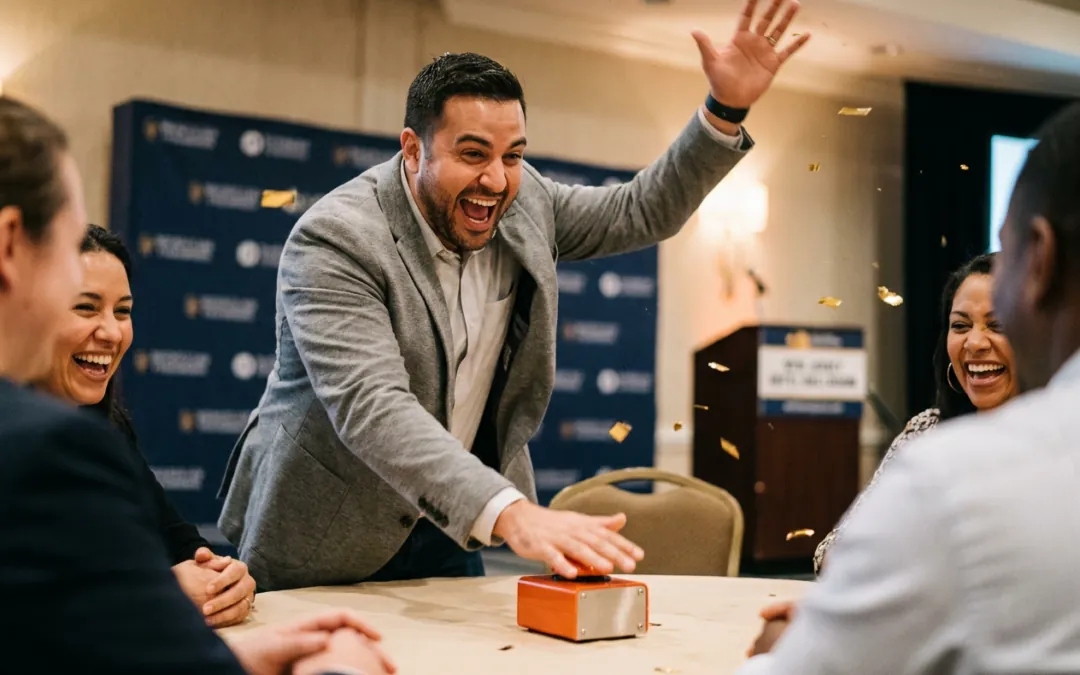
Company culture improves when you change what people actually experience on a Tuesday: who they talk to, what gets noticed, and whether the work feels shared. Slogans and values posters do not move it. Gallup found that U.S. employee engagement sat at 31% in 2025, down from a 36% peak in 2020, so most teams are running below the level they hit five years ago.
That is where most HR leaders get stuck. Budget is approved for one annual event, managers are already stretched, half the team works hybrid and rarely overlaps in the building, and the last engagement survey produced a 40-page report nobody acted on. The work below is built around those constraints, not around an ideal company with unlimited time.
What Actually Moves Culture, Ranked by Effort
Every intervention costs something: money, calendar time, or manager attention. This table sorts the common ones by what they change and what they cost to sustain.
Lever
What It Changes
Cadence
Who Owns It
Effort
Hosted group experience (live game show)
Cross-team familiarity, shared reference points
Quarterly or twice a year
HR or event planner
Low internal effort, vendor runs it
Manager one-to-ones
Clarity, recognition, early warning on attrition
Weekly, 30 minutes
Every people manager
High and permanent
Peer recognition program
Visibility for work outside a manager’s line of sight
Continuous
HR plus a platform
Medium, needs constant seeding
Culture committee
Employee voice, distributed ownership
Monthly meeting
Volunteer cross-functional group
Medium, fades without a charter
Annual engagement survey
Measurement only, no change on its own
Yearly
HR
Low to run, high to act on
Catered lunch or happy hour
Goodwill, limited mixing across teams
Monthly
Office manager
Low
Why Hybrid Schedules Break Culture Work
Culture work fails in predictable ways. Naming the failure mode before you start saves a year of effort.
The event gets confused with the outcome. A party is a nice afternoon. A structured group activity where people compete in mixed teams produces something different: names, inside jokes, and a reason to send the first Slack message next week.
Middle managers absorb every initiative. Anything that adds work to a manager’s week without removing anything gets quietly dropped by week three.
Introverts opt out of anything that looks like a performance. Open-mic formats and forced sharing punish the quietest half of the room. Team-based formats with a host who controls the pace let people contribute without standing alone.
Nobody owns follow-through. The survey ships, the results circulate, and no line manager is accountable for a single number.
Fix the Manager Relationship First
The manager sets the weather for a team. Gallup measured a sharp drop in one specific item among Gen Z and younger millennials: agreement that someone at work cares about them as a person fell from 54% in 2020 to 41% in 2025. That item is not fixed by a benefits package. It is fixed by a manager who runs a real weekly one-to-one and remembers what was said in the last one.
Give managers a short standing agenda: what moved this week, what is blocked, one piece of specific recognition, one question about workload. Thirty minutes, same slot, rarely cancelled. Cancelling the one-to-one sends a louder message than holding it.
Make Recognition Specific and Public
Generic praise reads as noise. Recognition works when it names the behavior, names the outcome, and lands where peers can see it. “Nice job” in a private message does nothing. “Priya rebuilt the intake form and cut our response time in half” in a team channel does a lot.
Set a floor rather than a target: every manager gives one specific, public recognition per week. Track it for a quarter, then let it become habit.
Give People Shared Experiences, Not More Meetings
Teams bond over things they did together, not over things they were told. That is why a hosted group activity outperforms another all-hands. A live game show format puts a marketing analyst and a warehouse supervisor on the same team, gives them a shared goal that has no career stakes, and lets an emcee handle the awkward first ten minutes so nobody has to volunteer to start.
The format matters more than the theme. Choose something where every person in the room plays, where the rounds are short enough that a slow start does not sink a team, and where the host reads the room and adjusts. Companies across New Jersey, New York and Connecticut build these into quarterly all-hands days precisely because the mixing is structural rather than optional. Our team building activities run on that principle: teams of mixed departments, a professional host, and scoring that keeps the whole room in it until the last round.
Measure With Two Questions, Not Twenty
Long surveys generate reports. Short surveys generate action. Ask two questions each quarter and publish the results:
Do you have the information and support you need to do your job well?
Would you recommend this team as a place to work?
Break the answers down by manager, not by department. Aggregate scores hide the two teams that are actually in trouble. Then pick one number and commit to moving it before the next survey.
Build Culture Into the Calendar
Anything that depends on spare time never happens. Put the culture work on the calendar the way you put quarterly business reviews on the calendar: dated, budgeted, and owned by a named person. A workable rhythm for a 50 to 300 person company looks like weekly one-to-ones, a monthly recognition round-up, a quarterly group experience that mixes departments, and one annual full-day event.
Set the budget the same way. A single hosted 90-minute game show starts at $3,595 in the New York metro area (see our pricing estimator), which is a small fraction of the cost of replacing one mid-level employee who leaves because nothing here felt worth staying for.
How to Choose Where to Start
Pick your starting point by the symptom, not by what is easiest to buy.
If people say they do not know what is expected of them, the problem is manager one-to-ones and clarity. Start there and nothing else. If people know their own job but have no idea who anyone in the next department is, the problem is structural isolation, and a hosted group experience fixes it faster than any communication plan. If good work goes unnoticed, start with recognition. If leadership genuinely does not know which of these is true, run the two-question survey first and spend the quarter acting on one answer.
Doing one of these properly beats launching four and sustaining none.
If your next step is a shared experience that actually mixes the room, tell us the date, the headcount, and what you want people talking about afterwards. Our team designs the format around your group, and you can start with the New Jersey team building options if your event is local.
Visible change in how a team talks to each other shows up within one quarter if you fix manager one-to-ones and add one shared experience. Measurable movement in engagement scores takes two to four quarters, because employees wait to see whether a change survives the first busy month. Anything promising a turnaround in weeks is selling an event, not a culture change.
What is the difference between company culture and employee engagement?
Culture is the set of behaviors a company actually rewards and tolerates. Engagement is how involved and committed an individual feels in their work. Culture is the environment, engagement is the response to it. You change engagement by changing the environment, which is why culture work starts with managers and shared experience rather than with perks.
Do team building activities really improve company culture?
They improve the specific thing they are designed to improve: familiarity and communication across teams that do not normally work together. That matters because people ask for help faster from someone whose name they know. A single activity with no follow-through changes nothing lasting, so treat it as one part of a quarterly rhythm rather than a fix on its own.
How much should a company budget for culture initiatives?
A practical planning figure for a mid-sized company is one hosted group event per quarter plus a small recognition budget. In the New York metro area a professionally hosted 90-minute game show starts at $3,595 for groups of 20 or more, and our pricing estimator shows the range for your group size. Compare that against your own cost of replacing an employee and the decision usually makes itself.
Who should own culture in a company that has no HR team?
Assign it to one named leader with budget authority and a standing slot on the leadership agenda, then form a small volunteer committee to generate ideas and run events. Culture without a named owner becomes everybody’s spare-time project and dies in the first busy quarter. The owner does not need to be a full-time HR professional, but the role does need real authority to spend and to schedule.
Is U.S. employee engagement actually getting worse over time?
Yes. Gallup measured U.S. employee engagement at 31% in 2025, down from a 36% peak in 2020. Most teams are performing below the level they hit five years ago, not above it.
New Jersey has a deep bench of team building companies, and they are not interchangeable. Some run hosted live shows that put an entire room on stage together. Some run venue-based activities where your group splits into rooms of six. Some are booking agencies that resell other people’s acts. Picking the wrong category is the most common and most expensive mistake an event planner makes.
That is why the selection criteria have changed. You are no longer buying an afternoon of fun. You are buying the one chance this quarter to get people who never overlap on the calendar into the same conversation. The seven companies below are all real, active New Jersey and tri-state operators, compared on the things that actually decide whether the day works: format, group size, and whether they publish a price.
Quick Comparison: 7 Team Building Companies in New Jersey
Provider
Base / Area Served
Format
Group Size
Published Starting Price
It’s PlayTyme Game Shows
Teaneck, NJ. NJ, NYC, CT
Hosted live game show, emcee plus full production, at your venue
Facilitated challenges, team olympics, workshops, multi-day retreats
Small to large
Not published
TeamUnity
West Orange, NJ
Game shows, picnics, casino nights, carnivals, licensed NJ entertainment agency
Small to very large
Not published
Bob Scott’s Game Show Night
NJ. Books NJ, NY, CT, PA, DE
Hosted TV-style game show with A/V production
20 to 300+
Not published
Watson Adventures
NYC based, runs NJ hunts in Morristown, Princeton, Hoboken, Newark
Hosted scavenger hunts, roughly 2 hours, in-person and virtual
Small to large, split into sub-teams
$650 weekends, $750 weekdays for a private game
Riddlesbrood Touring Theatre Company
Stratford, NJ. NJ, NY, PA, DE
Interactive murder mystery theatre with live actors, dinner theatre
Seated dinner sizes
Not published
All In Adventures
Rockaway and Woodbridge, NJ
Venue-based escape rooms, game show room, axe throwing
Split into small rooms
Not published
The Problems NJ Team Building Has to Solve
Four problems account for most disappointing corporate events in this market.
The activity only fits half the room. Escape rooms and axe throwing cap out at small groups. Book one for 120 people and you get six separate experiences running in parallel, which is the opposite of a shared one.
Nobody publishes a price. Most providers in this category quote privately, so a planner with a fixed budget spends two weeks collecting proposals before learning what is even possible.
Physical formats exclude people. Ropes courses, hatchet throwing and outdoor challenges quietly sideline anyone with a mobility limitation, an injury, or a dress code they were not warned about.
You booked an agency, not a performer. Booking marketplaces add a layer between you and the person who will actually stand in front of your staff. If something needs to change two days out, you are negotiating through an intermediary.
1. It’s PlayTyme Game Shows
Based in Teaneck and running corporate events across New Jersey, New York City and Connecticut since 2012, It’s PlayTyme builds team building around a hosted live game show. A professional emcee runs the room, the full set and sound system come with the booking, and the entire group plays as teams rather than watching a performance. Eight show formats are available, including Face 2 Face Feud, PlayPad Mania, Word Play, Lip Sync Challenge and Game Show Mania, and questions can be customized to your company.
Pricing is published rather than quoted behind a form. The 90-minute “Most Popular” package starts at $3,595 for groups of 20 or more, and our pricing estimator shows the range for your group size. A 60-minute “Budget-Friendly” option is also available. Included in every booking: professional host, game show set, audio and visual equipment, sound engineer, and prizes.
Advantages
Everyone in the room plays at once, so a 200-person all-hands stays one event instead of splitting into parallel activities.
Published price tiers by headcount, so a planner can budget before the first phone call.
Fully mobile production. The show comes to your office, hotel ballroom, conference venue or school auditorium.
Seated and low-physical by design, which keeps mixed-ability and mixed-age groups fully included.
An emcee absorbs the awkward opening minutes, so quieter employees contribute without having to volunteer first.
Content is customizable to company milestones, departments and inside references.
2. Team Building Unlimited
Team Building Unlimited is a New Jersey and Florida based facilitator with more than two decades of corporate work. Its catalog leans toward structured challenge programs: team olympics, mission-style problem solving, cooking competitions and tailgate challenges, plus workshops and multi-day retreat facilitation. Staff include certified educators and executive coaches, and the client list includes large enterprises.
Advantages
Strong fit when the brief is skills development rather than entertainment.
Fully portable programs that travel to your site or offsite venue.
Depth in multi-day retreat design, not just single sessions.
Disadvantages
No published pricing, so budgeting requires a proposal cycle.
Challenge formats often involve movement and hands-on tasks, which narrows participation for some groups.
Workshop-style content asks more of participants than a hosted show does, which can land badly at the end of a long conference day.
3. TeamUnity
TeamUnity operates out of West Orange and has been in the corporate event business under one name or another since the 1970s. It covers a wide catalog: game shows, company picnics, casino nights, carnivals and virtual events. The company is a licensed entertainment agency in New Jersey, which means it delivers some programs directly and sources outside performers for others.
Advantages
One vendor can cover a full company picnic or field day, not just a single activity.
Long operating history and a large corporate client base in northern New Jersey.
Useful when an event needs several entertainment elements at once.
Disadvantages
No published pricing.
The agency model means the person selling the event is not always the person delivering it.
Broad catalogs trade depth for range, so the team building component can be lighter than a specialist’s.
4. Bob Scott’s Game Show Night
Bob Scott’s Game Show Night is a New Jersey operator delivering TV-style hosted game shows with full audio and visual production. Formats include survey-answer and wheel-spin style rounds, and the company reports running over 100 shows a year across New Jersey, New York, Connecticut, Pennsylvania and Delaware for groups from 20 to 300+.
Advantages
Direct provider with a clear specialty rather than a broad catalog.
Production equipment included, so a plain conference room becomes a stage.
Comfortable across a wide group size range.
Disadvantages
No published pricing.
Service area stretches across five states, so travel and availability for a specific date need confirming early.
Fewer distinct show formats than a specialist with a larger catalog.
5. Watson Adventures
Watson Adventures has run hosted scavenger hunts since 1999 and is one of the few companies in this category that publishes a real starting price: private games start at $650 on weekends and $750 on weekdays. Its New Jersey coverage includes Morristown, Princeton, Hoboken, Newark and Liberty Science Center, and hunts typically run about two hours with teams competing on a route.
Advantages
Published starting price, which is rare in this market.
Site-specific hunts give a group a reason to explore a museum or downtown together.
Long track record with a large corporate client base.
Disadvantages
Groups split into sub-teams that spend the activity apart, so the whole company never shares one moment.
Outdoor routes depend on weather and on everyone being able to walk for two hours.
Harder to run inside a single ballroom during a conference agenda.
6. Riddlesbrood Touring Theatre Company
Riddlesbrood is a Stratford, New Jersey theatre company that has performed interactive murder mystery and dinner-theatre shows since 2000, touring New Jersey, New York, Pennsylvania and Delaware. Live actors work the room during a meal and guests solve the case across the evening.
Advantages
Distinctive format that pairs naturally with a seated dinner or holiday party.
Professional actors and a full production, with setup and teardown handled.
Large catalog of show titles, so a returning client gets something new.
Disadvantages
No published pricing.
Guests mostly watch and deduce rather than compete as teams, so it builds atmosphere more than cross-department contact.
Needs a dinner-service format, which limits it as a daytime conference session.
7. All In Adventures
All In Adventures runs venue-based entertainment centers with New Jersey locations in Rockaway and Woodbridge, offering escape rooms, a hosted game show room, axe throwing and other timed challenges under one roof. Corporate bookings require advance notice and groups rotate between activities.
Advantages
Several activity types in one building, so an afternoon can be rotated.
Fixed venue removes the need to arrange a space.
Chain operation with consistent delivery across locations.
Disadvantages
No published pricing.
Escape rooms cap at small groups, so a large company is split into many separate rooms.
Your team travels to them, which adds commute time to the workday and rules out pairing the activity with an on-site meeting.
Which NJ Provider Fits Your Group Size
Start with headcount, because it eliminates most of the field immediately. Under 30 people, almost any format on this list works and you should choose on taste. Between 50 and 300, you need a format built for one room: a hosted show keeps the group together, while escape rooms and hunts fragment it.
Then check the physical requirement against your actual roster. If anyone on the team has a mobility limitation, is pregnant, or is attending straight from a client meeting in business dress, an axe-throwing venue is not a neutral choice. Seated, team-based formats include everybody without anyone having to ask for an accommodation.
Third, decide whether you want development or connection. Facilitated workshops teach a framework. Hosted shows create shared memories and cross-department familiarity. Both are valid, but they are not substitutes, and an audience at 4pm on the last day of a conference will accept one and resist the other.
Finally, insist on a real number before you shortlist. A provider who publishes tiers by headcount lets you plan the rest of the day around a known figure. Compare our New Jersey team building activities against the quotes you collect, and if you want to see the formats first, browse the game show themes and tell us which one fits your crowd.
How much does a team building event cost in New Jersey?
Most New Jersey providers quote privately, so published figures are rare. Two exceptions give useful anchors: a 90-minute hosted game show starts at $3,595 for groups of 20 or more (see the pricing estimator on our pricing page), and private scavenger hunts start at $650 on weekends. Budget separately for venue, catering, travel and any customization.
How long should a corporate team building event last?
Seventy-five to ninety minutes is the sweet spot for a single activity inside a workday or conference agenda. It is long enough for teams to warm up and compete properly, and short enough that energy never dips. Full-day programs work for offsites and retreats, where the activity is one block among several rather than the whole event.
What is the difference between a booking agency and a direct provider?
A direct provider employs the host and owns the equipment, so the person you negotiate with is accountable for what happens on the day. An agency resells other people’s acts and adds a margin plus a layer of communication. Agencies are useful when you need several unrelated acts at once. For a single team building session, book direct.
Which team building format works best for a large group?
Hosted game shows scale best, because one emcee can run 200 people as competing teams in a single room with everyone watching the same scoreboard. Escape rooms, cooking classes and axe throwing all cap at small groups and force a large company into parallel sessions, which produces several small experiences instead of one shared one.
Can a team building event work for a hybrid team that rarely meets?
Yes, and hybrid teams are the strongest case for booking one. With most remote-capable employees now splitting the week between home and office, colleagues on opposite anchor days may never meet in person. Pick a date when everyone is on site, mix the teams deliberately across departments, and use the activity to create the first-name familiarity that hybrid schedules no longer produce on their own.
What is the most expensive mistake a planner makes when choosing a team building company in New Jersey?
Picking the wrong category of provider. Some run live hosted shows, some run venue-based room activities, and some are agencies reselling other providers’ acts. Confusing these categories means the format will not fit the group, and it is the most common and most costly error an event planner makes.
Why has the annual team event become more strategically important for New Jersey companies?
Because 52% of remote-capable employees now work hybrid, spending roughly 46% of the week in the office. For many New Jersey companies, the annual team event is now the only day the entire organization is in one room together.
You volunteered for the Project Graduation committee. The goal is simple: a safe, substance-free, all-night party that high school seniors actually want to attend. The stakes are real — since graduation season lands in the summer stretch that traffic-safety groups flag as the riskiest time of year for teen drivers, which is exactly why a supervised lock-in matters. Pulling it off is the hard part. You have to turn a school gym into a real venue and keep hundreds of 18-year-olds engaged from 10 p.m. to 5 a.m. The whole night rises or falls on one choice: entertainment that gets students participating instead of just watching.
For a Project Graduation committee, that means finding an activity that holds a big, mixed crowd of students who did not necessarily choose to be there. Forgettable activities split the room into small cliques. You want one central event that pulls the entire graduating class together for a shared grad night they actually remember. It has to run itself for the parent volunteers and land hard with the students.
A night this important needs the right partner. If you want to see how a professionally hosted game show solves your engagement problem and makes Project Graduation the highlight of the year, let’s talk. We turn anxious planners into heroes and skeptical seniors into cheering participants.
An all-night party is a marathon, not a sprint, with distinct phases of energy. Match your activities to how a big group of teenagers rises and fades through the night. Passive entertainment that works at 11 p.m. dies at 2 a.m. when energy dips. Here is a typical timeline and what works in each block.
Time Block
Energy Level
What Works
What Fails
10pm 11pm
High / Arriving
Upbeat music, plenty of food, photo booths, and walk-up attractions. A time for mingling and settling in.
Forcing everyone into a single structured activity. A quiet, low-energy start.
11pm 2am
Dropping / Mixed
A central, high-interaction event. A live game show gets everyone involved, focused, and laughing together, which beats the first wave of fatigue.
Passive entertainment like a movie. Activities that cater to small cliques or demand high physical energy.
2am 4am
Low / Waning
Lower-key options like a hypnotist, more food and drinks, and major prize giveaways that keep students invested in staying.
Launching another high-intensity, structured game. Expecting students to self-organize for long stretches.
4am 5am
Very Low / Exhaustion
Serving breakfast, running final prize drawings, and managing a calm, organized departure.
Starting any new, significant activity. A chaotic, disorganized checkout.
What Breaks When Seniors Get Bored and Leave
Planning Project Graduation is a huge undertaking for parent volunteers. Beyond the venue and fundraising, the real challenge is delivering an experience that lives up to the promise. Committees hit the same predictable hurdles every year.
Sustaining engagement: the biggest fear is that seniors get bored and leave. An eight-hour lock-in needs more than a DJ and pizza. You need a main event that holds a large, mixed crowd for a real stretch of the night.
Reaching every clique: the crowd spans athletes, artists, and academics, and an activity that only lands with the outgoing kids loses half the room. The main event has to give every type of student a way in.
Creating shareable moments: for seniors, a night is only as good as the photos and videos it produces. Entertainment that generates visible, camera-ready moments gives students a reason to stay and post instead of drift off.
Beating the unsanctioned after-party: Project Graduation competes with private, unsupervised parties. The on-site experience has to be compelling enough that staying in the gym feels like the better choice.
Venue limitations: most events run in a school gym. Turning that familiar, utilitarian space into a party takes work. You need a solution that brings its own atmosphere with backdrops, sound, and lighting.
Volunteer fatigue: committees are run by dedicated but exhausted parents who also chaperone overnight. The entertainment should cut their workload, not add to it. A provider who handles setup, execution, and teardown is essential.
Fundraising and budgeting: budgets run tight, built from local sponsorships and ticket sales. Every dollar counts, so you need an option that delivers maximum impact and value for the students.
Safety and supervision: the mission is fun, but the priority is safety. The entertainment has to be structured and professionally managed so chaperones can supervise the group with ease.
Top Project Graduation Entertainment Providers in NJ, NYC & CT
The right partner makes the event. We compared top tri-state providers that run interactive entertainment built for a large student event like Project Graduation.
1. It’s PlayTyme Game Shows
Since 2012, It’s PlayTyme Game Shows has been the large-group engagement specialist for schools and companies across New Jersey, New York, and Connecticut. We measure a great event by how many people join in, and our professionally hosted live game shows make that happen. For Project Graduation, we run a turnkey show built to be the high-energy centerpiece of the night, with every student in the game.
Location: Serving New Jersey, NYC & Connecticut.
Best for: A central, unifying experience for large student groups during the critical mid-event hours.
Format: Live, in-person hosted game shows, including Face-2-Face Feud (our Family Feud style game), trivia challenges, and more.
Standout features: A complete turnkey setup with all equipment, a host who knows how to work a student crowd, and our 100% satisfaction guarantee.
Pricing: Custom packages built around your event and budget.
Pros
Total participation: our formats let everyone in the room play along, not just the students on stage.
Turnkey for volunteers: we handle setup through teardown so your committee and chaperones can focus on the students.
Proven NJ, NYC, and CT track record: more than a decade of experience and 3,000+ events in the region.
100% satisfaction guarantee: every event is backed by it.
2. Hollyrock Entertainment
Hollyrock Entertainment has run TV-style game shows for over 25 years. They serve schools, camps, universities, and corporate clients across New York, New Jersey, Connecticut, and Pennsylvania. Their shows copy popular television formats and keep the crowd participating.
Location: NY, NJ, CT, PA and more.
Best for: School assemblies and fundraisers that want a traditional game show format.
Format: Live TV-style games like Brain Challenge, Corporate Feud, and Hollywood Squares-style rounds.
Standout features: A library of over 5,000 trivia questions, customizable content, and professionally designed sets.
Pros
Over two decades in the industry.
Wide service area across the Northeast.
Serves both education and corporate markets.
Cons
A broad focus means less specialization for the all-night Project Graduation format.
Website and marketing feel more traditional than newer providers.
3. Riddlesbrood Touring Theater Company
Riddlesbrood Touring Theater Company runs high-energy, comedy-focused game show parties across New Jersey, Pennsylvania, New York, and Delaware. The show centers on a charismatic MC and a portable system with podiums, buzzers, and video projection that fits most venues.
Best for: Groups that want heavy comedy and a theatrical host.
Format: Live comedy game shows with a portable setup.
Standout features: Comedy-first hosting, customizable trivia with personal content, and a full portable system.
Pros
Strong focus on the immediate NJ & NY region.
Comedy-first approach engages student audiences.
Brings its own portable equipment.
Cons
The core identity is a “touring theater company,” a different style than a pure game show.
The comedy-heavy style does not fit every school culture.
4. The Game Show Experience
The Game Show Experience builds high-production events that recreate a real TV studio. Based in New York with nationwide travel, they bring professional lighting, sound, and digital elements. They run both in-person and virtual events for corporate and school clients.
Location: New York & nationwide.
Best for: Corporate events or schools with larger budgets that want a TV-studio feel.
Format: In-person and virtual game shows with high production value.
Standout features: Deep branding and theme customization, high-quality A/V, and gamified training content.
Pros
High production quality creates an immersive experience.
Strong theme and content customization.
Virtual and hybrid options add flexibility.
Cons
Higher production value carries a higher price, which can stretch some Project Graduation budgets.
A national focus means less specific expertise in the NJ and CT school market.
5. Game Show Connection
Game Show Connection runs on-site, professionally hosted game shows in New York and Connecticut. Their formats include a Family Feud style game called ‘Team Face Off’ plus smartphone-based trivia. They have handled corporate parties, trade shows, and school assemblies.
Location: New York, Connecticut.
Best for: Companies and schools in NY and CT that want a straightforward, classic game show.
Format: On-site hosted games including ‘Team Face Off’ and ‘Smart Phone Trivia.’
Standout features: Experienced hosts, customizable trivia, and a variety of formats.
Pros
Explicitly serves the NYC and Connecticut regions.
Smartphone trivia makes it easy to involve a large crowd.
Experienced hosts with over a decade in the business.
Cons
Service area leans toward NY and CT, with less emphasis on New Jersey.
The range of offerings feels less focused than single-format specialists.
6. Ultimate Game Night Live
Ultimate Game Night Live is a Long Island company with over 30 years in entertainment. They provide a full turnkey solution for corporate, college, and school events, recreating classic TV game shows with professional production and hosting. They handle very large groups.
Location: Long Island (NYC area).
Best for: Large-scale events and colleges in the Long Island and NYC area.
Format: Professionally produced live game shows.
Standout features: Turnkey service, customizable questions, brandable sets, and groups up to 2,000 guests.
Pros
Decades of entertainment experience.
Handles very large audiences.
Brings a complete setup with all equipment.
Cons
The service area centers on Long Island, which can add travel costs for NJ or CT events.
A heavy corporate focus is less tailored to a high school lock-in.
Getting Project Graduation Entertainment Right the First Time
Picking the entertainment provider is the most important call your committee makes. Look past the price tag and focus on what makes the night work for your seniors. A great event is measured by how many students join in, not how many show up.
Look for a turnkey solution: your volunteers are chaperones, not roadies. Choose a provider that brings everything, the host, sound, set, buzzers, and expertise. Your job is to enjoy the show, not run it.
Prioritize total participation: ask how the format engages the whole audience. The best experiences are not just for the 8 to 10 students on stage; they let everyone in the room play along and shout out answers.
Vet for student-crowd experience: a corporate host is not the same as one who can command 300 seniors at 1 a.m. Look for a provider, like It’s PlayTyme founder Lisa Lawrence, with proven experience running a student crowd.
Confirm regional expertise: a local provider who knows the schools, venues, and culture in NJ, NYC, and CT reads your needs better than a national chain. They know what Project Graduation means.
Ask about guarantees: a confident provider stands behind the work. A 100% satisfaction guarantee matters on a fundraised budget.
Weigh each provider against those five questions, and one name will keep rising to the top for a Project Graduation crowd.
Ready to create an event every senior talks about for years? Contact It’s PlayTyme Game Shows today to see how our engagement model makes your Project Graduation a success.
Frequently Asked Questions (FAQs)
How far in advance should we book Project Graduation entertainment?
Book your main entertainment 4 to 8 months out. Many committees start planning in the fall for a June event. That lead time locks in your first-choice provider and date, since the best vendors fill up fast in the spring.
What’s the best way to keep 300+ high school seniors engaged all night?
Anchor the night with one central, highly interactive event. A live game show works because it pulls everyone together, focuses their energy, and runs on mass participation. That keeps students from splintering into small groups or drifting toward the door.
How do we handle safety and supervision with an outside vendor?
The host runs the show and manages the students in the activity, which keeps the group focused and contained. Your school’s volunteer chaperones stay responsible for overall safety and supervision across the venue.
Can the game show be personalized for our school and graduating class?
Yes. The best providers build the trivia and challenges around your school, from mascots and inside jokes to senior-year moments and staff names. A host who works your graduating class by name turns a generic game into your class’s send-off, which lands far harder than an off-the-shelf script.
How much does Project Graduation entertainment cost in NJ, NYC & CT?
Most providers, including It’s PlayTyme Game Shows, build custom packages rather than list a flat rate, because cost scales with group size, run time, and add-ons. Share your headcount and budget up front and ask for a written quote. On a fundraised budget, a 100% satisfaction guarantee also gives your committee peace of mind.