Your boss just dropped the news: the team needs a bonding event this week. You have no venue booked, no activity planned, and half the office already looks skeptical. Sound familiar? According to Gallup’s workplace research, business units with high employee engagement see 23% greater profitability. And yet, Gallup’s State of the Global Workplace report shows that only about one-third of U.S. employees are actively engaged at work.
Those numbers tell a clear story: team building is not optional. It drives measurable results. But when you need last minute team building in New Jersey, the real question is not “should we do this?” It is “who picks up the phone and says yes today?”
Finding a provider on short notice in New Jersey comes with real obstacles. Most event companies require weeks of advance booking. Outdoor options depend on weather and seasonal availability. Large group sizes narrow the field even further. And coordinating schedules across offices in Newark, Jersey City, Princeton, or the Shore means you need a provider that travels to you, not the other way around.
Key Issues with Last Minute Team Building Bookings
Planning team building on a tight timeline exposes problems that longer lead times hide. Here are the most common ones NJ organizers face:
Venue availability: Popular venues in North Jersey and Central Jersey book out weeks in advance, especially during Q4 and spring.
Minimum headcount requirements: Many providers require 20 or more participants, leaving smaller teams with fewer choices.
Travel logistics: Getting a team from Hoboken to a ropes course in the Pine Barrens takes planning that a 48-hour window does not allow.
Budget approval delays: Rushed events often mean skipping the formal procurement process, limiting you to lower-cost or bring-it-to-you options.
Quality concerns: Speed and quality rarely go together. Picking the wrong provider for a rushed event results in disengaged participants and wasted budget.
The table below ranks common team building formats by typical booking lead time so you know exactly what is realistic for your timeline.
1. It’s PlayTyme Game Shows (48-Hour Booking, Based on Availability)
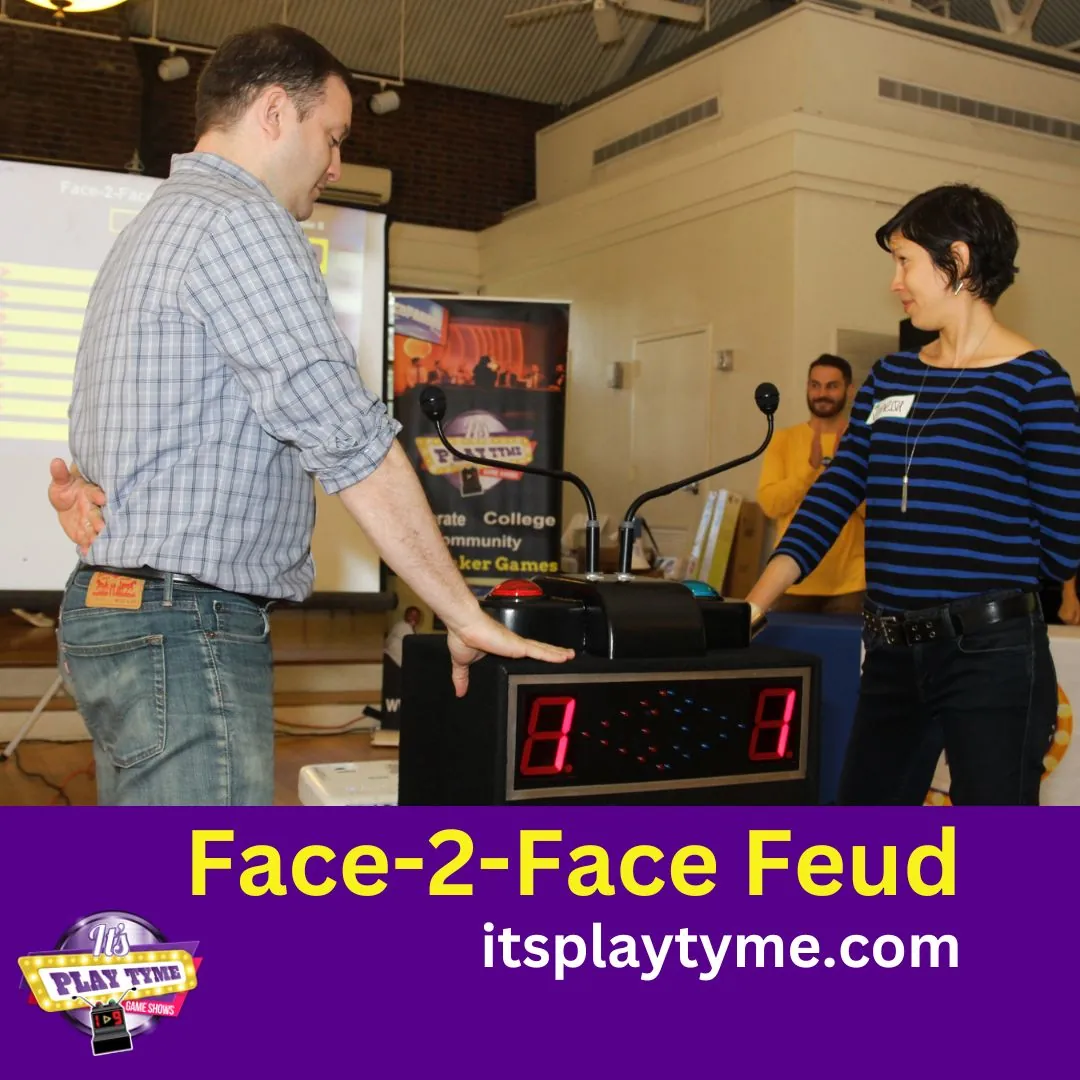
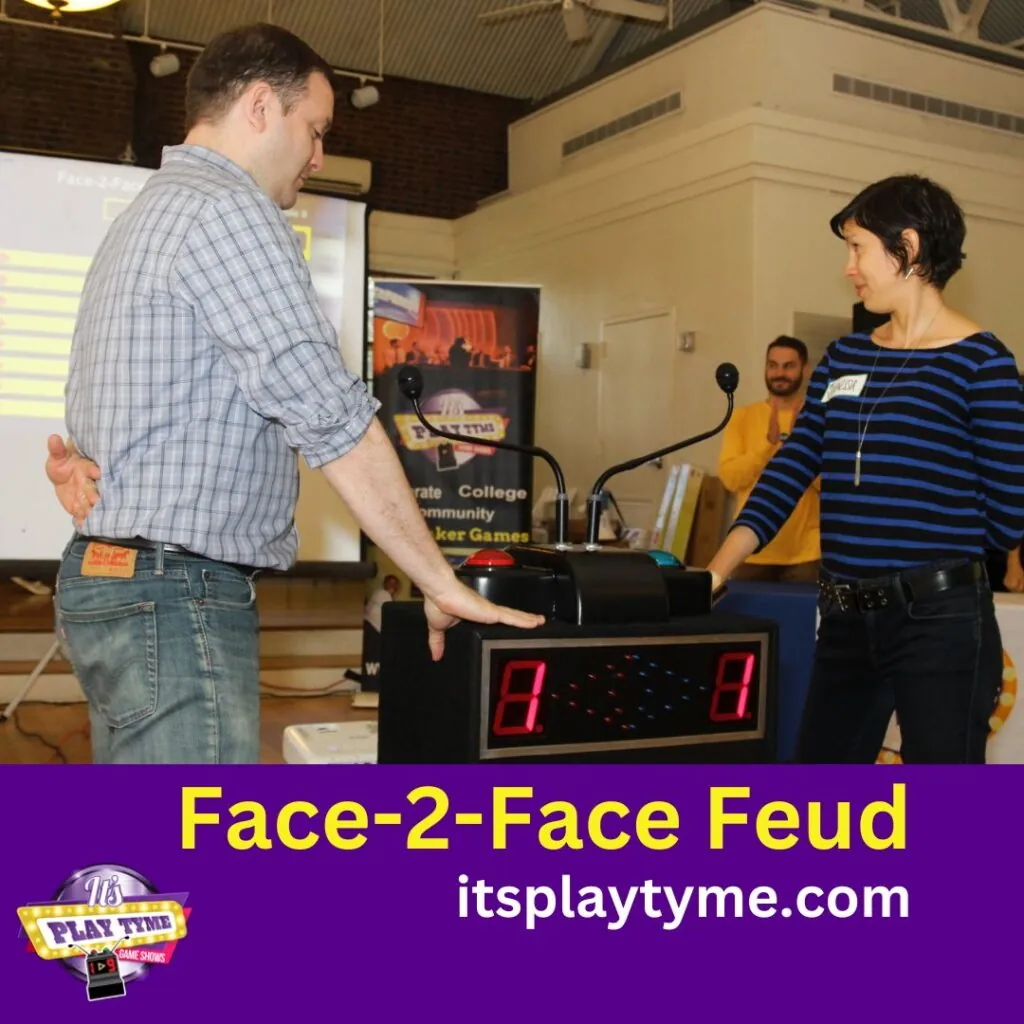
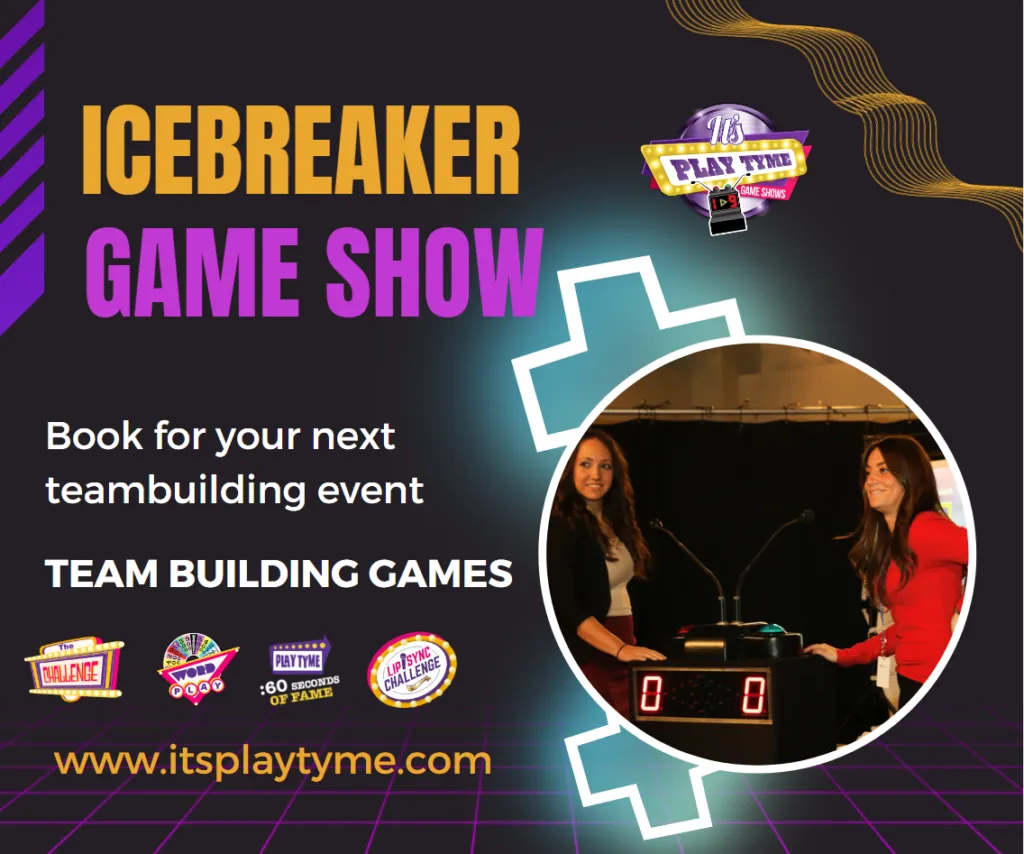
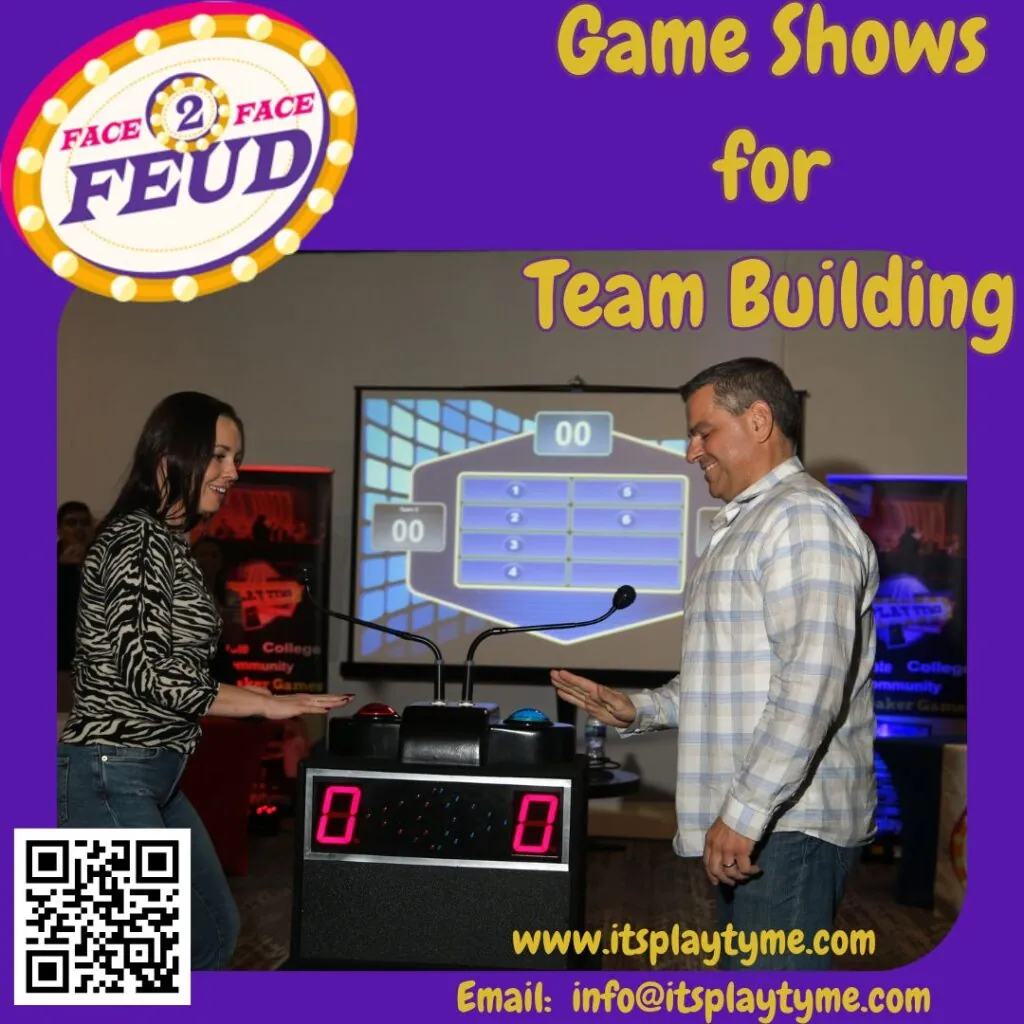
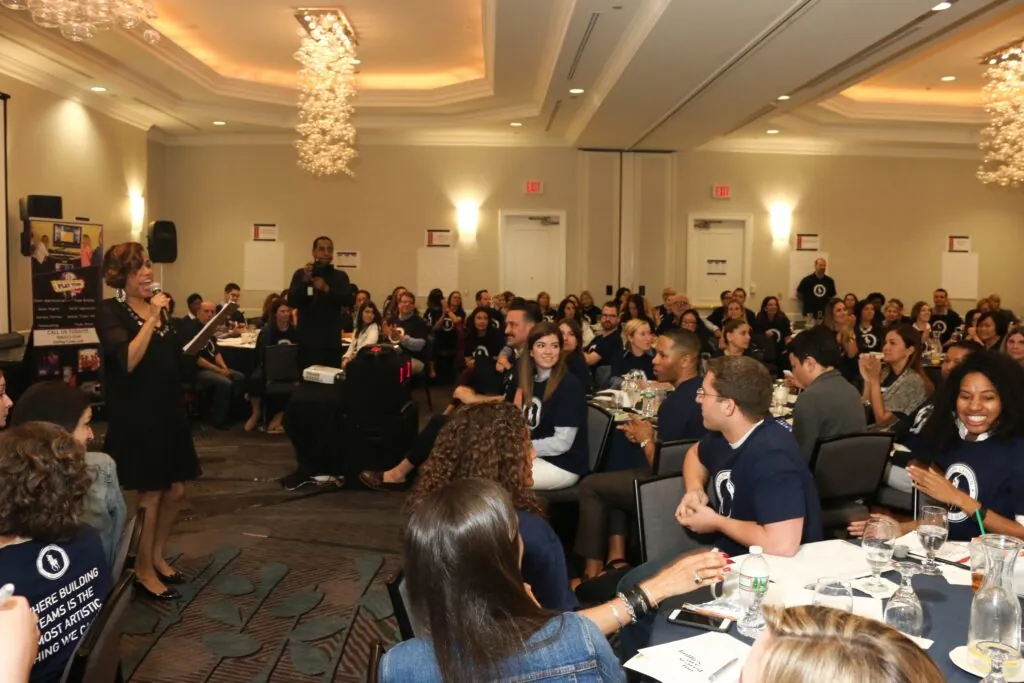
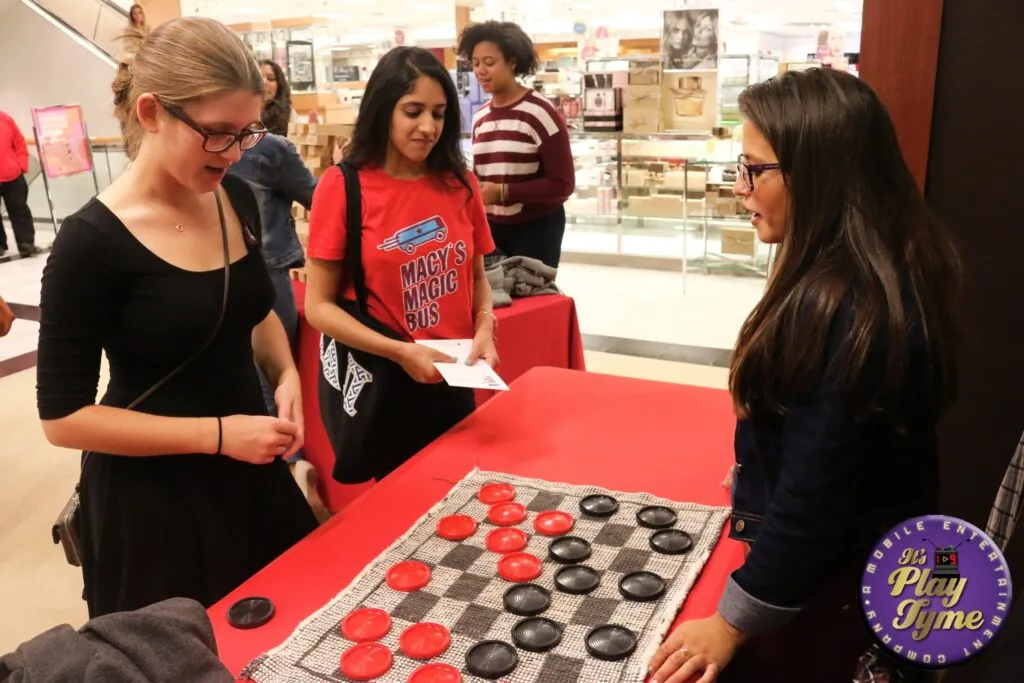
It’s PlayTyme Game Shows is one of the fastest options for last minute team building in New Jersey. They bring a full interactive game show experience directly to your office, conference room, hotel ballroom, or any venue across NJ, NYC, and Connecticut. No venue rental needed. No travel for your team. Just pick up the phone.
What makes them stand out for urgent bookings:
48-hour booking when the calendar allows (call to confirm your date)
They bring all equipment, a professional host, lighting, and sound
Group sizes from 20 to 300+ participants
Works for corporate teams, school assemblies, holiday parties, and fundraisers
Game formats include trivia, survey-style shows, minute-to-win-it challenges, and more
Setup takes about 30 minutes in any space with a power outlet
Advantages
Fastest booking turnaround in the NJ market
Fully mobile: they come to your location anywhere in the tri-state area
Scales from a small team lunch to a 500-person conference
No weather dependency, no travel coordination
Interactive format keeps every participant involved, not just watching
2. Virtual Team Trivia (Same-Day Booking)
If your team is remote or hybrid, virtual trivia platforms are a same-day option. Providers like Let’s Roam and QuizBreaker offer browser-based trivia games that require zero physical setup. You book online, send a link, and play within an hour.
Advantages
Zero setup time or physical space needed
Works across time zones and locations
Disadvantages
Screen fatigue is real for teams already on video calls all day
Less personal connection than in-person events
3. Improv Workshops (24 to 48 Hours)
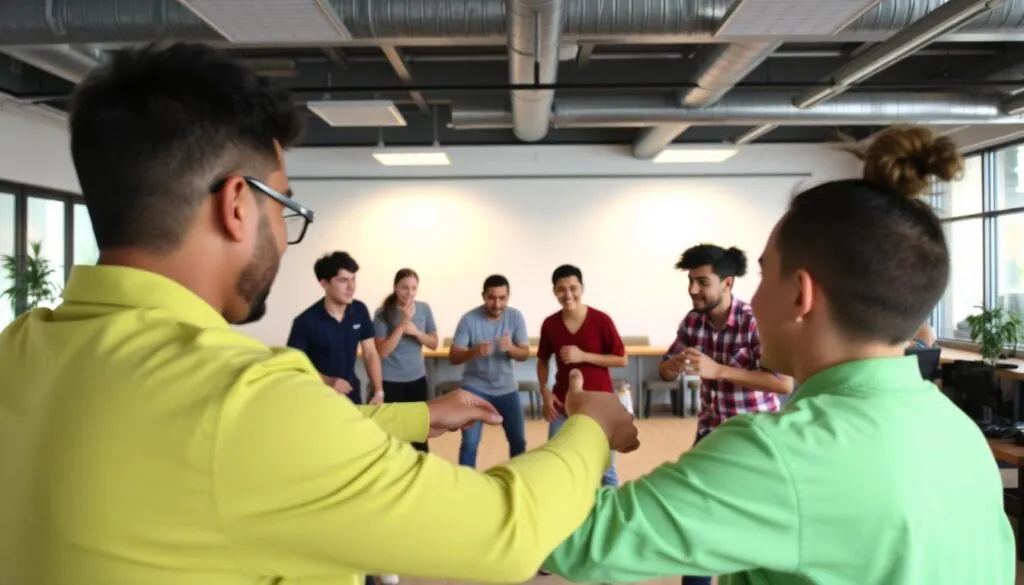
Companies like THEY improv offer corporate improv sessions across New Jersey. These workshops build communication, listening, and quick thinking. Most facilitators need at least 24 to 48 hours to confirm a date and travel to your site.
Advantages
Builds real communication skills participants use at work
Facilitators often travel to your office
Disadvantages
Not every team is comfortable performing in front of colleagues
Harder to scale past 50 people
4. Escape Room Outings (48 Hours)
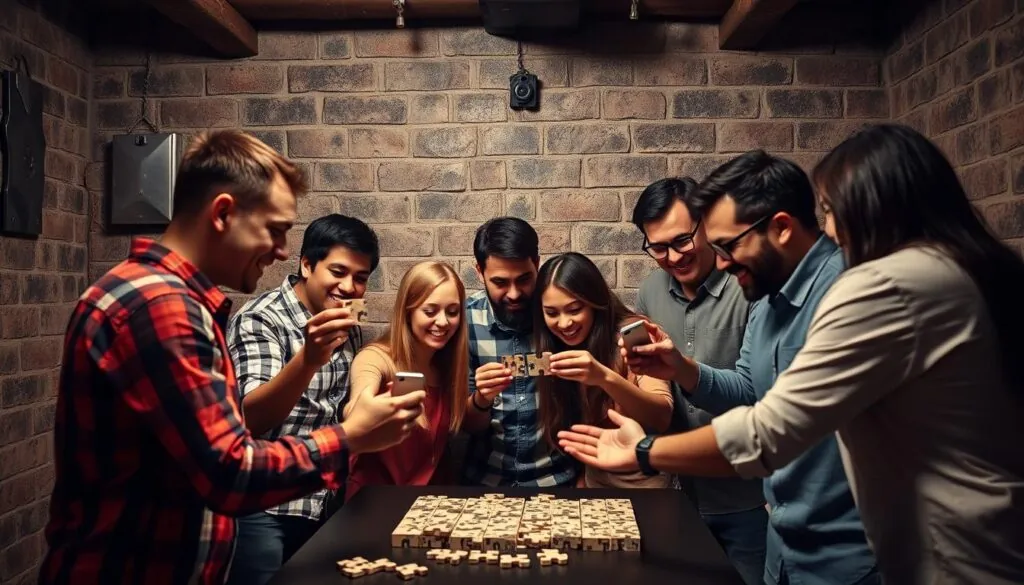
Escape rooms like Escapology in Holmdel or other NJ locations take groups of 4 to 12 per room. Most require at least 48 hours for group reservations. They work well for small teams focused on problem-solving under pressure.
Advantages
Strong collaborative challenge that feels genuinely fun
No facilitator needed beyond the venue staff
Disadvantages
Small room capacity means large teams split into separate groups with no shared experience
Team must travel to the venue
5. Cooking Team Challenges (48 to 72 Hours)
Culinary team building through providers like Passion for Spices in Summit, NJ, runs around $195 per person for groups of 18 or more. These events pair well with teams that enjoy food and low-pressure socializing. Expect 48 to 72 hours minimum for booking.
Advantages
Casual, low-pressure environment that encourages natural conversation
Teams produce something tangible (and edible)
Disadvantages
Dietary restrictions and allergies add complexity
Capacity usually caps around 50 participants
6. Indoor Go-Karts and Arcades (48 to 72 Hours)
Venues like iPlay America in Freehold offer go-karts, laser tag, ropes courses, and arcade games under one roof. Corporate group bookings typically need 48 to 72 hours. These work for high-energy teams that want competition without structured facilitation.
Advantages
Multiple activities in one venue keeps different personalities engaged
Good for larger groups (facilities hold 100+ people)
Disadvantages
Travel required to the venue (Freehold is Central Jersey)
Less structured team building, more group entertainment
7. Guided Scavenger Hunts (3 to 5 Days)
App-based scavenger hunts from companies like Outback Team Building send teams through a city or campus solving clues and completing photo challenges. They operate across New Jersey but need 3 to 5 business days to customize the route and confirm logistics.
Advantages
Gets teams moving and exploring together
Works in any walkable area
Disadvantages
Weather-dependent for outdoor routes
Lead time makes this a poor fit for same-week needs
8. Outdoor Ropes and Adventure Courses (5 to 7 Days)
Adventure parks like TreEscape or FLGX NJ offer zip lines, aerial obstacles, and ropes courses. Pricing runs $59 to $95 per person. Group bookings require 5 to 7 days advance notice, and activities are seasonal (typically April through November).
Advantages
Physical challenge builds trust and shared accomplishment
Memorable and different from typical office activities
Disadvantages
Seasonal and weather-dependent
Physical requirements exclude some participants
9. Volunteer and Community Service Projects (7 to 10 Days)
Organizing a team volunteer day through organizations like the Community FoodBank of New Jersey or Habitat for Humanity requires coordination with the nonprofit, background checks in some cases, and supply logistics. Plan on 7 to 10 business days minimum.
Advantages
Builds purpose and pride beyond typical entertainment
Positive PR and community impact
Disadvantages
Longest lead time on this list
Limited availability based on the nonprofit’s schedule
10. Custom Corporate Retreats (2 to 4 Weeks)
Full-service retreat planners like TeamBonding build multi-day offsite experiences with facilitated workshops, meals, lodging, and transportation. Pricing for facilitated events runs $75 to $105 per person for a 100-person group. These are the gold standard for deep team development, but they require 2 to 4 weeks of planning at minimum.
Advantages
Deepest team development impact over multiple days
Fully customized to your organization’s goals
Disadvantages
Highest cost and longest lead time
Requires significant coordination across calendars
What to Ask Before Booking Last Minute Activities
Start with your timeline, not your wish list. If you need something this week, options 1 through 3 on this list are your realistic choices. If you have a full week, options 4 through 6 open up. Anything beyond that, and you are no longer in “last minute” territory.
Next, consider your group size. A team of 12 fits in an escape room. A department of 80 does not. Mobile providers like It’s PlayTyme scale from small huddles to full company events without splitting the group into separate experiences.
Finally, think about the outcome you actually need. If the goal is laughing together and resetting after a tough quarter, a game show or cooking class does that. If you need to build communication habits, improv or a structured workshop is the better fit. Match the format to the goal, not the trendiest option on social media.
Ready to book something for this week? It’s PlayTyme’s corporate game shows are built for exactly this situation. Call directly to check 48-hour availability, or fill out the contact form for a fast response. Your team is waiting. Give them a reason to look forward to work this week.
How far in advance do I need to book last minute team building in New Jersey?
It depends on the activity type. Mobile game show providers like It’s PlayTyme can book with 48 hours’ notice when availability allows. Escape rooms and cooking classes typically need 48 to 72 hours. Outdoor adventures and retreats require a week or more.
Do any team building companies in New Jersey come to your office?
Yes. It’s PlayTyme Game Shows brings a full interactive experience to any location in New Jersey, New York City, or Connecticut. They set up in conference rooms, lobbies, cafeterias, or outdoor spaces. Improv facilitators also travel to your site in most cases.
Is last minute team building in New Jersey effective?
Absolutely. The value of team building comes from shared experience and positive interaction, not from how far in advance you planned it. A well-run 60-minute game show generates the same laughter, collaboration, and energy as an event booked months ahead. The key is choosing a provider with professional facilitation, not a DIY activity thrown together at the last second.
Strong teams are built long before students reach the workforce, and the habits start in high school classrooms, clubs, and athletic programs. Gallup reports that only about 23 percent of employees worldwide are engaged at work, a gap that traces back to weak collaboration skills, according to the Gallup State of the Global Workplace report. Teaching teenagers to communicate and cooperate now pays off for decades.
Connection matters just as much as skill. Pew Research finds that 95 percent of teens have access to a smartphone, and constant screen time can crowd out face-to-face bonding, according to Pew Research Center. Structured team building pulls students out of their feeds and into real conversation, which is where trust actually forms.
Teachers and advisors know the obstacles. You have a tight class period, a mixed group of personalities, a few students who dominate and a few who disappear, and almost no budget. You need activities that include everyone, run on a schedule, work without special equipment, and feel fun rather than forced. The ideas below cover both the do-it-yourself end and the professionally hosted tier.
What Makes Team Building Work for Teenagers
High schoolers spot a forced exercise instantly, so the best activities disguise the lesson inside genuine fun. When a group laughs together while solving a problem, the cooperation feels natural and the skills stick.
Shared stakes also drive engagement. A common goal, a friendly scoreboard, or a real deadline gives every student a reason to contribute. The goal is participation from the quiet students, not just the loud ones, and good design pulls everyone in.
Quick DIY Activities for the Classroom
These cost nothing, fit inside one class period, and need no special setup. They work for advisory periods, the first day of a club, or a team practice.
Fast icebreakers
Two Truths and a Lie, played in rotating small groups
Common Ground, where teams race to list ten things everyone shares
Human Knot, a physical puzzle that forces communication
Problem-solving rounds
Marshmallow tower build with spaghetti and tape
Blindfold maze, where one partner guides another by voice only
Escape-style puzzle packets that small teams race to crack
Rotate groups between rounds so students work with classmates they rarely talk to. That single rule turns a fun hour into real relationship building.
Activities for Sports Teams and Clubs
Athletic squads and club groups already share a goal, so team building sharpens chemistry rather than creating it from scratch. Focus on communication under pressure.
Relay challenges that mix athletic and mental tasks
Strategy games where the team plans, executes, then debriefs
Captain rotations so every member leads a drill once
Group goal-setting sessions with written, visible targets
Debriefing matters most. After each activity, a short discussion about what worked turns a fun game into a lasting lesson about trust and roles.
The Time and Buy-In Problems Schools Run Into
Time is the first hurdle. A 45-minute period barely fits setup, play, and reflection, so activities must start fast and need almost no instruction. Pick games students grasp in one sentence.
Mixed buy-in is the second hurdle. Some students arrive eager and others arrive skeptical, and one disengaged group can stall the room. Friendly competition and a visible scoreboard pull reluctant students in without singling anyone out.
Logistics finish the list. Limited space, no budget, and a wide range of physical abilities all narrow your options. Choose inclusive activities that work in a standard classroom and never depend on athletic skill to win.
The Premium Tier: A Professionally Hosted Game Show
When the occasion calls for something bigger than a classroom game, a hosted game show lifts the whole experience. A professional host, real buzzers, a giant scoreboard, and a fast-paced format turn an entire grade into one charged room. It’s PlayTyme Game Shows runs interactive programs for schools across New Jersey, New York City, and Connecticut, designed so every student plays rather than watches.
The hosted format solves the participation problem on its own. Team-based rounds put quiet students on equal footing with the outgoing ones, and the energy of live competition keeps a packed gym engaged from the first question to the final round. For pep rallies, end-of-year events, or club kickoffs, it delivers a shared memory that a worksheet never could.
Pairing both tiers gives advisors the most range. Use the free DIY games for weekly practice and connection, then bring in a hosted show for the marquee event that everyone talks about for months.
Building a Year-Long Team Building Plan
Spread activities across the calendar rather than cramming them into one day. Open the year with icebreakers, weave problem-solving games into the middle months, and close with a large group event that rewards the bonds students built.
Track what works for your specific group. Note which games drew the quiet students out and which fell flat, then repeat the winners. A simple log turns scattered activities into a real program that improves every term.
Want help with the marquee event your students will remember? Send the details through our contact page, and explore our team building programs built for high school groups of any size. For all-grade celebrations, our school programs bring the same energy to the whole student body.
Matching the Activity to the Moment for Students
Match the activity to the moment. For a quick connection inside class, reach for a free icebreaker or a problem-solving round that runs in fifteen minutes. For a team that needs chemistry under pressure, choose strategy games with a real debrief afterward.
For the events that define a school year, step up to a professionally hosted game show that puts every student in the game at once. Weigh your time, your space, and your goal, then pick the tier that fits, and rotate groups so the quiet voices get heard alongside the loud ones.
What are the best team building activities for high school students?
The best activities mix fun with a clear goal and include every personality. Quick wins include Two Truths and a Lie, the marshmallow tower build, and the human knot, while a hosted game show works for whole-grade events that put every student in the action.
How do you include shy or reluctant students?
Use team-based formats and rotating groups so no one is singled out and every team needs each member. Friendly competition and a visible scoreboard pull reluctant students in naturally, without forcing anyone to perform alone.
Why use a hosted game show for high school team building?
A hosted game show turns an entire grade into one engaged room with a professional host, real buzzers, and team rounds. It guarantees full participation and creates a shared memory that simple classroom games rarely match.
Short Answer: What Are Funny Employee Recognition Awards?
Funny employee recognition awards are humorous workplace awards designed to celebrate employees’ personalities, habits, skills, and everyday office moments in a fun and memorable way. Popular examples include titles like “The Caffeine Connoisseur,” “Reply-All Rookie,” “Spreadsheet Sorcerer,” and “Zoom Filter Fanatic.” Companies often use these awards during holiday parties, employee appreciation events, team-building activities, and end-of-year celebrations to boost morale, encourage laughter, and make employees feel genuinely appreciated without the event feeling overly formal.
Picture this: your team is gathered for an employee appreciation event, expecting the usual speeches and predictable awards. Then someone wins “The Reply-All Rookie” award. Another employee gets crowned “The Caffeine Connoisseur.” Suddenly, the room changes.
People are laughing. Conversations start flowing naturally. Even the quietest employee in the office is smiling, participating, and finally letting their guard down.
That’s the power of funny employee recognition awards.
In today’s workplace, employees don’t just want another generic plaque or awkward team activity. They want experiences that feel human, memorable, and genuinely enjoyable. A little humor breaks tension, encourages connection, and helps people feel appreciated without forcing interaction.
In fact, workplaces that create moments of laughter and shared experiences often see stronger collaboration, better morale, and higher employee engagement. Adding funny awards turns ordinary employee recognition into moments people actually remember long after the event ends.
The Importance of Yearly Employee Recognition
Recognition in the workplace has always been a critical driver of morale and productivity. But traditional methods, like generic plaques or repetitive “Employee of the Month” titles, can feel impersonal or stale. Funny awards add a personal, engaging, and impactful touch.
1. Combines Appreciation with Fun
Recognizing someone’s efforts doesn’t have to be formal or serious to be meaningful. Giving out funny employee recognition awards strikes the perfect balance between acknowledgment and entertainment.
Imagine presenting the “Spreadsheet Sorcerer” award to your Excel guru or the “Tech Whisperer” award to your IT lifesaver. Not only do employees feel seen and appreciated, but they also walk away with a smile.
2. Strengthens Workplace Relationships
Recognition that taps into individual quirks and unique contributions fosters inclusivity and understanding.
Funny awards let employees know they’re valued for who they are, not just what they do. Titles like “TMI Champion” or “Meeting Monopolizer” celebrate personalities in a playful way, encouraging a culture where differences are respected and embraced.
How Funny Employee Recognition Awards Create Camaraderie
Recognition is the heartbeat of any successful workplace, but let’s face it: traditional employee recognition methods can sometimes feel, well, bland.
That’s where funny awards come in! By celebrating your team’s quirks and unique personalities, you’re not just handing out certificates, you’re fostering a sense of belonging and camaraderie.
Here’s why this works:
Breaks the Ice: Funny awards provide a non-threatening way to acknowledge everyone, from your star performers to the quiet achievers.
Encourages Bonding: Shared laughter over a “Reply-All Rookie” award can turn colleagues into friends.
Boosts Morale: Recognition paired with humor is an instant mood booster, transforming even the most mundane workday into a memorable one.
Promotes Team Spirit: Everyone gets to see the lighter side of their coworkers, building stronger, more genuine relationships.
These awards remind employees that their individual quirks and contributions, big or small, don’t go unnoticed. In fact, they’re celebrated!
Get ready to take your employee recognition game to the next level? Whether you’re planning a holiday party, team-building event, or just want to inject some fun into your workplace, this list of 275 funny employee recogntion awards is your secret weapon. From celebrating the “Spreadsheet Sorcerer” to honoring the “Lunch Bandit,” you’ll find a perfect match for every personality on your team.
Dive into the list now and discover creative, laugh-out-loud ways to appreciate your employees! By the end of this article, you’ll have all the inspiration you need to transform your next recognition event into a hilarious, morale-boosting celebration.
Turning Funny Employee Recognition Awards Into an Interactive Company Event
Many HR teams search for funny employee recognition awards when planning ways to celebrate their staff. Titles like “The Office Comedian” or “The Spreadsheet Wizard” add personality and humor to the moment. But when companies want recognition to feel truly memorable, they often take it further by turning the awards ceremony into a live, interactive team experience.
Instead of simply announcing winners, teams participate in quick trivia rounds, survey games, or audience challenges before awards are revealed. This builds anticipation, laughter, and shared moments. Across New Jersey, New York City, and Connecticut, many organizations combine recognition with professionally hosted game show activities, transforming a routine awards presentation into a high-energy employee appreciation event. See how this works as corporate team building in New Jersey or team building in NYC.
Planning a Company Event for Your Team?
Across New Jersey, NYC, and Connecticut, companies book professionally hosted game show experiences for:
Humor in the workplace isn’t just about cracking jokes: it’s a secret ingredient to creating a thriving, collaborative, and happy environment.
Funny employee recognition awards provide an avenue to celebrate individuality while promoting a lighthearted, stress-free culture.
1. Breaks the Monotony
Let’s face it: work can sometimes feel like an endless cycle of meetings, deadlines, and reports. Injecting humor into recognition events shakes up the routine and reminds employees that it’s okay to have fun while getting things done.
A witty award like the “Most Likely to Forget Their Badge” can turn a mundane office day into one everyone will remember, and laugh about, for weeks.
2. Encourages Bonding and Teamwork
Laughter is contagious, and funny awards have a way of breaking down barriers and fostering camaraderie. When employees share a laugh over titles like “The Desk Decorator Extraordinaire” or “Lunch Bandit,” it creates connections beyond work tasks.
These moments of shared humor cultivate stronger bonds, making teams more cohesive and effective.
3. Reduces Stress and Fosters Creativity
Workplace stress is a reality, but humor acts as a powerful antidote. Funny awards bring joy, lighten the atmosphere, and help employees recharge emotionally.
They also encourage out-of-the-box thinking after all, creativity flourishes when people feel relaxed and open. A recognition moment with a twist, like awarding the “Nap Time Ninja” or “Coffeeholic,” turns stress into smiles and inspires employees to bring their authentic selves to the table.
Funny employee appreciation awards aren’t just about handing out laughs: they’re about creating a vibrant, engaging workplace culture. By using humor to celebrate individuality and team spirit, you can boost morale, deepen connections, and make workdays a lot more enjoyable for everyone.
Ready to spread some laughs and recognition? Keep reading to explore 275 witty award ideas that will transform your next employee celebration into an unforgettable event!
Find the Right Game Show for Your Staff
Pick the Ideal Match for Your Team’s Unique Goals and Needs – Click Below
GAME SHOW THEMES
275 Funny Employee Appreciation Awards Comprehensive List
Recognizing employees doesn’t have to be all plaques and formalities: sometimes, a good laugh is the best way to say “you’re awesome.” Funny employee appreciation awards are the perfect way to celebrate your team’s quirks, bring everyone together, and turn an ordinary day into a hilarious memory.
Whether you’re honoring the “Zoom Filter Fanatic,” the “Caffeine Connoisseur,” or the “Spreadsheet Sorcerer,” this comprehensive list of 275 witty awards has something for everyone.
From the quiet achievers to the office comedians, there’s an award to fit every personality and leave your team grinning from ear to ear.
Ready to add some fun to your next celebration? Dive into the ultimate list of funny awards and discover creative, laugh-out-loud ways to show your team how much they’re appreciated!
Productivity and Work Habits Award
The “Early Bird Gets the Worm” Award: For the first one in every day.
The “Clock Puncher Extraordinaire” Award: For always leaving right at 5 PM.
The “Overtime King/Queen” Award: For living at the office.
The “Spreadsheet Sorcerer” Award: For the Excel wizard.
The “Procrastination Prodigy” Award: For working best under the deadline.
The “Email Essayist” Award: For the longest emails ever written.
The “To-Do List Titan” Award: For someone who loves ticking boxes.
The “Can I Get an Extension?” Award: For always asking for more time.
The “Post-It Picasso” Award: For someone whose desk is a sticky note art gallery.
The “Coffeeholic” Award: For someone with a permanent coffee cup in hand.
Tech and IT Award
The “Tech Whisperer” Award: For fixing IT issues with no effort.
The “Password Reset Wizard” Award: For forgetting passwords daily.
The “Can You Hear Me Now?” Award: For always struggling with Zoom.
The “Ctrl+Z Savior” Award: For undoing all mistakes.
The “404 Error Award”: For being perpetually lost in technology.
The “Gadget Guru” Award: For showing off all the cool tech gadgets.
The “Cloud Overlord” Award: For mastering file-sharing chaos.
The “Help Desk Hero” Award: For fixing everything except their own issues.
The “Zoom Filter Fanatic” Award: For always using quirky filters.
The “IT Illiterate Genius” Award: For breaking things only they can fix.
Book a Game Show!
[We bring the full game show experience to your location in NJ, NYC, or CT and run the show from start to finish]
The “Trivia Trooper” Award: For knowing obscure facts.
The “Office Unicorn” Award: For being one-of-a-kind.
The “Can’t Stop, Won’t Stop” Award: For endless energy.
The “Most Likely to Be Famous” Award: For being a star in the making.
The “Memorable One-Liner” Award: For unforgettable zingers.
The “Walking Alarm Clock” Award: For reminding everyone about deadlines.
The “Random Fact Generator” Award: For spouting trivia at all times.
The “Social Butterfly” Award: For connecting with everyone.
The “Zen Master” Award: For staying calm under pressure.
Random Fun Awards (Continued)
The “Most Likely to Google It” Award: For always fact-checking.
The “Weekend Warrior” Award: For having the best weekend stories.
The “Vacation Visionary” Award: For planning amazing trips.
The “Desk Detective” Award: For snooping through the office for answers.
The “Most Likely to Forget Their Badge” Award: For always getting locked out.
The “Happy Hour Hero” Award: For organizing the best after-work drinks.
The “Fitness Fanatic” Award: For sneaking workouts into the workday.
The “Opening Act Ace” Award: For making team introductions fun.
The “Most Likely to Start a Podcast” Award: For sharing stories nonstop.
The “Human Alarm Clock” Award: For keeping everyone on time.
Crisis Management and Problem Solving
The “Firefighter Award”: For always putting out metaphorical fires.
The “Calm in the Storm” Award: For keeping cool under pressure.
The “Troubleshooting Titan” Award: For solving the unsolvable.
The “Crisis Whisperer” Award: For managing emergencies like a pro.
The “All-Weather Warrior” Award: For braving the commute in any conditions.
The “Backup Plan Boss” Award: For always having a Plan B (and C).
The “MacGyver Award”: For fixing things in unconventional ways.
The “Quick Thinker” Award: For last-minute genius ideas.
The “Triage Expert” Award: For prioritizing tasks under stress.
The “Problem Solver Extraordinaire” Award: For making challenges disappear.
Team Building and Morale
The “Hype Machine” Award: For boosting everyone’s energy.
The “Team Glue” Award: For holding everyone together.
The “High Five Hero” Award: For spreading positivity one high five at a time.
The “Lunchroom Legend” Award: For rallying the team during breaks.
The “Spirit Squad Leader” Award: For bringing enthusiasm to every event.
The “Motivational Master” Award: For encouraging others to keep going.
The “Energy Amplifier” Award: For spreading good vibes.
The “Workplace Warrior” Award: For inspiring everyone to push through tough days.
The “Friendship Builder” Award: For connecting coworkers effortlessly.
The “Morale Booster” Award: For always keeping the mood light.
Office Humor and Jokes
The “Pun King/Queen” Award: For legendary wordplay.
The “Laughing Fit Inducer” Award: For creating uncontrollable giggles.
The “Meeting Roaster” Award: For making meetings entertaining.
The “Office Prankster” Award: For harmless, hilarious pranks.
The “Sarcasm Supreme” Award: For delivering witty sarcasm on cue.
The “Dad Joke Hall of Fame” Award: For the cheesiest humor around.
The “Most Likely to Make You Laugh” Award: For comedic timing.
The “Awkward Silence Filler” Award: For breaking uncomfortable moments.
The “Giggle Guru” Award: For laughing at everything, always.
The “Class Clown” Award: For being the funny bone of the team.
WFH (Work from Home) Awards
The “Pajama Professional” Award: For best WFH attire.
The “Background Blur Expert” Award: For hiding the messy room.
The “Pet Cameo King/Queen” Award: For featuring furry coworkers in Zoom calls.
The “Muted but Talking” Award: For forgetting the mute button.
The “Most Likely to Work in Bed” Award: For mastering laptop lounging.
The “WFH Snack Stash” Award: For endless snack breaks.
The “Wi-Fi Warrior” Award: For fighting constant connection issues.
The “Least Likely to Turn On Camera” Award: For hiding during every meeting.
The “Virtual Background Virtuoso” Award: For creative video call settings.
The “Most Likely to Forget a Meeting” Award: For needing constant reminders.
Over-the-Top Sarcastic Awards
The “Participation Trophy” Award: For simply showing up.
The “Master of Doing the Bare Minimum” Award: For scraping by with effort.
The “Can’t Be Bothered” Award: For avoiding extra work at all costs.
The “Most Likely to Call in Sick on a Friday” Award: For “mysterious” timing.
The “Long-Winded Email” Award: For turning one sentence into five paragraphs.
The “Break Time Enthusiast” Award: For maximizing downtime.
The “Out of Office Forever” Award: For always being on vacation.
The “Delegate Like a Pro” Award: For passing tasks to everyone else.
The “Overthinker Extraordinaire” Award: For turning small problems into big ones.
The “Most Likely to Win the Lottery and Leave” Award: For dreaming big.
Special Mention Awards
The “Unsung Hero” Award: For being quietly indispensable.
The “Jack/Jill of All Trades” Award: For doing a bit of everything.
The “Silent Superstar” Award: For excelling without making noise.
The “Best Backup” Award: For being the ultimate team player.
The “Fix-It Fairy” Award: For solving problems nobody else wants.
The “Brainstorm Beast” Award: For dominating brainstorming sessions.
The “Office MVP” Award: For consistently outperforming expectations.
The “Rising Star” Award: For rapid growth and potential.
The “Most Reliable” Award: For always being dependable.
The “Office Rockstar” Award: For shining in every way.
Final Few: For Office All-Stars
The “Legendary Legacy” Award: For leaving a mark on the team.
The “Best Overall” Award: For being the ultimate team member.
The “Walking Sunshine” Award: For lighting up the office every day.
The “Dream Team Member” Award: For being a joy to work with.
The “Hall of Fame” Award: For long-term excellence and impact.
Challenges That Derail Funny Employee Awards (and How to Fix Them)
Funny awards fail for four predictable reasons. Every one of them is fixable before the event rather than during it.
1. The joke lands on the wrong person
An award about someone’s habits reads as affection to the room and as criticism to the person holding the trophy. Run every title past a manager who knows the recipient well. If the joke needs an explanation, cut it.
2. Only the loudest half of the room takes part
An open-mic awards night rewards the people who already enjoy attention and strands everyone else. A hosted format with rounds, teams, and a live scoreboard gives quieter staff a defined role, which is why many companies fold their awards into structured team-building activities rather than running a standalone ceremony.
3. The ceremony runs long and the energy collapses
Twenty-five awards read from a list takes 40 minutes, and the room checks out somewhere around award nine. Cap a single ceremony at 12 to 15 awards, or split them across game rounds so the pace never sags.
4. Nobody remembers it a week later
Awards announced into a microphone evaporate by Monday. Awards attached to a physical keepsake, a photo, or a competition people actually played in stay alive in team chats for months.
Match the Award Set to Your Event
Award count and pacing depend on the room. Use this as a planning baseline, then adjust for how much stage time you control.
Event Type
Group Size
Awards to Give
Best Pairing
Run Time
Holiday party
30 to 300
12 to 15
Hosted game show with an awards finale
90 minutes
Team offsite
10 to 60
8 to 12
Trivia rounds between award sets
60 minutes
End-of-year all-hands
20 to 300+
10 to 15
Large-format Feud plus marquee awards
75 minutes
Department meeting
5 to 30
5 to 8
Short quiz opener, then awards
30 minutes
Sales kickoff
40 to 400
10 to 12
Competitive buzzer rounds plus awards
90 minutes
School staff appreciation
20 to 120
8 to 12
Staff-versus-staff Feud plus awards
60 minutes
How to Host a Fun Employee Awards Event
Hosting a fun employee awards event is more than just handing out certificates; it’s about creating an unforgettable experience that your team will talk about for months. From creative props to thoughtful timing, planning a memorable awards ceremony requires a little creativity and a lot of heart.
Tips for Award Presentation
How you present the awards matters just as much as the awards themselves. Here are some simple yet effective tips to make your presentation a hit:
Use Props to Make It Visual and Engaging Props can elevate the excitement and give employees something tangible to take home. A tiny golden trophy for the “Spreadsheet Sorcerer” or a coffee mug for the “Caffeine Connoisseur” adds a fun, keepsake element. You can even go quirky: think rubber chickens, oversized sunglasses, or crowns for the “Cubicle Royalty” award.
Deliver with Enthusiasm and Storytelling Instead of just reading out the award names, share a funny or heartwarming anecdote about the recipient. For example:
“The ‘Zoom Filter Fanatic’ award goes to Alex, who always keeps our virtual meetings entertaining with his floating cat background. Honestly, the cat has attended more meetings than most of us!” Storytelling adds a personal touch and ensures that each award feels special and memorable.
Keep It Lighthearted and Inclusive The goal is laughter, not discomfort. Choose awards that highlight funny, harmless quirks rather than anything that could be perceived as hurtful. For instance, the “Keyboard Warrior” award celebrates fast typers, while the “Human Alarm Clock” award is a lighthearted nod to punctuality. Ensuring the humor is inclusive creates a positive vibe for everyone in the room.
When to Give These Awards
Timing can make or break the impact of your awards ceremony. Here are the best occasions to roll out those hilarious employee awards:
Annual Celebrations and Milestone Events Incorporate funny awards into yearly holiday parties, company anniversaries, or end-of-year celebrations. They add an unexpected twist to traditional festivities, turning routine gatherings into laugh-filled bonding experiences.
Team-Building Events These awards fit perfectly into team-building activities, especially when the goal is to encourage collaboration and camaraderie. For example, an award for the “Collaboration MVP” or “Best Brainstormer” can be a fun way to celebrate the spirit of teamwork.
Office Parties From casual happy hours to elaborate themed parties, awards bring structure and entertainment to any gathering. A mid-event awards presentation keeps the energy high and gives everyone a shared moment of celebration.
Virtual Awards for Remote Teams In the age of hybrid and remote work, recognition is more important than ever. Host a virtual awards show complete with breakout rooms for mingling, a digital “red carpet,” and a slideshow featuring the recipient. Awards like the “Most Likely to Work in Pajamas” or the “Muted but Talking” award are sure to get chuckles from remote employees.
How to Customize Funny Employee Appreciation Awards
While a general list of funny awards is a great starting point, customizing them to suit your team makes the recognition even more special.
Tailored awards show that you not only value your employees’ contributions but also take the time to understand their unique personalities and quirks. Here’s how to make these awards as personal, inclusive, and memorable as possible.
1. Make It Personal: Incorporate Inside Jokes and Team-Specific Quirks
The best funny awards are the ones that feel uniquely relevant to your team. Tap into the shared experiences, running jokes, and memorable moments that make your workplace one-of-a-kind. Here’s how:
Highlight Shared Memories: Did someone become a legend for fixing the office coffee machine or mastering an impossible client request? Create an award like the “Coffee Machine Savior” or “Client Whisperer.”
Celebrate Team Culture: If your team has a quirky habit, like Friday snack runs or a shared obsession with cat memes, turn it into an award. For example, the “Snack Squad Leader” or “GIF Guru” award could be a hilarious nod to these traditions.
Use Nicknames or Sayings: Personalize awards with nicknames or phrases your team uses. “Spreadsheet Sorcerer” might be fun, but “Dave’s Data Magic Award” adds a personal touch that hits home.
When awards resonate on a personal level, they become inside jokes that strengthen team bonds and make everyone feel part of a shared culture.
2. Choose Inclusive Awards: Avoid Jokes That Could Offend
Humor is subjective, so it is essential that your funny awards stay lighthearted and inclusive. The goal is to bring people together, not to unintentionally single someone out in a negative way. Keep these tips in mind:
Focus on Positive Traits: Highlight amusing quirks or funny habits that everyone can relate to, such as the “Reply-All Rookie” or the “Desk Decorator Extraordinaire.” Avoid awards that might embarrass or isolate someone.
Know Your Audience: Tailor your humor to match your team’s comfort level. What’s hilarious in one workplace might not land in another.
Test Your Ideas: If you’re unsure about an award, run it by a colleague to gauge whether it feels appropriate and funny.
By keeping your humor thoughtful and kind, you ensure everyone can laugh along without feeling uncomfortable.
3. Create a Keepsake: Present Certificates, Mini Trophies, or Virtual Badges
Recognition is even more meaningful when employees have something tangible to remember it by. Customize these keepsakes to add an extra layer of charm:
Certificates with a Twist: Design fun certificates using creative titles, bold fonts, and bright colors. Include the award title, a short description, and the recipient’s name for a polished look.
Mini Trophies or Tokens: Present props like small trophies, mugs, or novelty items that tie into the award’s theme. For example, pair the “Caffeine Connoisseur” award with a personalized coffee tumbler.
Virtual Badges: If your team is remote, create digital badges or e-certificates that employees can proudly display in their email signatures or Slack profiles.
Keepsakes give employees a physical or digital memento of their recognition, keeping the positive energy alive long after the event is over.
Personalization makes all the difference. By customizing funny awards to reflect your team’s unique personality, culture, and humor, you transform a simple recognition activity into a celebration of individuality and camaraderie.
Tips for Promoting Employee Awards
Your funny employee awards don’t just have to be an internal event: they can also be a powerful tool for boosting team engagement, fostering pride, and showcasing your workplace culture to the world.
Whether you’re involving your team in the process, sharing the fun online, or using it as a recruitment tool, promoting your awards can amplify their impact far beyond the ceremony.
1. Involve the Team: Get Coworkers to Vote or Nominate Awardees
The best recognition moments come when the entire team is involved. By inviting coworkers to vote or nominate awardees, you not only make the process more inclusive but also add an extra layer of fun and engagement. By involving employees in the selection process, you create a sense of anticipation and excitement leading up to the awards event.
Here’s how you can involve your team:
Nomination Forms: Create a simple form where employees can submit nominations for awards like “Office DJ” or “Post-It Picasso.” Include space for short explanations to make the process more interactive and entertaining.
Anonymous Voting: Use online tools or apps to allow team members to vote anonymously for their favorite nominees. This adds an element of surprise and fairness.
Team Brainstorming: In smaller teams, hold a brainstorming session to collectively decide on award titles and winners. This collaborative effort encourages bonding and ensures everyone feels part of the process.
2. Use Social Media: Post Pictures and Captions to Showcase Your Company Culture
Your awards event isn’t just a fun moment for your team: it’s also a golden opportunity to showcase your company’s personality and culture to the outside world. Social media platforms like LinkedIn, Instagram, and Facebook are perfect for sharing the highlights. Social media promotion not only spreads the fun but also builds your employer brand as a vibrant, engaging workplace.
Ways to Promote Your Awards on Social Media:
Photo Highlights: Share snapshots of awardees holding their trophies or certificates. For example, post a picture of your “Nap Time Ninja” recipient with a playful caption like, “John always finds time for a power nap, and we appreciate his relaxed approach to life!”
Behind-the-Scenes Content: Show the prep work, from creating the awards to setting up the event. This gives followers a glimpse into your workplace dynamics.
Live Updates: Post real-time updates or live-stream parts of the event to engage your audience in the moment.
Employee Spotlights: Feature individual recipients in dedicated posts, showcasing their unique contributions and quirky awards.
3. Use for Recruitment: Highlight Your Fun and Engaging Work Environment
Recruitment is no longer just about salary and benefits: it’s about culture, too. Funny employee awards are an excellent way to attract top talent by demonstrating that your company values personality, humor, and employee appreciation.
Here’s how to use awards to boost recruitment:
Feature in Job Ads: Include a mention of your fun awards program in job descriptions or on your careers page. Phrases like “Our employees are so unique, we’ve even created an award for the best ‘Caffeine Connoisseur’!” make your company stand out.
Incorporate into Interviews: Talk about your awards during interviews to show potential hires that your team knows how to mix work with laughter.
Showcase on Career Sites: Share photos, videos, or testimonials from employees about the awards experience on platforms like Glassdoor, LinkedIn, or your website.
When candidates see that your workplace is fun and appreciative, they’ll be more likely to picture themselves as part of your team.
Promoting your funny employee awards doesn’t just celebrate your team: it amplifies the message that your workplace is a great place to be. Whether you’re engaging your current employees, delighting your social media audience, or impressing potential recruits, these awards have the potential to make a lasting impression.
Book a Game Show!
[We bring the full game show experience to your location in NJ, NYC, or CT and run the show from start to finish]
Workplace recognition doesn’t have to be a formal affair: it can be a joyous celebration of individuality, humor, and camaraderie. Funny employee appreciation awards prove that laughter truly is the best medicine for boosting morale and building a happier, more productive team.
Recap: How Funny Employee Appreciation Awards Contribute to Workplace Happiness and Productivity
When employees feel valued and appreciated, it creates a ripple effect throughout the workplace. Funny awards take this a step further by making recognition not just meaningful but also memorable.
Happiness Booster: By celebrating your team’s quirks with humor, you create moments of genuine joy. Employees who laugh together are more likely to feel connected and engaged.
Team Connection: Awards like “Office Plant Parent” or “Meeting Monopolizer” highlight shared experiences and inside jokes, reinforcing bonds among coworkers.
Productivity Driver: A positive work environment fueled by laughter can reduce stress and foster creativity, ultimately leading to higher performance and job satisfaction. By recognizing the lighter side of work, you’re not only showing appreciation but also investing in your team’s emotional well-being.
Reinforcing the Value of Creative and Enjoyable Recognition
Traditional recognition methods can feel impersonal or repetitive over time. Funny awards bring a breath of fresh air by combining appreciation with creativity and fun. Here’s why they’re so impactful:
They Reflect Personality: Funny awards show employees that you see and value their unique contributions and individuality.
They Strengthen Culture: These awards promote a culture of positivity and inclusion, where everyone’s quirks and strengths are celebrated.
They’re Memorable: Unlike generic recognition, a quirky title like “Nap Time Ninja” or “Reply-All Rookie” sticks in people’s minds and becomes a cherished memory.
Creative recognition is more than just a morale booster: it’s a way to create a workplace where employees want to stay and thrive.
Your team deserves recognition that’s as dynamic and fun as they are. With 275 witty and creative awards to choose from, you have everything you need to plan an event that will leave your employees smiling, laughing, and feeling truly appreciated.
So why wait? Whether you’re planning a holiday party, a team-building event, or just want to brighten up the workday, funny employee appreciation awards are the perfect way to show your team how much they mean to you.
Start planning your recognition event today, and let the laughter and appreciation flow. Your team will thank you and you’ll create memories that last long after the applause dies down!
1) What are the best funny employee recognition activities for an EOY staff event?
Blend quick-hit superlatives with game-show mini rounds: Majority Rules polling, buzzer trivia, “Finish the Lyrics,” and rapid-fire superlatives (e.g., Caffeine Connoisseur). Rotate teams every 8 to 10 minutes to keep energy high.
2) How do we structure a 60-minute program that’s funny and team-building?
Use a 4-block run of show: (1) Icebreaker quiz (10 min), (2) First awards set (10 min), (3) Game-show challenge: buzzer or Majority Rules (20 min), (4) Marquee awards + finale (20 min). Keep intros to <20 seconds.
3) Which funny awards pair best with specific activities?
Music rounds → “Finish-the-Lyrics Legend”; trivia rounds → “Spreadsheet Sorcerer,” “Trivia Titan”; speed challenges → “Deadline Destroyer”; remote-friendly polls → “Emoji Enthusiast.” Match each award to the activity theme for maximum laughs.
4) How do we keep funny employee recognition inclusive and HR-safe?
Celebrate behaviors, not personal traits. Use opt-in nicknames, a quick reviewer pass, and “green-zone” titles (e.g., Reply-All Rookie, Zoom Filter Fanatic). Keep jokes PG and audience-approved.
5) What fast, low-budget elements can we add last-minute?
Printable certificates, table-tent superlatives, QR codes to short winner reels, inexpensive props (crowns, mini trophies), and a playlist bumper between categories. Shorten run-time if budget is tight.
6) Where do these EOY activities work best locally?
On-site conference rooms and hotel spaces across New Jersey, New York City, and Connecticut with projector + clear sightlines. Mobile game-show setups allow groups of 20 to 300+ to play simultaneously.
Step into the world of teamwork with our “13 Popular Scavenger Hunt Ideas for Successful Teams.”
In this blog, we’re diving into some seriously cool ideas that’ll make teamwork a blast. Imagine the fun of working together, the thrill of adventure, and the satisfaction of nailing challenges.
Whether you’re the team leader looking to spice things up or just someone who wants to have a blast with your colleagues, these scavenger hunt ideas are the key to turning ordinary teamwork into something epic.
Scavenger hunts promote team bonding: By working together to solve clues and accomplish tasks, team members can strengthen their relationships and develop a sense of camaraderie.
Scavenger hunts encourage problem-solving skills: Participants must think critically and creatively to complete challenges and find hidden treasures, fostering their ability to overcome obstacles as a team.
Scavenger hunts are versatile and customizable: With a wide range of themes and settings to choose from, scavenger hunts can be tailored to suit specific team goals and interests, making them an ideal activity for successful team building
Scavenger hunts are a fantastic way to foster teamwork and camaraderie among employees or groups.
They’re not just a fun way to spend an afternoon, but they also help to develop essential skills like communication, problem-solving, and collaboration.
So, if you’re looking for a unique and engaging team building exercises, why not consider organizing a scavenger hunt?
12 Steps to Organize a Scavenger Hunt
Organizing a scavenger hunt requires careful planning and attention to detail.
It involves creating a list of items or tasks, establishing rules, setting boundaries, and assigning teams.
Also, ensure the safety and enjoyment of participants by providing clear instructions and monitoring the progress.
To organize a successful scavenger hunt, follow these simple steps:
Set objectives: Determine the purpose of the scavenger hunt and what you want participants to achieve.
Choose a theme: Choose a theme that adds excitement and ties into your objectives.
Pick the location: Pick a location that is suitable for your theme and offers various hiding spots for clues.
Design clues: Create clues that are challenging but solvable, and align with your theme.
Prepare materials: Gather all the materials you need, such as clue cards, pens, and prizes.
Set rules: Establish rules and communicate them clearly to all participants before the scavenger hunt begins.
Form teams: Divide participants into teams, ensuring a mix of skills and abilities in each team.
Provide instructions: Explain the rules, objectives, and instructions to all participants at the start of the scavenger hunt.
Start the hunt: Release the teams to begin their search and solve the clues to progress.
Monitor progress: Keep track of each team’s progress and provide support or hints as needed.
Celebrate the winners: Once all teams have completed the hunt, announce the winners and award the prizes.
Debrief and reflect: Gather participants for a debriefing session to discuss their experiences and any improvements for future hunts
What Are the Benefits of Scavenger Hunts for Team Building?
A good scavenger hunt does more than send people running around looking for clues. When it is planned well, it gives teams a shared goal, a reason to communicate, and plenty of opportunities to solve problems together.
That combination can make scavenger hunts an effective team-building activity for corporate groups, schools, students, and other organizations.
What Are the Benefits of Scavenger Hunts for Team Building?
Enhances teamwork and collaboration: Scavenger hunts require teams to work together, communicate effectively, and support one another to complete tasks and solve clues.
Improves problem-solving skills: Teams must think critically, analyze clues, and strategize to successfully navigate the scavenger hunt.
Promotes creativity and innovation: Scavenger hunts often involve creative challenges, stimulating teams to think outside the box and come up with unique solutions.
Bonds team members: By participating in a fun and exciting activity, team members develop a stronger sense of camaraderie and build meaningful connections.
Increases motivation and engagement: Scavenger hunts spark enthusiasm and excitement among team members, boosting their energy and drive to actively participate.
Develops effective communication: Teams must communicate clearly and efficiently to coordinate their efforts, share information, and achieve common goals.
Fosters leadership skills: Scavenger hunts provide opportunities for individuals to take onleadership roles, make decisions, and guide their teams towards success.
Create an inventory of specific objects or landmarks that participants must capture in photos, such as a street sign, a statue, or a renowned landmark.
Include challenges that prompt participants to take imaginative or amusing photos, like posing in ridiculous outfits or reenacting scenes from well-known movies.
Time Limit: To add an element of thrill and urgency, establish a time limit for the scavenger hunt.
Motivate participants to collaborate and strategize in order to optimize their chances of photographing all the items on the list.
Offer a prize to the team that accomplishes the most challenges or produces the most creative photos.
Go, grab your camera and prepare to capture some indelible moments with your teammates!
2 – Nature Scavenger Hunt
Location, location, location: When organizing a Nature Scavenger Hunt, select a natural area such as a park, forest, or beach where participants can explore and find items on their list.
Create a list: Compile a list of items related to nature that participants need to find during the Nature Scavenger Hunt. This can include specific plants, animals, natural objects, or environmental features.
Assign teams: Divide participants into teams to encourage collaboration and competition during the Nature Scavenger Hunt.
Provide instructions: Explain the rules and objectives of the Nature Scavenger Hunt to the participants, including any time limits or specific guidelines.
Distribute materials: Give each team a copy of the Nature Scavenger Hunt list, pens or markers for marking items found, and any additional tools or equipment they may need, such as magnifying glasses or field guides.
Start the hunt: Set a specific starting point and time for the Nature Scavenger Hunt to begin. Throughout the Nature Scavenger Hunt, supervise the teams, provide any necessary guidance or assistance, and ensure fair play.
Finish line: Determine a designated finish line where teams must return within a specified time frame for the Nature Scavenger Hunt.
Award ceremony: Gather all the teams together after the Nature Scavenger Hunt and announce the winners, recognizing their achievements and providing small prizes if desired.
Reflect and celebrate: After the Nature Scavenger Hunt, provide an opportunity for participants to share their experiences, discuss the items they found, and celebrate the fun and learning.
3 – City Adventure Scavenger Hunt
When planning a City Adventure Scavenger Hunt, there are a few key steps to ensure its success:
Choose the perfect location: Select a city with a variety of landmarks, iconic spots, and hidden gems to make the City Adventure Scavenger Hunt exciting and engaging.
Create a theme: Tie the City Adventure Scavenger Hunt to the city’s history, culture, or famous landmarks to add a fun twist and educational element.
Design clue cards: Prepare clue cards that lead participants from one location to the next, incorporating riddles, puzzles, or trivia about the city.
Organize teams: Divide participants into teams and assign them a team name, providing each team with a set of clue cards for the City Adventure Scavenger Hunt.
Determine time limit: Set a time limit for the City Adventure Scavenger Hunt to add a level of competition and challenge.
Include challenges or tasks: Incorporate additional challenges or tasks at each location to further engage participants in the City Adventure Scavenger Hunt.
Provide a debriefing: After the City Adventure Scavenger Hunt, gather all the teams for a debriefing session to share their experiences and celebrate the winning team.
4 – Food and Beverage Scavenger Hunt
When organizing a food and beverage scavenger hunt it is important to consider the theme, team size, location, and dietary restrictions of the participants.
To make your scavenger hunt a success, here are some ideas:
Theme: Choose a specific cuisine or type of food and beverage, such as international cuisine or desserts, for the Food and Beverage Scavenger Hunt.
Team size: Divide participants into teams of 2-4 people to encourage collaboration and competition during the Food and Beverage Scavenger Hunt.
Location: Plan the hunt in a specific area related to food and beverage, like a farmer’s market, food court, or local restaurants.
Dietary restrictions: Take into account any dietary restrictions or allergies of the participants and ensure that the hunt includes options for everyone in the
Book a Live Interactive Game Show!
Call us today. TV Style Game Shows for groups are our specialty. Let’s Play!
During the exciting Food and Beverage Scavenger Hunt, teams eagerly embarked on a quest to discover diverse culinary delights from each continent.
With determination and enthusiasm, one particular team skillfully secured delectable and exotic offerings from Asia, Europe, Africa, and North America, impressing their companions.
Faced with the seemingly difficult task of locating an Antarctic treat, the team’s spirits remained undeterred as they combed the streets, eager to complete their extraordinary gastronomic journey.
Just when their hopes started to dwindle, they stumbled upon an extraordinary ice cream parlor, in the city.
This place held a reputation for crafting and concocting rare flavors, and to their astonishment, one of them was aptly labeled “Antarctic Adventure.”
An air of delightful anticipation filled the shop as the team enthusiastically ordered scoops of the extraordinary ice cream, its tantalizing blend of unconventional ingredients.
In this unforgettable moment of success, the group savored each mouthful of the peculiar delicacy, celebrating their completion of the scavenger hunt with smiles and contentment.
5 – Holiday Themed Scavenger Hunt
When planning a Holiday Themed Scavenger Hunt for your team, it’s important to consider the following steps:
Choose a holiday theme that aligns with the occasion or season, such as Christmas, Halloween, or Thanksgiving.
Create a list of items or clues that relate to the chosen theme. For example, for a Christmas hunt, you could include items like ornaments, candy canes, and Santa hats.
Select a location where the scavenger hunt will take place, whether it’s indoors or outdoors. Consider places like a holiday market, a local park, or even your office space.
Divide the team into groups and assign each group a list of items or clues to find. Encourage collaboration and teamwork.
Set a time limit for the scavenger hunt to add excitement and encourage quick thinking.
Provide prizes for the winning team, such as holiday-themed treats, small gifts, or certificates of achievement.
After the scavenger hunt, gather the teams together to share their experiences and celebrate the festive spirit.
Fun fact: Scavenger hunts have been enjoyed as a popular team-building activity since the early 1900s, and they continue to be a favorite choice for holiday celebrations!
6 – Team Building Scavenger Hunt
When it comes to team building activities, a scavenger hunt can be a fun and effective way to promote collaboration and communication within a group.
Team Building Scavenger Hunt Here are some ideas for a successful team building scavenger hunt:
Theme-based scavenger hunt: Choose a theme that relates to your team’s interests or goals. For example, a technology-themed hunt can involve solving puzzles related to coding or finding gadgets.
Outdoor adventure hunt: Organize a hunt in a park or nature reserve, where teams can search for specific landmarks or natural objects.
Historical hunt: Design a hunt that takes participants to historical sites or places of cultural significance. This can be a great opportunity to learn about the local history.
Photo scavenger hunt: Instead of collecting physical items, teams can take pictures or selfies with specific objects or landmarks.
Puzzle hunt: Create a series of riddles or puzzles that teams must solve to progress in the scavenger hunt.
Charity hunt: Combine team building with giving back by organizing a scavenger hunt that involves collecting items for a local charity.
Virtual scavenger hunt: In a virtual setting, teams can compete to find items or answers to specific questions online.
Culinary hunt: Incorporate food and culinary challenges into the scavenger hunt, such as finding specific ingredients or completing cooking tasks.
Customized hunt: Tailor the scavenger hunt to your team’s specific needs and goals, incorporating elements that align with your organization’s values or mission.
In 1992, the Microsoft campus in Redmond, Washington, held a team building scavenger hunt called “The Puzzle Riot.”
Employees had to solve puzzles and riddles while navigating through the campus.
The success of this event led to the establishment of an annual tradition of team building scavenger hunts at Microsoft, which continues to this day in 2023.
7 – Puzzle and Riddle Scavenger Hunt
When planning a puzzle and riddle scavenger hunt, it’s important to create a challenging yet enjoyable experience for participants. Here are some ideas to consider:
Pick a Theme: Choose a theme that fits the occasion or the interests of the participants, such as a mystery, adventure, or treasure hunt.
Create Clues: Create riddles or puzzles that lead participants to each location. Consider using wordplay, hidden messages, or brain teasers to make it more engaging.
Select Locations: Select diverse locations that offer different challenges, such as parks, landmarks, or even within a building. Remember to ensure it’s easily accessible for participants.
Teamwork: Encourage teamwork by assigning participants into groups that must work together to solve the clues. This fosters collaboration and communication skills.
Give Rewards: Offer small prizes or incentives for successfully completing the puzzle and riddle scavenger hunt. It increases motivation and adds excitement to the experience.
Safety Protocol : Ensure the puzzle and riddle scavenger hunt locations are safe and participants are aware of any potential hazards. Provide clear instructions and guidelines to ensure everyone’s well-being.
8 – Historical Scavenger Hunt
When planning a Historical Scavenger Hunt, select a location with real history and design clues that weave the facts in naturally. Here are some suggestions to ensure a successful Historical Scavenger Hunt:
Choose a historic site or city renowned for its fascinating history.
Create clues that direct participants to specific historical landmarks or buildings.
Integrate historical trivia into the clues to educate participants as they progress.
Incorporate challenges that prompt participants to interact with locals or historical reenactors, enhancing their immersion in the experience.
Make use of technology by including QR codes that lead to online resources with historical information.
Create a themed scavenger hunt centered around a particular historical period or event.
Encourage participants to capture memories of their historical adventure by taking photos at each location.
Supply participants with a historical guidebook or booklet containing additional information about each location.
Consider offering prizes or rewards to those who successfully complete the scavenger hunt.
9 – Art and Culture Scavenger Hunt
If you’re looking for a fun and educational way to explore creativity, history, and local culture, consider organizing an art and culture scavenger hunt. Incorporating the keywords “Art and Culture Scavenger Hunt,” here are some ideas to ensure a successful event:
Choose a theme: When planning the scavenger hunt, decide on a specific art or cultural theme, such as Renaissance art, street art, or local historical landmarks.
Create a list: Make a comprehensive list of specific items, locations, or artworks that are related to the chosen theme. Include famous paintings, sculptures, architectural landmarks, or cultural artifacts.
Map out locations: Prior to the event, thoroughly research and mark the locations of the items on your list. This can include museums, galleries, historical sites, or public art installations.
Scavenger hunt tasks: Develop creative tasks or challenges for participants to complete at each location. For example, you could ask them to take a photo with a specific artwork, identify the artist of a certain painting, or answer questions about the history behind a particular site.
Provide clues: Enhance the challenge of the scavenger hunt by creating clues or riddles that guide participants to the next location. It’s important to make them challenging yet understandable.
Team up: Divide the participants into teams and encourage them to work together to solve clues and complete tasks throughout the scavenger hunt.
Prizes and rewards: To make the event more exciting, offer prizes or rewards for the team that completes the scavenger hunt first or has the most correct answers.
10 – Tech Scavenger Hunt
When planning a Tech Scavenger Hunt, there are several key considerations to ensure a successful and engaging experience for participants. Here are some suggestions to make your Tech Scavenger Hunt enjoyable and memorable:
Choose a reliable and user-friendly app or platform specifically designed for organizing Tech Scavenger Hunts.
Create a variety of challenges that incorporate different aspects of technology, such as solving puzzles, taking photos or videos, or even using augmented reality.
Select locations or landmarks that have a connection to technology, such as tech companies, historical sites related to technological advancements, or places known for innovation.
Incorporate teamwork by encouraging participants to collaborate and communicate effectively using digital tools like group messaging or video calls.
Include rewards or prizes for reaching certain milestones or completing specific challenges to motivate participants.
Consider time limits or countdowns to add excitement and urgency to the Tech Scavenger Hunt.
Provide clear instructions and guidelines for using any required technology or apps to ensure a smooth experience for all participants.
11 – Sports Scavenger Hunt
A sports scavenger hunt is a fun and interactive way to engage teams and promote teamwork. Here are some ideas to consider for your Sports Scavenger Hunt:
Create a list of sports-related items or landmarks that teams need to find and photograph, such as a basketball hoop, a soccer field, or a tennis court.
Incorporate sports trivia challenges along the way, where teams have to answer questions about famous athletes, sports history, or team logos.
Include physical challenges like shooting a basketball or hitting a baseball, where teams can earn points based on their performance.
Add a sports-themed puzzle or riddle that teams need to solve in order to find their next clue or location.
Encourage teams to dress up in their favorite sports attire or jerseys to add to the excitement and team spirit.
End the Sports Scavenger Hunt with a reward for the winning team, such as tickets to a local sporting event or sports-themed prizes.
In 1996, the city of Manchester, England, hosted the world’s largest Sports Scavenger Hunt.
Over 2,000 participants competed in finding sporting landmarks and completing sports-related challenges throughout the city.
The event was a huge success and helped strengthen community bonds while promoting an active and healthy lifestyle.
12 – Adventure Scavenger Hunt
An adventure scavenger hunt is an exciting and captivating activity that can be appreciated by teams of all ages. Here are some ideas to ensure the success of your adventure scavenger hunt:
Pick a distinctive location that provides a feeling of adventure and exploration, such as a local park, nature reserve, or historical site, for your adventure scavenger hunt.
Create a list of items or clues that participants must discover or solve in order to advance through the scavenger hunt. Make certain that the challenges are thrilling and align with the theme of adventure.
Include physical tasks that promote teamwork and physical activity, such as climbing a tree, crossing a river, or navigating an obstacle course.
Introduce unexpected twists and surprises along the way to maintain the participants’ engagement and enthusiasm for the adventure scavenger hunt.
Provide each team with a map or compass to navigate the hunt, thus adding an orienteering element to the adventure.
Promote creative problem-solving by incorporating riddles or puzzles that must be solved in order to unlock the subsequent clue.
Pro tip: To enhance the enjoyment of the adventure scavenger hunt, consider incorporating a time limit or awarding prizes to the team that completes the hunt in the shortest amount of time.
13 – Indoor Scavenger Hunt Planning
When planning an Indoor Scavenger Hunt, there are several steps you can follow to ensure a successful and fun experience for everyone involved.
Choose a theme: Choose a theme that will make the Indoor Scavenger Hunt more exciting and engaging, such as a detective mystery or a treasure hunt.
Set up clues: Write a series of clues that will lead participants from one location to another. Make sure the clues are challenging but not too difficult to solve.
Hide objects: Hide objects or treasures in each location that participants will need to find in order to move on to the next clue.
Divide into teams: Split participants into teams to add a competitive element to the Indoor Scavenger Hunt. Each team should have a leader who will keep track of the clues and help their team solve them.
Start the hunt: Explain the rules and provide each team with the first clue. Make sure to set a time limit for the Indoor Scavenger Hunt to create a sense of urgency.
Monitor progress: Keep an eye on each team’s progress and provide assistance if needed. Make sure the Indoor Scavenger Hunt is fair by ensuring that each team has an equal chance of finding the clues and objects.
Finish line: Determine a finish line or a final destination where teams will gather once they have completed all the clues. Declare the winning team and reward them with a prize.
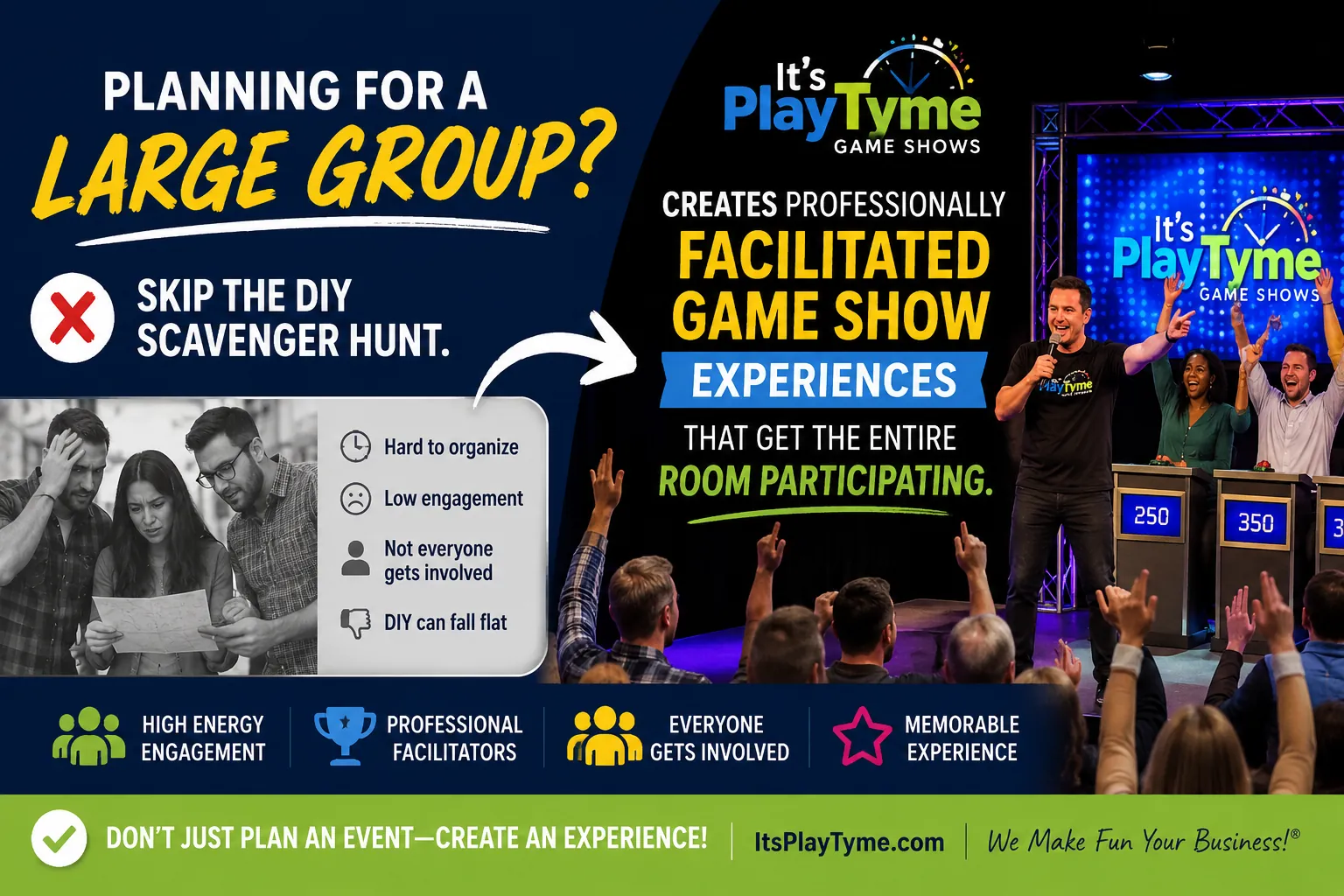
Planning for a Large Group? Think Beyond the DIY Scavenger Hunt
Scavenger hunts can be fantastic for smaller groups, especially when you have the time, space, staff, and logistics to manage them.
But as the guest list grows, so does the challenge.
Coordinating dozens or hundreds of people across multiple locations can mean more instructions, more moving parts, more monitoring, and more opportunities for participants to become disconnected from the main group.
For large corporate events, conferences, school programs, and company-wide gatherings, a professionally facilitated game show experience offers another approach.
Instead of sending everyone in different directions, It’s PlayTyme brings the group together through structured competition, team challenges, music, trivia, and professionally facilitated game show formats designed to keep people participating at the same time.
Because ultimately, the activity is only the vehicle. The real goal is getting people engaged with each other.
Challenges That Sink a Scavenger Hunt (and How to Avoid Them)
Scavenger hunts look simple on paper and get complicated on the day. These four problems account for most of the disappointment.
1. Writing the clues takes longer than playing the hunt
A 45-minute hunt needs two or three hours of clue writing, route testing, and answer keys, and that work lands on one organizer who already has a job. Build the clue list with two colleagues in a single session, or run a format where the puzzles already exist.
2. Teams finish at wildly different times
The fastest team finishes in 20 minutes and then waits while the slowest team hunts for another 25. Set a hard time limit rather than a finish line, and score on points collected when the clock stops. Everyone ends together and the energy holds.
3. Large groups scatter and lose the thread
Past roughly 40 people, a hunt turns into a dozen small groups wandering out of contact, and the shared experience disappears. Groups over 50 get more out of a single hosted format where everyone stays in one room, which is why larger companies often choose structured team-building activities over a DIY hunt.
4. Weather or venue rules cancel it on the day
Outdoor hunts depend on conditions you do not control, and many venues restrict where groups can roam. Always plan an indoor version of the same hunt, and confirm access rules with the venue a week ahead rather than the morning of.
Match the Hunt Type to Your Group
Group size and setup time decide which format works. Use this before you commit to a theme.
Hunt Type
Group Size
Where It Runs
Setup Time
Best For
Classic photo hunt
8 to 40
Office or campus
30 minutes
First-time groups
City adventure
10 to 60
A few downtown blocks
2 hours
Offsites and retreats
Puzzle and riddle
6 to 30
Indoors
3 hours
Analytical teams
Historical hunt
10 to 50
Landmark district
3 hours
Culture-focused groups
Indoor hunt
8 to 50
One large room
45 minutes
Bad weather and tight schedules
Hosted game show
20 to 300+
Any venue with a stage area
None, the host handles setup
Large or mixed-department groups
FAQs – Popular Scavenger Hunt Ideas
frequently asked questions
1. What are some popular types of scavenger hunt team building activities?
Popular types of scavenger hunt team building activities include office scavenger hunts, city, outdoor, museum, and virtual scavenger hunts.
2. How can scavenger hunt activities help colleagues get to know each other?
Scavenger hunt activities provide an opportunity for colleagues to bond and have fun away from their desks.
By working together in teams, employees can collaborate, communicate, and learn more about each other’s strengths and personalities.
3. What skills can be developed through scavenger hunt team building activities?
Scavenger hunt team building activities can help develop problem-solving, collaboration, communication and critical thinking,.
4. Are there options for both in-person and remote teams?
Yes, there are scavenger hunt activities available for both in-person and remote teams.
In-person activities may involve exploring the city or office space, while virtual activities can be done through online platforms or apps.
5. Can you provide some examples of scavenger hunt ideas for in-person groups?
Some examples of scavenger hunt ideas for in-person groups include the City Chase. This is where teams explore the city and complete photo and video challenges. The Storage Locker Scavenger Hunt, where participants search for relics in a storage room.
6. What are some virtual scavenger hunt activities for remote teams?
Virtual scavenger hunt activities for remote teams can include challenges like the Virtual Team Bucket List Hunt, where participants complete activities from their own locations. The Virtual Campus Goose Chase, where teams solve clues and complete challenges using an app.
Indoor team-bonding games and team-building activities have replaced the tired days of trust falls and awkward icebreakers. Today’s teams want energy, connection, and something that actually shakes them out of “meeting mode.” Even in a hybrid, high-stress workplace, your people need more than another memo to feel engaged. They need to play with purpose.
Nearly 75% of employees say they want fun, meaningful challenges that help them feel closer to their coworkers. That’s not a statistic, it’s a warning siren for any leader still recycling outdated team-building activities.
This guide highlights high-impact indoor team bonding games built to spark communication, boost morale, and transform even the most reserved teams, whether you’ve got 20 people or 200.
If your workplace feels a little too quiet lately, keep reading… the shift you’re looking for might be just one game away.
Key Insights – Team Bonding Games and Office Activities
Learn how to categorize activities by duration and team size.
Understand the importance of team building in modern workplaces.
Find clear instructions and expected outcomes for each activity.
Boost morale, improve communication, and create stronger connections within your workplace.
Game Shows for Team Building
Why Indoor Team Building Activities Matter
Indoor team-building activities are crucial for fostering a collaborative and motivated work environment. One of the biggest reasons employees are unmotivated or disengaged at work is that they can feel isolated. These activities encourage creativity, improve communication, and can boost productivity and morale.
Benefits for Team Morale, Retention, and Productivity
Team-building activities have a direct impact on team morale, retention, and productivity. By participating in indoor team bonding games, employees can develop a stronger sense of camaraderie and shared purpose. This, in turn, can lead to improved collaboration and project outcomes in the workplace.
Some key benefits of indoor activities include:
Facilitating meaningful connections between colleagues who might otherwise have limited interaction during normal work routines.
Creating a foundation of trust and mutual understanding that translates directly to improved workplace collaboration.
Developing a deeper appreciation for each other’s strengths, weaknesses, and communication styles through shared challenges.
Benefits
Description
Impact on Team
Improved Communication
Enhances the exchange of ideas and feedback
Boosts collaboration and project success
Increased Trust
Fosters a sense of reliability among team members
Reduces conflicts and improves problem-solving
Enhanced Creativity
Encourages innovative thinking and solutions
Drives team engagement and motivation
Book an Interactive Game Show!
Call us today! We provide “Premium Game Shows” for Corporate Events. We Come to You!
If you’re in HR or leading a team, here’s the truth: strong workplace connections are your secret weapon. Indoor team bonding games aren’t just a fun distraction but a strategic tool. They break down silos, spark genuine interaction, and create a culture where people want to collaborate.
When employees feel connected beyond their job titles, you’ll notice fewer conflicts, more creative problem-solving, and a team that supports each other without being asked. That’s not just better morale, it’s better business.
What Makes a Great Indoor Team Bonding Game?
A great indoor team bonding game is fun and strategic simultaneously. The best ones are high-energy, inclusive, and built around interaction. That’s exactly why game show-style experiences make excellent office activities. They mix excitement with purpose, turning team challenges into moments of real connection.
These games engage every personality in the room, from the quiet thinkers to the bold competitors, by encouraging collaboration, quick thinking, and a little friendly rivalry. As far as indoor office activities go, nothing beats the energy and engagement of a live game show that’s tailored to your group’s size and vibe. It’s team building with a twist—and everyone leaves feeling like a winner.
Key Elements of Successful Team Activities
Successful team activities share certain key elements that contribute to their effectiveness. These include clear objectives, well-defined rules, and a suitable level of complexity that challenges participants without overwhelming them. Additionally, the game should be designed to encourage collaboration and communication among team members.
A well-structured team-building activity also considers the physical and social needs of the participants. For instance, the activity should be accessible to all team members and should not inadvertently exclude or marginalize certain individuals.
Element
Description
Importance
Clear Objectives
Clearly defined goals for the activity
High
Well-defined Rules
Easy to understand and follow the rules
High
Suitable Complexity
A level of challenge that is engaging but not overwhelming
Medium
Find the Right Game Show for Your Team
Pick the Ideal Match for Your Team’s Unique Goals and Needs – Click Below
Adapting indoor team-bonding games for different team sizes is crucial to ensure that all participants remain engaged and benefit from the activity. For smaller teams, games can be modified to include more rounds or deeper discussion components. In contrast, larger teams may require the creation of subgroups or the implementation of a tournament structure to maintain engagement.
When adapting games, it’s also important to consider the physical space requirements and the complexity of instructions. Larger groups need more space and clearer instructions to avoid congestion and confusion.
5-Minute “Quick” Indoor Team Bonding Games
Effective team-building is key to a successful and harmonious workplace. Quick indoor team bonding games are an excellent way to foster collaboration and camaraderie among employees without requiring a significant time investment. These activities can be easily integrated into a busy schedule, making them ideal forteams looking to boost morale and productivity.
Here are four engaging games that can be played in just 5 minutes, each designed to promote teamwork and fun in the office.
1 – Show and Tell
“Show and Tell” is a simple yet effective team bonding activity. Team members bring an object that holds personal significance and share its story with the group. This activity encourages employees to connect on a personal level, fostering a deeper understanding and appreciation among colleagues.
Indoor Games Graph
2 – Office Pen Pal
The “Office Pen Pal” game involves pairing team members who don’t usually interact. They exchange messages or notes, getting to know each other better. This activity helps in building connections across different departments or levels within the organization.
3 – Paper Tower Challenge
In the “Paper Tower Challenge,” teams are given a limited amount of materials (like paper and tape) and must build the tallest tower possible within the time limit. This activity promotes teamwork, creativity, and problem-solving.
4 – Never Have I Ever – Office Edition
“Never Have I Ever – Office Edition” is an adaptation of the popular party game, tailored for the workplace. Players take turns saying “Never have I ever [done something],” and those who have done it receive a piece of candy. The player with the most candy at the end wins. This game is a fantastic conversation starter, revealing surprising facts about colleagues and encouraging participation from everyone.
Adapts the popular party game for workplace appropriateness.
Creates immediate engagement as team members discover commonalities and differences.
Encourages participation while keeping disclosures voluntary and comfortable.
Uses candy or small tokens for a fun, competitive element.
Focuses on professional experiences, travel, skills, and general life experiences.
Book an Interactive Game Show!
Call us today! We provide “Premium Game Shows” for Corporate Events. We Come to You!
Small groups can greatly benefit from focused group activities that foster collaboration and communication. These activities are designed to be short, engaging, and effective in promoting teamwork among team members. Learn More
1 – Lucky Penny
The “Lucky Penny” game is a simple yet engaging activity that encourages team members to share a personal story or anecdote. Each participant shares a story related to a penny they have with them, such as the year it was minted or a memorable event associated with it. This activity promotes communication and helps team members get to know each other better.
2 – Two Truths and a Lie
“Two Truths and a Lie” is a popular team-building activity that involves team members sharing two true statements about themselves and one false statement. The other team members then have to guess which statement is the lie. This activity encourages creative thinking and helps build trust among team members.
3 – Keep the Balloons Up
The “Keep the Balloons Up” activity is a fun exercise that requires team members to work together to keep balloons from touching the ground. This activity promotes teamwork and communication as team members must coordinate their efforts to achieve the goal.
4 – Minefield Communication Game
The Minefield Communication Game is an activity that promotes trust, communication, and effective listening. Team members are paired up, with one wearing a blindfold and the other guiding them through a “minefield” using only verbal instructions. This activity highlights the importance of clear communication and precise language in professional contexts.
The Minefield Communication Game creates immediate trust-building opportunities as team members rely on their partners’ guidance.
This activity emphasizes the importance of clear, specific communication and reveals common communication gaps.
By requiring verbal-only direction, the game promotes precise language and active listening.
Teams discover the need for establishing shared vocabulary and communication protocols.
The physical vulnerability created by the blindfold fosters memorable emotional connections between partners.
30 – 60 Minute Indoor Team-Building Exercises
Thirty-minute indoor activities can be a game-changer for teams seeking to improve their bonding and communication. These exercises are designed to be engaging, interactive, and most importantly, effective in fostering a more cohesive team environment.
1 – Face-2-Face Feud
Face-2-Face Feud is a fast-paced, survey-style game show that brings your team head-to-head in a friendly battle of wits. Inspired by Family Feud, this game is packed with laughs, energy, and team spirit. With custom questions tailored to your group,
it’s perfect for boosting engagement, breaking the ice, and sparking connection, whether at a retreat, office party, or team-building event. Fun, competitive, and 100% interactive.
2 – Memory Wall
The Memory Wall activity involves creating a visual display of company history, milestones, or team achievements. This can be a powerful way to foster a sense of shared identity and community within the team.
3 – Playpad Mania Trivia Challenges For Large Groups
Playpad trivia challenges are an excellent way to encourage teamwork and healthy competition, especially for large groups. By creating questions that require collaboration to answer, teams can work together, leveraging their collective knowledge and skills.
4 – Indoor Scavenger Hunt
Indoor Scavenger Hunts are a dynamic way to engage teams. Whether conducted in person or virtually, this activity combines physical movement with problem-solving, creating an energizing experience.
The benefits of Indoor Scavenger Hunts include:
Combining physical movement with problem-solving creates an energizing activity that breaks workplace routine while building team connections.
Customization to include company-specific items or clues related to organizational values, history, or current initiatives, adding an educational component.
The time pressure element creates excitement and reveals how team members perform and collaborate under deadline conditions.
Scavenger hunts can be designed to require collaboration between departments or team members with different knowledge bases, encouraging cross-functional communication.
This format adapts well to both physical office spaces and virtual environments, making it versatile for various team configurations and workplace settings.
Indoor Team Bonding Games for Large Groups
For large groups, indoor team bonding activities can be a fun, interactive and effective way to enhance collaboration. These activities are designed to engage everyone, promote teamwork, and create a more cohesive unit.
1 – Human Knot
The Human Knot is a classic team-building activity that works well for large groups. Participants stand in a circle and put their hands in the center. Each person should grab the hand of someone across from them, not next to them. The team must then work together to untangle themselves without letting go of each other’s hands.
This activity encourages communication, problem-solving, and teamwork. It’s an excellent exercise for large groups as it requires coordination and cooperation among all participants.
2 – Indoor Question Tag
Indoor Question Tag is another engaging activity for large groups. Participants stand in a circle, and one person is “it.” The person who is “it” asks a question, and anyone who can answer it must get up and move to a different spot in the circle. The person who is “it” tries to tag someone before they can find a new spot.
This game promotes movement and interaction among team members. It’s an excellent way to get everyone engaged and energized.
3 – Swift Swap
Split your team into two groups and line them up facing each other. Team A gets a quick observation period (15-30 seconds) to memorize as many things about the people in front of them as possible. Then, Team A turns around while Team B changes as many things about their appearance as possible.
After about 45 seconds, Team A turns back around and gets 5-10 minutes to find out what’s changed. This activity tests and develops observational skills crucial in many workplace contexts. It creates immediate engagement and encourages team members to pay closer attention to their colleagues.
Swift Swap develops observational skills crucial for customer service and project management.
It creates immediate engagement through its game-like structure.
The collaborative nature of identifying changes builds team communication and cooperation.
This game works particularly well for large groups, creating natural subgroups and ensuring everyone has an active role.
The physical movement and playful nature of making changes create energy and laughter.
Problem-Solving Team Building Activities
Problem-solving team-building activities, especially when structured as indoor team bonding games, are designed to challenge teams and spark creative solutions. These interactive experiences help teams sharpen critical thinking, improve communication, and boost collaboration in a fun, low-pressure environment. Learn More
Back of the Napkin Challenge
This clever indoor game gives teams a simple problem and minimal resources—just a napkin and a pen—to sketch out a solution. It pushes teams to think outside the box, prioritize ideas quickly, and practice communicating under tight constraints.
Spectrum Mapping
Spectrum Mapping is a dynamic, visual indoor team bonding game that helps uncover diverse perspectives. Team members place themselves on a spectrum based on their stance on a topic, promoting empathy, healthy discussion, and a stronger understanding of group dynamics.
Exquisite Corpse Storytelling
In this imaginative activity, teams are asked to solve a problem as if they were a famous leader or public figure they admire. By shifting their thinking to match someone else’s mindset, team members explore fresh strategies, break free from stale routines, and often discover bold new ideas.
It’s a powerful way to uncover team values, spark meaningful conversations, and create a space where innovation feels safe, even encouraged.
By adding these indoor team bonding games into your team’s routine, you’ll foster stronger collaboration, unlock creative thinking, and build a culture where problem-solving becomes second nature.
Creative Team Building Games
Innovative team-building games offer a unique approach to strengthening team bonds and improving communication.
These activities are designed to foster creativity, collaboration, and problem-solving skills among team members. Learn More
Exquisite Corpse Storytelling
Exquisite Corpse Storytelling is a creative team-building activity that encourages collaboration and creativity. Team members take turns adding to a story without knowing what the others will write, resulting in a unique and often humorous narrative.
Team Timeline Creation
Team Timeline Creation is an engaging activity that gives coworkers a glimpse into each other’s lives. By creating a physical or digital timeline, team members can share significant events and milestones, such as finishing college, getting married, or having kids.
Team Timeline Creation visualizes the collective and individual journeys of team members, creating a powerful visual representation of shared history and diverse experiences.
This activity reveals unexpected connections and commonalities between team members’ lives, often discovering shared experiences or parallel life events.
The timeline format creates context for understanding colleagues’ perspectives and backgrounds, building empathy and appreciation for different life paths.
By including both professional and personal milestones, this exercise helps team members see each other as whole people rather than just workplace roles.
The resulting timeline serves as an evolving team artifact that can be expanded as new members join, creating an immediate connection point for newcomers.
By incorporating creative team-building games like Exquisite Corpse Storytelling and Team Timeline Creation, teams can enhance their collaboration, creativity, and overall work environment.
Virtual Team Building Activities
Virtual team activities help bridge the gap between remote team members, fostering a sense of unity and collaboration. In today’s remote work environment, it’s crucial to have engaging and interactive activities that can bring teams together. Learn More
Online Group Games
Online group games are an excellent way to encourage teamwork and collaboration. These games can range from virtual escape rooms to online multiplayer games. They help team members bond over shared experiences and challenges.
Virtual Trivia Nights
Virtual trivia nights are a fun and engaging way to test team members’ knowledge and encourage some friendly competition. These events can be customized to fit the team’s interests and preferences.
Photo Caption Contest
A photo caption contest is a creative and entertaining activity that encourages team members to showcase their humor and creativity. To organize this activity, collect a few funny photos or memes and ask team members to submit their best captions. The captions can then be shared during a virtual meeting, and team members can vote for their favorites.
The benefits of a photo caption contest include:
Encouraging creative thinking and humor in a format accessible to all team members.
Providing opportunities for team members to showcase their wit and personality.
Being inclusive of team members across different time zones or schedules.
Creating positive recognition moments through voting for favorite captions.
Fostering team bonds over time through inside jokes and cultural references.
Board Game Tournaments for Team Building
A board game tournament offers a unique opportunity for teams to come together and engage in some friendly competition.
Although a slightly longer team building activity, it’s a great way to get your entire team having fun and participating in a bit of friendly competition. Learn More
Setting Up a Tournament Structure
To set up a successful board game tournament, choose games that move quickly and secure a large room to spread board games around the space. Participants can either choose what board game they’d like to start with or draw lots to decide. Once everyone has a board game, start round one, and whoever wins proceeds to the next round until the final two players compete to be crowned the winner.
Recommended Board Games for Teams
Selecting the right board games is crucial for a successful tournament. Consider the following types of games:
Cooperative games like Pandemic, Forbidden Island, or The Mind that create shared challenges.
Quick-playing games such as Codenames, Sushi Go, or Just One allow for multiple rounds.
Strategy games with simple rules but deep gameplay, like Ticket to Ride, Carcassonne, or Azul.
Team-based games like Pictionary, Taboo, or Cranium encourage different types of communication and problem-solving.
Games with hidden roles or social deduction elements like Werewolf, Secret Hitler, or The Resistance.
Food-Based Team Building Activities
Food-based team-building activities offer a relaxed and enjoyable way to strengthen team relationships. These activities are not only easy to organize but also provide a comfortable setting for team members to interact. Learn More
Indoor Cook-Off or Bake-Off
Hosting an indoor cook-off or bake-off is a fun and engaging way to encourage team members to collaborate and showcase their culinary skills. This activity allows participants to be creative and work together, often resulting in some delicious outcomes.
Teams can be formed to prepare different dishes, and the event can be made more interesting by having a judging panel or by letting everyone vote for their favorite dish.
Team Meals and Their Benefits
Team meals are a popular team-building activity that encourages camaraderie and conversation among team members. The benefits of team meals include:
Shared meals create natural social interactions in a comfortable context that most people associate with positive experiences and relaxation.
Breaking bread together has deep cultural significance, creating an inclusive activity that resonates regardless of background.
Regular team meals establish predictable social touchpoints that team members can anticipate and prepare for.
The informal nature of dining together allows for more authentic conversations, often revealing important insights about team dynamics.
Team meals require minimal planning while delivering significant relationship-building benefits.
By incorporating team meals into your team-building strategy, you can foster a more cohesive and collaborative team environment.
High-Energy Indoor Team Building Games
Energize your team with exciting indoor games that foster teamwork and camaraderie.
An indoor ropes course is an exhilarating team-building activity that challenges participants physically and mentally. It requires collaboration, trust, and communication among team members to navigate obstacles.
By working together to overcome these challenges, teams can develop stronger bonds and improve their problem-solving skills. Learn More
Go-Kart Racing as Team Building
Go-kart racing is among the most heart-pumping activities teams can do indoors. You and your group can head to the local track, buckle in, and race each other for bragging rights. To make the activity more teamwork-based, you can split the group into teams, hold races with one member of each team at a time, and keep track of how many times each team wins.
The benefits of Go-Kart Racing as a team-building activity include:
Combining adrenaline with friendly competition creates memorable shared experiences that strengthen team bonds through excitement rather than structured exercises.
Revealing interesting aspects of team members’ personalities, from competitive approaches to risk tolerance, that might not emerge in workplace settings.
Allowing flexibility based on group dynamics and team building objectives, as racing can be structured as individual competition or team relays.
Escape Room Challenges
Escape room challenges offer a unique and engaging way to foster teamwork and camaraderie among colleagues. These activities require teams to solve a series of puzzles and challenges to escape a themed room. Learn More
Benefits of Escape Rooms for Team Building
Escape rooms are an effective team-building activity because they promote communication, problem-solving, and collaboration. By working together to escape the room, team members develop essential skills that can be applied in the workplace.
The benefits of escape rooms for team building include improved communication, enhanced problem-solving skills, and increased collaboration among team members.
DIY Escape Room Ideas for the Office
Creating a DIY escape room in the office allows for customization to specific team development goals. For example, teams can focus on communication challenges or industry-specific knowledge.
Some ideas for DIY escape rooms include incorporating company history, inside jokes, or department-specific challenges. The process of designing the escape room can itself be a team-building activity.
Murder Mystery Team Building Events
hrilling team-building activity that challenges employees to solve a crime. These events are role-playing and problem-solving games where participants receive roles to play and work together to uncover clues and identify the culprit. Learn More
A murder mystery is a unique and t
Murder mystery events encourage collaboration, creative thinking, and communication among team members. By immersing themselves in a fictional crime scenario, employees can develop stronger bonds and improve their problem-solving skills in a fun and engaging way.
How to Host a Murder Mystery Event
Hosting a successful murder mystery event requires careful planning. Start by selecting a theme and creating or obtaining a script that outlines the story, characters, and clues. Assign roles to participants and provide them with character descriptions and background information.
Encourage participants to dress in character and use props and decorations to set the atmosphere. The event should be facilitated in a way that allows all participants to engage with the story and contribute to solving the mystery.
Ready-Made Murder Mystery Kits
Ready-made murder mystery kits simplify the process of hosting such an event. These kits provide comprehensive materials, including character descriptions, clues, and facilitator guides.
They come in various themes and complexity levels, allowing selection based on team size and experience.
Professional kits include digital and printable materials that can be customized with team members’ names and company-specific references.
Many kits offer hybrid options for both in-person and virtual participation, accommodating teams with remote members.
Using a ready-made kit ensures a structured and successful experience, even for facilitators with limited experience in running team-building events.
Measuring the Impact of Team Building Activities
The impact of team-building activities can be measured through various metrics and feedback mechanisms. To understand their effectiveness, organizations must assess both quantitative and qualitative outcomes.
Signs of Improved Team Cohesion
Improved team cohesion is a key indicator of successful team-building activities. Signs include increased collaboration among team members, improved communication, and a more positive team atmosphere.
Enhanced collaboration on projects
Better communication among team members
A more positive and supportive team environment
As noted by
“Teamwork makes the dream work.”
Gathering Feedback After Team Building Events
Gathering feedback after team-building events is essential for understanding their impact. Effective feedback collection involves combining quantitative metrics, such as satisfaction ratings, with qualitative insights from open-ended questions.
Feedback Method
Description
Benefits
Quantitative Metrics
Satisfaction ratings, participation levels
Provides numerical data for analysis
Qualitative Insights
Open-ended questions about the experience
Offers detailed, contextual feedback
Anonymous Feedback
Allows employees to provide honest assessments
Yields more accurate feedback on interpersonal dynamics
By comparing pre- and post-activity assessments of team functioning, organizations can isolate the specific impact of team-building interventions. Sharing aggregated feedback with the team creates transparency and demonstrates that their input shapes future team development activities.
Book an Interactive Game Show!
Call us today! We provide “Premium Game Shows” for Corporate Events. We Come to You!
Conclusion: Building Stronger Teams One Game at a Time
The power of indoor team-bonding games and team-building activities lies in their ability to foster collaboration and trust. Various activities allow leaders to choose experiences that match their team’s needs. Consistent team building creates a culture of connection and collaboration. By combining different activity types, teams can address various aspects of their functioning. As work arrangements evolve, intentional team building becomes critical to maintaining strong connections across distances.
FAQs – Indoor Team Bonding Games
Why are indoor team bonding games important in the workplace?
Indoor team bonding games help reduce employee isolation, improve communication, and create a more connected and collaborative culture. These activities are not just fun, they drive morale, engagement, and productivity.
What are some effective indoor games for small teams?
Great small group activities include “Two Truths and a Lie,” “Lucky Penny,” “Keep the Balloons Up,” and “Office Pen Pal.” These games promote trust, creativity, and conversation without requiring much space or setup.
Can indoor team games work for large groups?
Absolutely. Large groups benefit from games like “Human Knot,” “Swift Swap,” and live game show formats like “Face-2-Face Feud.” These formats use sub-groups or tournament styles to keep everyone actively engaged.
What are some quick 5-minute indoor team games?
“Show and Tell,” “Never Have I Ever – Office Edition,” and “Paper Tower Challenge” are quick, high-impact games that foster fast connections and a burst of team energy—perfect for kickoffs or transitions.
How do I adapt team activities for different team sizes?
For smaller teams, add depth to the activity with reflection or multiple rounds. For larger groups, use breakout groups or competitive brackets. Always adjust complexity and space needs based on the team’s size and layout.
What makes a great indoor game show for team bonding?
The best game shows are fast-paced, inclusive, and designed to match your team’s energy. Formats like “60 Seconds of Fame” or “Word Play” create laughter, friendly rivalry, and deeper collaboration in a fun, structured format.
Can team-building activities be done virtually?
Yes. Activities like virtual trivia, online group games, photo caption contests, and hybrid escape rooms are excellent for keeping remote teams engaged and connected across time zones and locations.
What creative indoor activities help build trust and communication?
Games like “Minefield,” “Team Timeline Creation,” and “Exquisite Corpse Storytelling” promote vulnerability, shared experiences, and authentic team connection, perfect for building stronger communication and trust.
How can I measure the success of my indoor team building event?
Track pre- and post-event collaboration, communication, and morale. Use feedback surveys with both rating scales and open-ended questions to evaluate the experience and gather insights for future improvements.
Why should I book a live game show as my indoor team activity?
Live game shows provide structure, energy, and full-team engagement. They combine competition, comedy, and strategy to create memorable experiences that strengthen team bonds and make workplace fun feel meaningful.