Christmas contest ideas for your office holiday party can instantly shift the vibe from “another end-of-year obligation” to an event people genuinely enjoy. As HR Directors, Office Managers, Executive Assistants, or Team Leaders, you’re juggling budgets, schedules, and the pressure to keep everyone engaged, whether your team is in-person, remote, or hybrid.
Quick answer: A christmas competition for the office works best when it is short, inclusive, and lets every department play at once. Top ideas include an ugly sweater contest, a gingerbread house build-off, a holiday trivia board, and a hosted survey-style team game for groups of 20 to 300 or more.
That’s why adding the right Christmas contest ideas matter. They break the ice, spark lots of laughter, and get people interacting beyond small talk. From Ugly Sweater Showdowns to Christmas trivia battles, scavenger hunts, and creative desk-decor challenges, these activities turn your holiday party into something memorable instead of routine.
If you want a celebration that feels fun, inclusive, and truly team-building, here are some Christmas contest ideas that will bring your group together and keep the energy high.
So, grab your team and get ready to celebrate the holidays with a mix of fun, creativity, and connection. Let’s unwrap the possibilities and dive into the festive spirit!
Office Holiday Party” width=”940″ height=”788″ />
Key Takeaways:
Christmas contest ideas can add festive cheer to your holiday promotions and marketing campaigns.
Corporate team-building contests can promote collaboration and bonding in the workplace.
An office Christmas contest can boost the festive spirit and creativity among team members.
A candy cane fishing competition and gingerbread man hunt add unique twists to traditional holiday contests.
Office Christmas Party Ideas, Activities, and Games Generator 2026
Holiday games and activities for corporate
1. Corporate Team Building Christmas Contests
Nothing brings a team togetherquite like a little friendly competition, and what better time to get everyone involved than during the holiday season?
With a range of interactiveteam building activities and challenges, these Christmas contest ideas are perfect for boosting morale and spreading festive cheer around the office.
Want the contest hosted for you? Our holiday party entertainment turns these ideas into a full game show your whole team can play.
Interactive Team Building Activities
When it comes toteam building, interactive activities are key. They allow team members to get to know each other better, work together, and have fun in the process.
Here are some Christmas-themed activities to consider:
Deck the Halls: Split your team into groups and challenge them to decorate the office in the most creative and festive way possible. Provide them with a budget and a set amount of time to complete the task. The winning group could be rewarded with a prize, such as a holiday-themed gift basket or a day off.
Gift Wrap Relay: This activity is perfect for larger teams. Divide your group into smaller teams and set up a relay race to see who can wrap presents the fastest. For an added twist, have the teams dress up in holiday costumes or use unusual wrapping materials such as newspaper or aluminum foil.
Christmas Scavenger Hunt: Create a scavenger hunt with Christmas-themed clues hidden throughout the office. This is a great activity for encouraging team members to work together and think creatively in order to solve each clue.
Team Building Challenges
If you’re looking for more of a challenge, consider having your team participate in one of these Christmas-themed competitions:
Challenge
Description
Build a Snowman:
Provide teams with a set of materials (such as paper, cotton balls, and craft supplies) and challenge them to create the best snowman they can.
Ugly Sweater Contest:
Encourage team members to get in the spirit of the season by wearing their ugliest holiday sweater. Have the team vote on the best (or worst) sweater, and award a prize to the winner.
Candy Cane Relay Race:
Divide your group into teams and set up a relay race with candy canes. The catch? Team members must hold the candy canes in their mouths while racing, passing them off to their teammates without using their hands.
These team building challenges are a great way to get everyone involved and working together towards a common goal. They can also help to improve communication, problem-solving skills, and give a sense of friendly competition.
So this holiday season, don’t miss out on the opportunity to bring your team together with these fun and engaging Christmas contest ideas.
Whether it’s through interactive team building activities or challenging competitions, these festive contests are sure to boost morale and spread holiday cheer throughout the office.
Book a Christmas Party Activity!
Call us for a free quote today. We come to you. Live Game Shows are our specialty. Let’s Play!
Are you looking to boost the festive spirit in your workplace?
Then encourage your team members to decorate their workspaces in creative and festive ways. This suggestion will make the office come alive with holiday cheer.
Organizing an office Christmas contest is a great way to promote team bonding, boost morale, and create a fun and festive atmosphere.
These workplace competitions can be a great addition to your Christmas marketing campaigns or simply a fun activity to celebrate the season.
Here are a few tips for organizing your office Christmas contest:
#1. Set clear guidelines: Be sure to set clear guidelines and expectations for the contest. This can include rules for decorations, deadlines for entries, and judging criteria.
#2. Encourage participation: Promote the contest throughout the office and encourage everyone to participate. You can even offer prizes or incentives for the most creative or festive workspace.
#3. Make it a team effort: Consider making the contest a team effort by encouraging departments or teams to work together to create a cohesive theme throughout the office.
#4. Spread the festive cheer: Don’t forget to take photos of the decorated workspaces and share them on your company’s social media channels. This is a great way to spread the holiday cheer and showcase your team’s creativity.
Office Christmas Decorating Ideas
Looking for some inspiration for your office Christmas contest? Here are a few ideas to get you started:
Idea
Description
Ugly Sweater Day
Encourage everyone to wear their ugliest holiday sweater and decorate their workspace to match.
DIY Ornaments
Set up a craft station where employees can create their own homemade ornaments to decorate their workspaces.
Themed Decorations
Choose a festive theme for the office, such as “Winter Wonderland” or “Santa’s Workshop,” and encourage everyone to decorate accordingly.
With these tips and ideas, your office Christmas contest is sure to be a success. So, get creative and spread the holiday cheer throughout your workplace!
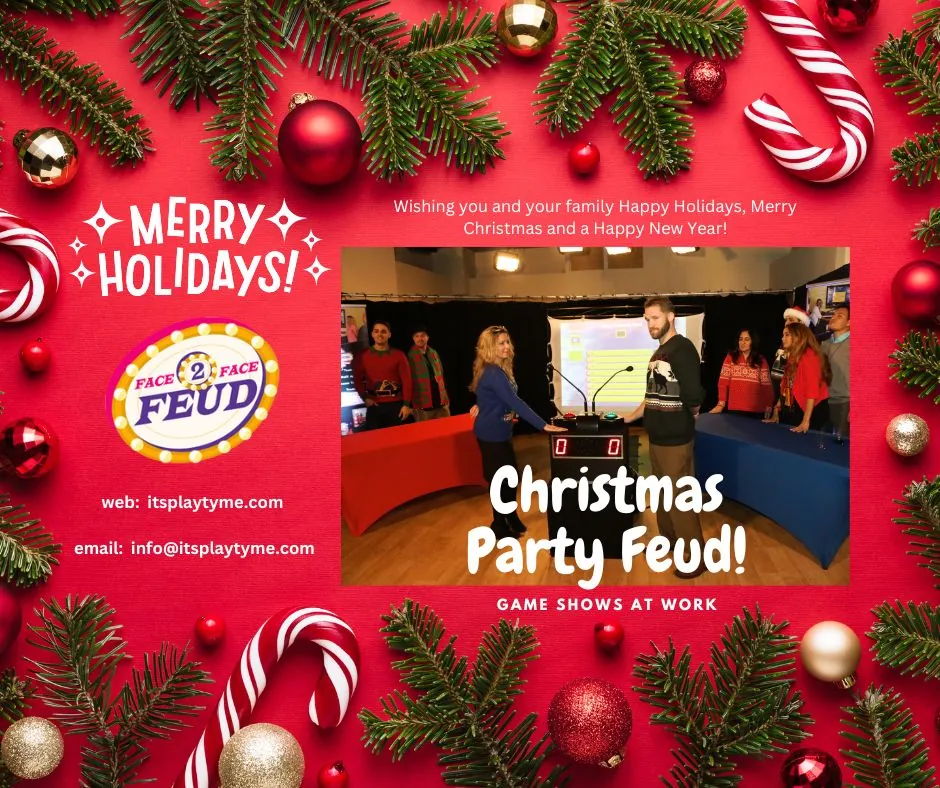
Christmas Party Feud!
3. Christmas Ultimate Trivia Challenge
Are you looking for a fun and engaging way to get your co-workers into the holiday spirit?
Look no further than a Christmas trivia challenge!
This workplace trivia contest is a great way to test your team’s knowledge of Christmas traditions, history, and pop culture while fostering friendly competition and team bonding.
To get started, you’ll need to come up with a set of Christmas trivia questions.
These can cover a variety of topics, from famous Christmas movies and songs to holiday traditions around the world.
Make sure the questions are challenging but not impossible and that they cover a range of difficulty levels.
Once you’ve created your questions, you’ll need to decide on a format for the trivia contest.
Will it be a one-time event, or will you hold multiple rounds over the course of the holiday season?
Will individuals compete against each other, or will you form teams to encourage collaboration?
Consider offering prizes for the winners to add an extra level of excitement to the contest.
These could be small gifts like festive candy or hot cocoa mix, or more substantial prizes like gift cards to local restaurants or stores.
Sample Christmas Trivia Questions
What popular Christmas beverage is also known as “milk punch?”
What is the name of the main character in “How the Grinch Stole Christmas?”
What country is known for starting the tradition of putting up a Christmas tree?
What are the names of the three wise men who brought gifts to baby Jesus?
In what year was “A Christmas Carol” by Charles Dickens first published?
With a little planning and some creative questions, a Christmas trivia challenge can be a festive and fun workplace contest that brings your team closer together. Good luck, and happy holidays!
4. Candy Cane Fishing Competition
Looking for a creative twist on your Christmas contest? Organize a candy cane fishing competition! This fun-filled activity is sure to bring smiles and laughter to all participants.
To set up the game, you’ll need:
A large bucket or container
Bent wire coat hangers or candy cane shaped hooks
String or fishing line
Candy canes with small holes in the wrappers
Here’s how to play:
Fill the bucket with candy canes.
Attach the wire hangers or hooks to the string or fishing line.
Lower the hooks into the bucket, trying to “catch” a candy cane.
If you hook a candy cane, carefully lift it out of the bucket and try not to break the candy.
Players can keep the candy canes they catch or you can keep score to determine a winner.
For added fun, you can create different “zones” in the bucket, with candy canes worth different point values. You can also set a time limit to add a sense of urgency to the game.
So get your fishing gear ready and let the candy cane fishing begin!
Book a Christmas Party Activity!
Call us today. We come to you. TV Style Game Shows are our specialty. Let’s Play!
One of the best ways to celebrate the holiday season with your colleagues is through a holiday bakery contest.
Nothing screams “Christmas” more than delicious treats and sweets! Not only is this activity a great way to cultivate a sense of community, but it also taps into the team’s creativity and culinary skills.
The rules of the contest are simple. Participants must whip up their best holiday treat, with a festive twist. It could be anything from gingerbread cookies to peppermint brownies.
The only requirement is that the dish must have a holiday element to it.
The treats will be judged based on taste, presentation, originality, and overall impression.
Each category will receive a score out of 10 points, and the participant with the highest total score wins the contest.
One way to make the contest even more engaging is to have participants share photos of their creations on social media using a specific hashtag.
This creates excitement and anticipation, generating buzz around your holiday celebrations.
Encourage team members to let their imaginations run wild!
Consider offering small prizes or tokens of appreciation for all participants to acknowledge their efforts.
Make it even more festive by having holiday music playing in the background or encouraging participants to wear holiday-themed attire.
By hosting a holiday bakery contest, you can bring creativity and cheer into the office while creating a bonding experience for your team. So, let the baking begin and may the best treat win!
6. Gingerbread Man Hunt
Get ready to spread some Christmas cheer with a festive gingerbread man hunt!
This popular contest will bring fun and laughter to your workplace immediately.
Here’s how to get started:
First, bake or purchase gingerbread cookies. You’ll want at least one cookie per participant.
Next, hide the cookies throughout your designated area. Be sure to make it challenging but not impossible.
Provide participants with clues or a scavenger hunt list to help them find the hidden cookies.
The first participant or team to find all of the cookies and return them to the designated area wins the contest!
This Christmas contest is perfect for several generations and can be adapted to fit any theme or location.
Plus, it’s a great way to get everyone moving and interacting with one another.
7. Advent Calendar Recall Challenge
Test your team’s memory skills with a fun and challenging calendar recall contest.
This Christmas countdown contest requires participants to recall and answer questions about the contents of an Advent calendar.
To organize this memory challenge, first, create an Advent calendarwith 24 numbered compartments.
Fill each compartment with different items such as chocolates, candies, or small toys. Write a unique question related to each item on a piece of paper and keep it in a separate envelope.
Next, announce the rules and distribute a list of the 24 items in the Advent calendar to each participant.
The list should have the number of the compartment and a brief description of the item. After that, you can distribute the envelopes with the questions to participants.
The participants have a set time to recall what was in each compartment and answer the corresponding question.
The person who recollects the most items and answers the questions correctly wins the memory challenge.
This Advent calendar recall challenge is a fun way to test and improve memory skills while enjoying the festive spirit.
So, gather your team and get ready for some brain-teasing fun!
Remember to Keep it Fun and Professional
While these holiday-themed competitions are meant to be lighthearted and fun, it is important to remember that they are still taking place in a professional environment and there are rules.
Make sure to avoid anything that may offend, and that the competition is inclusive and welcoming to everyone.
Most importantly, let your hair down and enjoy the holiday season!
Contests are a great way to get everyone into the festive spirit while also promoting teamwork and collaboration.
Conclusion
Incorporating these creative and engaging contests into your Christmas marketing campaigns or holiday promotions, you can build employee morale and promote team bonding.
Now that you have explored these exciting Christmas contest ideas, you can truly bring festive cheer to your workplace or holiday celebrations.
Music Trivia Game (2000 – Present) 10 Questions – Let’s Play!
Book a Christmas Party Activity!
Call us for a free quote today. We come to you. Live Game Shows are our specialty. Let's Play!
How do you judge an office Christmas contest fairly?
Share the criteria before the contest starts, such as creativity, theme and effort, then use a small mixed panel or an anonymous vote. Drawing judges from different departments reduces any sense of favoritism.
Should Christmas contests be individual or team-based?
Team contests usually work better at work because they involve more people and take pressure off anyone who dislikes the spotlight. Individual contests, like a holiday baking entry, work best as optional extras.
How long should a desk decorating contest run?
Most offices announce it a week or two ahead and judge on one set day, often the day of the holiday party. That gives people time to plan without the contest dragging on through December.
What contest can the whole company play at the same time?
A hosted game show lets everyone compete at once. The Challenge, our trivia board format, works for groups of 20 to 300+, and the questions can be written around your company's year and milestones.
Frequently Asked Questions – Christmas Contest Ideas for Work
Q1. What are the best Christmas contest ideas to use with my team?
Some of the best Christmas contest ideas include workspace decorating contests, holiday trivia challenges, gift wrap relays, candy cane fishing games, gingerbread man hunts, festive scavenger hunts, and Advent calendar recall challenges. Each activity creates excitement while helping teams collaborate in fun and low-pressure ways.
Q2. How do Christmas contests help promote team building in the workplace?
Christmas contests allow employees to work together, problem-solve, communicate, and share laughs during a busy time of year. These activities break down silos, make hybrid teams feel more connected, and reduce end-of-year stress while encouraging creativity and friendly competition.
Q3. What are some easy Christmas contests for large teams?
Easy Christmas contests for larger groups include ugly sweater competitions, gift wrap relays, Christmas scavenger hunts, office decorating challenges, trivia tournaments, and candy cane relays. These activities scale well and keep everyone participating at the same time instead of isolating individuals into small cliques.
Q4. How can I organize a Christmas trivia challenge for my office party?
Start by gathering Christmas-themed questions about traditions, movies, music, and global holiday customs. Decide whether employees will play individually or in teams, choose a host, keep score, and offer small holiday prizes. Trivia challenges work extremely well for hybrid and remote teams too.
Q5. What unique Christmas contest ideas can help boost creativity at work?
Unique ideas include holiday bakery contests, DIY ornament creation, candy cane fishing, Advent calendar recall competitions, and team snowman-building challenges using craft supplies. These spark creativity and get employees thinking outside the box while enjoying the holiday spirit.
Q6. How do I turn Christmas contests into a meaningful team-building experience?
To turn simple contests into true team building, choose challenges that require communication, collaboration, and shared problem-solving. Group people strategically, rotate roles, and use activities that get everyone involved at once. Structured formats, like facilitated games or timed competitions, ensure the event builds connection, not just entertainment.
Q7. Why are game show–style activities so effective for team building during the holidays?
Game show–style activities combine fast-paced energy with collaborative problem-solving, making them perfect for holiday events. They engage introverts and extroverts equally, keep large groups active at the same time, eliminate awkward downtime, and create shared excitement. This format transforms contests into powerful team-building moments that feel fresh and unforgettable.
Q8. Where can I book an interactive team-building experience for our Christmas office party in NJ, NYC, or CT?
If you want a high-energy team-building experience that goes beyond DIY contests, you can book a live game show with It’s PlayTyme Game Shows. We bring fully interactive, TV-style game show activities directly to your workplace or venue across New Jersey, New York City, and Connecticut. Call (201)-357-2979 or text 917-670-4689 to check availability for your holiday party.
Event organizers, HR directors, and executive assistants keep hitting the same wall. The budget clears, the venue is booked, and then half the room spends the night on their phones while an act performs at them. Gallup’s 2026 State of the Global Workplace report found that global employee engagement fell to 20% in 2025, its lowest level since 2020, costing the world economy an estimated $10 trillion in lost productivity.
Workplace relationships move that number. Gallup also reports that two out of 10 U.S. employees strongly agree they have a best friend at work, and that organizations moving that ratio to six in 10 could realize 12% higher profit. Your kickoff, retreat, or holiday party is one of the few days a year when those relationships get built on purpose. The entertainment you book decides whether that happens or not.
Entertainment Option
Participation Level
Setup Effort
Ideal Group Size
Primary Business Outcome
Live Hosted Game Shows
Whole room plays
Fully turnkey
20 to 300+ guests
Team connection and morale
Stand-Up Comedians
Audience watches
Venue and sound required
50 to 500 guests
Shared laughter for one set
DJs and Live Bands
Optional, low interaction
Stage and sound setup
50 to 300 guests
Background energy
DIY Opening Activities
Uneven, often forced
High organizer effort
10 to 30 guests
Surface-level introductions
Offsite Escape Rooms
Splits into sub-groups
Travel and logistics heavy
10 to 40 guests
Small-group problem solving
Why Traditional Corporate Entertainment Fails Large Groups
Still deciding which format fits?
Tell us your group size, your room and your time slot, and we will tell you honestly whether a hosted game show is the right answer, or whether something else suits you better.
Most entertainment budgets buy a performance instead of participation. Eight things go wrong when they do.
Spectator seating. Conventional formats point the room at a stage, so people watch a performer instead of talking to the colleague beside them.
Cliques stay intact. With no structured central activity, employees sit with the teammates they already know. New hires, executives, and cross-department peers never mix.
Planning lands on you. Venue logistics, catering timing, and AV coordination push office managers into running the activity themselves.
Lopsided participation. Open-floor mixers and cocktail hours let the loudest voices take over while quieter staff fade into the background.
Nothing sticks. An event that never involves the room leaves no story to retell on Monday, and turnout drops for the next one.
Mixed-generation rooms. A crowd running from Gen Z hires to staff two decades into their careers rarely agrees on one act, and a booking pitched at a single age group leaves everyone else checking email.
Venue AV that cannot carry the room. Hotel ballrooms, restaurant back rooms, and office atriums often come with one podium mic and no screens, so anything that depends on being heard or seen at the back table dies in the last three rows.
Defending the line item upstairs. HR leads and executive assistants have to justify the spend to finance, and a vague report that everyone had a good time is a hard case to make without attendance, participation, and post-event feedback to point at.
Option 1: Live Hosted Game Shows
Live hosted game shows are the strongest choice among corporate entertainment options when you want the entire room involved. Nobody sits through a lecture and nobody gets pushed into a trust fall. The TV-style format does the work, and every guest is either at the buzzer or shouting answers from the table.
It’s PlayTyme Game Shows has run professionally hosted experiences across New Jersey, New York City, and Connecticut since 2012. Founder Lisa Lawrence brings more than a decade of hosting to the microphone, which is why a VP and a two-week new hire end up competing on level ground. The setup is turnkey: full production, sound, lockout buzzers, and custom questions written around your industry and your company culture.
Face-2-Face Feud, 60 Seconds of Fame, and Name That Hit Song are corporate event games for employees who have barely met, and they break department silos inside the first ten minutes. 90-minute hosted shows start at $2,995 for groups of 20 or more. Use our pricing estimator to see the range for your group size. For a fuller budget picture, read our breakdown of how much corporate team building costs.
Best for: All-hands meetings, holiday parties, sales kickoffs, and offsite retreats from 20 to 300+ guests.
Standout features: A live trivia host, lockout buzzers, custom company questions, and full sound and production.
Advantages: Everyone plays, and the planner sits down as a guest instead of running the room from the back wall.
Consider this: The format needs a live host and roughly 90 minutes of protected agenda time to land properly.
Option 2: Stand-Up Comedians and Keynote Speakers
A professional comedian or guest speaker is still a staple at corporate galas and annual dinners. A strong performer lifts a big room fast and gives 300 people the same laugh at the same time.
The format stays passive. Guests sit in rows or at dinner tables and take in the content without speaking to each other. A comedian fills the half hour after dessert, but it never starts a conversation between finance and operations. Material is a live risk too, since one joke that misses can land badly with leadership or cut against company values.
Best for: After-dinner entertainment at multi-day sales conferences and award banquets.
Standout features: Stage presence, tight production values, immediate audience focus.
Advantages: Asks nothing of attendees at the end of a long conference day.
Disadvantages: Zero peer interaction, real material risk, and fees quoted privately per performer rather than published.
Option 3: DJs, Live Bands, and Musical Acts
Event DJs and cover bands anchor evening celebrations, holiday parties, and product launches. They set a tone, fill the room, and give people something to do once the formal speeches end.
Music holds energy but rarely builds connection. Volume works against conversation, so guests shout across tables or step into the hallway to talk. Dance floors also pull the same outgoing few every year while everyone else watches from their seats. Treat music as the backdrop to an interactive main event, not the main event itself.
Best for: Cocktail receptions, holiday dance parties, and celebration galas.
Standout features: Live vocals, professional sound engineering, custom setlists.
Advantages: Fills a large venue with continuous atmosphere across a long evening.
Disadvantages: Volume shuts down conversation, and participation skews to the people already comfortable dancing.
Option 4: Offsite Excursions and Escape Rooms
Bowling alleys, ax-throwing venues, and escape rooms get people out of the building. Small teams solve something physical together, away from inboxes and conference-room chairs.
Capacity is the catch. Escape rooms and activity venues run small groups per room, so a company of 50 to 300 splits into separate tracks that never share a moment. Offsite venues also add bus transport, hard travel windows, and liability paperwork, which makes them awkward for full-company meetings or an onsite conference agenda.
Best for: Single-department outings or leadership teams of 10 to 25 people.
Standout features: Physical puzzle solving, themed sets, a genuine change of scenery.
Advantages: Strong collaboration inside each small group.
Disadvantages: Fragments a large company, adds transport cost and travel time, and rarely publishes group rates.
Option 5: DIY Opening Activities and Internal Workshops
Internal opening activities and team-building workshops cost the least on paper. An HR lead or internal trainer runs a downloadable kit, a slide deck, or a prop exercise before the business agenda starts.
The savings move the work onto your own people. Someone on staff now has to host, and hosting a room of 100 colleagues is a skill. Without a professional emcee, buzzers, or staging, internal facilitators usually get polite compliance rather than real participation. If you want structured formats that keep your team off the hook, our guide to corporate event entertainment lays out the alternatives.
Best for: Fifteen-minute morning warm-ups and internal department meetings.
Standout features: Low outlay, flexible duration, full control of the message.
Advantages: Fits a short agenda slot with no vendor contract.
Disadvantages: Puts the staging burden on staff and stalls fast in rooms above 30 people.
Key Factors When Comparing Corporate Entertainment Options
Match the format to your objective and your room. Four things separate an event people talk about from one they sit through.
Group Size Flexibility
Confirm the format holds at your actual headcount. Onsite corporate event entertainment that works for 20 guests falls apart at 200 without professional sound and screens the back of the room can see.
Room Inclusivity
Pick activities where introverts and extroverts both take part comfortably. Structured game play lets a quieter analyst feed answers from the table while a sales rep handles the buzzer, and both count toward the same team score. That is what separates employee engagement activities for large groups from a performance the crowd merely attends.
Turnkey Execution
Hire vendors who own setup, AV, and hosting end to end. Ask what the venue has to supply, because a provider who brings its own sound and screens removes the single most common reason an activity fails in a hotel ballroom.
Return on Participation
Judge options by how many people actually take part, not by how many bought a ticket. Count the guests laughing, competing, and talking across departments at minute 40, then put that number in front of finance when next year’s budget comes up.
Pick the Format That Puts Your Whole Room in the Game
The decision comes down to one question: does the room watch, or does the room play? Comedy sets, background bands, and internal workshops all leave your people as spectators. A professionally hosted game show puts every employee, from the newest hire to the executive team, into the same activity for the same 90 minutes.
Planning an all-hands meeting, offsite retreat, or holiday party across New Jersey, New York City, or Connecticut? Look through our corporate team-building programs for interactive corporate event ideas sized to your headcount, then book your event with It’s PlayTyme Game Shows, backed by our 100% satisfaction guarantee.
Frequently Asked Questions (FAQs)
What are the best corporate entertainment options for large groups of 100+ employees?
Live hosted game shows work best at that size because every guest is involved at once. Team play, table cheering sections, and buzzer rounds hold energy across 100 to 300 guests without splintering the room into separate small groups.
How do live game shows compare to traditional team-building workshops?
Workshops lean on lectures or forced opening exercises that make plenty of employees uncomfortable. Game shows borrow familiar TV formats, so the laughter and teamwork happen on their own. Nobody has to be told to open up.
What group sizes work best for interactive corporate game shows?
Formats run well from 20 to 300+ attendees. The show is built around your headcount, so a 25-person leadership retreat gets tight, fast team play while a 250-person conference crowd gets full staging and sound.
How far in advance should a planner book corporate entertainment in NJ, NYC, or CT?
Book 60 to 90 days out, and earlier for Q4 holiday parties and summer kickoffs when dates fill first. That window also leaves time to write custom questions around your company and your people.
How much does interactive corporate event entertainment cost in NJ, NYC, and CT?
90-minute hosted shows start at $2,995 for groups of 20 or more. Use our pricing estimator to see the range for your group size. Groups that land between those bands are quoted on the next tier up or given a custom quote, and travel across New Jersey, New York City, and Connecticut is arranged when you book.
Still deciding which format fits?
Tell us your group size, your room and your time slot, and we will tell you honestly whether a hosted game show is the right answer, or whether something else suits you better.
Finding elementary school assembly ideas that hold a full gym is hard. You get five minutes to win a crowd that runs from fidgety kindergarteners to “too cool” fifth graders. A passive presentation that loses the room in ten minutes wastes your budget and a real chance to connect. The best assemblies create a shared experience kids still talk about at the dinner table.
Our Top 10 Most Popular Elementary School Assembly Ideas
Here are ten proven, interactive school assembly ideas that work for elementary audiences. Each one breaks down what you need to know to pick the right fit for your students in New Jersey, New York, or Connecticut.
1. Hosted Team-vs-Team Game Show
This format turns the whole student body and staff into contestants. A professional host runs a fast-paced show, often styled like Family Feud or Jeopardy! but built for a school. Instead of a few volunteers on stage, the entire gym splits into teams. Everyone shouts answers, cheers for their side, and stays in the action.
Grade Band: K-5. An experienced host adapts questions and pacing for different ages, often by running separate K-2 and 3-5 shows.
Run Time: 45-60 minutes.
Participation Level: High. Every student plays from their seat as part of a team, which is the whole point.
School Supplies: Just the space (gym or auditorium) and the students. Professional providers bring the sound system, visuals, buzzers, and host.
Curriculum Tie-in: Great for reinforcing curriculum with custom trivia, celebrating school spirit, or rewarding positive behavior. It builds teamwork, sportsmanship, and quick thinking.
2. Interactive Science Show
A high-energy science demo makes tough topics feel like magic. Think bubbling reactions, liquid nitrogen clouds, and safe, controlled bangs. A good presenter explains the “why” behind each experiment in plain language that sparks curiosity.
Grade Band: Best for 3-5. Younger students enjoy the spectacle but often miss the science.
Run Time: 45-60 minutes.
Participation Level: Moderate. A few student and teacher volunteers assist on stage while the rest watch.
School Supplies: A clear stage area, access to power, and a table. The presenter brings all scientific materials.
Curriculum Tie-in: Directly supports STEM and STEAM learning by bringing chemistry and physics to life.
3. Cultural Music & Dance Troupe
Bring the world to your students with a professional cultural group. Thunderous Japanese Taiko drumming, quick-footed Irish dancers, or a vibrant African dance troupe all light up a gym. These shows open a window into global cultures.
Grade Band: K-5. The visual and musical energy appeals to every age.
Run Time: 45 minutes.
Participation Level: Moderate. Often includes whole-group call-and-response, clapping rhythms, or a simple dance move from their seats.
School Supplies: A large, open performance space and a good sound system.
Curriculum Tie-in: A strong fit for social studies, geography, and music, and it promotes diversity and global awareness.
4. Author Visit & Interactive Storytelling
For younger students, meeting an author who reads their own book sticks with them. The best visits go past simple reading. They use big screens for illustrations, animated voices, and call-and-response to pull kids into the story. Reading suddenly feels exciting and personal.
Grade Band: Best for K-2. The intimate, focused format matches younger attention spans.
Run Time: 30-45 minutes.
Participation Level: Low to moderate. Kids answer questions and repeat phrases.
School Supplies: A comfortable seating area (often the library or a classroom), a projector or screen, and a microphone.
Curriculum Tie-in: Supports literacy, reading comprehension, and creative writing by showing the person behind the book.
5. Character Education Skit or Play
Many touring theater groups perform short plays for schools with a positive message. Topics cover anti-bullying (like the “bucket filler” concept), friendship, perseverance, and digital citizenship. Relatable characters introduce social-emotional ideas without preaching.
Grade Band: K-5. Providers often run different shows for K-2 and 3-5 audiences.
Run Time: 45 minutes.
Participation Level: Low. This is a viewing experience, though some include a Q&A with the actors afterward.
School Supplies: A stage or performance area. The troupe brings its own sets and sound.
Curriculum Tie-in: Great for launching or reinforcing a school-wide character education or SEL program.
6. “Minute to Win It” Style Challenges
Based on the TV show, students take on simple 60-second challenges with everyday objects. Stacking cups one-handed, moving cotton balls with a straw, rolling cookies down your face. It is funny to watch and a thrill to play, and it rewards creativity under pressure.
Grade Band: Best for 3-5. The rules and coordination suit older elementary students.
Run Time: 45-60 minutes.
Participation Level: High. A few students compete at a time while the whole room cheers. A good host gets dozens of kids involved across the show.
School Supplies: A stage area and tables. The host or company provides all the props.
Curriculum Tie-in: Teaches grace under pressure, creative problem-solving, and good sportsmanship.
7. High-Energy Stunt Show
Professional BMX riders, skateboarders, and yo-yo champions put on a show that holds the whole gym. Many weave in messages about practice, dedication, and a healthy, drug-free lifestyle. The skill on display commands attention on its own.
Grade Band: Best for 3-5, though all ages are impressed. Safety and goal-setting messages land harder with older students.
Run Time: 45 minutes.
Participation Level: Low. The audience watches the demonstration.
School Supplies: A large, flat, smooth surface (gym floor or blacktop) with plenty of clearance. These shows have specific space requirements.
Curriculum Tie-in: A good match for Red Ribbon Week or themes of physical fitness, helmet safety, and perseverance.
8. Mobile Planetarium Dome
An inflatable dome goes up right in your gym, and classes take turns inside for a tour of the night sky. It feels like a field trip without leaving school. An astronomer guides students through constellations, planets, and galaxies.
Grade Band: K-5. The visual wonder works for every age, with presenters tailoring the detail to each group.
Run Time: 30-45 minutes per session. Plan several sessions to get the whole school through.
Participation Level: Low. Students sit or lie down and watch the projection above.
School Supplies: A large indoor space with high ceilings and power. The gym is usually the only fit.
Curriculum Tie-in: A hands-on supplement to any earth science or astronomy unit.
9. Magic Show with a Message
A skilled magician holds a room like few others. Many educational magicians build the show around a theme: the magic of reading, believing in yourself, or standing up to bullying. The tricks grab attention while the message gives it substance.
Grade Band: K-5. A good family-friendly magician entertains the full age range.
Run Time: 45-60 minutes.
Participation Level: Moderate. The magician calls several volunteers on stage throughout the show.
School Supplies: Usually just a stage or performance area. Professional magicians are self-contained.
Curriculum Tie-in: Works for character education themes or as a pure reward assembly for positive behavior.
10. Interactive Puppet Show
For the youngest students, a good puppet show is pure magic. Big, colorful puppets and a simple story teach sharing, kindness, or facing fears. The puppets talk directly to kids and ask for their help to solve a problem in the story.
Grade Band: Best for K-2. Puppetry lands best with younger children who lean into the imaginative format.
Run Time: 30-40 minutes.
Participation Level: Moderate. High verbal interaction through call-and-response.
School Supplies: An indoor space where you can dim the lights to focus on the puppet stage.
Curriculum Tie-in: Social-emotional learning, storytelling, and conflict resolution for early learners.
Common Challenges When Planning a School Assembly in the Tri-State Area
Choosing an idea is only the first step. Principals, PTO leaders, and school staff hit several logistical hurdles when planning an assembly that works for everyone.
Varying Attention Spans
A kindergartener focuses very differently from a fifth grader. A 60-minute assembly with complex themes loses your K-2 crowd, while a 30-minute puppet show can feel babyish to older kids. The best assembly either splits by grade level or stays interactive enough to hold every age.
Gym echo turns a great presentation into noise. A performer who shows up with a small personal amp loses the back half of the room fast. A professional provider brings a sound system built for large, noisy spaces and delivers clear audio to every seat.
The “One Size Fits All” Trap
The biggest mistake is booking one assembly for 500 K-5 students and hoping it works. Content, pacing, and interaction all have to fit the age. An assembly that tries to reach everyone often reaches no one. Ask presenters exactly how they adapt the program for different grade bands.
Navigating Bell Schedules
A school day runs on tight timing. Fitting a 45- or 60-minute assembly, plus moving classes to and from the gym, takes careful coordination. Experienced providers arrive early, set up fast, start on time, and end on time.
Budget and PTO Approval
Funding is often the real hurdle. You have to justify the cost to your principal or parent-teacher organization. The strongest proposals frame the assembly as a curriculum-aligned experience that supports school goals, whether that means building community, boosting SEL, or rewarding academic achievement.
Vetting a Trustworthy Provider
Not every performer who books schools carries proper insurance or clears background checks. Before you sign, confirm the provider is fully insured, ask for references from nearby schools, and verify their staff are cleared to work around children. A reputable company shares this paperwork without hesitation.
Making the Message Stick
An assembly that lands in the moment can fade by the next morning. Ask the provider for follow-up materials, classroom discussion prompts, or a theme teachers can reinforce all week. The best events give staff a way to carry the lesson forward instead of ending at the final bell.
Reaching Every Student
A packed, loud gym can overwhelm students with sensory sensitivities or other diverse needs. Look for presenters who can adjust the volume, offer a quieter viewing spot, or pace the show so every child can take part. An inclusive assembly plans for the whole student body, not just the average student.
How to Choose the Right Assembly Idea for Your School
Too many options? Use this framework to make a confident call for your students and staff.
Start with your goal. Kicking off a character education theme, rewarding a successful fundraiser, or exposing kids to the arts? Your objective narrows the field fast.
Know your audience. Be realistic about the ages you serve. For a single K-5 assembly, prioritize interactive formats that flex across engagement levels. If you can split the groups, choose more targeted content.
Assess your venue. A proper auditorium with a stage and lighting is different from a multipurpose gym. Confirm the assembly physically works in the space you have.
Prioritize participation over passivity. The most memorable events make students feel part of the show, not spectators. A great event is measured by how many kids take part, not just how many attend.
Vet your provider. Look for deep experience in NJ, NYC, and CT schools. Check reviews, ask for references, and confirm they are fully insured. A professional handles everything from booking to show day for you.
Ready to bring a professionally hosted assembly that gets every student off the bleachers? A live game show guarantees participation from every student and staff member in the room. Contact It’s PlayTyme Game Shows today to learn about our 100% satisfaction guarantee and plan your next school event.
Frequently Asked Questions (FAQs)
How long should an elementary school assembly be?
For grades K-2, aim for 30 to 45 minutes. For grades 3-5, 45 to 60 minutes is standard. Match the run time to how long your audience can stay focused.
How do you keep kindergarteners engaged during an assembly?
Engagement for kindergarteners runs on variety and interaction. Use frequent movement, call-and-response, bright visuals, and music. Keep segments short, and pick a host who commands attention with warm, high energy.
What makes a school assembly “interactive”?
An interactive assembly puts students to work instead of just watching. They answer questions, compete in teams from their seats, come up as volunteers, or join group songs and movements. The goal is active involvement for most of the room.
Can one assembly work for both K-2 and 3-5 grades?
It is possible, and it depends on the performer’s skill and how well the content flexes. A team-based game show or a high-energy music performance can span both. For curriculum-heavy topics, splitting into two shows (K-2 and 3-5) almost always works better.
How much does a professional school assembly cost?
Cost depends on the type of show, the number of performers, travel distance, and experience. A solo act can start in the hundreds, while a larger production runs into the thousands. Always get a clear, itemized quote, and ask each provider exactly what is included so there are no surprises.



 Office Holiday Party” width=”940″ height=”788″ />