Team-building puzzles are not just brain games; they’re secret weapons for smarter teams. As trust falls and awkward icebreakers don’t cut it anymore. If you want to see your team actually think, collaborate, and innovate together, you need something more impactful.
I have been a professional corporate facilitator, and I’ve watched puzzle-based challenges turn disconnected teams into well-oiled problem-solving machines. Whether virtual or in-person, these collaborative games push your team to communicate better, think critically, and crack challenges together.
These games aren’t your average time-fillers. Team-building puzzles are hands-on challenges that require real teamwork to solve. They push participants to communicate clearly, delegate tasks, and think strategically under pressure. As teams work through each obstacle, they naturally start building trust, improving collaboration, and unlocking fresh ways to approach problems, all in a high-energy, low-stress environment.
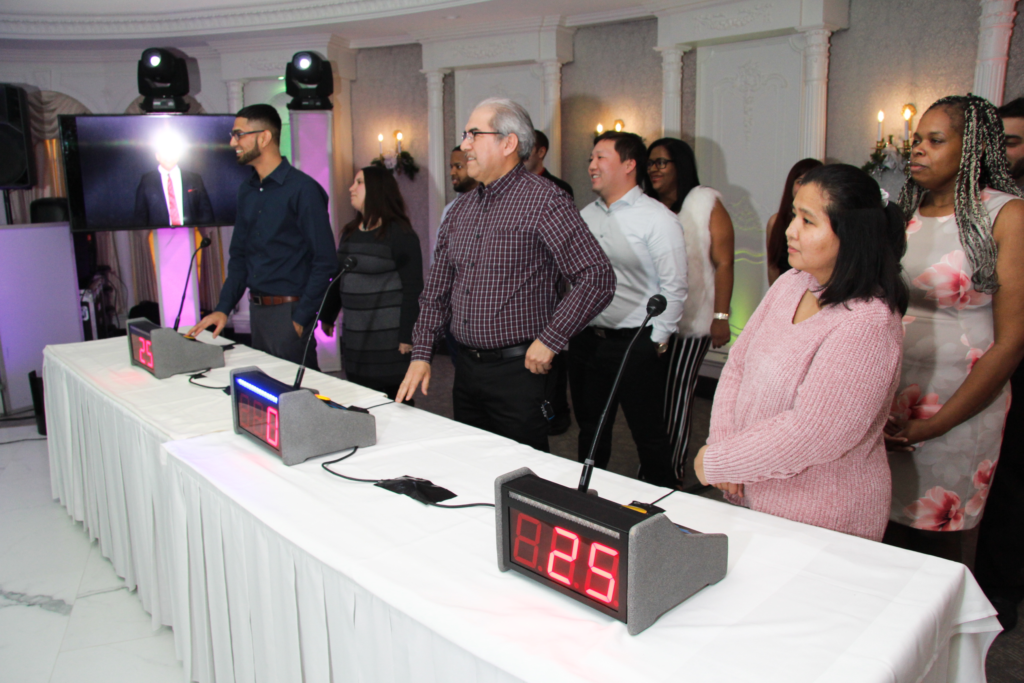
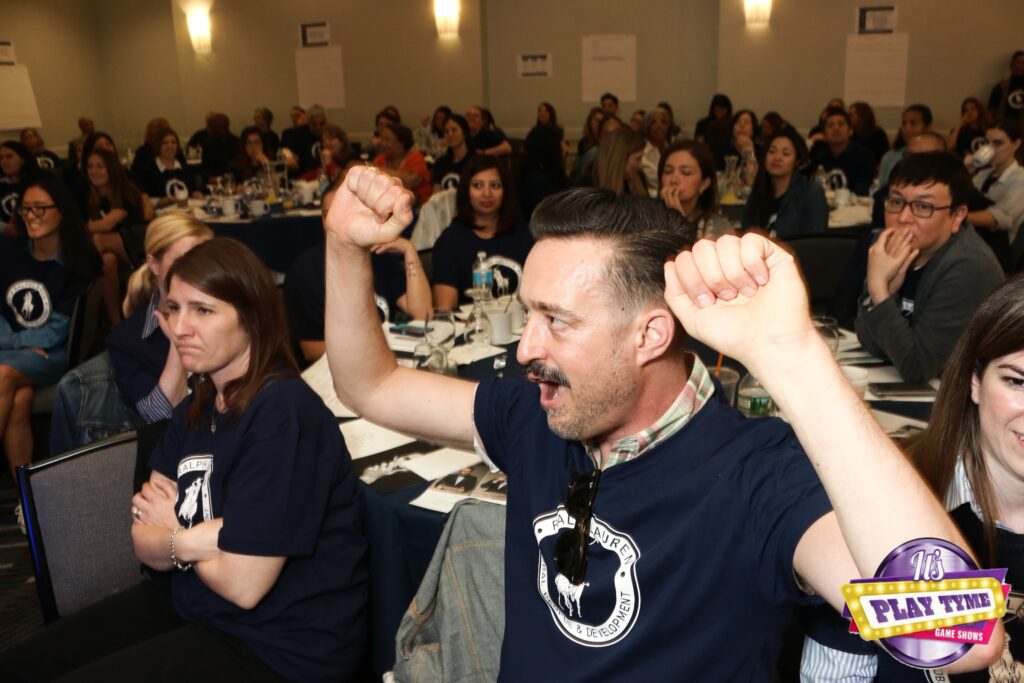
employee-engagement-game-show-idea
Key Takeaways:
Team-building puzzles can engage and empower teams.
These online activities improve problem-solving skills, promote collaboration, and ignite creativity.
Team-building puzzles can be tailored to the unique needs and goals of each team.
Team building puzzles offer a fun and effective solution for fostering a collaborative and productive workplace environment.
Boost Collaboration with Team Building Puzzles
As I mentioned earlier, one of the key benefits of team-building puzzles is that they enhance collaboration within teams.
These collaborative challenges and teamwork exercises can be incorporated into a variety of interactive puzzles that engage team members and promote communication and trust.
One effective way to boost collaboration is through group puzzle games.
These brain teasers require team members to work together and pool their collective problem-solving skills.
By solving problems together, team members learn how to communicate more effectively, share ideas, and build trust.
Got Team Games? – PRESS PLAY #funatwork #boostmorale
Another way to boost collaboration is through interactive puzzles that require teamwork to complete.
For example, an online escape room game would challenge teams to work together to solve a series of puzzles and escape within a certain time frame.
These types of puzzles encourage team members to share their ideas and rely on each other’s strengths to succeed.
Teamwork exercises can also be incorporated into these puzzles.
For instance, team members may be required to complete a puzzle together, with each member responsible for a different part of the puzzle.
By coordinating their efforts, team members can learn how to work together more effectively and collaborate towards a common goal.
Word Play Puzzles – Team Building in West Orange, New Jersey
Ignite Creativity with Group Puzzle Games
When it comes to team building puzzles, group puzzle games are a great way to ignite creativity among team members.
These brain teasers can help stimulate innovative thinking, encourage out-of-the-box solutions, and inspire team members to explore new perspectives.
Through interactive puzzles, teams can tap into their collective creativity and generate fresh, innovative ideas.
Group puzzle games are designed to challenge team members to think differently and solve problems creatively.
These games include activities such as jigsaw puzzles, tangrams, and riddles.
By working together on these puzzles, team members can develop their problem-solving skills and learn to approach complex problems from new angles.
One popular group puzzle game is the “Escape Room” challenge. Teams are locked in a room and must use clues and puzzles to solve a mystery and escape before time runs out.
This game requires teamwork, communication, and critical thinking to succeed.
Another example of a group puzzle game is the “Word Play” challenge. In this game, teams are divided into three teams.
It’s a replica of the very popular television game show “Wheel of Fortune”.
This game requires collaboration, creativity, and problem-solving skills as they are given hints and clues for each puzzle, but have to guess the right answer quickly in order to win the grand prize. .
Brain teasers are also a popular type of group puzzle game. These puzzles challenge teams to think creatively and solve problems using logic and critical thinking.
Some examples of brain teasers include Sudoku, crossword puzzles, and brainteasers like the “Rubik’s Cube”.
group puzzle game
Improve Problem-Solving Skills with Team Problem-Solving Tasks
Team-building puzzles with problem-solving activities are integral to any team’s progress.
By engaging in teamwork exercises and interactive puzzles, teams can become more adept at identifying and solving complex problems efficiently.
Team problem-solving tasks can enhance critical thinking, decision-making abilities, and analytical skills.
These activities help teams to approach problems from different angles and brainstorm innovative solutions.
The collaborative nature of these puzzles encourages communication, trust-building, and accountability within the team.
One of the most popular problem-solving puzzles is thejigsaw puzzle.
Team members must work together to fit the pieces of the puzzle together and create a complete image.
This activity requires attention to detail, critical thinking skills, and communication to ensure each puzzle piece is in the right spot.
Example of a Team Problem-Solving Task:
Another example is the “Escape Room” puzzle. This puzzle requires teamwork to solve a series of challenges and escape from a locked room.
Participants are put in a time-sensitive situation where they must collaborate, communicate effectively, and think creatively to succeed.
This type of puzzle is ideal for bringing team members together and showcasing their individual strengths.
Benefits of Team Problem-Solving Tasks
Description
Enhanced critical thinking
Problem-solving puzzles require teams to think critically, analyze situations, and come up with novel solutions.
Improved decision-making abilities
Team members learn to make decisions collectively, which improves their decision-making abilities.
Strengthened analytical skills
Team problem-solving tasks enhance analytical skills as the team is required to break down the problem into smaller, more manageable parts to find the solution.
Increased communication skills
As the puzzles are collaborative, participants learn to communicate more effectively, build trust, and hold themselves accountable for their contributions.
These interactive puzzles are designed to break the ice and promote open communication among team members.
The Importance of Icebreaker Activities
Icebreaker activities help to create an atmosphere of camaraderie and cooperation, strengthening relationships between team members.
These group bonding games can help to break down barriers and promote a sense of belonging within the team.
By engaging in these interactive puzzles, teams can build trust and establish a solid foundation for future collaboration and success.
The Role of Interactive Puzzles in Icebreaker Activities
Interactive puzzles, such as team-building puzzles, are an effective way to engage teams in icebreaker activities.
These puzzles are designed to be fun, engaging, and challenging, encouraging team members to work closely together to solve problems.
By playing these group puzzle games, team members can develop a sense of shared accomplishment, enhancing group bonding and improving collaboration.
The Benefits of Icebreaker Activities
Icebreaker activities have several benefits for team building, including improving communication, promoting teamwork, and fostering creativity.
These group bonding games promote open communication, encourage team members to share their ideas and opinions, and establish a sense of trust and understanding between team members.
By engaging in icebreaker activities, teams can develop the skills they need to work together effectively, improving collaboration and enhancing productivity.
These collaborative challenges and teamwork exercises promote teamwork, improve problem-solving skills, and inspire creativity.
How can team-building puzzles boost collaboration?
Team-building puzzles can boost collaboration by providing interactive puzzles that require teams to work together to solve.
These puzzles encourage communication, foster trust, and develop effective problem-solving strategies among team members.
How do group puzzle games ignite creativity?
Group puzzle games ignite creativity by stimulating innovative thinking and encouraging out-of-the-box solutions.
These brain teasers inspire team members to explore new perspectives and tap into their collective creativity to generate fresh ideas.
What role do team problem-solving tasks play in improving problem-solving skills?
Team problem-solving tasks are essential in improving problem-solving skills.
They enhance critical thinking, decision-making abilities, and analytical skills among team members.
Engaging in interactive puzzles helps teams become more adept at identifying and solving complex problems efficiently.
How can icebreaker activities enhance group bonding?
Icebreaker activities enhance group bonding by breaking down barriers, promoting open communication, and creating a sense of camaraderie among team members.
These interactive puzzles establish a solid foundation for future collaboration and success.
Did you know companies with happy employees perform up to 202% better? In contrast, only 13% of workers worldwide feel truly connected at work. Traditional team bonding activities for work often miss the mark—they feel outdated and uninspiring, leaving employees disengaged.
It’s time to shake things up with game show-inspired events. These high-energy team bonding activities for work bring excitement, laughter, and real connection into the workplace.
Game show-themed bonding is a modern, fun way to unite your team. These interactive games make employees happier, improve collaboration, and create lasting memories. By tapping into the thrill of classic game shows, you can build stronger teamsand a more productive work culture.
Key Takeaways – Team Bonding Activities
Engaged employees can boost company performance by up to 202%
Only 13% of employees worldwide feel engaged at work
Traditional team bonding activities often fail to engage employees
Game show-inspired events offer a fresh and exciting approach to team building
These activities boost morale, foster collaboration, and create lasting memories
employee-engagement-game-show-idea
Why Game Show Team Bonding Works Better Than Traditional Activities
Game show-inspired activities are a hit for fun team building for coworkers. They offer a unique and engaging experience that traditional bonding exercises can’t match. These activities tap into the competitive spirit and camaraderie found in game shows.
Game show-style activities make sure every team member is involved. Unlike traditional team building, where some might stay back, game shows pull everyone in. They feature fast-paced challenges, trivia, and friendly rivalry.
This high-energy format boosts team morale and gets colleagues laughing and working together. It’s a fun way to break from routine and re-energize teams.
Some key advantages of game show bonding include:
Igniting friendly competition that motivates teams
Encouraging communication and collaboration to solve challenges
Providing an immersive, shared experience that strengthens bonds
Offering a fun break from routine that re-energizes teams
By using the excitement of game shows, these activities create a fun atmosphere. Teams can let loose, have fun, and connect on a deeper level. The interactive nature helps teams work together better than traditional exercises.
Top Game Show-Themed Team Bonding Activities That Get Results
Are you searching for fun team bonding ideas? Game show-themed team-building activities are perfect. They make your team work better together, talk more, and have fun competing.
At TeamBonding, we have many game show activities to choose from. Here are some of our favorites:
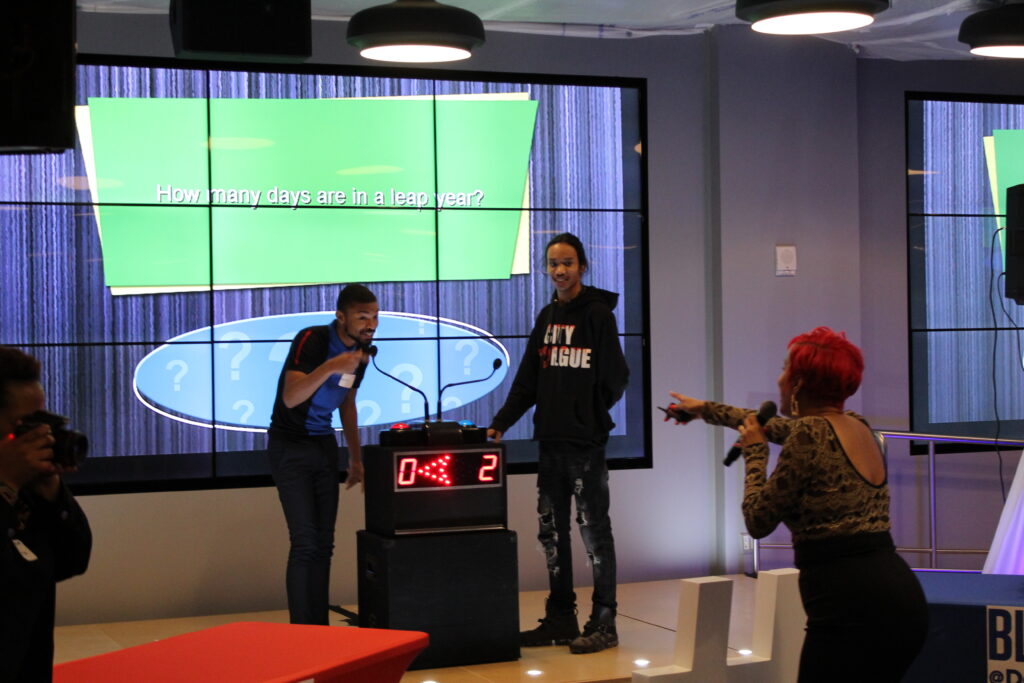
Face-2-Face Feud
This game is like a classic TV show. Teams guess the most popular answers to survey questions. It’s all about teamwork, smart thinking, and making quick decisions while having fun!
Game Show Mania
Game Show Mania is full of energy and fun. It has trivia, physical challenges, and creative puzzles. Teams face different challenges, testing their knowledge and teamwork. It’s great for boosting team spirit.
Minute to Win It
Minute to Win It is based on a TV show. Teams do simple tasks with everyday items in just one minute. It’s all about being creative, resourceful, and working well together.
Lip Sync Challenge (Wildcard!)
The Lip Sync Challenge is unforgettable. Teams pick a song, make a dance, and perform for everyone. It’s all about being creative, expressing yourself, and having fun together.
Why Game Shows Tap Into Team Chemistry
Game shows are great at creating corporate bonding experiences. They bring out the best in team chemistry. Unlike regular team building, game shows make teamwork fun and engaging.
When teams do game show challenges, they share a common goal. This creates unity and camaraderie, key benefits of well-planned team bonding activities for work. Team members support each other, celebrate wins, and learn from losses.
Game shows let everyone show off their skills. Whether it’s trivia, physical challenges, or problem-solving, everyone gets a chance to shine. These types of team bonding activities for work help boost morale and employee confidence.
Game shows also improve communication and teamwork. Teams must think fast, communicate clearly, and collaborate under pressure—skills that directly translate to the workplace.
The competitive edge of game shows adds energy and excitement. Teams strive to do their best, which strengthens relationships and fosters a more positive work environment.
Perfect Location Settings for Game Show Bonding
Choosing the right location for a game show team bonding event is key. It makes the experience more immersive and fun. The right spot can also strengthen workplace culture and get teams to step out of their comfort zones. Here are some top picks for your next game show bonding activity:
Conference rooms: Turn a big conference room into a game show studio with bright decorations, lights, and sounds. It’s a familiar spot that makes teams feel comfortable while doing icebreaker activities.
Outdoor spaces: Use nice weather to your advantage and hold your event outside, like in a park or courtyard. A new setting can energize teams and build camaraderie.
Dedicated event venues: Rent a space with the tech and setup for a real game show feel. These places often offer customized corporate events just for your team.
The right location boosts leadership development through play. It creates a space where teams can really connect and work together. Moving away from usual work spots helps teams focus on bonding and unity.
The table below shows the benefits of different locations for game show team bonding events:
Location
Benefits
Conference Rooms
Familiar setting, easy to decorate, cost-effective
Outdoor Spaces
Change of scenery, natural light, promotes relaxation
Dedicated Event Venues
Professional atmosphere, high-quality equipment, customizable
By picking the perfect spot for your game show team bonding event, you create a space for breaking down silos and real connections. Whether it’s a conference room, outdoor spot, or event venue, the right setting makes the experience better. It helps your team bond in meaningful ways.
Real Teams. Real Results. Real Fun. (Rutgers Alumni and MetLife)
At our company, we’ve seen how game show team bonding activities change teams for the better. Rutgers Alumni Association and MetLife are great examples. They both saw the power of team competitions and activities.
The Rutgers Alumni Association wanted to make their annual meeting fun. We made a Family Feud-style game for different graduation years. It was a huge hit, with over 90% of people participating and lots of laughter.
MetLife had a different challenge. They wanted to bring together employees from different departments. We created games that needed teamwork and talking. This led to stronger relationships and a sense of unity.
But don’t just take our word for it. Here’s what some participants had to say:
“I haven’t laughed that hard in years! The games really brought out everyone’s competitive spirit in a fun way.” – Rutgers Alumni
“I got to know my colleagues on a whole new level. It was great to see different sides of people and work together in a non-work setting.” – MetLife Employee
The numbers show the impact too. Check out these impressive stats:
Company
Participation Rate
Morale Boost
Productivity Increase
Rutgers Alumni
92%
85%
15%
MetLife
88%
79%
22%
Ready to make your company meetings more fun? Contact us to learn how our activities can help your team bond and achieve great results.
Other Team Bonding Activities (That Don’t Put You to Sleep)
Game show-themed activities are great for team bonding at work. But there are many other fun and educational options. These activities keep everyone involved and entertained, making your team-building efforts a success.
Cook Up Something Tasty: Teams prepare and share meals, fostering teamwork, innovation, communication, and relationship building.
Contribute to the Community: Volunteering for local causes or charities, such as building homes with Habitat for Humanity, packing food at a food bank, or cleaning up litter in a park.
Get Active Outdoors: Activities like rock climbing, hiking, kayaking, ropes or obstacle courses, scavenger hunts at the park, or beach days.
Gain Insight into Personality and Work Styles: Using assessments like Myers-Briggs Type Indicator, DISC assessment, Workplace Big Five Profile, Team Management Profile, or StrengthsFinder 2.0.
It’s important to pick activities that are both fun and educational. This way, your team will grow closer, communicate better, and work more efficiently. Try to have at least 1-2 fun activities every quarter to keep your team connected and motivated.
Let’s Make Work Fun Again—One Game Show at a Time
It’s time to add excitement to your workplace with fun team building for coworkers. These activities boost employee engagement and team cohesion. Say goodbye to boring office activities and hello to a memorable bonding experience.
Game show-inspired team building brings a fresh twist to bonding activities. It taps into the competitive spirit and encourages teamwork. Activities like Face-2-Face Feud, Game Show Mania, or the Lip Sync Challenge can transform your team dynamics.
Don’t settle for boring employee engagement ideas. Game show-themed team building is a blast. It brings out the best in your team, creating camaraderie and unity. This leads to better performance and a more positive work environment. So why wait? Incorporate these team cohesion strategies into your next team-building event.
Ready to make work fun again? Book your unforgettable game show-inspired team bonding experience today. Treat your team to an event they’ll be talking about for months. Let’s create lasting memories, strengthen bonds, and elevate your team’s performance—one game show at a time!
FAQs – Team Bonding Activities
How do game show-inspired team bonding activities boost employee engagement?
Game show-inspired team bonding activities are fun and interactive. They make everyone want to join in. This leads to more team spirit and better work relationships.
What makes game shows an effective format for corporate team building?
Game shows mix friendly competition with teamwork. They create a fun experience that brings people together. This helps teams work better and feel closer.
Can game show team bonding activities be customized to suit our company’s specific needs?
Yes, game show team bonding activities can be made to fit your company’s goals. They can help with leadership, teamwork, or just boosting morale. This makes them a great choice for any team.
What are some popular game show-themed team bonding activities?
Popular activities include Face-2-Face Feud and Game Show Mania. There’s also Minute to Win It and the Lip Sync Challenge. Each one offers a unique way to have fun and work together.
How can we ensure maximum participation and engagement during the team bonding event?
To get everyone involved, pick activities that are fun and fast-paced. Our hosts make sure everyone feels welcome. Choose a place that’s fun and open, like a big room or outdoor spot.
What kind of results can we expect from game show team bonding activities?
Game show team bonding activities really work. Rutgers Alumni and MetLife saw better communication and teamwork. They also felt happier at work. These activities are a great way to make your team stronger and happier.
Did you know companies with a strong team-building focus do better as far as ROI goes? For over 15 years, I’ve seen how live game shows boost corporate culture and employee happiness. Now, businesses are using fun events with buzzers and challenges to bring teams together.
Think about using “Jeopardy” style game or “In It to Win It” to entertain and strengthen team bonds. These games are more than fun; they’re tools for “better communication” and teamwork. They create lasting memories that energize employees and make them feel closer.
These experiences can happen anywhere, from offices to off-site venues. I’ve seen groups bond over laughter and strategy in game shows. For instance, a Wild & Wacky Team Building event turns colleagues into friendly rivals, boosting morale and loyalty.
The best part is, you don’t need a big budget to start. Just a text can lead to a top-rated, no-deposit event.
Key Takeaways – Team Building Experience
Game shows, as innovative team-building experiences, can greatly enhance corporate culture.
Employee satisfaction often skyrockets following a unique team event that breaks the routine.
Game shows can be integrated into any corporate setting, making them versatile and easy to arrange.
No upfront costs mean these experiences are accessible to businesses of all sizes.
A simple text to 917-670-4689 can kick off your unforgettable team-building adventure.
Wild & Wacky Team Building events receive outstanding feedback, as evidenced by a 5-star Google rating.
employee-engagement-game-show-idea
What Makes a Team Building Experience Effective in the Office?
Effective team building includes everyone, from entry-level staff to top executives. To truly develop leaders and boost engagement, the key is to blend fun with function, and that’s exactly where game shows shine.
Game shows turn traditional team-building into an interactive experience where every participant has a role. These activities break down social and professional walls, foster collaboration, and make teamwork feel more exciting, not forced.
They also serve as a unique platform for teaching business concepts in a more entertaining, memorable way. This playful approach to leadership development leads to real growth by:
Creating a supportive environment for risk-taking and innovation
Enhancing communication skills through fast-paced challenges
Building trust and understanding across departments
With game shows, you’re not just playing games—you’re building better leaders, one laugh at a time.
Game shows are great for all team sizes. They bring everyone together, making the workplace more inclusive. Learn more about dynamic team building for executives here.
Studies show that team bonding is very important. Fun, interactive games can greatly improve work life and employee happiness.
Success in team building, like game shows, comes from real-life scenarios. It turns daily challenges into growth opportunities. Choosing the right activities is key to meeting your team’s needs.
Choosing The Right Team Building Experience
Choosing the right team-building events can boost corporate cohesion and morale. It’s important to understand your team’s unique dynamics and match them with your company’s goals. It’s not just about having fun; it’s about creating experiences that help teams grow and work together better.
Game show-type team challenges are very effective. They help break the ice with fun icebreaker games. They also make teams work together in a fun, yet competitive way. These challenges can be customized to fit any team’s needs, whether it’s cooking, music, or trivia.
Game shows as corporate team-building activities offer a unique combination of entertainment and skills-building.
Culinary competitions to spice up team coordination and creativity.
Trivia games that enhance knowledge and group problem-solving skills.
Music and performance challenges that encourage team members to step out of their comfort zones while having fun.
Choosing the right team-building event is key. It should be enjoyable and meaningful to the team. An event that hits the mark boosts communication, morale, and a sense of shared purpose in the company.
Comedy Game Shows for Team Building – Let’s Play!
Why Game Shows? The Secret Sauce Behind the Fun
Adding game shows to team-building activities is a smart move. It uses fun to keep employees happy and build a strong company culture. Game shows are lively and fun, changing how teams work together. They bring excitement and teamwork to the forefront.
These games offer a fun yet useful experience. They’re not just for fun. They help teams bond and feel more connected to their company.
Benefit
Description
High Engagement
Game shows make sure everyone plays a part. It’s a fun way for all to join in.
Versatile Settings
Game shows fit any place, from small rooms to big halls. They match any company’s vibe and needs.
Enhanced Team Dynamics
Game shows help teams work better together. They do this in a fun, safe way, making the workplace better.
Immediate Feedback
Knowing who wins right away boosts spirits. It keeps the team excited and eager to do more.
Customization
Challenges can be made to fit the company’s goals and values. This makes the games both fun and meaningful.
Game shows are a great way to have fun while building a strong team. They entertain and help keep employees happy and loyal to their company.
Popular Game Show Formats That Wow Teams
Planning a game show for corporate events can boost team building. These formats make sure everyone has a great time and connect better at work.
Face-2-Face Feud
Face-to-Face Feud is great for team building. It makes teams compete, sparking debates and laughter. It’s a fun way to get teams to bond and have fun together.
Minute To Win It – 60 Second Challenges
The ‘Minute To Win It’ format is perfect for a challenge. Teams have to work fast to win in 60 seconds. It’s a high-energy game that sharpens teamwork and problem-solving skills.
Game Show Trivia Mania
Game Show Trivia Mania is for teams that love learning. It tests many knowledge areas, making everyone competitive. It’s a fun way to learn and connect at work.
Lip Sync Challenge
The Lip Sync Challenge lets team members show off their creativity. It’s a fun, high-energy event that strengthens team bonds. It’s a great way to enjoy and express yourself.
These formats add a fun twist to team building. They entertain and help teams work better together. A game show at your next event could really boost team spirit.
The Ideal Setting for a Game Show Experience
Hosting a team-building eventneeds the right setting for success. Whether it’s virtual or in-person, the environment matters a lot. It affects how happy employees are and how leaders grow.
Game shows can fit into many places, from big ballrooms to online platforms. This flexibility keeps the fun and teamwork alive, no matter where you are. It makes every event count.
Setting Type
Benefits
Best for
Virtual Environment
Connects remote teams, highly scalable
Virtual team building
Physical Game Studio
Authentic game show feel, high engagement
Corporate team-building events
Adapted Office Space
Cost-effective, convenient for participants
Small to medium-sized teams
Every setting has its perks for game shows. For instance, virtual settings let teams from all over join in. They use cool tools like live polls and video chats to make everyone feel connected.
Turning an office into a game area can shake things up. It can make workdays more fun and boost morale. Pick a setting that fits your team’s needs and goals.
Getting the perfect setting takes careful planning and knowing what makes these events great. Think about your team’s needs and the game show’s vibe. This way, you create an experience that’s fun and builds important skills and values.
Not All Game Show Experiences Are The Same
I’ve seen how different, unique team events can be. Not every game show team building is made with the same care. A great event shows off your company culture and team’s unique traits.
game-shows-ct
Events that reflect a company’s history or mission are the most impactful. They can be in-person or online, aiming to entertain and bond the team.
Here’s how these events can turn “regular team meetings” into engaging experiences:
Content that shows off company values and history
Games that highlight each team member’s strengths
Challenges that help with professional growth
This approach makes every game show fresh and interesting. It creates a strong bond among team members and a deeper appreciation for the company’s history and future goals.
Real Companies, Real Results (Mini Case Studies, Volvo and Sony)
Volvo and Sony have seen big wins by adding game shows to their team activities. These events are designed to entertain and boost morale. They also help employees work better together. Let’s explore how these efforts have helped in the workplace.
A study found that team games can really help keep employees. Volvo and Sony noticed their teams’ morale had gone up. They say it’s because of the fun, team challenges they added. For more on their success, check out this case study.
Here are some key benefits of hosting live game shows:
Teams feel more united through friendly competition
Everyone gets recognized for their skills, making the team more respectful
Employees are happier after these events, showing better morale
It creates a culture where everyone works well together
Companies that use these activities see lasting benefits. They have happier, more engaged teams. Adding similar activities could be a smart move for your team’s success and to keep top talent.
How to Customize Your Team Building Experience
Customizing team-building exercises is key to boosting employee satisfaction. I work with organizations to tailor each game show to fit their unique culture and goals. This involves close collaboration with professional facilitators to create experiences that are both fun and meaningful.
Choosing the right game format is the first step. We select options based on your team’s size, dynamics, and goals. Then, we customize the questions and activities to make sure they’re entertaining and relevant.
To highlight leadership, we use scenarios that require quick decision-making, for example:
For stress relief, we choose light-hearted activities that make everyone laugh. Every detail is crafted to align with your values and boost employee engagement.
I make sure every aspect of the team-building experience is well-planned. This includes the physical setup and digital platforms for virtual teams. Each element is designed to elevate, educate, and entertain everyone involved.
Ready to Bring the Buzz? Book Your Game Show Experience
If you want to energize your team and build camaraderie, it’s time to book a game show experience. This is more than just a team challenge. It’s a fun twist on traditional team building. With various game show formats, your employees will have an event they’ll never forget.
This experience boosts cooperation and morale. It’s perfect for refreshing your company culture or adding excitement to your events. The game show vibe stays with your team long after the event.
Effective team building is about memorable experiences. I create events that everyone will talk about for weeks. Fun activities like this inspire teamwork and reveal hidden talents.
With themes from sports to food, everyone finds something to enjoy. You can customize the event to fit your company’s style. The setup includes mood-setting lights and fog machines for an immersive experience.
Teams of up to three can compete, making it a fun and competitive atmosphere. You can even submit your questions for a personal touch. Available worldwide, including Canada and France, this unique challenge can transform your work environment.
Game Shows for Team Building
FAQs – Team Building Experience
1. How do game shows contribute to team building?
Game shows create a shared experience that naturally encourages communication, collaboration, and healthy competition. They help break down social barriers, spark laughter, and make even the quietest team members feel seen and heard—all while working toward a common goal.
2. Can team-building activities enhance company culture and employee morale?
Yes, absolutely. Interactive team-building events like game shows boost morale by bringing energy and fun into the workplace, which improves employee satisfaction, strengthens bonds, and fosters a positive company culture that people want to be a part of.
3. What are some popular game show formats for team-building events?
Top picks include Face-2-Face Feud (survey-style), Minute to Win It (quick physical challenges), and Game Show Trivia Mania (customized knowledge battles). These formats are high-energy, crowd-pleasing, and adaptable to different group sizes and event goals.
4. Can game show team-building experiences be customized?
Yes, customization is a game-changer. You can tailor everything from the trivia questions to the game themes to reflect your company’s culture, goals, and even inside jokes—making the experience more personal, impactful, and unforgettable.
5. What factors should I consider when selecting a game show for my team?
Start by considering your team’s size, personality, and comfort level with friendly competition. Then choose a format that matches your goals—whether it’s breaking the ice, building collaboration, or just giving your team a reason to laugh together.
6. Are virtual game show experiences possible for remote teams?
Yes, game show experiences can absolutely be done virtually. They’re a fantastic way to keep remote and hybrid teams engaged, connected, and having fun—no matter where they’re located on the map.
7. Have real companies seen tangible benefits from game show team-building activities?
Yes, big names like Volvo and Sony have seen real gains. They’ve seen better teamwork, happier staff, and more retention. Custom game shows help highlight and reinforce company values.
8. How can I book a game show experience for my team?
To book a game show, contact team-building experts like TeamBonding. They’ll help pick the right game and customize it for your team. They aim to meet your goals and make it fun.
A recent study found that 67% of executives often tune out during important meetings. This lack of focus at the top can cost companies a lot. Traditional training methods often fail to keep senior leaders engaged.
Corporate game shows offer a new way to engage even the most skeptical executives. These interactive events turn jaded leaders into active participants. They create a safe space for strategic thinking, unlike traditional workshops.
Game shows are designed to break down barriers and encourage real teamwork. They tap into leaders’ competitive spirit while keeping things fun. This helps them see challenges in new ways.
This guide will show you how to use game shows for leadership teams. You’ll learn how to create engaging content for senior executives. It also covers how to measure the impact on decision-making and team alignment.
Key Takeaways
Interactive game shows create psychological safety for honest communication among executives
Game-based methodologies drive strategic thinking more effectively than traditional workshops
Competitive elements tap into leaders’ natural drive while fostering collaboration
These approaches work for both in-person retreats and distributed leadership teams
Properly designed games lead to measurable improvements in decision-making and alignment
Game shows break through engagement barriers at top organizational levels
The Challenge of Engaging High-Level Executives
Senior leadership teams often struggle to engage in meaningful ways. The unique role of executive management can make collaboration and strategic thinking hard. It’s key to understand these challenges before finding solutions that work for your C-suite team.
Common Issues with Executive Meetings
Executive meetings often follow the same patterns, which can limit their impact. Dominant personalities often take over, while quieter, yet valuable, voices are ignored. This imbalance means the loudest, not always the wisest, ideas get heard.
Digital distractions make things worse. Senior leaders often split their focus between the meeting and their devices. This makes deep strategic thinking hard and shows others they don’t need to fully engage.
Political considerations are preventing authentic dialogue
Strategic discussions devolving into operational details
Meetings are becoming information-sharing sessions instead of decision-making forums
Lack of psychological safety for expressing dissenting views
Why Traditional Team Building Falls Flat with Senior Leaders
Standard team-building exercises usually don’t grab the attention of C-suite members. They often see these activities as simple or unrelated to their daily challenges. This makes them mentally disengage or show reluctance.
The hierarchical structure of executive teams adds to the challenge. Many team-building methodsignore the complex power dynamics among senior leaders. Activities that work for frontline teams might feel forced or artificial for those in positions of authority.
Time is also a big factor in why executives resist team building. They are very protective of their schedules. Traditional team building rarely shows clear benefits, making it an easy target for dismissal.
Why Game Shows Energize Leadership Teams
Leadership teams do well in game show settings. These formats tap into basic human drives and break down usual team dynamics. When executives leave their spreadsheets for a world of buzzers and timers, something special happens.
The room’s energy changes, and communication barriers fall. Even the quietest C-suite members show hidden talents and views.
a) The Psychology Behind Competitive Engagement
Competition sparks strong brain responses that boost learning and memory. In game show settings, leaders’ brains get a dopamine rush. This “reward chemical” makes them feel good and focused.
Effective game shows offer the right mix of challenge and ease. Too easy, and it’s boring; too hard, and it’s frustrating. The perfect balance keeps leaders engaged and creative.
b) Benefits of Gamification for Executive Decision-Making
Game shows let leaders practice making big decisions in a safe space. A well-crafted game can mimic months of market changes in minutes. This gives teams a chance to think strategically fast.
Game mechanics also make hidden patterns clear. When leaders decide within the game rules, their usual patterns show. This reveals biases and team dynamics that might not be seen in regular meetings.
Many teams use team-building retreat games for these experiences. They help leaders focus and open up to new ideas.
c) Creating Psychological Safety Through Play
Game shows are great for building trust among leaders. When they laugh and compete, status differences disappear. This creates a safe space for risk-taking.
This safety lets leaders communicate honestly. Even the most reserved can speak up in a game setting. New team members find their voice more easily in these playful situations.
The fun and camaraderie from game shows strengthen leader relationships. These bonds improve team dynamics long after the game ends.
Popular “Game Show Formats” for Corporate Leadership
Using game show formats for corporate leadership is a fresh way to tackle challenges. These interactive sessions can change how leaders tackle tough topics. They also help strengthen your team and improve how you run your company. Let’s look at four game show formats that work well with leadership teams.
1 – Family Feud for Organizational Alignment
Family Feud games are great at showing where leaders and the team might not see eye to eye. They do this by asking employees, customers, or stakeholders about important business questions first.
Then, leaders try to guess the most common answers. This reveals big differences between what leaders think and what happens in the company. Questions like “What do employees value most about our company culture?” or “What do customers find most frustrating about our service?” give deep insights.
The real benefit comes after each round, when leaders can talk about why their guesses were off. This safe space helps address issues that might not be talked about openly in your team.
2 – Jeopardy-Style Knowledge Competitions
Jeopardy games make learning about technical or compliance topics fun. They also show where your team might need to brush up on certain areas. The trick is to make the categories both challenging and accessible.
Good categories might include “Industry Trends,” “Company History,” “Customer Insights,” or “Regulatory Requirements.” The best Jeopardy-style games for work use important business info in a way that doesn’t feel like a test.
“Our leadership team learned a lot about our regulatory environment through our Jeopardy game. The competition made them pay attention in ways our usual presentations didn’t,” says a Fortune 500 Chief Operating Officer.
3 – Who Wants to Be a Millionaire for Strategic Decision-Making
The Millionaire format is perfect for practicing making big decisions. Questions get harder as the game goes on, requiring smarter thinking.
The lifelines (Phone-a-Friend, 50/50, Ask the Audience) can help teams work together better. For example, “Phone a Department” lets leaders get advice from different teams.
This format shows how leaders handle stress, whether they like to get input before deciding, and how they weigh different pieces of information. All these are key to good corporate governance.
4 – Shark Tank for Innovation Pitches
Shark Tank-style sessions are great for evaluating new ideas and giving feedback. Teams prepare pitches for new ideas, improvements, or big plans, while leaders act as investors.
It works best when you have clear rules for judging ideas. The questions help create a balance between being creative and practical. This way, everyone learns to give better feedback.
This approach makes innovation more open and teaches leaders to give better feedback. Many teams find that using game shows at team retreatsleads to big business ideas.
The competition helps leaders explain how they make decisions more clearly. This often shows big differences in how they see opportunities and risks.
Step-by-Step Planning for Your Leadership Team Game Show
Every successful leadership game show starts with a detailed plan. This plan makes sure the event is both fun and strategic. It’s all about balancing business goals with fun activities. When done right, these games can change how teams work together and make decisions.
Defining Clear Objectives and Desired Outcomes
First, decide what you want your game show to achieve. Do you want to boost strategic thinking, improve teamwork, or find talent gaps? Your goals should match your business needs.
Make a simple plan that covers:
The main business challenge the game will tackle
The leadership skills you want to see or develop
How you measure success
How you’ll use the insights gained after the game
Share your goals with important people, but keep the surprise and fun for the team. Executives do best when they see the value in what they’re doing.
Selecting the Right Format for Your Team
Not every game show fits every team. Choose one that fits your team’s size, dynamics, and comfort with competition. Some teams thrive on competition, while others might feel stressed.
Match the game to your learning goals by thinking about:
How your team works together and their hierarchy
The culture and how it affects participation
The technical needs for online or mixed formats
The busy schedules of your executives
The best games let leaders show their strategic thinking and help teams work together better.
Creating a Detailed Production Timeline
Good game shows need careful planning. Make a detailed timeline that starts from your event date and goes backward. This includes all the prep work.
Your timeline should include:
Steps for creating the game content
Technical rehearsals and checks
Training for the team running the game
Updates for the players
Debrief and planning after the game
For online games, add extra time for tech checks and have backup plans for tech problems. The best games seem easy, but are the result of lots of hard work.
By following this structured plan, you’ll create a game that energizes your team and gives valuable insights. The effort you put into planning will pay off in both fun and results.
Developing Content That Challenges Leadership Teams
The heart of a good leadership game show is its content. It must stretch executive thinking. The format is engaging, but the substance of your questions and scenarios is key. It turns a simple game into a powerful tool for leadership development.
To create content that resonates with senior leaders, you need careful planning. You must understand your organization and the psychology of executive decision-making.
Crafting Questions That Provoke Strategic Thinking
Effective questions for leadership teams do more than test basic knowledge. They make executives think deeply about situations and challenge their business assumptions.
Use the “what if” framework to encourage forward-thinking. For example, instead of asking “What was our market share last quarter?”, ask “What would happen to our market position if our top competitor dropped prices by 15%?”
Make your questions layered to require both analytical and creative thinking. Start with data, then ask participants to extrapolate implications or develop strategies. This mirrors the complex decisions executives face every day.
Integrating Company Data and Business Challenges
Turn your business metrics into engaging game content. Create questions that require interpretation, not just recall. Use recent customer feedback, market research, or financial trends as the basis for scenarios.
When using company data, present it visually whenever possible. A graph or chart can spark questions about trends, anomalies, or responses. This makes the game relevant to current priorities.
Consider using a Wheel of Fortune format for team challenges. This familiar framework focuses on strategic issues.
Creating Scenarios That Simulate Real-World Decisions
Scenario-based questions help leaders practice strategic decision-making. Design decision trees with meaningful consequences that reflect real business constraints.
For example, present a scenario where a major client is threatening to leave. Offer multiple response options with different resource requirements and outcomes. Ask teams to debate and select their approach, then reveal the results.
These scenarios are powerful when they include realistic constraints like limited budgets or tight timelines. The game format often reveals decision-making patterns that might be hidden.
Hybrid Solutions for Distributed Leadership Teams
With teams spread across locations, designing game shows for both in-person and remote participants is key. Digital platforms provide equal access to questions and responses.
Use digital polling tools for independent answers before group discussions. This ensures all voices are heard, not just the loudest.
For hybrid meetings, mix teams with both in-person and remote members. Provide clear visual cues for all participants, regardless of location.
The Ripple Effect: What Happens After the Show
Leadership game shows create excitement, but their lasting impact depends on what happens next. The real change starts when teams go back to their daily tasks. A good game show can spark change, but without follow-up, it fades away.
Creating lasting change means turning insights into actions. This process helps teams grow and improve.
Successful team building for leaders goes beyond the event. Game shows can reveal strengths and weaknesses. They offer chances for growth.
Let’s look at how to make the most of your game show investment.
Key Performance Indicators for Team Engagement
Measuring a game show’s impact is more than just asking if people had fun. Look at how teams work together and make decisions. Track these to see the real value:
Communication frequency and quality between departments
Decision-making efficiency in subsequent leadership meetings
Cross-functional collaboration initiatives
Psychological safety scores in team assessments
Innovation metrics and idea implementation rates
Great teams watch these numbers to stay on track. They use both numbers and feelings to understand their team.
Collecting and Analyzing Participant Feedback
Getting good feedback takes time. Ask people right after the event and again later. This helps you see what really stuck.
Same-day reaction surveys focusing on engagement and enjoyment
One-week reflection questionnaires exploring personal insights
Debriefs are key too. Talk about the game within 48 hours. Ask about specific moments, not just if they had fun.
Translating Game Insights into Workplace Action
The biggest step is making changes last. Without this, the game is just fun. Here’s how to make it stick:
Ask leaders to change one thing based on the game. For example, if they talk too much, they might listen more in meetings.
Make team agreements based on what you learned. If teams don’t work together, plan to work together more. Theripple effect of small leadership actions can change a team.
Use mini-games to keep the momentum. These small activities help teams practice new skills. The best teams use games in regular meetings.
See your game show as the start of a journey, not just an event. Success is not just about fun. It’s about how teams work together after the game.
Case Study: When a Game Show Unleashed a Hidden Leader
A technology firm decided to make its planning sessions more fun. This led to the discovery of a leader who changed their business path. TechNova, a company with 200 employees, was facing a big change as cloud computing changed their industry.
Despite having skilled leaders, their meetings were stuck in a routine. They were all about avoiding risks and defending their areas. This was not helping the company move forward.
“Our meetings were just echoing the same old ideas,” said Sarah Chen, TechNova’s CEO. “Everyone was too focused on their areas. We needed something to break these barriers.”
The HR team suggested using “Who Wants to Be a Millionaire” to make decisions about cloud transformation. Each leader would answer tough questions about the market and customer needs. They could get help from others, which encouraged teamwork.
Then, something unexpected happened. Marcus Jimenez, the quiet operations director, showed great strategic insight. While others struggled, Marcus answered questions with surprising clarity.
“It was like seeing a different person,” Chen said. “Marcus was always ready with operational advice. But in the game, he showed a deep understanding of our industry’s future.”
The game show made everyone feel safe to share their true knowledge. Without the usual power struggles, Marcus could show his real skills. This format let him think strategically in a way that was not seen before.
Quickly, TechNova’s leaders saw Marcus’s value. They made him a key player in customer-focused projects. They even created a team for innovation, with Marcus leading, even though he wasn’t the highest in the hierarchy.
To see how these changes worked, TechNova tracked important signs:
Decisions on new projects were made 37% faster
The success rate of new projects jumped from 62% to 84%
Employee engagement rose by 22%
Customer satisfaction with new features went up by 18% in six months
These changes showed the power of talent management. TechNova updated their leadership training to include games. They also held game shows for different teams to find more hidden talent.
“The game show made our meetings fun and changed how we find leaders,” said Chen. “We learned that old meeting styles can hide amazing talent.”
Most importantly, TechNova successfully moved into the cloud market. They launched a competitive cloud platform six months early. Marcus’s insights helped them focus on what customers wanted.
This story shows how game shows can change leadership teams. They create a space where real skills can shine, not just titles or confidence. When we break free from usual power structures, we often find talent we didn’t know we had.
Sometimes the best ideas come from the people who speak the least in traditional settings. Our game show format gave everyone equal chance to show their knowledge, not just their position or confidence.
TechNova’s story teaches us that finding talent needs creative methods. By using games instead of usual meetings, companies can find the true leaders. This ensures the right voices are heard when making big decisions.
Conclusion: Transforming Leadership Culture Through Interactive Team Experiences
Interactive game shows can change a leadership team’s culture in big ways. They’re not just fun activities. They’re key steps in how leaders think, talk, and work together.
Game shows help teams share common experiences. When leaders face challenges in a game, they learn a language for real business problems. “Remember how we solved that puzzle in the game show?” can spark new ideas for real challenges.
These games can also change how teams work. The leader who always talks might start listening more. The quiet leader might get a chance to share important ideas. This mix-up can bring new ideas and ways of thinking.
If you’re unsure about using games in business, think about the benefits:
They help teams trust each other faster
They make it safer to try new things and innovate
They lead to better decisions through teamwork
They uncover hidden talents and leadership skills
They create lasting memories that strengthen team bonds
These experiences can change your whole company. When leaders are open and work together, the whole team follows. This creates a culture of teamwork and innovation.
By choosing interactive game shows for your team, you’re doing more than just having fun. You’re setting the stage for your team’s success in the future. The fun of today can lead to big wins tomorrow.
Ready to Wake Up Your Leadership Team?
Let’s be honest, your leaders don’t need another snoozefest meeting. They need energy, connection, and a spark of competition.
Start with a 20-minute game at your next meeting. Try Family Feud to fix alignment. Use Millionaire to boost strategy. Pitch Shark Tank-style for fresh ideas.
DIY if your budget is low, or bring in the pros for a real experience. Either way, game shows break silos, spark real talk, and unleash untapped leadership potential.
Stop meeting. Start playing with purpose.
FAQs – Leadership Teams
1. Why do traditional team-building activities flop with executive teams?
Because trust falls and paper towers don’t cut it at the VP level. Senior leaders need challenge, not cheesy games. Traditional activities feel too basic, too forced, and frankly, too irrelevant. When there’s hierarchy in the room, you need an activity that levels the playing field and earns their respect.
2. What real benefits do game shows bring to leadership team dynamics?
Game shows shake things up. They strip away titles and egos, spark dopamine (yes, the good brain juice), and turn strategy into play. Leaders start thinking differently, communicating more clearly, and bonding over shared wins—and epic fails. The result? Real-time collaboration, minus the boardroom fluff.
3. Which game show formats work best for executive teams?
Think smart, fast, and competitive.
Family Feud-style: Great for exposing gaps in team alignment.
Millionaire-style: Pushes decision-making under pressure.
Shark Tank-style: A must for practicing idea evaluation and quick pitches. Each format targets a different leadership muscle.
4. How do I get skeptical execs to buy into this?
Hit them with the truth: This isn’t fluff—it’s leadership development disguised as fun. Share wins from companies like theirs. Emphasize how this creates space for honest dialogue, smarter thinking, and even friendly rivalry. Bonus tip: get a senior exec to co-sign the idea. Instant buy-in.
5. How do we make game show content relevant to real business goals?
Ditch the trivia about TV shows. Instead, build questions around real company data, industry trends, or past challenges. Use scenarios that mirror real decisions your leaders face daily. When your content connects to KPIs and culture, the game becomes a living case study—with laughs.
6. How do we measure whether this game show worked?
Start by asking the team: Did they communicate better? Make faster decisions? Feel more connected? Pre and post-event surveys, feedback forms, and behavioral observations tell the story. But the real win? What happens in the game starts showing up in the boardroom.
Have you seen how top schools have teachers working together smoothly? In today’s world, how well teachers get along can really affect a school’s success. With the challenges of pandemic learning gaps, administrative tasks, and new technologies, teachers need each other’s support more than ever. Teacher Team-building exercises do more than just fill up professional development days. They build strong relationships that help teachers get through tough times. When teachers really connect, they communicate better, feel less stressed, and come up with new ways to teach.
Strong teams in schools have a big impact on students. Schools with united staff see better student results, better classroom management, and more consistent teaching across grades.
Using game show ideas is a fun way to build these important connections. They need little setup but have a big effect on staff morale. These activities turn regular meetings into chances for real connection and boost team building participation even among those who might not want to join in.
Team-building activities reduce teacher burnout and improve retention
Game-based exercises require minimal preparation but deliver significant results
Regular collaborative activities transform school culture over time
Team building helps staff navigate educational challenges more effectively
Improved communication among educators creates consistency for students
Why Teacher Team Building Exercises Matter Now More Than Ever
The way we teach has changed a lot, making team building for teachers more important than ever. Schools now face new challenges like helping students catch up after the pandemic and dealing with their emotional needs. Teachers must also handle more work and keep up with new technology.
Studies show that over 55% of teachers feel burned out, a 15% jump from before the pandemic. This shows why strengthening teamwork in schools is not just good—it’s necessary.
When teachers work alone, problems get worse. But schools that focus on teamwork see big improvements in teacher happiness and student success.
Team building does more than just make teachers feel good for a moment. Schools that do team activities regularly see:
30% fewer teachers leave their jobs
Better communication between departments
Smarter ways to solve student problems
More sharing of ideas and resources
Being more ready for big changes
Today’s schools need teams that can work well together. When teachers support each other, they build strong networks against stress. One of the most effective ways to strengthen those bonds is through teacher team-building exercises that go beyond the usual icebreakers.
These bonds don’t form on their own. Schools need to make time for team building to help teachers connect.
Investing in team building brings real benefits. Schools that focus on teamwork see teachers happier and more likely to stay. One study found that schools with strong teamwork had 22% happier teachers and 18% more kept their jobs.
Team building also saves money. Hiring and training a new teacher can cost between $9,000 and $21,000. Keeping teachers through team building is a much smarter financial move.
But it’s not just about money. Teachers who feel supported and connected are more creative and enthusiastic. This makes students more engaged and successful.
Today’s teacher team-building exercises are different because they focus on solving real problems. They help educators connect in meaningful, lasting ways.
Investing in teamwork makes schools better in many ways. From more productive meetings to more creative lessons, the benefits spread throughout the school.
As education keeps changing fast, schools that focus on teamwork stay ahead. Team building is not a luxury—it’s a must for schools to succeed.
Game Show-Style Teacher Team Building Exercises
Looking for the perfect icebreakers for teachers? Game show-style events might just be the secret sauce your school needs. These familiar formats tap into nostalgia. They create an environment where collaboration happens naturally and everyone feels comfortable participating.
Game shows work exceptionally well in educational settings. They mirror what teachers already know and love. The structured rules, friendly competition, and emphasis on thinking quickly align perfectly with educators’ natural strengths.
The best team building activities don’t feel forced. They create authentic moments of connection while people are simply having fun together. Game shows hit this sweet spot perfectly.
What makes game show formats effective is their ability to level the playing field. In a school environment where hierarchies can sometimes create barriers, these activities put everyone on equal footing. The department head and the new teacher might find themselves as teammates, collaborating to solve puzzles or answer trivia questions.
These staff bonding games also accommodate different personality types. Introverted teachers who might dread traditional “share something personal” ice breakers often thrive in game show settings. The structure provides a comfortable framework while allowing genuine connections to form.
From a practical standpoint, game show-style events solve many common team-building challenges. They require minimal preparation, can be scaled for any group size, and typically need few materials. This makes them ideal for professional development days, faculty meetings, or after-school gatherings when time and resources are limited.
The problem-solving element of these activities directly translates to classroom benefits. When teachers collaborate to overcome game challenges, they’re practicing the same creative thinking they’ll need when facing unexpected situations with students. These shared experiences create a reservoir of goodwill that teachers can draw from when real challenges arise.
Aspect
Traditional Team Building
Game Show Approach
Benefit to Teachers
Preparation Time
Often extensive
Minimal
Respects teachers’ busy schedules
Participation Level
Variable, often uneven
High and consistent
Everyone feels included
Comfort Factor
Can feel forced or awkward
Familiar format reduces anxiety
Creates psychological safety
Skill Transfer
Sometimes unclear
Direct application to the classroom
Improves collaborative problem-solving
Enjoyment
Highly variable
Consistently positive
Builds positive associations with team activities
The best ice breakers for teachers create moments of genuine connection while respecting their professionalism and time constraints. Game show formats accomplish this by providing just enough structure to make participation comfortable while allowing authentic personalities to shine through.
Schools that implement these activities often report improved communication between departments. They also see increased willingness to collaborate on curriculum and a more positive overall climate. The shared vocabulary and inside jokes that emerge from these experiences continue to strengthen bonds long after the activity ends.
As we explore specific game show-style activities in the next section, keep in mind that the goal isn’t just fun (though that’s important too). These carefully designed experiences build the foundation for a more cohesive, creative, and resilient teaching team ready to tackle whatever challenges the school year brings.
Must-Try Teacher Team Building Exercises (Game Show Edition)
Want to energize your teaching staff? These five game show-style team-building activities are a hit with little prep. They’re designed to strengthen faculty rapport and foster a positive school culture. The fun of these activities lies in making meaningful connections through playful competition.
#1 – Face-Off Feud – Teacher Edition
This game show adaptation sparks excitement and boosts communication skills. Divide teachers into two teams and prepare education-themed survey questions. These questions should resonate with their daily experiences.
Sample survey questions might include “Top answers students give for not completing homework” or “Most common items found in a teacher’s desk.” The familiar format lets teams dive into the action without needing much explanation.
For materials, you’ll need:
A whiteboard or digital display for answers
Pre-surveyed responses (survey other teachers or staff beforehand)
A buzzer or bell for teams to signal when they want to answer
This activity breaks down barriers between departments. Teachers discover shared experiences and laugh together over common classroom situations. This helps normalize challenges and builds solidarity among staff.
These quick challenges bring instant energy and use common classroom supplies. Set up 5-6 stations with different 60-second challenges. Teachers can rotate through stations individually or in small teams.
Paper Clip Chain Race: Create the longest chain of paper clips in 60 seconds
Stack Attack: Build the tallest tower using dry erase markers
Sticky Note Shuffle: Transfer 20 sticky notes from one surface to another using only one hand
Pencil Roll: Roll pencils across a table to land within designated zones
Cup Flip Challenge: Arrange and flip plastic cups in a specific pattern
These challenges create instant connections. Teachers who rarely interact find themselves cheering each other on. The shared experience of tackling simple yet tricky tasks levels the playing field.
#3 – Academic Showdown Trivia Mania
This trivia competition celebrates the diverse knowledge within your faculty. Create balanced teams that mix subject areas, experience levels, and departments. This maximizes relationship building.
Develop question categories that allow different teachers to shine:
Education History: “In what year was the Department of Education established?”
Teaching Methodologies: “What learning theory did Jean Piaget develop?”
Pop Culture in Education: “What fictional teacher appears in the Harry Potter series?”
School-Specific Knowledge: “Who was our Teacher of the Year in 2018?”
This activity fosters a positive school culture by validating diverse expertise. Teachers gain respect from colleagues for their unexpected knowledge.
#4 – Word Play – Wheel of Fortune
This beloved word-guessing game is perfect for team building. Create a simple wheel mechanism and develop education-themed word puzzles. This activity builds vocabulary and encourages creative thinking and teamwork.
For maximum engagement, Wheel of Fortune for team building should include categories relevant to educators. Categories like “Teaching Jargon,” “Educational Theories,” and “Things Found in a Classroom” are popular. Teams take turns spinning, guessing consonants, buying vowels, and solving puzzles.
The collaborative nature of this game fosters teamwork. As teams work together, they develop a shared language and appreciation for each other’s knowledge. The familiar format means minimal explanation time and maximum engagement.
#5 – Commercial Break Challenge
This exercise turns teachers into marketing teams. Divide the faculty into small groups and give each a bag with random objects. Each team has 15 minutes to plan and one minute to perform a commercial about what makes your school special.
The randomness of the objects forces creative thinking, while the school-focused content reinforces positive messaging. This activity is great for:
Beginning of the year kickoffs
Reinvigorating mid-year motivation
Celebrating school achievements
The resulting commercials are hilarious and boost school pride. Teachers discover hidden talents and gain fresh perspectives on their school community.
Each of these game show-inspired activities fosters authentic connections among faculty. By moving beyond traditional meetings, teachers build relationships that improve collaboration. Just 15-30 minutes in these activities can significantly enhance school culture and staff morale.
Real Schools, Real Results (NJ + NYC Testimonials)
Teachers from real schools are seeing real changes. They use game show-style activities in their professional development. This is happening in classrooms and staff lounges across the Northeast.
At PS 118 in Brooklyn, Principal Maria Sanchez faced a big challenge. Her staff was divided between old and new teachers. “Communication was our biggest hurdle,” she says. “Department meetings felt tense, and collaboration was minimal at best.”
Then, they started using game show activities during three professional development days. The results were amazing.
“We did a scavenger hunt for our teachers. I put them in teams, and they ran around and had to solve the clues and send pics to prove they figured it out. We had 10 clues plus a bonus, and it took like 30 minutes. The laughter in the hallways that day changed something fundamental in our school culture.”
Six months later, Sanchez saw big changes. There was a 40% increase in cross-department collaboration. Staff meeting participation also improved a lot. The key was making team building a regular thing, not just a one-time event.
In suburban New Jersey, Riverdale High School took a different approach. With 87 staff members and 1,200 students, Assistant Principal Tom Jenkins worried about cliques.
“We did Cover Your Cups, a cup flipping game, and started with 8 teams and then had one grand champion team. It took about 20 minutes, and the staff had a BLAST! What surprised me most was seeing the quiet English teacher high-fiving the boisterous gym coach. These are people who barely spoke before.”
The impact went beyond the game itself. Jenkins says communication improved naturally after the game. “The conversations that started during the game continued into curriculum planning sessions.”
At Charter Academy in Newark, a smaller school with 32 staff members, the challenges were different. Principal Keisha Williams describes a dedicated but exhausted team facing burnout after two tough years.
“We needed something that would rebuild trust and camaraderie without feeling like another task on their plates,” Williams says. They started a monthly “Game Show Friday” with different activities each time.
The results were clear across many schools:
73% of teachers felt more connected to colleagues outside their department
Staff meeting attendance increased by an average of 12%
Voluntary participation in curriculum development committees rose by 28%
89% of administrators noted improved problem-solving during actual work challenges
Teacher retention improved by 7% year-over-year across surveyed schools
PS 204 in Queens initially faced skepticism from some staff. “The eye-rolling was real,” laughs Principal David Chen. “But we started small, with just 15 minutes, and built from there as people saw the benefits.”
The best schools linked the games to real work challenges. At St. Mary’s Academy in Jersey City, they made Academic Showdown Trivia relevant to school policies and strategies.
“It became both fun AND functional,” reports curriculum director Janelle Peters. “Teachers were learning while playing, which made the information stick. Now when we discuss intervention strategies, everyone has the same baseline knowledge.”
Building trust and camaraderie takes effort, but it pays off big time. Schools see better teaching teams, more problem-solving, and better student outcomes.
As one Newark teacher said, “I’ve been through countless professional development sessions in my 17-year career. These game show activities are the first ones that actually made me feel like part of a team.”
game-shows-ct
How to Plan Your 60-Minute Team Building Session
Planning a team-building session is key to success. Teachers have busy schedules, so every minute counts. A 60-minute session is the perfect length to make an impact without taking too much time.
Creating a great session doesn’t need a lot of resources. It does, though, require paying attention to important details. Here are some steps to help you plan a memorable event for your staff.
Choose the Right Timing
Choosing the right time for your session is important. It affects how much people participate and how excited they are. Here are some options:
Before school starts (early morning energy)
After dismissal (when daily pressures are behind)
During scheduled professional development days
As part of a faculty meeting (replacing routine announcements)
The best time depends on your school’s culture and schedule. Morning sessions can be energizing. Afternoon sessions are more relaxed, without the stress of classes coming up.
Select Activities Based on Team Needs
Not all activities are the same. Choose ones that fit your team’s goals:
Communication challenges for departments that need better coordination
Problem-solving exercises for curriculum development teams
Trust-building activities for newly formed teaching teams
Creativity boosters for instructional design groups
The most successful team building doesn’t just entertain—it addresses real workplace dynamics and creates lasting change in how people interact.
Sample 60-Minute Agenda
Having a plan makes everyone feel more comfortable and productive. Here’s a good format for your session:
Welcome & Framing (5 minutes) – Explain the purpose and expected outcomes
Icebreaker (10 minutes) – A quick, low-pressure activity to set the tone
Main Activity (30 minutes) – Your featured game show or team challenge
Reflection (10 minutes) – Guided discussion about insights gained
Application (5 minutes) – How to apply learnings to daily work
For a ready-to-use framework, check out this template for a fun 60-minute team building that takes the guesswork out of planning.
Prepare Your Environment
The setup of the room can greatly affect how well people participate. Think about these things:
Room arrangement that encourages interaction (circles or small groups)
Comfortable temperature and adequate lighting
Minimal distractions from outside noise or interruptions
Easy access to the materials and technology needed
For bigger groups, divide into smaller teams of 4-6 people. This size lets everyone get involved without feeling left out.
Facilitation Tips for Success
Even the best plans need a good leader. As the session leader:
Model enthusiasm and full participation
Provide clear, concise instructions before each activity
Monitor time closely but flexibly
Have strategies ready for encouraging reluctant participants
Prepare thoughtful reflection questions that connect activities to daily work
Some teachers might be hesitant at first. Be open about this and explain how these activities can help their teaching and students.
The best team-building activities make a real connection between fun and serious work. Make this connection clear during your reflection time to ensure lasting impact.
By following these tips, you’ll create a session that respects teachers’ time and delivers real results. Just 60 focused minutes can improve communication, teamwork, and school culture all year long.
Ready to Reboot Your Team’s Energy?
Game show-style team building does more than just entertain. It builds trust and camaraderie among staff. This helps them connect beyond their classroom walls.
Imagine teachers laughing together during Face-Off Feud or cheering each other on in Minute-To-Win-It. These moments create strong bonds. These bonds help teachers work better together, share resources, and support each other when needed.
Concerned about time? A single 60-minute session can make a big difference. Worried about money? These activities are affordable, with a big impact. And, if some staff are hesitant, start with the most fun games. Soon, everyone will want to join in.
Plan a team-building calendar that teachers will look forward to. Maybe have a game session every month. This regular effort leads to happier teachers, stronger school spirit, and better student results.
Teachers work hard every day. They deserve moments to reconnect with their love for teaching and with each other. The real question is, can you afford to ignore team building?
Game Shows for Team Building
FAQs – Team Building For Teachers
1 – How much time should we allocate for game show-style team-building activities?
Most game show activities last 30-60 minutes. For the best results, plan a 60-minute session. This includes 5-10 minutes for introduction, 40-45 minutes for the main activity, and 5-10 minutes for reflection.
If you’re short on time, Minute-To-Win-It challenges can be done in 15-20 minutes. They’re great for quick team building.
2 – Do these activities work for both small and large faculty groups?
Yes, game show activities fit all group sizes. For small faculties (under 15), make just two teams. For larger groups (20+), run multiple stations or a tournament format.
Face-Off Feud and Academic Showdown Trivia are perfect for big groups.
3 – How can we ensure these activities don’t feel like “just another thing” added to teachers’ plates?
View these activities as professional support, not extra work. Schedule them during meetings or professional development days. This way, they don’t add to the workload.
Highlight how team building improves communication and collaboration. Make sure the activities are fun and low-pressure.
4 – What if some teachers are resistant to participating in team-building exercises?
Start with activities that offer different roles and participation levels. Game shows naturally include both spotlight moments and supporting roles. Pair hesitant teachers with enthusiastic ones.
Have administrators join in to show their support. Create a safe space where everyone feels welcome to participate.
5 – Can these activities be done virtually for remote professional development days?
Absolutely. All five game show activities can be adapted for virtual settings. Face-Off Feud works well with shared screens and breakout rooms.
Minute-To-Win-It challenges use common household items. Academic Showdown Trivia and Word Play also work well online. Virtual activities might need more prep but are just as effective.
6 – How do we measure the effectiveness of these team-building activities?
Look for immediate and long-term signs. Immediate signs include more interaction and collaboration. Long-term signs include reduced turnover and better staff climate survey scores.
Use brief, anonymous feedback forms after sessions to get insights.
7 – What materials do we need to prepare for these game show activities?
Most activities need minimal materials. Face-Off Feud requires survey questions and a scoreboard. Minute-To-Win-It uses classroom supplies like paper clips and markers.
Academic Showdown Trivia needs questions and a timer. Word Play requires puzzles and a wheel mechanism. You can make these materials with basic supplies or free digital tools.
8 – How often should we incorporate team-building activities into our school schedule?
Do team building activities at least quarterly. For more frequent activities, schedule 15-20 minute sessions monthly during staff meetings.
Choose strategic times like before school starts, mid-fall, January, and spring to keep momentum.