


Quick answer: Companies plan for rain or snow by booking an indoor room in writing, agreeing on weather triggers and a decision deadline with every provider, and drafting the staff update in advance. A hosted indoor team-building session keeps the group doing one shared activity after the move, so the day still delivers connection.
Central Park averages 4.6 inches of precipitation in July, according to National Weather Service 1991-2020 climate normals, so even a summer company outing needs a rain plan. When rain shows up in the forecast a week out, staff start asking whether to bring a coat or expect a cancellation email. Without an agreed backup, HR leads and office managers spend the final days chasing answers instead of getting people ready to connect.
Plan for weather from the first brief. Picnics, field days, summer outings, tented corporate events and winter outdoor events all need a confirmed indoor alternative.
Where Last-Minute Weather Calls Break Event Logistics
- The indoor room exists, but nobody has booked it. A venue that mentions a spare room has not confirmed availability, access or use. Until it is in writing, you don’t have a backup.
- Every supplier works to a different deadline. Catering, transportation, venue staff and production crews each need instructions before they commit people and equipment. Waiting for a perfect forecast leaves everyone working from different assumptions.
- Outdoor deposits ride on vague weather terms. Read each vendor’s cancellation and force majeure language before you sign. If it covers only severe weather and not steady rain, you risk paying for an outdoor setup nobody uses.
- The room holds everyone but splits the group. Separate rooms, blocked sightlines or poor seating turn one shared experience into scattered side conversations. In a crowded, low-ceiling banquet room with no sound engineering, people at the back miss the instructions. Your backup has to keep people participating, not just keep them dry.
- The fallback turns into lunch with nothing planned. A field day downgraded to an unstructured indoor meal loses the shared activity that was the reason for the outing.
- The organizer ends up running everything at once. When HR or the office manager reroutes vendors and also has to lead a disappointed crowd, both jobs suffer. Split those roles before event day.
- The announcement reaches staff unevenly. Some employees check email before they leave. Others follow last month’s calendar invite, and mixed directions mean wasted travel, late arrivals and a phone that won’t stop ringing.
Phase 1: Set Weather Triggers and a Deadline
A working outdoor event backup plan names who decides, what they review and when the call becomes final. Share those roles with the venue and every provider before staff get arrival instructions.
-
Set objective inclement weather triggers: heat index, wind gusts and lightning distance
Walk through persistent rain, thunderstorms and lightning, wind gusts, snow, ice and high heat index readings with your venue and providers. Agree on the reading that triggers a move for each one, based on official forecasts and alerts, venue procedures, travel conditions and equipment needs.
For lightning, the National Weather Service guidance is plain: when thunder roars, go indoors, and wait at least 30 minutes after the last thunder before heading back out. Build that wait into the schedule. A tent does not answer every weather question. Ask the venue which conditions take the tent out of use and which indoor setup applies when they do.
-
Work backward from your supplier commitments
Set the decision deadline around room setup, production access, catering changes, transportation and staff departure times. The earliest binding commitment sets your cutoff.
Never pick a deadline that conflicts with a provider agreement. Write the cutoff down and list who hears the decision first.
-
Name a decision owner and a backup
Give the call to someone with the authority to approve the move and announce it. Name a second person with the same contact list and written plan.
Weather watching continues after the first decision. Document how the venue and organizer respond if conditions change again.
Phase 2: Write a Rain Plan for Outdoor Event Day
Your rain plan needs its own working agenda. Swapping the outdoor address for an indoor one leaves arrival, food, seating and the shared activity unanswered.
-
Protect the purpose of the gathering
Write down the outcome you want: colleagues meeting across departments, new hires joining established teams or staff spending real time together. That outcome decides what stays on the indoor agenda.
The setting changes, but the reason for gathering does not. Keep a clear welcome, one shared team-building session and time for conversation.
-
Connect the outdoor and indoor schedules
Check how the move changes arrival routes, meal service and departures. Give the indoor session a fixed slot in the schedule, not whatever time is left over.
Flag which outdoor elements depend on open space, such as field activities or a lawn setup. Replace those on purpose instead of squeezing the whole outdoor agenda indoors.
Phase 3: Contract an Indoor Backup Space With Production Clearance
Book a room that fits the full group in the layout you need. A capacity number alone does not tell you whether everyone will see, hear and take part.
-
Confirm seating, sightlines and accessible routes
Ask for a floor plan showing seating, the host area, equipment positions and clear walkways. Check the route from parking or drop-off through the entrance and into the room.
Plan space for coats, wet umbrellas and mobility needs. Keep registration and refreshments clear of the team-building area.
-
Check sound and power with the production team
Send your provider the room dimensions, photos and any venue specs. Confirm electrical access, sound, equipment placement and venue restrictions before you approve the setup.
Ask about noise from neighboring rooms and other events in the building. Your host needs every person to hear instructions without competing announcements.
-
Lock the access and setup window
Confirm when the room opens, which entrance the crew uses and who handles venue access. Put loading, elevators and furniture moves in the written agreement.
Ask whether the venue sets the indoor room before the weather call or waits for your instruction. That answer decides how fast the group moves inside.
Phase 4: Keep the Group Participating Indoors
A hosted indoor session gives colleagues one common focus after the location changes. The goal is active participation across the whole room, with clear instructions and a role for everyone.
-
Book a professionally hosted game show team-building session for large groups
It’s Playtyme Game Shows uses professionally facilitated live game-show experiences as the vehicle for participation, connection and camaraderie. Founder Lisa Lawrence started the company in May 2012 after more than 20 years as a choreographer, having noticed that at most events only a handful of people participate while everyone else watches.
For groups of 20 to 300+, the format builds participation in instead of waiting for a few confident volunteers. Everyone plays as part of a team, and a professional host guides every moment.
Formats include Word Play and The Challenge. Pick the format that fits your group and goals, then confirm its production needs with the team.
-
Match the production to the indoor room
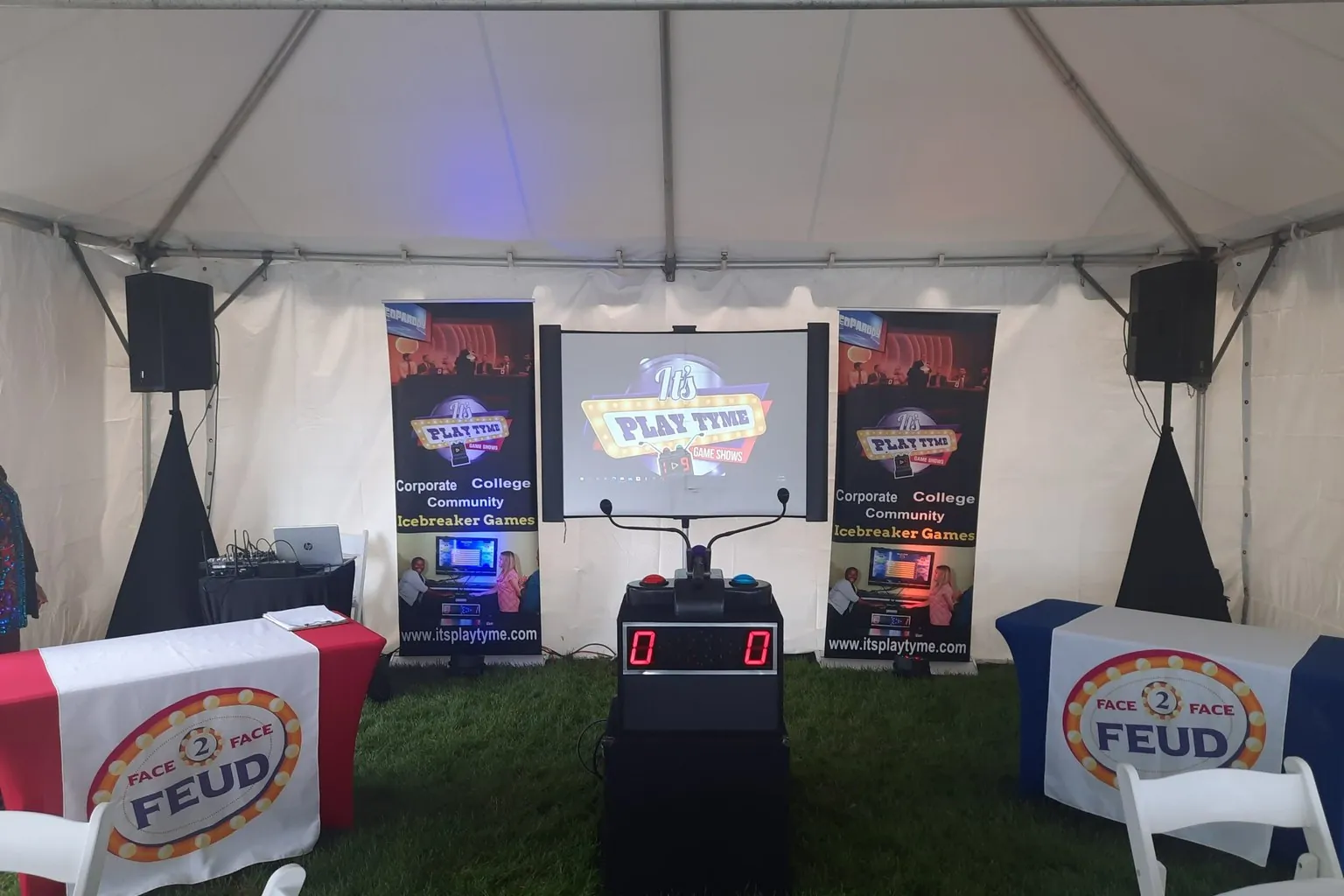
It’s Playtyme Game Shows brings the host, sound engineer, audience-response keypads or cellphones for large groups, TV-style podiums, buzzers and LED lighting to your venue. Check that equipment list against the room plan.
The company is based in Teaneck, New Jersey, and serves New Jersey, New York City and Connecticut. Its onsite team-building activities guide covers how to plan participation at your own location.
Keep your internal lead in charge of company announcements and attendance. Let the host run the team-building session so the organizer gets to take part too.
What to Confirm With Your Provider
Get every answer in writing before you call the indoor backup confirmed. Keep the venue agreement and the activity agreement separate so neither rests on an assumption.
Does the provider run its program outdoors, and what does it need?
Ask about the provider’s real operating conditions, equipment needs and venue requirements. Confirm outdoor delivery directly instead of assuming an indoor program works outside.
For the indoor backup, send the room layout and access details. Ask the provider to flag anything that needs fixing before production arrives.
When is the latest you can make the move-indoors call?
Ask for the provider’s deadline and compare it with the venue, transportation and catering cutoffs. Record who authorizes the change and how the provider confirms the instruction.
Never assume every supplier works to the same cutoff. Your final deadline has to fit the earliest commitment you actually signed.
Does holding an indoor backup room change the quote?
Ask the venue whether it charges a hold fee for the backup room, and ask the production team about working across two spaces. Get any quote changes before you approve the plan.
Corporate team building with It’s Playtyme Game Shows is starting at $2,995, with setup, breakdown, delivery and travel within NJ, NYC and CT included. The pricing page lists multiple event spaces as a possible added cost, so ask for a quote that reflects your backup room.
Phase 5: Tell Staff What Changes
A good announcement tells employees what to do next. Lead with the confirmed location and arrival instructions, not a long forecast explanation.
-
Draft the message before the decision
Write the indoor update while you plan the original event. Leave blanks for the confirmed venue, entrance, arrival time, transport changes and organizer contact.
Say plainly that the company gathering and team-building session are going ahead indoors. Note any changes to dress, food or timing.
-
Update every place employees look
Change the calendar invite, staff email and your main internal channel at the same time. Ask managers to pass the same message to anyone who doesn’t check those channels.
Delete outdated directions from shared planning files. Give reception, transport coordinators and venue staff the same wording so employees hear one answer.
Phase 6: Walk Through the Move
Test the outdoor event backup plan as a chain of handoffs. Follow an employee’s path from the announcement to the indoor room and into the shared session.
-
Check every handoff with your venue contact
Confirm who opens the room, swaps the signs, directs arrivals and approves furniture changes. Decide where employees go if they show up with the original instructions.
-
Close the remaining gaps
Review the final agenda with the host and the venue team. Settle any conflicts over catering, speeches, equipment access or room turnover before staff arrive.
Keep the current contact list and approved plan with the decision owner and the backup. A backup plan works when everyone knows their job.
Indoor Backup Options Compared
Four common backup options compare on fit below. Use the table to decide which one you put in writing.
| Backup option | Best for | Less suited for | What to confirm |
|---|---|---|---|
| It’s Playtyme Game Shows hosted indoor session | Groups of 20 to 300+ that need one shared team activity after the move | Rooms that can’t seat the full group together | Floor plan, power, sound and setup window |
| Tent on the original site | Light rain, when the venue confirms the tent stays in use | Conditions the venue’s procedures rule out, such as thunderstorms, strong wind, snow or ice | The venue’s weather limits for the tent |
| Rain date | Events where the original date is flexible | Groups with fixed calendars or prebooked travel | Every supplier’s rescheduling terms |
| Indoor room with no planned activity | Short gatherings built around a meal | Groups that need people to mix across teams | What fills the time after the meal |
Lock In Your Indoor Backup Before the Forecast Turns
If your group needs one shared activity after the move, put a hosted indoor session in writing now. If your date is flexible, a rain date can work. If the meal is the whole agenda, an indoor room alone covers it. Sign off only after the room, decision deadline, staff message and quote all line up.
Planning corporate team building with an indoor backup? Tell It’s Playtyme Game Shows your date, room size and goal, and you get a custom production plan within two business days. No deposit is required to book.
Solve the participation problem
Ready to get the whole room in the game?
Frequently Asked Questions (FAQs)
What should an outdoor event backup plan include?
A confirmed indoor room, agreed weather triggers, a named decision owner and a deadline every provider has signed off on. Add the indoor agenda, room requirements, the staff announcement and supplier contacts. Get all of it in writing.
When should we decide to move a company event indoors?
Set the deadline around venue setup, provider commitments, catering, transportation and staff departure times. Confirm the cutoff with everyone affected before you announce anything. Keep watching conditions and follow the venue’s procedures if the weather shifts again.
Is a tent enough for our rain plan?
Not always. A tent does not solve every weather, access or equipment problem. Ask the venue which conditions take the tent out of use and what indoor setup applies, then confirm your provider’s needs separately.
What indoor team-building activities keep 20 to 300+ employees engaged when an outdoor outing moves inside?
A professionally hosted session where everyone takes part on a team, with a host guiding the room and sound engineering so every table hears the instructions. It’s Playtyme Game Shows runs live game show team building for groups of 20 to 300+, using audience-response keypads or cellphones for large groups. Confirm first that the room seats the full group with clear sightlines.
How much does an indoor backup room or hosted team-building session cost?
Venue hold terms vary, so ask your venue for the backup-room hold fee in writing. Corporate team building with It’s Playtyme Game Shows starts at $2,995, with setup, breakdown, delivery and travel within NJ, NYC and CT included. Multiple event spaces can add cost, so ask for a quote that covers both rooms. No deposit is required to book.
How do we tell employees the location has changed?
Lead with the confirmed indoor location, entrance and arrival time. Update the calendar invite and your main staff channels at the same moment. Say what continues, what changes and who to call with questions.