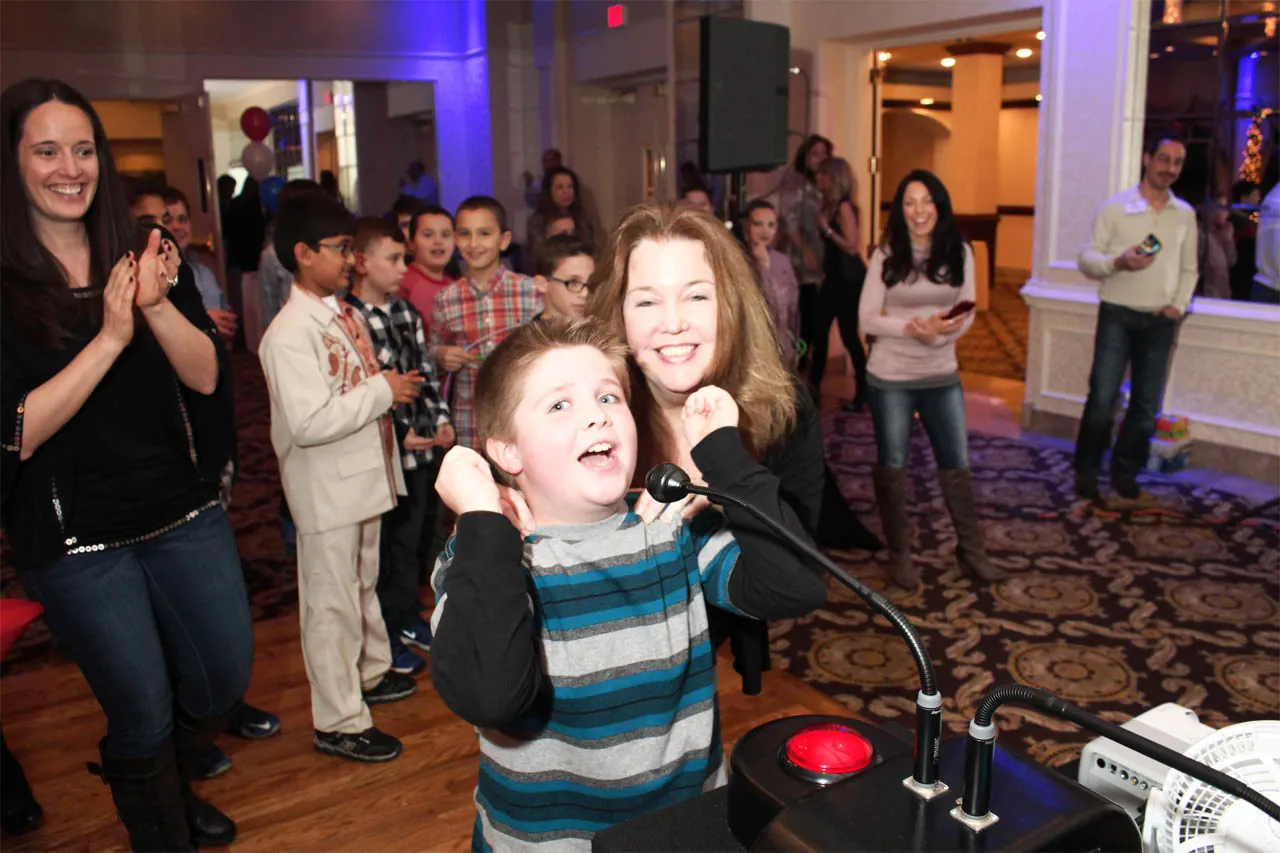
The truth is that affordable team building activities exist at every budget level, from zero-cost options you run yourself to professionally facilitated programs that deliver measurable returns. The real question is not “how cheap is the activity?” but “what does each dollar actually produce?”
For SMEs across New Jersey and New York City, the challenges are specific and familiar. Budgets are tight. HR departments are small (or nonexistent). Managers get tasked with “planning something for the team” on top of their real workload. The result is often a half-organized happy hour that remote employees skip, or a trust fall exercise from 2004 that nobody enjoys. Teams stay disconnected, turnover stays high, and the cycle repeats. This guide breaks down affordable team building activities by format, cost, and outcome so you invest where it counts.
Looking for affordable team building? Get a clear quote for a hosted game show for your group in NJ, NYC or CT.
Employee disengagement costs the global economy $10 trillion in lost productivity each year, per Gallup.
Replacing one employee costs six to nine months of their salary, making retention the cheaper option.
Affordable team building options exist at every budget level, including zero-cost programs you run yourself.
The right question is not how cheap but what each dollar actually produces in engagement.
Small and mid-size businesses in NJ and NYC face tight budgets and small or nonexistent HR teams.
The Hidden Costs of Budget Team Building
Budget constraints create real obstacles that go beyond sticker price. Understanding these challenges is the first step toward spending wisely rather than spending less.
Time is a hidden cost. Free activities still require someone to research, plan, purchase supplies, coordinate schedules, and facilitate. A manager spending eight hours organizing a scavenger hunt represents hundreds of dollars in lost productivity, even if the supplies cost nothing.
Low participation kills ROI. A $500 activity with 40% attendance costs more per engaged employee than a $1,500 program with 95% attendance. Voluntary, after-hours events consistently draw lower numbers than structured, in-workday programs.
Repeat formats create fatigue. Teams that do the same pizza-and-trivia routine every quarter stop showing up. The activity feels like an obligation rather than an investment in their growth.
Remote and hybrid gaps. Activities designed for in-person teams exclude remote workers entirely. Hybrid-friendly options require technology, facilitation skills, and intentional design that most managers lack.
Measuring outcomes is difficult. Without clear objectives, even a well-run activity becomes “something fun we did” rather than a tool that improved communication, trust, or collaboration. Leaders struggle to justify future spend without data.
Free Team Building Activities You Run Yourself
Zero-budget options work best for teams under 15 people where at least one person has facilitation experience. These require no vendor, no contract, and no approval chain.
Lunch and Learn Sessions
Each team member presents a 15-minute talk on something they know well, whether it relates to work or not. The format builds public speaking confidence, surfaces hidden expertise, and gives introverts a structured way to share. Cost: $0 (employees bring their own lunch) or minimal if the company provides food.
Walking Meetings
Replace a weekly status meeting with a walking version. Pairs or small groups walk a set route while discussing one agenda item. Stanford research shows walking increases creative output by an average of 60%. This works best for brainstorming or relationship-building conversations rather than data-heavy reviews.
Volunteer Days
Organize a group volunteer shift at a local food bank, park cleanup, or Habitat for Humanity build. The shared physical task creates bonds that office work does not. Many nonprofits provide all coordination and materials for free. The team gets purpose, the community gets labor, and nobody writes a check.
Problem-Solving Workshops
Present a real business challenge and let cross-functional groups brainstorm solutions for 60 minutes. The company gets actionable ideas. The team practices collaboration under constraints. The only cost is the meeting room you already have.
Low-Cost Activities Under $500
A modest budget opens up options that feel more intentional than a potluck but stay within a department-level approval threshold.
Office Trivia Tournaments
Build rounds around company history, industry knowledge, and pop culture. Use a free platform like Kahoot for scoring. Budget $50 to $100 for small prizes (gift cards, extra PTO hours, a trophy that rotates). This format scales well for groups of 20 to 50.
Cooking Challenges
Rent a community kitchen or use a large break room. Teams of four compete to prepare a dish within a time limit. Budget $200 to $400 for ingredients and basic supplies. The format forces cooperation, delegation, and quick decision-making under pressure.
Outdoor Field Days
Reserve a local park and run a series of relay races, tug-of-war, and obstacle challenges. Equipment costs are low (cones, ropes, balls). Budget $100 to $300 depending on group size. This works well for teams that sit at desks all day and need a physical reset.
Mid-Range Professional Programs ($500 to $2,000)
This is where the gap between DIY and professional facilitation becomes clear. A trained facilitator brings structure, energy management, inclusive design, and a post-event debrief that connects the activity to workplace outcomes.
It’s PlayTyme Game Shows sits just above this range, delivering fully produced interactive game show experiences for corporate teams across New Jersey, New York City, and Connecticut. Their 90-minute shows start at $3,595 for groups of 20 or more (see our pricing estimator), which puts professional facilitation within reach for companies that assumed it required a five-figure budget.
What separates a professional program from a DIY effort at this price point:
A dedicated host who manages energy, pacing, and group dynamics so no manager has to play emcee
Professional-grade AV equipment (buzzers, screens, sound systems) that creates a polished, exciting atmosphere
Custom content tailored to the company’s industry, inside jokes, or training objectives
Inclusive formats where every personality type participates, not just the loudest voices
Setup, teardown, and all logistics handled by the vendor
It’s PlayTyme’s game show format is particularly effective because competition is a natural engagement driver. Teams that compete together remember the experience, reference it in meetings, and build inside jokes that strengthen daily collaboration long after the event ends.
Want the most engagement for your budget? A game show keeps every guest playing for one flat price.
Free activities carry costs that never appear on a budget line. A manager spending 10 hours planning and running a team-building afternoon represents $500 to $1,000 in salary alone. If that activity lands flat (and many DIY efforts do), the team walks away more cynical about team building than before.
The professional game show costs more upfront but delivers a lower cost per engaged employee than a happy hour because nearly everyone participates. The manager spends zero hours on logistics. The experience is polished, memorable, and directly connected to teamwork outcomes. When you account for hidden costs, “affordable” means the total investment divided by actual impact, not the number on the invoice.
What Makes a Team Building Activity Worth the Money
Not every activity delivers equal value. Before spending anything (including your time), evaluate the option against five criteria that separate productive team building from expensive socializing.
1. Participation Rate
The best activity in the world fails if half the team skips it. Activities that happen during work hours, include remote-friendly options, and feel genuinely engaging (not forced) consistently hit 85% or higher attendance. It’s PlayTyme reports 90 to 95% participation rates because the game show format draws people in rather than requiring them to show up.
2. Skill Transfer to Daily Work
A ropes course builds trust in the moment. A collaborative game show builds communication, quick decision-making, and the ability to perform under pressure, all of which transfer directly to project work. The activity should mirror the skills you need on Monday morning.
3. Inclusivity
Physical challenges exclude team members with disabilities. After-hours events exclude parents and caregivers. Alcohol-centered events exclude people who do not drink. The most affordable activity is one that every team member actually attends and enjoys.
4. Lasting Impact
A good team building event creates stories the team references for months. A forgettable one creates nothing. Professional facilitation, memorable moments, and shared competition produce lasting bonds that a pizza party does not.
5. Scalability
If your team grows from 20 to 50 people, does the activity still work? DIY efforts often break down past 15 participants. Professional programs are designed to scale without losing quality or engagement.
How to Build a Year-Round Team Building Plan on a Budget
The most cost-effective approach is not choosing one activity. It is building a quarterly rhythm that blends free, low-cost, and professional options across the year.
Quarter 1: Free Internal Activity
Start the year with a lunch-and-learn series or cross-department shadowing. Zero cost, high relationship value.
Quarter 2: Professional Facilitated Event
Invest in a professionally run program like an It’s PlayTyme game show. This is the anchor event that the team anticipates and remembers. Budget from $3,595 for a 90-minute show (see our pricing estimator).
Quarter 3: Low-Cost Group Activity
Run a cooking challenge, outdoor field day, or volunteer shift. Budget $200 to $500. Assign coordination to a different team member each time to distribute the planning load.
Quarter 4: Professional Year-End Event
Close the year with a second facilitated experience. Consider a holiday-themed game show or team awards ceremony with professional hosting. Budget from $2,995 for a hosted game show.
Total annual investment: the two professionally hosted events are the largest line items, starting at $3,595 each for a 90-minute show, plus two low-cost internal activities. Compare that to the cost of replacing even one disengaged employee who leaves (six to nine months of salary), and the math is straightforward.
Getting Budget Team Building Right the First Time
Start with your constraints, then match the format to the outcome you need. If your budget is truly zero, run a problem-solving workshop or volunteer day and commit to doing it well. If you have $500 to $2,000, a professionally facilitated program delivers the highest return because it eliminates hidden costs, maximizes participation, and creates lasting impact.
For teams in New Jersey, New York City, or Connecticut, It’s PlayTyme Game Shows offers a format that consistently outperforms DIY alternatives at a comparable total cost. Their interactive game shows are fully customizable, require zero planning from your team, and work for groups of 20 to 300+ people. Reach out to get a quote and see how a professional program fits your budget. You can also explore team building program options to find the right format for your group size and goals.
What are the most affordable team building activities for small teams?
Lunch-and-learn sessions, walking meetings, and volunteer days cost nothing beyond employee time. For groups under 15, these formats build genuine connections without any vendor or supply budget. Add a $50 to $100 prize pool for a trivia tournament and you have a structured, engaging event for under $100.
How much does professional team building cost per person?
Professional facilitated programs typically range from $25 to $85 per person depending on group size, format, and location. It’s PlayTyme Game Shows runs 90-minute shows starting at $3,595 for groups of 20 or more. Use our pricing estimator to see the range for your group size. Larger groups bring the per-person cost even lower.
Are DIY team building activities as effective as professional ones?
DIY activities work well for small, close-knit teams where someone has strong facilitation skills. For groups over 15, or teams with remote members, professional programs consistently deliver higher participation rates, stronger engagement, and better skill transfer. The hidden costs of DIY (manager time, lower attendance, repeat format fatigue) often close the price gap.
What team building activities work for hybrid and remote teams?
Virtual game shows, online trivia tournaments, and remote-friendly problem-solving challenges work for distributed teams. It’s PlayTyme offers hybrid formats on request that connect in-office and remote employees through the same competitive experience. The key is choosing an activity specifically designed for mixed attendance rather than adapting an in-person event on the fly.
Collaboration is not a soft skill. It is a competitive advantage that separates high-performing organizations from everyone else. According to Harvard Business Review, time spent on collaborative activities has increased by more than 50% over the past two decades, reflecting a fundamental shift in how work gets done. Meanwhile, Gallup’s workplace research shows that business units in the top quartile of employee engagement achieve 23% higher profitability than those at the bottom.
The numbers are clear: organizations that invest in collaborative culture outperform those that treat teamwork as an afterthought. Yet knowing collaboration matters and actually building it into daily operations are two very different things.
Most companies struggle with the same obstacles. Departments operate in silos — communicating only when a problem forces interaction. Meetings fill calendars without producing alignment. Remote and hybrid arrangements fragment teams that once shared a hallway. New hires join without relationships across functions, and veteran employees default to familiar circles rather than building new ones. These are not abstract concerns. They show up in missed deadlines, duplicated work, and the slow erosion of trust that makes every project harder than it needs to be.
Want to see collaboration in action? Our hosted game shows get teams working together, anywhere in NJ, NYC and CT.
Time spent on collaborative activities has risen more than 50% over the past two decades, per HBR.
Teams in the top engagement quartile deliver 23% higher profitability than disengaged teams, per Gallup.
Organizations that invest in collaborative culture consistently outperform those that treat teamwork as optional.
Most companies know collaboration matters but struggle to build it into daily operations.
Silos and calendar-filling meetings are the most common barriers to genuine workplace collaboration.
Challenges That Undermine Workplace Collaboration
Before building a collaboration strategy, it is worth naming the specific barriers that get in the way. Ignoring them leads to surface-level fixes that do not stick.
Siloed Departments
When marketing, sales, engineering, and operations each run their own playbook, priorities clash. Information stays trapped inside teams instead of flowing across them. Cross-functional projects stall because no one owns the handoff points.
Inconsistent Communication Norms
One team lives in Slack. Another prefers email chains. A third stores everything in shared documents no one else reads. Without a common rhythm, messages fall through the cracks and resentment builds quietly.
Proximity Bias in Hybrid Work
Employees who work on-site together form stronger relationships than those who connect only through screens. Hybrid and remote workers often feel excluded from decisions, which reduces their willingness to contribute ideas.
Collaboration Fatigue
Too many meetings and constant requests drain the very people who make cross-functional work happen. Harvard Business Review’s research found that 20% to 35% of value-added collaboration comes from just 3% to 5% of employees. When those top collaborators burn out, the whole network suffers.
Lack of Shared Experience
People collaborate best with people they trust. Trust grows through shared experiences, not org charts. Without intentional opportunities to work (and play) together, teams default to transactional relationships that break under pressure.
Why Collaboration Is a Competitive Advantage, Not Just a Value
Most companies list “collaboration” among their core values. Fewer treat it as a measurable driver of business results. The distinction matters.
Collaborative teams solve problems faster because they draw on diverse expertise instead of relying on a single perspective. They innovate more consistently because ideas face constructive friction before reaching the market. They retain talent because employees who feel connected to colleagues across the organization report higher job satisfaction.
The competitive advantage is compounding. Each successful collaboration builds a network of relationships that makes the next project easier to launch, staff, and execute. Organizations that invest in these networks create institutional knowledge that competitors simply do not have.
The Missing Ingredient: Shared Experiences Beyond Work
Training sessions teach collaboration theory. Workshops produce frameworks. But the relationships that drive real collaboration form through shared experiences with emotional stakes. When people laugh together, compete together, and solve problems under time pressure together, they build the kind of trust that transfers directly to workplace interactions.
This is why forward-thinking companies invest in team building formats that go beyond trust falls and icebreakers. The most effective programs put cross-functional groups into situations where collaboration is required for success, not optional.
How Team-Based Competitive Formats Build Collaboration Habits
It’s PlayTyme Game Shows has built its corporate programs around a specific insight: collaborative competition creates collaboration habits that outlast the event itself. Their team vs. team game show formats work because they replicate the dynamics of real workplace collaboration in a low-stakes, high-energy environment.
Here is why competitive team formats are uniquely effective:
Cross-functional mixing. Teams are assembled across departments, forcing people who rarely interact to rely on each other immediately. A sales rep discovers the quiet analyst in accounting has a sharp strategic mind. An engineer finds common ground with someone from HR. These connections persist long after the game ends.
Real-time decision making. Game show rounds demand fast consensus. Teams practice the exact skills they need at work: listening, delegating, building on each other’s ideas, and committing to a direction under time pressure.
Visible individual strengths. Trivia rounds, creative challenges, and physical tasks reveal different types of intelligence. People see their colleagues as complete humans with surprising talents, not just job titles.
Emotional bonding through shared stakes. Winning (and losing) together creates a shared emotional memory that is far more powerful than any conference room exercise. Teams that play together develop an unspoken shorthand that carries into daily work.
Ready to put collaboration on the scoreboard? Our team rounds reward working together.
Not all team building programs deliver lasting collaboration benefits. It’s PlayTyme Game Shows stands apart for several concrete reasons.
Their programs serve New Jersey, New York City, and Connecticut, bringing a professional game show experience to corporate offices, event venues, and offsite locations. Every event is hosted by a trained emcee who manages energy, pacing, and participation so that no one sits on the sidelines.
The format is designed for groups of all sizes. Whether the company has 20 people or 200, the game show structure scales without losing the collaborative intensity that makes it effective. Rounds are calibrated to require every team member’s input, which eliminates the common problem of one or two extroverts dominating while others disengage.
Customization is built into every event. It’s PlayTyme works with clients to incorporate company-specific content, inside jokes, and industry knowledge into the game rounds. This makes the experience feel relevant rather than generic, and it reinforces the idea that collaboration at this company has its own culture and vocabulary.
Collaboration Formats That Work for Different Goals
Format
Best For
Collaboration Skill Built
Group Size
Team Trivia Game Show
Cross-departmental mixing
Knowledge sharing, consensus building
20-300+
Minute to Win It Challenges
New team onboarding
Trust, communication under pressure
15-100+
Customized Corporate Game Show
Leadership retreats
Strategic thinking, delegation
10-150+
Feud-Style Competition
Department vs. department bonding
Perspective-taking, creative problem solving
20-100+
Measuring the Impact of Collaborative Team Building
The best collaboration investments produce observable changes, not just good feelings. After a well-designed team building event, look for these indicators:
Increased Cross-Functional Communication
Employees who met colleagues from other departments during the event start reaching out directly instead of routing requests through managers. Email chains get shorter. Slack messages go to the right person on the first try.
Faster Project Kickoffs
Teams that already have relationships move through the forming and norming stages faster. Projects that would have taken two weeks to get aligned start producing work in the first week.
Higher Voluntary Participation
When people enjoy collaborating, they volunteer for cross-functional work instead of avoiding it. Committee sign-ups increase. Internal mentoring relationships form organically.
Reduced Conflict Escalation
Colleagues who have a personal connection handle disagreements directly rather than escalating to management. This saves time and preserves relationships that transactional interactions erode over months.
Building a Collaboration Culture That Lasts
A single team building event does not transform a company. Lasting collaboration requires an ongoing commitment to creating shared experiences and reinforcing collaborative behaviors. Here is what that looks like in practice:
Schedule regular collaborative events. Quarterly or biannual game show experiences keep cross-functional relationships fresh and give new employees a fast track into the company’s social fabric.
Rotate team compositions. Each event should mix people differently so the network of relationships expands over time rather than reinforcing the same clusters.
Connect the experience to work. After a team building event, reference it in meetings. “Remember how your team solved that final round? That’s the same kind of thinking we need here.” This bridges the gap between the event and daily operations.
Recognize collaborative behavior. Highlight employees who reach across departments, share knowledge generously, and bring diverse perspectives into projects. What gets recognized gets repeated.
How to Choose the Right Collaboration Program for Your Team
Selecting a team building format requires honest assessment of where your organization’s collaboration breaks down. If the problem is siloed departments, choose a format that forces cross-functional mixing (team trivia and game shows excel here). If the issue is that new hires struggle to integrate, pick a format where tenure and title do not determine contribution (physical challenges and creative rounds level the playing field). If leadership wants to model collaborative behavior, a customized game show that puts executives on equal footing with front-line employees sends a powerful message.
The format also needs to match your group’s size and energy. A program designed for 20 people will not deliver the same experience for 150. Work with a provider that scales its format to your headcount without losing the collaborative core of the experience.
It’s PlayTyme Game Shows brings professional-grade team building to organizations across the tri-state area. Their team vs. team game show format is specifically designed to build the cross-functional collaboration habits that drive long-term business performance. Reach out to book your event or explore corporate event options to find the right format for your team.
Frequently Asked Questions (FAQs)
How does collaboration directly affect business profitability?
Gallup’s research shows that highly engaged, collaborative business units achieve 23% higher profitability than disengaged ones. Collaboration reduces duplicated effort, accelerates decision-making, and improves the quality of solutions by incorporating diverse perspectives. These efficiencies compound over time into measurable financial gains.
What is the best team building activity for improving workplace collaboration?
Team-based competitive formats like game shows are among the most effective because they require real-time collaboration under time pressure. Unlike passive workshops or lectures, competitive team formats force participants to listen, delegate, and build consensus, which are the same skills needed in daily work.
How often should companies invest in collaborative team building events?
Quarterly events produce the best long-term results. This cadence keeps cross-functional relationships active, gives new hires regular opportunities to integrate, and reinforces collaborative behaviors before they fade. Companies with rapid growth or high turnover benefit from even more frequent sessions.
Does team building work for remote and hybrid teams?
In-person team building events are especially valuable for remote and hybrid teams because they address proximity bias directly. Bringing distributed employees together for a shared competitive experience creates the emotional bonds that screen-based interactions struggle to build. Many organizations schedule these events during quarterly or annual gatherings.
How large of a group is effective for a team building game show?
Professional game show formats like those from It’s PlayTyme Game Shows scale effectively from 20 to 300+ participants. The structure works because it breaks large groups into smaller competing teams, ensuring everyone participates actively regardless of total headcount.
Only 20% of employees worldwide report feeling engaged at work, according to Gallup’s State of the Global Workplace report. That disengagement costs organizations up to 23% in lost profitability, a figure backed by SHRM research on employee engagement and performance. Team outings remain one of the most direct ways to reverse that trend, and Hackensack sits at the center of Bergen County with the venues, restaurants, and infrastructure to make planning one straightforward.
But picking the right outing is harder than it sounds. A venue that works for 12 people falls apart at 40. Activities that energize a small sales team bore a department of 70. And logistics in North Jersey (parking, transit access, group minimums) eliminate options faster than most planners expect. This guide organizes seven Hackensack team outing ideas by group size so you spend less time researching and more time booking.
Planning a team outing in Hackensack? We bring hosted game shows to your office or venue for 20 to 300+ people.
Challenges of Planning a Team Outing in Hackensack
Bergen County offers hundreds of activity options within a 20-minute drive, but that abundance creates its own problems. Planners face a few recurring obstacles when organizing group events here.
Group size mismatches: Most Hackensack venues cap at 30 to 50 guests. Once your headcount crosses 50, the list of realistic options shrinks dramatically, and splitting the group across multiple sessions kills the shared experience.
Parking and transit logistics: Downtown Hackensack has metered street parking and a handful of garages, but large groups arriving by car need advance coordination. NJ Transit bus routes serve the area well, though the train station is in neighboring Bogota/Teterboro.
Budget unpredictability: Restaurant buyouts, venue rentals, and activity packages all price differently (per person, flat fee, hourly). Comparing costs across formats takes real digging.
Engagement across personality types: Not everyone wants to solve puzzles or paint. Choosing a single activity that keeps introverts, extroverts, competitive types, and laid-back colleagues all engaged is the hardest part of the job.
Want an outing that fits any group size? Our hosts scale every round from small teams to full companies.
Fathers who participate in school activities produce measurable results. According to the National Center for Education Statistics, 89% of parents attended a general school meeting or event during the most recent survey period, yet father-specific attendance at fundraising events trails far behind that number. Meanwhile, the National PTA reports that students whose parents actively participate in school functions earn higher grades, attend school more regularly, and develop stronger social skills across every demographic group.
A father-son game show fundraiser taps directly into those benefits. It gives dads a reason to walk through the school doors on a weeknight, puts them shoulder-to-shoulder with their kids in a competitive format, and raises money for the PTA or school program at the same time. The format is simple: families pay an entry fee, compete in team-based game show rounds, and the school keeps the proceeds.
But most PTA coordinators and school event planners already know the frustration. Traditional fundraisers (candy bar sales, wrapping paper catalogs, walk-a-thons) produce diminishing returns year after year. Parent turnout drops. Dads skip the event entirely because it feels like another obligation rather than something they actually want to attend. And the planning committee burns out trying to organize an event that barely breaks even. A game show fundraiser built around the father-son dynamic solves several of these problems at once.
Planning a school fundraiser? Our Fun With Your Son game show brings families together and raises funds, anywhere in NJ, NYC and CT.
Father-specific attendance at school fundraisers falls well below the 89% general parent participation rate.
Students with actively involved parents earn higher grades and attend school more regularly, per the National PTA.
Families pay an entry fee to compete in team-based game show rounds, generating funds for the PTA.
The competitive format puts fathers and sons shoulder-to-shoulder, creating a strong draw for a weeknight event.
The event raises school money while building the parent involvement that research links to student success.
What a Father-Son Game Show Fundraiser Actually Looks Like
Picture your school gymnasium or cafeteria transformed into a live game show set. A professional host runs the event from a stage with lighting, sound, and scoring displays. Father-son teams compete in rounds of trivia, physical challenges, and relay-style games. The audience (moms, siblings, grandparents, teachers) watches from bleachers or folding chairs, cheering and participating in crowd rounds.
Each round is designed so the father and son must work together. One round tests how well dad knows his kid’s favorite things. Another puts the son in charge while dad follows instructions blindfolded. The competitive energy in the room builds fast because every family wants to win, and the format keeps the stakes light enough that nobody feels embarrassed.
It’s PlayTyme Game Shows specializes in exactly this format across New Jersey, New York City, and Connecticut. Their school assembly experience translates directly into fundraiser events because they already understand gymnasium acoustics, age-appropriate content, and how to keep a room of 200+ people engaged for 90 minutes straight.
Challenges of Planning a School Fundraiser That Families Actually Attend
Every PTA board has dealt with the same set of problems when planning fundraisers:
Low dad turnout. Most school events skew toward mother attendance. Fathers often feel like the event “isn’t for them” or conflicts with work schedules. Without a compelling reason to show up, they stay home.
Fundraiser fatigue. By the third catalog sale of the year, families stop participating. The per-family donation amount drops, and volunteers grow resentful of the effort-to-return ratio.
Entertainment gap. A bake sale or silent auction raises money, but it does not create the kind of memorable experience that builds community. Parents attend out of obligation, not excitement.
Planning burden. Volunteer-run events require weeks of coordination: sourcing prizes, setting up decorations, managing signups, handling money at the door. The planning committee does all the heavy lifting.
Unpredictable revenue. Product-based fundraisers depend on individual sales effort. One family sells 40 boxes of cookies. Another sells two. The total is impossible to forecast.
A game show fundraiser with a professional company addresses every one of these problems. The company handles entertainment, equipment, and hosting. The school handles ticket sales and promotion. Revenue is predictable because it is based on attendance, not individual sales performance.
Why the Father-Son Dynamic Makes This the Best Fundraiser Format
The competitive energy between a father and son is the secret ingredient. Dads who would never attend a craft night or potluck dinner will absolutely show up to compete on a game show stage with their kid. The format gives fathers a specific role (teammate, not spectator) and a specific reason to be there (winning).
Kids respond to it just as strongly. A third-grader who dreads the annual fun run will beg his dad to sign up for a game show night. The format feels like something they watch on TV, not something the school invented to collect money. That distinction matters for both attendance and enthusiasm.
The parent-child team structure also creates moments that families talk about for years. When a father fumbles a trivia answer about his son’s favorite song, the whole gymnasium laughs together. Those shared moments build the kind of school community that PTA boards work hard to foster through less effective means.
How It’s PlayTyme Game Shows Runs a School Fundraiser
It’s PlayTyme brings professional-grade game show production to school events. Their team arrives with all equipment: stage lighting, wireless microphones, buzzers, scoreboards, and a sound system sized for your venue. The host is a trained entertainer, not a parent volunteer reading from index cards.
Before the Event
The It’s PlayTyme team coordinates with the PTA or event chair on logistics: venue layout, expected attendance, age range of participating kids, and the type of game show format that fits the group. They customize rounds based on the school’s preferences and the father-son theme.
During the Event
The host manages all pacing, scoring, and audience engagement. Rounds rotate between team challenges (father-son pairs), audience participation (everyone in the room), and head-to-head eliminations. The energy stays high because the host reads the room and adjusts on the fly. A typical event runs 60 to 90 minutes.
After the Event
The school keeps 100% of ticket and concession revenue. It’s PlayTyme handles breakdown and cleanup of their own equipment. The PTA gets a turnkey fundraiser without sourcing entertainment, building sets, or training volunteers to host.
Want a fundraiser families talk about all year? Tell us your goal and we will build the night around it.
Game Show Formats That Work for Father-Son Fundraisers
Format
Best For
Group Size
Energy Level
Family Feud Style
Large groups, all ages
50-300+
High
Trivia Challenge
Older kids (grades 4-8)
30-200
Medium-High
Minute to Win It
Physical, high-energy crowds
40-250
Very High
Are You Smarter Than Your Kid
Father-son/daughter pairs
20-150
High
Wheel of Fortune Style
Mixed ages, relaxed pace
30-200
Medium
The “Are You Smarter Than Your Kid” format works especially well for father-son fundraisers because it puts the parent-child knowledge gap on full display. Dads answer questions about their son’s world (favorite YouTubers, school subjects, friend names), and sons answer questions about dad’s era (cassette tapes, rotary phones, 1990s TV shows). The generational comedy writes itself.
What PTA Coordinators Need to Know Before Booking
Planning a game show fundraiser is significantly less work than organizing a traditional event, but a few decisions affect the outcome:
Ticket Pricing
Most schools charge $10 to $25 per person or $30 to $50 per father-son pair. Set the price based on your community and your fundraising goal. A gymnasium with 150 attendees at $15 each generates $2,250 before concessions.
Venue Setup
A gymnasium or cafeteria works best. The game show company needs access to power outlets, a clear stage area (20’ x 15’ minimum), and enough seating for your expected crowd. It’s PlayTyme handles the rest.
Promotion
Send flyers home with students two to three weeks before the event. Emphasize the father-son competition angle in all messaging. Use phrases like “Dad, are you ready to compete?” and “Can your father-son team take the trophy?” Dads respond to direct, competitive calls to action, not generic “join us for a fun evening” language.
Concessions
Add a concession table with snacks and drinks for additional revenue. This is separate from the game show and entirely managed by the school. Pizza, popcorn, and bottled water are the highest sellers at school game show nights.
Beyond Father-Son: Expanding the Format
While the father-son angle is the hook, the format adapts to any parent-child combination. Mother-daughter nights, mixed-gender family teams, and grandparent rounds all work with the same game show structure. Schools that run a successful father-son fundraiser in the fall often book a mother-daughter event in the spring, doubling their annual fundraiser revenue with a proven format.
The game show structure also works for school assemblies during the academic day. It’s PlayTyme runs school assembly programs that use the same energy, equipment, and hosting expertise in an educational context. Schools that see the fundraiser in action frequently book assemblies for anti-bullying programs, end-of-year celebrations, and reward days.
How to Pick the Right Fundraiser Entertainment for Your School
The right fundraiser does three things at once: raises money, builds community, and creates demand for next year’s event. A game show fundraiser checks all three boxes because families leave asking “when is the next one?” rather than “do we have to do this again?”
When evaluating entertainment companies, ask these questions: Do they have experience in school settings specifically (not just corporate events)? Do they bring all their own equipment? Do they have a professional host who works with kids regularly? Do they customize the format for your group size and age range? It’s PlayTyme answers yes to all four because corporate game shows and school events are their core business, not a sideline.
Ready to book a father-son game show fundraiser for your school? Reach out through the contact page to discuss dates, formats, and pricing for your event. It’s PlayTyme serves schools across New Jersey, New York City, and Connecticut with a format that turns a routine fundraiser into the most talked-about night of the school year.
How much does a father-son game show fundraiser cost to book?
Pricing depends on the event duration, group size, and game show format. Most schools cover the entertainment cost through ticket sales alone and keep concession revenue as pure profit. Contact It’s PlayTyme directly for a quote based on your school’s specific needs.
What age range works best for a father-son game show event?
The format works for kids in grades K through 8. It’s PlayTyme adjusts the difficulty of trivia, the pace of physical challenges, and the complexity of team rounds based on the age range of your group. Elementary and middle school events tend to generate the highest energy and attendance.
How many father-son teams participate in a typical event?
Most school game show fundraisers accommodate 15 to 40 competing teams with additional audience members watching and participating in crowd rounds. The total attendance (competitors plus spectators) typically ranges from 75 to 300 people depending on the school size.
Do fathers and sons need to prepare anything before the event?
No preparation is needed. All games are designed for spontaneous participation. The host explains each round, and teams compete on the spot. The unprepared element is part of what makes the event funny and engaging for everyone involved.
What if a child does not have a father available to participate?
Any adult male figure (grandfather, uncle, older brother, family friend, mentor) partners with the child. It’s PlayTyme hosts these events with inclusive language and flexible team structures so every child who wants to participate has a partner. Schools also run mixed-gender parent-child versions of the same event.
What measurable benefits do students see when fathers participate in school events?
The National PTA reports that students whose parents actively participate in school functions earn higher grades, attend school more regularly, and develop stronger social skills across every demographic group. A father-son game show gives dads a compelling reason to attend on a weeknight, directly connecting to those documented outcomes.
Escape rooms earned their popularity for good reason. They put a small team in a locked space, ramp up the pressure, and force collaboration under a ticking clock. But when an event planner tries to scale that experience to 40, 80, or 200 employees, the cracks show fast. The format was built for pods of six to ten, not a full department.
The stakes for getting team building right are real. Gallup’s State of the Global Workplace report found that teams with high engagement show 23% greater profitability than disengaged ones. And according to SHRM research on employee engagement, organizations that invest in structured social and team activities see measurably higher retention and morale scores. Picking the wrong format does not just waste a budget line. It burns trust with the people who showed up expecting something better.
If you have ever booked an escape room for a large group, you already know the recurring frustrations: splitting your team across multiple rooms, half the group standing around waiting for a slot, the loud thinkers solving everything while quieter employees spectate, and an off-site venue that eats two hours in transit before anyone solves a single puzzle. These are structural problems, not a bad booking. The format works brilliantly for a handful of people. It was never designed for a company-wide event.
Looking for an escape room alternative for a big group? Our hosted game shows fit 20 to 300+ people in one room, anywhere in NJ, NYC and CT.
Challenges of Using Escape Rooms for Corporate Team Building
Before comparing alternatives, it helps to name exactly what goes wrong when escape rooms get pushed past their intended use case.
Hard group-size cap. Most escape rooms hold 6 to 10 players per room. A group of 50 means five separate rooms running in parallel, which fragments the shared experience into isolated pockets that never reconnect.
Uneven participation. Puzzle-heavy formats reward the fastest thinkers. Two or three assertive employees tend to dominate each room while quieter colleagues stand behind them and watch. That dynamic reinforces existing silos instead of breaking them.
Venue logistics. Escape rooms are fixed locations. Your team travels to them, not the other way around. Between commute time, staggered start slots, and waiting for the last group to finish, the actual bonding window shrinks to under an hour.
Observer exclusion. Anyone with mobility limitations, claustrophobia, or anxiety around timed pressure sits the event out entirely. There is no observer role that still feels like participation.
One-and-done replayability. Once your team solves a room, that room is finished. Repeat bookings require a completely different venue or theme, which narrows options quickly in smaller markets.
What Makes a Strong Escape Room Alternative?
The right alternative keeps what escape rooms do well (competition, collaboration, time pressure) while removing the structural limits. A strong replacement should scale to the actual headcount without splitting the group, include every participant regardless of physical ability or personality type, arrive at your location so nobody loses an afternoon in transit, and offer enough format variety that you never repeat the same experience twice.
A live hosted game show checks every one of those boxes. It’s PlayTyme Game Shows built its entire model around the problems escape rooms create at scale. The company brings a full TV-style production (buzzer podiums, a professional host, sound and lighting) directly to your office, conference venue, hotel ballroom, or outdoor event space anywhere across New Jersey, New York City, and Connecticut.
Side-by-Side: Escape Rooms vs. Live Game Shows
The differences become clear when you stack the two formats against the factors that actually decide whether a corporate event works.
Factor
It’s PlayTyme Live Game Show
Corporate Escape Room
Group Size
20 to 300+ in one room
4 to 10 per room (split for more)
Setup Location
On-site: we travel to you
Venue-bound: your team travels
Participation Rate
100% (every person plays simultaneously)
Active solvers dominate; observers sit out
Hosted Experience
Professional host runs the entire show
Staff-monitored via camera; no live host
Replayability
Multiple themes (trivia, Family Feud, Minute to Win It)
One-and-done per room
Accessibility
All mobility levels, all personality types
Physical movement required; pressure-sensitive
Why Group Size Is the Deciding Factor
Escape rooms work beautifully at a single-team scale. A pod of six colleagues solving puzzles together builds genuine trust and communication. The problem is that most corporate events do not involve just six people.
When a company books an escape room for 60 employees, the venue splits them into six to ten separate rooms. Each room has its own experience. Teams never interact with each other. The “company event” becomes a collection of parallel small-group outings that happen to share a parking lot. There is no shared moment, no collective energy, and no story everyone tells on Monday.
A live game show puts the full group in one room at the same time. Teams compete against each other on buzzer podiums while the host keeps energy high across every round. Whether the headcount is 25 or 250, the experience stays unified. Everyone sees the same big moments, reacts together, and walks out with the same stories.
Full Participation vs. Spectator Sidelines
Inclusion is not a soft metric. When half the room disengages during a team building event, the people who sat out remember that feeling longer than the people who played.
Escape rooms create a natural hierarchy inside the room. Employees who think fast, speak loudly, or have done escape rooms before tend to take over. That leaves analytical thinkers, introverts, and first-timers watching from two feet away. The format does not offer a meaningful way to pull them back in.
It’s PlayTyme’s game show format eliminates that dynamic. Every participant holds a buzzer or plays on a team that rotates through rounds. The professional host reads the room in real time, calls on quieter tables, adjusts difficulty, and keeps the competition balanced. Nobody fades into the background because the format does not allow it.
Want the puzzle energy without splitting up your group? A game show keeps every team in the same room and in the game.
The logistics gap between these two formats is larger than most planners realize until event day.
An escape room requires your entire team to travel to one fixed location. For companies in northern New Jersey or Manhattan, that means coordinating parking, transit, arrival windows, and staggered start times across multiple rooms. The actual bonding time shrinks dramatically once you subtract the commute, the waiting, and the debrief that happens in a lobby.
It’s PlayTyme brings the full production to wherever your team already is. The crew arrives early, sets up buzzer podiums, sound equipment, screens, and lighting in your conference room, hotel ballroom, outdoor tent, or office cafeteria. Your employees walk down the hall and the show is ready. No buses, no carpools, no lost afternoon.
Replayability and Format Variety
Escape rooms have a built-in ceiling: once a team solves a room, that room is done. Booking a second event means finding a completely different venue or waiting for new rooms to open. In smaller markets across New Jersey and Connecticut, options thin out fast.
A live game show sidesteps this entirely. It’s PlayTyme offers multiple show formats (trivia face-offs, Family Feud-style survey rounds, Minute to Win It physical challenges, music and pop culture rounds) that rotate across events. A company that books quarterly never repeats the same show. The host customizes questions to the company’s industry, inside jokes, and team dynamics, so each event feels built for the room.
When an Escape Room Is Still the Right Call
Escape rooms deserve credit for what they do well. If your group is a single team of 6 to 10 people who want deep, focused, puzzle-driven collaboration, an escape room delivers an intensity that other formats do not replicate. The locked-room pressure forces fast communication and shared problem-solving in a way that feels genuinely earned when the team cracks the final code.
The format also works for leadership retreats where a small executive team wants a bonding challenge outside the office. In those situations, the tight group size is a feature, not a limitation.
The disconnect happens when planners try to stretch that small-team format across a company-wide event. That is where an escape room alternative built for scale becomes the better investment.
What Sets It’s PlayTyme Apart as the Top Alternative
Several companies offer game show-style entertainment. It’s PlayTyme separates itself on three concrete points.
more than a decade of production experience. Founder Lisa Lawrence and the PlayTyme crew have hosted thousands of events across NJ, NYC, and CT. That depth of experience means the host reads rooms accurately and adjusts on the fly.
Full production setup, not a trivia app. Buzzer podiums, professional sound, screens, and stage lighting arrive with the crew. The experience looks and feels like a real TV game show, not a laptop plugged into a projector.
No deposit to hold your date. It’s PlayTyme reserves your date when you agree on it, and the host running your event is named in your agreement.
100% satisfaction guarantee. Backed by a 5-star Google rating and 14+ years of getting rooms to engage.
The company serves corporate clients, schools, and organizations across New Jersey, New York City, and Connecticut with game shows designed for corporate events, holiday parties, conferences, and team building days.
How to Choose the Right Format for Your Next Team Building Event
Start with two numbers: your headcount and your available time window. If you have fewer than 10 people and a full afternoon to travel off-site, an escape room is a strong, focused option. If your group is larger than 15, if travel logistics are tight, or if full participation matters, a live game show is the format built for exactly that scenario.
Ask yourself three questions before booking. First, will every employee participate actively, or will some watch from the side? Second, does the format come to your venue, or does your team lose time getting there? Third, who is running the room on the day? The answers point clearly toward a format that scales, travels, includes everyone, puts a professional host in charge, and stands behind the experience with a 100% satisfaction guarantee.
What is the best escape room alternative for large corporate groups?
A live hosted game show is the strongest alternative for groups over 15 people. It keeps the competition and teamwork of an escape room while scaling to 200+ participants in a single room, with every person playing simultaneously instead of splitting into small pods.
How many people fit in an escape room vs. a game show?
Most escape rooms hold 6 to 10 players per room. Larger groups require multiple rooms running in parallel, which fragments the shared experience. A live game show runs 20 to 300+ people together in one space with a single host driving the energy for the entire group.
Is a live game show more cost-effective than booking multiple escape rooms?
For groups over 20, the per-person cost of a single game show production is typically lower than booking four to six separate escape rooms. The game show also eliminates travel expenses, and lost work time in transit, there is no deposit required to hold your date, and every event is backed by a 100% satisfaction guarantee.