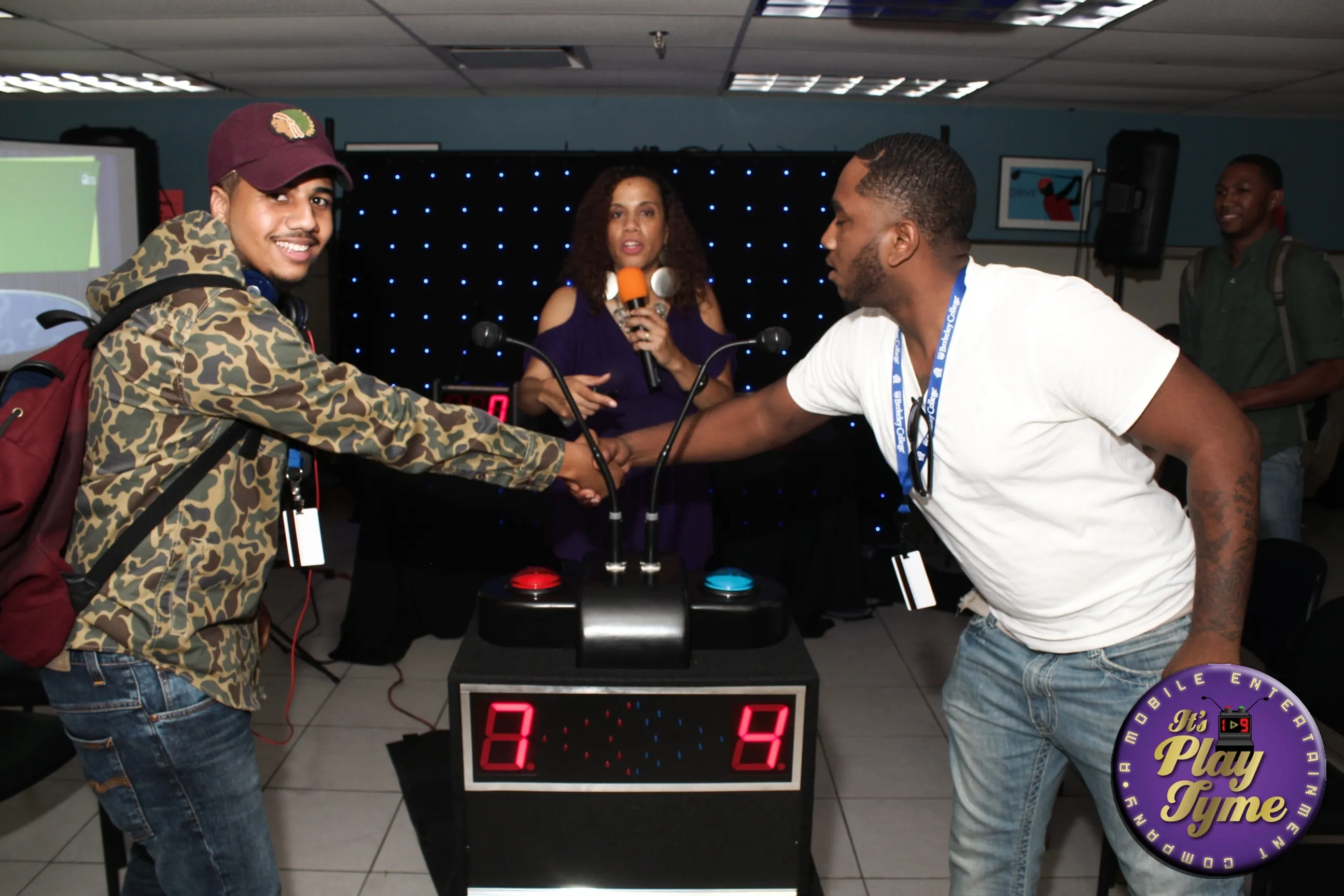
Student engagement drives academic outcomes, and interactive programming is one of the fastest ways to build it. According to Gallup’s research on over five million students, engaged students are 2.5 times more likely to earn excellent grades than their disengaged peers. Meanwhile, a study cited by the National Education Association found that schools with high collaboration levels see 12.5% more students performing at or above standards in English Language Arts.
A family feud style game show for school events taps directly into both of those factors. The survey-based format requires teamwork, quick thinking, and crowd participation, all without demanding any prior subject knowledge. Students cheer, debate answers, and rally behind their teams from the first round.
Yet school activity directors and PTA coordinators face real obstacles when planning assemblies. Budgets are tight. Many programs entertain younger students but lose older ones (or vice versa). Teachers worry about lost instructional time if the event falls flat. And finding a vendor who understands school settings, not just corporate boardrooms, narrows the field fast. A family feud style game show solves several of these problems at once, but only when it is run by a provider built for the school environment.
Want a Family Feud style game show for your school? We host survey-style assemblies and events for students in NJ, NYC and CT.
Engaged students are 2.5 times more likely to earn excellent grades than their disengaged peers.
Schools with high collaboration see 12.5% more students performing at or above ELA standards.
The format requires teamwork and quick thinking but no prior subject knowledge from students.
Students cheer, debate answers, and rally behind their teams from the first round.
School activity directors face tight budgets, making low-prep interactive formats especially practical.
Why the Survey-Based Format Works for Every Grade Level
Family Feud’s genius is its simplicity. A host reads a survey question (“Name something you find in a school cafeteria”), and teams guess the most popular answers. There is no trivia barrier. A fifth grader and a twelfth grader compete on equal footing because the game tests common sense and group instinct, not textbook recall.
This format creates three conditions that other assembly programs struggle to match:
Instant participation. Every student on a team contributes guesses. Wallflowers get pulled in by teammates who need answers.
Built-in suspense. The reveal board (physical or digital) turns each answer into a mini event. Cheers erupt when a guess lands in the number-one slot.
Flexible timing. Rounds run three to five minutes each. A host adds or drops rounds to fit a 30-minute assembly or a 90-minute field day without changing the core experience.
Challenges Schools Face When Booking Assembly Programs
Finding the right assembly program is harder than it looks. Activity directors regularly run into the same set of hurdles:
Budget Constraints
School assembly budgets often come from PTA fundraising or a limited activities line item. Expensive programs get cut first, regardless of how effective they are. A game show format is cost-efficient because it entertains hundreds of students in a single session rather than requiring small-group breakouts.
Age-Range Mismatch
A program designed for elementary students bores middle schoolers. One pitched at high schoolers goes over younger heads. The family feud survey format scales naturally: swap the survey topics for age-appropriate content (pop culture for teens, animals and food for younger kids), and the mechanics stay the same.
Passive Audiences
Motivational speakers and lecture-style assemblies lose students after ten minutes. A game show forces active participation. Students stand, shout answers, and physically move to the stage. Passive watching is nearly impossible when the whole gym is split into competing teams.
Vendor Experience in School Settings
Many entertainment companies focus on corporate events and treat schools as an afterthought. They bring equipment sized for hotel ballrooms, use humor aimed at adults, and lack the crowd-control instincts that a cafeteria full of 300 students demands.
What Makes a Family Feud Style Game Show Different from Other Assemblies
Standard assembly options include magicians, science demos, anti-bullying speakers, and dance troupes. Each has value. But a family feud style game show for school events fills a gap that the others leave open: large-scale, team-based interaction where the students are the show.
Magicians and science demos are performer-centered. Students watch. Motivational speakers talk at the audience. Dance troupes bring a handful of students on stage while the rest sit. A game show flips that ratio. The host is a facilitator, not the star. Teams of students rotate through rounds, and the audience picks sides, chants, and reacts in real time.
This structure also supports social-emotional learning goals without labeling itself as an SEL program. Students practice communication, consensus-building, gracious losing, and celebrating peers, all inside a game they genuinely enjoy.
It’s PlayTyme Game Shows brings a dedicated school assembly track record across New Jersey, New York City, and Connecticut. Their Face-2-Face Feud program is built specifically around the family feud survey format, with professional-grade buzzers, a digital reveal board, and a trained host who knows how to manage a gym full of students.
Several factors set them apart from corporate-only providers:
School-tested content. Survey questions are pre-screened for age appropriateness. No awkward moments, no content that forces a teacher to intervene.
Scalable setup. The equipment works in a cafeteria, gymnasium, auditorium, or outdoor space. Setup and teardown fit within a typical period break.
All-inclusive format. Students with varying abilities, language backgrounds, and confidence levels all participate. The survey format does not penalize anyone for not knowing a “right” answer.
Customizable themes. Schools request curriculum-tied surveys (history, science, reading themes) or fun pop-culture rounds. The host adjusts on the fly based on crowd energy.
It’s PlayTyme also offers additional game show themes beyond the feud format, so schools booking a longer event or a spirit week series get variety without hiring multiple vendors.
Planning a Family Feud Style Assembly: What Activity Directors Need to Know
Booking a family feud style game show for school events takes some coordination, but less than most assembly programs. Here is what to prepare:
Venue and Layout
The game needs a stage area (even a taped-off section of a gym floor works), power access for the sound system and reveal board, and enough seating or standing room for the audience. Most providers bring all their own equipment.
Student Grouping
Decide in advance how teams form. Options include grade vs. grade, homeroom vs. homeroom, or random selection. The host handles the rest. Larger schools split into two or three sessions so every student gets a turn.
Timing
A single assembly session runs 30 to 60 minutes. Build in five minutes on each end for setup transitions. Schedule it during a period that avoids standardized testing prep or lunch overlap for best attendance and energy.
Teacher Buy-In
Share a short description of the program with teachers beforehand. When faculty understand that the game show reinforces teamwork and communication (not just “fun time”), they support it and help manage student behavior during the event.
Want every student in the game, not just a few on stage? Our team format gets the whole crowd cheering.
Administrators approve assemblies faster when the program connects to measurable school objectives. A family feud style game show supports several common goals:
School culture and climate. Students from different classes and cliques collaborate on the same team. The shared experience builds positive associations with the school community.
Attendance incentives. Schools use game show assemblies as rewards for attendance milestones or positive behavior periods. The anticipation alone boosts daily attendance in the weeks leading up to the event.
Curriculum reinforcement. Custom survey rounds tied to recent units give students a low-stakes review session disguised as entertainment. Teachers report higher retention on topics covered in game show rounds.
Transition support. For incoming students (fifth to sixth grade, eighth to ninth grade), a game show assembly during orientation week breaks the ice faster than any icebreaker worksheet.
Assembly Format
Student Participation Level
Group Size
Prep Required by School
Best For
Family Feud Style Game Show
High (team-based, whole audience)
20 to 300+
Minimal (venue and schedule only)
All grades, spirit events, orientations
Motivational Speaker
Low (listen and reflect)
Any
Minimal
Character education, anti-bullying
Science Demo
Medium (watch with volunteer moments)
Up to 300
Minimal
STEM enrichment, elementary
Talent Show
Medium (performers active, audience passive)
Any
High (auditions, rehearsals)
Arts showcase, school pride
Field Day
High (all students active)
Varies by station
High (stations, volunteers, equipment)
End-of-year celebrations, PE goals
How to Decide If a Family Feud Format Fits Your School
Not every school event calls for a game show. But if your goals include high participation, minimal prep on your end, and a program that works across grade levels without modification, the family feud survey format checks every box. Ask three questions before booking:
Do you need an assembly where most students are active participants, not passive viewers? If yes, a game show format outperforms lectures and demos.
Does your audience span multiple grade levels or ability levels? The survey format requires no baseline knowledge, making it the most inclusive option available.
Is your planning bandwidth limited? Game show providers like It’s PlayTyme handle equipment, hosting, and content. Your team provides a venue and a schedule.
If you answered yes to two or more, a family feud style game show for school events is the right fit. Reach out to It’s PlayTyme Game Shows to discuss dates, pricing, and custom survey options for your school. Browse their full lineup of school assembly programs to see how the feud format pairs with other game show experiences for spirit weeks, field days, and end-of-year celebrations.
How long does a family feud style game show assembly last?
A typical session runs 30 to 60 minutes depending on the number of rounds and students involved. The host adjusts pacing in real time, so the show fits your schedule without feeling rushed or dragged out.
What age groups work best for a family feud style school event?
The format works for elementary through high school. Survey questions are customized by age group so the content stays relevant and appropriate. Younger students respond to silly, imaginative prompts while older students enjoy pop-culture and competitive rounds.
Do students need to prepare anything before the game show?
No preparation is needed from students or teachers. The game show provider brings all equipment, content, and hosting. Schools only need to provide a venue with power access and enough space for the audience.
How many students participate in each round?
Each round features two teams of four to six students at the front, while the rest of the audience cheers and contributes answers from their seats. Over a full session, 30 to 50 students rotate through the stage, and every student in the audience stays engaged through team chants and crowd-poll moments.
Keeping existing clients is the most profitable growth strategy any organization has. Research published by Harvard Business Review found that a 5% improvement in customer retention rates increases profits by 25% to 95%. Yet most appreciation events (the dinners, the cocktail hours, the award galas) follow the same formula year after year, and attendance quietly declines. On the experiential side, EventMarketer’s EventTrack study reports that 85% of consumers are more likely to purchase from a brand after participating in a live, interactive experience. The data is clear: passive hospitality keeps clients polite — but active participation keeps them loyal.
A game show for client appreciation events flips the typical format. Instead of a keynote speaker or background music, guests compete in studio-style rounds with buzzers, scoreboards, and a professional host who controls the energy of the room. The shift from spectator to contestant is what creates the emotional memory that standard events fail to produce.
But planning a client appreciation event that actually stands out is harder than it sounds. High-value clients (the ones who generate the bulk of your revenue) have attended dozens of corporate dinners and receptions. They recognize a recycled format instantly. If the entertainment feels like filler between courses, the event confirms what they already suspected: your relationship is transactional, not personal. For organizations with repeat stakeholders (law firms hosting referral partners, sports franchises entertaining season-ticket holders, country clubs retaining members), the stakes are higher. These guests compare every event to the last one, and “the same thing we did last year” is the fastest path to disengagement.
Planning a client appreciation event? A hosted game show gets clients and your team playing together, anywhere in NJ, NYC and CT.
A 5% gain in client retention can increase profits by 25 to 95 percent, per Harvard Business Review.
85% of consumers are more likely to purchase from a brand after a live, interactive experience.
Most appreciation events follow the same passive formula year after year, and attendance declines.
A game show replaces passive hospitality with buzzers, scoreboards, and competitive studio-style rounds.
Active participation keeps clients loyal where passive formats only keep them polite.
Why Client Appreciation Events Need a Format Change
The traditional client appreciation event follows a predictable arc: arrive, mingle, sit for a meal, listen to a short speech, leave. Some organizations add a DJ or a photo booth, but these additions are passive. They decorate the event rather than drive it.
The problem is not effort or budget. The problem is that these formats ask nothing of the guest. A client who sits through a dinner is a spectator. A client who competes in a fast-paced trivia round, rings in with a buzzer, and celebrates a team win is a participant. Participation creates a story worth retelling, and that story reinforces the relationship long after the event ends.
Organizations that host annual or quarterly appreciation events feel this pressure most acutely. The first year, a nice dinner is impressive. By year three, it is routine. By year five, clients send a junior associate in their place. A game show format breaks that cycle because it is inherently different from anything else on a corporate social calendar.
Challenges of Making Client Events Feel Fresh and Personal
Event planners responsible for client appreciation face a specific set of obstacles that generic entertainment options do not address.
Audience fatigue: High-value clients attend multiple corporate events each quarter. They have seen every standard format (cocktail receptions, wine tastings, golf outings) and mentally categorize them as obligations rather than highlights.
Mixed demographics: A client roster spans ages, industries, and interests. Entertainment that appeals to one segment (a live band, a comedy act) often alienates another. The format needs broad, built-in appeal.
Engagement without awkwardness: Icebreakers and networking games feel forced when guests are clients, not coworkers. The entertainment needs to create natural interaction without putting anyone on the spot in an uncomfortable way.
Logistical constraints: Appreciation events happen at restaurants, hotel ballrooms, country clubs, and office atriums. The entertainment needs to work in whatever space the client has booked, with minimal setup disruption.
Measuring impact: Leadership wants to know the event strengthened relationships, but “everyone seemed to have fun” is not a metric. The format should produce visible, unmistakable engagement (laughter, competition, conversation) that justifies the investment.
What a Game Show for Client Appreciation Events Looks Like
A production-grade game show transforms a standard event space into something that feels like a television set. The core elements include a professional emcee, wireless buzzer systems for each team or table, a large-screen scoreboard visible to the entire room, custom-branded question rounds, and a sound system with walk-on music and countdown timers.
Guests are organized into teams (often by table) and compete across three to five rounds of trivia, word puzzles, music identification, or survey-style questions modeled after popular TV formats. The host keeps the pace fast, calls out team names, and builds rivalries between tables. Rounds last 10 to 15 minutes each, and the entire experience fits into a 60 to 90 minute window.
Why the TV Format Works
Game shows are one of the few entertainment formats with universal cultural recognition. Every guest, regardless of age or background, understands the mechanics: answer the question, beat the clock, outscore the competition. There is no learning curve and no opt-in barrier. The format is immediately familiar, and that familiarity is what makes it inclusive.
Customization for Client Audiences
The strongest game show providers tailor question content to the host organization and its clients. Rounds include industry-specific trivia, company milestones, or inside jokes that reward long-term clients for their loyalty. This personalization turns a generic game into a shared experience that reinforces the relationship.
Industries Where Game Shows Drive Client Retention
Certain industries see outsized returns from game show entertainment because their client relationships depend on repeated, memorable touchpoints.
Professional Sports Franchises
NHL, NBA, and MLB teams host season-ticket holder appreciation nights multiple times per year. These high-value fans have access to every standard perk (meet-and-greets, exclusive merchandise, suite upgrades), so the franchise needs entertainment that feels genuinely new. A game show pitting sections against each other gives season-ticket holders something they have never done at the arena before.
Case Study: The Philadelphia Flyers’ Client Appreciation Game Show
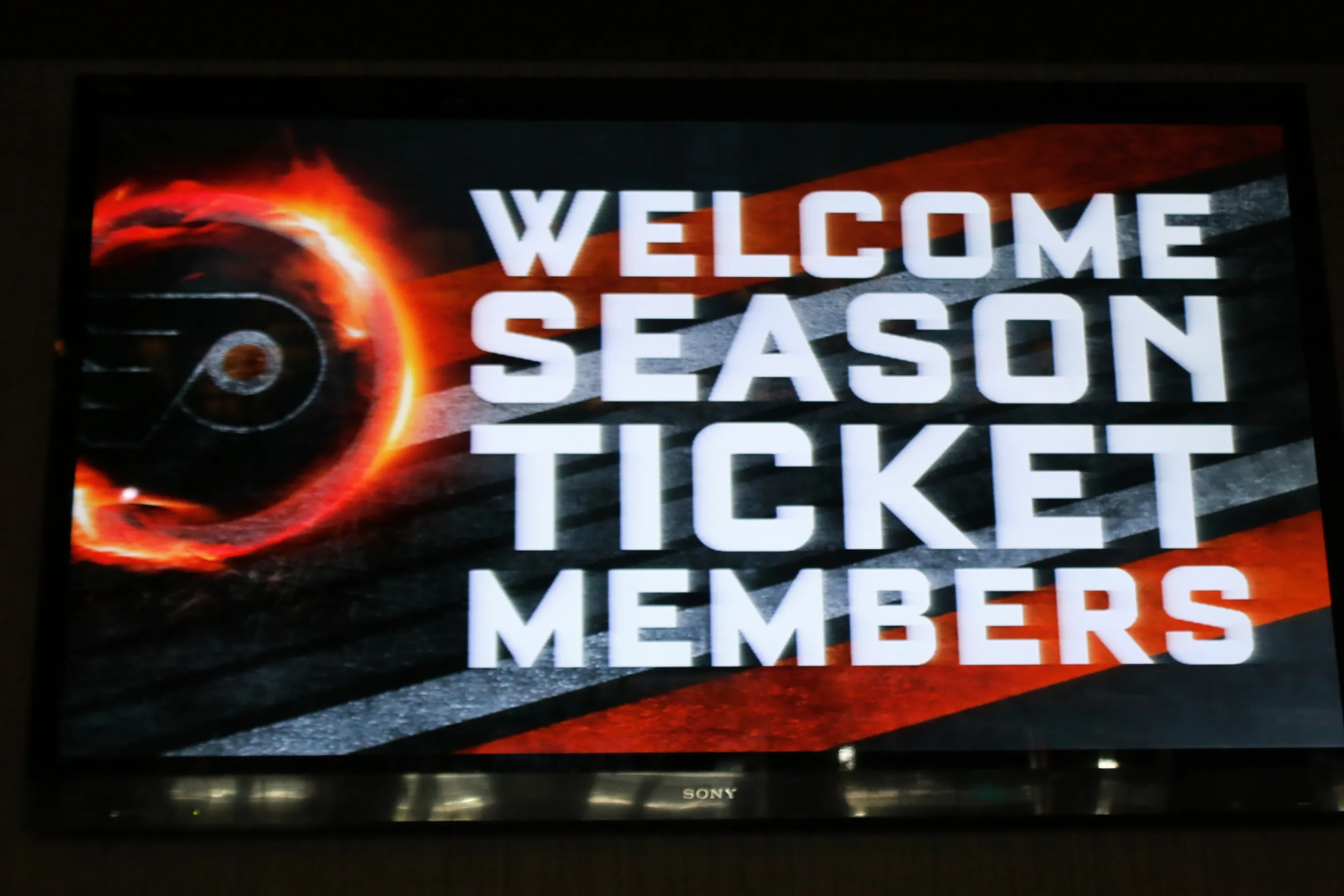
The Philadelphia Flyers, one of the NHL’s most storied franchises, needed a fresh approach to their annual client appreciation event. Their corporate sponsors and suite holders expected more than a meet-and-greet with players. The Flyers wanted an experience that would strengthen relationships with their highest-value partners while generating genuine excitement.
It’s PlayTyme Game Shows produced a custom game show experience for the Flyers’ client appreciation night. The production included a full LED stage setup, professional sound and lighting, and a host who tailored every round to the audience. Questions blended Flyers history, NHL trivia, and sponsor-specific content that made corporate partners feel recognized, not just invited.
The format worked because it solved every challenge the Flyers had identified. Guests who would normally cluster in small groups were mixed into teams, forcing new conversations. The competitive element gave even reserved attendees a reason to engage. And because the game show was pure entertainment, with no product pitches and no sales decks, clients relaxed and genuinely enjoyed themselves.
The result: clients stayed longer than at previous appreciation events, participation was nearly universal, and the Flyers’ sales team reported stronger follow-up conversations in the weeks after. The game show became the talking point, not just the event.
Law Firms and Financial Services
Firms that rely on referral networks host appreciation events for referring attorneys, CPAs, and wealth managers. These guests are sophisticated, time-pressed professionals who will not attend an event that feels like a standard reception. A 60-minute game show gives them a reason to stay, interact with other referral partners, and associate the hosting firm with energy rather than obligation.
Country Clubs and Private Member Organizations
Member retention is the lifeblood of private clubs. Seasonal appreciation events (holiday parties, member anniversaries, family nights) need programming that draws attendance and creates buzz on the club’s social channels. Game shows fill rooms because members want to compete against neighbors and friends in a format that is both social and energizing.
Real Estate Brokerages and Insurance Agencies
Agents and brokers who host annual client appreciation events use game shows to re-engage past clients who have not transacted in years. The interactive format gives the agent a natural reason to reconnect, and the shared experience reopens the relationship in a way that a mailed calendar or holiday card never will.
Want clients talking about your event for months? We build custom game rounds around your brand and guests.
It’s PlayTyme Game Shows is a family-owned company based in the New Jersey, New York City, and Connecticut tri-state area that has produced over 3,000 live events for corporate clients, schools, and private organizations. Their approach to client appreciation events is built on three principles that separate a professional game show from a DIY trivia night.
Production-Grade Equipment
Every event includes wireless lockout buzzer systems, a large LED scoreboard, professional audio, and themed lighting. The equipment creates the look and feel of a real television game show, which is what makes guests feel like contestants rather than attendees. This distinction matters: the emotional shift from “I’m at a corporate event” to “I’m on a game show” is the retention tool.
Trained, Professional Hosts
It’s PlayTyme provides a dedicated emcee who manages energy, pacing, and crowd interaction. The host reads the room, adjusts difficulty on the fly, and ensures every team gets moments in the spotlight. This is not a speaker with a microphone. It is a performer whose job is to make every guest feel like the event was built for them.
Flexible Formats for Any Venue
Their game show formats (Face-2-Face Feud, trivia, Name That Hit Song, Word Play, and custom rounds) work in hotel ballrooms, restaurant private dining rooms, office lobbies, and outdoor pavilions. Setup takes under 30 minutes and integrates with existing event timelines, whether the game show is the centerpiece or a 45-minute segment between dinner and dessert.
Format
Best For
Group Size
Duration
Face-2-Face Feud
High-energy crowd competition
20-300+
45-90 min
Trivia Challenge
Industry or company-themed knowledge
20-300+
45-75 min
Name That Hit Song
Mixed-age groups, casual settings
20-250+
45-60 min
Word Play
Wordplay fans, smaller intimate events
20-150+
30-60 min
Custom Game Show
Branded content, milestone celebrations
20-300+
60-90 min
The Emotional Memory That Keeps Clients Coming Back
Standard appreciation events produce gratitude. Game shows produce stories. A client who wins a final-round buzzer battle against a rival table will talk about it at the next industry lunch. A team that rallied from last place to steal a victory will reference it in emails months later. These are not polite “thank you for having us” memories. They are vivid, competitive, emotionally charged moments that attach directly to the hosting organization’s brand.
This is why organizations with high-value repeat stakeholders (sports franchises, law firms, private clubs) have adopted the game show format for appreciation events. Their clients have seen every conventional entertainment option. They do not need another open bar or acoustic guitarist. They need an experience that surprises them, includes them, and gives them something to talk about when they get home.
The production quality matters because it signals investment. A DIY trivia game on a laptop screen tells clients you spent 20 minutes preparing. A full game show setup with buzzers, scoreboards, and a professional host tells clients you treated this event like a production, not an afterthought. That signal is what high-value clients notice and remember.
How to Choose the Right Game Show for Your Client Appreciation Event
Selecting the right format starts with three questions: How large is the group? How formal is the venue? How well do the guests know each other?
For large groups (100+) in ballroom-style settings, Face-2-Face Feud and trivia formats generate the most energy because they pit entire tables against each other. The competition is collective, so no individual feels singled out. For smaller, more intimate gatherings (under 50), Name That Hit Song or Word Play create a relaxed atmosphere where every team gets frequent turns. For events celebrating a company milestone or long-term client relationships, a custom game show with branded questions, company history rounds, and personalized shout-outs delivers the strongest emotional connection.
The right provider handles logistics, customization, and crowd management so you focus on hosting your clients, not running the entertainment. Ask whether the provider supplies all equipment, whether the host adapts content in real time, and whether they have experience with client-facing (not just internal) audiences. Client appreciation guests expect a polished, high-energy experience, and the provider should deliver that from setup to teardown.
How long does a game show for a client appreciation event last?
Most game show formats run between 45 and 90 minutes, depending on group size and the number of rounds. The experience fits naturally into a larger event timeline, whether scheduled as a pre-dinner activity or the main entertainment after a meal.
Is a game show appropriate for a formal client event?
Yes. Professional game show providers use polished equipment, trained hosts, and customizable content that matches the tone of the event. The format works in black-tie galas, executive dinners, and casual outdoor gatherings because the host adjusts energy and pacing to fit the room.
What group size works best for a client appreciation game show?
Game shows work for groups as small as 20 and as large as 300 or more. Teams are typically organized by table, so the format scales naturally with the venue layout. Larger groups generate more energy during competitive rounds.
Do clients need to know trivia to participate?
No. The best game show formats mix general knowledge, pop culture, music clips, and survey-style questions so that every guest contributes regardless of expertise. Hosts also adjust difficulty in real time to keep all teams competitive throughout the event.
How far in advance should a game show be booked for a client event?
Most groups book 4 to 8 weeks ahead, and shorter notice often works when the date is free. Custom question rounds (company history, industry trivia, personalized content) benefit from the longer end, since the provider needs time to research and produce them.
How does participating in a live game show affect client purchasing behavior?
EventMarketer’s EventTrack study found that 85% of consumers are more likely to purchase from a brand after participating in a live, interactive experience.
Corporate training programs consume billions of dollars annually — yet most of that investment disappears within days. According to SHRM research on gamified learning, organizations that apply game mechanics to training see measurable gains in knowledge retention and business outcomes, including double-digit increases in performance metrics. Meanwhile, ATD’s 2025 State of the Industry report confirms that 94% of employees are more likely to stay at companies that invest in their professional development. The message is clear: training matters, but only when it sticks.
That disconnect between spending and results is exactly why L&D teams are turning to game shows for corporate training. The standard approach (a slide deck, a talking head, a quiz nobody studies for) produces forgettable sessions and disengaged employees. Trainers know this. They watch participants check their phones ten minutes into a compliance refresher. They see onboarding cohorts struggle to recall basic product details a week later.
The core problem is format, not content. Most training fails because it delivers information passively. Employees sit, listen, and forget. There is no urgency, no accountability, and no reason to actively process what they hear. Game show formats solve this by replacing passive consumption with active competition, time pressure, and real-time scoring that forces participants to retrieve and apply knowledge on the spot.
Want corporate training your employees remember? We build hosted game shows around your training content, anywhere in NJ, NYC and CT.
SHRM research shows gamified training produces double-digit gains in employee performance metrics.
ATD’s 2025 report finds 94% of employees are more likely to stay at companies that invest in development.
The standard slide-deck-and-quiz approach produces forgettable sessions and disengaged employees.
Trainers already see the signs: participants checking phones ten minutes into a session.
L&D teams are turning to game shows because conventional training formats fail to make content stick.
Why Passive Training Produces Poor Results
Lecture-based training relies on a single transfer method: listening. Research on memory consolidation consistently shows that passive listening produces the lowest retention rates among all learning formats. Attendees retain roughly 10% of what they hear in a lecture after 48 hours. Compare that to active participation methods, where retention jumps to 75% or higher when learners practice, discuss, and apply new information immediately.
Slide-heavy presentations compound the problem. Participants read ahead, tune out the speaker, and assume they will “review the deck later.” They rarely do. Even interactive elements like polls or breakout discussions only partially address the issue. They break up monotony without creating the kind of high-stakes engagement that forces genuine recall.
The result: organizations repeat the same training cycles quarterly or annually, covering identical material because employees never internalized it the first time. That repetition wastes budget, wastes employee hours, and creates a culture where training is treated as an interruption rather than a growth opportunity.
How Game Show Mechanics Drive Training Retention
Game shows work as training tools because they activate three cognitive principles simultaneously: time pressure, competitive scoring, and team accountability.
Time pressure forces rapid recall. When a team has seconds to answer a question about a compliance policy or product specification, there is no time to bluff. Participants either know the material or they don’t. That urgency triggers deeper encoding in memory because the brain treats time-pressured retrieval as a high-importance event.
Competitive scoring adds motivation that no slide deck provides. Leaderboards, point totals, and round-by-round standings create an emotional investment in getting answers right. Adults respond to competition. When a team trails by 200 points going into the final round, every member is focused, engaged, and actively trying to recall what they learned.
Team accountability distributes the learning load. In a team-based game show format, every person’s knowledge (or lack of it) directly affects the group’s score. This creates positive peer pressure to prepare and pay attention. It also surfaces knowledge gaps in real time, giving trainers immediate feedback on which topics need reinforcement.
Challenges of Using Game Shows for Corporate Training
Despite the clear advantages, integrating game shows into a training program presents real obstacles that L&D teams need to address.
Content alignment. Off-the-shelf game show providers run generic trivia formats. Those are fun but fail to reinforce specific training objectives like regulatory compliance, product feature mastery, or company policy knowledge. The game becomes entertainment rather than education.
Participant resistance. Some employees view game-based training as childish or unserious. Without proper framing and genuinely challenging content, skeptics disengage or treat the event as a break from “real work.”
Measurement difficulty. Standard team-building providers rarely track individual or team performance data. Trainers walk away with anecdotal impressions but no measurable outcomes to report to leadership.
Scalability. Running a game show for 20 people differs dramatically from running one for 200. Audio, visual, and logistical requirements scale in ways that most internal teams are not equipped to handle.
Content creation burden. Writing game show questions that are challenging, accurate, and aligned with learning objectives takes significant time. Most L&D teams lack the bandwidth to build a full question bank on top of their regular workload.
Training Topics That Work Best in a Game Show Format
Not every training topic translates equally well into a competitive quiz format. The strongest candidates share a common trait: they involve specific, testable knowledge that employees need to recall accurately.
Policy and Compliance Training
Compliance refreshers are notorious for low engagement. Turning OSHA regulations, harassment prevention protocols, or data security policies into game show questions transforms mandatory training from a checkbox exercise into an active recall session. Participants remember the content because they competed over it.
Product Knowledge and Sales Enablement
Sales teams need to know features, pricing tiers, competitive differentiators, and objection responses cold. A game show format tests that knowledge under pressure and quickly reveals which reps need additional coaching. It also builds confidence: a salesperson who dominated a product knowledge round carries that certainty into client conversations.
Onboarding and Culture Integration
New hires absorb enormous amounts of information in their first weeks. A game show session during onboarding reinforces company history, values, internal tools, and role-specific procedures while simultaneously building social connections among the new cohort. The competitive format breaks the ice faster than any icebreaker exercise.
Leadership and Management Development
Scenario-based game show rounds test decision-making skills. Present a management challenge, give teams limited time to choose the best response, and score based on alignment with company leadership principles. This format surfaces how leaders think under pressure, not just what they know.
Ready to make training stick? Our game rounds turn lessons into friendly team competition.
The difference between a game show that entertains and one that trains comes down to content customization. Generic providers run pre-built question sets: pop culture trivia, general knowledge, or broad “workplace” categories. Those formats generate laughs but zero training ROI.
It’s PlayTyme Game Shows takes the opposite approach. Every game show is built around the client’s specific training objectives. The company works directly with L&D teams, HR departments, and training managers to script custom question content covering the exact material employees need to retain. That means a pharmaceutical company’s compliance game references their actual policies. A tech firm’s product knowledge round covers their real feature set. An onboarding game show tests the new hire handbook, not generic workplace facts.
This fully scripted custom content is what separates a training-grade game show from a party trick. It’s PlayTyme’s team handles the content creation burden so trainers do not have to build question banks from scratch. Clients provide the source material (training manuals, policy documents, product specs), and It’s PlayTyme transforms it into engaging, competition-ready game rounds.
Training Format
Engagement Level
Knowledge Retention
Custom Content
Real-Time Feedback
Slide Presentation
Low
Low (10-20%)
Yes
No
E-Learning Module
Moderate
Moderate (30-40%)
Yes
Limited
Workshop / Breakout
Moderate
Moderate (40-50%)
Yes
Partial
Generic Team Building
High
Low (not training-focused)
No
No
Custom Game Show (IPT)
High
High (70%+)
Yes, fully scripted
Yes, scored rounds
What It’s PlayTyme Delivers for Training-Focused Events
It’s PlayTyme Game Shows operates across New Jersey, New York City, and Connecticut, bringing professional-grade game show productions directly to corporate venues, conference rooms, and offsite locations. The company specializes in TV-style interactive formats (think Feud, Jeopardy, and Wheel-style rounds) that translate naturally into training applications.
For training-focused events, It’s PlayTyme provides:
Full content scripting. Every question, category, and round is custom-built from the client’s training materials. No generic filler.
Professional hosting and production. A trained emcee runs the show with professional sound, lighting, and scoring systems. The production quality keeps even skeptical participants engaged.
Flexible group sizes. Programs scale from small department sessions of 15 people to company-wide events with hundreds of participants, all using team-based formats that keep everyone involved.
Multiple game formats. Different training objectives pair with different formats. Rapid-fire recall works for compliance. Category-based rounds work for product knowledge. Scenario rounds work for leadership development.
No upfront deposit. Payment is collected after the event, not before. That policy reflects confidence in the product and removes a common barrier for L&D teams working within tight procurement cycles.
Building a Game Show Into Your Training Calendar
The most effective approach treats game shows as a recurring component of the training program rather than a one-time event. Quarterly game show sessions create a rhythm of active recall that reinforces material covered in traditional training throughout the year.
A strong implementation sequence looks like this:
Deliver the core training content through your standard method (workshop, e-learning, or instructor-led session).
Schedule a game show session 1 to 2 weeks later to test retention and reinforce the material through competitive recall.
Use the game show scores to identify knowledge gaps by topic area.
Address those gaps with targeted follow-up training before the next cycle.
This “train, then test through play” model gives L&D teams both the engagement boost and the measurable data they need to demonstrate training ROI to leadership. It transforms the game show from a standalone event into an integrated assessment tool.
How to Choose the Right Game Show Training Provider
Not every game show company delivers training-grade experiences. When evaluating providers, focus on these criteria:
Custom content capability. Ask whether the provider writes questions from your materials or runs pre-built sets. If they only offer generic trivia, they are a team-building vendor, not a training partner. It’s PlayTyme’s ability to fully script every round from client-supplied content is the standard to measure against.
Production quality. A game show loses credibility if the production feels amateur. Professional sound, scoring displays, and an experienced host make the difference between a memorable training event and a forgettable one.
Scalability. Confirm the provider handles your group size confidently. Ask for references from events of similar scale.
Geographic reach. For companies in the Tri-State area, working with a provider based in the region ensures reliable logistics and eliminates travel surcharges. It’s PlayTyme covers New Jersey, NYC, and Connecticut with consistent service quality.
Post-event data. The best providers deliver performance summaries that trainers use to measure knowledge retention by topic. This data closes the feedback loop between training delivery and training assessment.
Ready to turn your next training session into an event employees actually remember? Contact It’s PlayTyme Game Shows to discuss your training objectives and get a custom game show built around your content. Explore the full range of corporate event and team building programs available across the Tri-State area.
How do game shows improve corporate training retention?
Game shows use time pressure, competitive scoring, and team accountability to force active recall rather than passive listening. These mechanics trigger deeper memory encoding, resulting in retention rates of 70% or higher compared to 10 to 20% for lecture-based formats. The competitive element also motivates participants to prepare and pay attention.
What types of training content work in a game show format?
Any topic with specific, testable knowledge translates well: compliance and policy training, product knowledge for sales teams, onboarding content for new hires, and leadership development scenarios. The key requirement is that the material has clear right and wrong answers or best-practice responses that participants need to recall accurately.
How does It’s PlayTyme customize game shows for training?
It’s PlayTyme builds every game show from the client’s own training materials. Clients provide policy documents, product specs, handbooks, or other source content, and the team scripts custom questions, categories, and rounds aligned to specific learning objectives. No generic trivia is used.
How large of a group works for a training game show?
It’s PlayTyme runs training game shows for groups ranging from 15 to several hundred participants. Team-based formats keep every person actively involved regardless of group size. The production scales with professional sound and scoring systems designed for both conference rooms and large event venues.
How often should companies schedule game show training sessions?
Quarterly sessions produce the strongest results. Schedule a game show 1 to 2 weeks after delivering core training content to test retention through competitive recall. Use the scores to identify knowledge gaps, then address those gaps before the next cycle. This rhythm turns the game show into a recurring assessment tool rather than a one-time event.
Schools across the country are investing in character education, and the results speak for themselves. A landmark meta-analysis published by the Collaborative for Academic, Social, and Emotional Learning (CASEL) found that students in social-emotional learning programs scored 11 percentile points higher on academic achievement tests than peers without those programs. Meanwhile, data from the Centers for Disease Control and Prevention confirms that school-based programs addressing social and emotional skills reduce behavioral problems and improve classroom engagement.
Character education assembly games bring these outcomes to life in a format students actually enjoy. Instead of passive lectures about respect or fairness, game-based assemblies put students in situations where they practice those values under real (and fun) pressure.
But getting character education right is harder than it sounds. Many schools struggle with assemblies that feel preachy or forced, leaving students disengaged within minutes. Others rely on one-time motivational speakers whose messages fade by lunchtime. Teachers report that standard character ed curricula often lack the interactive component needed to reach students who learn by doing. And for administrators juggling tight budgets, finding a program that genuinely reinforces SEL standards while keeping an auditorium of K—12 students entertained feels like an impossible ask.
Planning a character education assembly? Our interactive game show assemblies build real values for students in NJ, NYC and CT.
What Makes Character Education Assembly Games Different
Traditional character education programs lean on worksheets, videos, and discussion circles. These tools have their place, but they miss a group of students who respond better to active participation. Character education assembly games flip the model: students compete, collaborate, and make decisions in real time, and every round reinforces a specific value.
A well-designed game show assembly turns abstract concepts (teamwork, integrity, sportsmanship) into observable behaviors. When a student helps a struggling teammate answer a question, that is cooperation in action. When a team loses a round and cheers for the winners, that is sportsmanship students feel rather than just hear about.
It’s PlayTyme Game Shows builds every school assembly program around this principle. Their interactive game shows for schools in New Jersey, New York City, and Connecticut are designed so that character development is baked into the game mechanics, not tacked on as an afterthought.
Core Values Reinforced Through Game Show Formats
The best character education assembly games target specific SEL competencies. Here are the values that game show assemblies reinforce most effectively:
Teamwork: Students are grouped across grade levels and friend groups, forcing them to communicate and cooperate with peers they don’t normally work with.
Sportsmanship: Competitive rounds create natural moments to practice winning graciously and losing with dignity. Hosts model and reinforce these behaviors throughout.
Respect: Game rules require listening to opponents, waiting turns, and acknowledging good answers from other teams.
Responsibility: Each team member has a role. When one person doesn’t participate, the whole team feels it.
Integrity: Trivia and challenge rounds test whether students will play honestly when the pressure is on.
These are not hypothetical outcomes. They are built into the structure of every round.
Challenges Schools Face With Character Education Assemblies
Even schools committed to character education run into predictable obstacles when planning assemblies:
Student Disengagement
The biggest challenge is holding attention. A gymnasium full of students will tune out a lecture within three minutes. Passive formats (slideshows, monologues, videos projected on a screen) lose younger students almost immediately and older students shortly after. Any assembly program that expects students to sit still and absorb a message about respect is fighting human nature.
One-and-Done Programming
Many schools bring in a motivational speaker once a year and check the character education box. Research consistently shows that one-time events produce minimal lasting change. Students need repeated, varied exposure to SEL concepts for those concepts to stick. A single assembly is a starting point, not a strategy.
Lack of Measurable Outcomes
Administrators need to justify spending. When a character education assembly has no observable outcomes beyond “the kids seemed to enjoy it,” it becomes difficult to secure funding for future programming. Schools need assemblies that produce visible, reportable changes in student behavior.
Audience Size and Age Range
Elementary, middle, and high school students respond to completely different stimuli. An assembly that works for second graders will bore eighth graders, and vice versa. Schools need programs flexible enough to engage a wide age range or adaptable enough to be tailored by grade band.
How Game Show Assemblies Deliver SEL Outcomes
Game show assemblies solve the engagement problem by making students active participants rather than passive audience members. Here is how the format naturally produces character education outcomes:
Competition creates stakes. When points are on the line, students care about the outcome. That investment is what makes the character lessons land. A student who practices sportsmanship when they genuinely wanted to win has internalized the value in a way no worksheet replicates.
Team structures build social skills. Dividing the audience into teams and rotating representatives on stage forces students to negotiate, encourage each other, and communicate under time pressure. These are the exact skills SEL frameworks target.
Live hosting provides real-time coaching. A skilled game show host does more than read questions. They narrate good sportsmanship when they see it, redirect negative behavior in the moment, and celebrate effort alongside correct answers. This real-time reinforcement is far more effective than a debrief after the fact.
Why It’s PlayTyme Game Shows Stands Out for Character Education
Not every game show assembly company treats character education as a priority. It’s PlayTyme Game Shows designs its school assembly programs with SEL alignment built into the experience from the ground up. Here is what sets them apart:
Professional hosts trained in youth engagement: Every host knows how to read a room of students, adjust energy levels for different age groups, and weave character messaging into the flow of the game without making it feel forced.
Customizable content: Schools choose themes that align with their character education curriculum, whether the focus is anti-bullying, respect, teamwork, or responsible decision-making.
Full auditorium participation: The game format ensures every student in the room is involved, not just the handful on stage. Audience response rounds, team cheers, and collective challenges keep the entire assembly engaged.
Serving NJ, NYC, and CT: Local availability means no travel surcharges and the flexibility to book single assemblies or recurring programs throughout the school year.
Format
Student Engagement
SEL Alignment
Full Audience Participation
Repeat Programming
It’s PlayTyme Game Shows
High (interactive competition)
Built into game mechanics
Yes (every student involved)
Yes (customizable themes)
Motivational Speaker
Low to moderate
Verbal messaging only
No (passive listening)
Rarely
Video/Media Assembly
Low
Content-dependent
No
Limited variety
Workshop/Breakout Sessions
Moderate
Strong (small group)
No (small groups only)
Yes
Want students practicing kindness and respect? Our game rounds turn character traits into team goals.
CASEL identifies five core competencies for social-emotional learning: self-awareness, self-management, social awareness, relationship skills, and responsible decision-making. A well-run game show assembly touches every one of these:
Self-awareness: Students recognize their emotional responses to winning and losing in real time.
Self-management: The fast pace of game rounds requires impulse control, patience, and focus.
Social awareness: Team play demands reading teammates’ emotions and responding with encouragement.
Relationship skills: Collaboration with unfamiliar peers builds communication and conflict-resolution abilities.
Responsible decision-making: Trivia and strategy rounds present choices where honesty and fairness matter.
Schools already tracking SEL benchmarks find that game show assemblies produce observable data points: teachers report improved peer interactions, reduced conflicts during recess, and students referencing assembly experiences when discussing character traits in class.
Building a Year-Round Character Education Program With Assemblies
A single assembly creates a memorable experience. A series of assemblies throughout the school year creates a character education program. Here is how schools structure recurring game show assemblies for maximum impact:
Quarterly Themes
Align each assembly with the school’s character trait of the month or quarterly SEL focus. Fall: teamwork and cooperation. Winter: integrity and honesty. Spring: respect and empathy. End of year: celebration of growth.
Grade-Band Customization
Run separate assemblies for K 2, 3-5, and 6-8 (or combine where appropriate). The game mechanics stay the same, but question difficulty, pacing, and character messaging adjust for developmental level.
Teacher Integration
The most effective programs give teachers pre-assembly and post-assembly discussion guides. When classroom conversation connects to the assembly experience, retention increases significantly.
Measuring the Impact of Character Education Assembly Games
Schools investing in character education assembly games need evidence that the investment works. Here are practical ways to measure outcomes:
Behavioral incident tracking: Compare disciplinary referrals before and after an assembly series. Schools using interactive character education programming consistently report reductions in office referrals.
Student surveys: Short pre- and post-assembly surveys measuring attitudes toward teamwork, respect, and sportsmanship provide quantifiable data.
Teacher observation: Classroom teachers are the best judges of whether assembly lessons translate to daily behavior. Structured observation forms capture these changes.
Peer interaction metrics: Track collaborative behaviors during group work and recess. Increases in positive peer interactions correlate directly with effective SEL programming.
How to Pick the Right Character Education Assembly for Your School
Not all assembly programs deliver on their promises. When evaluating options for character education assembly games, prioritize these factors:
First, ask whether every student participates or just a few. Programs that put five students on stage while 300 watch are entertainment, not education. The best programs engage the full auditorium in every round.
Second, look for SEL integration that is structural, not cosmetic. A game show that mentions “respect” once is not a character education program. A game show where the rules require respectful behavior to earn points is.
Third, evaluate the host. The person running the assembly determines whether it succeeds or fails. Experienced hosts read the room, adapt on the fly, and model the exact behaviors the school wants students to adopt.
Fourth, consider sustainability. One assembly is a treat. A recurring program with evolving themes is a character education strategy. Choose a provider willing to build a year-round partnership.
Finally, check references from schools in your area. Local providers who understand your community and your students deliver better results than national touring acts with generic scripts.
It’s PlayTyme Game Shows checks every one of these boxes for schools in the tri-state area. Their programs are built around full-audience participation, SEL-aligned game mechanics, and professional hosts who specialize in K 12 engagement. Contact It’s PlayTyme to discuss how a character education game show assembly fits your school’s SEL goals.
Character education assembly games are interactive, game-show-style school assemblies designed to teach values like teamwork, sportsmanship, respect, and integrity. Students participate in competitive rounds where these character traits are reinforced through the game’s rules and structure rather than through lectures or passive viewing.
How do game show assemblies support SEL standards?
Game show assemblies address all five CASEL competencies: self-awareness, self-management, social awareness, relationship skills, and responsible decision-making. The competitive format creates real-time situations where students practice these skills under genuine (and enjoyable) pressure. Teachers report that students reference assembly experiences when discussing character traits in class.
What age groups do character education game show assemblies work for?
Professional game show assembly providers customize content for different grade bands. Elementary students (K 5) respond to high-energy, simple competition formats. Middle school students (6-8) engage with more strategic gameplay and peer-driven team challenges. Programs like It’s PlayTyme Game Shows adjust pacing, difficulty, and character messaging for each audience.
How often should schools schedule character education assemblies?
A single assembly creates a memorable experience, but quarterly or monthly assemblies build a sustained character education program. Schools that align assembly themes with their SEL calendar (teamwork in fall, integrity in winter, respect in spring) see the strongest behavioral outcomes across the school year.
How much do character education game show assemblies cost?
Pricing varies by provider, audience size, and program length. It’s PlayTyme Game Shows serves schools across New Jersey, New York City, and Connecticut with competitive pricing and no hidden travel fees. Schools should request a quote directly to get accurate pricing for their specific setup and schedule.
Disengaged employees cost organizations worldwide an estimated $8.9 trillion in lost productivity each year, according to Gallup’s State of the Global Workplace report. Meanwhile, Gallup’s Q12 meta-analysis found that business units with high employee engagement see 23% greater profitability compared to those with low engagement. The numbers are clear: keeping your workforce connected and motivated is a business priority — not a perk.
Out of office activities for employees give teams a chance to interact outside the daily grind of meetings, emails, and deadlines. These shared experiences build trust, improve communication, and create the kind of genuine rapport that makes collaboration easier back at the office.
Still, planning an off-site event is rarely straightforward. HR managers and team leads face real obstacles: coordinating schedules across departments, finding activities that suit varied physical abilities and personalities, justifying the budget to leadership, and figuring out whether an event actually moved the needle on morale. Without a clear strategy, out of office activities turn into expensive outings that employees forget within a week.
Planning an out of office activity for employees? A hosted game show gets your team playing together, anywhere in NJ, NYC and CT.
Why Out of Office Activities for Employees Drive Real Results
Taking your team out of the office does more than break up the routine. It removes hierarchy and puts people in unfamiliar situations where they rely on each other. A director and a junior analyst working together to solve a puzzle or win a trivia round interact differently than they do in a conference room.
Shared experiences create “social capital,” the informal bonds that make it easier to ask for help, give honest feedback, and collaborate under pressure. Teams that build this trust off-site bring it back to their daily work. Communication improves. Conflict decreases. People stay longer because they feel a genuine sense of belonging.
The return on investment goes beyond feelings. Organizations that invest in regular team bonding activities report lower turnover, higher productivity, and stronger cross-departmental collaboration. These are measurable outcomes that affect the bottom line.
Challenges of Planning Out of Office Activities for Employees
Before diving into activity ideas, it helps to name the obstacles that derail most off-site plans.
Scheduling conflicts: Getting 20 or 50 people in the same place at the same time requires weeks of coordination, especially across departments with different peak workloads.
Inclusivity concerns: Not everyone enjoys ropes courses or escape rooms. Physical limitations, introversion, cultural preferences, and personal comfort levels all factor in. An activity that alienates part of the group does more harm than good.
Budget justification: Leadership wants ROI numbers. “The team had fun” is not a compelling budget request. HR teams need activities that produce observable, measurable improvements in engagement and collaboration.
Logistics overload: Booking a venue, arranging transportation, managing dietary restrictions, coordinating with vendors, and handling last-minute cancellations all fall on the organizer’s plate.
Measuring impact: After the event, how do you know it worked? Most companies lack a framework for tracking post-event engagement improvements, making it hard to justify repeating the investment.
Interactive Game Shows and Trivia Events
Game shows and trivia competitions are among the most effective out of office activities for employees because they work for groups of almost any size and require no athletic ability. Everyone participates, whether they are competitive or casual.
It’s PlayTyme Game Shows stands out in this category. Based in New Jersey and serving the entire NJ, NYC, and Connecticut region, they bring fully produced, interactive game show experiences directly to corporate events. Their format includes buzzer-based trivia, music and pop culture rounds, and team-based competition rounds that keep every participant involved from start to finish.
What separates It’s PlayTyme from generic trivia nights: a professional host runs the show, all equipment is provided, and the format adapts to groups ranging from 20 to 300+ people. The energy of a live game show creates a shared experience that teams talk about for months. It is an ideal option for companies that want high engagement with zero planning burden on their internal team.
Why Game Shows Work for Corporate Groups
Participation is natural: answering questions and cheering for teammates does not require special skills or courage.
Introverts and extroverts both engage: the team format lets quieter employees contribute knowledge without being the center of attention.
Customizable content lets organizers weave in company trivia, industry knowledge, or inside jokes.
Setup and teardown are handled by the provider, removing logistics stress from the HR team.
Outdoor and Adventure Activities
For teams that thrive on physical activity, outdoor options offer a change of scenery and a dose of adrenaline. Popular choices include hiking excursions, kayaking trips, go-kart racing, and field day competitions.
The trade-off with adventure activities is accessibility. A rock climbing outing excludes employees with physical limitations. A full-day hiking trip requires a level of fitness that not everyone shares. If you go this route, always offer an alternative track so no one sits on the sidelines.
Outdoor Options That Work for Mixed Groups
Scavenger hunts: Teams explore a park, downtown area, or neighborhood while solving clues. Walking pace is flexible, and the puzzle element keeps it engaging.
Field day events: Relay races, tug-of-war, and sack races bring out playful competition without requiring serious athleticism.
Picnic and games: Combine a catered lunch with lawn games like cornhole, bocce, and giant Jenga for a relaxed, social atmosphere.
Want an outing everyone can join? Our game shows come to your office, venue or restaurant.
Hands-on workshops appeal to teams that prefer collaboration over competition. These activities tap into problem-solving skills and produce something tangible by the end of the session.
Cooking classes: Teams work in small groups to prepare a meal. Communication, delegation, and time management are built into the process naturally.
Art or pottery sessions: Low-pressure creative activities reduce stress and give people a chance to express themselves outside of work roles.
Build-a-project challenges: Teams assemble bikes, care packages, or other items that get donated to a local charity. The collaborative effort serves a purpose beyond the team itself.
Creative workshops tend to run 2 to 3 hours, making them a practical option for half-day outings that do not consume an entire workday.
Volunteer and Community Service Outings
Volunteering together gives employees a shared sense of purpose that extends beyond quarterly targets. It also strengthens the company’s community presence, which matters for employer branding and recruitment.
Effective volunteer outings have structure. Partnering with a local food bank, habitat organization, or park cleanup crew provides clear tasks and a visible outcome. Avoid vague “volunteer days” where people show up without direction. The activity should feel organized and meaningful.
Pair a morning of service work with a team lunch afterward. The informal conversation that happens over food is where the real bonding occurs.
How to Plan Out of Office Activities on a Budget
Budget constraints should not eliminate off-site activities from your calendar. Some of the most effective team-building experiences cost very little.
Activity Type
Estimated Cost Per Person
Group Size
Time Required
Best For
Game show event
$25 $75
20-300+
1-2 hours
All teams, any fitness level
Scavenger hunt
$10 $30
10-100
2-3 hours
Small to mid-size groups
Cooking class
$50 $100
10-30
2-3 hours
Teams that enjoy collaboration
Volunteer outing
$0 $15
10-100+
3-5 hours
Purpose-driven teams
Field day/picnic
$15 $40
20-200
3-4 hours
Outdoor-friendly groups
Trivia night (in-house)
$5 $15
10-50
1-2 hours
Budget-conscious teams
When budgets are tight, focus spending on the elements that create the most impact: a skilled facilitator, good food, and a well-organized format. The venue matters less than the experience. A game show in your office parking lot with a professional host beats a fancy restaurant with no structured activity.
How to Pick the Right Out of Office Activity for Your Team
Start with three questions: What is the goal? Who is participating? What is the budget? The answers narrow your options quickly.
If the goal is engagement and energy, interactive formats like game shows and trivia events deliver the highest participation rates. If the goal is deeper relationship building, workshops and volunteer projects create more intimate connections. If you need something fast and inexpensive, a structured team lunch with icebreaker activities does the job.
Consider your team’s demographics. A group of 25-year-olds in a startup responds differently than a cross-generational department of 80 people. Activities that require no special physical ability, no embarrassing performance moments, and no pressure to “be fun” get the broadest participation and the most honest feedback.
For teams across New Jersey, New York City, and Connecticut, It’s PlayTyme’s corporate game show events solve the hardest part of planning: they handle setup, hosting, and teardown so your HR team focuses on showing up, not managing logistics. Reach out to book your team’s next off-site experience and see firsthand how a professionally run game show transforms your next company outing.
What are the best out of office activities for large teams?
Game shows, trivia competitions, and field day events work best for large groups because they scale easily and keep everyone involved. It’s PlayTyme Game Shows, for example, handles groups of 20 to 300+ people with a format designed to keep energy high throughout the event.
How often should companies plan out of office team building activities?
Quarterly events strike the best balance between frequency and budget. Monthly activities work for smaller, lower-cost options like team lunches. The key is consistency: one well-planned event every quarter produces better results than a single expensive annual retreat.
How much should a company budget for off-site team building events?
Budget $25 to $100 per person for most activities. Game shows and trivia events fall on the lower end of that range while delivering high engagement. Cooking classes and adventure outings tend to cost more per person. Factor in transportation and food when calculating total costs.
How do you measure the success of out of office activities for employees?
Send a short survey within 48 hours asking about enjoyment, connection with colleagues, and willingness to attend future events. Track employee engagement scores quarterly to identify trends. Monitor turnover rates and cross-team collaboration metrics over 6 to 12 months for long-term impact data.
What out of office activities work for remote and hybrid teams?
Virtual game shows and online trivia events keep remote employees engaged without requiring travel. For hybrid teams, plan in-person events at a central location and offer a virtual participation option. The goal is inclusion: every employee should feel part of the experience regardless of where they work.